THE CHLOE AFFECT - Chloe Careers Podcast
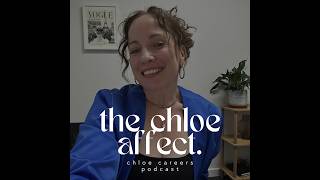
In the inaugural episode of The Chloe Affect, Chloe Spillane introduces herself as a 36‑year‑old solo founder who wants to become a mother. She outlines her non‑linear career—from acting school, through travel sales, a disastrous recruitment role, and a period of redundancy—to the moment she launched her own career‑coaching business, Chloe Spillane Consulting (later Chloe Careers). She shares key failures that taught her integrity, the ethical dilemmas she faced in recruitment, and how a viral LinkedIn post after redundancy sparked a flood of opportunities that she deliberately turned down to pursue her own venture. Chloe describes the rapid growth of her brand via Instagram and TikTok, the financial realities of bootstrapping, and the personal challenges she’s overcome, including teenage depression, an abusive relationship, and a deep‑seated rejection wound. She explains the podcast’s purpose: to give a voice to women who are building businesses alone, to normalize discussing trauma, and to encourage self‑belief despite naysayers. The episode ends with her expressing hope for motherhood, a commitment to personal growth, and an invitation for listeners to join her journey.
Chapters
Hello, I'm Chloe Spillane. I am a woman. I am a business founder. I am 36 years old. I am single and I want to become a mum. I am an eldest daughter. I am someone that is the strong but sensitive type. I am fiercely independent. But at the end of the day, I really want someone to take care of me. I am a Cancer, so I'm hard on the outside, soft on the inside. I've had a very non-linear career, and I wanted to start this podcast because, A, I don't think there's enough female voices out there talking about what it's like to run a business, uh, to figure it all out on their own, but also women that are literally doing everything by themselves. You know, I, I lost my job and then I started this business. I am single through a series of failed relationships where I've learned a lot about myself and done a lot of personal growth. and I want to become a mum, you know. So I think I want to be a voice where women who feel that they are doing it by themselves feel seen and heard and understood, and that we're not different. Uh, well, if we are different, it's, it's a strength and it's something that we should be proud of. So that's why I'm here, and that's why I'm speaking. Before I get into this first episode, which is me essentially sharing my story, who I am, what I'm all about, um, a bit about the business and where I'm at in my life. Um, I wanted to give a bit of background, uh, to me, so shared some truth statements at the start. But I, you know, I, uh, I'm currently based in a small regional town in New South Wales. I'm a city girl though, love being in the city, have been in the city for 15 years. I've been in New York multiple times for work and other opportunities. But I grew up on a farm and I was lucky enough to have a very privileged childhood. Got to take myself overseas when I was 18 on a gap year and then thought I wanted to go into acting. I went through some troubled teenage years when I was 17, 18. I was diagnosed with depression when I was— I would have been 17 and a half. And my amazing family still supported me to do my gap year. I think it was essentially they wanted me to get out and see the world and see what was beyond the dark corners of my mind I found myself in. So I went to Scotland, spent a year there, and came back did a year at University of Newcastle doing a Bachelor of Arts. Wanted to— thought I wanted to be a journalist, and then I was dead set on getting into acting school. So I got into acting school. I went to Australian Institute of Music, did a course there with ADA, which no longer exists, but I got a Bachelor of Performance, and there was some massive learning curves in that degree. I actually failed one of the units when I was there, and I, um, was in the dentist chair getting a filling, and I found out that I'd failed while I was there. So that was a really good day, really good day for me. Um, but I, I formed some of my closest friendships there, and even though I didn't pursue the line of acting from that degree, uh, I will say that there was so many things that I learned from that, um, so many parts of myself, so many, like, I guess, like, the ways that I deal with life and business. A lot of things came from that acting degree, and I think there's a lot in that, um, you know, when you're— when you do such a hands-on, internal kind of degree like that, you are forced to face certain parts of yourself, or you're forced to build certain— work on specific muscles, um, There's something really random that I'll always remember from it is understanding personal space or my peripheral vision and knowing who's around me and feeling that there's a golden thread pulling me up from the top of my head whenever I walk around or where I'm trying to keep myself balanced. But also a hell of a lot of resilience. That is one of the biggest things I got from that. Anyway, moving on from there, I did the degree, did about a year outside of that, and then realized that it wasn't what I wanted to pursue full-time. You know, I have a lot of respect for it. I admire everyone in it. I obviously have some really close friends that are pursuing that line of work, but for me, it wasn't where I saw myself being long-term. And that is an industry that if you want to make it work, you have to throw your entire self into it. And I just wasn't going to do that. So I found myself falling into a role in travel and worked in travel sales for a few years. I again formed some really great friendships there, learnt how to sell really well, love that. Obviously got some really good travel out of it, but if I'm being completely honest, it was probably not my proudest moments of my career. I learned some really hard lessons there about integrity. Um, I— it was where I faced my biggest failure in my career. You know, I, um, I was almost fired. I, uh, and I cost one of the businesses that I worked for— they had multiple branches— I cost one of the branches like over $10,000 in errors because I was too— I didn't— well, I didn't feel that I could voice my failure or my error or what had gone wrong because I was so desperate to prove my worth and to show that I was worthy and show that I was successful. I think I was so hell-bent on being successful and winning, um, and I've always been very competitive, but I lost, I lost the focus on what was really important and what my values were. And I think when you— I was in my early 20s, um, I think our 20s are where we learn a lot of lessons, um, or make a lot of mistakes. And that was one of the biggest ones, you know, learning to honor my values, act with integrity, and be true to myself and what's important and what matters. And to not feel that I need to prove myself or show that I'm worthy to be respected. And yes, I can win, but I don't need to cheat to win. I can win through being honest and I can win through doing things the right way that feel good. And, you know, if I could go back and do it all again, I wouldn't change a thing because that failure— and I like to put that in inverted commas— um, that failure taught me again a massive lesson as to how I want to live my life, the person that I want to be, and what's important. And I think those are the kind of lessons that when we accept what our part to play was in that failure or in what went wrong, then we can learn so much about ourselves and what we're going to put up with, tolerate, expect, accept from ourselves and our own behavior. You know, it's so important to do that introspective work to go, you know what, that wasn't acceptable. I'm not okay with that. I'm gonna, I'm gonna own that and learn from it, but it's certainly not behavior I'm going to exhibit moving forward. So that was that. Then I, uh, left that and went into a completely different field. I wanted to— well, I didn't actually know what I wanted to do, so then I went to a recruitment agency and, um, asked them to help me find another job in travel. And they turned around to me and said, well, how about you think about a job here? So Switch sold me in, which, you know, I'm okay with that, uh, And I started doing, so I got the job there and I started doing agency recruitment. That was, oh, sorry, completely forgot one whole year of my career there. But I know why I forgot that because it was the worst job I've ever done. Like I've done hospitality, I've ran events vans, I've done waitressing work, all of that. But this job, I was in it for one year and I would never do it again. But I learned, but I still learned something from it. It was essentially a conflict resolution role where I was giving people bad news all the time. Time about canceled holidays. It was the worst. Anyway, so I got out of that. I was like, I cannot do any another day of this. So I got myself out, went to recruitment, got into the recruitment agency, and started working in the world of people and hiring and recruitment, and definitely found a niche there. You know, I, I'm good at sales, I'm good with people. That was something that was natural. But I found that Being able to help people with their careers and find what made people tick, what people were interested in and what they wanted and how you could help them get that gave me a lot of job satisfaction. Again, another big lesson I learned here, and it's funny, you know, you go through your career and I feel like every job you go through, there's always going to be something that you've learned. And whether it was something through an error you made or a failure or just something you didn't agree with, something that grinded against your gears, I think it's so important to recognize in that moment that that wasn't for you and you made a decision to go, this isn't for me, I'm going to choose a different path. So for me, it came down to morals and ethics. There was that whole piece around, and if you know agency recruitment, it's you get paid commission on where you place people in roles. And for me, I I was— remember working with this client, and I was— she was interviewing for two roles, different companies, and one of the companies was going to pay me more commission than the other one. And of course, in that line of work, generally you're encouraged to place people in roles that are going to pay you more commission because that means more money for the business, which makes sense, I get it. But that didn't align with my values. I, in my head, I could not get past the thought of this client who trusted me to place her in her next best role. And I avoid the term dream role because I don't think we ever have a dream career. Like, at the end of the day, we're doing a job. And I think saying dream career can sometimes put us in this, uh, forever-ending, never-ending space of trying to, trying to fulfill a dream that we don't even know don't even have real clarity around or don't even know exists. Like, how do you know what your dream role is? What is that? You know, I think it's more about what is the best role for where you are at right now in your career that meets your needs and meets your lifestyle. That's what's important. Anyway, so with this client, I couldn't in good faith put her in the company that, even though I was paying more commission, we knew was a toxic workplace and a lot of people left all the time. I knew that I'd be putting her in a bad place. And that just didn't sit with me, even if it was a, you know, a business decision, it just wasn't right. So I thought, right, I need to move on to a company where there, uh, it's more focused on, I guess, promoting the brand from within. So that got me into internal recruitment and I started my journey in talent acquisition where I was working for recruitment companies, recruiting recruiters, bit of a tongue twister. Um, I really enjoyed my time in both of the companies I worked for. Um, I obviously got really involved in the people process, uh, hiring internally, candidate management, talent attraction, employer brand, how to bring the right people into the organization through right messaging. So a lot of working with marketing departments, things like that. Um, unfortunately, in my second role, and again, you know, business decision— decisions need to be made, um, I was made redundant. And again, if I could go back and do it again, I probably would have made myself more useful. I guess I came in, I did, I delivered a new role. It was all very exciting. Uh, but at the end of the day, when they stopped needing to hire, it was, well, we don't need this role. It's a new role. It's not something that's going to bring in enough revenue for us, um, or impact our bottom line in a, in a positive way, uh, moving forward. So got made redundant from there and I am someone that I've always known I had a voice. I always know— I've always known I wanted to make an impact, and I always knew that there was something else out there for me. I just never really knew what it was. There were so many ideas that ran through my head, and I'd always say to my friends, oh, I know there's something out there for me, I just don't know what it is, I don't know what it is, I don't know what it is. I got made redundant, and I got put up a post on LinkedIn talking about that I was made redundant, I was looking for work, and that post went absolutely viral. I had— I ended up getting over 70 people reach out with job opportunities for me. Obviously I had to like, you know, talk to them and go interview and things like that, and I didn't go for all 70 opportunities. I think I ended up having something like 30 different meetings, um, Through those 30 meetings, I then went to interviews, and then through those interviews, I got 3 job offers, and I turned them all down. So this was literally within, I don't know, a month of me being made redundant. I decided to turn them all down because I went— I got back home, uh, and keep in mind, at this point, I have just been made redundant from a, uh, I think that my package at my last role was $140,000 inclusive of super. I was— I'm a single woman, um, and living by myself in Sydney, right? So a lot of pressure. Anyway, so I turned down all these roles, which was a massive risk for me. But I, as I said, I remember coming back home from one of the interviews and I sat on my couch and I just started crying. I started crying because I didn't— I just knew that it wasn't for me. Like, I knew that I couldn't do this job. Like, I couldn't be in this space doing the same thing. It just wasn't lighting anything up in me. And I thought, surely this isn't it for me. Like, surely I don't get made redundant and then step into a role that doesn't even excite me, doesn't even feel like it's giving me something of purpose. I'm just stepping into it and doing the motions. Like, surely that's not it. I don't think I can do this. And so, you know, that crack made me realize that maybe this is the time when I invest in myself and I figure out what this thing is that I really want to do. And I remember when I turned down these jobs, one of my closest friends, her sister-in-law runs her own consultancy and she was looking for a freelance recruiter. So someone to do some work for her, for her clients. And I thought, oh, well, you know, that could be some good work for me to get to pass the time, get some income coming in. But I remember having a conversation with her, and a lot of people had said to me that I— when I'd flagged the idea of, um, I might go out on my own, they're like, oh, maybe you should get some more experience, maybe you should work underneath someone else, maybe you should do X, Y, and Z, get more qualifications, all of that. So there were all these, you know, seeds of doubt in my mind. But I remember speaking with her and I said, you know, um, I'm thinking of even just Yes, doing some freelance work for her, but also just putting my name as a business on my LinkedIn, like saying Chloe Spillane Recruiter or something. And she's like, yeah, you should do it. And that comment from her just made me feel legitimized in going out on my own. And I was like, you know what, maybe I can do this. Maybe I can make this work for me. Like I can do this. Like I can pick up some work and I can give myself a business name and I can just do it. I can make it work. And so I didn't know what to call my business. I had no idea. Uh, and the thing that just came to mind was Chloe Spillane Consulting, my name consulting. Like, what am I consulting? What am I doing? I don't know, it's just Chloe Spillane Consulting. And that seemed like a great idea at the time, and I just didn't know what I was really doing with it. I just knew that this was my moment to 100% back myself and go, it's now or never, Chloe. Take the leap, dive in, and don't look back. And I never have. Oh, I nearly get emotional talking about that. It's really heavy stuff. Um, anyway, but this isn't even the best bit. So I decided to turn them all down. I was going to go out on my own, and I literally, like, as I said, paying all my own bills super independent, looking after myself. I pretty much gone through my redundancy paycheck. I had no savings to my name. We'll get to my money story in another episode. Oh my God. Um, but I, yeah, I decided that nope, I was going to go all in. So what I then did, and I remember like the day after I got made redundant, I literally did an interview for like some hospo job to get some extra work, like It was crazy, the timing. I signed up for those hospitality platforms like Sidekicker and things like that and just started doing a bunch of gigs. I eventually ended up, because I'm a good worker, I will dedicate myself to the business. I got offered a job at one of the restaurants. I then was running events. I was running plates at an events place. I was doing weddings. I was driving an events van, like literally driving a van in Sydney I'm someone that has a pretty bad driving record from when I was a teenager. And then to the point my parents didn't want to trust me with their car. And then I have never owned my own car. I've had my license. And then I rock up to this job and they're like, oh, you have your license? You can drive? I'm like, yeah, sure, I can drive. What? Got in the van and then started driving the van around for these events. So that was terrifying. But clearly I did it. No one crashed, no one died. We were all good. So I was doing 4 different hospitality, hospitality gigs, plus I was doing the recruitment freelancing work to get Chloe Careers off the ground. Obviously it wasn't Chloe Careers then, it was Chloe Spillane Consulting and Career Coach Chloe and all these things. Um, but I was working all those jobs to get it off the ground and I started that in April. I remember my first month of, um, Chloe Careers, we made $1,800. I made $1,800. And what I was doing then was just doing resume reviews, LinkedIn reviews. I remember getting my very first customer and I couldn't believe that she wanted me to do her resume. I was like, oh my God, this person on LinkedIn wants me to do her resume. This is amazing. And I'll never forget her as a customer. I actually should probably reach out to her at some point and say like, I'm still in this. You're my very first customer. And yes, that, that's what it started out as, and that was in April. And I would say it would have been in this November, December that year I went full-time with Chloe Spillane Careers. Um, so what is that? April, May, June, July, August, September, October— about 7, 8, 8 months I would say it took me to get to a point where I went full-time. What I also want to drop in there is that when I started Chloe Spillane Careers, I remember thinking how I was going to get this off the ground. And yes, I had the hospital work. Yes, I had the recruitment freelancing, but I wanted to start a social media page because I'm like, okay, let me get some stuff out here. Like, surely there's people out there that want to learn how to write a CV or update their LinkedIn or how to do interviews. And so I started a social media page, Instagram, Got on TikTok, and again, it was like Chloe Spillane Consulting or CS Consulting, like so not attractive or aesthetic. Um, wrote up my little bio and just started putting up content. And within a month— I'm not joking— within a month, I had 10,000 followers across Instagram and TikTok. And I thought, wow, okay, I've clearly tapped into something here. So my social media accounts went absolutely gangbusters. They kept growing and growing and growing. Um, now they're sitting at— I've got 35,000 on 23,000 on TikTok, 11,000 on LinkedIn, and that's been over a 2.5-year period. Um, so I really tapped into something, I think, in a— at a really good time. Um, the career coaching industry, I think there's a lot more people in there now, but when I tapped into it, it seemed to be not as flooded. So that was a major growth point for me as well on that social media piece. Anyway, That is essentially my story of my career and how I got to where I am now. I think the other really important piece around all of this is it's not just my career that went through this growth. And I talked about some of the turns and the shifts and the changes in the way I approached life and work and my own values and things like that. But there's been so much growth for me as a woman. I was a very confused, angry, sad teenager. Um, I had a beautiful childhood, but when I got into my late teens, I went into a pretty dark space. My mom actually says, and I'm sure she won't mind me sharing, but she tells me that an alien inhabited my body. Um, it's puberty, right? But it was pretty bad, and I was very confused. I was I didn't know who I was. I didn't really know my place in the world. I was confused about my sexuality, all these different things. And then through my 20s, I, you know, was constantly feeling that I needed to prove myself and that I wasn't good enough, that I wasn't attractive enough, that people didn't think I was pretty, that people didn't think I mattered, that people didn't think my voice needed to be heard. You know, I'm naturally a very sensitive person. And when I was in my 20s, I had this really tough exterior up and all my closest friends know the truth now, but I was always known to be Chloe the tough one. Chloe, you know, nothing bothers Chloe. Everything gets by. Chloe doesn't get upset over anything. But really, I was that meme where in public I'd be like, oh yeah, whatever, I don't care. And then I go home and sob like every time. And I just felt I could never show that part of me because no one would want it. I remember literally a guy broke up with me because I, you know, we got together and he saw like the big confident bravado flashy side of me. And then when I opened up and I was much more like sensitive and soft and nurturing, and you know, it wasn't what he wanted. So I'd been reject— that part of me had been rejected for so long that I didn't feel comfortable sharing it. Um, and then, you know, my own self-worth as a woman and how I appease to like the male gaze and all of that was just so Oh my God, I get so sad for myself thinking about it. Like, I just, I was just constantly seeking validation. I just wanted to be liked. I wanted to be seen as pretty. And, um, I, I just, yeah, I just wanted to be accepted. And I think I had to go through so much hurt and pain to get to the point of realizing that you know, this is something that I need to work on. Like, this is a real wound I have. And the wound was a rejection wound, which I only found out through doing some actual deep trauma counseling work through an incredible coach. And, um, yeah, like, it— being able to identify that part of myself was huge in my own growth. And, you know, this is a lot for me to all dump on you for the first episode here, but this is just giving you a bit of a taste as to my journey. So, you know, I have gone through these different careers. I have gone through changes and pivots in my own life. I have gone through relationships that haven't worked. I seem to attract the same type of male time and time again. And now I find myself in a position of being single. Um, my last relationship was abusive, um, and and I'm healing and recovering from that still. And people get nervous when they hear the word abuse, but I think I was in denial about it. I didn't know that it was happening until it was so clearly, vividly pointed out to me. And I— it's— time has passed and I'm still recovering. So it's so important to me that people that experience any kind of trauma like this talk about it. Because the more you talk about it, the more it becomes something that is okay to hear, listen, to be understood. Because if we can't talk about it, then we're always going to be in the dark and we're always going to be a victim. You will not be a victim if you talk about it. Um, so yeah, I found myself being this woman who has got her own business. I have built myself up from the ground. I am still working through a lot of things. Um, I've gone through a lot of self-development, a lot of personal growth, and now I'm at a place where I want to have children. You know, I, I'm 36. We, uh, can give it all the time in the world, but we have a body clock. That's just, that's just reality. And I have desires of how I want children. You know, I don't want to have a child at and this is my own preference, right? Like, it's— I don't want to have my first child at 40. Like, I want to, I want to have my first child in my 30s, and maybe I'll meet someone and then have another one. But I'm currently going down another process to, to get pregnant, um, maybe. So, you know, there's a lot of things going on in my head, and I think, again, um, it's a lot to take in on episode 1, but I there's a voice here, there's a voice that needs to be heard. Uh, there's women out there I know that are like me, that are doing it by themselves, that have maybe had, uh, maybe had failed relationships, maybe had careers that haven't worked out, but are still slogging at it to make it work, are still showing up for themselves, are still pushing through. And it's not about being resilient, it's about believing in yourself. It's about going, I want a life for myself and I want to make it happen, and I know what I need to do to get there. And it's about turning away from the naysayers. It's a— it's, it's about not letting people's doubts and their own fears and their own insecurities get in the way of what you really want. And once you get to a point of just having that absolute self-belief in you and wanting to put yourself first and wanting to show up for yourself, then anything you want in life can happen for you. And I don't have everything I want, but I am, I am definitely working towards it, and I'm not giving up until I get there. And that is because I just want it. I know what I want, and I'm going for it, and I'm going to make it happen no matter what my circumstances are, no matter what I've gone through. I am the one that can make change happen, and I'm here to do that. So on that note, thanks for tuning in to episode 1. I haven't even, as I'm talking through this episode, I haven't even like come up with a name, um, what this podcast will be, um, but it's going to be something around, um, being a woman, building, building a business, being a— can I call myself a CEO of a one-woman business? Probably not, but whatever, maybe I can. Um, and yeah, just being really open about growth, personal journeys, um, and how we get to where we are now. So I love you for listening. Thank you and, um, welcome to my world. I will see you in the next episode.
More from Chloe
30 days to interview - 90 days (or less) to offer. Comment OFFER to join the challenge. #interview

Get the interview - then LAND the offer in '30 days to interview. 90 days to offer'. #interviewtips

Best way to understand how a company grows their employees - ask. #interviewprep #interviewquestions


When you think about an interview, how do you feel? #careeradvice #jobsearch #jobseeker

The more human you can be - the more likely the connection request will land. #jobsearchtips

Okay, now that we've got intro's out of the way, who wants to work with me? 😉 #womenin30s
Who else fell off the wagon this week? Also, who cares. #careercoach #careeradvice #dailythoughts
Stop getting stuck in your head, get objective instead. #interviewtips #interviewprep
The Chloe Careers Collective - learn how to do things differently. #careercoach