5 Lessons Every Man Without A Father Needs To Know
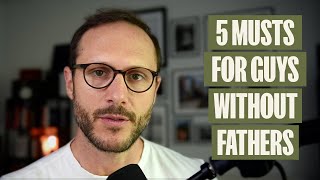
Connor Beaton (Man Talk Show) presents five lessons for men who grew up without a father: (1) intentionally grieve the absence (preferably witnessed by other men); (2) "father yourself" by imposing high standards, discipline, and structure to draw out your best; (3) recognize the right to be angry at/with your father and practice containing and processing that anger among other men; (4) understand that women cannot define or give you masculinity—masculinity must be built internally; (5) accept that the absence was not your fault but take responsibility to build your own masculine core and, if applicable, be the father you didn’t have. The talk also outlines negative effects of father absence (reduced confidence, distorted risk-taking, antisocial behavior, mental-health struggles) and emphasizes men’s groups, witnessing grief, and self-accountability as remedies.
Chapters
All right, guys, welcome back to the Man Talk Show. Today we'll be talking about the five things every guy who grew up without a father needs to know. This is a bit of an interesting one. I've had a lot of guys over the years that I've worked with who didn't have a father in their life. Their father abandoned them or passed away very young or was just completely absent, was sort of there in their life, but was a ghost in their life. And it can have pretty severe side effects. I've had a lot of men that have said, hey, I didn't grow up with a debt. What did I miss? What do I need to know? And so I'm going to address that based off of everything that I've seen and learned in my years of working with men and studying psychology before I share all this. Just a quick reminder. Man this forward. Man it forward, right? If you know somebody in your life that could use this video or could use this episode, then definitely man it forward and share it with them just like every other episode. So let's dive in. What are the possible side effects of not having a father present? Well, when a father isn't present, the biggest thing is that the image of what it means to be a man, the image of masculinity, is missing. And so a young boy can grow up without the presence of how a man operates. When he's stressed, how a man treats women, how a man deals with his own anger or his own grief or sadness. A young boy can miss out on the image of what he can step into, who he can become, the mountain that he can climb or conquer. You know, I think in its truest form, the role of a father is to be this sort of, not necessarily a conquest, but like a mountain, an image, psychologically, metaphorically, an example in the world of what that young boy can one day aspire to physically within his purpose, within his social circle, within the world, within relationship. And so the impact of a young boy not having a father is that it will impact his ability to take significant risks. It'll impact his relationship to risks. So he might find himself taking really severe, life threatening, very dangerous risks that are borderline unhealthy, or he will find himself not wanting to take any risks at all, and his life will feel very small and condensed and constricted. The other thing is that it can impede a young boy and a young man's development of confidence and his ability to pursue, developing the discipline to, you know, produce a sense of self worth and self esteem. And a sense of competency within his life. It can also create antisocial behaviors. It can lead to joining other groups of individuals where victimhood is very, very strong within the sort of group identity. And it can lead to dropping out of school, committing more crimes, higher levels of mental health issues, struggles to take accountability or responsibility can lead to all types of things. And I think that there's a Jordan Peterson quote that sort of sums all this up. Whether you like him or hate him, disagree with him, et cetera is sort of beside the point. I think that this quote really epitomizes what it feels like to be without a father. Peterson says if the father doesn't form a relationship with the boy or rejects him, it can feel as if the spirit of civilization has left you outside of the walls, like you have little to no worth. So that's kind of what it can feel like. I've talked to a lot of men who are confused, devastated, have just carried around this sort of vacancy or pain or hollowness inside of them from not being really close to their dad, even if their dad was sort of in their life, but vacant or kind of a hollow ghost, ghost like shell of a man. It can have a really devastating impact. So with all. Here are the five things that every man who grew up without a father needs to know. The first thing is that you will need to grieve the absence of that masculine figure, of that man, of your father. You will need to grieve the absence of him in whatever form that took. And you will specifically need to grieve him amongst other men. So your grief for the absence of your father will need to be witnessed by other men in a contained place, in a contained way, in an intentional way. Right. Not like drunk one night after the bar. I mean, in a men's group, at a men's weekend, in a gathering of men, where the intention is to heal and rectify your own relationship with masculinity with other men who have maybe caused you harm or hurt you. And, you know, I have a saying that has resonated with a lot of guys, which is grief that is not witnessed cannot be healed. So if you have a level of anger, animosity, or grief because your father wasn't in your life, that needs to be witnessed by someone else. You can't simply hope that it eventually goes away. And it's very confronting for a lot of men to take that first step, but is the first step nonetheless. The second thing is that the role of the father is really to impose the highest Standards of behavior, the highest standards of discipline and. And structure onto you as you grow up, with the intention and the aim of drawing out the best of you, of sort of giving you the edges and the structure so that you can develop the highest version of yourself. And sometimes that's challenging, right? Sometimes to bump up against those edges and to have somebody hold you accountable and to have somebody hold you to that highest version of yourself and can be confronting. But it is also the thing that almost all young boys, all young men, all men in general, really want. And so the role of the father really is about confrontation in a way that is meant to evoke the best version of you. And not through punishment or aggression or hatred or shaming you or belittling you or any of those things, but actually through a type of firm loving. And so this is why in my book, and you've probably heard me talk about it before, if you follow my channel for a while, I talk about fathering yourself, AKA what are the highest standards that you can hold yourself to? How do you draw out the best in yourself? And usually that's by fathering yourself. Because when we have a dysfunctional relationship to our father, it's very common that our inner authority to turns into our inner critic, right? So many men that I've worked with over the years where they have felt deeply rejected by their fathers or abandoned by their fathers or their fathers were so highly critical, like nothing was ever right. There was no loving, there was no praise, there was no validation. There was this complete disconnect because everything was wrong. A boy's inner authority, a man's inner authority turns into this domineering, tyrannical inner critic. So you have to begin to father yourself. You have to begin to ask yourself, well, what would it look like to hold myself to a higher caliber, a higher standard within my behavior, within my discipline, within the structure of my day and the routines. How can I take on a greater responsibility within my own life so that I am contributing more than I take? I like this notion that the difference between a boy and a man is that a man produces more than he takes. He gives back to his family, to the people around him, more than he is taking from them. So that's where you can begin. You can begin by learning to father yourself. Now, the third thing is this notion that every son has the right to be angry with and at his father and should do so from time to time. The really interesting thing about being a dad and the role of the father is that he teaches you what to do. With. With the sometimes hostile, fierce, overpowering and sometimes aggressive level of maybe anger or just energy within you. And a solid father will be a really formidable individual in such a way that doesn't kill off a son's anger. It doesn't squash that energy. It doesn't dominate him in the moments where he's angry. It actually allows him to grapple with. With that energy that's coming out of being angry, of being disappointed with the world, of being frustrated about not getting your way and having to sort of navigate through the internal disappointment, hostility, aggression that might pop up. And a father does that by being loving and firm, disciplined, yet compassioned. Right. And so you have to know that you can surround yourself with men where your anger can actually come forward, where you can be disappointed and they can meet you in that way. They can face your anger and not shut it down, not have it turn into some physical altercation, not have it mean that there's something fundamentally wrong with you. Really great Mensworth, in many, many ways, is about how you as a man reconcile with your own inner anger, with the energy of that hostility that can sometimes exist within the physical nature of. Of a man, and to not try and kill it off, because that fierceness is also a part of your aliveness as a man. Right. Really masculine men have a quality of fierceness in them that is vibrant, that is alive, that's attractive, that helps them create and carve out a path within the world. And so part of the father son dynamic is that a father is a place and a space where a son can bring his anger and a place and space where he can see what his father is doing with the energy of that anger. And so that's a very important dynamic. And if you didn't have a father in your life, you won't have been able to see that. And it's very likely that your mother didn't have the wherewithal to handle that anger within you or that energy within you and either try to shame it out of you, squash it down, kill it off, say that it was bad or wrong, met it with extreme hostility or dysfunction, and wasn't really able to contain it because it was. Every son at some age knows that he's very likely able to overpower his mother. It's usually in their teenage years, at 14 or 15 or 16, where a young boy becomes much more physical. Testosterone is coursing through his body. He knows that there's, yeah, mom can be fierce, mom can be dominating, mom can be aggressive, but in the background, physically, he knows that there is an imbalance within the force, within the system. And where there is a father, there is a check to that balance. And so if you didn't have a father, you can practice bringing that anger in a healthy way into other groups of men, into relationships with other men, so that you can begin to grapple with it and wrestle with that energy so that it's not hostile, it's not aggressive, it's not violent, but it's also not dead and limp and completely gone within you. It's something that, again, can shape your life from a place of protection and a place of aliveness. The fourth thing that I think is very important, that every man without a father needs to know. A woman can never hold the key to your masculinity. And whether or not you are a quote, unquote, good man, they can never define your masculinity or your manhood as much as the modern women in the modern society and the modern narrative has tried to do so. They can't affirm or even signal that you have built a masculine core or masculine way of being in the world, or whether you are good at being a man, at least not with their words. They might, through their actions, because they're drawn, they feel safe, all these sort of signals. They can signal it through behavior, through choices, but they can't necessarily signal it by telling you that you are masculine, that you have healthy masculinity, that you're a good man, that you're good at being a man. They can't define it, they can't take it from you, ultimately, they cannot give it to you. So stop turning to them for the answers to whether or not you are a masculine man, how to cultivate that masculinity. Stop turning to women to validate your goodness as a man, your effectiveness as a man. The trap of the modern psychological field and modern culture and the modern narrative is that he has told men that women hold the key to defining your masculinity, to giving you a sense of whether you are a masculine being, a masculine man. And that is not the case. They do not hold the key to that. And the last thing that I wish every single man who grew up without a father knew is that it was not your fault, but it is your responsibility. It is not your fault that those things happened. It is not your fault that your father was not around. It is not your fault that your father checked out, that maybe he made poor decisions with his life, that his choices and decisions in his life maybe left you abandoned or neglected or feeling like there was something fundamentally wrong with you because he chose to not be around, or his decisions led to circumstances that took him away from you. That's not your fault. And it is your responsibility. And part of tuning in to your own masculine core and your own masculine nature is to find forgiveness through picking up the responsibility of saying, okay, you weren't able to be there for me, but I will be there for me and I will do whatever it takes in order to draw out the best in me and in order to step into my own masculine nature in order to become the man that I know I'm capable of becoming. Regardless of your actions, your choices, and your decisions. And if I should one day have a son of my own, I will show up for him in the way that you didn't or couldn't. So those are the five things that I wish every man without a father knew. Again, thank you so much for tuning in. Don't forget to man it forward and share this video with somebody that you know could use some of this guidance and insight.
More from Connor







How to Raise Strong, Unshakable Boys in Today's Culture, with Dr. Shefali Tsabary



