5 Questions That Will Change Your Life
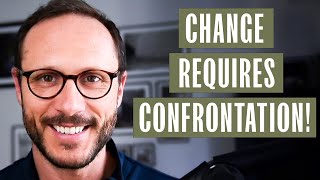
Connor Beaton shares five questions designed to surface what you're not seeing about yourself. They target your shadow side, what would actually move the needle in your life, what's in your control, what hard thing you're avoiding, and what worry is keeping you from noticing.
Chapters
I've always been fascinated by the power of a good question. You know, the reality that there's certain questions that we're asked at points in our life that cause us to almost stop in our tracks and think or broaden the lens in which we're viewing existence or ourselves in such a way that it elicits a response that we just couldn't have even thought of or known about. You know, it puts us into contact with parts of our ourselves that we don't really understand or that we weren't aware of, or brings us into the realization of a truth that we've been trying to dig for, for months or weeks or years. And all of a sudden somebody asks us a question that makes that answer pop up so, so easily, you know, that it's like ridiculous and awe invoking and inspiring. And for me, questions have always had and played this role in my life where I've been fortunate enough to be asked some pretty powerful questions by some absolutely incredible individuals. And so today I wanted to share the five questions that have the potential to change your life and the five questions that have undeniably changed my own life. And before I give you the five questions, I want to just quickly talk about this notion of the shadow. And, and using something that I call sentence stems to evoke the shadow. And so the shadow is a concept that Carl Jung created. It's basically a part of your unconscious mind. And it is the sort of place of storage for all the parts, all the elements, all the things that you don't necessarily like about yourself. It's where you put the pain from your childhood. It can be where you put your insecurities and your fears, all the elements of yourself that you dislike, that you don't want other people to know about, that you feel like you have to hide in order to be accepted or loved or attractive enough or whatever it is. And so the interesting thing about the shadow is that it's a part of you that wants to be integrated into your identity. It doesn't want to be an outcast. It doesn't want to live on Rikers island in your psyche, right? It doesn't want to be imprisoned somewhere in your psyche. It wants to be a part of who you are. And sometimes we get stuck in life. You get stuck in your relationship, you get stuck in your career or in your path in life, not able to really make a decision, right? Should I stay in this relationship and keep working on it, or is it time for me to leave? Should I break up with this person? Should I reveal something about myself that I've been hiding. Should I stay in this job or go? Should I sell this business or continue to work on it? Every once in a while, we find ourselves at an impasse where we can't seem to really draw up or draw out any type of conclusive decision for ourselves. And it seems like it's almost impossible. And the truth is that we're usually in those moments asking the wrong questions. And we actually need questions that are going to help us elicit what's called unconscious content. Okay? So anytime that we're stuck in life, it's because we can't draw in our consciousness. We can't draw a conclusion through. Through purely rational, logistical, logical thinking. And we kind of get stuck. And it's usually because the answer to the question or the problem that we're facing, the answer or the solution is lodged somewhere out of sight. And that's out of sight psychologically, which means that it's buried in our subconscious or unconscious mind. And so we need questions that can provoke the unconscious part of our psyche. I don't know if you've ever seen the image of the iceberg that represents consciousness, where the little piece of the iceberg sticking up above the water is the representation of your consciousness. And then if you stood at the edge of the iceberg and you looked down into the water, you could see a part of the iceberg. And that part is your subconscious. You kind of like vaguely aware of it. Every once in a while, some of that. Some of those thoughts or content or emotions will pop up in your consciousness. And then underneath the water is just this massive chunk of ice. And that's your unconscious mind, right? It's all the stuff that you've forgotten about, you don't even know about yourself. The things that are sort of locked away from your everyday consciousness that would just be inundating you with useless information or memories. And that element of you is a very important part for when you feel stuck, for when you're trying to make a decision in your life. But you're not really too sure which direction to go. And so we need questions that prime and sort of poke at that unconscious part of you to elicit that information. Because anytime that we're stuck, it's usually a sign that we've just run through the simulations in our conscious mind as much as we possibly can. And sometimes they come back blank. And we just don't really know where to go from there. And so I'm going to give you some questions that have radically and fundamentally made a huge impact in my life and in some of the men that I've worked with over the years. And one of the challenges that I saw it on the Internet, one of the reasons why I was doing this video is that I've had a number of men say, hey, I love your questions in your book. I love the questions that you offer. You know, when I work with you, how do you come up with these? And in a lot of ways, these are questions that I've come up with for myself, and these are questions that I've learned from some incredible people along the way. And I think that there's just terrible questions out there. You know, like a lot of the questions that people are journaling about is like, you know, what's my why? And why do I really want to be doing what I'm doing? And those are just so banal and so plain and so generic that they're going to elicit a generic answer. You know, sometimes the. The more robust the question, the more profound the answer, you know, and the more simple the question, like, what's my why or why do I really want to be doing what I'm doing? They just evoke a kind of plain, boring answer that doesn't really give you a lot of insight and isn't really designed to help, you know, scour the dredges of who you are in your psyche and your identity. So I'm going to give you these questions. Some of them are maybe worded differently than you are used to. That's because a couple of them are framed as a sentence stem. And a sentence stem is something that I use when I'm working with somebody. And the sentence stem is designed to help you move out of that hyper rational, hyper logical orientation that you are normally used to. Because when you're in that orientation and you're going to get normal results, right? So if I asked you a question in a very simple way, like, you know, what color is the dog? I could ask it to you that way or, you know, tell me about that dog, and you would give me a very plain answer, right? Oh, like, oh, that, that dog is brown and its name is, you know, frank. But if I say, what's one thing? Or like the one thing you want me to know about that dog is. And all of a sudden what that does, just the way that you change the question will spark the creative mind. And because the question is asked differently, it actually prods a little bit of the unconscious and causes you to respond in a different way. And so If I said, what do you want me to know about that dog? You might say, his name is Frank and he's brown. And if I said, what's the one? Or, like, the one thing you want me to know about that dog is. And you might be like, I want you to know that, like, that dog is just incredible, and I love its fur. And, you know, all of a sudden, all of this color and texture comes out in the answer, because it's not the rational, normal way that we would ask a question. So just stay open as you listen to some of these questions and keep that in mind. Sometimes we need to reframe the way in which we are asking a question to elicit a different answer, right? So saying that another way, you might actually be asking the right questions. They might just not be ordered or structured in the way to elicit the response that you're looking for. So let's start with question number one. I love this one. This one is meant to get into the shadow and get into understanding that sort of hidden part of us. So the first question is the one thing I don't like people to know about me or struggle to admit is the one thing I don't like, like people to know about me or struggle to admit is. Now, this question, again, on the surface, might sound pretty direct, pretty clear, but I would love for you to just engage in the process of thinking, like, what don't I want people to know about me? What insecurities, what fears, what decisions, what choices do I normally hide from people in order to belong? And the power of this question is that it's going to give you insight into one of the main blocks that you likely have when it comes to intimacy, deep sexual connection, having great friendships, or really feeling like people in your life give a shit about you. Oftentimes, it's the things that we're hiding, right? I can't tell, you know, them about this decision that I made, or I can't tell them about this thing that happened to me, or I can't tell them about this desire that I have because they might reject me. The reality is that we as human beings, we want to be known, we want to be loved. We want to be understood for who we really are. And normally, what's keeping us from that is the stuff that we hide. It's the stuff that we don't like. It's the stuff that we don't think or know how to accept about ourselves. And so we hide it from other people. But those are the elements of ourselves that we have to learn to accept and we have to learn to create a place in our relationships with other people. So that's number one question. Number two is the one thing, the one thing I could take action on that would make the greatest difference in my life right now is the one thing I could take action on that would make the greatest difference in my life right now is I love this question because for a long time I just had analysis paralysis. I had procrastination coming out, you know, like every orifice in my body. I just couldn't get myself to do anything. And I felt overwhelmed by all of the possibilities. So I could do that. I could start with this, you know, I could send that email. I could go work out. I could, you know, I just had this like, never ending list of things that is like, I just didn't know where to start. And maybe part of that was like, I have a little bit more of an ADHD orientation. But I think part of it was I was just inundated with possibilities and I just didn't know where to begin. And so this carved it down into, okay, this is the thing that I'm going to focus in on. I think this would have the greatest impact or create the greatest difference in my life. And by doing that over and over and over again. And I went through a period of time in my life where I would ask this question every single day. The one thing that I could take action on today that's gonna make the greatest difference in my life. And sometimes it was just go work out, like, get your ass in the gym, go move your body and go push some heavy weights. And other times it was like, oh man, send that email that you have been avoiding for days or weeks or have that conversation or make that phone call or buy that thing. And it just gave me this one simple thing that I was doing every single day that gradually started to build on its and create progress and momentum. And I was like, oh, yeah, I can do this. This is great. And I felt like I had a process and a structure to get one big thing done every single day. So whether or not you use that every day, or you just ask yourself this question once a week and then you take action on it. I have found this to be an incredibly, incredibly helpful question that can shift quite a bit and put into perspective what matters. Because sometimes we stress out about stuff that really doesn't make much of a difference, you know, that cognitively we're like, I know that's not going to make much of a difference. But I'm going to dwell on it and then I'm going to expend all that energy dwelling on it, and it's going to take me away from doing the stuff that I know is actually going to make a difference in my life. So that's question number two. Number three, this is just a very simple question that I've been using for, I don't even know, 12, 15 years. I remember reading the 7 Habits of Highly Effective People by Stephen Covey. And in it he talked about the circle of influence and the circle of non influence. And it was such an epiphany in my life. Like, it really was a monumental perspective shift for me because what I started to realize was I spent an inordinate amount of time fixated on stuff that I had no control over, worrying about things that I couldn't influence whatsoever. And. And when I started to use this question, what I realized was I could reign in all of that energy, all of that attention, all that focus, and really hone in on the things that I could influence and to let go of all of the things that I had no control over whatsoever that I had been spending the majority of my time freaking out about, right? Anxious about worrying about, et cetera. So the question is, is this something I can influence or is this out of my control? Is this something I can influence or is this out of my control? And it's a very simple question. It's something that I still to this day ask myself all the time, right? If something happens in my business, something happens with a client, something happens in my marriage, or with my kid or finances or mortgage or whatever it is, is this something I can influence or is this out of my control? And the beautiful thing is that I've practiced this so much now that when I'm like, no, actually I can't influence this, this is something out of my control, boom, I'll let it go. And it doesn't occupy more space and energy in my head because I know that that's a fruitless endeavor. Continuing to worry about and fret about things that I have no control over is the definition of suffering, right? When you spend time worrying about future pacing, about trying to figure out what you could do to shift it or make it different, but you have no control over it. That is the literal definition of self suffering. And so you can end that suffering by saying, actually, I have no control over how that person responds. I have zero influence over what decision that person makes, you know, whether that client decides to work with me or not. I have no. True. I have no influence over how that person responds to this email or to this conversation. That's on them. Right. I can't do anything about that. And that is very freeing because then we can focus again, our energy, our efforts, our attention, our skills, our emotions, all of it, on what we actually can influence. And then we are not only just more productive, it's not a productivity thing. We are much more free. And the truth is that every man is seeking a deep, deep level of freedom. And for me, this has brought a tremendous amount of freedom because I'm like, I can't control that. And so I'm free from it, right? I can't influence how that person's gonna respond, and so I'm free from it. And that's such a liberating, powerful, and potent place to operate from. So that's number three. Number four. I love this one. What really hard thing. What really hard thing can I do today that would ultimately make my life better? What really hard thing can I do sometimes today that would ultimately make my life better? And again, this is a different. A bit of a different take on number two. It's. It's a little bit more intense because it's focused in on doing hard shit. And again, the reality is that there's. There's two reasons why we don't do things. And those two reasons are you're either lazy or you're afraid. And either way, by identifying the hard thing and making a commitment to go and doing it, you are confronting the laziness and you are confronting the fear. The reality, the truth is that change requires confrontation. I say this all the time. If you want change to happen, to manifest, to take place in your life in any way, shape or form, you want a better sex life, you want to make more money, you want to find your purpose in life, you want to live with more meaning. All of that requires some type of confrontation. And so we have to. You have to do this one thing, which is if you want anything in your life to change, you have to disrupt your homeostasis. And as men, not a lot of men have been taught to disrupt their homeostasis, to get out of this place of comfort and mediocrity and this place of, like, ease. And we've sort of been sold this bill of goods in modern culture that says if you make it to this place where you're making good money and you have good relationships, that you can just relax or you can just Netflix and chill for the rest of your life. But that's boring and people don't want that. So we need to actually confront and face and do hard things, usually on a daily or at the very least weekly basis. I try and do a hard thing every day. Sometimes it's a cold shower that I really don't want to do or a cold plunge that I really don't want to do. Other times it's like working out and I'm like just feeling lazy. And the 500 pound, you know, fat guy in me that just wants to smoke weed and play video games all day and eat potato chips and popcorn is like, nah, man, don't, don't do it. Like just go sit on the couch and have another coffee. Doing that hard thing or having a conversation in the business or with your partner that is uncomfortable, doing those hard things is actually beneficial. And there's a lot of research on this and science on it that I'm not going to get into. But start with that one. So that's number four. Number five, the last one. What am I missing? What am I missing or not seeing by choosing to worry? What am I missing or not seeing by choosing to worry? There's a great quote by a guy named Gavin de Becker. And Gavin de Becker wrote a book called the Gift of Fear. He's also written some other books that are phenomenal. But the Gift of Fear is a great book. It's a deep dive into the role that fear can play in your life and specifically how it can develop a sharper character for you by facing and confronting some of those fears. But he said, when you worry, ask yourself, what am I choosing not to see right now? The truth is that fear is a blinding mechanism. It's a domestication mechanism. It's meant to sort of contain you and pull you back into this smaller space. And I always say that whenever we're trying to shift, we're trying to change, we're trying to grow, we're kind of trying to develop, we're trying to create deeper intimacy in our relationship. Whatever it is that you are focused on, there comes a point where your mind just starts to run wild and anxiety and worry and fear start to run rampant. And that's usually at the point where you are at a decision impasse, where you are either starting to make change and it feels uncomfortable and you feel like you're sort of stepping out and taking up more space than you normally would. And so fear kind of comes back in and says, you're taking up too much space, you're getting too big. Like, better push yourself back down, better collapse, better constrict. Or it shows up when you are on the verge of taking action that you know you should take, right when you're on the verge of taking that action. And so fear has this capacity to blind us. So when we're stuck in, you know, overanalyzing, overthinking, anxious, worrying, you know, playing out all the multitude of scenarios, we're missing out on something. And you need to get into contact with that thing that you're missing out on. Usually it's some type of appreciation or gratitude, but it can also be the fact that you're safe, you know, things are going well, that you're good in life, but getting clear on what it is that you're missing when you are letting yourself choose to worry, choose to overthink, to not have any boundaries with that mental noise that's inside of you. And you're not using some of the questions before, right? Specifically, is this something that I can influence or is this completely out of my control? Normally, we find ourselves in a place where anxiety, over, overwhelm, overthinking, ruminating thoughts, worry is spinning up because we're fixated on something that we have zero control over. And instead of relaxing into that, instead of saying, actually, I have no control over this, and that might suck.
I might not like that, but at the very least, I can acknowledge that whatever's gonna happen is gonna happen, and then I can deal with that. So what are you missing out on by not by choosing to worry? What are you missing out on or not seeing by choosing to worry? So let me know which question you really loved, which one stood out to you. And if you're watching this on YouTube, share in the comments below what questions you have found to be very powerful for supporting you and creating change and transformation in your life. And as always, until next week, this is Conor Beaton signing off.
More from Connor







How to Raise Strong, Unshakable Boys in Today's Culture, with Dr. Shefali Tsabary



