7 Masculine Principles most men Have Forgotten
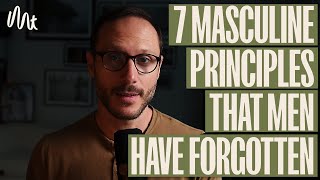
This is a single-speaker YouTube monologue by Connor Beaton presenting seven masculine principles he believes modern men have forgotten: (1) embrace the unknown, (2) embrace discomfort, (3) take responsibility and ownership, (4) build brotherhood, (5) master impulse control, (6) become emotionally sovereign, and (7) honor the feminine without resentment or pedestaling. The video mixes mythic/initiatory framing, Stoic and philosophical quotes, practical exercises, and a closing call-to-action directing listeners to the Man Talks Alliance.
Chapters
Foreign.
Back to the Man Talk Show. I am Connor Beaton, and today we're going to be talking about the seven masculine principles that most men have forgotten. The seven masculine principles that most men have forgotten. And this is going to be an amalgamation of philosophy and myth and initiation. And so I've pulled together seven principles that I think when I look out at, at our culture, at our masculine culture, at our world today, our society, that these are kind of the seven pillars that I think most men are struggling with. I'm curious to hear, you know, you can leave your comment in. In terms of what principle do you see men struggling with the most that they need to remember? But let's dive into the. To the seven to begin with. So number one is learn to love and embrace the unknown or the uncertain. Learn to love and embrace the unknown or the uncertain. JASON Joseph Campbell said, the cave you fear to enter holds the treasure you seek. The cave you fear to enter holds the treasure you seek. And so in this quote, you can kind of hear, the treasure is in the unknown, right? The treasure is in the uncertain. And we have to be willing. And, you know, there's a lot more within that one quote because it's about also the shadow and where the gold is buried and all that kind of stuff. But, but really it's about facing the unknown. And the very first step of initiation is the calling. It's what's called the calling. And the calling is all about you as a young man or a boy or a man venturing into the unknown. And, you know, in our modern life, men have been so conditioned to seek certainty, so conditioned to seek comfort and through certainty, and so conditioned to be in your rational mind, constantly and chronically thinking about what the outcome is going to be, whether it's about fatherhood, whether it's about your job, whether it's about your finances. We can get stuck in this place of never meeting who we become in the unknown, and then you build up zero tolerance for it. And so you actually, and I see this with so many men, part of their life, part of the reason why they're. They're struggling in their life and they feel crippled in their life is because they actually cannot tolerate any unknown, any uncertainty. And so they sit there mentally masturbating constantly. And maybe you do this, maybe you just sit there mentally masturbating all the time. Like, how's that conversation gonna go? And how what, you know, what's the outcome going to be? And is it going to happen the exact way that I want? And like, what if it fails? And you know, all that kind of stuff will just rip through your head over and over and over again. But true initiation into manhood is not found in the known. So if you want to walk towards or grow down into yourself as a man, or walk towards the version of yourself that you know you're capable of becoming more self led, more self respect, a deeper quality of self worth, that's not going to be found in, in the known. You cannot find real mature masculinity in the. In the known. Safe and rehearsed. It doesn't exist there. That is the realm of the boy. That is the realm of the man who is afraid. So we have to be willing to venture into the unknown. And you can see this again in initiation, where boys were taken out into the wilderness. They were taken to an experience of completely the unknown. And in some initiations, the unknown is literally facing death, right? Because death is the ultimate symbol, the ultimate metaphor for the unknown. And so for some initiation cultures or cultures that have initiation rights, those men would put themselves on the brink of facing death and they would go through, you know, tying a rope around their feet and measuring it out. So that was just long enough. And jumping off a high platform, head first onto the ground and facing the unknown, facing death. So try and find something every single day that you can embrace in terms of the unknown and uncertainty. Have a conversation with a random stranger. Go to a different coffee shop, go to a new restaurant. Start to face unknown and uncertainty. Have the hard conversation, maybe in a way where you don't, you know, sit there for days thinking about absolutely everything that you're going to say. Instead, just say the thing. Just have the hard conversation. Move yourself into the uncertain. So number two principle, number two is embrace discomfort. And Marcus Aurelia said, if you are distressed by anything external, if you're distressed by anything external, the pain is not due to the thing itself, but to your estimate of it. Right, to your estimate of it. And so the, this embracing discomfort is mostly about you understanding how you respond internally to things that you don't like. And here's what I really want you to get. I wish every. I like, maybe I'll make a T shirt from this. But really, discomfort is not the enemy, okay? Discomfort is not the enemy. It is the raw material of growth. Discomfort is the raw material of growth. So if you want to grow in any way, financially, physically, psychologically, emotionally, sexually, spiritually, you have to get uncomfortable. It is a prerequisite for any type of change or transformation. And the challenge that so many men face is that they are afraid of getting uncomfortable. They're afraid of being embarrassed. They are afraid of moving into a space of I don't know how that's going to go and it's going to be uncomfortable to have that conversation and I might feel ashamed or what if I fail? It's like, yeah, that's the point, right? Or I don't, like, I don't know how to meditate or I don't know how to do breath work. And so I'm going to just avoid it because I don't want to be uncomfortable. Well, that's the point. You have to start somewhere. And because we live in this kind of dopamine addicted culture that is absolutely obsessed with, with convenience and obsessed with comfort, you get almost lured into this kind of indoctrination. I almost hate to use that word because, you know, it's used all the time in different circles. But truly, modernity in my perspective, is luring people into a kind of indoctrination that the best place for you to be is, is in your comfort zone. And I see this all the time with people who have no tolerance for being uncomfortable. And this is where it's like, I need you to behave a certain way or act a certain way or talk a certain way in order for me to feel okay internally. It's like, no, that is not the case. That is not what good psychological, emotional or physical strength or any type of health is comes from, right? It comes from being able to face and seek discomfort. And so you kind of have to buck against modernity because in many ways, modernity, for all of its lovely things, right, for the technology that has brought us and the wonderful cars or whatever parts of modernity you like, it can also lure you into a kind of psychological, emotional and masculine dysfunction, erectile dysfunction, where your masculinity is shriveled up and it just doesn't work. It doesn't work because the masculine core gets built by seeking discomfort. Your masculine nature is sharpened, built, strengthened by seeking things and experiences that are uncomfortable. So begin to embrace the discomfort. Number three is take responsibility and ownership of almost to a degree that feels uncomfortable. Take responsibility and ownership almost to a degree that feels uncomfortable. This was really hard for me for a long time. And there's two parts of this that I want to talk about. The one part is take responsibility for your own shit and your own actions, right? Take responsibility when you've screwed up, when you failed, when you've made a mistake, when you forgot something. Take Responsibility and own those things. But the only other part of this that I do not see a lot of people talking about that is so damn important is take responsibility for things that you give a about. This is where you will start to find meaning and purpose. Okay? Meaning and purpose reside. I mean, there's many different parts that play into it, but one of the parts is that you take responsibility for something that you actually care about. Right? And this is where Nietzsche said, he who has a why to live can bear almost any how. That's what he's talking about. What he's talking about is take responsibility for something you give a shit about. I work with guys all the time that are in jobs. They absolutely hate doing work that they don't give a shit about. That the only reward for them to do that is just some financial reward. And I see this all the time with guys that they have big corporate careers, they're making lots of money, but they're working for a company and people and team and producing work, and they don't care about any of it. And so they have all of this responsibility and none of the purpose and meaning, all this responsibility and none of the intrinsic internal rewards. So not only should you take responsibility for your actions and your words, but you should take responsibility for something that actually matters to you in your life, because that is where meaning and purpose resides. Number four, build a brotherhood and honor your people. Another way to say this is build your brotherhood and don't talk shit about people in your inner circle. I see way too many men that talk shit about the men that are in their life. They talk about them behind their back. They don't clear out what they need to say, and it starts to erode the trust in relationships. Part of building your brotherhood is that you are going to have to face some level of confrontation with other men. You are going to have to get uncomfortable with saying, I didn't like that you did that, or I don't, I don't really like this part of, you know, this part bothers me about you or whatever it is. And as you build really robust brotherhoods, you can not only rely on those men and trust those men, but you can clear things with them. You can start to see who you are through the life and the eyes of another person. This is where Aristotle said, a friend is another self. A friend is another self. It is a, you know, a. A really good man in your life. And I'm leaving tomorrow for four or five days to go and spend some time with some incredibly quality men. That I've come to really appreciate and respect. And because of them, I'm able to see myself in a different way. I'm able to view myself in another way. I'm able to see parts of myself in them. And we have this saying in the alliance, which is, your work is my work, your work is my work. And so the work that you go through as a man, the challenges that you face, the hardship that you face, the successes that you have, that we can celebrate together, that's my work too. And so we need to be able to build that brotherhood. And we can see men are in decline and so is brotherhood. Friendship amongst men is just very vastly in decline. And it is really, really unhealthy for so many people. And if you do not know where to begin, join the Man Talks alliance. Or even if you have good men in your life, join the Man Talks Alliance. You can go to mantalks.com and check out the alliance. But we've got a brotherhood of 800 plus men that are all working to become more self led, to respect themselves more, to build up these traits and these principles that we are talking about. So go check that out. Number five is, have dominion over your impulses. Have dominion over your impulse. And again, Aristotle said, freedom is the, is the power to control ourselves. Freedom is the power to control ourselves. This has to be one of the hardest things. This principle here is, has been brutal for me and has taken me years and years and years and years to get. Because when I was young, I was not taught impulse control at all. I was the kid that was like given the double chocolate chip Costco muffin for breakfast. You know, my parents would let me make whatever the hell I want. So I'd make myself Rice Krispies and put like 3 tablespoons of white sugar on it and just ate junk food, you know, know, I'd eat chocolate chips straight out of the bag. And I had no impulse control. And nobody helped me to refine it. Nobody helped me to build any type of impulse control. And so what do you think that led to? It led to a whole bunch of addictive behaviors. Porn, booze, woman, womanizing, lying. I mean, you, you name it. I mean, just, I, I went through the gamut. So modern freedom, in the way that most people talk about it is often confused with indulgence. A lot of people will promote an ideal of freedom that actually has almost zero impulse control. It's like you should be able to be free to do whatever you want, say whatever you want, experience whatever you want, and Feel however you want and you know, all that kind of stuff. Yes, we absolutely should have the right to do things and, and ultimate freedom has, comes with some type of constraints, right? The more that we can put in impulse control, the more free that we feel. Like, for example, I'm going through this, you know, two month thing right now where I have started to restrict diet and, you know, calorie count. And these are things that I would have never done in the past because I had zero impulse control. I would eat healthy during the day and then at night, you know, I would roll around and it's like, ah, screw it. And I would just eat popcorn or ice cream or bag of chips or whatever it was. So we have to begin to build our impulse control and do it systematically. Because dominion means mastering your desires, having some dominion over yourself, having leadership within yourself. It's not about dominant, denying your desires, but placing them in service of something higher. It is about being able to have some dominion over these impulses that tell you just open up the web browser and go, you know, pull one off, right? Or just pour an extra glass of whiskey or just have, you know, the cigarette or, you know, smoke just a little bit more weed. And so from, you know, porn to junk food to endless scrolling, so many guys are drowning in unregulated impulse, right? And you might be one of these men. And so if you're listening to this and you're like, yes, check, check, check, check, check, check, check. This might be the principle that you start with. You're like, I am going to reign in some of my impulse control. And again, this is not about denying your desires. It is not about turning into some OCD neurotic dude that like your entire day is completely mapped out and scheduled out and if you miss anything or you eat more calories than you were supposed to, that you just completely break apart. That's not healthy either. But it is about getting some deep level of impulse control within your life, within your ability to relate to yourself. Number six two more. Become emotionally sovereign. Become emotionally sovereign. So this is something that I wrote about in my book Men's Work. There's links to that in the description, but I talked about building emotional sovereignty. And so emotional sovereignty for me is your ability to connect to your own emotions, maintain them, process them, take responsibility for them without being constantly disrupted and, and charged because of other people, because of external circumstances. So this is about taking responsibility for your own emotions, not suppressing them. This is what most men do. The majority of men think that they've Become emotionally sovereign because they've numbed themselves out for two decades, or they have just suppressed and repressed all of their emotions. But then they wonder why they blow up at their girlfriend or their wife, you know, over some stupid little thing. So no man is free who is not the master of himself, said Epictetus. No master. No man is free who is not the master of himself. So emotional sovereignty is really about getting to understand how you feel about certain things in life. Being able to connect to when you are experiencing certain sensations or emotions. The charge, the emotional charge that happens in your body because your emotions are just energy in motion. So the more that you can get connected to that intensity inside of you, the intensity of grief or anger or joy or excitement or anxiety or frustration, whatever it is. And the more that you can learn to discharge that energy, that emotion, in a way that, that you respect, right? So you can discharge or downregulate or diminish or decrease that emotion in a way where you aren't using some coping mechanism. Like every time you feel sad, you go and jerk off and watch porn, or every time you feel lonely, you just smoke a joint and, you know, numb out. Or every time you're frustrated with your girlfriend and your wife, like you pour yourself an extra beer or, or whiskey. Those are using external mechanisms. And you are not sovereign. You need and have become dependent on something outside of yourself. And this is what nice guys experience, right? If you're a nice guy, this is what you experience. You need somebody else to tell you that you are good. You need somebody else to validate you in order for you to have any internal experience of self respect or self appreciation. And then you become dependent on that hit. So insource that level of emotional mastery. And number seven, I'm going to put this in here, is honor the feminine without resentment or pedestaling. Honor the feminine without resentment or pedestaling. Data, David, data. Many of you might know from Way of the Superior man said, the masculine grows by challenge, but the feminine grows by praise. So we honor the feminine, we praise the feminine, but we do not allow ourselves to become resentful or to pedal them. And I think one of the biggest challenges that I see in our modern culture with a lot of men is there is this huge division that men have forgotten how to honor women. Men have forgotten how to honor women. Now, I think many of you will probably be saying, I think women have forgotten how to honor themselves. And I don't disagree with that. That's a whole different video and conversation, but a lot of Men have broken into these two camps. One is resentment, animosity, anger towards women, blaming women for absolutely everything. And then the other camp is just pedestaling women with. With. Without any kind of cognition or them taking responsibility or them taking accountability for anything. And so there's kind of these two sides that a lot of men fall into where they just pedestal a woman and they give her whatever she wants and they try and, you know, please her, and whatever she says goes. And whatever women in culture and society says cannot be spoken against. And on the other side is this very deep resentment. And so we have to come back to this place of being able to honor the feminine, to honor women, because resentment arises when you honestly have been wounded in some way by a woman or by the feminine. And we have to be able to move out of that, to come back to a place of saying, okay, a woman or some women hurt me. And that's true. And I'm responsible for my pain, right? The first line in my book and my first line of my book in men's work is, a man's work begins with pain. So if you have been hurt by a woman or you have been taught to be less than a woman, for whatever reason, he's chronically trying to please her. She's never happy, she's always let down. And it's just this vicious cycle because he has turned himself into a needless man. And so for those men of you that are watching this, your work is to start to reinstitute need, needs. And you can honor women by having needs as a man. And for the other men that have become resentful, it is likely to grieve the pain and the hurt that you experienced at the hands of a woman who maybe, whatever she did, cheated on you, you know, fleeced you, took you for granted, lied to you, betrayed you. However, it was that she broke your heart. So thank you so much for tuning in. If there's anything that you want to add, definitely comment below. I'd love to hear your thoughts on what's one principle that you think many men have forgotten. Till next week. Connor Beaton signing off.
More from Connor







How to Raise Strong, Unshakable Boys in Today's Culture, with Dr. Shefali Tsabary



