A Jungian Guide To Healing The Father Wound
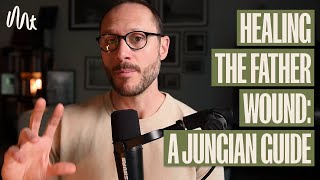
Connor Beaton explores the father wound through Jung's lens: how absent, abusive, or emotionally distant fathers create patterns like perfectionism, addiction, and broken relationships in men. Healing means shadow work, separating your real father from the inner father archetype, and learning to father yourself through ritual and discipline.
Chapters
All right, team, welcome back to the Man Talk Show. I am Connor Beaton, and today I'm going to be walking you through a deep dive of the father wound from a Jungian perspective. So I'm going to be defining what the father wound is, how it gets created, how it's likely showing up in your life today, getting in the way, sabotaging, etc, and then how you can specifically resolve and heal through that wound. And I'm going to give you four, five practical and tactical Jungian steps that you can take in order to resolve this father wound. So before we dive in, don't forget to do two things. Number one, if you enjoy this video, man it forward. Okay? Man it forward. This is how the channel grows, but also it's how it gets into the ears and onto the eyeballs of other people so that they can learn as well. So send it to a man that you know will enjoy it, maybe not enjoy it, but needs to hear it. Oftentimes I get guys like, man, that was rough to hear, but I definitely needed to hear it. And don't forget to subscribe wherever you're tuning into, Whether it's on YouTube or on Spotify, this will ensure that you get notified of other episodes when they drop. All right? Every man carries a psychological imprint of their father. Now, for some men, that imprint is going to be wild or aggressive or violent. It's going to be an imprint of impotence and kind of spinelessness and, you know, a man that was a wet noodle. Or it's going to be an imprint of vacancy, right? Of emptiness, of hollowness, of what I've called the ghost dad, right? He was there, but kind of empty and vacant or just vacant altogether, because dad wasn't really in your life. And so today we're talking about the. The one of arguably the deepest psychological imprints that you as a man will carry, and that is the father wound. And this is really the invisible pattern that shapes how you see yourself, how you love, how you treat women, how you lead, how you relate to your own sense of authority, your sense of self worth and self esteem, and how you relate to the. The masculine. So let's dive straight in and talk about defining the father wound. So the father wound isn't about blame, right? This isn't to shit talk your dad. It's not to cast blame on him. It's not to, you know, try and take him down a peg. And, you know, maybe your dad was great. Maybe you're. Maybe you had a wonderful father who was in your Life. The majority of the time, it's not about blaming him for what your life looks like. This is about understanding. Okay, so the father wound arises when a boy's essential need for affirmation, for structure, for order, for presence, for discipline from his father gets unmet or is met in overly aggressive, overly dominant, overly violent ways. So it's not caused only by abuse or abandonment or neglect. These. These are obviously the common ones. But sometimes, maybe, like you watching this, your father was physically there, but was emotionally vacant or absent. Maybe he was distant all the time. Maybe he was extremely critical, nonstop. Or maybe he was just so preoccupied that it felt like you were chronically trying to get his attention. Maybe other times, or maybe for some of you men, what you viewed was somebody who was very meek and weak, and you had to grow up too quickly because you had to play the role of the man of the house. Now, Carl Jung wrote, what is not made conscious appears in our life, and we call it fate, right? So unless you make the unconscious conscious, it will direct your life and you will call it fate. The father wound is precisely that our fathers, your fathers, have had an imprint on you when, whether you like it or not, whether he was in your life or not, it will have left a mark on you, especially in an unconscious way. And the unconscious. This is the unconscious inheritance that becomes a kind of destiny until it's brought up into light. And, you know, I've worked with maybe tens of thousands of men at this point, because, you know, in the alliance, we've got, you know, about a thousand members right now, and I work with a ton of guys. I hear a ton of men's stories. And one of the things that continues to come up over and over and over again is the realization of what a large impact a father has had on a man. And for a lot of guys, it's kind of like this conceptual, like, yeah, I know my dad had a decent impact on me. Or, you know, I know that him kind of being absent a lot had an impact on me or when he was super critical of me. But when they really start to sit with the truth of it, they're able to see the weight and the gravity that their father's life actually had on them. And for many of you, this is going to be challenging because if your father was abusive or if he was not around or if he was neglectful, it's very common that a lot of men will try and disconnect from the truth that their father had an impact. It's almost like, I don't want to acknowledge that dad had an impact on me because then that would be giving him too much credit, ability, or too much power or too much influence over me. And so I'm going to try and negate that. And the truth is that you cannot heal what you cannot recognize or admit to, right? So Jung said that the first step in any therapeutic, any spiritual process is actually the step of confession. So in part. And not a confession like go sit in a booth and talk to a priest, but confession in the sense that you're willing to. To finally confront. And this is how I look at it. I look at it more as a confrontation, right, that you are confronting the truth of the impact that your father had on you, the good, the bad and the ugly. Because for many men, they want to try and negate the bad and the ugly. So let's just dive in. Let's talk about the psychology behind the wound. So in Jungian terms, the archetype of the Father really represents the archetype of authority, of order, of structure, of spiritual guidance, and of a kind of ascension or direction for you to take as a man of becoming. So the Father really represents the Logos, which is the principle that that brings meaning and direction into chaos. So you think about being a child, everything's pretty chaotic, right? Because everything's unknown and the unknown is chaos. Those two things go hand in hand. And the Father's job is to really support you as a boy, as a son beginning to have order and structure to the chaos of life and existence. And when this archetype is fractured in childhood, whether your father, will. Was neglectful or abusive or abandoning or. He didn't have any real sense of self. He didn't pursue the dreams and goals that he had for himself. He, you know, sort of kowtowed to your mother or, you know, he sort of let her dominate him and his life. What will happen is that you will grow up to become a man who is split inside. One part of you will long for approval, and the other part of you will deeply be craving to give that to yourself. One part of you will resent authority, while the other one is desperately trying to develop an inner quality of authority. And somewhere underneath, there's a boy who's still waiting for his father to finally say, I'm proud of you. I accept you. I acknowledge you. I love you. And without realizing it, you as a man, see, seek that validation externally, seek that authority externally. So when we didn't get that from our fathers, what ends up happening is this unconscious yearning and Seeking for the things that we needed from dad out in the world, right? So if your dad didn't really have good boundaries and he was disconnected from a sense of healthy, clean anger, that's something that you probably will seek out in the world. And you'll seek it sometimes in good places, right? From mentors, from friends, from bosses. But sometimes you'll start to look for these things in a lover, in a relationship, from society itself. But here's the catch. For many of you, it will never feel enough. It will never feel enough. And this is one of the absolute hallmarks of, of the father wound. Not enough. Nothing is ever enough. All the money that you make is not enough. All the success and the achievements and the women that you bang and the accomplishments that you achieve and how good your body looks, and none of it's ever enough. And you never actually feel internally enough. So not only are your external achievements or accomplishments ever enough, but internally, you never feel like you are enough. There is a kind of vacancy of wholeness that you will struggle with. So let's talk about how the father. Father wound actually shows up. Because it can show up in a number of different ways. So the father wound will wear a couple different masks. One of them is perfectionism. Perfectionism is a huge, huge indicator that there's some type of father wound within you. This is the endless drive to prove yourself right. Maybe you brought home the 95% and dad was like, where's the other 5%? He was hypercritical of you. He. His. His expectations of you were always just beyond what you achieved and accomplished. And so we always kind of felt like his love, his validation was just out of reach. And maybe he didn't have high expectations of you, but for whatever reason, because of divor force, because of distance, because of whatever, his love, his acceptance, his validation of you was always just out of reach. And so the father wound in you likely shows up in this kind of chronic perfectionism where nothing's ever good enough. And the expectations that you have of yourself are always so high that you. You can never actually reach them. The next one is rebellion. And this is rejecting all types of authority, seeing authority as a threat, seeing the authority within you as a threat. And this rebellion can really look a number of ways. This is the interesting thing is that if, and I've seen this in a lot of men who grew up with a successful father, and that father, you know, was not really around, didn't really give them the praise and the validation that they want. And so how they react rebelled. Unconsciously is through inaction, lethargy. Watch how much I'm going to rebel against the life that you lived. I'm not going to be anything like you, and so I'm going to be unsuccessful. I'm not even going to try. I'm going to rebel against you by becoming somebody that I don't even like, because I'm living in a way that is in opposition to how you lived your life. So that's the second thing. The third way this can show up is through addiction. Trying to numb out the pain of lacking in that love and that validation. Trying to numb out the pain of having been abused or neglected or abandoned by the father. Trying to numb out the truth of what you experienced at the hands of your father. The next one is emotional distance. Very common for a lot of you guys that had an emotionally distant father, because, again, the father archetype is meant to bring order to chaos. Emotions are naturally pretty chaotic. And so if you had a father that was just largely disconnected from his emotions, never communicated any emotions, then it's very common that you will become a man who is emotionally distant from others because he's emotionally distant from himself. You're disconnected from your own emotions, and you struggle to express love, you struggle to express desire, you struggle to express any type of emotionality or vulnerability. And all of those things can be seen as a threat. One of the last ones is people pleasing. So you make. You mistake approval. You mistake approval for affection. So you start to create a life where pretty much most of what you do is designed to try and get somebody's approval, to get them to validate you, to say that you're good enough because, you know, didn't happen from dad, or you never really got that from dad, or it was not trustable, Right? Like maybe your dad even said those words. But there was something about the dynamic between you and your father that you could actually never really trust their validity, and they never really landed in you. You never got that what he was saying was true for whatever reason. Maybe it just felt like he was lying or placating you or his actions made it seem different. So there's other ways. One of the other big ones. And you can check out my video on the Puerto Ternus on this. But the other big one is that you just genuinely feel like a boy. You're, you know, maybe in your 40s or your 50s or your 30s, but you just feel like a boy. And for a lot of men that have a father wound, they will. They'll shirk responsibility they'll struggle with taking on responsibility. They'll struggle with taking on the responsibility that they need in order to actually feel competent and capable in life, in order to build a more robust, mature sense of masculinity and self. And the last and final piece that I want to talk about with the father wound is generally men that have father wounds have very poor or tumultuous relationships with women. This can be cycling through women continuously. This can be struggling to get any type of female attention. This can be getting a lot of unwanted female attention, right? You seem to attract women that aren't good for you and that end up causing a lot of chaos in your life. Or you attract women that really embody the sort of masculine characteristics and traits that you are lacking. And this is really what I see in a lot of men that have father wounds. A lot of men that have father wounds, deep father wounds, almost always at some point will attract a woman who embodies the same characteristics and traits that their father did. And they will start to play out this dynamic with the woman that they're dating. And it will be very similar to dad. I know it sounds weird and messed up, but in today's world, what will happen is especially for the people pleasers, the nice guys, the guys that are out there that have, you know, low boundaries or, you know, are very perfectionistic. A lot of the times you are the men that find yourself in relationship with hyper masculine women that are dominating, calling the shots, leading the relationship, choosing the direction of how things are going. And you feel small, you feel insignificant, you feel like you're failing in the relationship, There's a lot of anxiousness, and generally speaking, that is a replay of what happened with dad. So some men will repeat the direct wound of their father, right? The divorce, the infidelity, the gambling, the money away, et cetera, the anger towards their own sons. But as Jung has said, the greatest burden that a child must bear is the unlived life of the parent. So just start to think about what was the unlived life of your father. Was it his disconnection from his own anger or his own grief? Was it that he never actually pursued the things that really mattered to him? He was too afraid or too scared or so risk averse that he actually just never lived the life that he deeply desired. So here's the truth. Your father, no matter how absent or how flawed or how perfect you think he was, is not the final authority in your sense of self worth. Inside of every man, inside of every man. Watching this inside of you is an inner father is an archetype, the psychological function that can guide you, discipline, help to create discipline within you and affirm a deeper sense of self. So healing the fatherhood wound actually means awakening that inner father inside of you that is amoral, that is not about your father, but. But it is about the universal father, the archetypal father. And this is what we're really doing when we do what I call fathering yourself. Right. So a lot of people talk about inner child work or reparenting for men. What I talk about is fathering yourself, learning how to connect with that archetypal father, and really fathering yourself as a man, as a boy. So this is the process of reclaiming your own inner sense of authority and integrating the masculine principle consciously. Right? Integrating some of these things consciously so it's no longer projected out into the world. You're not trying to seek it outside of the you know of yourself. It's actually something that you curate and live from within. And Jung would actually call this part of this, the individuation process. And this is the journey towards becoming whole, where you no longer seek your father's validation or whatever it is that your unconscious is looking for from dad, but you actually discover that father within the depths of your own being. So, five steps that you can take. Let's dive in to the kind of meat and potatoes. So here's the thing. Healing, it's not always super quick and it's not always linear. This is one of the big challenges that a lot of men have when they're doing this work is they want it to be instant and overnight, and they want it to be this linear process. Right? Step one, do this. Step two, do this. So I'm going to give you five pieces, but they are not in sequential order. So what I want you to attune yourself to is which one feels the most relevant for you based on where you're at right now. Okay. Step number one is confronting your shadow. Confronting your shadow. Write down all of the unresolved feelings, beliefs, expressions towards your father. There might be rage that you never expressed. There might be grief, There might be disappointment. There might be deep love and respect and admiration that actually never got to be communicated. Bring this to light. So write down what is the shadow of my father? What is the unexpressed anger, grief, rage, disappointment, love, appreciation that exists inside of me in my shadow that's never had a place in my relationship with my dad. And if your dad wasn't around ever, or he just wasn't in your life, then maybe it's just the anger of, like, where the hell were you, man? Like, where the hell were you? Or the grief of, I wish I even got to know who you are. That can be a very deep grief for men that were adopted. Maybe you're a man that was adopted or you grew up and you never really knew your father. So because that. That shadow really thrives in silence and will control you. So beginning to understand what is the shadow of my father. And the second piece to this is understanding what did my father not express or teach me that I want to learn? What did my father not express, embody, or teach me that I actually want to learn? Maybe he didn't express his anger or his grief or his sadness. Maybe he didn't explore any. His own sense of purpose and passion. The things that you knew you could feel he wanted to pursue in the world. And what are the things that he just didn't teach you? Right. Maybe there were certain things starting a campfire, right? Learning how to shave that he didn't teach you all of those things. Those skills are going to be very, very important.
Next is step number two. Differentiate the man from the archetype. So differentiate your father from the archetype of the father. Your father was human. He's limited. He's shaped by his own wounds, his own pain, his own dysfunction. But the father archetype is an eternal figure. It's not a flawed figure. It is the archetype not necessarily of perfection, but of the aim to which you are targeting. So separate the two from your. Separate your father from the archetype of your father, from the discipline, from the wisdom, from the direction, and start to study who are good examples of the archetype of the father in myth, in story.
I mean, maybe in movies, but more so in myth and in story, that you can begin to study to really understand the core tenets of and principles of the father archetype. And this is important because what happens for a lot of men doing this work is they can't dis. They can't sort of disconnect from their father as the archetype. And he gets projected over top of how you as a man think that you should parent yourself, talk to yourself, make decisions, et cetera. So really start to study and learn the archetype of the father. Number three is fathering yourself. Begin the process of fathering yourself. And I'm going to give you some specific things that I want you to begin to do. Number one, what skills, what traits do you want to learn and teach yourself. Maybe you always wanted your dad to teach you, you know, how to change the oil in the car or how to do photography or certain woodworking things. What specific things did you want him to teach you that you can begin to teach yourself? Included in that is probably something about how you do two things. Number one, how you speak to yourself, how you create order within your own inner chaos. And number two, how you deal with your own emotions. So emotional regulation, emotional intelligence. Again, it is the father's job to teach you as a young boy and as a young boy that's becoming a man, how to speak to himself and how to deal with his emotions. So for many, many, many men, pretty much every man I've ever worked with that has a fatherhood wound, they have a terrible inner dialogue, a some type of dysfunctional inner dialogue, and they feel lacking in any type of proficiency or ability, ability to regulate their own emotions. So you need to develop an inner dialogue with your inner father. Okay? And that might sound something like setting a boundary with that critical voice or that highly judgmental voice. I'm not going to talk to myself like that. I'm not going to speak to myself like that. Really starting to set boundaries with the part of yourself that is chaotic and overrunning. Right? Get up, try again. I believe in myself. Like, I actually want you to do an exercise of what are the things I really wanted or needed to hear from my father? Write down this question now, what did I really need to hear or what did I want to hear from my father that I didn't get? And then those are the things that you start to tell yourself, right? Get up, try again. I believe in you. I know you can do this. I knew you could do it. Right? Don't talk to yourself like that. Whatever it is, really start to identify those things and then let those be a new way in which you speak to yourself. Super, super, super important. The last piece is begin to have a kind of ritual around this process, a ritual for healing the father wound. Now, for some men, you might want to write a letter to your father, even if he's gone. It's not necessarily about giving your dad the letter. It probably usually isn't the best idea to do that. But being able to write a letter to your father from the boy in you, really saying everything that you need to say. And this ritual might be something that you come back to over and over and over again. So when I did this practice, I actually had this ongoing letter that ended up turning into. I mean, I don't even know how many pages it was. It was like 40 or 50 pages. Of all the things over the course of like 8 to 12 months that I just kept. I kept coming back to it. I just used it as a journaling practice. What did I want to say to my dad? What were the things that were unexpressed? What were the things that I needed him to know about me? What were the things that I wanted him, that I wanted to know about him? And just really putting that all out into paper. So this ritual turns your emotions into meaning, and meaning is the beginning of transformation. So for many of you, because your emotions surrounding your dad haven't really had a place, not with him, not in the world, not really in a relationship, they haven't been able to be released or transformed or integrated into your larger sense of self. So by doing this exercise once or twice a week, just sitting down over the course of a few months and adding to this letter, what did I want dad to know about me? What did I want to know about him? What did I love? What didn't work? Well, all that kind of stuff just continue to add into it. And then you can have a kind of closing ceremony where you deal with everything that you wrote. And again, often this is not something that you send to your dad, even if he is alive. Maybe there's pieces of it that. That you bring that feel super relevant, or maybe it's just like, hey, I did this practice and I want you to know, like, I've. I've let go of, you know, what happened in my childhood, and I really appreciate you and whatever that looks like. So this is the process of beginning to father yourself. The last two things I want to give you, these are sort of bonus things that you can do, is develop a healthy relationship with your own sense of discipline. Now, this is about creating order and structure in your life. This is about being meticulous with your routines in the morning, in the evening, throughout the day, and being able to have discipline as something that is generative and adding to your life, rather than something that is a punishment and subtracting or dysfunctional in your life. Almost every man that has a full father wound is using discipline as a punishment. There is a dysfunctional relationship with discipline. So beginning to have healthy routines, rituals that actually begin to elevate your discipline as a man is going to support you in fathering yourself, but it's also going to support you in healing that wound. Because for a lot of you guys, when you have an. A poor relationship with discipline, there's it's like this tether constantly holding you to dad in some way and keeping you stuck in that relationship with him. So that's the one piece. And the second piece is really having a practice of creating emotional sovereignty and emotional regulation, being able to work actively. And maybe that's you joining the alliance or getting a coach or going into therapy or whatever that is, but having a practice where you are curating a much deeper, much more trusting quality of emotional intelligence and emotional regulation so you know that you are able to handle yourself emotionally. Many men that have father wounds do not feel like they can handle themselves emotionally without emotionally disconnecting or shutting down. So this is what a man needs to do to address the father wound. When a man heals this wound, he no longer chases approval. He stands rooted. He becomes calm, purposeful with direction, with discipline. You become grounded in a deeper sense of truth, of who you are. And. And from this place, you can finally become a father. Maybe not to a child in your own life, but to your own heart, to your own mind, to your own body and to your own soul. And in doing that, you become a part of the archetypal father in the world. So more on this another time. Thank you so much for tuning in. I hope that you enjoyed. And until next week, Connor Beaton signing off. Sa.
More from Connor







How to Raise Strong, Unshakable Boys in Today's Culture, with Dr. Shefali Tsabary



