Amir Odom: Leaving BLM & Concerns About The LGBTQ+ Community
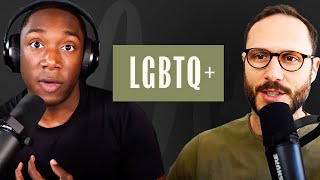
Amir Odom discusses his shift from BLM activism to engaging with conservative voices, and his concerns about the LGBTQ+ movement's direction. He highlights challenges for young Black men like absent fathers and media influence, and raises specific critiques about trans children, drag for minors, and women's sports.
Chapters
Everything just get mixed up in each other and just a huge, huge, huge umbrella term, lgbtq, where it's hard for even regular gay people to understand what, like, some of these terms mean. And the biggest thing about it all, to me at least, is that you can't defend what you can't define. For example, for some people in the community, I'm seen as transphobic because I won't date a trans man.
All right, Amir, welcome to the Man Talk Show. How you doing today?
Thank you for having me. I'm doing great.
Awesome, man.
Love.
Love to hear that. And really glad that we got a chance to sit down and connect and have a bit of a conversation.
Yeah, I'm excited for this one. I haven't really dug into some of these topics in, in depth, and, you know, a friend of mine sent me your video, and he was like, you should have this guy on your show. And I was like, okay, cool. And then I watched a bunch of. And I was like, oh, yeah, okay, this. This can be interesting. This be fun. This would be a great conversation. So. But before we get into any of that, let's start with the question, which is tell us a story about a defining moment in your life that made you who you are today.
Yeah. Defining moment in my life that immediately go to is a failed.
Deletion attempt, if you get what I'm saying. This was back in eighth grade, and I was living with my godparents. My dad's never been in my life. My mother was gone, and I was going through a rough, really rough time. And I said, you know what? This is it. This is gonna happen. And it was like a Thursday night. I went around, walked around the neighborhood, said bye to my friends. They're like, what are you doing? And I was like, oh, nothing. Just wanted to give you a hug.
And the whole way home, like, I was trying to do different things, and I just couldn't go through with it. And then I get back home, and I'm pissed because I didn't do it. And I'm listening to my ipod, and Waitlist by All Time Low came on, and New Perspective by Panic at the Disco. And basically those two songs just gave me the ultimatum. And it was like, hey, either you're gonna do it, or you're gonna create your own life, and you're gonna try your best to be the best version of yourself that you can. That you can possibly be and go out and just try to live a fruitful life. And so I did that. And ever since that day.
I made it my mission that if I'm not gonna go the other route, I'm always gonna pursue a better life for myself. And that was a really big defining moment because I'm still on that mission, not looking back.
I appreciate that. I appreciate you sharing that story. And, you know, I think it's something that a lot of people struggle with at one point or another in their life. And I remember hearing, I don't remember where the quote came from, but somebody once said that suicide is the ultimate form of self destruction. You know, that when we, when we are going down that path, when we are contemplating those things, that there's. That there's a kind of like desire for self destruction. And what's interesting, you know, this is the man talk show. I talk a lot about men and.
Work predominantly with men. And, you know, the company is really about men's mental health and how we lead ourselves. And what I've always found a bit fascinating is this notion of change and what causes us to change. And I remember seeing somebody talking about like, there's four reasons why we change, and one of them is that things become so bad that we have to. And I don't know if it's like a guy thing, but I mean, my story was somewhat similar to yours, except it involved me living in the back of my car for a few weeks. And you know, what I. What I find interesting is like, that a lot of us move towards this rock bottom. So what do you, what do you think it is about, like, bottoming out, you know, or like trying to.
Find. Not. Not that we're trying to, but finding ourselves in a place of extreme duress as men. Especially that.
That we. That we seem to be drawn towards. Because I see a lot of guys doing this and blowing up their businesses, imploding their marriages, you know, ending, you know, destroying relationships, refusing to sort of get help or pursue the change that they know is possible. Do you think that that's a man thing? Do you think that that's. That's just a human thing? Like, tell me a little bit about your. Your side of it.
I feel like, personally, I feel like it's a man thing. I think it's just we almost want to push the limits or just see how far we can go or just see how can I keep getting away with these quick fix dopamine hits and go about my life and be comfortable and not have to deal with what's actually going on in my life. Because you can't deal with the things that you don't confront so if you keep hiding it and suppressing, you keep going along this life, it's almost like we are like, how far can we go? How far can we suppress it? How far can we hide it? How far can we just drink? How far can we just, you know, stick here until you hit that point where it's like, okay, I guess I found my limit and I need to bounce back. Because another thing I find interesting in men, in that we, for the most part, can bounce back pretty fast and hard and quickly change our lives right around.
But I do think it's, you know, unique to men.
Yes, I would agree with that. I think that there's something within us I've talked about, like, how we've stripped mind our culture of initiation and that when we as men lack a kind of initiatory process that helps us to demarcate between boyhood and manhood, that we look for these types of very challenging experiences relationally, culturally, psychologically, that help us to know that we've moved into this different part of our life. Right. Where responsibility and maturity is required. Can you paint a little bit of a picture, I think, for the conversation that we're about to have, I'd like for people to get a little bit more about your background. And so can you paint a little bit about the culture and the community that you grew up in, the narratives that sort of permeated that space and what life was like for you growing up?
Yeah. So for those listening, I am black.
And growing up, my dad was out of my life ever since I was about 4 or 5. He was gone. It was just me, my mother, my sister. And there's two parts, really. One, growing up black, I was always just raised and taught that being a black man in America, I'm going to have to work harder than the white people around me. There's going to be injustices that I face in my life is going to be hard just because of the color of my skin. And that resonated with me deeply. And then around middle school was when I realized I was also gay. So there's a double whammy. And it was like, okay, I'm being raised, and I know that being gay is, quote, unquote, bad. And I'm that I know that being black is going to give me challenges. And so they created this really rough victimhood mindset in me that was. I felt like I knew I had to go out in life and work hard. I knew I had to become something. But in the back of my head, I always resented who I was. I felt like I always had a target on my back, whether it was going to be cops or gay bashers or whatever it may be. That's just what I was raised around.
And especially throughout middle school, I went through a lot of, you know, bullying and social changes just because.
I was never enough. So I suppressed the gay side. But then being black, I just thought being black was my skin color. But I quickly learned it was more than that. You know, I get bullied for riding my skateboard to school, for wearing.
You know, clothes from Hot Topic or listening to rock bands. I was like, why are you acting white? Or why are you talking white or mere, you're an Oreo? And I was always conflicted because I'm like, okay, well, dang, I already know being black, I'm have to go through stuff. But now being myself, apparently I'm not enough.
So it all just combined and created this kind of resentful nature of who I really was. Um, and then fast forward to ninth grade. You know, I moved down to Nashville, Tennessee, came out the closet. And when I came out the closet, I flew out the closet. I was. It was pretty gnarly because throughout the middle school.
What do you mean by that?
I mean, if you think of the most stereotypical gay guy you can think of, that was me.
Okay.
Because in middle school, I was never black enough. And so. And I was always. Obviously, I was in the closet. So when I came out in high school, I said, oh, I'm gonna be gay. Like, since I'm gay, Like, I have to be the exact stereotype of what I'm seeing online in the TV shows. I'm gonna change my voice, do the hand gestures, like the whole nine we're rainbows. And I just wasn't happy with that. One, because it wasn't me. But two, it just. It didn't sit right because even then I said, was it myself?
And that was its own debacle of being outed in conversion therapy, all that stuff. But resulted to around 10th, 11th grade, where had a conversation with my mom. She's like, you know what? Forget it. You're gay, but you're a mirror first. Like, being gay is not who you are. You are who you are. You're just also gay. And since then, I've just been myself, thankfully. So that's kind of the background of where I'm at and how my views on the world and topics today are able to be.
A little different than the mainstream.
Yeah, I mean, I think one of the things that I've appreciated about hearing your story. I mean, you know, our lives, I think, have just been wildly different. You know, Like, I grew up in Northern Alberta in Canada, where it's like minus 30, half of the year. Not a lot of diversity, you know, and. And I think what's been interesting for me, like, I love this show because I just get to talk to so many different people about so many different subjects and topics. And what's fascinating is I remember. So I have a background in classical music, and so I actually went to university and got a music degree. And I was. I was the odd man out. You know, I was, like, one of the only straight dudes in the. In the music program. And so I was like, I was surrounded by, you know, I was surrounded by gay guys that were constantly, like, trying to push the boundaries and the borders with me of, like, are you sure you're straight? And I was like, I'm pretty sure I'm straight, but it gave me. It gave me good insight into gay culture and the gay community to some degree, still being an outsider looking in, but I love the way that you frame that. Right. I, like, I flew out of the closet. That's. I don't think I've ever heard that before. That was. That was good.
I have to find pictures. Yeah, it was gnarly.
Oh, man. Well, I'm sure that there's some good stories in there, Amir, and maybe, you know, maybe we'll dig into those next time.
You've talked about this interesting journey. There's a couple of things that I wanted to talk to you about. The main one is what's happening within the LGBTQ community, because I think you have such an interesting perspective, But I want to just take a little bit of a detour first.
And help to sort of walk us through the change that you've gone through, because you've talked about sort of, quote, unquote, leaving the left. And I'm curious about what's led you on some of these pathways. I don't normally talk about politics on the show. I've tried to stay pretty nonpartisan and centrist for the most part, because I think that there's a lot of spaces online that are just so polarized right now, and I've always tried to make my show a bit of a safe haven, but I think that your journey is interesting, and so can you just unpack a little bit of, you know, the environment that you grew up in politically? What sort of shifted? Yeah, maybe I'll just hand the torch over to you to unpack some of that.
Yeah. So politically, you know, the whole back end of growing up black and being told that, you know, I'm gonna have it harder than a lot of white people and just. It was just known this thing that, yes, all Republicans are racist and homophobic and being both black and gay, I was like, well, yeah, no, I'm steering clear of that. That's just what it was. You know, family full of Democrats, they just voted Democrat just because Republicans were racist. That's all I ever knew.
And live going through my life, especially around, like, the height of BLM, like 2015, 2016, when it really started to ramp up, I had crippling anxiety over the police. I thought my life was in danger at all times. I thought the cops were out to get me. I thought that thousands of young black men were being shot and killed unarmed by the police, with the way that it was being portrayed on the news and in black community. So always had that in mind. And then I went on a date with this wonderful guy, and was this.
Part of flying out of the closet or. This is.
No, this is later on. This is.
Okay, this is later on.
This is like college.
And, you know, I go on this date with this guy, and he's like, hey, so what are your thoughts about white lives matter, basically? And he's a white guy. And I was like, it's stupid. It's harmful. Like, we know white lives matter. Like, we just want to focus on the black lives. Like, it's making me mad. And he's like, well, that's what they want. They want to divide us. They want us to be angry because here I am, a white person in front of you, and you care about me. I'm sure you have white people in your life that you care about. Do their lives matter? And I'm like, yeah. And he's like, well, that's. It's just that simple. It doesn't have to be as hyped up as it needs to be. So after that, he told me to look at some more independent, you know, YouTubers. And I did. And I went down a rabbit hole of discovering an entire different side of politics, especially a lot of black Republicans, black conservatives, because I just never was exposed to that. I've never seen it. There was one moment, I'm sure some people may have heard of her, Candace Owens. She had. Speaking at a college campus, and she had said, yeah, like, you know, I get it. People are upset at, you know, cops shooting black people. But I want you guys to understand how many. How many how much that's happening. And she said that there are more people who get struck by lightning every year than black unarmed men get shot by the cops. And I remember just being really, really mad because my whole life I was. I.
She was invalidating my entire lived experience of being fearful and scared of the police. And so I fact checked her, and, you know, the data can be diced up, but at the end of the story, there are more people who get struck by lightning than black unarmed men get shot by the cops. And I thought it was in the thousands, and it's nowhere near. And so that completely destructed my world view. And I found other black conservative creators, and I reached out to them. I was like, yo, I'm on this new, like, political journey. I'm just trying to understand the left, the right, everywhere in between, and ended up getting invited to the White House.
I go to the White House and I meet Trump in, like, within a year. I'm talking marching with BLM to now. I'm shaking Donald Trump's hand. And it was just. It was a wild experience.
That whole journey. And especially when I started to speak about my experience at the White House because I didn't tell anybody I was going, I just went. And the amount of friendships that I lost and family members that I don't talk to, just for entertaining the other side. Going online and seeing Rev.
What is his name, Al Sharpton, talk about the event and saying that I was paid to be there and it was all fake and planned and this and that, I'm like, that wasn't the case. And then seeing the speech I was at for Trump being cut up and diced, I was amazed. It just blew my mind at how much I was being lied on and lied to. So that played a big, big role in, you know, how I look at the world today.
Well, I mean, it sounds like you were living under one sort of paradigm.
You know, I obviously don't have context to even know what it's like to be an American. I mean, I am getting some now. You know, I've lived in the United States for the last couple years, and it is radically different than living in Canada in many respects. But I don't know what it's like to be, you know, a black man in America. I don't know what it's like to be a gay man in America or the combination of those things. It does sound like that some of those experiences were. Were sort of jarring and made you question your political leanings. For sure. I'm Curious. You know, I think there's a lot of conversation like do you still feel like or don't you? Wouldn't you say that there's still real sort of systemic issues that black Americans face?
For sure. Okay, most definitely.
Can you speak a little bit to that?
Yeah, I think there's a lot of things that have happened in the past that have been towards the detriment to the black community today. One thing that I think about is the music, the culture itself, how degrading it is and how non motivating it is and how all the kids in the hood, they either think they're either going to be a rapper or NBA player and they don't want to. The thought of them being something else is rarely even crossing these kids minds. And I think that's a systemic, a systemic issue stemming through from the music industry itself and all the leaders and people in charge of saying, yep, let's just keep this cycle of pill popping and, and girls and money and drugs like it's, it's disgusting. I think how the black community really doesn't pour back into its own community.
There's a couple different things out there. But I try to focus on the future and going forward because we cannot change the past. As horrible at it as it is. As much as, you know, white people got a head start, there's still a lot of things that we can do now that we aren't doing.
And so I try to focus there and just say yes, there's a lot of things that have happened, there's a lot of things upset us back. There's a lot of systemic issues. But if we change how we act now will be, will be set because it's proof. The proof is in the pudding that black people can be and do whatever they want in this planet up to becoming a billionaire.
Yeah, I mean it's such a complex issue and I, I think one of the challenges like I, I recently had this gentleman on and his episode isn't out yet but he, his name is Richard Reeves and he wrote this book on, called On Boys and Men and he talks about the education system in America not necessarily being set up for young boys because our, our prefrontal cortex actually develops later than young girls. But what was interesting was that when he broke down the data and actually got into being able to look at different races. Hispanic, right? Or Latino, Caucasian, black, etc. What he did find was that within the education system it does look like young black boys especially have a much more challenging time. And so is there A way for us to tackle. Do we need to help the education system? Is that something? Because I think one of the challenges that emerges is that when people see some of this data, the comment is, well, it's because the system is racist, that there's racism built into the systems. And so that's why young black men are struggling more than any other population in the American education system. What's your take on that? Are there certain things that you think that we need to do within this education system? Where does racism fit into this sort of equation? Like, I've never really been too sure of, like where to land the plane on that one.
I think the land planes at the culture itself. Because again, like, even for me, I grew up and I was being picked on for just thinking differently. Like, I think that's the biggest thing, that the difference in America between white people and black people is white people can be and do whatever they want to do without really much, any backlash. But black people, as soon as you have a black kid who's looking at anime, oh, you're not black, you lose your black card. Like you're stupid. Or you have a black kid wanting to listen to rock music and it's more metal, oh, what are you doing? White people stuff, yada, yada, yada. It's always.
Have to be trapped in this block, this box of quote unquote, being black. Like, there's even TV shows called Black Car now and that's harming us. You look on tv, the love and hip hops, the. All you see really is black people in a negative light. And in these inner cities, and you see these young black kids struggling, who's. Who's there for them? Are they even in a mental state where they even think they can become something? Are they in a mental state in an environment where they're being poured into? Like, yes, you should be studying right now. Yes, you should be focusing on this. Yes, get away from the drugs. Like, are they.
Being paid attention to? And I don't think so. And I don't think, you know, when you, when you look at the crime rates and who's committing crime, and you look at cities like San Francisco, Portland, Louisiana, all these cities that are rapidly raising crime rates and theft, all of it. And you break it down by race and age, you see a lot of young black men, unfortunately.
And so, yeah, like, you can throw millions and millions of dollars into a school district, but what good is it going to do if the kids aren't going to learn? Even if they think that they can learn. I think truly the culture itself has to change.
And inspire a generation of young black men and remind them that they can be something and be whatever they want to be. Instead of just being in a home with no father, where the mother's working two jobs, they throw them some chicken nuggets to watch tv, and then they're out in the streets gang banging. It's like a cycle that's not ending.
It does seem like. I mean, I. I wrote a book recently that came out in. In January. And I mean, it's all about men. It's called Men's Work. And one of the things that I wrote about in there as I was researching was.
The. The plague of absent fathers that is permeating our culture in North America. And I think that that's, you know, statistically, it's.
Really prominent within the black community. And, you know, I think it's. It's prominent everywhere, right? It's like 1 in 4 kids in America are going to grow up without a father figure in the household. And we know statistically that young boys are hit by that more than young girls. That's just the reality of the data and the research. And so I think what I hear you saying is, yes, the education systems probably need some reform here and there. I think we can all probably agree on that, right? The education systems are a little outdated, a little shitty. You know, I think school teachers are probably underpaid in some places. And, you know, it's a challenging system to say the least. But what you're also saying is, in addition to that, the culture that young men are growing up in, specifically young black men, is not conducive for them. But maybe, I think, to fill in the blank there, because why, like, it's not conducive for them? Because why.
I'd say it's not condensed because they're not. A lot of them don't even believe in themselves. Okay, One, they don't believe in themselves, but two, they're not seeing.
Any light of day of another outcome because.
They have no fathers in the home. And that's why I give a little grace. And, you know, the whole systemic issue, because if you're a young black man in the hood, you see your mama struggling, working two jobs, you have no male figure to look up to at all. All you're surrounded by is gang banging and rappers. And you look on tv, you're typically watching sports, and all you see is NBA players. And, you know, I can go to the corner, sell some drugs, and then pay Rent. Because if I had. I have had a lot of friends who were drug dealers that were, like, paying off their parents mortgages and, like, doing things for the family, because that was the easy source of income for them at the time. And it's what they knew. That's what they grew up around. So I think what a lot of young children need, especially young black men, is just more guiding figures and mentors to steer them in the right direction and. And to just end the crime and just have different role models to look at.
Well, let's shift gears a little bit.
I think there's probably a lot more that we could explore in that area, but I want to be conscious of your time and. And on this. On this episode, because one of the things that I really wanted to talk to you about was what's happening in the LGBTQ community.
For a number of reasons. Yeah, Like, I've. I love using polls on Instagram.
Right.
I've got a ton of people that follow me on Instagram, and so I've. I've really taken to, like, doing surveys on there recently, which has been kind of fun to see people's perspectives. And I did a whole series of. Of polls and surveys around trans issues and some of the things that was going on. And I was really surprised because I think my audience is probably more progressive leaning, but maybe a little bit more centrist, you know, and then I think a lot of the guys, like, you know, people comment on. A lot of guys comment on my YouTube stuff of like, oh, this is, like, soft red pill. You know, that kind of stuff, which is interesting. So I'm like, okay, because I've always. Again, like I said, I've always tried to say, stay as neutral as possible to.
I respect it.
You know, it's challenging, man. It's really. It's really, really hard. And. But so. So let's enter into this conversation about the LGBT community. I think I just want to start as broad as possible, because from the outside.
I can't really tell what's going on. I can. It just sort of seems messy. And I have a lot of friends that are, you know, that are gay, that are bi, that are queer, you know, and it's. It seems like there's just a lot going on. So, broadly, what the hell is happening in the LGBTQ community?
Exactly. That. What the hell.
Broadly, we're seeing.
A split almost between the LGB and the TQ plus, we're seeing that.
We're seeing kind of, if you lump it back together, then LGBTQ as a Whole, you're seeing progressives and the left versus, like, moderate centrists and the right as far as in the gay movement. Because if you're gay and you say, for example, voted for Trump, then you're immediately just like, you're homophobic. I don't know how that works, but that's just what they call you.
There's a lot going on. It's hard to say broadly. I mean, I see the biggest is the LGB trying to break up from the TQ plus.
Well, can you.
Yeah, go ahead.
Can you say a little bit more about that? Because it sounds like maybe there's elements of those groups that you. You as a gay man don't feel in alignment with. So, like, is there. Can you articulate that a little bit more and maybe say, like, what's going on there?
Yeah. So lgb, lesbian, gay, bisexual, has everything to do with biology and sex. It's sex, biology, male, female, the body parts for each. And I'm pretty sure we all know that you know what a lesbian is, what being gay is, and what being bi is. That means you're attracted to 1, 1, 2, or both.
Biological body parts. That's LGB. And then you have the TQ plus, which is the trans queer, and the endless Alphabet list of everything that just gets tacked on to the group. That's all expression. That's.
Yeah, it's mainly just expression. Whether you're trans queer, pan, whatever it may be, you still default and only like one or two or both body parts. So these groups are not even in alignment. Like, just because I'm gay doesn't mean I have anything to do with the trans community and how someone wants to express their gender. I'm the only thing that's gay about me is what happens behind a closed door. Like, that's it.
And you're seeing a lot of LGBTQ issues and rights and this and that. You see, if you look deeply into what's going on, especially in 2023, a lot of the issues have to relate with the TQ plus because after gay marriage, especially in America, like, the gays are pretty much done.
Like, what do you mean by that? Like, they've, like, rights were fulfilled.
Okay. Equal citizens. There were some states, we had some to do some work in, but for the most part it was fine. But we all know that a non profit can exist if it doesn't have a problem. And so now you have them focusing on trans issues and trans kids and drag queens. That's nothing to do with being gay, like, at all. And so you're seeing.
Everything just get mixed up in each other and just a huge, huge, huge umbrella term, LGBTQ plus, where people. It's hard for even regular gay people to understand.
What. What a. I don't even know, like, some of these terms mean. And the biggest thing about it all, to me at least, is that you can't defend what you can't define.
And there's a lot of things going around now that we cannot define.
For example, I. By. For. For some people in the community, I'm seen as transphobic because I won't date a trans man.
Yeah, I've. I've seen that. I've sort of seen that, like, floating around where it's like, will you date a trans man? And then if it's a no, whether you're straight or gay, that you're transphobic for some reason. Yeah, but that. That sort of. That's always, like, caught me because I'm like, well, if I have the freedom to say I don't want to date a gay man, why don't I also have the equal freedom to say that I don't want to date a trans man? Like, I don't understand, like, how does that make me. Just because I don't want to be in a relationship with a gay man doesn't mean that I'm homophobic. It just means. It just means that I'm straight, You know, Like, I. So.
Exactly right. And so that's where a lot of the confusion and the concerns coming from that everything is, like, the definitions are losing meanings. Like, no one's even knows what they're arguing for anymore.
Yeah, it's an interesting, charged topic. And so.
I think, where is the intersection between politics and.
An LGBTQ plus issues? Because I think, historically, I was talking to one of my. One of my friends, and he's. I think he's in, like, his mid-40s. You know, he's gay. He grew up in the south in. In Georgia and came out when he's, you know, quite young. He's, you know, been with the same man for a long time. You're married, right, if I'm not mistaken. Yeah. How long have you been married for?
I mean, technically, about a year year.
So congratulations.
Thank you.
But we were sort of talking about some of these, you know, some of these challenges, and he, you know, he was kind of talking about a very similar sentiment of, like, you know, I don't feel like I belong all of a sudden within some of my groups because for a long time, you know, the. The gay community was fighting for equal rights within the community. Right. Being able to get married, being able to treat, be treated as an equal citizen. So where's the intersection for you between the LGBTQ + community and, and politics in terms of what kind of equalities are being fought for now? Do you, do you agree with what's happening? Do you disagree? Like, what's your take in terms of being a part of that community? And I hear that there's some separation that maybe needs to happen, but as.
Of now, there's not much that I agree with. If someone's like Amir, do you agree with the gay community? I'd say no.
In the past, yes. You know, I want to be able to adopt children, I want to get married. Those kind of equal rights. Yes. But for example, you know, allowing drag queens to dance in front of children. I'm, I'm personally gay, man. I'm not in favor of that.
So if you had adopted children, if you and your husband adopted children, you wouldn't be okay with that?
No. How come with saying drag queens? No, just because of how far it can go. Can there be a family friendly drag queen show? Sure. Where they're fully clothed? Yes. But what I'm seeing is not that I'm seeing the videos of them coming down from the dominatrix strings in black leather. I'm seeing them do the splits. I'm seeing them expose their bulges to the kids. I'm seeing a lot of.
Non PG stuff. So I'd rather just keep it at the gay club. Same way we keep strippers at strip club. Rather keep drag queens at the gay club. Something else recently that they're fighting for is trans kids. And I'm dropping a video soon on that.
I don't know how that's going to end, but I, I, it makes me upset because.
There'S a lot of children being taken advantage of and it's a scary, scary road that the gay community is going down trying to defend the right for children to.
Sterilize themselves. That's, that's gender affirming care. It's sterilization and double mastectomies for 12 year olds.
I'm not a fan of that and I'm not. That doesn't make me transphobic. That doesn't make me hateful. It makes me.
Knowledgeable of what can happen because I do know people who have detransitioned and as much as they could and they completely regret going through that as a child.
And I don't understand how we got here from 2013, 2014, getting the rights to be married in 2023. Yeah, damn near 10 years later. Fighting for, especially here. There was a rally here in Nashville fighting for children to have autonomy, which a child needs a parent, they need guidance. And if you're fighting for children to have autonomy over their body, especially sexually, I think you and I both know where that can easily lead to very quickly. And it's just no one's looking at it from that angle. No one's like understanding how atheists can be taken advantage of or. It's something I even struggle with talking about because I don't understand how we got here. I just don't how, how we got here to allow from saying, yes, we need to ban jewels and ban vapes for children.
But then we're also saying they should be able to sterilize themselves. I don't, I don't know how we got here.
Yeah, I mean, it's, I don't know either necessarily. I mean, I think.
I think it is a bit of a conundrum for the everyday person, you know, because when, you know, I think trans people make up something like 0.6% of the population, if I'm not mistaken, if that my data is correct on that. And so it's a very, very small percentage of the population and yet there's so much controversy around it. And, and what I find fascinating is, you know, I've been hesitant to even enter into the conversation for years. I'm like, I'm a straight white dude and I can just, I just see people just get annihilated online, you know, and so this is more me having a conversation with you to get your perspective than it is about me sharing my mind in any way, shape or form. Because, you know, I think that you have a unique view and vantage point into a community that I'm not necessarily a part of. But what is interesting is I'm a parent. I have a two year old son. And so this has become something where I'm like, well now this is entering into my territory because I have a kid. And so I'm like, you know, if you're telling me that my 14 or 15 or 16 year old son can supersede my decision as a parent for him and he can make an autonomous Choice as a 14 year old or a 15 year old to take hormone blockers without my consent as his legal guardian, then I have a problem, right? Then I'm like, well now you're actually infringing on my ability to parent as a parent. And so.
He'S not allowed to drink until he's 21. He can't get a driver's license until he's 16. There's all of these things that he can't do legally and for good reason. I mean, I was a. I was a. At 16, I didn't, I didn't know my ass from my face, you know, like I just.
You telling.
You know, and so, I mean, I was like a reckless ass little fool who, you know, had just like gone through puberty and was wildly emotional and was chasing women and, you know, was. Was really, I mean, had some dark thoughts in, you know, in terms of my own life and et cetera. And so.
It really is confronting for me as a parent. So what are, what are some of your main concerns? I think you've sort of touched on a couple of them, but what are some of the main concerns that you see? Families facing, children facing, parents facing our culture and our society facing right now?
The big concern for me is that that whole transition children debate and how it does bleed into the everyday people like yourself, where it's like, okay, I just had nothing to do with me at all. I was just on the outskirts. It's like, that's their community. They're doing their thing. But now it involves you.
That's a big concern for me. Are you referring to just in life in general or just like the gay community?
More so in the gay community? Yeah. Okay.
I'm like, there's so much.
Yeah, you're like, well, I'm actually concerned about quite a bit.
Currency collapse right now, you know, inflation.
The trans kids. That one's a big one. The Pride Parade. I'm over the Pride Parade. I think.
How come? What, what's wrong there?
It's a giant who wears the least parade and just celebrating who you have sex with.
It has the opportunity to be a really great event, to just be way inclusive and saying, hey, look how far we've come. We're all equal. Let's all party together and just celebrate pride. Equality for all. But no, it's not that. It's a bunch of drag queens, ladies and nipple tassels, men and thongs prancing around with rainbows, corporate sponsorships, money grabs, and that's about it.
And it's. It's so annoying to see. And I'm tired of the Pride Parades. It does nothing for anyone. I don't think children should be there. All you have to do is go on YouTube and search Pride Parade and you should be able to see why you don't want children to be there.
I'm over it. I just do not like it. The pride parades, the children transitioning, the trends in sports. I think, I think a trans sports league would do amazing numbers. I had to pay money to see some trans wrestlers and trans football players. I think that'd be crazy. But they need their own league. I don't want like this. And people say, amir, why do you talk about this like you're not even a woman? You don't care about sports. What does it matter to you? It matters to just take care of just women. And one day, if I do have a daughter, I would want her playing sports with other biological women. Like I. And it doesn't make me hateful to want that. It doesn't make me hateful to understand that the average man can take down a woman that's not misogynist, that's not anti feminist, that's not being hateful. It's just what it is.
Yeah, I think I, I think I read a study somewhere that said that the average man, if you take, if you take a man who's like, we'll just pick an arbitrary height, like 5 foot 8 and 160 pounds, and you take a woman who's 5 foot 8, 160 pounds, that man will statistically be able to punch 40% harder than her and lift like 50 to 80% more than her. Right. And so there's.
It is interesting. Like I was going to refer back to those polls, like I put a poll up and I asked the question around the sports leagues because, you know, I don't necessarily have an answer for this either, but it's interesting to see. And I said, you know, how many, you know, do you think that trans folks should be, should play in the leagues with men and women, or do you think that trans people should have their own league? And the resounding answer was that they should have their own, their own league.
Right.
It was really interesting. There's something like 3,000 people voted on it on the survey, through the poll. And that was sort of like the resounding answer.
I do. It does seem like.
Yeah, I mean it would be, it would be interesting. Can you say a little bit more about protecting women? What did you mean by that?
Well, there's multiple fronts to that. One for sports. We've seen it lately with the Leah Thomas, swimmer.
Mediocre male swimmer, just decided to change, take three shots, grow out his hair, and now he's able to swim with females and it's dominating.
That'S just, does not sit right for me. And it's not allowing women the space to show off their strengths because you just have a male injected, just taking over things, protecting female spaces. You know, we've seen this over at we spa in Los Angeles.
If your wife and daughter are in a spa, they should not be confronted with a group of, of people who have their penises out just because they identify as a woman and they're allowed in that space. I think especially spaces like bathrooms and locker rooms that should be designated to sex. And if someone is uncomfortable, then they need to go to a private restroom. But I don't think it's okay for women and their daughters to be confronted with penises in a private space like that. That's two. I don't think that.
Trans men.
Taking light of everything and taking away from female influencers is right. For example, Dylan Mulvaney, a trans Tick Tock star.
Getting all these sponsorships from every company known to existence. I mean really, Nike, Bud Light, Maybelline.
Tampax. Instead of putting that towards up and coming female influencers, it's given to trans men or trans women.
It's.
It'S so confusing. It's just, it's. We're right, we're marching for women's rights, but at the forefront of it is biological men.
Yeah, that part, I mean, I, I saw. What's her name? Bethany. She's a very famous surfer who lost an arm. I think she was in like a, like she got lost an arm through a shark, shark bite, if I'm not mistaken. Bethany Something Hamilton, I think. And she, she spoke out on Instagram because the, the surf league essentially was allowing.
You know, biological men who had transitioned to be trans woman to compete within the women's league. And she was speaking out against it, you know, sort of saying, like, let, let trans people have their own league like this. It's, you know, there's not, there's certain, I think that there's certain sports where, where maybe it could be a little bit more for sure, even keel. But I think that there's other sports. It's like, you know, I'm six one and 200 pounds. If I take, transitioned and wanted to go fight MMA, like I'm gonna, I'm gonna probably mess some shit up, right? It's gonna, it's not gonna be good. And so I, I do think that, you know, we still have to have some safety precautions and some sense of, some sense of equalness within the equation. And so it's, it's A very interesting conundrum that, that we seem to be faced with. But I think the, the big challenge is, is that it's so politicized. It has become so politicized and only certain people are allowed to talk about it.
Oh yeah.
Which is why I think it's interesting what you're doing and I'm curious about how conscious you are about.
Your mission, your voice. Do you have a mission when you started out with this? Is there something that you're trying to accomplish with sort of talking about some of these issues?
Yeah, I want to give people the tools to share their thoughts rationally on tough topics. I want to. I understand that a lot of the attention I've gotten is because I am black and gay, but I'm not your typical black and gay guy and I don't think like the average black and gay person. I respect that.
But I know it does hold weight. And regardless or not, I am still black, I am still gay, I'm still a part of these communities.
So the end goal really for me is always just to wake someone up. And I really, I'm always, when I talk to the camera, I'm always Talking to my 16 year old self and what he would want to hear. And I. My main goal, especially for other black people and other gay people is just let them know that they don't have to feel trapped or don't to feel like they have to belong in what this community has become, whether it's the black community, gay community, and that they can be vocal. But it's, it's hard to do that sometimes when I do make these videos because when I try to be as compassionate as possible.
I've scrapped two videos already because I was, it was too much passion and it was coming off the wrong way.
I try to be cautious of how I'm coming across because I do make my videos for the person who doesn't agree with me. That's why I'd rather watch my videos.
But it's becoming increasingly hard because again, we cannot defend what we can't define. And like you were saying, you have people, it's super political, polarized and politicized and only one group it seems. I can speak on it, but even then it's confusing because they can't even define it. You're telling me.
It'S a little off topic, but you're saying, just an example, men shouldn't be making laws about women's bodies. In the same same sentence, you're also telling me that men can be women and Women can be men. So does that mean all our opinions are equal or are you saying that we're different? Like there's so many things that aren't defined that we're just saying. And it's hard, it's just really hard to talk about it.
Yeah, I, I agree, I agree. It's very, it's very challenging to talk about it. I think the last where I'd like to maybe leave things is, you know, you had talked about.
Sort of like trans representation within, within kids spaces. Right. Whether that's readings or the education system. You know, I think I saw in one of your videos there's like Blues Clues had trans on there is. What's wrong with that? Exactly. For, for you. And again, I'm, I'm just so I'm clear, I'm not advocating for or against. I'm trying to be in neutral space in as many of these questions as possible. But what's wrong with that for you? Because wouldn't you have liked as, as a young boy to have had some representation to see yourself in the content that you are watching? And where do we draw the line from your opinion about when, where that should and shouldn't show up?
Yeah, regarding kids, I'd much rather leave kids, especially 13 and under, leave sex relationships out of it. And I extend this to straight people too. Like there's no reason for me to be seeing, watching Zach and Cody and watching them kiss other kids on screen. Like that's just, I don't need any of that.
And I think the trans and gay representation, all that for minors needs to just be eradicated and gone. There's no reason to have a pansexual dolphin with cut marks for transitioning in Blue's Clues for four year olds. Why are you advocating for a four year old to get a mastectomy when they don't, they don't even know what they want for dinner or they want to be a dinosaur when they grow up. Like I, I, no, am I fine with representation in later shows like high school shows like Degrassi and all that kind of stuff? Yeah, go for it. I don't care.
But more age appropriate representation and not inundating kids with.
Yeah, like there's no reason for.
Trans people and drag queens to be in front of five and six year olds. I, I genuine. The only place, if I thought to myself, tonight I want to go see a drag queen, I have to go to the gay club and show my ID and go to the back room. But for some reason we're Saying yes, that that belongs in an elementary school. I don't think they need to be there at all. Age appropriate makes sense to me.
But I just, I do not like where it's going.
Well, this has been a fascinating conversation for me to have with you and I appreciate your willingness to come on the show and chat with me and dig into some of these topics and you know, like I said, I think I'm still finding my way in a lot of this. I think some of it's very clear to me and, and I haven't.
Yeah, I don't think I've talked about a lot of it on the show because I've tried to keep my organization focused in on like men's health and development, but I have had a lot of men coming to me saying like, what do you think about this and how do we talk about this? Like my kids are going to school. Like my 7 year old has, you know, they're talking about bringing in a drag queen and like, I don't know how I feel about that. I'm like, okay, so it's just very interesting to get you your perspective and I really appreciate it. And you know, I, I reserve the right to invite you back on the show to have conversation number two because I'm, I'm assuming I'm going to get lots of questions, so.
Well, gladly, this has been great. I'll gladly come back for another episode. I thank you for having the space for me.
But also being willing to talk about these things in such a free flowing and nuanced manner like, and just credit to you, I still don't know where you stand, which is great. You just open the floor and I think it's what we all should be doing. Just hearing each other out. There's no reason for the hate and the divisiveness. None of it. Just having conversations.
Yeah, I appreciate that man. I appreciate that. Well, thank you, Amir. We'll have the links to you and your work in the show notes. And as always, Team man it Forward. Share this episode with somebody that you think is going to be find it interesting. It might open up a dialogue for, for you and somebody else. But until next week, this is Connor Beaton signing off.
More from Connor




How to Raise Strong, Unshakable Boys in Today's Culture, with Dr. Shefali Tsabary





Anxious, needy, overthinking in love? That's a pattern, and it can change. Check the description 👇
