Andrew Tate - Are Men Domesticated?
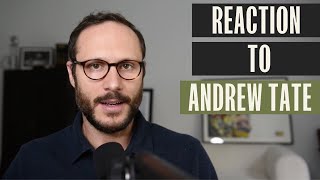
Connor Beaton examines why Andrew Tate appeals to young men, tracing it to male domestication, disenfranchisement, and rising mental-health problems. Tate's warrior narrative thrives in an attention economy that rewards outrage, offering simplified answers to men who feel lost.
Questions this video answers
Approximately 27%
One in four (25%)
Three out of four suicides (75%)
32%
The attention economy and outrage culture (provocative statements propagate quickly and gain attention)
Chapters
All right, welcome to this little segment. This is different than what I normally do, but last week I put out a newsletter about Andrew Tate. My thoughts on why him and why now. A lot of controversy around this guy. Some people love him, some people hate him. And it was really interesting because when I put out this newsletter, the response for the most part, was great, because I didn't take a side of this guy's, you know, amazing, or I love him or I hate him, or he's the world's biggest misogynist or whatever it is. I didn't take a side. I just looked at why did somebody like him and the message that he's talking about become so prominent? So this video today, this podcast episode today, is really an extension of that. Talking about why is it that some of the things that he is saying and espousing are gaining so much traction and attention, specifically amongst young men? What is it about what he's selling, what he's endorsing, what he stands for and embodies is really landing for a lot of young men. And I think that this is a very important conversation. So as you watch this video, if you're watching on YouTube, comment below, I'd love to hear your thoughts about him, about, you know, the manosphere red pill, about why Andrew Tate, specifically right now in our culture and our society has become prominent. And what about his messages? Do you like? What about his messages? Can you not stand or dislike? What do you think is harmful or damaging about what he says and maybe what's helpful? And why do you think so many young men are resonating with what he is saying? Leave your comments below. Let me know what you thought about what I said, if you would agree or disagree, and looking forward to hearing your thoughts. So here we go.
That's what the people in charge of the world are afraid of. So to make sure there's no revolution, what they do is they construct as many divisions amongst the peasants as possible. They make sure the blacks hate the whites, the men hate the women, the Republicans hate the Democrats, and we're all so busy fighting with each other, they can laugh from the top, because there's not very many of them, and there's a bunch of us. I'm telling you, the reason in countries like America, the reason the law is so destructive against men is very, very purposeful. They don't want you to feel like a king. They don't want you to feel powerful. You wake up amongst three, if you have 10 sons from 10 baby mamas, you're gonna Wake up and feel like the man. You ain't taking easy.
All right? So, you know, first and foremost, I don't know about you, but if I woke up And I had 10 kids and. And three baby mamas, I don't know exactly that I would. I would feel like the man having 10 kids sounds like a lot. I have. I have one child, and that's. That's a tremendous amount. But besides that, I think what's really interesting about this, this clip so far, is just the hierarchy of what's being created, right? So you hear Andrew Tate, I think one of the reasons why he's become so popular, whether you love him, whether you hate him, whether you think that he's, you know, the bane of existence, is that he's playing to this notion that legislation, politics, big government, you know, big institutions, big don't want men who are empowered, don't want men who are sovereign, don't want men who are living a good life, right? Cause if you really listen to what he's talking about, a lot of the times he's selling a certain lifestyle, right? He's preaching a certain lifestyle, but he's also selling a certain lifestyle. So it's very on brand for him. Again, good, bad, ugly, et cetera. I'm not here to comment on who Andrew Tate is and whether I like him or not. I don't actually care about that. I think that's less relevant than asking the question, what, why Andrew Tate and why right now? Why is he so popular, prominent, and what is it that he's saying that is resonating with so many men? And here I think he's getting into something that's very much felt within masculine culture, right? Testosterone rates are dropping. Less men are going to school than ever before. Less men in their 20s are having sex than ever before, right? Something like 27% of men in their 20s aren't sexually active or have been with a partner. More men are living at home in their 20s than with another person. And so you have this sort of shift within male culture where it's very clear that there's sort of this over domestication of men, whether that's self imposed, whether that's a byproduct of society, whether that is legitimately that the. The powers that be, you know, are putting legislation into. Weaken men in some way, whether the, you know, the rise of feminine, like, you know, wherever you stand, stand on the spectrum of what is causing this sort of struggle within masculine culture. Because I think we can all see that, right? I think for the most part, you know, New York Times to Fox News to, you know, it doesn't matter if it's a media outlet on the left or the right. Most people are acknowledging, like men are struggling, there's some shit going on with men and what is happening. And so what Andrew Tate is really, I think, saying in some ways, which I would agree with the content of what he's saying, not necessarily the delivery mechanism of what he's saying, but I think in many ways it's a reminder that most, not most, but many men, countless men feel beaten down by the system. They feel disenfranchised. And I think we have this very rampant culture of domestication. You know, you go to work, you sit down, you sit there, you never lift weights, you never do hard things, you never have to engage with shit that's, that's challenging. Most of the stress that you experience as a man within our modern culture is something that, you know, it's like the taxes that you have to pay and the legislation and the worry about, like, you know, being in a, in a sexless marriage. Which is true, right? Something like one in four marriages within the first two years will become sexless. One in four. So a lot of men find themselves in this, in a situation where their life, their relationship, their work, it doesn't look the way that they want it to or hope that it would. And so they not only feel disenfranchised, but they feel wildly domesticated and domesticated in the sense that they're not in their own power as a man. They're not connected to their own masculine core. They're not out there lifting heavy stuff. They're not doing something meaningful. They're not contributing to, to something that matters to them. They're not out in nature experiencing their own wildness or the wildness of life. And so I think what's appealing, on an undercurrent, on an unconscious psychological level about what he's saying to men and why so many men, you know, why he's become such a polarized figure very quickly within our culture, is that he's talking to men about men and he's talking to the plight of men. You know, the sort of shit that a lot of men are going through. And he's doing it in a way that's really aggressive and it's. And it's very warrior based, right? It's like the warrior archetype. It's like there's us and there's them and there's very few of them, but they have a Lot of control and a lot of power, and they want to suppress you. They want to keep you down. And so it gives men an enemy, right? It gives men an enemy, and it gives men a battle that they can feel like they're engaged in. And I think because a lot of men feel like the battle that they're fighting in their lives is hopeless, is meaningless, it gives them a battle perceptually that feels meaningful, that feels like there's an actual target versus, you know, if you haven't had sex with your wife in a year or two, and you can't seem to figure that out or engage it, it feels like a hopeless battle that you can't seem to win. And so it redirects some of that, you know, warrior energy towards this sort of. This sort of battle. So let's. Let's keep watching and see what else he has to say. Again, I'm not interested in whether or not you think Andrew Tate is a good guy or a bad guy. I mean, if you want to comment on that, that's fine. That's your prerogative. I'm not here to comment on whether or not I like him or dislike him, whether I think he's an asshole or a good guy, whether I think he's good for men or bad for men. I'm simply here asking the question, why him and why now? And what is it that's happening within male culture that that is allowing for a figure like this to blow up? And what is it that's happening within our culture at large that's allowing a figure like this to become so prominent? So let's. Let's keep watching.
If you wake up on your third year of a sexless marriage, paying taxes and your kids don't even listen to you, you don't really feel like rebellion. You don't have it inside of you. This is why there's so much male suicide. This is why men are so depressed. They. This is why everyone's so unhappy. Because the life they try and create for men, the things they try and purport, the ideas they try and make us subscribe to, are depressing. They want you as a tax slave. They want you as a tax slave. They want you in a sexless marriage.
So again, here, notice it's they, right, this sort of notion of, like, they want that. Well, who. Who's they? Right? The powers that be. Big government, big tech. You know, that this sort of analogous cabal that is creating this for men. I mean, I think the reality is that we have to acknowledge is that we as men have also contributed to creating this right. We as men have done this. We have allowed our lives to become these very overly domesticated forms of existence where we're not pursuing meaningful things, where we're not pursuing things that matter to us, we're not contributing to things that are important to us. So I think, I think one of the things that gets missed in this commentary is the fact that a lot of the infrastructure that has been built has been built by us as men. And maybe it's us as men, maybe it's the men who are wanting to control and wanting to, you know, I mean, you can go down that rabbit hole, but we also have to look at our part in the creation of the systems and the structures that we inhabit. And we also have to look at our part as individual men in, in the systems and the structures of our own lives. You know, he's like, he's talking about entering into the sexless marriage and having kids that don't like you and that don't even listen to you and you know, working a job that you hate. And it's like that's a double edged sword. That's not just simply a result of a system that is anti men or that's trying to hold down men. That is also often a result of a man who has made choices in his life that have led him there. Now, the system, I'm sure, has contributed to it. But we can't exclude the fact that there are men who don't want to work, who don't want to work hard, who don't want to face hardship, who don't want to deal with the pain of their life, who don't want to have uncomfortable conversations with their wife about sex, who don't want to leave that marriage and that safety and that security. And so I think we, you know, we also have to have a conversation about the reality that we as individual men have created and have contributed to that domestication of ourselves. It's not like we haven't had a part in that and a role in that. And I think that that's an important part of this conversation as well, because. And I think he does advocate for this in some ways. And again, I'm talking about the context versus the delivery mechanism of how he delivers some of this because some of the way that he delivers this I think is really abrasive and it speaks to, you know, the why he's become so popular. The truth is we live in an attention economy. That is the truth. The most valuable resource, the most valuable asset that we have now in existence is attention. And so a byproduct of that and an offshoot of that, unfortunately, is that we also live in this sort of outrage culture. And so in order to gain attention, we. What you have to do is be outrageous, is say outrageous things, even if there's merit and truth in it, even if there's validity to what you're saying, or. He's talking about male suicide, he's talking about male depression. Those are all real things that a lot of men are dealing with and struggling with. And it's true, right? Something like three out of four suicides are going to be men. The highest, the most. The leading cause of death for men under 45 in the UK as an example is. Is suicide, right? So it's a problem. It's a real big thing. But I don't think it's as simple as, you know, big government or big organizations, large corporations are trying to suppress and repress men because they don't want men to be strong and happy. I don't think it's that simple. You know, I think there's other factors, like the fact that 32% of boys in America are going to grow up in a home without their biological father present. So that's a lot of young boys who are growing up in a household where they don't have an active male role model. They don't know what it looks like to have a male figure or male presence in their life actively. And then sometimes even if they do, they might be growing up with a father or stepfather or a male figure who is completely domesticated, who's completely disconnected from his own masculine core, his own masculinity, his own sort of male essence. And he'll be. He'll have grown up in a relationship with an example of a man who doesn't have that kind of fire. And maybe that boy feels it in him. And so I think a lot of the reason why somebody like Andrew Tate has become so popular is because 1. Culturally, we live in a culture of outrage, right? It gets. It gets attention, gets. Immediately you go out on social media, you say some wild shit, and if there's an undercurrent of truth in it, that wild stuff will propagate really, really quickly. Because all of a sudden people who hear it think, yeah, I feel that way. Yeah, I've gone through that. I've been screwed over by divorce courts. I've struggled with depression because I have low testosterone and I feel less motivated. I've struggled with finding a decent job that I can enjoy and find a place in culture and in society where I feel like I actually matter, where I'm contributing something that makes a difference. So I think that there's many factors to this, but the key, this sort of secret ingredient that it seems to happen. And again, I don't necessarily agree with this, but I think one of the reasons why he's being able to become so successful and so prominent within our modern culture and social media is that he realizes and plays to the fact that we propagate outrageous commentary that often house some deep and meaningful truth that a lot of people are feeling. And that seems to be the way, right? You see somebody like Jordan Peterson, well, he's created a lot of outrage and a lot of controversy around who he is and what he says and what he believes. But he also has a very deep following that love him and that have benefited because of his work, because of his speech, because of what he's said. And so you have to look at somebody like that and like Andrew Tate and say, well, what's going on here? And so the reality is that you might not like this individual. You might not like what how he's saying things. You might not even like what he's saying. You might think that carte blanche, just across the board, he's just terrible and bad for men and bad for society and bad for culture. But there's clearly something that he is saying that feels really important. And I think why he's been able to do what he's done is because of outrage culture. And why he's able to do it now is because he's talking about things that men are going through and feeling almost globally, but more so within Western cultures that are true, right? A lot of men are struggling, and we know that because, you know, if you just look, the New York Times, the Wall Street Journal, Fox News, everybody in mainstream media is talking about how men are struggling, right? And it's kind of a common consensus, but there's this moving target of why men are struggling or what we should specifically do about it. So along comes a hyper, overly confident figure like Andrew Tate and says, well, here's the problem and here's my solution, right? You need to fight, you need to build, you need to work. You need to realize that the systems that you're a part of don't want the best for you. And so he's sort of saying, hey, guys, here's the solution as I see it. And maybe you don't believe the problem that he's putting forward or the solution that he's putting forward. But, but, but apparently a lot of people do, right? So, again, I would love to hear your thoughts. Why do you think that a figure like Andrew Tate has become so prominent and so popular within our modern culture right now? And, and why do you feel like it's happening right now at this moment within the current conversation and the current social and socioeconomic environment that we're living in within Western culture? So comment on this video if you're watching on YouTube. DM me if you're listening to this on the podcast, I would love to hear your thoughts because I'm going to be talking about more of this stuff in the upcoming weeks and talking more about what is happening within male culture. So if you're watching this on YouTube, comment below. Let me know if you enjoyed this. Let me know what you think I missed or should add into the conversation. And as always, until next week, this is Connor Beaton signing off.
More from Connor







How to Raise Strong, Unshakable Boys in Today's Culture, with Dr. Shefali Tsabary



