Are You A Domesticated Man?
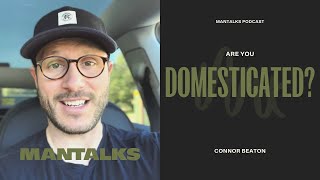
Connor Beaton argues that many men have become domesticated, losing the ability to choose what matters. He traces this to weak family bonds, technology, and addictions like pornography and gaming, then urges men to examine their unconscious attachments and deliberately recommit to relationships, routines, and purpose.
Chapters
Men, what's going on? Good to see all of you today. I want to talk a little bit about a few things. Number one is domestication. Number two is how we attach to what matters most to us and why it is absolutely imperative for you to understand in your life. And number three is how to reclaim and regain your power and your strength in any area of your life. So I get asked all the time about, you know, how do I quit pornography, how do I stop smoking so much weed, how do I drink less, how do I improve my morning routines, how do I improve my habits? And I've been thinking a lot about this over the past six weeks as I have been digitally detoxing, which has been a wonderful experience. And I'll talk about more. But one of the things that I have come to see and realize more and more over the years of working with men is how wildly domesticated we are as men. And when I say domesticated, I don't mean like, you know, lounging around the house and eating TV dinners and whatnot. I mean unable to use our voice for what matters most, unable to take a stand in our life, unable to confront and set boundaries in our relationship, unable to create direction and clarity in your work, in your purpose, in your health, unable to do the things that matter most to you and unable to attach to the things that matter most to you. You see, domesticated men are, I don't want to say weak men because I think that that's just, you know, flagrant salacious. But I think domesticated men are more common than we think. I've been a domesticated man, you know, and I think many men go through a phase at some point in their life where they are domesticated, where they're getting up and they're doing the same thing over and over again and they hate their job and they don't like their. And they feel out of control of every part of their life. And it slowly erodes their internal connection to anything joyful, anything fulfilling, anything rewarding. And so domestication, as I'm using it here, is that you as a man become unable to choose. You as a man have your choice hindered. Your choice of what you want to put into your body, your choice of how you show up in your relationship, your choice of whether or not you watch porn, whether or not you have another drink before bed, your choice of whether or not you get up at 6 o' clock in the morning and drag your ass to the gym. It's that domesticated men are the men who lack the Capacity to choose powerfully in their life. Now, I've thought about a lot of why does this happen? You know, and some people will say, well, it's the feminization of men. You know, it's. It's feminism. Like, men have become more feminine, Men have become more feminized, and that's the problem. And maybe there's some validity in that. Who knows? I don't want to get into that, but the other men would. Other people will say, what's the government? Right? It's the government's responsibility. Like, you know, men have. Be. Have just started to rely more on big corporations and big governments, and they've outsourced their sovereignty. And maybe there's some truth in that, too. And then other people would say, well, men just aren't men anymore. You know, they don't have real role models. They don't have real mentors. I think that there's probably truth maybe a little bit in all of those. I mean, we could debate and talk about that quite a bit. But I think one of the biggest things, if you put all of those things aside, I would argue that one of the largest and most impactful things on a man's life in today's world is. Is how he attaches, how he connects to what matters most to him. You see? And when I talk about attachment, I don't mean the Buddhist sense of attachment, of desire, of lust, right? I'm talking about attachment in the sense of how you as a man connect to what matters most to you. And that starts in your family system. You know, that starts with attaching to mom and understanding that she's nurturing, she's compassionate, she's present, she's there for you. Attaching to dad and understanding that there's order and structure and that there's rules and that you can take risks and. And you're encouraged. And there's. There's praise there, but there's also. There's also hardship, right? There's also that. That component of giving you direction and feedback and guidance and mentorship. So attachment starts in that space, right? And then it permeates out through the rest of your life. So how you attach in your family system will impact how you attach to your friends, to your career, to your purpose in your relationship with whoever you date, to your children, to your like, to every single part of your life. And so one of the challenges that I think we're seeing is that as the family structure has been eroded, as divorce has gone on the rise, as you know, previous generations of Men and our generation of men have lived in really largely fatherless homes. We have been, um, we have been debilitated, right? Maybe, maybe you feel this like who you have been debilitated in your capacity to attach as a child, as a young man, as a young adult, and then as an adult. And so a lot of men are out in the world and they don't know how to connect to what really matters most. And it's not that your attachment goes away, right? As the saying goes, nature abhors a vacuum. And so when you don't learn how to attach to mom, to dad, to friends, to family.
It'S not that your need for attachment disappears. It's that what you attach to changes. And this is where the interesting part of social media and technology and pornography and things like alcohol and weed and drugs and video games and all this other kind of stuff comes into play. Because all of them are designed for you to attach to, right? Social media is literally designed neurologically, emotionally, physiologically, from a nervous system standpoint, to attach to, right? It's designed for you to plug into constantly. It's designed to capture your attention, and that is attachment. Right? Where you put your attention constantly is what you are attaching to. So if your attention is on pornography, you know, hours and hours and hours a week, or it's on alcohol every single night before you go to bed, or it's on video games for, you know, three hours a day, or it's on social media for three hours a day, that's what you're attaching to. So it's not that our desire for attachment goes away, it's that what we attach to changes. And so this is where a lot of men struggle, this is where. This is where domestication comes in, is that when you as a man aren't able to choose actively what you're attaching to, right? To choose to attach to your wife or your partner and the intimacy that you desire and crave. To choose to attach to healthy routines, morning rituals, to choose to attach to your family structures and systems, to your purpose, to drive and determination of what you want to do.
We then outsource that attachment, that choosing to these externalized structures that are constantly vying for our attention that become this addictive behavioral pattern that shows up. So we attach to video games, you attach to social media, and you just doom scroll through whatever social media platform you like. You attach to alcohol to sort of numb out that feeling of existential dread or purposelessness or, you know, the despair that you might feel within your Relationship, you attach to pornography rather than having uncomfortable conversations with your partner, talking about the type of sexual intimacy that you'd like to have. So you outsource your attachment to externalized structures that are literally designed to capture your attention, that are, that are designed with the knowledge that, that, that. And preying on the, the knowledge that you might not have other things to attach to in your life, that you might not actually have purpose to attach to in your life or that you're. When you struggle in your relationship, it's praying all of these things are preying on that notion. So what do we do? What do you do? How do we combat this? Right. First, you need to understand that there is merit in being able to notice all of the things that you are attached to that maybe don't serve you, that are unconscious, right? So take a look at some of the things like social media, how much you drink, you know, maybe, maybe if you're a weed smoker, how much weed you're smoking, your video game consumption, your porn usage, et cetera, and be honest with yourself of am I consciously, actively choosing to attach to those things? And if not, then that's time for an intervention, right? That's time to say I want to consciously choose. Because it's one thing to consciously choose to sit down and watch pornography and another thing to have it be reactionary and out of your choice because you're bored and it's just what you're going to, or you're lonely and you just need a quick fix. So start to look at when and where you are unconsciously choosing some of these things and interject your choice, interject your choice. Start to powerfully choose and say, I am going to. Rather than watch porn, I'm going to reach out to a friend or I'm going to, you know, connect with my wife or my girlfriend and have a conversation about what I'd like to explore, experience sexually or, you know, I'm going to take her out on a date, I'm going to plan a date. So you start to move that, you start to move yourself back in the direction of choice. Because choice, powerful choosing, is for undomesticated men. The more that you are able to and capable of choosing what it is that you want in your life. And this isn't easy, by the way. For most men, this is not easy because we have grown up, we have been indoctrinated into this society, into this culture that tells you what you should choose, that tells you what you should think, that tells you how you should act it tells you how you should behave. You know, we really live in this sort of this pervasive notion that everyone else around you should have a say in who you are and what you do and what you think and what you're allowed to experience. You know, you go on social media and everybody has an opinion that they think that you should listen to, right? I mean, never before in human history has there been a time where random fricking strangers from around the world have had free reins to tell you what you should think and do. So you are combating the group psychosis. You are combating every single day in your sovereign choice, in your ability to wake up in the morning and choose how you want to start your day, what you want to do in your morning routine. You are choosing sovereignty. You are choosing to not be be a domesticated man. You are choosing to move in the direction of being an individual who can then choose and decide how he wants to contribute to the society that he's in, rather than being a pawn and a cog and a domesticated individual who is going along with the agenda that he has been sold. So, comment below. Let me know what you think about this. Let me know what you would add. Let me know what questions you have, Let me know what you agree with or disagree with, and I would love to hear your thoughts. Till next time.
More from Connor







How to Raise Strong, Unshakable Boys in Today's Culture, with Dr. Shefali Tsabary



