Attachment Specialist: "Red Pill Gurus" Are Leading You Astray - Adam Lane Smith
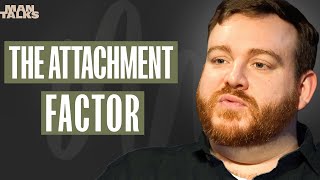
YouTube interview (Dec 11, 2023) between Connor Beaton and Adam Lane Smith about attachment theory, men's mental health, and contemporary dating culture. Adam describes clinical work with trauma, defines attachment styles (secure, anxious, avoidant, disorganized), explains biological mechanisms (oxytocin, GABA, vasopressin, serotonin, dopamine), and gives practical steps to move toward secure attachment. He critiques red pill/manosphere responses to male insecurity, proposes a transparency-based "Clear Pill," and discusses how technology and dating apps amplify dopamine-driven short-term mating dynamics that undermine long-term bonding.
Chapters
Most gurus over in the red pill circles, I should say, teach men how to switch to avoidant behaviors, how to use avoidant behaviors, in fact, to then prey upon anxiously attached women who are insecure, who are otherwise very kind and very sweet, but are already hurt and are afraid, and then to prey upon them, pit them against each other, and then emotionally coerce them into all kinds of sexual shenanigans. And it just turns these men into people they don't want to be, which is why they're in it for a couple years. And yeah, they usually have more sex, but then they start to really be disgusted by themselves, themselves and very unhappy because all they're doing is going through one relationship after another and that's not what they want either. So then they start looking for another answer. So.
All right, Mr. Adam Lane Smith, how you doing, my friend?
I'm doing great. It is good to be here. I'm looking forward to this conversation.
Likewise. I thought I'd full name you straight out the gates.
I appreciate that you don't want to be Adam Smith and sell books on Amazon. Let me tell you, it'd be about on page 3000. So Adam Lane. That's right is what I got to go by.
That's right. That makes sense. I mean, I feel like I'd be very googleable if I use my middle names because I have like, I don't think I've actually ever shared this on the podcast, but my middle names, both my middle names, I'll only reveal one of them. But both of my middle names are my grandfather's names and they are both old, old school names that most like nobody has anymore. And one of them is Roland. R O L A N D Roland, which is very, very old school name. Right? There's no Roland's running around, I don't think in grade four or two right now or in their 40s for that matter. But anyways, man, I'm looking forward to this conversation. Let's start where we always start, which is tell us a story about a defining moment in your life that made you who you are today.
I years back was a licensed psychotherapist and I specialized in trauma, severe trauma at the time. And I was placed in big correctional facility, one of the worst in the United States for some of the worst offenders, death penalty inmates, long term gang members. And I remember sitting in this little closet of a, of a tiny office that they gave me to work with with convicted killers. Obviously just put them in a closet with a therapist and there's this gentleman who was in his 40s and he had been a hardcore long term gang member, multiple killings for his crew, and he had reached the end of his rope because he had a small child at home. And he was looking at another five years on something completely unrelated to killing, completely unrelated, something else, something foolish that he had done, more foolish. And he was getting choked up. And he said, adam, I don't understand.
Why it's so easy for me to do these bad things and so hard for me to do the right things.
And I had fortunately just read a couple of books about attachment theory and I was just barely beginning my. My understanding of attachment and how it works and how it flows from childhood. So I looked at him and I asked him one of the questions that had been reverberating in my brain since reading that book. And I said, who taught you that no one will ever love you for doing the right thing? Who taught you that only the wrong thing will keep you safe? And I remember he broke out crying at that point. And that was his breakthrough moment. He got out of the gang, he started working, turning his life around. He was able to parent his young child a bit from prison. He's still doing better. He got out, he's taking care of his kid now. He's doing great. But that was his defining moment of learning. Who had taught him that goodness would get him hurt and evil would keep him safe? And that's the question that I think everybody needs to really answer. If you don't like your behavior, love that.
What was the draw for attachment to you? Because there's many different parts of psychology or psychoanaly, you know, psychoanalysts that we can go into. So what was the draw for, for you around attachment?
Oh, yeah. So I, I started off specializing in trauma and I worked with the most complex cases and the deepest problems and the PTSD signs that other specialists missed. People would come to me when they'd been in therapy for 20, 30 years and nobody had properly diagnosed them, they had got no results. And they would come into me and I did a Thor assessment of PTSD every time someone walked in, just in case. And I would catch those cases nobody else saw. But what I identified was a lot of people had PTSD symptoms or close to it, but they were subclinical, they weren't technically diagnosable. And they would say, well, I didn't have horrifying life threatening events like other people did, but I've always felt scared, and I have many of the symptoms of ptsd. And then I started linking that up with generalized anxiety disorder of lifelong anxiety and then especially teenage depression or depression that begins in the teenage years. And then panic attacks, being afraid all the time, and that depression coming in when your anxiety gets so high that you still get hurt and hurt and hurt and it never gets better. So now you're hopeless. And I started asking questions like, where is this coming from? And the schools and academic thought, they basically teach you, well, it's probably a chemical imbalance. You're just kind of born wrong. Or we don't really know exactly, could be formative. Freud tried to invent some reasons and things for childhood issues. We don't want to talk about that. That's weird and uncomfortable. So a lot of therapy is just built around, well, we don't know why it happened, but let's kind of try to figure out how to fix the symptoms. And I didn't like that answer. That's not a good answer. It's not an answer that solves the problem. So attachment theory, once I finally dove in and figured it out, it was a fringes kind of idea shoved way, way in the back of the bookshelf. Once I started diving into it, it answered that question. It said, this is why you get scared as a one year old, as a two year old, as a three year old. This is how you learn no one will love you. This is how you learn that you're, when you take control. This is how you learned that you were only safe when you give up control and have someone take care of you. And as that unravels, it started to fit into all of the other diagnoses that we saw. And it finally answered that question that was the draw of attachment for me, was it finally answered all the questions nobody else had been able to.
Yeah, I love that. I think my journey has been somewhat the same in the sense I studied Carl Jung for a very long time. I loved you. Jungian analysis and dreamwork and just his frame always drew me in. There's something about it that I really loved. And years ago I met a man who's become a good colleague and friend of mine. He's in his 70s and he's developed his own attachment model. And I learned a lot about developmental psychology and attachment from him. He's incredible. And so I was very much looking forward to this conversation because, well, I watched a lot of your content and dug in and I was like, oh yeah, this guy's on, on the straight. Like he gets it, you know, and let's just start sort of at the foundation. And then we'll, we'll see where this goes. But in for you. How do you define attachment? And then I have some. We're going to go a whole bunch of different places. But I just want to set the tone of the foundation so everybody knows that's listening, what, what we're talking about. How do you define attachment? Why is it relevant and important for individuals? And then we'll maybe talk about the ruptures or the impasses after.
Yeah, let's make it super simple. Attachment is the way that you as a kid learn to connect to other people, to give and receive love, and also to feel safe. Right. Your caregivers either taught you that they would work with you and cooperate during any conflict, a question and ambiguous situation. Ambiguous situation. When you have needs, when you're sad, when you're scared, your caregiver said, all right, I will work with you. We'll take care of this. Don't worry, I've got you. Or they made you feel like a burden, they made you feel unwanted. They didn't show up, they were gone. They were just mysteriously vanished. And you didn't know why their parents broke up when you were for any kind of reason that you could feel unsafe or feel like people are not going to work with you or that you don't deserve to be loved. That's what attachment, that's what breaks is the belief you don't deserve to be loved or the belief that other people are not capable of giving you love and of being reasonable and trustworthy. So you either split off and become insecurely attached, either anxious, avoidant, or what's called disorganized, more of a blend of the two. And you split off and try to make other people make sense and make safety out of, out of the world for yourself by pleasing other people, by playing games with them, by being tactical, being careful. Perfectionism, more of a focus on safety instead of real bonding. Or you learn from your parents that it's okay to be loved and take and people will work with you and be reasonable and you develop secure attachment. You go out into the world trying to build bonds, chasing opportunities, connecting with people. More of a positive, sunny outlook on life. It's one or the other. And the research shows that about 50% of people now have roughly insecure attachment issues. One of the three. Only about 50% of people are securely attached anymore, which is part of the reason we're falling apart. We can't make connections.
Do you find that the majority, if not all of the People that you work with have some form of an attachment issue.
That's generally, that's what people come to me for, is they have an attachment issue or they're connected to somebody who does, because you may be securely attached, but then you could bond with somebody through romance who's insecurely attached and you don't catch it. This happened a lot in the baby boomer generation. You'll see one parent was really secure, calm, reasonable, logical. The other parent completely snapped apart, has a personality disorder or something, divorced. The other person chased dopamine. I'm not happy. Me, me, me. That broke up a lot of marriages in the, in the baby boomer generation specifically. They're currently tripling the divorce rates in their 70s, by the way, because they're continuing on with those attachment issues and not solving them.
Yeah, I think that's one of the interesting things that I've found with the data around divorce is that it's skewed a little bit. You know, we see like, everybody's kind of seen the headlines of like 50% divorce divorce rates. But the reality is, is that you have the, you have the repeat, you know, offenders, right? You have the people that when they get divorced, they're much more likely to divorce a second and a third and sometimes a fourth time. And that, that skews the data. And so I think it's. I can't remember exactly what it is, but I think that first time, I don't even know what you'd call it marriages, but people that get married, I think it's something like 38% or somewhere between 38 and 42%. So it's lower than people expect.
It's about one third. And here's the thing that people hear, okay, so I have a one in three chance of getting divorced. There's a tremendous number of variables that slide into there that can increase that or decrease that. You can go down to a 1% if you follow a lot of those pieces that are in there. But you've, you've got to understand the variables that lead into that. Attachment is a major one.
So when people are looking for a partner, let's just talk about dating a little bit, because there's a broader conversation of the, you know, the dating market and relationships seem to be a bit of a mess, for lack of a better term. They're just. I think the clinical term is shit show. I think that's in the DSM 5. It's just a shit show.
Do you find that? Because I think for a lot of Listeners that are single, what they're looking for is what are the signs that a woman has a secure attachment, that she's got a healthy baseline for attachment and vice versa for the women. Like what are the signs that a man has a secure and healthy attachment? So can we go down that pathway a little bit and is there a difference between how men and women will display a secure attachment?
Good question. So really quick, here's what you need to understand is that people who are securely attached, they get that through their family network, which usually means their parents are securely attached and usually means their parents have other people around them and they're securely attached. They grow up in a network that's more securely attached. It's almost a segregated world between secure attached people over here connecting to each other and insecurely attached people. And they can't signal to each other very well. So that's the real segregation almost between, between people. When you grow up in a secure attached environment, you also then use that network to begin dating. So securely attached people primarily date through their network of known people so that they will have mutual acquaintances so that they have data about each other and they can understand about more about each other. They aren't dating complete and total strangers in an alley somewhere. Typically then you go to online dating. Right? Online dating.
That sounds fun. Come on.
Now that's Tinder for. There's, there's Tinder. You just select the alley option. Digital on Tinder, Tinder and, and dating apps, those are primarily people for people that don't have a network that can introduce them to people like that. So back in 1995, 65% of all, all couples got together through friends and family Networks. Now it's 12.5% connected through friends and family networks. Back then it was about 12.5% connected through what they called computer dating or odd different dating systems back then, you know, structured dating. Now it's 65% is, is dating through, through the apps. So it's actually reversed. It hasn't reversed because apps are more effective. Apps are, it seems to be less effective because they cycle you back in contin to keep you as a customer. They've reversed because people don't have family and friend networks as much. So securely attached people don't have those family and friend networks. So they do have those family friend networks. Insecurely attached people don't. So number one, if you're dating people on an app, understand that your dating pool already has a much higher chance of having somebody who is insecurely attached already. Because you're dating online. This is not to say don't date online or that people data on your bad, but you already have a much higher probability of connecting with someone who is insecurely attached. So the things you need to look out for, are they just showing up for fun or are they pretending to just show up for fun? Right. The women. I'm just here for fun. We'll just see how it goes. Yeah, I've got eight years to waste just waiting to see if you'll marry me. No, no, no. Securely attached women know what they want and they're usually going for it. And they'll tell you they're not ruthless and they're not trying to handcuff you and marry you that day, but they're very clear. Clear about what they do ultimately want. They just, they don't pretend they don't. Right. So men and women who are securely attached, they generally speaking, no more what they want and they kind of make it known. First, second date, they kind of talk about, hey, just heads up. I want to know if you're on the same page. I am looking for long term committed thing. If you're not, that's okay. Hey, that's cool. Let's finish our dinner. We'll high five. If you are looking for a long term committed relationship, I'd love to have a second date with you. That's more of a secure approach, right? Insecure approach is. I can't tell you that. Honestly, I can't be that clear. And I need to play games to figure out how you feel. So they're going to play their cards really close. I don't know if I'm interested or not. I don't know. Are you interested? Well, what do you think? Well, I don't know. And they'll just kind of play it and have fun. And then the first 10 dates are about fun. Then the first three years is about fun. And they won't talk about commitment or anything until you're already pregnant. So you got to get that. You got to get that going early. Securely attached people will talk about what they want early. Insecurely attached people won't. Another step that you got to look for is how do they talk about their ex? Do they bring their ex up on the second date? Do they bring their ex up a lot? If you ask them about their relationship history, how do they talk about it? Insecurely attached people will usually talk about relationships that happened to them instead of relationships that they were a part of that they played a role in this bad thing happened to me. Let me tell you about my awful ex. That happened to me like a disaster. Right? They'll talk about it that way. Securely attached people say, well, here's a relationship I was in. Here's lessons I need to follow through on. Here's a little bit of what my ex did, but we don't need to focus on that. It's me and here's what I've learned, right? They take value and lessons out of it. And the number three, they are very clear about how they feel about you. Fairly, fairly decently into it, but they don't throw themselves at you. Right. Securely attached people usually bombard you. Either they're anxiously attached, so they leap at you with arms and legs spread trying to grab onto you so you don't leave them because you've shown them a scrap of attention, or they're avoidantly attached where they will overwhelm you with what's called love bombing and mimic love by just. By pushing oxytocin into you, by doing all kinds of things to make you feel loved. But they won't actually follow up with substance. They'll go really fast. Insecurely attached people go really fast. Securely attached people, they play it cool. They might develop feelings, but they play it cool. They know it's a long term sustainable game. Those are the three things I would look for.
I love that. I appreciate that. And it's funny. My. My wife and I actually met through friends. A good close friend of ours who runs on Instagram, he runs an account called Create the Love. He was not. When he says create the love, he's not like hooking people up, you know, it's just actually creating love in your life. But he was a mutual, mutual friend of ours and we met through him. And I've seen that with a number of people he actually met. He has partnered the same way through mutual acquaintances. And I've seen that time and time again. That's a pretty decent way to have those overlapping networks. I love that that's a sign of a secure attachment. Can you give a little bit more insight before we go down the sort of rabbit hole of some of the things that I want to talk about? I just, again, I want to lay some of the foundation. So for the listener that's out there, can you give some indicators of the differences between avoidant and anxious and then where disorganized fits into this whole picture? Because I just want everybody to have the same playing field before we, you know, go down into the weeds?
Absolutely. Now I'll just give a warning here. Most people who talk about attachment, they come from the lens of anxious attachment. They talk to people with anxious attachment, so they tend to demonize, avoidantly attach people really hard. I'm not going to do that. I'm going to talk today, hopefully kindly, about everybody. Anxious attachment, they. They are afraid of being abandoned. They do nice things for everybody else. They act like a doormat, typically for everybody else because they don't believe they are worthy of love. So they are continuously doing nice things for you, hoping that you will meet their needs and not abandon them and that you will love them. It's an endless game of please don't leave me. I promise I'll be good. That's anxious attachment all the time. Avoidant attachment is, I don't trust that other people will be fair with me when the chips are down. So I'm never going to be in a position where other people are in control of me or my life in any way. I will avoid conflict, but that also means I'm going to avoid closeness, because closeness can lead to conflict, it can lead to issues, it can lead to concerns and conversations. So I'm afraid to get close, and I will keep everybody at arm's length. Some people who are avoidant are very manipulative and they go out and they manipulate other people. The extreme version of this could be antisocial personality disorder. But most avoidant people are not manipulative. Most avoidant people are just scared. They're just trying to not get hurt, and they stay out of relationships. They just stay away from other people because they're so nervous and they're so scared of getting hurt. And then disorganized is usually a blend of the two. It's usually when you have picked up one attachment issue and that wasn't enough to make you feel safe in childhood, you kept getting hurt, hurt, and people were really disruptive to you. So then you layer on a second attachment issue the other way to try to stay safe. So you avoid other people as much as humanly possible. But then when you do get close, you become very, very obsessive of keeping them around because you're afraid of being abandoned. Or you tend to run around grabbing hold of people because you're so anxious. But once you do connect to them, it scares you to death to be that close to them. So you become avoidant and push them away. Jump out the window, burn the place to the ground. Disorganized people, they tend to be very chaotic and nobody suffers through it more. Than they do. The extreme version of this would be borderline personality disorder. But this, this, this is the smaller version of a disorganized style. They don't have the full personality issue. It's just they are, they are never able to settle in their relationships because they're always scared in one direction or the other. Those are the three types you look out for.
Are you familiar with Dr. Robert Glover's work? No more Mr. Nice Guy.
Absolutely, Absolutely. Absolutely. So I had a great conversation with. He's a bit of a mentor to me. I got his book over here on the shelf.
Nice. Yeah, yeah. He's become a good friend of mine over the years and his work is phenomenal. I think his work has really supported a lot, a lot of men. I'm curious though, as you broke down these different styles, do you find that nice guys are predominantly more anxious or more avoidant? Like, where would you say that they fall? Because as you were describing, anxious, like, I kind of feel like I can go both ways. But I, I do find that a lot of nice guys tend to fall more on the anxious side of the spectrum. But I'm curious to, to hear what your thought is on that.
Generally, yes, generally it's Nice guy syndrome is, is an anxious attachment phenomenon. Generally speaking, there are some avoidant men who, who people please, but it's not to not be abandoned. They people please because they think that's what's required, required of them by other people. They think that's how society works. They're not afraid of being abandoned. They can go become self sufficient. Nice guy syndrome is typically about I don't deserve love, but I'm going to try to earn it. And it usually goes back to their mother. Did their mother give them consistent love or inconsistent love? Inconsistent love or mom pulling away from him at some point and he was given love and then it was removed from him. That seems to create that anxious attachment that he's endlessly chasing it. So then he goes, finds a wife or a girlfriend and he treats her the way he treated mom. He tries to get mom's love all over again continuously. Yeah, that's nice guy syndrome. I had a great conversation with Dr. Glover about that.
That's awesome. I feel like, I feel like the three of us would have a good dialogue. Maybe we'll have to put that together one day. I bet that would, that would, that would kick some ass for. Let's just pause there and pull in that throat a little bit. For the nice guys that are out there. There are many. I Think in our, our culture as I think we'll talk about why later on. But how does a nice guy begin to unwind that anxious attachment style and, and move out of, move out of that to a more secure. Because I mean most people, not most, but a lot of people are, are familiar I think with John Boby's work and attached. I think a lot of people have read the book and it can be very helpful to have these, these frameworks, but it can also become a sort of cage that people feel trapped in. It's like, oh, there's my anxious attachment again. There's my avoidant attachment again. So how do we start to shift out of these towards secure attachment? I know it takes a while. I think in Bolby's work he talked about something like two to three years if I'm not mistaken of like consistent behavioral changes. Maybe, maybe we can get there faster. I know some of the guys that are probably listening to this that are.
Like two to three years. Dude, no. Yeah.
But I'll hand it over to you. I'm curious to hear your thoughts on that.
Absolutely. So I like you were asking me how do we, how do anxiously attach men break out of that? And there's actually two outcomes when anxiously attachment break out of that one. Yes, secure attachment. You can absolutely fix your attachment styles. That's one thing I want to hammer in right now is you don't have to stick with whatever, whatever your attachment quizzes you take online or whatever you identify with. You are not stuck there. That's why I, when I began this process, I hated attachment styles. I would not talk about them because people wanted to take them on like zodiac signs and say, all right, well I'm, I'm an anxious today, so let's look at my horoscope. And that's not it. People do not do that. You can change and become secure and it does not take three years. There's a couple steps that you need to follow. Number one is identifying the core elements of yourself. And when men do this, they're defining principles, their values, the things they put aside when it comes time to make a decision. Right. Honesty, courage, compassion for others, loyalty, integrity, keeping your word, freedom, creativity, whatever values you have, your honor, code, if you will, that is what men throw away, especially nice guys. Oh no. I'm in a circumstance where someone might be mad at me, throw out everything that makes me proud of myself and have any self esteem, do whatever's going to make somebody happy so that I feel safe. And that's, that's why they hate themselves. That's what leads to that self esteem loathing. So number one is identify that core code that you want to live by. Number two is to start instilling that in yourself daily with practices, meditation practices, phone phone reminders, writing on your bathroom mirror and dry erase marker. It's one of the first thing I have my coaching clients do. Write your code on your bathroom mirror. Set phone reminders every day that ping. You meditate on it for five minutes every night. Did I uphold my values today or did I give in to them? If I gave in to the fear, what am I going to do differently tomorrow to maximize my chances of going up 1% over time? Every day you boost that, then you go and you open up to somebody else. One person. You have what I call the I am an anxious person speech. Hey, I just want to tell you, you might already know this about me, but I'm an anxious person and I overthink things. I play games, I try to make people like me and I hate it. I never want to do it again. And I'm telling you because I trust you. So let's build a relationship that is honest and open. And if I have confusion or, or need clarity, can I just ask you and you do the same with me and odds are good the other person's going to say, yeah, I already knew this about you. Yeah, that's fine, let's do that. You relax and you get all this rush of good hormones and bonding chemicals and everything you didn't really get much of before. And then you start feeling better. And the more that you lean into those relationships, the more open you are. It's like filling an experience gauge in a video game. You're leveling up. Your goal is to fill that up and fill that up and identify that the magic number by anecdotal evidence through my clients seems to be three people. When you have three people who fully accept you and you are able to be open with them and reality test with them when you have irrational fears, when you do that over and over and over, it reprograms your brain every single time. So maybe John bowie was saying two to three years for fully 100% rock solid secure attachment. But it grows drastically even within a couple of months of these efforts, you'll see tremendous growth if you really stick with it. I'll pause for breath. Do you have any questions on that? Otherwise, I'll tell you where it goes wrong. When nice guys try to break out.
No, I mean, I think that that tactical approach is Very helpful because there is something in there about being able to trust the connection again. You know, like, I know and.
I know in, like, developmental psychology in those early few stages, it's a lot of am I okay? Is my world okay? Or that's reverse. It's is my world okay? And then am I okay? And if we don't get that neurologically and in our nervous system, it can be very hard to reconfigure that. And so I love the tactical approach because what you're sort of saying and that what you're laying out there is just a pathway for guys to then recondition their nervous system. To say, I'm okay being honest, I'm okay being forthcoming. I'm okay telling the truth about my needs and my wants and my desires and. And you know, how I want to in the bedroom and like, all that kind of stuff, which is usually somewhere down the line. Maybe don't start with that one, but. Or do. I mean, I don't know. It's your life, but it could be the place where you want to start. But you're giving a sort of pathway towards understanding that attachment and connection relationship is safe and trustworthy and that your needs are going to be prioritized. And so that's awesome. Please go ahead and tell us where it goes awry.
Really quick. Let's jump in there. It's not just that you are dismantling the fear and soothing the nervous system. You're releasing of the big five brain chemicals. There's a lot of brain chemicals, but the big five that we really look at with attachment, oxytocin, which is the love hormone, makes you feel loved and safe. If you got inconsistent attached oxytocin as a kid, that often leads to that anxious attachment, you're chasing it. You're a junkie all the time for the rest of your life trying to get loved and safe again. Oxytocin releases something called GABA. Gamma Aminobi uric acid. GABA is an inhibitory neurotransmitter that shuts down the release of cortisol. It minimizes the release of cortisol, shortens the length of the release of cortisol. It's an anti anxiety and antidepressant. It also helps synthesize melatonin. It also helps you be efficient on. On utilizing magnesium to relax and sleep and let your muscles uncramp. So you have to have a lot of oxytocin to really release an adequate supply of gaba. If you don't, I mean, that's literally your brain saying, somebody loves me. I don't have to be scared. That's those two chemicals. If you don't have them, you don't have them. The next one is vasopressin. It's the hormone release. When you solve stress together, it's men accomplishing something together, it is resolving a challenge together. Men are goal oriented. Who knew that men have a little bit more receptors for vasopressin than women do, but we all have the receptors for it. And when you have receptor vasopressin, your system, it actually makes you more protective of other people. But it also, the research shows, makes you feel safer because you're saying, I have allies that solve stress with me. I'm not alone. Right? You don't have lone wolf syndrome anymore. Next is serotonin. You can get this through a number of ways, but especially through deep abiding relational connections and good conversation, good memories, good moments, peace. Right? People who have bad attachment, if they're on the self improvement path, they obsess over serotonin. But they're never going to get as much as they need because they won't get it through their relationships. The last one is dopamine. Right. When you have attachment issues and you're alone and you're separated from other people, you don't have conversations to that depth. You don't open up, you don't share, you don't bond, you don't solve problems together. Your brain looks like this and you have dopamine, which is going to lead to porn addiction, it's going to lead to sugar addiction, it's going to lead to nicotine addiction, it's going to lead to all kinds of impulsive behaviors. Every time you're stressed out, you're going to binge on dopamine. That's all you're going to think about. And that's going to be your primary driver for life is dopamine. And then your relationships are going to wear out about seven months because you won't get the novelty dopamine anymore. From the first seven months of a relationship. Then they start to fall apart. When you fix your attachment, yeah, it soothes your nervous system. But then your brain does this inside your relationships and opens up like this and you have a full, rich life and it feels good. And you have discipline and control and fulfillment and then it feels amazing. Then nature takes its course and then you want to have secure attachments, so you lead in that direction. It's not like, oh, I have to suffer through fixing my attachment. No you fix it a little bit. Then you have an amazing experience where you open up and you get these chemicals. You go, whoa, what was that? And then you start leaning into it. It feels great. That's, that's, that's the good part. Everybody out there. So if, if you're afraid to fix your attachment, you feel like it's going to be a living hell. It's amazing. You're already in a bit of a living hell. It feels so much better once you fix it. Fix it. And it feels so good. As far as falling apart, the sad, sad, terrible truth that I have seen that I hate is that a lot of anxiously attached men, they tend to connect with the opposite. They tend to connect with avoidantly attached women or women with personality disorders, or they just fall apart in relationships, even with nice women, and they ruin them because they won't open up about their needs. And then they feel a victim. Then they go online and they type in bad woman, hurt me, right? Or they, you know, what does it mean when a woman is manipulative? What does it mean when a woman is unkind to you? Why are women so mean? And the only thing they're really going to find online is fairly radicalized red pill circles of formerly anxiously attached men who have never met a securely attached woman. It seems it appears that they were primarily hurt by women with personality disorders, and now they have codified how to act around women with personality disorders into how to treat all women forever. Because all women on earth have borderline personality disorder. And all women are waiting to shank you with a knife and laugh at you. All women will cheat on you if you have the slightest amount emotion. All women are just waiting to trade up at the moment's notice. And they have no loyalty or kindness whatsoever. All women are sociopaths. And that is, that is the sad version of how men get out of an anxious attachment because they become avoidantly attached. The red pill circles teach men. Most gurus over in the red pill circles, I should say, teach men how to switch to avoidant behaviors, how to use avoidant behaviors, in fact, to then prey upon anxiously attached women who are insecure, who are otherwise very kind and very sweet, but are already hurt and are afraid, and then to prey upon them, pit them against each other, and then emotionally coerce them into all kinds of sexual shenanigans. And it just turns these men into people they don't want to be, which is why they're in it for a couple years. And yeah, they usually have more sex, but then they start to really be disgusted by themselves and very unhappy because all they're doing is going through one relationship after another, and that's not what they want either. So then they start looking for another answer. So guys out there, if you're anxiously attached, becoming avoidant is not the answer. Becoming afraid of women is not the answer. Fear is not the answer. Manipulation is not the answer. Women out there, same thing. If you've been hurt by an avoidant man, becoming manipulative and hurtful yourself is not the answer. Do not be afraid. Secure attachment is where you're looking for.
That was good, man. I feel like that's gonna blow up on the Internet. Or at least it should. Should. At least it should. No, I mean, in, in all seriousness, I think I've always had issue with the red pill content. I know it's helped a lot of men in some ways, and it's given them a framework and a structure, but I've always held the, the frame, to use their. Their terminology, that it's non relational. And it's non relational in the sense that it is predicated mostly on manipulation and fear and coercion. And I think one of the main challenges is that the more that I learned about attachment, the more I was like, oh, this is red pill is not informed at all about the foundations of how we actually securely attach as human beings to produce secure, loving, kind, long lasting relationships. And you have to maintain this kind of Persona that you create. And it's. It's almost an iteration I find on pickup culture, you know, like a pickup. The one reason why pickup was so detrimental to so many. I've worked with so many men that went through pickup, and then they're like recovering pickups. And then, you know, they come and work, you know, with us. I'm sure that you've worked with a number of them. And what ends up happening is that they're devastated because they had to create a Persona that wasn't really them that then they use to attract women. And it works because you can run a script to attract this specific type of woman that maybe has, you know, daddy issues or is wounded by her father or et cetera. And you can run this script and attract these women and maybe you can build a relationship with them short term, but eventually you kind of feel like shit because who you actually are never gets to enter into the relationship. And so you segregate this huge part of who you are part, and it's never allowed in the relationship. And that's like the definition of avoidant attachment, right? It's like, I don't want you to know about my insecurities. I don't want you to see my fears. I don't want you to connect with the parts of me that might be weak and et cetera, et cetera, et cetera. And so I'm just never going to bring them in my relationship. And then when you ask about them, I'm going to bounce. I'm going to shut down and peace out. So I've always had some challenges with it. It's interesting because somebody put me in touch with Relo Tomasi to have him on the show. And I have been. I've been sitting on that for a while because.
I know. I know that when I have that conversation and I put it out on YouTube, the trolls are gonna show up hard, you know, and. And I want to have a very meaningful conversation about, you know, what's the intersection between attachment and evolutionary psychology? Because there is an intersection. You know, those two things can coexist. It's not. One only exists in a vacuum, and the other one is complete. So I'm going to pause there. What are your thoughts on everything that I just said? Do you. Do you want to add anything in? And then let's.
I love what you just said. Red Pill takes evolutionary psychology, but then it assumes that every. Every woman on Earth has borderline personality disorder or antisocial personality disorder. Every woman's a sociopath or every woman's a nut job. And then you assume that that is the default setting for evolutionary psychology. Now you're trying to survive based on that. And that's where the flawed premise comes out. And guys that study Red Pill and are immersed into it and make it their religion, it really is like a cult. Guys that are that dove that. That deep into it, they get offended when you tell them that. But it's a place of fear. Fear is never the answer, you guys. We're not. We're not trying to build a Jonestown. I have said that Red Pill is a mental Jonestown, is what it is. It's, come here, be afraid, worship me, and then when the feds come, we'll all take the Kool Aid is almost what it looks like they're setting up for. And it's not the answer. So learn evolutionary psychology. It's beautiful. Evolutionary psychology was not invented by Red Pill. Rollo Tomasi will tell you that himself. But people assume he invented it. They just think he did, because that's the first place they hear about it. Evolutionary psychology even talks about attachment. They Weave together. They are, they are. They are one in the same. It's a survival adaptation through evolution. It's. It's a normal piece. Yes. Everything you said, beautiful. Just love it.
I appreciate that. Yeah, it's. It's a very interesting one. So, so let's. I want to come back to this. I want to take one quick little detour back into the dating world world, and I would like for you to possibly just use the attachment frame to do your best to define what the hell is going on in the dating world. Like, because it's a lot of people, you know, talk about what a mess it is. There's kind of, you know, all this content that's online that's, you know, gotcha. And there's a lot of finger pointing back and forth between men and women. There's this huge gender war happening between men, men and women where, you know, both seem to feel very disenfranchised by the opposite, you know, opposing gender that men feel. Some men feel controlled by women and some women feel controlled by men and that they're the, you know, bane of their problems, et cetera, et cetera, et cetera. So through the lens of attachment, what do you think is happening via the dating world? How does technology fit into that? How is technology maybe fractured or ruptured our connection to attachment? And is there a. Is there a pathway forward from your perspective?
Absolutely. So keep in mind that the dating world is not representative of everybody. Mostly secure, attached people, they tend to separate off. They get married fairly young, they find their partners, they start building a family. A lot of securely attached people are out of the dating pool. So the dating pool is primarily insecurely attached. Right. And the people who get divorced and then re enter the dating pool, a lot of them have attachment issues as well. Well, it's just. As you get older, the dating pool gets more and more and more insecure and worse and worse and worse. Just raw numbers. It's awful.
The dating pool then is injured people who are going out and injuring other people and getting injured themselves repeatedly. They also. That brain, right, they're dopamine binging. Now, the apps have come along and you can just scroll like you're cruising on Amazon for the next person to have sex with with. So that day, that novelty, dopamine, right, it hits for the first six to seven months, but then it begins to wear off and it is supposed to be replaced with oxytocin bonding. They do saliva swabs of couples who've been together for years, securely attached couples. Who've been together for years. Their oxytocin rates are off the chart on any given day. And it. It's overwhelming. Oxytocin is what spurs spontaneous displays of affection. It's what spurs that. So they did some research recently with fathers, and they had the fathers hold their babies and they measured how much the fathers played with the babies. Spontaneous affection. Kiss the baby, you know, talk to the baby. And then they shot oxytocin up their nose in a mist. They can do this. And then they went back and measured how much affection the father showed the babies after that. After the oxytocin blasts, fathers were way more. More emotionally interactive. Talking, playing. It was just this overwhelming change with the oxytocin. Not that they were all bad before. It was just like this surge of overwhelming spontaneous affection. That right there is what is supposed to replace the dopamine at six to seven months. And you're supposed to transition from one to the next. A lot of people out there are familiar with the one year cliff of the female sex drive drive. The one year cliff comes from her dopamine drops. She's not trying to earn your approval, she's trying to bond with you. But her sex drive is driven primarily by oxytocin, especially long term. Does she feel loved? Does she feel safe? Does she feel connected? Have you demonstrated emotional openness? Have you forged an emotional bond with her that would make her irreplaceable? Or have you kept her at arm's length and she's nothing but a dopamine binge to you? So she's imminently replaceable. At the drop of a hat, her sex drive will go down or go up in association with her oxytocin bond with you. So there's couples out there doing this game of dopamine, dopamine, dopamine, and then pick me, pick me, pick me. And not sharing explicit needs, not sharing explicit expectations. Everybody's guessing. One of the most heartbreaking people I have come to me is women who've been in a relationship for eight years. And they come to me and say, Adam, do you think he's ever going to mention marriage? I'm like, well, what do you want? I want to get married and have children. Well, what does he want? I don't know. We've never talked about it. I've been waiting for him to mention it. It's been eight years. Yeah. And I'm 35 right now. Do you think he's going to mention it? No, actually, I think that you guys have maintained this Long because you didn't mention it and he's afraid of it and you're just making it easy for him to just run away from it. So I recommend that you have that conversation fairly quickly and figure out if you're both on the same page or not so that you can build a relationship or find somebody else who does. And next time, don't waste your time, is what I typically tell these people. It's harsh, but it's true. You've got to be clear about what you want, but you've also got to identify that dopamine is not your friend, Dopamine is not your friend. And jumping into sex as fast as possible, it makes you drunk and stupid because then you're settling for red flag after red flag after red flag, hoping to just continue your binge. And you, you will actively not address problems because you are emotionally drunk and emotionally stupid, hoping that you can just linger on in this relationship as long as possible. So pause, take your time, don't jump into the sack. Pause and get to know the other person. Do some real compatibility testing. Be clear about what you want. You have to be a jerk about it. Be clear about what you really want and see if the other person's able to work with you and have conversations with you and be honest about what they want as well. See if they're a little bit more secure. And for God's sake, if you're insecurely attached, fix it. Become securely attached first so that you can signal correctly to securely attach people and get them on your side.
Yeah, I, I really love that because I think in, in many ways. Well, first off, I was listening to the, the first part of the conversation about dating apps, and I couldn't help but almost hear like 20 year old me chime in and being like, that sounds great. You know, like just all that dating and all that dopamine and all that sex all the time. But, you know, I think in terms of wanting any type of lasting relationship, that's not, that's not it. But, you know, I think one of the things that I learned from my, my colleague and my mentor, his name is Dewey Freeman. And one of the things that he says is that the, the foundation of, the foundation of attachment is being able to go through a hard time and come out the other side. Okay. And that when you can do that repeatedly with somebody in relationship and in contact in relationship with them, that it actually fixes some of the holes that can be there from our anxious attachment or, you know, from our avoidant attachment. And creates that secure attachment. Right. And one of the things that I noticed with my wife was that that was one of the things that I was drawn to immediately, you know, is that we could, we could talk about hard things, whether it was in my past or we could talk about hard things in terms of. Terms of like, where we wanted to live or travel or conflict would come up and we could work through it in a way where we were both. All right. That doesn't mean that we solved the problem perfectly every single time. But our relationship wasn't so shaken up and, and battered and bruised by going through that hard time. And for everybody that I've ever worked with, that's, that's one of the indicators. It's like all my. When I look around at my friends and the people that I've worked with over the years that people that are able to repair from any type of relational tear or conflict, you know, within sort of like 24 to 72 hours, seem to have a pretty good connection, ideally 24 to 48, because it maintains this like, oh, I can go through a hard time and I can go through that hard time with you, and we can come out the other side. Okay. And it's not going to be open and linger and all that other kind of stuff. So I think that what you're saying is really, really valuable and pretty spot on. And one of the things that I've thought about and I'll. I'm curious to get your thoughts and I want to move away from, from red pill a little bit, but I've always found the like, and this isn't to, to, to hate on them or say anything bad about them or anything like that, but the men going their own way, I've always looked at that and been like, that's the most avoidant thing I've ever heard. Like, that's just pure. Like, you're actually like Dec, declaring your avoidance. You're just saying, I'm not interested in ever having a woman in my life because I don't trust women and I. And I can't stand to have a secure relationship with them. And there's other parts to it. Like, there's. I, I know that there's other parts to it and there's some that, you know, some aspects of it that are very much about men's rights and social issues and societal things that are actually quite important, but it gets mixed up in, in this. Like, I, I can't. I'm avoidant of women. So I'm curious on your thoughts. Have you gone into, you know, researching the incel movement or men going mgtow, men going their own way. And, and what's your thoughts on, on those, those spaces of the, the manosphere on the Internet?
Oh, yeah. Mgtow. I, I've had, I've had several dear friends who are mgtows. And.
Generally speaking, they're not bad people. They're actually not usually out there trying to hurt anybody. They're not generally the ones who are out there manipulating women who are preying on hurt women. They're actually usually some of the more honest guys because they're fairly straightforward. And they'll say, relationships will never work. I have given up on love. I. No one will ever be okay. Yeah, they might say, you know, all women are monsters. But then they say, I'm going to stay away from them. And that's just how it is. Okay, well, you know what? If you're going to live in fear, at least that's the more honorable way to typically do it. Instead of, all right, I'm going to live in fear and use these tactics to harvest sex from women because they're livestock for me. Right. The mgtow guys usually aren't doing that. Typically. It is still living in fear and I understand where they're coming from, but it is still living in fear. Yes to the men's rights issues. Yes to men being in many ways second class citizens in many areas, especially in family courts. Right. Especially with sentencing, especially with, with custody battles, especially with all kinds of issues like that. Absolutely. There are genuine grievances here. But again, don't live in fear because living in fear is not really the answer. Right. If your only experiences with women who are awful and evil, yeah, you might believe that's all that there is. But, but there is more out there. Study attachment theory, understand how it intersects with actual reality, and then figure out if you want to make a decision not based on fear, but based on fact.
What is the clear pill and how does it relate to the red pill? I've seen a couple people talk about this. I know you've been talking about this. Break this down for, for the good listeners.
I've got so many men coming to me that say, Adam, I'm, I'm through the red pill. I'm over the red pill, but I don't know what's next. Right. It was my only answer. Where do I go from here? I don't want to manipulate women anymore. I don't want to be afraid. I want to build an actual sustainable relationship. Is that even possible? Is marriage still real? Can I really have a wife and kids? Clear Pill was my answer to this. It's clear because it's obvious. It's the obvious next answer. It's attachments, being honest and connecting and everything we've talked about. But it's also clear because you're transparent with the other person. It is based on transparency. Here's something that I've been playing around with, and I'm going to pitch this to you, is masculinity. It was almost erased from the west, right? World War I, World War II, the Dust bowl, the Great Depression, everything. It, like, wiped out this. These generations of men, killed so many men, shoved men in a meat grinder, shoved them into factories. They were removed, removed from their families. We had very little presence of real masculinity in families for a long time. Women stepped up and became masculine to try to take over that role. A lot of the baby boomer men, not all of them, but, you know, a good portion of them, they abandoned their families and created really wounded women who then went on to raise more wounded women and terrified women. Don't ever trust men. They'll always let you down. Go focus on your career. Get really financially stable. Only have babies with a man once you, you're, you know, 500 years old, you know, and you're financially set and he's, and he'll never be able to hurt you that way. We've, we've done that. And women have been primarily masculine. Men have not. Meanwhile, we've told men, don't be masculine, don't be masculine. And men are being suppressed. Men are being taught to act like defective girls. Then men got through that and they said, I'm tired of this, I won't live this way anymore. We had the, the men's rights activists, we had the pickup artists, we had Red Pill all kind of wove together. And I think that this was almost a juvenile masculinity trying to emerge from its chrysalis. This is immature masculinity trying to push through, right? People look at Andrew Tate and I'm not going to make a comment on him, but the men who live that way, who say manhood is about as much money as you can get, as many naked women as you can get, and being able to flex on the other, on the rest of the world, that's masculinity. That's, that's like a 15 year old masculinity, right? That's a teenager masculinity. That's middle school masculinity. And high school masculinity. I think we're emerging into an authentic, secure adult masculinity. And that's where we're clear. Pill comes in, is let's be clear. Let's be honest. Let's live with integrity. Let's set aside the fear and learn fact. Yes. Let's embrace evolutionary psychology and some hard facts and some difficult choices. Let's embrace the differences between men and women. Let's understand those differences. Let's also push for relationships that are based on mutual fulfillment. Let's push for relationships based on openness and trust. Let's push for relationships based on integrity and honor and loyalty. Let's not have sex mindlessly with women in clubs and reward women who are very, very, shall we say, unstable and unhealthy. Let's not reward, reward that behavior, women. By the same token, let's not reward the behavior of the men who are out there playing games, pretending, trying to get in your pants. Let's everybody calm down and let's start demanding more authenticity and more transparency in relationships and be clear and honest with each other. That's the goal of clear Pill. And everything stems from that.
There's a lot in there that I feel like we could poke around in. And one of the things that I found is that there seems to be in short supply of mature masculinity, you know, just mature men. And I think that, you know, I think people like Chris, you know, both of us have been on a show, Chris Williams show. I think people like him are doing a really good job of bringing people to the forefront who are having those conversations, who are, in some ways and not, not all of his guests, but some of his guests are, are good representations of mature men that, you know, I think many, many, many, many men have grown up lacking in their life as any type of role model. Right. It's like 1 in 4 kids in America are going to grow up without a father figure in their. In their household. And then they'll go into the education system where it's, you know, totally dominated by women. And then if they want to go seek a counselor or a therapist or a psychologist for help, that's 78 to 80% women. And so they can literally go through their entire maturation process with, you know, almost no mature men to model what it looks like to be a man who is dealing with problems or how to deal with anger or how to, you know, how to interact with women and be respectful and responsible, but still direct and assertive. Right. And so I've Been talking lately about this epidemic of male vacancy. And in some ways it's that we're coming out of this period where mature masculinity has been vacant within our cultures and our society to the degree that we, we hardly can't tell what it looks like anymore. And so as some more mature men start to speak up and have platforms and talk and whatnot, you know, I think it's starting to come back into our culture. I also think that, and Chris and I talked about this when I was on a show that, and I'm curious to get your thoughts that our fathers grew up under the generation of, arguably one of the most traumatized generation of men ever. The men who came back from World War II specifically carried so much trauma and PTSD and they returned home and were expected to pick up their jobs, go back to being husbands, go back to being fathers, and go back to dealing with the problems of everyday life while, you know, three to four weeks ago or a couple months ago, they just saw their friend, you know, blown to pieces. So I think we're kind of coming out of this experience where a lot of men were raised by men with an intense amount of trauma and that created this sort of wave throughout our society and our social structures. So I'm curious to get your thoughts on that and maybe the role that it's played in, I mean, maybe our attachment as men to one another, to our fathers, to our friends. But just to get your take on.
That, I mean it goes back even further than that. I mean that layers on top of the industrial revolution which overtook families living together and staying together in urban environments, in rural environments, on their family farm, long term, working together, connecting together, living very close to each other, to throwing into cities and being in tight little quarters where there was five families with an apartment kind of thing, families, parents, working 16, 18 hour days. People forget that Henry Ford came along and invented the eight hour workday. He invented the nine to five. He invented the 40 hour workweek. Before it was before that the average workweek was 100 hours for parents. So that was what we walked into initially from, okay, let's work together in our farm and fields and take care of each other. To parents are removed from the home 100 hours a week. And that, that was a devastation, ripping up kith and kin, family organizations and groups. You lost all five networks that you're supposed to connect through family, kith and kin, your, your even religious community, your village, everything was destroyed and now you're thrown into cities for the first time in Mass numbers, bigger numbers even than ever than before. And then you had World War I. Then you had Great Depression, especially here in the United States. You had massive depression throughout Europe as well, and devastation of economies and shifting and changing. Then you had World War II, and that was. That was okay. We've already been through a living hell, and our parents were through hell, and we lost everything and we have no connections. Now let's all become the worst traumatized generation in history. Then let's come home to everything being broken. No family connections, and we don't have human bonds hardly anymore. Now let's be the worst off any generation has ever been from both of those directions. What you said, and I said, now let's raise the baby boomers. And that's why the baby boomers are so messed up. So many of them, not all of them, but so many of them are devastated by, you know, my parents didn't love me. My parents did love me, but they were broken. I don't understand what love is. And then the technology growth that has come out of that. They got the car, which became the mobile sex wagon. Now you can go anywhere you want and have sex with anybody within 50 or 100 miles. That was overwhelming. That was revolutionary. That was. That's what created the idea of really modern dating. Hey, I can just go find someone attractive and have sex with them in my car somewhere. Hey, we can just start doing that. We can go faster and faster and faster. They at least had some family network surviving, but then they gave birth to Generation X and Generation Y, which life changed around them so rapidly, and they had so many conflicting messages screamed at them. Generation X and Generation Y basically told everyone, go f yourself. And then they just sort of hide in the corner. Then baby boomers got divorced, and in their second round of marriage, had the millennials and said, we won't make mistakes like we did with our first batch of weak children. We'll make exact copies of ourselves. And the millennials and boomers hate each other because the boomers tried to make the millennials harder than they made the first generation. And the baby. And the millennials have never seen a functioning family system, not ever. And now we've got Generation what Z? Now, where they're living in the rubble of a society, in the rubble of in ruins and smoking ruins, trying to pick through and find scraps of food to eat. And that's what our dating system is now, and that's what our family systems are now. That's what our political systems are now. It's what our economic models are now is people living in smoking ruins from the last hundred years of family devastation. And that's how attachment and masculinity all fit together, because men are more needed than ever, and they are more terrified and disconnected than ever at the same time. But one good piece of this, one good piece is that Rome started off with a bunch of random outcasts and foreigners and strangers wandering the wilderness. And they were drawn into a tiny little village called Rome that was set up as a sanctuary for anybody who wanted to live there. And Rome got to be pretty decently sized, from what I hear. So men can come back from almost nothing when we are given the incentive. And when we connect to other men, we can come back from absolute devastation. So that's my little historical spiel.
I was going to say it sounds promising before you, before you added in the. The last piece. And I think it is. I think when I hear the doomers and I hear the catastrophizing of whatever the problem of the day is that's going to wipe out the entire species of humanity.
I can't help but return to being a kind of relentless optimist, a realist as often as I can, but. But still relentlessly optimistic. Not naive, right? Not, not stupid, not closing my eyes to the problems that exist in life, but relentlessly optimistic. Because I do feel like part of maturity is being able to, in the words of Francis Weller, hold grief in one hand and gratitude in the other. And so we can't look at the catastrophe or the shift that's happening in our world today without also holding the gratitude and the joy and, you know, whatever you want to say, the goodness that also simultaneously exists. And if you can't do both, then you're probably hijacked. And it's funny how in today's culture, you know, that seems to be looked down on. And I think one, one final piece that I wanted to add it in, as you were talking about the whole. The whole cycle was that the boomers are also the richest generation. And so you have these kids of these very traumatized people who all of a sudden have had tremendous economic prosperity, just insane amounts of economic prosperity, right? And. And it's like, well, you know, it's kind of easier to avoid your problems when you have a couple boats and, you know, the Lambo in the garage and the 8, 000 square foot house, right? It's like you. You can go through your second or third marriage and just keep dating younger and not worry about it, right? So so anyway, that dopamine is a hell of a. Means one hell of a drink.
You never have to come off dopamine. You won't.
I'm curious for you to just maybe expand a little bit on how you view mature masculinity. Maybe not sort of from a definition standpoint, but what are some of the contributing factors that actually help a man to mature into that mature, masculine.
I will say that.
I didn't feel like a man. I didn't really step forward into responsibility and to honor. I didn't really get it right, why it was important to be stable, maximum discipline, to lean in, to start your own business or, or to put in your all at the office. I didn't really understand all, all that until I held my son in my arms for the first time. My oldest son. And I remember he was born, he came out, it was a mess. And like it is, it's. It's never clean like it is in the movies. It's a mess. And they toweled him off and they put him on his mom. And I was looking at him thinking, okay, my son is here. This is good. And I was thinking, how do I feel about this? What am I supposed to feel about this? And I felt like this, this feeling in me like something's changing. What is going on? It's almost like an anxiety. And then my wife looked at me and said, do you want to hold him? And I was very eloquently, as most first time dads do. I go, oh yeah, I don't know, you know, do I? And they handed him to me and I held him in my arms. I looked down at him and he looked up at me with these just big blue eyes and he just looked at me.
And I remember looking at him and thinking, like, kid, I will do anything it takes.
To make this world a safer place for you. I remember thinking that when I looked down at him and. And that started this obsession with making things better for other men. Then I had my first daughter. And boy, that's when you're a dad in this world and you have a.
Daughter, man, you, oh, all the things.
You think you used to enjoy suddenly become dread. By the way, I'll just let you know.
And I said, I got to make this world better for everybody. But masculinity, for me, it was having responsibility settled upon my shoulders. Maybe that's a child. Maybe it's somebody who needs you. Maybe it's a leadership position at a company. Maybe it's, you know, a call to action somewhere religious call or, or just a family member who needs your help. But masculinity, I don't think it can be separated from responsibility. I think a man needs to be called to something greater outside of himself to really take on the fullness of manhood. And I think that that's one reason men today are so disconnected, is because they have no responsibilities, not even for themselves. I think that we need to give them responsibility and hope for themselves. And I think we need to show men how other people still need them and that they're more needed than ever.
I agree. I agree entirely. I think there's nothing more, maybe dangerous but, but also heartbreaking than a man that doesn't believe that he's wanted or welcome within a culture, society or relationship. You know, I think that that's, that's just a recipe for, for disaster. And yet we seem to be, over the last decade or two, we seem to be hell bent, or at least our culture seems to be hell bent on reinforcing the notion that men aren't needed or wanted. And they hear that in relationship too. I mean, I think men hear that all the time in relationship. And I think it's, it's heartbreaking for a lot of guys. And I've, I've even said in, in a Q A a couple times online like, because a lot of women follow my, my account on Instagram and they'll ask questions like what's the best thing I can do for my partner? Or what can I do for my husband? And I will say something along the lines of one, remind him that he's needed in your life. And two, genuinely thank him and show appreciation for all the things that he does that support, support you in your life and that that man will just fall over backwards. You know, he'll just feel so wonderful. So this has been a wonderful conversation. There's one last piece that I think I want to ask. I was going to ask it earlier, but we just went into different directions and I don't want to let it go. Which is why is it that so many men struggle to be in relationship with women that have anxious attachment styles, Anxious women. And how can men best.
Navigate through those relationships? Because I see a lot of men that are like, my girlfriend's anxious, my wife's anxious, and it just throws them for a loop. So let's just, let's just maybe end on that.
I like this. So I just did a five part series on my YouTube channel about this because so many of the men who, who come to me now, they are avoidant. And they. They have a cycle of being with women who are anxiously attached. Or their wife is anxiously attached and she smothers him to death, right? She starts off with no strings attached, everything's fun, fun, fun. And then all of a sudden, all her secret expectations come out. Now he's snared, right? She. She trapped you with a bear trap on your leg and you didn't notice because she was feeding a potato salad and having sex with you during the time. So the bear trap effect, being smothered, being trapped, it's an avoidant. Man's worst nightmare come true. Anxiously attached women, not to demonize them either, but they tend to do all these nice things, but have all these secret expectations that you are having. You have to read their mind, you have to figure out their needs. If you really care about them, you'll know what they want and then you'll do it in abundance and you'll do the right things. And you do all these things and anxiously attach women, they can sit there forever. Most of them, they can sit there forever hoping that you'll someday love them. But if you have children with them, I wrote a book on this right above my head. Exhausted wives, bewildered husbands. If you have children with them, they usually get flooded with so much oxytocin that it changes them. And they have that moment like I had with my son, where they say, I'm going to do anything it takes to make sure my children don't feel as scared as I feel. And then dad becomes the enemy because dad doesn't know how to connect to those kids. Dad doesn't know how to give them connection, bonding and intimacy. He doesn't know how. So she starts to resent him and blame him and treat him like a monster and alienate him from the kids. And then it's her and the kids versus him. And he doesn't understand what's happening, so he feels attacked, so he gets angry and then he looks like a monster. And then everybody believes her side, and then he's driven out into the cold. And then they get a divorce and all of his income goes away and he's living in a studio apartment, funding their lifestyle. And she gets a new boyfriend to feed her oxytocin addiction. And he's just left all alone. And that births red pill cycles right there as well. And.
The best thing you can learn is to stop running away from emotional intimacy. How to foster it and create it, but also how to count and hold somebody accountable for regulating themselves. Right? I will give you intimacy and connection. But only when you are regulating yourself appropriately as much as you can. Do some work. Correct your anxious attachment. I'm not just going to live here and just let you smother me to death forever. Fix your anxious attachment and I will feed your needs and I will take care of you. When both of them can come to the table with secure attachment and take care of each other or even fix their attachment together and do some incredible bonding during the process, you can build an incredible relationship that can never be severed because you have built it based on real, genuine trust and love. So there is absolutely hope. I help couples do this all the time. I know that it's possible.
Wonderful. Well, this has been an absolute pleasure, my friend. I really enjoyed this conversation. Where can people go to learn more about you, your work? I know you mentioned a book and I think there's a program in there. So just tell people where they can find out more about you.
So I am Adam Lane Smith. My website is Adam lanesmith.com on there I have links to my coaching personal one on one or for couples. I have the Attachment Bootcamp video course which will show you the 10 clear steps to go from anxiously or avoidant or disorganizedly attached insecure attachment to secure attachment. If you want to build a loving family connection and romantic connection and friendships that last a lifetime and become fully secure and in less than three years, check out the Attachment Boot Camp video course on Adam Lane Smith. I'm also on YouTube at attachment Adam and if you prefer a lot of images and text, I'm on Instagram.
Thank you so much for joining me. We are definitely gonna have to do this again. I'm definitely going to reach out to Dr. Glover and see if he wants to have a bit of a conversation with the the two of us. I think that'd be a very fun conversation because I've been thinking about doing like group conversations, long form, you know, 90 minute, two hour conversations with interesting guys on very specific topics topic. So I think a nice guy conversation is in the future with us. So thank you so much for joining. For everybody that's out there, do not forget to man it forward. This is a podcast episode that you know you should share with your buddy. You know, you should share maybe with your girlfriend or your wife and have a conversation about it. Get them to listen to it. You listen to it, have a conversation. And as always, until next week, this is Connor Beaton signing off. Thank you so much much for joining us.
More from Connor







How to Raise Strong, Unshakable Boys in Today's Culture, with Dr. Shefali Tsabary



