Balazs Bercsényi and Kjartan Rumpsfeld - Art And Personal Transformation
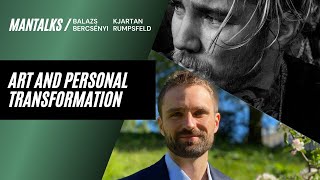
This is a transcript of a YouTube interview (host Connor Beaton) with tattoo artist Balazs Bercsényi and healer/facilitator Kjartan Rumpsfeld about how art (tattooing) and spiritual/energetic healing combine to create transformative, initiatory experiences. Balazs tells a defining story about a mushroom-tea-assisted healing in Norway that shifted his life and tattooing practice; Kjartan recounts monastery training (Course in Miracles) and a surrender experience in Spain that reoriented his service orientation. Together they describe hosting communal tattoo retreats (Bali, Crete, Norway) that pair tattooing with energetic work, movement/acupuncture (Chris), and aim to create a safe container for initiation and transformation. Practical notes: Balazs historically worked in NYC in his 20s; he plans to limit future tattoos to six clients who own his NFTs.
Questions this video answers
August 17, 2021
Norway, Bali, Crete
New York City (roughly ages ~25–29 as stated)
A mushroom-tea-assisted healing session that surfaced anxiety and allowed a deep energetic release (described as life-changing; occurred ~2.5 years prior to the interview)
A friend named Chris (movement coach and acupuncturist) was on the team
Chapters
All right, Balash Kjartan, thank you for being on the show. Thank you for being here. Thank you for your patience with the technology. Yeah, man, we're scattered across the globe, so of course there's going to be things that come up. But listen, I'm very much looking forward to this conversation. So before we dive into some of the main reasons why I wanted to have you on the show, I would love to ask you the question that I ask all my guests, which is tell us a story about a defining moment in your life that made you who you are today. And so maybe, Balash, we'll start with you.
Thank you.
Thank you. Thank you for having me.
Wonderful question. The first thing that comes to mind is an experience I had in Norway 2 1/2 years ago.
I used to live and work in New York City.
From the age of like 20, 20, 25, 26 to 29. And, and, and I left New York and.
Few months later, I, I ended up going to Norway through a friend of mine, through a client of mine. So basically what happened is I'm trying to make it very short. It'.
Basically there was this wonderful.
Person, her name is Ezrea. She reached out to me, she's a client of mine, and she was like, hey, I want to get a tattoo. And I was like, sure, what if we go to like, some like, snowy, wonderful, like, wonderland, where we can record it and everything, you know, and then it will be so much fun. And then. So Ezriel connected me, connected to Kiartan or asked him if he could host us. I had no idea who Kjartan was or, you know. Yeah, never met him before. So, long story short, we ended up going to Norway and.
That trip really changed my life, I have to say, because in many, for many reasons, I.
You know, I went there.
Till the age of like 29. I was like, you know, I was, I was going into this like, really fast paced life, you know, and always chasing, always chasing something in the future, always chasing something that. That's not present, that's like, if I'm gonna get there, I'm gonna be, you know, satisfied. I'm gonna be happy. If I'm gonna tattoo a lot of famous people, I'm gonna be satisfied if I have a lot of money, etc, etc, you know, it's like a very egoistic a way of living because I also didn't know any other way. So.
I was living my life like that, which was very exhausting. But somehow I hold it together, you know.
Until that point. And then and then like three days in, we are in Norway in this beautiful house, right? Like, you see the fjords and everything. It's just like, you know.
Insane, insanely gorgeous.
And we had this beautiful gathering. It was actually six of us. It was my girlfriend there, my videographer Azria, my client, her videographer, and Kjarten. And so we had this beautiful gathering in one of the evenings.
And we had a little bit of a mushroom tea. And I was very resistant to any substances. I haven't done anything.
After the age of like 25. So I was like, very much, like, against it. I was. There was a lot of fear, there was a lot of anxiety that I did not really want to surface and then. But anyways, I was like, you know, everyone's doing it. Let me just have a little sip. Why not? You know? And.
Yeah, that basically set the tone for the rest of the night. I was like. All the anxiety, all the pain, everything that I was carrying with me, all the burden and all this, like, junk, you know, was just. Everything just surfaced up and. And yeah, I was like, I really, truly felt like, I need help, you know, I was like, I need some sort of help. I didn't say it out loud, I just felt it. And.
And, you know, I had. I didn't know anything about Kjarten or his work. You know, he mentioned it briefly in a supermarket before we actually headed out there that, you know, he's doing some healing work. And I was like, ah, you know, fuck it, I don't need healing. Like, you know what I mean? I'm all good, you know. And yeah, like, fast forward four days later, you know, he. I'm like, super anxious, freaking out. He sensed it. And then. And then, you know, it kind of like pulled me aside, pulled me aside and.
You know, like, did his energetic work that. His magic. And.
Yeah, I truly have to say that was like a life changing experience because. Because, like, somehow through this dynamic, I was able to release all of this junk that I was like, all this energetic junk that was in my body, I was carrying around. He. I almost felt like I had. I got permission. I was like, okay, I'm like, I'm safe. I'm safe now. Finally, you know, after 29 years, I'm like, oh, okay, it's. I can release. And so I did. There was a lot of, like, purging, a lot of crying. There was a lot of, like, any kind of bodily sensations you can really name. I went through it and then I came out of it three hours later. I was like, I'm in fucking heaven. You know, I was like. I just felt like. So it's. It's this, like. I feel this tremendous gratitude towards the universe that all of this thing was, like, orchestrated without me even, like, knowing it. So it was. It's not, you know, like, Kjartan is, like, obviously a major player in this, but, like, you know, my girlfriend, every person that was there had a tremendous amount of role in this. You know, it was like we were healing the whole space, so not just me. I, like, my personal experience was, like, insanely amazing, but I think that everyone. Everyone kind of, like, felt it. And so after that, I was like, I want to know everything about this. I want to learn this. I want to, like, what the fuck was this? Like, you know, I need to know more about it. I need to know more about it. And it's also.
Just, like, you know, kind of, like, want to connect this to the tattooing work that I'm doing. It's like, you know, I always felt this, like, urge of knowing, you know, like, this urge of, like, I had all these questions in my mind, and I finally felt like I got some answers or it's like this aha moment. I was like, okay, cool. Okay, got it. And it's hard. Really hard to put it into words, but it also had a tremendous amount of effect in the work I do, the way I work and, you know, the tattoos that I do. So that healing session was pretty wonderful, I have to say.
It's beautiful. Yeah. I mean, it's like, you know, the universe conspires for you in some ways, but we don't. We don't always listen. We don't always know how to look for the signs. We don't always know how to open ourselves to the opportunity to have that work on us and through us. And I feel like what you're describing is almost every single man's experience walking into any kind of healing, you know, like, fuck that. I'm good. I don't. I don't need healing. Right? Like, I'm good. Everything's okay. Uh, that was very much mine. And, you know, having. Having had the honor to work with thousands of men now over the past decade, that is a very similar experience that we have this resistance to sort of open ourselves to that. That sort of hero's journey of entering into what is confronting. You know, there's definitely a confrontation when it comes to healing work, and I think that we. We underestimate that. So I really appreciate your experience because it's. I think it's very relatable. It's very, very relatable. And, Kjartan, what about yourself?
Tell us a story about a defining moment that made you who you are today, man.
Yeah, there's a lot of, I want to say, course corrections, but it's like that 0.1 degree alignment, which, over the trajectory of a lifetime, it makes a huge difference. The experience of, you know, what Balaj is just mentioning, you know, there's a. There's a. You know, that in particular, there was an element of resistance in myself as well, you know, to show up in service like that. And, you know, it's not something I feel like I do personally. It's more of like, oh, shit, it's like I'm being asked to provide a service. Okay, let me get out of the way and participate in the healing and. But I think.
A specific moment that I can really identify that allowed that to flow through was a few years, I think about maybe, like 10 years ago now.
I spent a period of time in a monastery in the US Studying something called a Course in Miracles. I'll probably reference that again by deep, deep studies with the Course of Miracles and spend time at this monastery in Utah.
It was designed to confront your mind, really, to discern yourself between who you are in truth and the mind chatter, the habitual mind, the egoic mind patterns. And I have a background and did a lot of sports, a lot of competition, competitive sports, martial arts, bodybuilding, and, you know, and then you get into monastery and you kind of, like, slowly undo these things. And, you know, you learn to learn to kind of observe the intensity in the mind, you know, the parts of your mind that most people, you know, resist, run away from. And, you know, competition was one of the things that. Because I excelled at it at the time, something I gained safety through, I gained, you know, an identity through it. And so you're like, in this dissonance between true collaboration and then maintaining this distance through competition. And so during this monastery stay.
We were in Spain in one of the kind of like the periphery locations, and there was me is in a steward role, overseer role, and then two other guys, perfect setup. And. And, you know, it's like I was young, I was like, 24, 25, and the other guys, you know, 21, 22. So it's like, you know, unresolved resistance and competition and all this stuff. And we. We drive to the beach, the three of us, and, you know, as. So I used to do a lot of swimming, so, you know, jumped in the ocean And I started swimming really hard, you know, just like butterfly swims out. And I could just watch all this competition in my mind, you know, the showing off. And I just feel, wow, holy fuck, this is painful. And just stop. Went back up, sat down, laid down. The other two came laying next to me. Told me afterwards, but I was laying there. It's like, I can't. I can't do this anymore. I can't hold onto the pain. This is too painful. And so later, I remember just falling into a prayer and like, spirit, you know, take my body, take my name, take my bank account, take, you know, all these things that I was holding on to and driving identity from. And I just fell into this open space. I was just complete, empty, you know, no duality, just open space, light, pure abstraction. And it was one of those moments where, you know, even though on a conceptual level, you know, you get the mind training, get the inquiry into things and meditation and all this stuff, but it's like, you know, you get an experience like that where it's like, wow, reality is beyond all of this chatter in the mind, all this identification, all the competition, and it's actually safe to surrender the idea of separation. And so for me, that was really, really defining. And like, yeah, it's, you know, reality has your back. You can't really escape it, and why would you want to? And to use the opportunity to heal my mind. And I think that's really what also allowed me to show up for Balaj and different contexts later.
Wonderful. Yeah, thank you for that. I mean.
I think it's certainly a relatable experience again for many people who carry around that pain and attach worth to, you know, monetary things and material things. And I think it's something that we. We all do. We can all get stuck in and caught in, certainly. Um, but, yeah, I mean, I feel like what you're describing there is an experience where, like, recently I just had this gentleman on named Rupert Spira, and he's.
I know him.
Yeah, yeah, he's. He's wonderful. I've been be following his teachings for quite a while and. And he talks about. He uses the analogy of the waves returning back into the ocean. You know, that our thoughts and this chaos that we are constantly consumed by is just a part of this vastness that is awareness. And that we can return back to that vastness. You know, that. That's sort of the. The practice, if you will. But I appreciate what you're saying there because sometimes we can get caught in the language, you know, we can Read the books, we can do the courses, we can do those things and, and miss out on the experiential aspect of it, you know, and so. But I feel like that's what you guys really do well. So let's, let's talk about your, Your approach, because you have done something unique in the sense that you've sort of blended art and healing modalities in some. In some way that you, you both work together and you collaborate. And so I'm hoping that you can just describ bit about what that process looks like because, you know, you're, you're both exceptional in your own ways. And Balash, you're one of the. I think when I came across your work, I remember looking at it and I was like, man, this is like legitimate art on the body. You know, it's legitimate. It's like a, like a painting almost. You know, it's like. It was hard to describe. Like, I've seen a lot of gifted tattoo artists and artists general, but there was just something unique about it. And I want to go into some of those pieces. But tell me a little bit about your. About your process and how you've started to blend healing modalities within your. Within your work.
I think the first time that, like.
Came to my mind, I was in New York and like, some. Somewhere, like in the middle of my stay, I had this woman that reached out to me and I really felt this urge. I was like, I really want to take this woman to, like, to like, a beautiful Villa Costa Rica somewhere and just like, kind of like orchestrate like.
Some sort of like a unique experience for her instead of just like welcoming her in a studio. And, you know, what I, What I'm used to do. So it's like, you know, the tattoo scene is.
I would say 99% of the tattoo scene is about, like, you know, opening a studio. You're welcoming people. People come get tattooed a few hours. You know, you, you, you chit, chat a little bit and, and, you know, it's like, it's like a proper. It's. It's like a printing machine. It's a factory. Right.
It's like a trend. Transactional. A little bit in nature.
Yeah, exactly. There's nothing wrong with that. You know, I think it's, you know, like, not everyone can hold space, so not everyone has the capacity to.
Do.
That because I'm not really tattooing, you know, it's like, you know, tattooing is just an excuse to join. I feel like it's not really. That's just. That's just an excuse. That's, like a byproduct of.
You know, of, like, connection. And. And I always felt like that. And I really was looking for a deeper connection with every client that I came across. But until I met Kjarts, and I had no framework, that I had no, like, context around it, what I really wanted to do or how I wanted to do it, et cetera. And after I had this experience and really just not just the healing, but, like, also going to a place together, like going to Norway and then do a tattoo in a remote place, renting a house or, like, being in a house, you know, like, that kind of. That kind of, like, communal way of getting together was very special. And.
After that, I was like, you know, maybe we should do some things together. Maybe we should, like, host some retreats together.
And so we did.
We did two. You know, we are also learning. We did one in Bali, and also. And then we did another one in Crete and Norway.
Crete and Norway was one retreat, but we chose to divide it into, like, two locations.
So really, it's just about.
Like, allowing our clients to show up and kind of, like, be in service and see what they. What they really are looking for, you know, and just, like, you know, some people want rest, some people want to, like, you know, there's every. You know, there's so many human beings. Everyone needs something. Something different, you know? I have a wonderful friend, Chris. He's from New York. He's a movement coach and acupuncturist. He was with us in both of those retreats. So. So we. Not just. So Kjartan was kind of, like, covering the mental, inner energetic aspect. I was just drawing on them. And then Chris was doing acupuncture, movement, and kind of, like, he was covering the physical aspect of the retreat and. Yeah, and then it's just a wonderful way of hosting people, and it's just a different way of approaching tattooing itself because it's. You know, I feel like most of the people that come to get tattooed, there is. There is an urge to.
To shift something in them, or they want to either get tattooed because XYZ happened in their life, they lost someone. It's. Or, like, you know, it's coming from a grief or.
Or.
Marking their. Their kid's birth or, like, you know, some. Some sort of, like, you know, there's always this story.
Yeah, There is something universal there.
Yeah, I was gonna say. I would agree with that. I feel like tattoos, for many people are symbolic in nature, and that they, like, for me, at least, when I've gotten tattoos in my life, they've been a demarcation of a chapter in my life. That's what they've always represented for me. And I know for different people, for friends, for family, they serve different purposes. My sister's got tattoos, and it seems to symbolize things for her, whether it's the symbolization of a family member or a period of her life or something meaningful for her. So it does seem like they play a very important role. And it also seems that it shows up in people's lives and that they are bringing things to that experience. You know, they're bringing the weight of an experience. They're bringing something that's quite meaningful to them and sort of asking you to.
Represent that, you know, on their bodies. But. Yeah. So charactin, you had something to say. Did you want to just jump in there?
Yeah, I think. I mean, from my perspective and, you know, the Balaja and I have held this conversation for the last two and a half years. I think it's, you know, this. This ability to. To curate or hold a space that. That is safe for people to come in. You know, we don't. It's not necessarily in the words or in the, you know, the actions we do or in, you know, the. The how the service looks, but it's, you know, it's like this. There's a container there that can. That can hold people going through something they're ready for. You know, it's like the. The people that come for the tattoos, they're looking for a. You know, it's like a marcation of a transformation. But, you know, that. That cocoon that. That space to the portal, if you will, to kind of, you know, move through and trend, really transition that, you know, it requires. It say it requires a maturity and just witnessing someone in that, you know, and to. Not really they're holding space for someone, but it's like, you know, being. Being fully present and witnessing someone going through whatever that is without judgment or them needing to justify or explain, and for them to really just allow them to move through and step through whatever it is in them that they're longing to step through.
Yeah.
And it almost feels like sort of like an ancient form. Form, you know, because, like, the little that I do know about the history of tattoos, that they've played a very sort of like, communal role, role within our society. Right. That they have been, you know, this. This experience that you went through as sometimes an initiatory process, you know, so I Was wondering if you can speak to that, because I do think that sometimes people likely are coming into your work craving that initiatory experience. And it sounds like you've melded these two, I don't know, lineages or components together to create these initiatory experiences. Can you speak to that?
Yeah, it's very contradictory, Rick. Right. Because you're searching for a transcendent experience through a physical experience. So you're like, oh, let me just adjust my look with a tattoo, which is a clearly, like a materialistic form of separation or differentiating yourself.
Let'S say 5,000 years ago, you got a tattoo because the, you know, I was belonging to this tribe, and, you know, the other tribe had different kind of tattoos and marks on their body, but also, like, this aesthetic, you know, like. Yeah, just, like, want to stand out, you know, but in the same time, you know, it's this, like, you get this.
All this, like. All this, like, aspects are kind of, like, merged in together, and now it's like, you know, it's one. It's like, yeah, you get this tattoo, but you also having a transcendent experience or. Yeah, I mean.
That'S what I have to say, really. It's also the.
Tribal sacredness of tattooing as well. There's just something shamanic and old, and there's some wisdom in that. I don't know what it is. It's maybe the pain, the connection, the physical connection with the artist and the client. And then, you know, it's just. It's a wonderful way of expressing art or channeling through art, you know?
Yeah, I appreciate that. I do think that is a form of shamanism, and I think, again.
In some ancient tribes and cultures, it was the shaman who actually performed the ritual, you know, who would actually do this sort of tattooing. And so it's interesting to see that showing up within your work. I'm curious. You use a lot of symbolism and archetypes and ancient languages, and.
Not in all of your work, but in some of your work. And I'm wondering where that comes from. Is it intentional? Is it something that you've studied? Because it almost seems like the ancient is very prevalent and present within your work.
I. Yeah, I don't really. I didn't really study too much about it. I read some stuff, but I'm not really good at, like, studying stuff or I'm not really, you know, some of you could say, like, I'm all over the place a little bit sometimes. But when it comes to tattooing or creating art, for People. It's very easy for me. Like, you know, I don't think about it too much. I'm just. I could also reference myself as, like, a stylist. I'm a. I'm a tattoo stylist, so I'm. I'm merging things together. I'm, like, putting different ingredients there and adding my. My. My symbols to it. But, like, those symbols just coming through me, I don't really know what they are. Most of the time, I'm just like.
It's hard to answer because I don't really know what I'm doing. You know, in a way, it's just. Yeah.
Words you don't want to hear from someone who makes a permanent tattoo. I don't know what I'm doing. Trust me.
I know. I know, but it's not, like. Exactly. I know what I'm doing, but in the same time, I'm just, like, allowing this whatever to, like, come through, especially when I get some sort of freedom with the piece. Right. Because some people, like, show up with, like, a specific design, and sometimes I'm just like, yeah, I don't want to change anything. I love. Let's just do that, you know, so kind of, like, you know, there are different kind of people showing up. Some people are like, hey, do whatever. Whatever you want. And then some people just like, I kind of want to. You know, it's also, like. It's interesting to watch them dealing with their own control. You know, it's like, you know, like, I'm, like, a very wealthy, successful person. Let me just get tattooed. And then you're like, you know, showing up, you're like, okay, so how much can you let go? And then there's always this little cat fight. Sometimes.
They want to control, but they want to control, but they don't really know what they want to control. They just want to control because they're used to controlling.
Yeah, I mean, I feel like that, again, that shamanic piece shows up, that you're sort of perceiving what it could look like and creating. And I do think that the act of creation, in many ways, is an act of surrendering. You know, it's an act of letting go. It's a lot. It's an act of allowing universal intelligence, divine intelligence, creation, etcetera, to move through us and for us to just be the vehicle of its expression. In some ways, and that's almost what I hear you describing, is that there's a. A getting the ego out of the way so that creation can flow. In some ways. Does that feel does that.
Very true. Yeah. Yeah, that definitely resonates. It's like, you know, it's. Even though that the chatter of the ego, that's, like, part of the work that I'm doing with Kjarton. You know, it's like, you know, it's not. Not necessarily fighting against the ego. You're just like, okay, yeah, you just see it. Okay, cool. There's a chatter. Okay, okay. Came back. You know, it's like. But. But, like, when you. When you can like, really just, like, stay in this. This, like, as Eckhart Tolle would say, this, like consciousness, space or consciousness. Or space. Consciousness. Sorry. Then, you know, like, then. Then there you just have more access to.
Things that.
Not really touchable or.
I don't know, you have an access of it. I find. I find when I'm in those moments, I have an access to expression and knowing in a way. Like when I'm doing my work with somebody, I'm curious to get your perspective on this cartoon as well. But, like, when I'm doing my work with somebody, it's almost as though I'm not the one doing it. Like, it's almost as, like when I'm really in my flow and I'm working with somebody and I'm working with their shadow and their, you know, their. Their trauma or their depression or whatever, you know, the divorce that they're going through. It's almost like the best work that I do is when I'm not doing it, when I'm out of the way, you know, and that's kind of what I hear you saying, is that feels like a chat. Maybe channeling is not the right word. Maybe that's like, maybe too woo woo for some people, but it almost feels like it's happening through you, you know, that you're tapping into a field of awareness, a broader field of awareness that is a, you know, a form of an intuitional intelligence. So cartoon. What's. What's that like for you when you're. When you're facilitating that kind of work?
Yeah, I mean, you know, it's. It's. I think you're referencing the flow state, so, you know, it's like the flow state that a lot of athletes get into or, you know, addicts to and to just kind of, you know, the. When the mind turns off and you know what to do. And, you know, this is a. This is a context, like a specific application of that where, you know, rather than, you know, diving down a mountainside or throwing yourself out of an airplane, you Know, it's done in a higher service. And, you know, that. That was really the whole. You could say the whole mind training I went through during the monastery were, you know, it's like using. Using specific tasks and projects to flush out egoic resistances and chatter so that you could observe them. And then, you know, through the. The joining with. With mighty companions, you know, any. Anyone really that. That, you know, has that intention to release these things because the ego seems to be many, but it's really just one thought system. That's the self deception. The same deception is in really everybody's minds as long as we believe.
The story and the narrative. And with meeting Balaj. And it's like, for me, that was a continuation of showing up in whatever context, to surrender the whole project, whatever the, you know, the time container for service, and then allowing myself to show up to, you know, surrender any fear resistances I have to providing that work to someone who's like, I don't need healing. I was like, okay, cool, let's see where this goes, you know, without any intention of wanting to heal anyone. Because it's like, you know, if I see someone in need of healing, you know, this misperception is in my mind. Let me correct that. Let me. Let me take responsibility for my own perception first and not, you know, think I can heal the world because, you know, everybody else is fucked up, but I'm good, so I'm gonna fix everybody. You know, it's like, that's. That's something, you know, for. For me to look at if that comes up and, you know, and then it has an effect. And then Balaj is like, let's do this. I want to go deeper. And I had the book, the Course in Miracles, which is very powerful context for this. I just had a laying out, and he grabbed it and read it. I was like, okay, cool, no agenda here. He's like, let's do this stuff. All right, well, first we have to become the space, become congruent with the space so that we can. Can allow just the voice to speak through, you know, the. The voice that really reminds us about who we are in truth. And, you know, I think that's. That's also the, you know, it doesn't need to be tattooing or it can be anything, really. It's just, you know, can I show up with that intention and. And, you know, really listen. Listen and follow. And then, you know, let. Let the higher intelligence move through. And, you know, for Balaj, that shows up in. And I've seen people See, look at his work. And they're like, you know, they can hear it. It reminds them of something. There's a familiarity. And I think, you know, that's the. For me, at least, it's the highest function we can fulfill. It's like, you know, remind ourselves about what's really true because, you know, you can see today in fast paced society, consumerism, you know, and even in the tattoo shops, you know, you get the tattoo because you're drunk, you know, and it's transactional everything. And, and, you know, the more we, we follow that, the more we fall into, like, deception, confusion, forgetting who we are, you know, what's really important, forgetting the present moment. And so, you know, this is really, it's that, it's like, let's join, let's join in this moment. Just like, you know, this, this podcast, this meeting, recording. It's like, let's collaborate to, to create, you know, a reminder of who you are, who we are in truth, and enjoy that as an experience, not just at a conceptual level. And with myself and Balaj, it makes art, touches people. I think it's. Yeah, what else would you want to do?
Yeah, well said. Well said. Thank you for that. Well, I feel like we're unfortunately short on time. I would love to just converse with you, you know, indefinitely. In some ways, I feel like we would have good conversations sitting around a fire.
Maybe. What I'll just leave with here is what stands out to me is this notion of, of control and surrendering, you know, meeting our control mechanisms. And that art, whether it's tattooing, healing, modalities, you know, whether it's meditation or whatever experience you're having, is this balance in meeting the part of us that wants to find control. And so, Balash, can you just speak to that and sort of close us off here? That balance between control and surrendering, how has that looked for you? Or how do you see it showing up for your clients when they're going through the experience?
Yeah.
Well, it's all like what Kjartan just said, you know, it's like when I see something in someone, you know, it's like, let me just observe my mind first about it, because it's my perception, right? So it's like I need to heal that in my own mind. So it's like taking full responsibility of how I feel and being very honest about my own mind and how I, how I operate. So. Yeah, but I mean, tattooing is definitely a helpful tool to.
Kind of like loosen those serious dogmas and just the seriousness of life, of our existence, is like, can I just draw on you as I am a 6 year old drawing on another 6 year old? You know what I mean? What is the difference? What is the difference between me growing up or me being a six year old is I'm doing the same exact thing. You know, I'm just like, hey, you want to let me just draw something on you. You know what I mean? So it's, you know, in a nice, aesthetic pleasing way, also reminding people of that, like, that love, you know, really, that comes through the tattoo and, you know, it's like in whatever form. So every client has a different aesthetics, which kind of like I get sense when they show up. And I was like, okay, you know, there's this 42 year old Russian woman who show up for the first tattoo and I'm like, okay, let me do something delicate for her. It's her first tattoo. So it's like, you know, kind of also like feeling there, you know, like. Or someone else showing up to get there. His 40th tattoo, you know, doing a sleeve or whatever. It's like a different.
Yeah. And it's just.
Yeah, I'm very grateful, very grateful for this, for this experience because.
There'S nothing to prove. There's nowhere to go, there's nowhere to get to. You know, it's like, it's, it's. Yeah, I'm unlearning all the blocks, removing all the blocks, so I get to just like, enjoy.
Well said, well said. Well, thank you for that, that wisdom and I appreciate you diving in with me on your, your first podcast. That feels, that feels monumental in many ways. So I'm honored by that. And yeah, we'll have links in the show notes to, to both of your work and any. Anywhere that you'd like people to sort of check, check out your work just in case they're, you know, they're listening to this and they're immediately curious.
Yeah, I mean, you can, you can. Most of my works are on Instagram, so it's going to be down here. I'm not going to spell it. It's no point. We'll have it in the show notes.
Yeah.
And then. And I have a YouTube channel as well, so I started doing some short videos with certain clients, kind of like telling their stories through, like, short videos with some animations. So going to probably put more content out there in the near future. And then, yeah, continuing doing hosting retreats, working with Kjarten.
And also the NFTs. You know, like, that's another thing that I dove into. So next year I'm only doing six tattoos. People who own one of my NFTs. That's going to be interesting.
Yeah, that could be a whole podcast about just the NFTs and the whole how that played into surrendering control, because that was huge.
That was a wild one. I saw that. I did want to talk about that, but unfortunately, we didn't get around to it today. But that is a very unique approach, and I appreciate that. So. Okay, wonderful. Thank you. Thank you. I appreciate you both for being here and for conversing with me. And for everyone that's out there listening, certainly check out both Balas and Kiatan's work. We'll have the links in the show notes for you to check that out. And until next week, this is Connor Beaton signing off.
More from Connor







How to Raise Strong, Unshakable Boys in Today's Culture, with Dr. Shefali Tsabary



