De-sexualizing My Brain Changed My Life
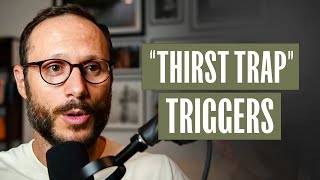
Connor Beaton describes how excessive porn and sexualized social media destroyed his focus and impulse control, then shares five concrete steps he used to rewire his brain: notice the anxiety or boredom under each urge, fill your time with real activities, unfollow triggering accounts, swap empty dopamine hits for earned rewards like exercise, and use blockers and meditation. He stresses it took years of sustained work.
Chapters
What's up, team? Welcome back to the Mantalk Show. Connor Beaton here. Today we're gonna be talking about desexualizing your brain for a better life. Healing your brain from maybe the damage that over consumption of porn has caused, or healing your brain from just the ridiculous amounts, copious, copious amounts of sexualized content that is easily accessible on the Internet. Now, I'm making this video for a number of reasons, but one of them is that I know what it' like to be a man whose internal landscape is so riddled with hyper sexualized thoughts and desires and hopes and wishes and fantasies and everything that it's very hard to get anything done. You know, I've been on this mission lately to help men quit porn, to help men regain some control over themselves and their impulses. Because the reality is that I was once a man who had zero impulse control and my life sucked. My life was just shit. It was terrible. And it was terrible because I had no control over myself. I didn't feel like I could make healthy decisions. I didn't trust myself. I didn't feel like I had discipline. And I see a lot of men struggling with this. And the reality is, is that we live in a time where sexualized content is so unbelievably easy to acquire. It is everywhere. Everything has become sexualized. Women's pole vaulting, right? I talk to men from around the world. And so I know. I know what your YouTube feeds look like. I know what your Instagram explore pages look like. I know. I know what's going on, okay? I know the thirst traps that you guys fall into, right? The women's volleyball that manages to show up randomly on your recommended page on YouTube, or the women trying on lingerie or bikinis that's easily accessible on YouTube. These things are all available. And guess what? If you're a parent, these things are all available for your sons. This is why the average young boy is going to come across some type of porn now between the ages of 8 and 12, right? That's the reality. It's shitty. It's not great. It's a harsh truth to have to face. But this is part of the reason why I'm making this video is that I was once one of those men whose life was ruled by sexual content and. And by invasive sexual thoughts and by just terrible impulse control. And in today's world, you can literally go onto any single social media platform and find soft pornographic content that's on there and sexualized content that's on there. And so with all that said, let's just get straight into the video because you are probably watching this thinking like, yeah, yeah, I got it. That's me. That's why I'm here. That's why I'm listening to this. Let's get into the meat and potatoes of it. So, okay, first and foremost, number one, the number one thing that I want you to know about desexualizing your brain is that you are probably not only overstimulated and over sexualized because of all the content that you've been consuming that's easy to access, but you're probably going to those sexual thoughts because, number one, you are feeling shit you don't like. And you're moving to sexual thoughts or thirst traps as a quick way out. So you're feeling something you don't like. You're feeling anxious, you're feeling bored, you're feeling lonely. You know, you're feeling kind of alone and down. And it's one of those nights where, like, you've texted a couple buddies and nobody's available and you kind of feel like crap and you don't know what to do, and you've gone on Tinder or you've gone on Bumble or Hinge and you're not having any luck. And so all of a sudden you find yourself with the thoughts, right? The sexual thoughts of go on to Instagram or TikTok or YouTube or Pornhub or whatever it is where you consume your sexual content, your sexual meals, if we will. And that helps you move away from whatever it is that you're feeling, right? Even if it's at work, right? You're writing emails to your boss, your colleagues. You're stressed out. You don't want to feel that stress. Boom. There's the sexual thought immediately. There it is thinking about some sexual conquest or some porn that you watched or whatever it is. So that's number one. It's very likely that you're feeling something that you don't like. So you have to start to pay attention to what are you actually experiencing underneath the sexual thoughts. All right? That's number one. Number two is if you want to desexualize your brain and you have to get some freaking excitement into your life, the reality is, is that it is so much easier, so much easier for you as a man to continue to watch sexual content, to continue to consume hypersexual content on social media platforms. If you dislike your life, if you are unhappy with your job, if you are miserable in your relationship, if you dislike your body, if you don't like the way you treat yourself. If you just don't like who you are in general, it is so much easier to turn to that type of content because there's no excitement in your life, there's no real joy to grasp onto. And so where do you get it from? You get that dopamine hit, you get that little bit of joy, that little bit of excitement from sexual content feels exciting. You get a little bit of a thrill. You know, maybe you work in.
Something a little taboo, whether it's the porn that you watch or where you're masturbating or where you're looking at the content, right? Maybe you're sitting on the toilet taking a dump, your girlfriend or your wife is in the other room and you're looking at things that you shouldn't be looking at, right? Or that you don't want to be looking at, not even shouldn't be looking at, but that you don't want to be looking at. So number two, get some excitement in your life, get a damn hobby, get some better friends that you can go on adventures with, and start focusing on building a life that you actually like. That will divert a lot of this attention that goes towards sexualized content away from it and onto something not even productive. It's not even about productive, but onto thriving, onto actually living your life. Number three, cut out the thirsty triggers, right? The thirsty triggers. So the IG explore page that you go to, the YouTube videos that you go and look up, the TikTok, the whatever it is, whatever the triggers are for you, right? If that's, you know, scrolling on Instagram and seeing a chick in a bikini or, or there's certain accounts that you follow that you know are questionable. And you really, if you ask yourself at the end of the day, you know why you are following them, right? Because they're a thirst trap and they help you feel better. And, you know, maybe they're very beautiful and attractive. Start to unfollow, start to block, start to delete all of the things that are thirst trap triggers. So you really need to change what it is that you are consuming. So if you think about this hyper sexualized content that you've been consuming as like sugar, right? If we just make the analogy of trying to get into better shape, trying to lose a little bit of weight and get into better shape, step number one would be really looking at what you're consuming. And this is no different. You have to really pay attention to what are you actually consuming because content is, is psychological and mental Sustenance, right? The content that you consume is psychological and mental sustenance. So if you look through your TikTok, your YouTube, your Facebook, your Instagram, whatever other social media platforms you might be on, and you start to pay attention to the type of content that you're actually consuming, you'll get a very quick understanding of, of whether or not that content is helpful for you, whether it's generative, it's actually supporting your growth, your development, your betterment as a man, or whether it's empty calories, right? If you're sitting in front of your computer on YouTube, watching women's pole vaulting or high jumping or women's volleyball because you're bored and it's a little bit exciting and gives you a bit of a sexualized thrill, that's probably not the content that is going to help you feel better in the long run. It's probably not the content that is teaching you a valuable skill set. And it's probably not the content that. And I'm laughing because I have talked to so many men that have fallen down these traps, right, on Instagram. You know, they give you one fitness model who's wearing the booty shorts and the, you know, whatever top that barely covers the top. And all of a sudden you're, you know, 15, 20 minutes down the rabbit hole, you've seen hundreds of women and you're thinking about masturbating when you should be working, right? This is. This is a daily occurrence for so many men. And so you have to really start to check the content that you are consuming. Which brings me to point number four. Stop chasing empty dopamine calories and start working for it, right? These porn, pornography, thirst traps on whatever social media platform that you are looking at, that's empty calories, it's empty dopamine calories. Because what you're getting in that moment is like little tiny bits of dopamine, little bit of tiny, little tiny, tiny whiff and hit of feel better. This distraction from whatever it is that is going on in your life in that moment, the boredom, the stress, the overwhelm, the anxiety, the anger, the frustration, the loneliness, the bitterness, the resentment, whatever it is that you don't want to pay attention to within yourself, it gives you a little bit of a distraction away from it. Now, dopamine isn't a bad thing. It's a great thing when we start to develop it and pursue it in specific ways. So you can start to meditate, you can start to do breath work, you can start to whatever it Is. Which brings me to the next point number five, which is use the tech tools properly. Right? Use the tech tools properly. I'm not really the person that's like, all technology is bad and we should go back to living in the forest. I don't think that's really realistic. Use the technology that you have properly. Which means use airplane mode. I discovered this thing years ago when I was traveling when I first started man talks. This is like nine or ten years ago. And I would get on airplanes and I would have my email open and I'd have 30 emails that I needed to respond to, and I'd get on the airplane, the plane would take off, I'd open up my laptop and there would be all the emails. And I used Apple Mail. And so I would hit reply and I would write the email and I would, you know, put the window down and. And just respond to 30 emails and wait until I got to wifi next, and then I would send off 30 emails. And I started to realize that every single time I traveled, I got so much freaking work done. I got more work done on airplanes than I did sitting at my desk in my office. And so I started to realize that this whole working on an airplane thing is great. How could I do that in real life? Oh, there's a thing called airplane mode. So put on airplane mode. You know, open up whatever it is that you need on your computer if you want to work and start to actually focus for more than 30 seconds at a time. Use your tech tools properly. Maybe you need to install a porn blocker, maybe you need to do those things. Maybe you need to, you know, use timers. But for me, one of the most supportive things that I have found is to literally turn off the WI fi to put airplane mode on to get work done. And if I need to research something, if I need to look at something, I'll turn it back on for a moment and whatnot, but then I'll turn it back off. And I get so much work done when I have airplane mode on and I'm not distracted and I'm not distracted by my phone, by social media, because I can't go on because it won't load. So that's that one. The last piece is use better tools. So do breath work, start doing meditation, start to do yoga, start working out. Have a friend that you are going through this process with where you actually communicate, hey, I'm going to start desexualizing my brain. And what that means is I'm going to really start to delete all of the stuff that I would normally use in order to consume that type of content. And instead I'm going to replace it with things that are more generative. So when I want to go watch porn, I'm going to go meditate when I want. When I find myself going down the whatever, Instagram, YouTube, TikTok rabbit hole and watching thirst traps, I'm going to go and sit and meditate or do breath work or, or do yoga, go work out or go for a run. I'm going to do something, I'm going to journal, I'm going to do something to shift onto a generative habit that is going to support me versus the, you know, content that I'm used to consuming. And this is a great thing to do. When you start to spiral, when you catch yourself in the act of consuming this content, have something that you have decided that you are going to do, whether it's meditate for five minutes, you set a timer, you sit down. I remember when I started doing this years and years and years ago, before all of this kind of self help content for young men and men was out on the Internet. This is what I used to do. Okay, I'm going to give you this secret.
It's super simple and it's really fucking hard and annoying. Every time I wanted to watch porn, I would go sit my ass down on a meditation cushion and I would set a timer for five or 10 or 15 minutes and I would close my eyes and I would breathe and that's it. And I would feel whatever the hell was going on inside of me, whatever I didn't want to feel the anxiousness, the boredom, the loneliness, the anger and frustration, the resentment, the sadness, the grief, the whole thing. And slowly over time, I reconditioned myself to have focus and attention and I conditioned myself to move away from the invasive and the intrusive over sexualized thoughts and content that was ruling my life. Now this is not easy, right? If you watch any YouTube video or listen to any podcaster and they're like, ah, you know, I stopped watching porn in five days and I desexualized my brain in seven days. They're probably lying to you or they didn't really have that bad of an issue with it to begin with. I was off the deep end. I really had a hard time with pornography and with sexual content. It was pervasive in my life, on my computer, on my phone. It was bad. And now I don't have any problems. You could come to my house today, you could look at my Instagram, if you ever meet me in real life, you can take my phone and look at my Instagram content, because it's pretty much the only platform that I go on. You can go on my YouTube, you can look at my watch history, you can do whatever you want. And you are not going to find sexual content on any of those platforms because I have freed myself of those things. And now that doesn't make me better than anybody. It just makes me not worse than anybody. So, just so we're clear, but I had to work tirelessly, tirelessly, I promise you, for years, I had to work tirelessly to move out of this way of being. And the last thing that I want to say, and then I'll wrap up here, because I've actually said more than I thought that I would, is this is one of the best things that I have done for myself in my life. And maybe I should have put this at the beginning, you know, food for thought for. For later. But this is one of the best things that I have ever done in my life because I was so.
Run by my sexual impulses. The impulse to think about sex, the impulse to go and look at sexual content, whether it was just on some social media platform that seemed kind of harmless and not like watching porn or actually watching pornography. It was. It was bad. It was all throughout my day. And when I started to move away from this, I freed up time, I freed up energy. My mind became more clear, my thinking became more clear, my decision making became much more clear and much more effective. I trusted myself to make better decisions. My sense of discipline started to elevate and skyrocket. And so all of these things that you probably are wanting to work on or develop within yourself, this can be a pathway if this is something that you are struggling with and this isn't to shame you sexually. Because I think for a lot of us men, the reality is that we enjoy sex, we like sex. And for many of us, that desire, that joy, that natural joy, and that natural connection to the joy of sex is hijacked by the Internet, by online content, by porn websites, by OnlyFans, models, and whatever. And it distracts a lot of it takes away and sucks a lot of our sexual energy out. And so you end up not engaging in the type of sexual interactions that you really desire with your partners or that are even possible because you've given so much of your sexual energy to out into whatever it is that you are watching and consuming. So that's it. Thank you so much for tuning in. If you're watching this on YouTube, comment below. Don't forget to give a like subscribe hit the bell notification so you get alerts when this comes out. And subscribe wherever you're tuning into this, whether you're on Spotify or Apple or on YouTube, wherever you are. And please man it forward. Share this with somebody that you know could use this conversation. Until next week, this is Connor Beaton signing off.
More from Connor







How to Raise Strong, Unshakable Boys in Today's Culture, with Dr. Shefali Tsabary



