Dealing With An Avoidant's Silent Treatment - What To Do
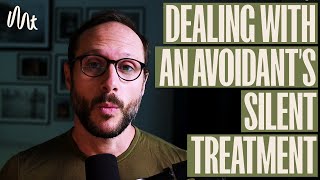
Connor Beaton explains why people with avoidant attachment use silent treatment and what to do when it happens. He covers the psychology behind the behavior, how it affects partners, and practical ways to set boundaries and communicate better.
All right, team, welcome back to the Man Talk Show. Connor Beaton here. And today we are going to be talking about avoidant silent treatment. This is the number one thing that drives people crazy when they are dating an avoidant person. Maybe you've experienced this. Whether you're dating somebody and they kind of go radio silent, feels like they're ghosting you, or you're in a marriage or you're in a long term relationship with someone who has avoidant tendencies. And so I'm going to talk about why these things happen, what you need to know and what you can do to bridge that gap and to invite closeness and connection back in. So you've probably felt this, right, the silent treatment. It can leave you feeling lost, confused, disconnected, it can leave you feeling anxious. It can leave you feeling really sort of not like disoriented in terms of what does this mean for you or the relationship. And this video is really going to give you the tools and the knowledge that you need to know and in order to effectively navigate this challenging situation with an avoidant person. And I know, I know that many of you, I've seen it in the comments. Anytime I do an avoidant video, it's like, don't bother with an avoidant, leave the avoidant. I mean avoidance really get a ton of flack for being avoidant. And I understand that. I used to be an avoidant man. I understand how frustrating it can be. So we're going to dive into this. The first thing that I want you to know is understanding avoidant silent, silent treatment. Why does this happen? Because for a lot of people, maybe for you, it's probably felt like a punishment. It's probably felt like you are being discarded or that the other person is not considering where you're at or that they're trying to punish you in some way or pull away from you. But really that of that silent treatment is a self preservation or self protective strategy that that avoidant person is deploying. Oftentimes it's unconscious. Oftentimes it's their nervous system, their brain is telling them to move away. Now again, this is not an excuse for their behavior. At some point the avoidant person needs to take needs to take responsibility for their behavior, for their actions and kind of like, you know, an addict in the sense that there's no convincing an addict to go and get help. There's no convincing an addict to get clean and sober. Well, same thing is true with an avoidant partner. There is no convincing them to bridge the gap to closeness and connection. So I'm going to just give you one quick thing around understanding what an avoidant actually is. An avoidant attachment style. I have a whole deep dive, long form video on this. If you're wanting to go super deep into understanding avoidant attachment, I have that. We'll link that up here for you. But that's a super deep dive on everything avoidant attachment, so you can definitely check that out. But at the core, an avoidant attached person is somebody who prioritizes self over relationship. So the way that I like to look at it is inside of the avoidant attachment avoidance psyche and their nervous system and their neurology. The base statement is, I'm better off alone than together or I am safer with myself. I can trust myself more than another. And that doesn't necessarily have anything to do with you. Maybe your actions are contributing to pushing them away. And we'll talk about that in a second. But for the, for the avoidant attached person, they learned very early on in life it was, it wasn't safe to trust other people. It wasn't safe to be in relationship fully with other people. It wasn't safe to be known by other people. Maybe they were abused, maybe they were neglected, maybe they were abandoned, whatever the circumstances may be. But they learned that it is safer for them to be this kind of lone wolf or like lone Ranger. And this manifests in a relationship by them pulling away. Usually when either conflict happens or a lot of closeness starts to happen. So you might notice if you're with an avoidant person, things will be going well and then all of a sudden they'll pull away, they'll start an argument, they'll start to give you the silent treatment. You'll, you know, invite some more closeness and connection, maybe going on dates or, you know, spending some more quality time together, going on a vacation, having conversations about the relationship progressing. And all of a sudden they just start to pull the nets in. You know, they, they stop communicating, they stop giving you physical contact and that can be deeply, deeply frustrating. So that's a little bit about what the avoidant attachment style is. Again, think self preservation. I'm better off alone than I am with another or it's safer for me. Whereas for an anxious, attached person, it's the opposite of that. It's like, I need you to be okay in order for me to be okay. That's the anxious partner. And for the avoidant partner is I need to be with myself in order to feel okay. So why do they go silent? Well, a couple things are important to Know, as I was saying before, the biggest part, whether they're conscious of it or not, is that they go silent as a self protection strategy. Something overwhelms their nervous system and this is kind of indicative of an avoidant partner. When conflict starts to happen, when closeness starts to happen, their body starts to move into a more sympathetic dominant state, their nervous system moves into a more stressed state, it's harder for them to co regulate, it's harder for them to maintain connection. And so when closeness or conflict starts to happen, that silent treatment can start to increase or they can move to that silent treatment as a form of self preservation and self protection. Some of this is underpinned by a kind of discomfort with emotional intensity, a discomfort with conflict. So again, they might have a past history of being raised in high conflict households. They may have been raised in households where whenever conflict did happen it would turn into abuse. Maybe they experienced the silent treatment for days on end or longer periods of time from, you know, people that were their caretakers. But they, they kind of have learned through their life that in order for them to process their emotions, in order for them to understand what's happening inside of them or in the relationship, they need to disconnect, they need to unplug from other people in the relationship. And they need that space and that time to kind of process what's going on inside of them on the other side of things. And this is why a lot of avoidance will go radio silent, is that internally there is a deep underlying fear of intimacy and vulnerability. And so you may have heard people talk about, you know, things like not really having consistent access to the neurochemicals of vasopressin or oxytocin, the sort of bonding hormone for a lot of avoidant partners. That is true. They haven't had access to this consistent level of oxytocin, which would normally allow that person to bond, to pair bond with a caregiver, with a family member. And so what ends up happening is that when that starts to happen, when closeness, intimacy, connection, they're really starting to feel known. Maybe you're really starting to communicate like, oh, I'm really loving this relationship or things are going well, that this underlying fear of intimacy, of I'm going to lose my autonomy, I'm going to lose my individuality, that is a threat internally, both in their psyche and in their nervous system. Now obviously that has a kind of painful impact on you, right? The impact of their silence is oftentimes that you are feeling rejected, you feel invalidated, you feel unheard you feel like they. That you know, your partner's pulling away from you altogether, your significant other is disconnecting from you. And this can really evoke a good amount of anxiety and uncertainty within you as their significant other. And I've heard a lot of people describe it as I've been insecure, I've been secure, and I felt good in all these other relationships. And all of a sudden with this person, I feel anxious, I feel insecure, I feel, you know, I'm constantly questioning things. I'm questioning the relationship status, I'm questioning whether I'm lovable, I'm questioning whether I'm attractive enough. And all of a sudden, all of these insecurities from underneath the surface will get evoked inside of you. And this is a very important piece of the equation because what can end up happening unbeknownst to the avoidant person? Again, I give them the benefit of the doubt because I've been an avoidant. I know that some of these things, for me at least, it wasn't a choice. I wasn't choosing to intentionally harm people that I was with by pulling away, by shutting down, by going inside, by disconnecting. I wasn't intentionally choosing that at the time. It was a very unconscious response to fear of intimacy, fear of conflict because of my upbringing. But for you, there's going to feel like there's this difficulty in. In resolving conflict and really building trust. And so that's the kind of impact that this shutting down and this silence from your avoidant significant other or partner, et cetera, is going to have on you. And I get that. And this is important to note because this is part of what you can start to tend with that you can reflect back on yourself and say, like what. What kind of insecurities are actually coming up here? What. What is being evoked within me? How do you start to navigate this silent treatment? This. Let's just get into the kind of nuts and the bolts, the pragmatic and sort of practical, tactical things that you can do. The first thing is being able to ground and regulate yourself. Ground and regulate yourself. Because the natural tendency of pretty much anyone, whether you were already an anxious person before in relationships or. Or you are a very secure person, is to chase, is to pursue, is to demand a response, is to try and give ultimatums, and that will push that person away even further. And so the first thing that you have to really anchor into yourself is, I'm going to stop chasing this person. I'm going to stop using ultimatums and threats. To try and demand a response or demand closeness, or demand intimacy, or demand that that person engages with you in a specific way. And I know that that can be frustrating for some people because we can really want and desire that closeness and connection. And we can move into a space of either becoming very anxious and trying to figure out like how do I, people please them into connecting with me or how do I sort of force this and use this heavy handed approach. The second thing is to begin to communicate what's needed in order for the relationship to function and to communicate this in an assertive way, in a grounded way, but to do so respectfully. And that might sound something like, hey, shutting down and not communicating with me for two, three days actually isn't okay. That's not the type of relationship that I'm interested in being in. And if you are not willing to deal with some of the challenges that are happening inside of you and deal with some level of conflict and discomfort in our relationship, then I'm not sure how we move forward with this. What I need is X, Y and Z, right? Take your space. Take a few hours, you know, give, give them the time and the space that they need, which I actually 100% need still to this day. Sometimes I need to be able to go within, to take a couple hours to myself to reflect and be able to bring that back into the relationship. So create a little bit of a structure with your significant other by stating here's what I would love to happen. I want to co create this relationship with you. I want to be able to give you your time and your space when conflict happens, when you feel overwhelmed or overrun, that's okay. And, and I need to know that you're going to return. I need to know that you're going to return. So this is a very, very important part of the request that is going to give you insight to whether or not things are going to be workable with that really avoidant partner. Because again, there's no convincing an avoidant person into intimacy. You can't do it. In fact, the more you try and demand the that intimacy and that closeness, the further away that's likely to push them. So the third thing here is reinforcing choice. You have a choice in all of this. You can choose to leave and come back. You can choose to stay and engage. You have a choice in all of this. Here's what I need, here's what is I think best for the relationship. What do you think? How does that sound for you? Are you open to engaging in the way that I'm talking about in having consistency of connection, and really, again, this ties into the foundation of secure attachment. Secure attachment is being able to go through a hard time together and come out the other side. Okay, now for an avoidant person, that really never happened for avoidant people. What they learned is that in order for me to go through a hard time, I need to go through it by myself. I cannot go through a hard time. Whether it's a conflict, a challenge at work, a challenge in my life, a challenge between us and the relationship with you, and come out okay. So there has to be a kind of period where you say, look, I know that, that when conflict happens or disagreement or, you know, things are going really well and it starts to activate you, I know that sometimes you're going to need to take some space. That's okay with me. I'm fine with that. I simply need or require that you come back and that we set some constraints or we set some agreements. Probably agreements is a better word than constraints. Cause again, constraints might push them away. But we set some agreements around how we're going to deal with this disconnection. If you want time and space, if we get into a little disagreement and you feel yourself starting to shut down, great, let's take an hour, let's take two hours. But what's not okay is that we take five days, right? Not okay. So set some of those agreements with the other person, invite them back in and moving forward, make sure that you have some healthy communication with them around some of these boundaries and invite them into the creation of these agreements. What would feel good for you? I understand we have conflict. It's challenging for you. What would feel good for you? Do you need an hour or two to just go for a walk or to go and write or to whatever it is that you need to do and have that conversation together. Set the very clear expectations of what it is that you need and want, and invite that avoidant person into buff through their own choice, not through a demand. And this might take a few conversations, right? A lot of people expect, like, I'm going to. I'm going to go into this conversation, I'm going to have it one time. It's going to be super effective. And I'm never going to have this conversation again. That is almost never the way it works when we are reversing attachment wounds, when we are moving from anxious or avoidant back to secure. This does take sometimes multiple conversations to reinforce the agreement and to have that person begin to trust that they can go through a hard time with you and come out the other side. Okay. And you might even want to use that type of terminology to say look, I want to be able to go through a tough time with you and know that we can come out the other side okay? Is that something that you're interested in? Or you could even say what was it like for you to go through a hard time growing up with your parents, you know, in your family? Could you do that with them? Or did you have to resort to shutting down and just getting through that hard time by yourself? So invite them into that conversation and invite them into having a choice and having a say in being able to incrementally step towards that secure attachment. Because the more that you chase them, the more that you demand things from them. And this is where pretty much everybody goes goes south and sideways with avoidant attached people is we move towards people pleasing or tyranny like authoritarian demands. You will do this and for an avoidant person that's just going to entrench them in their. In their ways. So invitation, invitation, invitation, stop seeking. Create some clear agreements. Invite them into it. Do your best to to de. Personalize to not personalize their behavior because most of the time it has nothing to do with you unless you're moving into one of those two camps. The quicker that you can move out of I'm going to demand that you create and maintain connection with me. I'm going to demand that you operate in a certain way or I'm going to try and people please you into a certain behavior. The quicker that you can move out of that and you can move into here's what I need and in a grounded, centered way and create an invitation and have them choose to engage what it can look like to move back into consistent connection with you. The easier the process will be and and the faster that avoidant person will begin to to trust and feel safe with going through conflict with you with opening up to a deeper level of intimacy with you. So share your thoughts below. Make sure that you man it forward and share this video with somebody that you know needs to hear it. And until next week, Connor Beaton signing off. Sam.
More from Connor




How to Raise Strong, Unshakable Boys in Today's Culture, with Dr. Shefali Tsabary





Anxious, needy, overthinking in love? That's a pattern, and it can change. Check the description 👇
