Desexualize Your Brain And Regain Control (30 Day Plan)
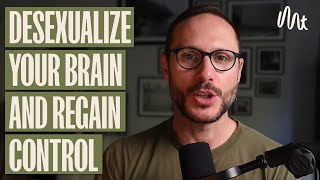
Connor Beaton outlines a 30-day plan to quit pornography by rewiring how your brain responds to triggers. The core idea: cues create cravings through a process called incentive-sensitization. He prescribes urge-surfing (sitting with the craving for 10 minutes), adding friction to your environment, and building a dopamine menu of replacement activities.
Chapters
All right, men, welcome back to the Mantalk show. Today might be one of the most important episodes. We are going to dive into desexualizing your brain, quitting porn. But we're going to talk about how you can rewire your urges, rewire your brain to take back control. And I'm going to lay out a 30 day plan for you. And the reason why this is so important is not because you shouldn't have a good healthy connection to your, your own arousal, right? Your own desire, that there's nothing wrong with you having sexual thoughts or sexual impulses. This is the most, this is the biggest misconception on this topic. But the truth is that for you and for the majority of men and for me when I was dealing with this, the truth is that this is so damaging for one specific reason. Any man who feels like he cannot control himself, who feels like he cannot control his impulses, who has an impulse or an urge to do something, and you can't say no to yourself. It erodes your sense of self worth, self trust, self respect and self leadership. So this is why being able to say no to the thoughts when you see the woman at the gym and you're just like, man, I just want to look over there constantly. Or it's late at night and you're bored, you're like, I just want to go to bed, I'm exhausted. And your brain's like, yeah, but go and turn on pornhub, right? Or you wake up first thing in the morning, you're like, maybe I should go and you know, pull one out, right? So this, this is really about being able to regain a deep sense of setting a boundary with yourself, being able to say no, being able to trust yourself, being able to lead yourself through the challenges. And the truth is that most of you are not losing your battle with porn because you're weak. That's the misconception. This is what ends up happening in most guys brains, right? I can't say no to porn. I can't stop these sexual thoughts that I'm having throughout the day. It must mean that I'm a piece of crap and that I'm weak. No, that's not it. You're losing because your brain has been trained day after day after day to day to want and desire on command, not to like, but to want and need something. And there is wanting circuitry in your brain that can hijack your attention, that can hijack your motivation, it can even hijack your sexual performance in the bedroom. So today I'm gonna show you how to unwire, rewire those triggers so that you can rebuild impulse control and, and reclaim your, reclaim your sense of self respect, self trust, but also your own sexuality so you can direct your sexual energy to the places where you really want it to go. And we're going to do this without you shaming yourself or beating the crap out of yourself. So this is a field tested 30 day protocol backed by neuroscience about cravings and habits. So let's dive straight in. Why, what, what porn is really doing. This is, we're going to start, I want you to know what porn is doing in your brain to your wanting system, right? We all have this system, this desire system in our heads. And for most men, they're trying to white knuckle their way out of this, right? You're just trying to willpower and force, using brute force to stop watching porn, to stop having the, you know, intrusive thoughts. And that just doesn't work because craving isn't just willpower, it is cue conditioned motivation. Cue conditioned. So you have certain conditions that will trigger or cue a motivation towards doing a certain behavior. And in addiction science this is called incentive sensitization. Incentive sensitization. And that really means that the brain learns to assign incentive towards something, right? Pay attention to this now, right? There's a certain trigger. It's 11 o' clock at night and you're bored and you're laying in bed scrolling through and that's something that's happened over and over and over and over and over again. You don't like the sensation of being bored and it triggers a cascading effect of your mind being cued towards, I feel something, I don't like it, I need to deal with it. And your brain has assigned poison pornography just as an example, as the thing that's going to help you feel better. And over time, wanting or that desire becomes amplified, even if liking it, actual pleasure and actual satisfaction doesn't. Right? So that's why you can feel pulled to open the porn browser to watch it even when you know you'll feel worse after. Even when you know, I don't actually want to do this, I'm tired, I just want to go to bed, or I need to get out of bed and wake up, you know, and start my day and go to the gym. This is embedded because there is a cue, a trigger response inside of you. This incentive sensitization where you have been conditioned to respond a certain way to certain criteria, to certain trigger points. And in sexual behavior research, people who struggled with compulsive use of pornography or dating apps or sex, they show stronger brain reactivity to sexual cues. So again, the brain. Your brain will light up and actually activate on the trigger, right? Not necessarily the reward. So it's really about understanding. The first step is really about understanding these trigger points. So what do you see? What do you think? What do you feel that starts to cause this cue to come online? This is a very important piece for a lot of men. What I have found is that you will feel something that you do not like that your brain has associated having a sexual thought, having a sexual thing go through your head, having, you know, some type of release by watching porn as a cure for the feeling that you don't want, right? You feel bored, you feel sad, you feel like you're behind. You know, you may be screwed up at work or in your relationship, or you feel disconnected and lonely, and all of a sudden, that feeling has triggers. A cue triggers a response of, let me deal with this. Let me numb this out. Let me move away from this feeling by going to watch porn, by having some type of sexualized thoughts. So this isn't necessarily about. There's something wrong with you. You're bad, you're broken. This is really about. Your brain has assigned.
Sexual thoughts, sexual thinking, pornography, watching porn, getting off to it as a. As a response to a certain cue. So the first thing that I'd like you to do is identify what the cues and the triggers are. Are there certain feelings, certain sensations? Are there certain times of day? You know, for a lot of the men that I've worked with, it's like morning or night. There's something about that. They're alone, they're with their own thoughts, and all of a sudden, you know, they. There's a sequence of events that happens that cues or triggers this habit or this pattern. So for many of you, there'll be a kind of ritualized sequence of events that will happen that will lead up to you engaging with the behavior. The next thing is understanding the three forces. Training your urge, okay, and training your urges and really undoing your impulse control. So the first thing is cues to cravings, which we've been talking about. The brain learns that a certain amount of a certain time, a certain place, a certain website, a certain body part, a certain feeling or emotion is equals needing relief, right? So you might notice that every single time you feel lonely, that's when you want to go and watch, you know, corn. You might notice that every single night at a certain time when you're stressed out and you can't seem to calm down that that's when you want to go watch it or when you first wake up in the morning, that's when you want to go watch it. So cues equal cravings. So get very clear on the, on the cues. The second thing is supernormal stimulation. Now this is something that I talked about in the book, but there's something called novelty on demand. So pornography has a kind of novelty on demand. Sexualizing is kind of novelty on demand. Your imagination gets captured in it and it keeps dopamine sort of this dopamine wanting of. I want more, I want more, I want more primed. And so it's constantly activated. So every time you think about some type of sexual encounter or you fantasize about something, or, you know, you get to go and watch porn and there's all these scenes playing out. It keeps this little stream of dopamine continuing. And then what happens is that you need more and more and more stimulation. And the hard part about it is that is super normal, right? Super normal, meaning it's above normal. So you can sort of think about this. The analogy that I've used before in the past is if you're eating a certain meal, right? Let's just say that you're eating, you're eating a meal, your average meal you take in, that's 500 calories to 800 calories per meal. And all of a sudden, you know, it's Thanksgiving and you have turkey dinner and you end up consuming 2,000 calories in one meal. That is a super normal meal. Porn and a lot of hypersexualized thinking is a super normal type of stimulation. And so this is why it's so addictive, is that it is above normal from what you are normally experiencing. If you, you know, are taking care of yourself and you're just going through some imagination of past experiences or you're having an experience, you know, with your girlfriend or your wife. So these types of things create a connection to the dopamine in your body. The third thing is the stress loops, okay? Stress or low mood is increase cue driven cravings, okay? So the more stressed out you are, great news. More stressed out you are, the more tired you are, the more it is going to activate these cravings, right? These are the stress loops. So you have a craving, you use, you shame, there's more stress, you have a craving, you use you shame there's more stress. So what we want to do is take a sort of mindfulness and we're going to talk about this, because what happens for a lot of men is that two things. Number one, the more tired they are, the more stressed out they are, the less willpower that they have to say no to it, and the more that their cravings are really heightened for the most part because their brain has associated porn. Sexualized thinking as a means of de stressing, right? Because after you climax, there's a whole cascade of neurochemicals that happen. You feel relaxed and there's a period of like, oh, I don't feel, you know, your nervous system kind of peaks out. It hits the red limiter, right? If you imagine your, your engine, right, your nervous system being an engine, you hit the rev limiter, you climax and then, whoa. And so if you've been running, you know, at 5,000 rpm and the red line's at 8,000 rpm, you've been running at 5,6000 rpm all day since you woke up, or 7,000 rpm all day since you woke up. And all of a sudden you hit the red limiter, you get back down to 800 RPM or a thousand revolutions per minute and you're like, oh, I feel relaxed. Your brain associates that release with the ability to relax, with the ability to de stress. So for a lot of you, this is what's happening. This is why it's so hard to let go of it, so hard to say no to it, is that your body and your mind have associated being able to de stress, being able to relax, being to able with watching porn, with having sort of sexualized thoughts. So what do we do? Let's talk about this 30 day plan. Okay, number one, what I want you to do is list your five triggers. List the five trigger situation. This might be a time of day, this might be a certain device, this might be a certain location. This is probably going to include a specific emotional state, certain platforms, certain keywords, certain body parts. I really want you to list out the five main triggers. You might have more than five, but be aware of the top five triggers because this is going to support you in knowing like, oh, shit, like, there it is. Okay. Just had the trigger. I was on Instagram, saw the thirst trap, you know, saw the body part that I really love, that activates me, and away we go. Right then beside each of those triggers, write the first action you usually take, right? So if it's, you know, bedtime, what action do you normally take? Do you open up a certain app? If it's you feel lonely or bored, what's the first Action that you normally take. Do you go to Instagram? Explore? Do you open up TikTok? Is there a certain search term that you start to search for and then next why you can't change what you can't see. So people with compulsive sexual.
Behaviors show heightened cue reactivity. So very likely, if you've had a hard time quitting porn, quitting, reducing these hypersexual thoughts, it's because your brain has a very high level of sensitivity to these cues. So what we need to do is remove some of their intensity and start to redesign them. Okay. So first we need to build awareness. What are the cues? What are the triggers? And that activate me? For me it was boredom, it was loneliness. It was when I was super stressed out and I couldn't seem to come down. Those things were massive, massive triggers. For me. That was like the place where I was the weakest. I couldn't say no. And then, you know, I would use porn to, to go and just like relax and feel better. So step number two is starting to redesign environment. Okay. Friction beats willpower. Friction beats willpower. So remove or password protect browsers at your high risk hours. You might want to put blockers on certain websites that you normally will go and frequent disable explore tabs. Use app sites that block on a specific schedule that go along with your, you know, your triggers and your cues. But you want to create friction. Okay. Do not expect yourself to just be able to say no on command because you're wanting to quit porn or because you're wanting to, you know, have better impulse control. It's not how that works. You're not going to strong arm yourself. This isn't an arm wrestling match with willpower you will lose because these systems and this Q function in your brain will override your willpower pretty much every single time. Because. Because you haven't developed the system internally to actually build up some willpower, to build up the ability to say no, to build up impulse control. Those things have been significantly reduced and replaced with this queue system. So replace late night scrolling with one pre committed alternative. Right. So what does that mean? It means that you replace laying in bed at 10 o' clock at night or sitting on the couch at 10:30 at night, scrolling through Instagram, scrolling through social media with something that is going to be more calming. Right? You do breath work, you do meditation, you do some journaling. You know, you talk on the phone with a friend, you read a book, you do something that is going to shift the pattern that would normally activate this cue response, and you take the trigger and you replace it with something generative. You replace it with something that is going to soothe or salve the issue that you're dealing with, right? So if every time you feel bored, that's when you want to go onto porn. You need to have something to replace that trigger with. You need to have something to replace that cue with. Step number three is urge surfing, right? So this is kind of a 10 minute rule. When the wave hits, when the urge hits, do not fight it, write it. What happened for me, what happens for a lot of men is the urge comes on super strong. You start having the thoughts, you have a desire to go and watch porn, or, you know, all of a sudden your brain is just caught in these like hypersexual loop thoughts. What I want you to do is to set a timer, okay? Set a timer. This is literally what I did. And it might sound ridiculous, but this is one of the things that can really, really support you. I want you to set a timer for 10 minutes. I want you to sit down, I want you to breathe, slowly scan the urge in your body. Where is it? What does it feel like? What is it trying to protect you from? And really start to label it. I'm going to give you a simple phrase, which is, this is a craving, not a command. This is a craving, not a command. And so this is where the real work happens. Because part of what's happening is that you have very little impulse control when that craving pops up. You have very little. There's. Your brain only knows that one pathway. So you need to start to slowly and incrementally interrupt that pattern. So what I would do is I would have the urge to go and watch porn or to have, you know, all these sexual thoughts starting to happen. It was like, maybe I should text that woman, text that chick and like, maybe I should just DM her. And that's when I would set the time. I'd sit down. I started with five minutes, then worked up to 10 minutes, and then worked up to 15 minutes. And it was just sitting with whatever I was experiencing. And a lot of the times it wasn't just arousal, it was. I was bored, I was stressed out. You know, my brain was going a million miles a minute and I couldn't seem to calm it down. So focus in on your breath, set the timer for 10 minutes and repeat the mantra. This is a craving, not a command. For your brain and your body, it feels like a command, right? Go do this, Go watch this.
You can even have A script, right, Right now I feel a strong pull in my chest. Where you wanna identify what's happening, you can identify what's happening in the body. I feel a strong pull in my chest, I feel tension in my hands. This is the cue firing. So you want to identify the cue in not just thoughts, but in, in sensations specifically, and then begin to breathe through it. Your breath is going to help you move through this huge craving that will all of a sudden come on. Remember this one thing, which is that it's a wave. It's gonna come in waves, this urge. And this craving is not just like peaked out the entire day. It comes in waves based on cues, based on triggers. Number four is implement intentions. So start to set an intention with yourself. Write down three if thens to plan what you're going to do and pre decide your action when certain things happen when these cues hit. Because one of the big things is that you need to take away decision making in those moments. Okay, if this happens, if it's 11 o' clock at night and I'm bored and I'm on social media, then I'm going to do this and you make that declaration and that commitment. If I text this person, I'm going to immediately turn my phone off. Then I'm going to turn my phone off and just go to bed. If you know, and you just have to go down the list. So look at your cues and create some if thens and pre decide what you're going to do. Right? If, if I open the porn browser, then I'm going to text my accountability partner immediately. Right? And so you create pre decided situations that you are going to commit to so that when these things happen, you don't have to think about it. It's like, oh, this happened, then I do this and you just do that action. Because what happens for your brain is like, oh, I'm, you know, I've opened up the porn browser, I'm having these thoughts again. What should I do? What? Well, maybe I should. No, if you're trying to think about it in that moment, you've lost, you lost the game. So you want to have very clear, if I do this, if I take this action, if I feel this cue, if this trigger happens, if I take this action, then I do this immediately. And then you just start to follow those steps. And eventually what will start to happen is that this technique will override the habit of the, the cue to the craving to the, to the action. And what will happen is that it will link your cues with an Alternative behavior. Okay, so you're actually replacing the behavior. So what I would do is when I would feel those urges, I would sit down, set the timer and I would breathe and meditate for 10 minutes. And it started to associate that cue with a different behavior than opening up a web browser and watching porn. So your brain still wants this reward, right? Your brain still wants this reward and it's going to try and get some type of hit when the cue happens. So you kind of want to build a bit of a, and this is step five. You want to build a bit of a dopamine menu, right? So your brain still wants some dopamine, still wants to hit. So create a bit of a three tier menu that you can choose from instantly, right? Quick hits, breath holds, breath work, meditation. 20 body weight, squats 20. I love the burpees. And maybe I'm just like sadistic like that, but I love burpees, so I do burpees. Medium might be a 10 to 20 minute thing, right? So the quick hits are two to five minutes. You want something short, brief, that's just going to help you get through that wave or that urge. The medium ones are, should be about 10 to 20 minutes. That could be a walk, it could be a kettlebell swing, it could be you sit down with your guitar, your piano, you tidy something up in your house. You, you know, you read a little bit of a book and then there's a deeper one, right? 30 to 60 minute. And that's a workout. You go and learn something, maybe you're doing a program or a course, you do some creative work, you plan something out, a trip that you're taking. So here you, you're not suppressing the desire for a reward. You are retraining your reward system towards actions that are aligned with your values, that actually cultivate trust, that cultivate respect, and that cultivate leadership. So in sensitization terms, removing salience from these digital cues, from these external cues, to embodied and relational cues. So we're moving from things that are.
Degenerating on us that are actually kind of self destructive and we're moving towards more generative habits and behaviors. All right, I'm going to leave you with those five. Hopefully. Hopefully this really supports you in being able to address and deal with these challenges. Don't forget to men it forward. Don't forget to subscribe wherever you're watching. If you're on YouTube, leave me a comment. I read all of them and you know, leave me a comment on Spotify and, and subscribe on Spotify? I hate to ask, but it goes a long way. It just really does. Right. The algorithm promotes channels that have more people viewing and subscribing. So please do subscribe and man it forward. Share with somebody that you know will enjoy it. Till next week. Connor Beaton signing out.
Sam.
More from Connor







How to Raise Strong, Unshakable Boys in Today's Culture, with Dr. Shefali Tsabary



