Do These 3 Things To Improve Relational Conflict
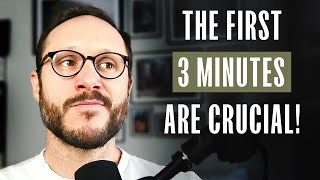
Connor Beaton breaks down three moves for fighting better in relationships: recognize your default role in arguments, pause early to breathe before escalating, and stop debating facts to explore what each person actually experienced. The first three minutes of a fight predict how the whole thing goes.
Chapters
How do you have a proper fight in your relationship? How do you have a productive argument? How do you go through conflict in an effective way? It's one of the things that I'm going to be talking about today, and I want to start off by giving you a really interesting piece of information and data, which is that 96% of the time, how a conflict goes in the first three minutes is going to determine the trajectory of that conflict for the rest of the argument. And almost every single time it comes up, right? Because most couples have cyclical fights in their relationships. They have reoccurring and repetitive arguments about the same thing over and over and over again. And it is very common that the first time that argument happens about sex, about money, about whatever it is to taking care of the kids, cleaning the house, how you put the dishes in the dishwasher, blah, blah, blah, it's very common that the first time that that argument happens, how it goes in the first three minutes is going to determine the trajectory of the rest of that argument in that moment, but also is going to determine the trajectory of that argument almost every single time it comes up. So we need to be aware.
Very aware, right? I'm giving you some. I'm going to give you some very tactical things that you can do to, to inform you how you can actually argue properly how you can actually have productive conflict in your relationships. Because that is incredibly important, right? We can't just wish for no conflict in our relationships. And the people that are out there that, you know, think that conflict in a relationship is bad is delusional and it's not productive. It's just not helpful to think those things. Right? We have to know that conflict can be very product, especially when it comes to our intimate relationships. And I'm going to say that happens because we are wanting to be understood and our differences create conflict within the relationship. And so part of the reason why we have arguments and conflict in relationship is so that we can in a more deep way understand our partner and be understood by them. So this conflict actually creates a more. A larger picture or a larger viewing window in which you can actually see your partner. But the challenge is, the challenge happens when we are not willing to move through conflict or we constantly go at it the same way and we get stuck in the same roles that we always get stuck in. So what do you need to know in order to do conflict? Well, there's a couple things that happen in the first three minutes of any argument that you need to understand to actually have a more Effective.
Conflict. A more effective argument, number one, is what role do you play? What role do you normally play? Every person when they're in a conflict, they go into a specific role in their relationship. So you might be the person that's trying to prove a point. You might be the person that's playing the role of needing to be, Right? You might be the role of the historian, right? Some people keep track of every single piece of information that happen, and they regurgitate it, and they recall it in the moment of the argument, and they're like, well, that's not how it went. It went this way, and it didn't happen that way. It went that way. Uh, you might be the fawner, right? You might be the. The. The person who's placating the other person, like, oh, whatever you need. And I don't want to. Da, da, da. You might be playing the role of the victim, whatever it is. So you need to get very clear on what role am I actually playing when conflict starts to emerge. So that's number one. Number two, in the first few minutes of conflict, one of the most important things that you can do is to breathe and ground. Breathe and ground. Now, the reason why I say this is because in the first three minutes, if you escalate very quickly, if you're somebody that goes from zero to nine, you know, on the angry scale, on the reactive scale, that is going to set the tone for the rest of the conflict. So if you become defensive immediately, and you can tell that you're defensive, but you just keep going with it, or you start to go on the attack immediately, the more that you do that in the first three to five minutes, the more that. That is going to set the tone for the rest of the disagreement. So the best thing that we can do is to breathe and ground. And you might need to actually call yourself out and say, listen, I'm getting really defensive, or I feel really reactive, or I feel really angry. I need a minute. I need to pause. That's okay. Even if it's in the first 60 seconds, right? Your. Your wife or your girlfriend might say something and like, boom, you feel that spark, and all of a sudden you're just like, oh, I'm gonna. I'm gonna tell you who's right, you know, and you want to go on the offensive. Catch yourself in the moment, take a breath and say, you know what? I just got really reactive. Hold on. Just give me a second. And, you know, she might not listen to that. She might keep coming, but you reinforce that that part, you reinforce the boundary, what you need in that moment. So that's also really important. Take a moment, breathe, ground yourself, feel your feet on the floor, Call out where you're at, number three. And this is arguably one of the most important pieces. One of the main conflict points that I've seen in a relationship is when we get caught focusing in on objective truth, what is the objective reality and what ends up happening is that we miss. Miss out on the subjective truth or the subjective experience of ourselves and the other person. And so what we need to do is we need to orient ourselves rather than getting caught in what's objectively true. What objectively happened? What did you objectively say? What did I objectively hear? You know, those types of pieces. We need to move to a more subjective reality. What did you experience? What are you trying to say? What do I need to understand about you and your subjective reality, your subjective experience? Because when you can do that, you actually create a shared reality, what I call the relational reality. And couples start to break down, relationships start to break down when the relational reality starts to get distorted, where one or both people in the relationship stop understanding the other person's subjective reality, and they stop seeking to understand and listening to the other person's subjective experience. And so you can practice this. You can have a conversation with your partner of like, hey, we need to prioritize understanding each other's experiences and not get so caught in what objectively happened. What objectively got said, you know, those types of pieces. Because that sometimes can be out there in the world. And where a lot of couples get caught arguing is about objective reality. No, this objectively happened and you objectively said that. And when what we actually need to move back to is, well, what did you experience when I said that thing? What did you experience when I forgot to bring home X, Y, and Z from the grocery store? What did you actually feel when I forgot to call you last night? Right. What actually happened inside of you? Then hopefully there's room and hopefully your relationship has space for this for you to often say, here's what's subjectively happening in me, right? When you said X, Y and Z, I experienced this. I experienced anger, I experienced reactivity, I felt defensive, you know, or I experienced disappointment because you said you're going to do something and you didn't follow through on it. You know, you said you're going to pick the kids up, and then you expected me to do it, right? So being able to create a dialogue for you and your partner where both of you are like bloodhounds for the other person's subjective reality or truffle pigs trying to sniff out the other person's objective reality. What actually happened inside of you that I can start to tune into. And the more that each of you can become proficient at that, the less likely conflict is going to erupt. The, the more likely in the beginning of conflict, you are automatically going to start to train yourself to rather than defending, well, is that right? Is that objectively what got said? Is that really true? You know, blah, blah, blah, blah. You're going to start to attune yourself and focus in on what is this person experiencing right now? What are they actually going through? What are they trying to communicate about what they're feeling? And then is there room for me to also express that thing? And if you're the one that's upset, then vice versa, right? That you have room and space to communicate your subjective reality of here's what I experienced. And maybe that's not what you meant and maybe that's not what you intended, but here's how it landed for me, right? Here's my experience. And when a couple can prioritize that in the beginning of the conflict, right out the gates. And I get that this takes practice because if you've been in a long term relationship, man, do you have grooves around fighting. Most couples that have been together for a year or more already have set ways of arguing. They have their roles down, they have their reactivity and how they get spun up in the first few minutes of the argument and they have their defense mechanisms against understanding the other person's subjective reality. And they are caught talking about what they think happened. So we want to move back towards what did you experience? And we want to do that relatively quickly in the beginning of the relationship. And if you've been with your partner for a very long time, watch this video, right? Watch this video. Listen to this podcast. If you don't want to watch this on YouTube, listen to it on my podcast on Spotify, the Man Talks podcast and have a conversation with your partner about what do you actually need to understand what's going on inside of me and what do I need to know to understand what's going on inside of you? What when conflict happens. And a great question for you and your partner to discuss is what does the first three minutes of our conflict normally look like? What does the first three minutes of our conflict normally look like? What happens? Study the first three minutes of how your conflict goes and that will tell you a lot of what unfolds throughout the rest of the conflict. You don't need to study the entire argument and every argument that you guys have study the first three minutes and when I say that what I want you to really look at is what happens inside of me subjectively and have your partner do the exact same thing. What happens inside of them? Do they get spun up? Do they get reactive? Do they shut down immediately within the first three minutes? Do they feel shame? Do they get defensive? Do they start to placate what happens inside of each of you? Identify that very clearly. Talk about it openly so that the next time conflict emerges you can catch yourself, they can catch them and you can start to work on again communicating each of your subjective realities. So thank you so much for tuning in. Share this man it forward with somebody that you know will enjoy it or could use it. And until next week this is Connor Beaton signing off.
Sam.
More from Connor







How to Raise Strong, Unshakable Boys in Today's Culture, with Dr. Shefali Tsabary



