Do Women Really Want Vulnerable Men
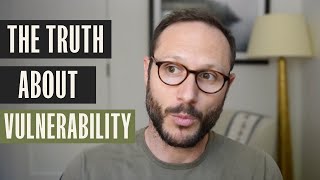
Connor Beaton argues that vulnerability alone doesn't fix men's problems. Women want safety, not neediness. When men outsource their emotional validation to women and overshare without boundaries, it erodes intimacy instead of building it.
Chapters
Do women really want men that are vulnerable? Do women really desire men that are. That are open emotionally, that are constantly sharing what they're feeling and sharing their emotions and being vulnerable with them in a relationship? Is that really what they're asking for? Or is it something different that they're really looking for? Because there's this notion in modern culture, in the mainstream rhetoric and narrative, that that looks at the problems that men are facing today socially, right? That male culture and masculine culture is facing today, right? The rising rates of suicide, the fact that more men commit suicide than women on an average of three to four times. The fact that, you know, there are more men in prison there than women, there are more homeless men than women, there are more male addicts than women. You know, the fact that less men are going to college, less men are entering into the labor force than ever before, more men are living at home than ever before, less men in their 20s are having sex, getting laid than ever before. And so there's a lot of these stats and this information that gets put out and the mainstream rhetoric that is returned is, well, if men were just more vulnerable, then they wouldn't have those problems, right? If men were just more emotionally adapted, emotionally attuned, then they wouldn't be experiencing those issues. And this filters into how a lot of men think about their relational problems and what a lot of women say about how you should solve your relational problems, right? So, like, on an individual level, if you're having problems in your relationship, again, the narrative is you should just be more vulnerable. You should just be more emotional. You should share your emotions more. And I think in large part, this notion, this idea that your problems will be fixed as a man, that our problems collectively as men will be solved if we're more vulnerable, comes from this sort of female and feminized narrative and idea that how we define men should be in the hands of women. I think in many ways, in male culture, we have offloaded and outsourced validating what it means to be a man, what it means to be a good man, what it means to be good at even being a man, what healthy masculinity looks like. We've outsourced a lot of that to women. And so the only way to verify, the only way to validate that you're a good man is if you get the sort of blue check mark from women, right? You get the verification. It's like Twitter or Instagram. You get the verification that you're a good man from a woman in your life. It's Like, I'm a good man because my girlfriend says so, or, you know, I'm a great man because my wife says so. Well, is that true? And did you get there simply by being vulnerable? And is that what even what women are looking for? You know, I think that this notion that being vulnerable, it means that you're a good man is a false equivalency. You know, certainly again, there. There is merit in some of the notion that there are some men who could use better connection and contact with their emotional body, better understanding of what they're feeling, a larger vocabulary and being able to express what they're feeling. But I don't think it's the cure all that it's been positioned as. What are women really saying when they say, you know, in a relationship, I want you to be more vulnerable, I want to feel you more, I want you to be more emotional, you know, because I fell into this trap too, for a number of years where I kept hearing that, you know, I kept hearing, I just want you to be more vulnerable. I want you to be more open. And I definitely went along with it. You know, I thought that my role as a man was to be more vulnerable, to be more emotional. But it didn't often lead to the results that I thought it would in the relationship. It didn't always lead to a deeper connection or better sex or better communication. It often led to, you know, my past girlfriends being more responsible for me, me feeling more needy, you know, me feeling like I had to bring my problems and my challeng to the women that I was dating, and then I didn't know what was supposed to happen, right? Like, was she supposed to solve my problems? Was she supposed to help me? It was a very ambiguous space. But I think this has come from the notion of how women actually build relationships with other women. You know, if you really watch how women will create relationships, really deep and meaningful relationships, and if you talk to women and you say, hey, what do you really value in your female relationships? And how do you know unequivocally that you can trust another woman? What you'll hear her describe is vulnerability. She'll describe connecting with that other woman emotionally and being very real and being very raw and being very open and sharing intimately some of the details of her life or her past or her challenges or what's going on in her sex life or her relationship or what she experienced as a girl. And. And the depth of vulnerability that she shares with that other woman equals the depth of trust that she has with that woman. It's a form of trust building amongst women, and in many ways that gets brought into a relationship dynamic. And so, you know, I think after having worked with a number of women and listened to these conversations and.
Been in conversations with couples and worked with a lot of couples, is that what women are actually saying when they say, I want you to be more vulnerable, I want you to be more honest, I want to feel your emotions more, I want you to talk to me more about your emotions is I want to feel safe. I want to feel safe. Because safety is a massive priority for women, you know, evolutionary. From a biological standpoint, there's many reasons for this that we could talk about, but at the end of the day, safety is a huge priority. But I think it's going about it maybe in a wrong way of equating vulnerability with safety. It's like, if a man is vulnerable with me, then he's a safe man. Well, that might not necessarily be the case. He might be emotionally manipulative, he might be needy, he might be an emotional narcissist. I mean, the idea that just because a man is vulnerable in a relationship doesn't mean that he's a safe man. I think in many ways, what women are actually looking for. And by the way, when a man is operating from that place, we end up running around in circles like a dog chasing his tail, constantly trying to bring our problems, bring our feelings, bring our emotions to the women that we're dating, to our wives, to our girlfriends, to our colleagues, to our sisters, mothers, et cetera. And it's this sort of moving target of sharing maybe too much or not sharing enough, and oftentimes expecting that we're going to get something back in return.
And for a lot of men, what I've seen happen is that they get into the relationship with a woman who wants him to be more vulnerable. And when he starts going down that path, it often leads to him becoming dependent on her to understand his own emotions. Because maybe he doesn't necessarily understand what he's feeling, or he doesn't have other men in his life that he can bring those challenges to where that he, you know, he feels a lot of charge around, he feels angry about, he feels frustrated or stuck or lost about. When a man lacks that other masculine connection, he inevitably brings all the weight of his challenges and his problems and how he feels about them into his relationship, into his marriage to his partner. And she feels obliged to support him and help him. And so the vulnerability that she asked for very quickly becomes this sort of same Thing, the prison that she feels stuck in, the thing that erodes the intimacy, the thing that erodes the communication. And very quickly, that man can become reliant on her for unpacking and understanding what she's. What he's actually feeling. And I think what. What we all benefit from, what we as men benefit from, what relationships benefit from, is not necessarily that we as men need to be so much more vulnerable with women. You know, I don't think that women actually want vulnerable men, because if you really listen to what they're saying and if you watch why they leave relationships, why they break up with men, you know, a lot of the times what they actually will tell you is, he was too needy. He needed too much from me. You know, he didn't know how to deal with his own problems. He didn't know how to deal with how he felt about his own problems. Right. He was too chaotic.
And too unstable. And so in many ways, what they're saying is he brought a lot of his vulnerability, a lot of his emotions, a lot of his feelings into the relationship, and I wasn't interested in them. So I think what women are actually saying is, I don't really want a vulnerable man. I want a man who's emotionally sovereign. And for us as men, I think that this is part of the path. This is part of our own journey, is to do develop a sense of emotional sovereignty, that we have a sense of autonomy and individuality over our own emotional body. Not that we deal with everything by ourselves. That's not at all what I'm saying, But that we have a depth of understanding to how we feel, that we bring our problems, our challenges to men in our life. Right. I think somebody. Somebody said, you know, the way of men is the way of the gang. Like we. We thrive as men in the arena with other men. That's how we sharpen ourselves. That's how we develop ourselves. And so we can bring our experience, the charge of our anger, the charge of our frustration, the intensity of the lostness that we feel, the confusion that we feel to other men, and we can be with that experience with other men to get their feedback, to get their advice, to get their direction, to have them challenge us to, you know, that's the type of fierceness of intentionality that we as men need in our lives and in our emotional realm. And the real problem, I think, is that not many men have other men in their lives that they can really bring the depths of their problems to. They might bring their complaints, right? They might, you know, bitch and moan about their relationship and how they're not getting laid enough and not getting enough sex. But they don't actually bring the depth of the problem that they're facing. The existential questions that they have about their life, the pain that they felt from their childhood, from the abuse that. The experience that they experienced. They don't have men in their lives that they can bring the real depth of their issues and challenges and intensity and their charge to. And when they can do that, when a man can bring the fullness of his experience to another man, to other men or a group of men, he can begin to learn how to work with that part. He can begin to have emotional sovereignty so that he can bring what he's working with, what he's processing into his marriage, into his relationship with his woman. He can say, here's what's going on in my life. And that's the type of vulnerability that I think that most women are looking for. For a man to be able to say, here's what I'm feeling. I'm aware of it. I know about it. Maybe I'm doing something about it, or I don't know what to do with it yet, but here's the direction, I'm going with it, right? I have support. I have the resources. That's the key part. I have the resources in my life for me to navigate that territory, those waters, that emotion, that feeling, that experience. And that, I believe, is what most women are looking for. That's the type of vulnerability. That's the experience that they're actually looking for. And so, you know, when you hear this notion of be more vulnerable, be more emotional, I would just say rephrase it as be more emotionally sovereign. Develop a group or a community or men in your life that can help you understand, process, Be with your own emotional experiences, be with the challenges and the hardship that life inevitably is bringing to your doorstep or already has, and learn how to regulate, learn how to process your own emotional realm. Because that is strength. It takes courage, it takes bravery, and it's intense, right? Every man carries within him a quality of intensity that he is afraid of individually, if he's really willing to see it. And so a man who is strong, a man who is grounded, is a man who's willing to go into that realm, face that part, likely with other men supporting him, and return to his relationship. To say, here's what I'm confronting within myself. I feel an intense amount of anger about something that happened at work, but here's what I'm doing with it or here's the resources that I'm leaning on. You know, here are the men that I'm talking to about it and all I need you to do is just know about it. All I need you to do is just listen. You know, that's, that's what I need from you and that type of direction, that's the vulnerability that allows a woman to feel safe within the context of the relationship. So let me know what you think. Maybe you disagree with some of this. Maybe you disagree with all of it. Maybe you agree with many parts of it but let me know what you think in the comments below. If you're watching on YouTube, message me on Instagram man Talks and let me know if some of this resonated with you, if you found value in this and if you think that there are things that I've missed around this conversation of men and vulnerability. And until next week, this is Connor Beaton signing off.
More from Connor







How to Raise Strong, Unshakable Boys in Today's Culture, with Dr. Shefali Tsabary



