Does Modern Therapy Not Understand Men’s Suffering & Suicide?
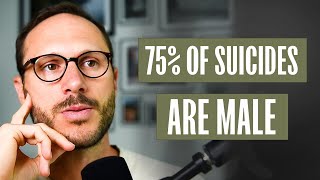
Connor Beaton examines why therapy often misses men's suffering. Men die by suicide at nearly four times the rate of women, yet therapeutic approaches rarely account for how men experience and express emotional pain differently.
Chapters
What's going on, team? Welcome back to the mantalk show. Today we're going to talk about does modern therapy not understand men's suffering? And specifically the depths of male self destruction, AKA male suicide. Now, this is a pretty charged topic. There's a lot of information and data about this, but I wanted to address this because over the years I have come across a lot of men who have talked about taking their own life. I've come across a lot of men who know men who have taken their own life. I have worked with men who have made attempts, a lot of them. I have worked with a tremendous amount of men who have thought about taking their own life. And I've been one of those men. And one of the things that I've continued to see time and time again is how few men have actually had those conversations with the people around them. How few men have a robust enough social circle with other men where they can actually say, man, I am really strong, struggling. But that's not the part that I'm here to talk about because I was listening to a podcast called Modern Wisdom with Chris Williamson. I'm going to be on his show later this year and he had a guest on George from the Tin man, and they were talking about suicide rates within men. And George had brought up this stat around this study in the UK that showed that 92% of men who took their own lives were actively seeking help, right? 92% of men, think about that. So the vast majority of men who take their own lives have acknowledged that something's going on, have acknowledged that they're struggling and enter into some therapeutic support. So this notion of like, well, you know, less men would take their own lives if they just talked, right? If men just talked more, you know, which is kind of ironic because my company's called Man Talks and this is called Man Talks, not the point, but this, the notion of if men just opened up and talked more, that would solve the problem. And while that does help a lot of the times, the reality is, is that the modern therapeutic industry, the modern psychological industry is a very female oriented and female dominated space. And so, you know, again, and there's a couple of stats that this study from the UK showed, right? Of those 92% of men that took their own lives and were seeking help and seeking therapy, 80% of those men were deemed to be low risk or no risk at all of taking their own life. So the big question comes out of this data. I think most people would probably look at this data and think like, well, how how the hell does that happen? You know, how do so many men. Because, you know, men account for something like 75% of suicide rates globally. And you know, you can break that data down and you can see that in this, you know, in the United States, for example, it's a very high ratio of those individuals are, you know, from the military service. And you can look at age range and you can look at the impacts of fatherless homes and there's a whole bunch of things that really play into it. But this isn't a video about why men do it. This is a video about whether or not the therapeutic industry is actually supporting the, who are at risk of those things. And what I can tell you is I've held dozens and dozens and dozens of weekends, live weekends with men where there's usually anywhere from 20 to 40 men. And it's always fascinating and we do a bunch of depth work. I partner with somebody who's been doing gestalt therapy for 50 years. He's one of the most profound clinicians in the world. And what I found over the last decade of working and speaking with men in various degrees is how many men have thought about it and how many men have made an attempt and how many men have never talked about it and how many men have gone to therapy and not really at all felt like the issues that were leading to these thoughts that were leading to these contemplations were even addressed. Right. And so this isn't to say the therapeutic industry is broken. This isn't to say that therapy and psychology can't be helpful. I think that narrative is garbage, right? There are people out there that are like, psychology is BS and therapy is garbage and if you need it, there's something wrong with you. That's all nonsense, you know, I mean, when you look at the history of therapy and psychology, it really is almost an extension of philosophy and almost like a spiritual contemplation. You and that really good therapy and really good psychology is both relational and almost philosophical and spiritual. You know, it's meant to bring you within yourself. And so I think generally speaking, a lot of men love that. Right? There's some great work by, I believe, a gentleman named Dr. John Barry again out of the UK, who has shown that for men, one of the most inspiring and motivating factors and most rewarding and fulfilling factors in a man's life is to pursue some type of self betterment. And I've seen that in my own life for sure. Like when I can improve on myself when I have a Kind of mission within myself, where I'm going to better myself. Whether it's physically, mentally, professionally, financially, within my health, within my relationship, within my sex life. All of those endeavors are incredibly rewarding, even if it's just learning a new task or skill. So does the therapeutic and psychological industry really understand men's suffering? I think that's a big, big question. I think it's very debatable, right? When you look at the therapeutic industry, 85% of clinical psychologists are women. That's a huge number. And we have to acknowledge that there is a difference between men and women. There is a fundamental difference between what it's like to be a man and what it's like to be a woman. Biologically, psychologically, emotionally, sexually. They are fundamentally different experiences. Now that doesn't mean that a woman cannot be an except therapist or psychologist for a man. That doesn't mean that at all. I've worked with some women before. That can be incredible. That's not what I'm saying. What I'm saying is that the industry itself is clearly missing something. And my guess is this. My guess is that the majority of men go into therapy and psychology and their problems and their issues for the most part are treated in a very female oriented or feminine way. And so a lot of men will enter into therapy and what they will receive is validations about their emotions, what they're experiencing. They'll talk about their family system and those things can be very helpful. But when a man is going through a divorce and he's just lost 50% of his assets and he doesn't have access to his kids outside of once or twice a month, there's not much that this sort of emotional validation is going to do. There's not much that things like cognitive behavioral therapy are going to do. When a man is faced with the real experience of having half of his life savings taken from him, of not being able to see his children, right. We sort of have this notion that men don't really care about being fathers within our culture outside of like a selective few. But those aren't the guys that get divorced, right? That we have all of these sort of asinine assumptions that I think have bled into the way that men are treated when they enter into the therapeutic and psychological. Because the reality is, is that the experiences first and foremost that men face are fundamentally different. And two, the problems that men face are fundamentally different. The reality is, is that there's a few key things that I think the therapeutic industry often misses when it comes to working with men. First is being able to radically repair the relationships that men have with other men. Being able to create really deep, depth oriented, meaningful relationships with other men is challenging. It's hard for most men. It's hard for us to trust. It's hard for a lot of men to really open up and be real with other men and sort of risk judgment or any of those things. It's hard for men to find really meaningful, healthy community. And it can be challenging to build. So that's one thing that I think is often underestimated. Secondly, are the stigmas around men opening up and being real and being very transparent. And third is the focus in on simply emotional validation. And emotional caretaking often misses out on men wanting to develop themselves towards some type of mastery, capacity, capability and competency. And this is something that I, I haven't seen in most therapists or psychologists language. When they're talking about men, they don't talk. They miss almost entirely out on the, on the reality that we as men love to feel competent and capable. And that's not because we want to be these egotistical, you know, individuals that are like crushing it and all those types of things. It's that there's something within our spirit and our soul and our masculine core, whatever words you want to put on it, that really values the type of mastery, that really values being able to protect and provide for the people that we love. And so when those opportunities aren't available for us, when those opportunities aren't presented to us as extremely meaningful and what we're met with when we bring our problems into a session with a therapist or a psychologist is simply the emotional caretaking and validation that is so often very, very helpful and very transformative for a lot of women. We miss out on this big piece of the equation that a lot of men are looking for that I think drives them down these paths. I'll end with this because I think this, this was heartbreaking for me to see and it can honestly make me.
It's almost hard to talk about. I saw this video recently.
Of a bunch of men. It was sort of cycling through these videos of men playing with their kids, having fun with their friends, having fun with their family out at the park. And what the videos were, were the last videos of these men before they had taken their lives.
And on the surface they looked great. You know, on the surface they looked real good. And I've known a number of men like that. You know, I've known a number of men like that where on the surface they Looked real great. But deep within themselves, they felt completely alone and completely isolated. And there were certain issues and problems and experiences that they had gone through in their lives. Abuse that they had experienced, sexual abuse, some type of trauma that they had literally never told a soul. And I know this because I have worked with thousands and tens of thousands of men who have been carrying things inside of them that either no one else has known about, no one else has cared about, or no one else has known what to do with. Because so often I have heard men talk about how they have opened up about their trauma in a therapeutic setting or to someone in their life, and they've been met with that individual not knowing how to really support them or how to help them. And on the other side of it is not knowing. And this is the kicker that I think a lot of the therapeutic industry misses. And this is where I'll end. A lot of people don't know how to help men get direction back in their life. It's not just about validating your internal state. It is about helping a man have direction out of the pit of despair that he has found himself in. Very clear, concise, meaningful direction. We as men need to know what the roadmap is sometimes. And for a lot of men who have bottomed out, or a lot of men who feel like they are bottomed out or about to bottom out, they are looking for direction and a map. And the problem that I see most common within the therapeutic and psychological space is that there isn't a lot of direction. There's a lot of validating what's happening within, and there isn't a lot of, have you thought about moving in this direction? And I think. I think maybe this is why people like Jordan Peterson have become so popular over the years. Love him or hate him, right? I know speaking his name is like saying Voldemort from Harry Potter, but he has given men very clear direction. Go clean your room, stand up straight, dress properly. Right? These very sort of basic things. That for a man who is struggling, who has literally never gotten any masculine direction in his life, that. That nutrition that is so substantial to that man. And it's mocked by public society, it's mocked by the average person in the mainstream media. It's mocked by people because they don't know what the hell men are actually going through and actually experiencing. And that is the fundamental problem that I see happening. So I would love to hear your comments, I would love to hear your thoughts. If you're watching this on YouTube. Comment below. If you're listening to this on social media, on my podcast, on Spotify, on Apple, itunes, please share it, please man it forward. This is an important conversation. Very, very important. Obviously, I'm stirred up by it because I see it firsthand. I see it firsthand every single day. And so if you are someone who is struggling, if you are someone who could use support, my my doors are always open. You can message me on Instagram, you can email me through the website. But I just want you to know that if you are one of the men that I was talking about in this video, one, know that you're not alone. And two, please do not hesitate to reach out. I will move the world to try and do whatever I can to support you. So thank you so much for tuning in. And until next week, this is Connor Beaton signing off.
More from Connor




How to Raise Strong, Unshakable Boys in Today's Culture, with Dr. Shefali Tsabary





Anxious, needy, overthinking in love? That's a pattern, and it can change. Check the description 👇
