Dr. Nicholas Brüss - A Deep Dive Into Psychedelics, Part 2
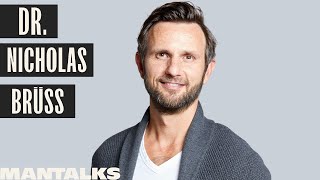
Dr. Nicholas Brüss breaks down how different psychedelics work in therapy. Psilocybin increases brain connectivity over 3 to 5 hours; MDMA reduces amygdala activity to help process trauma; ketamine works in 1 to 2 hours. Preparation, setting, and screening for psychosis risk matter as much as the substance itself.
Chapters
All right, Mr. Nick. Is it Bruce or Bruss? Bruce.
Yeah. I'm bringing back. I brought back the umlaut in my. In my family.
Yeah, that's good. It's very good. The umlaut is important. Do you speak any German?
About zero amount. About nil.
Roughly zero percent.
Yeah.
You know what's funny is I actually in university. I don't think I've ever said this on the podcast before, but let's see if I can do it properly.
Something like that. I think. I think my grammar is probably shit.
It's schice to my ears. You just said the most eloquent, thought provoking, amazing thing ever. I have no idea what you said.
I said I studied German in university for about three years. But like I said, grammatically, I think that sentence was probably terrible. And if my wife heard this, who speaks German again? Another lesser known fact about Vienna, Farren, licensed marriage and family therapist, Mindful mft. Her mom was a German teacher, and so she actually speaks. She. She hasn't done it in a long time, but she's Her. Her German is very good. And so whenever I speak, she laughs because my. My grammar is so terrible because I could never get the sentence structure because it's very different from English.
Right.
In English, you'd say, I'm going to school. And in German, you'd say, I am to school going, whoa. And that always screwed me up, you know, it always. It always messed with me. Well, I'm like, why am I to school going, why am I not going to school?
Yeah. Without a lot of exposure, I imagine that's. That's. That's a rough ride. I'm curious, with your opera singing, did that include somewhat of a study of different languages or how did.
Yeah, that's. That's one of the reasons why I. Why I studied German was I really, actually, I really loved German Leader, which is German art song. You know, people like Schubert were just icons, you know, when I was singing. So I studied three years of German, two years of Italian, tried Russian for, like a hot minute, like, you know, two days, and gave that up immediately because that's one of the most challenging. I sang in Mandarin at one point. Oddly enough, they want to hear the funniest thing this is, and then we'll move on. We'll come to you because I feel like I'm talking about myself on my own show. I grew up my mom. So my mom's side of the family is French, like from France proper, not to diss the French Canadians or anything. Like that my French Canadian followers. But my mom spoke French to me as a kid for a little bit and then just stopped entirely. And then later on in life when I started singing.
Why'd she stop?
I don't know. It's some weird secret that I don't know about. I think she just got tired of it, honestly. It's just remind. Reminded her of being one language.
Here we go, right?
One language. English. And then when I got into university and started singing, my voice fit. Singing French operas and music. And it's. Some of the French operatic music is beautiful. But for the life of me, Nick, I am freaking terrible at French. Like, I couldn't figure out because in French you have to drop certain parts of the. You had to drop certain consonants at the ends of words. And I could just never remember it. And. Oh, it was hard. It was hard. That in Russian, Russian is really something else. But anyway, welcome back to the show. Thank you. Now that we've had a.
Goofy little intro, you and I were talking about why more men don't go to therapy before we got onto this, before we hit record, and I thought, well, this would be an interesting way to segue in. Even though what you and I are going to talk about today is something very, very. I. I'm curious from your take, like, how many or how. What percentage of your clientele would you say are. Are men? Because you're in a. An interesting field where I think it's actually a little bit more appealing to men to go and do psychedelic assisted therapy. So I'm curious if you have a vague notion of what that percentage might look like.
Yeah. Immediately it kind of comes to mind of 50, 50 for me, which I know is. Is outside of. Of the norm. And I get often requests for a male therapist, like, will come up through colleagues seeking specifically a male potential client, seeking a male therapist, as we were discussing, often because they want to enter a space like there's the stigma of therapy and like, oh, it's all feely and I'm going to cry or I'm just gonna, you know, I'm gonna. I'm going to complain and you're just going to listen. I'm going to. I'm going to pay you a bunch to just listen, and that's going to be it. And that's not very appealing to, I think, and, or any. Any humans. The process of therapy, or at least a component of it, can be the inclusion of all. All parts. And that includes the. The parts that need to be held in a way that Like I see you, I see you struggling and a man, as a man, I see you, I know the context of this world generally as a man and I want to learn about what it's been like for you, yes, in childhood, but also like your day to day. And I think men seek, or anyone, any person seeks a holding container, a container to explore that helps them feel safe enough, non judgmental and that you'll kind of get me, you know, so that you can open and explore what needs to your attention.
Yeah, I think I was telling you that I recently covered something like this on the podcast because I had come across this, this stat that only 29% of psychologists are men. And what's interesting to me is, you know, I catch some heat sometimes on Instagram for some of the things that I talk about or say or the way that I position things because, and I've said this time and time again, like I unapologetically am speaking directly to men. And sometimes that's not going to land for women. Sometimes it is. You know, sometimes women are going to see themselves in what I'm talking about because I'm talking about something generic like trauma or neglect or something relational. But sometimes it's not going to land because I'm speaking directly to men. What I find interesting is that a lot of the content, and this is just my personal perspective, I could be wrong on this, but I think that a lot of the content on platforms like Instagram and TikTok and stuff like that are largely geared towards women. And the industry, the therapeutic and psychological industry, I think, has done itself a wild disservice of not speaking more directly to men and not trying to do a better job of understanding how do we get men in the door? Because I think one of the interesting things that I often hear, and I've talked to a lot of fairly prominent therapists and psychologists over the years on this show or at events is this general complaint like, oh, more men need to go to therapy, more men need to get a therapist or a psychologist. And it's like, well, maybe that's true. I don't necessarily disagree with that. I think they can be very helpful. And yes, there's a stigma out there, but have you as an industry ever considered that maybe you're actually not talking to men? Maybe that the way that things are positioned and put out into the world are actually very much geared towards the more feeling centered, feminine oriented individuals that are out there. And so the guys that are like me a decade ago, working construction hear that and are like, well, that's so far removed from who I am and who I know myself to be and what my life looks like. I can't relate to that. So if I go into therapy with a therapist, are they going to even be able to relate to me? And I think that that's part of the gap that we're seeing, right, is that less men are entering into universities and colleges to be therapists and be psychologists than ever before. So I think there's going to be this sort of gap maybe that emerges. But one of my hopeful things is that what I've noticed in talking to men is that they are very excited about psychedelics and psychedelic assisted therapies. Very excited and very open to it. And I'm wondering from your perspective why you think that is. Because this is primarily what you do. So from your perspective, why do you feel like more men are open to doing therapy when it is psychedelic assisted? When psychedelics enter into the chat room?
Yeah. Well, Connor, I agree that there is a gap, and I agree that there are that in a lot of ways. And just speaking kind of to the stigma of therapy is a place to go. And it's like you talk about your feelings and then you, you pay someone to talk about your feelings. And to a lot of guys that I've spoken with, that's just like an insane idea. Whereas I think there's this opportunity with not only the, the, the kind of, the shifting of that. And actually I, I remember a post that you'd put out a while back. I hope you can help me out with this. It was like the real flex or the new flex, the new masculine flex has to do with like the work you're willing to do or something like that.
Something. Do you remember that some of those lines, like the real masculine flex is being able to dig into the things that you've been avoiding or do the work that you've been avoiding. Some version of that. Yeah.
And I was so happy to see how well that was received. I'm sure you got some. Maybe you got some pushback or something along the way. But like, all the hearts on that, I loved seeing that. Cause I think that is a bit. That is kind of the bullseye of a reorienting of what, what would be really helpful for. For men and people of all, you know, men and women. So to your question of how psychedelics kind of are opening, it's kind of this banner out there that I think is. And I've, I've seen it in my inbox and, and in Phone calls of people more interested. And whether they know it or not, psychedelics can offer kind of a therapeutic lubricant to opening to feeling more. And then let's just name what's true. Like, there's. Oh, and I get to be in an altered state. Okay, great. It's the same way that is, you know, people in parties, social situations, we take a quote, unquote, social lubricant. So if I can have something chemically helping me out therapeutically to connect more with younger parts of myself or the things that I haven't shared with other people, then I think that's a. That's a real advantage and part of the paradigm shift going on here in mental health as psychedelics are getting rolled out.
Yeah, I mean, I think it's interesting because traditionally we. It's almost like we are, as a human species more open to being open under altered states, and that. That's socially acceptable. I mean, you think about. It's like, oh, he was just drunk and, you know, he opened up, or, you know, whatever the case may be. And so I think there's maybe less stigma around it. I also think there's a little bit of excitement around it.
Right.
It's like, oh, I get to do therapy, but I. But I get to do therapy with drugs. Like, that feels a little bit more fun, you know.
So. So, you know, I think that, that that element is there. And one of the things that I really wanted to do today, so I don't want to take us too far off course here, because, you know, you and I recently had a great conversation, and I ended that conversation with this urge to go deeper into what are all the different substances used for. So anything that you just want to say to add to what we've just been talking about before we wrap up on that front and dive into this other part of the pool.
Thanks for that. You're so good, man. Um, yeah, and it's. You're. I just want to highlight what you're naming, and it's essentially vulnerability. Like, is there something that can help me be more vulnerable so I can know myself better, so I can be more intimate in my. With my own experience of myself and with others around. And if there is a. A substance that safely can help me out with that in conjunction with therapy, great. Let's do it. Let's go. And you've probably heard this phrase in many of your listeners. Like, you know, someone goes to an ayahuasca ceremony and they. They have 10 years of therapy in one night. You Know that phrase, five years, whatever it might be, is, is out there. And there's something to that. There's a way that these medicines can help us connect with something either universal and at the same time very personal. And it's a level of vulnerability, whether it be feeling more or seeing images from their, their childhood that, that really want to need their attention. And there's this space to kind of hold that and then explore it and get, and get to know it more. So, yeah, I, I agree that I like that.
I like that perspective. And you know, I think about maybe this is the last thing that I'll say on this front. Apparently I have a lot to say on this topic.
I love it.
Normally I don't. I've been, I've been, you know, I've been trying to alter how I interact in these podcasts because normally it's just so interview based and I just want to have conversations because, you know, most of the people that I get on these shows, I'm like, man, I would totally sit down with you. I mean, you and I have had the fortune of actually conversing a decent amount offline. But, you know, just having more conversations I think is important. I think we do ourselves a disservice often when we see a problem. And I see this happening quite a bit within, you know, the, again, whether we want to call it the therapeutic space or the coaching space or whatever it is. So identifying a problem. Oh, men need to be more open. Men need to be more vulnerable. But then the tactic used to try and get men to be more open is shame. Oh, men, you know, men just don't want to open up and they need to open up and, and all of our problems would be so much better if they did. And it's like, well, that's just. You're just trying to shame men into, you know, it's like the whole toxic masculinity conversation, it's just like, well, that's just shame based. That's just a shame based tactic to try and alter someone's behavior, which I don't know if you have ever tried that in parenting, but it doesn't work fucking well, right? It's like shaming or a partner, right? In a relationship, you're trying to shame somebody into changing. That is almost always a toxic behavior in and of itself and not going to produce the results that you want. And so why are we allowing that when it comes to inviting men into the therapeutic space? I think, I think it's so asinine.
I would include Ourselves shaming ourselves into something.
Yeah.
How's that going? You know, it's not working or you have a sense that there's some other way. So this idea of, of, you know, just stop doing that or if you would do it differently and what actually therapy and, and all. Everything that you put out is really turning towards is or includes is just like the. Why? Well, what would be the environment that helps you express or, or share the things that maybe you haven't shared before? Or what is the environment that would help you feel more supported again? It's a, it's a, it's kind of a shift here from like just pushing towards something to let's take care of the environment. And psychedelics do that in a particular way, which is it helps us out neurochemically. And then also there's the experience and how the experience is prepared for, how it's held during and then how it's integrated afterwards.
Yeah. And we'll, we'll talk a little bit about that, I think, when, as we go through this process. But I think one of the things that I actually haven't heard in other interviews is just a breakdown of the different psychedelics that can be used. So let's just dive straight into that part. Thank you for indulging me in this other conversation. I'm just going to go through and let's just explore the different ones. I'm going to start with my personal biased favorite, if there is such a thing, which is psilocybin. I have so much love and adoration and respect for psilocybin, and I've talked a little bit about it on the show, but it's something that has been immensely supportive in my own life. And, and so let's just start there. Psilocybin. What does it do? What can it be used for? What are some of the clinical data showing, you know, either in your personal experience or, or what you've heard? What do you see it being helpful for, for the individual to heal and work through.
Great. Yeah. So got a lot. Oh my God, I'm so excited. I love that you honed in on. Let's, let's, so let's tap in, let's touch in on, on these different psychedelics. Psilocybin, ayahuasca, ketamine, mdma. There's more, there's more. Starting with psilocybin. So this is the, the psychoactive component in what most people know as mushrooms or magic mushrooms and a little bit of backstory or context. So this is found in over 200 species of fungi. Humans have been eating these mushrooms for at least 5,000 years. 5,000 years. And this is evidenced by their depiction in cave paintings in Europe and Northern Africa, sculptures in Central America, and still being used by indigenous groups in Mexico and beyond. So different regions of the world have been eating mushrooms for a really, really long time. Briefly, the Western world got introduced to magic mushrooms in a Life magazine article. And, you know, in. I'm sorry, in the 1950s, so decades, a half, you know, nearly half century before the Internet, the things that showed up in Life magazine, they're a big deal. They got talked about, it was widely circulated and it was on the COVID This amateur mycologist, Gordon Wasson, told his story about meeting a Maztec shaman woman named Marina Sabina and described his experience of a mushroom, a psilocybin mushroom experience. And there were, there were photographs, there were illustrations of the mushrooms. And it was kind of the first big time public description of a psychedelic psilocybin experience. And that that spark kind of took, took off, particularly in the hippie kind of counterculture. So they really like got going with the mushrooms and that got, that spread wildly. And at the same time, research really started to pick up through the 60s. And as we talked about in our first conversation in the 1970s, that all the research got shut down as psilocybin was made illegal to bring it to be.
Timothy Leary went wild.
What's that?
So Timothy Leary went wild?
Oh, yeah, yeah, yeah. There's a lot of pros and cons to that, but he, he is, he. I'd like to think that could have gone differently.
Well, it's going differently now.
Yeah, it's going differently now. Thanks for bringing it to now. And now is like it's mainstream. So very well respected academic research institutions are producing very clear, like, state of the art or gold standard research around how these medicines, psilocybin, very much included, are making a great impact in the wellbeing and the mental health of many people. So in terms of mainstream goop, Netflix, New York Times, 60 Minutes, like in the last six months and this, I'll probably say this again in the next, you know, six months from now, but in the last six months, more people have reached out, men and women alike, about psychedelic assisted therapy. And the stigma is changing even on the, even the Hollywood front. You know, not so long ago, any mention, seemingly any mention of a psychedelic had people like tripping their face off or doing really stupid or silly things. Whereas just what is a year or two ago, eight perfect Strangers. Nicole Kidman starring in this situation where there's a lot of positive that comes out of working with psychedelics. Gotta say, you cannot dose people out there.
Yeah, that show is wild.
That part is fucked up. Other than that, the positive outcomes and the range and you know, it is Hollywood. All that to say the, the stigma is, is shifting greatly.
I was just gonna sort of interject and inquire about a couple of things. Number one, from my understanding, the base psychoactive component of psilocybin and ayahuasca, which we'll talk about in a minute, is 5 Meo DMT, right? Or not 5 Meo DMT, sorry, it's dimethyltryptamine is the chemical compound that's within both of those things. Is that accurate?
Yeah. So five MEO DMT and ayahuasca. DMT is the, is the active psychoactive ingredient there, psilocybin and just to name the other. So dmt, psilocybin, LSD and mescaline are considered the classic psychedelics and what they have in common is that they stimulate the 5ht2a receptor. So this is a serotonin is, plays a big role in everyone's brain situation and all of these classic psychedelics really stimulate that particular receptor, 5H T2A. And so that's why there's a particular range of different of experience honed in on distortions of perception. Time and space get a little wonky. You're more likely to feel, you know, emotional sensitivity and perception again gets, it gets really interesting. And, and I want to come back to at some point the, just the therapeutic benefits of having a novel experience and potentially a corrective experience. So psilocybin definitely hits that receptor and what people tend to feel about that. And let's say early on here to name, we talked a little bit about set setting and dose last time, of course, integration. But the dose, all of these medicines that we're going to be talking about today, dose is a, is a big component of that, a real world example. So like, I don't know if you've found this but like people at parties, social gatherings, they are swapping out alcohol for a small dose of, of mushrooms. You're nodding your head. Cool. So what they're finding is that, and I want to let listeners know it's, you know, when people hear psychedelics, they can think of the extreme. They can think of like, whoa, my face is melting or you know, these things again that we've, we've heard about, but I'm talking about a Small dose. Just to put something on the map. It can be the same amount of or similar, not the same, similar amount of alteration of two or three glasses of wine and then. But though different and I think a little bit better because it, it can, it can help people feel more connected to themselves, to their bodies, to the people around them. It lifts the mood, kind of changes the vibe in a way. It can feel a bit more creative other than alcohol, playful. I mean most of the time laughter is involved and I don't mean falling necessarily falling down in laughter, but that, that can be a side effect. But I want to let it be known that there's a way to use these medicines that you're not, you know, tripping your face off in the corner like shivering or crying. There's a way to, to participate or to partner with these medicines that help our connection to ourself and to others. And also with that like. And just while I'm speaking about kind of the party scene, or not even the party scene. Cause I don't mean like hardcore. Let's blow our minds out, right?
Jump on. I mean like yeah, I mean acid. Yeah.
Oh my God. There's countless stories and I hear em like every week. I'm like oh my God. People come like I had this amazing experience and then they described this essentially horrific setting. Like I was in the back of a club on top of the subwoofers, losing my mind, trying to text my mom to say I love you and I couldn't open my phone and. And though in that there was something that they wanted to take away and work with. So head and setting all that to say set and setting. Very, very important but more of the, the kind of the social connective scene, you know. Psilocybin. This mushroom is often dosed in chocolates these days. There's likely not bags of dried mushrooms going around where you're like oh, take a handful and you know, see how it goes. But rather somewhat dosed out. So I mean literally like a chocolate bar with the perforated squares and they, they have a sense or they know exactly how much is in each square. And if you take a portion of that square it might have a gentle, no hangover kind of experience. Different than alcohol. And just to say same with alcohol. It's like you could have a drink of alcohol or you could have 10, 15 shots and you'd have a very different experience. So you just want to bring a lot of education and presence to dose as we're talking about these things.
Yeah, it's interesting. I remember I interviewed a gentleman named Brian. I'm going to get his last name wrong. Morescu or something like that. Oh yeah, yeah. He wrote this sort of history of psychedelics and some of the possibilities of how it was used in Greek culture and whatnot.
Immorality case.
Say it again.
Immorality case.
Immortality.
Immortality. Immorality.
Immorality. That's good. That's good. That was good. And what I found fascinating was there was a part of it where he was talking about how psychedelics were used in like the 16th or 15th or 16th century by the church to make psychedelic meat and essentially like psychedelic beer. And I was like, holy shit. So, you know, I think we often think that this hasn't been a part of our culture, but it has been sort of immersed in our culture. I did want to back up. You were mentioning this receptor and I, you know, we're going to do a couple of things, which is sometimes when we go down the rabbit hole of the nerdy stuff, and then sometimes we're going to just talk about, you know, what's the functional component of this medicine? So that specific receptor, why is that important? How, what does that receptor do within our brain or our body? What's it responsible for?
Great. So my first answer is we don't know. And that said, I'm certain, I'm certain there are some neuropsychologists out there that are like, oh, no, no, no, we do know. It's, it's this, this and that, but generally it's yet to be discovered why that particular. And here's the thing with. Within our brain, this is what I do know. Within our brain, when we talk about serotonin, when we talk about glutamate with ketamine and you know, other, other aspects of our brain or other neurotransmitters, there's the neurons themselves, but there's systems in the brain. And what we know about psilocybin is that it increases the connectivity across the brain. And then just to bring that really quickly to like a real world experience, you can be sitting with psilocybin, a moderate dose, and then you could, whether you per intentionally, which I hope people do, bring a lot of intention to it, you can have kind of that same problem, those same problems in your life what feel like dead ends or like oh shit, or stress points in your life and you can reperceive those. You have the kind of neuro support, like what's going on in your brain can help you have the experience of making more Connections of other opportunities or possibilities, ways of being. Part of that can be acceptance of what's there. When I'm talking about acceptance now I'm talking about not acceptance, oh shit, that's just the way it is, but rather acceptance as a starting point. Oh, I totally keep doing that relational pattern that keeps me stuck and I keep blaming it on the other person. Oh, I see that in a psychedelic psilocybin experience. We can see that in a clear, clear mirror and like a deep knowing where, you know, this is an internal. Can be an internal experience where there's no one to shame us. There's no one to like, you know, tell us what to do or that we shouldn't have been doing that. But like I'm doing this kind of this dropping motion where it's like, oh, I know that that's what it's been like. And now because I accept that or because I see that clearly now I get to make other choices around that maybe now I do want to talk to someone and see if there's some other ways or there's some resources out there that I can help learn about about attachment style or trauma or different things to help out.
So when you say that psilocybin can help create connection across the brain, that's something that I'm assuming is taking place when you are, when you're on that psychoactive. Right. When you, when you've taken psilocybin. It's not something that, that is going to help neural connectivity. Post that or like just maybe outline that a little bit more and what that means and, and, and how that bridges into the experience while you're on psilocybin and then, and then off of it.
I could not have asked for a better lead in like you have just set me up so well, because here's the thing and I'll, I'll start with Yale, well established obviously university has done research that again around this connectivity that the one dose of psilocybin increases neuroconnectivity. And they not only found that and for now, for this moment, we're talking about in, in rodents that it increases neuroconnectivity up to three weeks after.
Hmm.
Okay. And now jump to a. Humans and John Hopkins University has done looked at the same thing like what's going on in the brain and that connectivity and they have found in humans same thing. Yes. During. And this is the main point which you said we have will for and for weeks after. It's creating a state in the brain where it helps Us be more connective, there's more neural connection going on which unfolds in our life as more openness, more acceptance, more. The research wouldn't say it like this, but I would say it as more vulnerability and a more, more willingness to connect with ourselves and others for weeks after a single dose of psilocybin.
So that neuro connectivity that you're talking about is actually connecting the different parts of the brain and helping to create different pathways that weren't there before. That's, I mean that's interesting. So what you're saying is not only is that neuroconnectivity allowing you to have, you know, a different experience in that moment because your, your state, your, your actual physical mental state is altered a little bit. But post that it's also helping to maintain some of the, those pathways and connections that are going to produce what more acceptance, more openness. What are some of the other things that this added neural connectivity is actually going to produce for us when we are, when we're on it and off of it?
I see it as fertilizer to help us learn. So we've probably seen more and more research around learning and habits. James Clear atomic habits and his work is amazing because it really shifts from kind of just like a doing to taking on an identity. And I think psychedelics can really help in that process. So you have a big experience with psilocybin, ayahuasca, mdma, DMT and then you have a new reference point. You some examples, you, you feel what it's like to be you without the physical pain that you're so used to. You feel what it's like to be you without the anxiety that you're so used to and likely identified as. And then you set up your life to avoid and like create all these things. A lot of avoidance. So the neuro connectivity goes beyond the actual experience and that's that real rich opportunity to then and of course ideally in a supportive environment that it's not just you go off to the jungle, do an experience and then don't talk to anybody about it, but rather there's preparation and there's the experience. And then afterwards you're like, wow, I met some younger parts of myself that really, you know, my five year old self who felt like he had to be a certain way. You know, that's a question I often ask my clients. Who did you have to be for your parents? Because they play such a big role in our life. It's not to dis on parents, but this is the Soup we grow up in. So during psychedelic experiences, when we can hear and kind of vibe with and learn from these younger parts of ourselves, we can then take that and see that pattern that, like, oh, I'm not allowed to be sad, or I'm not allowed to be angry, or, you know, I have to be in control all the time. Like, I can. We can see how that plays out in our life. And then we get to make options, we get to make choices around that.
So what would people expect from doing something like psilocybin? Because I think one of the things that, you know, even though I'm kind of asking you to do a little bit of the impossible, which is to describe the experience, you know, if you talk to anybody about psychedelics, that's a very challenging thing to do. But I want to just contextualize this as much for the listener so that we can differentiate between a psilocybin, an ayahuasca, an mdma, an ibogaine, you know, because all of those are going to give you very different experiences, both internally, physically, et cetera. And so I want to just sort of, as best as we can, what might that experience be like? And why might somebody choose to do something like psilocybin versus something else? Because my understanding from the literature is that something like psilocybin can be very good for addiction, severe depression, sometimes ptsd. I would love to hear your take on, like, what circumstances? Why should somebody explore that pathway? And then what might they expect when they're having that experience?
Great question. And I really want to bring everyone's attention to this is. We are very early in this, call it paradigm shift or this renaissance of psychedelic medicines. Connor, when you and I sit down, in five or ten years from now, we're going to have a different view on different medicines and kind of what they've shown to be really helpful for. For a different range of people. Hopefully it's even dialed into, like, what they've identified as their. Their attachment style or the different types of trauma or different. Certain types of childhoods. Like which medicines. Which. Not. Not only the medicines, because I really want to broaden the view to the medicine, but also the container, the set and setting around that. At that time, we'll also be talking about things that we don't even know the names of yet. Different medicines, designer psychedelics that haven't even been discovered yet. So there's. Yeah, the. The two pieces are. One is that there's the medicine itself, but then there's also the. The set and setting and the intention that people are bringing. So when someone has an intention, wow, I, I, I know that I keep doing this thing relationally and I want relief from it or I want to do it a different way. Like, I haven't found my partner or the partner that I'm with. There's the same argument that keeps coming up. What can help with that? Psilocybin in particular. And now I want to kind of like put some others on the board to just kind of compare a little bit to, as you requested. So the last thing I've mentioned was like, couples or relationship. And then we're going to get into mdma because that albeit not so psychedelic, quote unquote, meaning there's not so much of a visual, not the visuals that we tend to associate with psychedelic medicines, but more of the openness, kind of connective and trust that opens up is going to be incredible for couples therapy and just couples across the space. As you know, MDMA is being used for the treatment of ptsd, Post Traumatic Stress Disorder, and what it does, and for a couple reasons, both the duration, it's four, four to six hours. It gives this space where the amygdala is not as active. The amygdala, the fear response center of the brain, is turned down, and thus the trust is turned up. And at the same time, the prefrontal cortex, our narrative self and our thinking mind is still very much online. So we can process, essentially reprocess, these traumatic memories, which result in more openness, more trust, more discernment. As far as technically speaking, the symptoms of PTSD go down, down, down, down, down.
So, so could I just interject for one quick sec? So would another way of saying that be that when you're doing MDMA for PTSD treatment, essentially it's turning down the dial of your fight, flight or freeze, turning down your fear response, turning down the trauma response that would normally happen when you think about that traumatic event, and turning up the dial of your cognitive processing ability to maybe see what was good about it or reconcile something that you weren't able to reconcile when you're just in that intense, you know, nervous system response. Is that roughly accurate?
That is more than roughly. That is quite accurate. And I love the word reconcile. We could also include acceptance, which then gives us the ground in which to make choices from there often. And I've seen this in the maps, Multidisciplinary association for Psychedelic Studies. Their phase three trial, which I've had the very good fortune to be a clinician and a supervisor on, is that we see people, they're able to create this space, and the MDMA helps out in creating this space, internal space for them to revisit. Very, very traumatic material in their life. Stuff that they just have had other parts of themselves or just protection for reasons they would just not go near. Sure, they might be able to say, yeah, my mom beat me, or yeah, this or that happened, or, yeah, I was raped, or this, or kind of talk it a little bit with some distance, but it's created this space to go in and be with that kind of younger version of oneself. And I. I can't help but bring in the ifs internal family systems perspective here. But to be with this younger part of themself where they essentially update that younger part that they're safe now. It's a different situation now. And the. The compassion. Oh, my God, goosebumps are coming, man. The compassion just flows naturally out of people when they are able to connect with these younger parts of themselves and essentially update them to what's true now.
Love it. Well, I love that we naturally sort of segued into mdma. Maybe we'll just. We'll bounce around a little bit because I want to have. Make sure that we don't run out of time, because there's many that we could. That we could go through. I think we've touched base on psilocybin, which is. Which is good. You know, from an experiential standpoint, I think the. Maybe the nice thing about psilocybin is unless you're doing a lot of it, you're not likely to have a. A physical response of illness.
Right. Like, if you're. Have you. Have you had that on psilocybin? No.
No.
Yeah. No, no, not. You're not likely to.
Right.
Like, if you're. If you're doing something like ayahuasca, you're probably going to have some kind of purging, which is why some people don't like that or they want to avoid it. But I like the distinction between, you know, on mdma, you're. You're not going to see the shapes and the fractals or the, you know, the sort of visions or however you want to call that. Maybe let's talk about ayahuasca, because I think that's got a lot of attention from people like Dr. Gabor Mate and, you know, others. Why is it, in your perspective, so popular? What is it necessarily used for in a traditional sense and then in a medicinal sense? You know, why would you say somebody should or shouldn't you know, go and explore ayahuasca. Are there parameters around that?
Great. And I'd love to weave in your experience if you've had experience with ayahuasca. Yeah, okay, great. Briefly, ayahuasca, a powerful psychedelic medicine. The briefest of intros. Its origins date back 3,000 years to the Amazon jungle. It's, it's made up of two different plants. It's made up of the leaf of a particular shrub at the bark of a, of a, of a particular vine. And check this out. Of all the plants in the Amazon, these two don't even grow next to each other. But somehow 3,000 plus years ago it was found out that if you combine these two, and by combining, I mean brewing them in a tea, if you cook them together, it creates this experience that sets people potentially a life changing experience that sets people off in a very visionary and healing four to six hour experience.
I was going to say, can you imagine being that first person that's just trying to brew up some root tea and all of a sudden gets fucking blasted off into the universe.
Right?
Like I just wanted some T.
What's happening? I must be dying.
You got a capital T. Plus plus plus plus plus wow.
Holy.
And the folklore around it is the spirit of ayahuasca told people which, which plants among the thousands or the, I don't know, nearly infinite combinations of plants bring together. And what we know now of the science of that is that the leaf, Karuna, it, it contains dmt. But here's the thing, DMT cannot be ingest or it can be ingested but it won't be psychoactive to humans because there's an enzyme that just knocks that out. But the vine has pieces are, it has an inhibitor of that enzyme. So it's this combination that sets people off into these visionary healing experiences. So your question of like why people find ayahuasca so intriguing or. And in one sense, I don't know meaning if you just hear like the, okay, so you're gonna go to the jungle. And it doesn't have to be the jungle, it can be a nice home in here in California, Topanga, California. Which is a kind of a. I'm not into Topanga, but in Topanga it's a kind of hippie boho vibes up there and a very, you know, you can do ayahuasca in a lot of different set and settings but generally you're going to be in a space and it's often done in groups, most often done in groups. It's Going to be a lot of people perhaps that you don't know. And what you've definitely heard and any of your friends and invited you to ayahuasca or what you've heard in, in just like the media is that you're going to go, you're going to drink something and then you're going to puke and see things. You might even, you know, diarrhea, you might be sick. It's gonna be a kind of a wild experience. So for that, like, why would anyone wanna do that? And now to, to answer that is, is because it has been reported by at this point, tens of thousands, if not hundreds of thousands of people of the impact that it's had, the positive impact. So you mentioned Gabor Mate and I had the good experience to sit with him and his crew in Mexico with Ayahuasca. And he did the all day preparation and integration. And through those experiences I got a deeper sense of compassion for my body, my physical body. I spent time with my skeleton, I spent time with my muscular system, I spent time with younger parts of myself. And I was also vomiting quite some. My partner, the people on either side of me told me the other day it was quite violent, the level of vomiting I was doing. So that's a part of it. But I've also, I do integration work. I. The work I do is all above ground, but I do a lot of integration work. And I've heard from numerous Fortune 500 CEOs, artists, celebrities, blah, blah, blah, that they have had visionary experiences and deep healing experiences from this medicine and doing working with this medicine in a safe space where they can notice what arises and meet it in a way that unfolds in their life in a positive way.
I think, you know, I unashamedly always come at things, not always, but frequently come at things from a Jungian lens. And I've always wished that Jung had the chance to do some form of psychedelics, you know, because I think his take on them would have been fascinating. But my personal experience, maybe I'll just speak to this, please, as best as I can. My personal experience both with ayahuasca and psilocybin is that there's a reconciliation within the unconscious. There's some form of reconciliation of the things that we either don't know about ourselves or that we haven't known how to reconcile with, that we haven't known how to resolve or heal or forgive or let go of or in a more complete and complex way, understand.
And so I found that the difference between psilocybin and ayahuasca is quite profound. I personally just prefer psilocybin. Personally, it's just a personal preference. I didn't throw up when I was doing ayahuasca. It came out the other side.
I couldn't escape the purging. It was actually, it was interesting because when I was doing ayahuasca, I was down in the jungle in Costa Rica and every single time that it felt like my body was going to throw up, somebody right next to me would just violently purge and then the sensation would pass within me, you know, and it was almost like they were processing that part for me, which I don't know if that was my doing. I don't think so. I think that was, that was just part of the process. But I think for me that that's the biggest piece is that the commonality between psilocybin and ayahuasca is that they can both be. You kind of enter into the dreamscape and into the, into the realm of the unconscious and things unfold for you within that space that you otherwise wouldn't be able to make sense of or piece together or heal or accept, et cetera. So I think that's the way that I would try and describe it from my personal experience, but I think that it's just based off of the frame of reference that I have and the training and understanding. Yeah, I don't know if that resonates with you.
Yeah, totally. It reminds me that Stan Grof, who's kind of the godfather of the psychedelic renaissance, Czech psychiatrist, who has sat with 5,000 people in LSD therapy and created holotropic breath work, he dubbed it psychedelics in general, non specific amplifiers of the unconscious. So what to, to what you were, you were speaking of, it gives this opportunity to explore kind of an excavation of what's arising and these different medicines. In my experience as well, psilocybin kind of has a different tone or energy to it. And whereas ayahuasca, it's considered the grandmother. And so, you know, with grandmother, you know, you're not, you're not hanging out with your grandma on Saturday night trying to get high. You're like showing up to listen deeply, to hear the wisdom.
She's teaching you some shit.
She's teaching you some shit. That's right. And I want to say just like generally like ayahuasca and fun don't tend to go together. That said, some people have euphoric experiences and very self loving and it can be, you know, very expansive, but it's there's this sacredness and this reverence.
That comes on board. Not that, not at all. Saying that psilocybin is not to be treated sacred and reverence unfolds is a very earth based kind of ness to, to psilocybin. But as we said earlier, like in a couple years from now we're going to have even more clarity around like, oh, you're suffering from this, what do you. And then through a conversation, understanding which of the psychedelic medicines might be support and which particular container might be a support for you to work through that, to bring about more presence, more connection in your relationships, more discernment, more boundaries, whatever it might be that you're seeking.
So if ayahuasca is the grandmother, who's grandpa, that's mescaline.
As I understand it, mescaline comes from cactus peyote, San Pedro. And it has a different, it's heart opening and just let me check in with you. Have you experienced mescaline any of its.
I haven't gone down that path yet.
Okay. Also held often, most often in kind of a ritual teepees. A teepee and a fire can be involved where you sit around a fire, ingest mescaline, which again comes from a cactus and you kind of, you drink it, it's super bitter, it's, it's not so fun to drink. But the experience of helping you focus and then reflect on unconscious material. What a gift that these medicines help bring forth unconscious material. If we go back a hundred plus years to the, to kind of the roots of psychotherapy and free association. Sure, that's great. That can take a minute. Here's this intentional space where this information is arising for you and loving individuals around you that are similarly focused on either healing or expansion or growth in some way. So the good news is, is that there are a number of at this point states, including your own New York. You're in New York. Yeah, yeah, yeah, yeah. New York, California, both have bills coming up in November. New York is actually to my opinion, more impressive in that it will legalize the use of plant based medicines, whereas California is looking to just decriminalize them. And this would make psilocybin, dmt, DMT again an active ingredient in Ayahuasca and some other plant based medicine, mescaline, though not from peyote, because that is, you know, it takes a long time to grow peyote and they want to protect that. So San Pedro is another version of that. And it's coming out in our culture that these, even the politicians are Kind of hearing the groundswell of like these are medicines that are helping our events, that are helping, you know, people end of life care, you know, and the anxiety of end of life and these, these, these factors are coming together. The world, it's gonna look very different in, in the next five to 10 years. Colorado, the majority of the voters in Colorado just passed a bill, Oregon did it in 2020 and is allowing psilocybin and other medicines more available. So it's shifting.
So what you're saying is that a man talks mushroom weekend with you and I is possible in New York in the future at some point in New.
York, in Colorado, perhaps sooner than that. And yes, huge smile. Oh my God. The healing, the connection, the bonds created through those different ceremonies. Yeah, it's gonna be huge.
We're just planting seeds, you know, it's not, not that it's going to happen, it's just that it's in the ether.
Yeah. Wink, wink. I think it's happening. Yeah.
So, so let's keep rolling because there's a couple that I actually am not super familiar with. I know, I mean I know a decent amount about 5 Meo DMT LSD. I am, I'm very familiar with, I've never tried those two Ibogaine I've heard is, can be very intense. I think it's that one or mescaline, I can't remember which one is. It's a ride. So why don't we start, why don't we go with 5 Meo DMT? Because I think that's become popularized. I also just wanted to put a quick little caveat in and get your perspective of are there certain people who should not be exploring psychedelics? Like are there, is there a certain population of individuals who, who we know should maybe steer clear or definitely 100,000% need to have a professional there with them.
Really glad you bring that up. Not surprising, your thoughtfulness not only in this space but in general. Two things. The, there's the way the research kind of addresses it and then there's the real world. Researchers have certain. For any study there's inclusion, an exclusion criteria. So for the maps, ptsd, mdma. For treatment of ptsd, people have to have a certain amount of PTSD and they, there's certain things that cannot be.
Part of their experience and a certain amount of ptsd. How do you, how do you quantify caps?
There's, there's certain scales and, and measurements surveys in which people like report and, and describe their experience in life. And that highlights kind of Their level, quote, unquote level of ptsd.
So based on the intensity of the symptoms that they're producing.
Yes.
Uh huh. Okay, cool. Thank you.
Because you know, we could take ptsd. What's that say?
Continue on. I just wanted to clarify some of these things. I think it's helpful for everyone.
Great. Right on. Because I think it's really great to pause on for a moment because whether people qualify for a study and we tell people this, like that, that, that essentially that ended up not qualifying, we say we do not think, we are not saying that. Mdn, MDMA will not help you. We are not saying that. But for the purposes of this study, and most people can imagine for the research, you're like looking with a microscope, you know, at certain things and we have to control certain variables. So ptsd, even just on a spectrum, and even if we just say like anxiety and certain levels of anxiety, do I think MDMA will be helpful for people to process their anxiety and kind of the root causes of that. Yes. Is, would those people qualify for the latest study? Probably not.
So, so what about people that are like bipolar or schizophrenic and have some of these other quote unquote disorders? Are, are they eligible? Is there something that they should or should not explore? And what's, where are we in terms of the research and the data on that front?
So that's only going to expand right now. It's probably as tight as it's, well ever will be. Meaning that there will be other studies specifically around bipolar. Whereas if that may have eliminated someone from a research study, generally when there is a close family member, basically if you're, if your parents or you yourself have had psychotic episodes, that often eliminates people from the research. Again, this is kind of how research goes. It starts out with a particular lens and then it expands, expands from there. It actually weaves back an earlier point. Um, like psilocybin is very, I would call it gentle and like there's, there's not a lot of antidepressants, anti anxiety, anxiety medicine that you would have to wean off in order to work with. Psilocybin obviously goes without, maybe it goes without saying, but I'm definitely gonna say it. I am not suggesting you wean off any of your medicine. Check with, you know, a physician about this. And actually I do want to be really clear about that. Please start talking to your mental health professionals about either your desire or your experiences with psychedelics. That's actually going to move things forward. So these medicines, ketamine Also you don't have to get off SSRIs to to do work with ketamine. And psilocybin is also spacious and pretty gentle like that too.
Yeah, I feel like we covered a little bit of ground on ketamine last time. So let's carry on this path towards 5 Meo DMT. And again, what can people expect? What type of results does it produce? What's the experience like and.
Why would they take it? Besides the like, you know, if you've listened to Terence McKenna talk about the machine elves, you know, and you want to go and visit the elves, is there a medicinal purpose towards 5 Meo DMT? Let's explore that one a little bit.
Yeah, I really want to speak to five Meo. DMT. DMT again, a classic psychedelic that's in ayahuasca. DMT. Call it straight DMT or 2n n. DMT is different. It's obviously the same class, but different than 5 Meo DMT. I believe that's what Terrence McKenna was, was speaking to in terms of the elves and these like situations that you see. Just real quick, I'm gonna come back to 5 Meo. But Terence McKenna just to say he's got this stone ape theory that others have collaborated that like that a hundred thousand years ago that our ancestors Homo erectus. The reason the a way that we got to Homo sapiens, ones that know, that they know could have been through the exposure of psilocybin mushrooms. That consuming these mushrooms increased a level of sensitivity that developed more of our language that helped us be better hunter gatherers. It helped us see the connections in the world, natural world around us that helped advance us as a species. So thank you Terrence. Back to five meo. So this is, this is called five toad Bufo. Also considered, some call it like the God molecule comes from, check this out. It comes from toad venom. Particular toad called Sonoran Desert toad or the Colorado river toad. Same, same toad. It can also be synthesized and that's also really important so that we can, you know, conserve and not basically not have to hunt these toads. Not that they have to be killed to get the venom, but you know, it can disrupt their natural habitat. If we're like grabbing them and milking them, you kind of milk them a little bit and then their venom squirts out and then that gets dried out and then that gets smoked. 5 Meo is, is most traditionally smoked and it is a blast off situation. I'm talking G forces. So you smoke 5 Meo DMT. I remember talking to a facilitator one time and I said well do you wear eye shades? And they said, you know, seconds after smoking DMT you won't even know that you have eyelids. So you don't need an eye shades. So it's not even the seat belt around your lap. It's like the full harness over because there can be like some G force and it's a very strong fast acting component with a short duration and short relative to MDMA of four plus hours, LSD of you know, eight plus hours. We're talking more on the order of 20, 30, even an hour of really a strong afterglow. So the most intense part tends to be less than a half an hour of 5 Meo DMT and the experience because it's not, not because it's so quick. But I've heard a lot of different reports. It can be from the extremes of just every one person shared it as every cell in their body was orgasming. Every cell in their body at the same time was orgasming. So this euphoria that just swept over others just get folded into, back into the cosmos like the multiverse, like the fabric like no longer being themselves. They're just the entire or an aspect of the fabric of consciousness. This medicine tends, part of its power is where it's so important as we discussed a bit last time, the surrender, the open trust, let go. That this medicine can be a very strong encourager instead of me to, to surrender and let go. Yes, you can resist it and that can turn into a rougher, a rougher ride. But this medicine launches people into. It's really hard to describe because it's not so much narrative based. It's. And some of the healing or some of the therapeutic benefits of it is that it's, it's time and space outside of their narrative. It may feel like there's, there's no trauma. There's so much beyond that, that trauma. And here's something I, I want to highlight that I don't know that many people highlight. It's the coming back from or as the medicine is wearing off. We can really notice and be sensitive to what it is, our identities, our sense of self, kind of what we take back on. Oh, I'm a person who you know, was a victim of this or I'm a person who has this limitation. We can really notice that almost as if we're like kind of naked. I've never heard it described like this, but this is what's coming right now. We're just like as the medicine is wearing off, we're naked and we get to know like our body for the first time again. And compassion tends to roll forward and then we notice this shirt coming to us. Oh, that's my childhood. Well, that seems to be just being put on me right now. Okay, great. That's part of me. And now these shoes that are tied a little bit too tightly. That's kind of how I'm gripping things. Okay. So there's this real experience of knowing oneself even as the medicine is, has definitely as it's wearing off.
I love that, I love that description. I think that's very well put and articulate. I think that gives people a very good sense. One of the things, there's a couple of things that came up for me immediately was I just realized we haven't actually given people time frames for what they can expect. Right. So psilocybin, depending on the dose, you're looking at three to five hours, roughly.
Yeah. Okay.
Mdma, again, these are all dose dependent for the most part. I think ayahuasca is a little bit more consistent. But mdma, how long are you looking, looking at if you're, you're doing an.
Mdma, the research says four to six hours. And then that's like a single dose. And then as, as we're talking about these doses, of course there's an arc, there's like a, a buildup, there's a peak, often a plateau, and then a, a tail. That's why we give a range.
And so every arc for, for every medicine is going to have a different, like a different component to it. What about ketamine? How, how long can people expect that to last?
Yeah, so ketamine, and it's one really useful because it's legal, meaning it can be prescribed by physicians, whereas these other medicines that we're talking about, not yet Ketamine, the arc tends to be an hour to two hours. I'm, I'm doing a kind of a, an extra big arc there. But the most, most of the peak or the higher part of it is within an hour. And then it's how long you want to kind of treat and be with the tail of that. There's different administrations ways to take these medicines. With ketamine sublingual, that's like a compounded essentially like a lozenge that you put in your mouth and absorbs transbucal comes medicine gets absorbed through your cheeks. You can take it intravenously. So literally running an IV take it IM intermuscular. So a shot into Your arm or hip. And these also affect both the bioavailability, like how much ketamine you're actually getting like a hundred milligrams of ketamine. Oral lozenge, you're probably getting, you know, they say anywhere between 20 to 40% of that hundred milligrams. Whereas IV or IM, you're getting like 95 plus percent of that medicine.
Interesting. And then five Meo. DMT, you're looking at what we just talked about, you know, 30 minutes to an hour. But generally the peak of it doesn't last for the hour. Right. The peak is sort of the shorter aspect of it and then the come down afterwards is longer.
Yeah, the peak of 5 Meo. I smile because time is not accessible. Really not much of a concern. It's, it's probably laughable at that point. But yeah, on clock time from someone on the outside, it's, it's about 30, well let's say 30 minutes or so. Yeah.
Okay. And then, and then LSD, we've talked about a little bit mescaline and ibogaine. How long can people expect for, for that experience to last?
Yeah, so mescaline is on the longer side. I say that, but the reality is often those ceremonies are when are held where there's boosters or you're, you're, you're kind of drinking over a period of time and those ceremonies can last all night. Although one dose of mescaline might be four hours or more. Ibogaine, which you mentioned, that's a doozy. Like a proper dose of ibogaine, which is from the West Africa and this particular bark and which has had a lot of healing components and like reports for healing substance abuse, like heroin. I used to run an integration group and I've talked to people that have come and they said I used to do heroin, I don't do heroin anymore. After one Ibogaine journey, that journey tends to be 24 plus hours or you know, some say 12 hours is like the, the, the main juice of it. But it can be a such a long ride where there is naturally not that people are set up. Okay, now you're going to review your life, but reports from people across time in different regions, they have a review of their life and they come to something meaningful or something purposeful which helps them shift. And I would say that also comes through in the psilocybin research that there's, as we discussed, there's something going on neurologically and then there's an experience where people connect with more of their Purpose. They see that there's more of them to be expressed or that there's ways in which they're holding back. I think it encourages people to do more work, more healing and more expression post the actual experience itself.
Yeah, well said, well said. You summarized why I appreciate psilocybin so deeply. And I've heard the same about ibogaine, both about its intensity and about the sort of life review that can happen. This is great, man. I feel like you and I could actually keep going. Unfortunately, we do have to start to wrap up and we could dive into each of these even deeper. But this has been so cool to just kind of go through them and get a sense of what the experience is like and what, what each of them is sort of used for within the therapeutic realm or what people can expect experientially. What do you want to leave people with just as we start to wrap up this conversation? Any doors that you felt like we left open, anything that you want them to know about integration? I would love to just leave the, you know, sort of hand you the mic and let you close this out in any way, shape or form that you see fit.
Well, I'll leave you with kind of things to look out for and things to look forward to, at least as they come to my mind. One is excitement about psychedelic medicines. I think we did a decent job here. It's not just the medicine itself. There's an experience and there's a way to hold the experience so they're not a magic bullet. So beware of kind of things being over. Promised that you'll get 10 years of therapy in one session. Even though you, you know, you just drove to the. You found your way to the jungle and people that don't speak your language and the expectations of that are beware of over promising. I would also want people just to be safe. You're extra sensitive in this space, so really trust the people that are around you. These medicines are becoming more and more available. I know some people are really hanging on and there's this thing, treatment resistant, meaning not that they're resisting treatment, but that treatments haven't worked for, for people and they are yearning for other treatments. So please find a safe space that there's preparation, intention, integration and keeping in mind, set, setting and dose. So be educated about it. So that's the what to look out for, the things to look forward to or maybe as a transition Back to Terence McKenna, he, he spoke of this as like a civil. The psychedelic issue is like a civil rights issue. Yes, there's healing. And if we just shift, pivot for a moment from healing, like the exploration of consciousness, they have locked up, governments have locked up these consciousness exploration components that grow in our earth. Wow. So again, back to, you know, Oregon, Colorado, New York and California. Soon, these bills that are going to make this stuff available. I am such an advocate for the education around as these things start to roll out. So things to look forward to. This is a shift, this is a paradigm shift in mental health, particularly the psychopharmalogical component. Whereas so much of that SSRIs, you know, antidepressants, all these things to attack to. Yeah, I would say attack or deal with symptoms. Psychedelic medicines, the way we talk about them and my colleagues and, and, and people in the know that have direct experience, they work, they partner with these medicines to have healing experiences that get at the root of suffering. So this, I see this as the future of mental health. In years from now, we're going to be able to. It's going to be like as profound as the Internet is, it's like, you know, how did we do things before? As we have these medicines on board, Psychedelics can be maybe. I think psychedelics will be kind of similar in like, how did we do things before? Kind of the Internet of mental health, that big of a leap in care and ways of doing deep work for healing at the root of suffering. And I'll leave. The last thing is why I'm so confident is that is because across, you know, continents and across different medicines, the ones we've talked about and beyond, like, so often people get to this kind of bullseye of the bullseye about love and their heart opening and being more connected and compassionate with themselves and others. So that's why I'm super confident and excited about this movement that's happening.
Well said, man.
Well said.
And I think it's one of the reasons why I've started to have more of these conversations on the show is I want to make sure that people come into them in a informed, educated, useful way, you know, because I think the majority, because they were so underground for such a long time, a lot of people's experiences are exactly what you described. Right. It's like I had a. It's like I don't. I won't do mushrooms well. Why not? Well, because I had a bad trip in high school at a party, you know, and it's like, well, of course, you know, you were, you, you know, you were at a high school party and you dropped three grams of mushrooms. Like, that's a bad idea. You know, it's like, we know that now. We have enough research. Like, that's probably not going to go well. And so, you know, I think a fewfold. One, I'm really excited about the potentiality of these medicines and the functionality that they can bring into the therapeutic realm, into the healing realm. And I think so long as they're not overly commercialized. I think that's one of my fears, if I could say that, is that they will become overly commercialized and that commerce will get hold of them and turn it into a, you know, like, kind of like what's happened with cannabis a little bit, where it's. The intensity of the drug has just been dialed up so much that it's like. It's dangerous. You know, I think it's dangerous in some capacity for people who are already prone to psychotic events and breaks and whatnot. And so, yeah, I appreciate all the work that you're doing, brother. Thank you for your knowledge and your insight and your wisdom and the work that you're doing with individuals. I look forward to more of these conversations. So thanks for being here again and for everyone that's out there that's curious about this work, definitely follow along with Nick. We'll have the links to his work and his website in the bio and stay tuned because you never know when Nick and I might just spring a, you know, mushroom weekend on you. We'll just call it the Man Talks Mushroom Weekend. That's.
Yes.
Just unabashedly. It'd be like a celebration, you know.
So. All right, my friend, thank you so much and we'll talk soon. Be well.
Thanks, Connor.
Bye.
More from Connor







How to Raise Strong, Unshakable Boys in Today's Culture, with Dr. Shefali Tsabary



