Dr. Nicole LePera: Unmet Childhood Needs Are Sabotaging Your Life
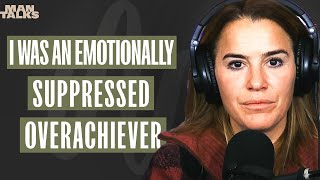
Transcript of a Man Talk Show conversation (Dec 18, 2023 upload) between Connor Beaton and Dr. Nicole LePera focusing on how unmet childhood needs shape adult relationships. Major themes: emotional and physical needs, nervous-system ‘conditioned self’, aloneness vs. solitude, emotional regulation/co‑regulation, resentment and trauma bonds, and practical steps to ‘be the love you seek’ (body-based practices, breath, boundaries, and attunement). The speaker also references personal grief and a book tour related to her new book 'How to Be the Love You Seek'.
Chapters
When our needs are unmet, whether it's physical or emotional, our body will register threat, a lack of safety. We'll drop into that survival brain, all of those different reactive moments, conditioned ways of being, and we won't be able to show up as responsive, connected, attuned partners. For anyone else, that belief came from a lived experience where your emotions did not have the space and the validity that they inherently do. It's incredibly important to be connected to our emotional, to our physical bodies and therefore our emotional selves, because our emotions give us important information as to how we're navigating or experiencing our environments. And when we shut ourselves off from them, not only do we shut ourself off from that guidance, we shut ourself off from a whole aspect of who we are and our energetic spirit, self expression. And when we do that and drop back into survival mode, we can't show up in service of our loved ones, of our families, of our businesses, of whatever it is that is important to us.
All right, Dr. Nicole, welcome back to the Man Talk Show. How are you doing?
I'm incredible. Thank you again as always, for having me.
Connor, you got it. You got it. Three Pete. We got a, we got a Three Pete in the house.
That's wild.
I always love our conversations. I feel like you and I have very good dialogue to the point where you're one of the few guests that I've actually gone back and listened to, which is really interesting, mostly because I have that thing that I think a lot of people do, which is I get self conscious listening to myself like the TED Talk that I did years ago. I'm like, I can't watch that. And mostly because I would change probably what I talked about in the TED Talk. But, but it's, it's interesting. But you're one of the guests that I've actually talked about, really loved, and be like, oh, wait, what did she say and what did we talk like? I want to go back and hear that. So I'm really looking forward to this conversation. All that said, how have you been? How has the book tour been going? This is, you know, it's already been a massive success. How's it been going and what's it like for you to go through the whirlwind of this cycle again?
Well, thank you. I'm honored to be someone that you're willing to listen to yourself. I have that exact same thing in terms of not wanting to hear my voice, not wanting to overanalyze my performance, wanting to critique it. So thank you for sharing that. How I've been is. It's really been a whirlwind, especially the past couple weeks for me. The book in general. The topic of the book in general on relationships is something that for me is. I mean, has been really always top of mind, having struggled for so long within my relationships, having been a couples counselor. So creating this book and thinking conceptually about it and writing as much of my own journey into it has, of course, I think is always the case. Just brought up a lot emotionally, kind of revisiting. And especially this past week where I had the opportunity, as I was sharing with you beforehand, to this was the first book of the three. The first one having come out during COVID where I had the opportunity to even think about or consider a book tour in person events. And while one of the stops that we had made and decided on was New York City, which is where I spent almost the entirety of my 20s, which was really cool. And then that gave my family the opportunity to attend. I did a stop off in Philly, where they're living. And so for me, as celebratory as all of this has been an exciting. Putting a book out into the world, seeing the impact that it has had, there's been a side of grief and the darker emotions, I think, that have also come to the surface because going home was the first time I've been home in my family home since the funeral of my mom a little over two years ago. Now, having them at an event, I mean, events celebrating me was one of the prime places that you would always see my mom, you know, either on the sidelines or in the chairs in the seats, cheering me on. And so having her absence so acutely present to me at a time when there was also so many exciting emotions really did create a bit of an emotional whirlwind, to say the least.
Yeah, I appreciate that context. And, you know, it's interesting when we lose people who are close to us in our lives and. And then we keep going and it's sort of in the background. It's not always front and center. And then we have these moments where all of a sudden it's very front and center. And I've been thinking about that a lot recently as my mom has terminal cancer. And I've talked about it a little bit on the show, and it's really given me pause to reflect on what's important and what's valuable, but also what do I want to share with her, and what do the final months of our relationship look like? Speaking about relationships and the relationship that she and I have and what conversations do I want to have? And is there things that I don't want to leave on the table? And so they're big things. I think oftentimes we get caught in the complexities of our relationships, or how do we make it better, what do we need to improve, or what do we want to celebrate and those types of things. But when there's this very real stark contrast that somebody is permanently departing.
It contextualizes things very, very differently. And so, yeah, it's just an interesting thing that I think is very relatable for a lot of people. Yeah. I mean, anything else you just want to say on that front? How did you find yourself navigating with the grief and the joy of that? Because those are two very extreme experiences to hold while you're going through this massive celebration. You know, it.
I think finding space to even have, I think something that comes along with, you know, book promotions and book events is just a lot of scheduled time. I had the opportunity for incredible. I was on the Today show, so I had a. Filming for that and prepping. And so I had all of this stuff that I wanted to perform in a certain way and, you know, to focus on. And then, of course, the opportunity to meet the community and, you know, give a little talk, though then to meet them in a book signing brought a lot of presence that I wanted to bring. I'm always very intentional when I'm in circumstances, situations like that, experiences like that, where I really want to be grounded and present in my body. So saying that, to say, I think I did a lot of putting my emotions aside, compartmentalizing a bit with the, you know, always having something that I was very interested and wanted to be focusing on, and knowing that if I allowed myself to really stew in everything emotionally that was coming up, that would make being fully present and being of service in the way that I wanted to be of service really difficult. So saying that, to say I've learned lessons now for future book events to make sure my schedule looks a little bit different, you know, that I can have more just natural moments to allow myself to. To be with whatever is present the next couple weeks, I will start to have many more of those moments. So if you probably asked me this question a week or two from now, I would have a much different answer than it's kind of in the background. The. My presence, I should say, is kind of in the background to. Or my. My attention is not fully present to all of the emotions that are in the background, which then has. And I think this very much applies to much of the topics in the book, which has created an opportunity for me to slide back into many of my old habits. Just the stress of managing and keeping down, suppressing all of that emotional energy so that I. I can be present in the moments that I want to be, has caused a very physical toll on the body. Typically too, when I travel for any. For book events, for book opportunities, I struggle with carving the time and space and mornings for me to move my body in the way. And so that's usually the first thing that goes because I'm focused on whatever I'm there to do. And so the scenario goes that I've been noticing a lot of those reactive old habits, which is interesting because one of the most prominent ones for me is to go back alone, just go back and feel emotionally alone and create a circumstance of the emotional aloneness that I felt very much in my childhood. Even though in my current life and current relationships I have the opportunity to be supported by incredibly loving individuals. Yet in these moments where I desperately want to just be held or seen or emotionally supported are the moments where I become passive aggressive or reactive or lock myself in the room and then almost revalidate in some way. That old narrative, which for me is, look at how emotionally unconsiderate or inconsiderate you are, Nicole. Look at how alone you are. No one wants to show up for you. Even though it's not the objective reality for me at all.
It's interesting because as you talk about that, I can't help but, you know, I. I think that for a lot of men, what we do when we're struggling is to go back to aloneness. You know, it's like a very common thing for a lot of guys to do is like. And maybe it manifests differently or what it looks like on the outside is different, but that's definitely a coping mechanism, if we want to call it, or a method that a lot of guys deploy. What do you like? What are the roots of that? You know, this, this drawing back to aloneness. Because I even find that in myself, where there's. I definitely, there's. There's parts of me that I've. I've come to learn and I'm okay with it now more so than ever. I really love solitude. Like, I actually really love being in solitude. And my wife and I have this joke that like, she wants to do everything and I just want to be, you know, in every moment and so she can be Busy, sort of like working away. And I would just prefer to sit and meditate, you know, and, and, and be in silence and be in solitude. But I know for me, when there's high levels of stress and, and overwhelm in my life that I can revert to an. Not an unhealthy type of aloneness, but I can retreat from the conversations, the feelings that I'm having, the emotions, the. The things that I actually need to do. Those are the things that I generally tend to let go to the wayside. What is it about that aloneness that you think is so appealing for people when that stress starts to come up in our lives?
I want to thank you in a lot of ways, Connor. There was a distinction that I read in your book, Van Talks, and you even describing what you're gifting us with now with this idea of your shift into the more nourishing aspects of solitude. And I'm thanking you because you were giving me language for a similar shift. And really a distinction first that I've been able to make in my own journey of the difference not only in origin between aloneness and solitude, the difference in embodied experience, and oftentimes an outcome where solitude itself can be very replenishing, very grounding, very nourishing. It can be that which actually allows us to show up in full, energetic service or connection to another. And that is so much part of my journey. And I think for most of us who struggle with the other version of aloneness, feeling lonely or self isolating at a time where we want to or need support on some deep level, even feeling deeply, I think, alone within whatever it is that we're struggling with, this idea that I think a lot of us have, that no one else has a similar experience or can understand or not wanting to show them what we're struggling with in fear that they'll deem us unworthy or broken or whatever it is. Most of us that are having that experience, I think are having it because of the reality of the lived experience of that type of aloneness that we've had at a time and a place, usually early on in our earliest relationships. And for me it was really confusing because I live in a family that liked a lot of physical together time. We kind of operate as a unit. We have meals at the same time, we're more or less in the same room, even if we're not paying attention to the what's on the television though. And so I would have never, you know, kind of thought I was alone or used the language. What I've come to realize is I was. Even though there was a lot of physical presence, there was a depth of emotional absence of emotional loneliness. And what that translated that kind of contradictory in a way, experience to me in my relationships in particular, I really struggled with space, perceived space, with having people or partners that don't want to, you know, do the same thing I want to do at the same time that I want to do, who pull away physically, they want to have different plans in any given moment or emotionally. And it's because. And I struggled ultimately then to be alone myself. I remember the first moment in my late 20s where I went and did something alone for the day without having someone else to join me in my plans. And living in New York, I was obsessive. I had an incredible, you know, rich social life with a lot of friends. So I always had someone, I was always making plans. And it wasn't until. And so I think it originates, um, I had a fear ultimately of, of loneliness because it wasn't necessarily being physically alone. It was all of the embodied emotional experience that brought me back to that emotional loneliness. Though at the same time in our childhood, you know, immature way of making sense of the world, that egocentric state, those of us who were left either physically alone or emotionally alone likely at that time applied a very self focused reason, right? For the aloneness. I am alone, my caregiver, physically left or emotionally isn't available to me because of something inherently flawed, intrinsically wrong, something bad about me. So then almost like this self fulfilling prophecy, right? We are shameful to share sometimes even emotionally, what we need or what we're feeling with others in fear of not only them seeing those aspects of ourself, in fear of recreating their unavailability. The experience that we did live, that feeling of rejection that comes along with that. And so in a way, our familiar home, even though it's so deeply uncomfortable because we need support and connection and desperately want to be safe seen is also the same exact thing that we recreate in an attempt to protect against all of those feelings of unworthiness, shame, recreating, rejection. And then so the cycle goes.
Yeah, it's so, it's so interesting because I think there's like that aloneness can be appealing in so many ways. And I think for me, as, as you were talking, I was thinking about like, why was it such a draw for me personally and because I had, you know, I was between two families, I was always on the go as a kid. And what hit me was one I hated being alone as a kid. I really didn't like it. I, you know, unless I was outdoors messing around with like my slingshot and a hatchet, right? Just causing, just totally shit disturbing, right? Trying to cut down 80 foot trees in the backyard, getting into trouble, getting know, hitting golf balls into the neighbor's yard, like just all that kind of stuff. Like if you left me alone, I probably got into trouble, right? Killing plants with WD40.
It was rowdy. But I think what really hit home for me is the sense of aloneness that I felt in not really belonging in either of my family systems because I viewed them as being whole and complete without me. And so there was always this, it always felt like there was this barrier of like, well, do I fit in this family system or do I fit in this family system or do I fit in, like, do I actually fit in either of them? And so I think that's where this kind of aloneness that I grappled with for a long time really stemmed from. And then, you know, I had to find my own way towards solitude, like healthy solitude, which I really love and enjoy today. But I think a part of that has been possible because I know I belong now. And I've done the work to have a deep and rich sense of belonging within the family that I've built within the families that I've come from within my friend circles. And so, yeah, it's just so interesting how there's all of those things that can contribute to our sense of aloneness. But I don't want to spend too much time on this because I really want to talk about relationships. I really want to talk about relationships, which in some ways we've already been doing. How would you describe the state of modern day relationships? Because when I read stuff online and I hear people talking, it's just a nightmare. It seems like it's a nightmare. Like dating apps are a shit show. There's such a very clear gender war going on. Somebody sent me this op ed in the New York Times from a couple days ago where, you know, this, this individual is sort of laying out all of the problems with modern, modern dating and sort of resting it all on the shoulders of men. Like men are the problem and many to change. And so there's this very clear gender war sort of happening. And it just seems like when people look out at dating, for the most part it is not really a good experience. And so I'm wondering, like, when you look at relationships from all the work that you do because you interact with so many people. What do you feel has shifted and changed within our modern day relationships?
That's a really interesting question, Connor. And I think one of, I mean I remember when dating apps as an entity first began and they were something that if you were using them, you felt very shameful, maybe you're being secret even about using them. And, and now I've just seen all of the, you know, essentially options that I think are available and the quick nature in which you can just zip on your account, right and kind of shift through, swipe through people and either find and try to create or a new relationship, maybe find an alternate option if you're not happy in the, in the dating that you're happening. And I think that mirrors are just information age, for lack of a better word in general with this immediate access, whether it's information or dating partners.
And I think possibly something that comes with that.
Are two things are a lot of dating information, different types of people, different categories. I mean anytime we're sifting through information, our brain, right trying to make sense of the vast amount of it will begin to rely on categorical groupings, stereotypes, right. Kind of those ways in which we can quickly find our way to the appropriate aligned or ideal person. And so with that I think possibly comes, you know, hearing this op ed and just seeing a general sense of the way in which individuals or groups of individuals can be talked about. I think that that could be a byproduct of our natural tendency to make sense of and group the world. Though depending again on what beliefs you have about the certain groups. I do think that then some messaging can be difficult.
Do you think that relationships have become less resilient or that the individuals within the relationships have become less resilient?
So the next then piece of that, I think the second thing was right ultimately does this access to ending, to leaving to a possible reason to end or leave because of all the other opportunities create. Because I do hear some people bring that up as a possible, you know, a possible concern or reality that they believe. Well, people aren't working on staying essentially or resolving because they no longer have to. And I think that the I don't think anything is ever personally 100% environment, right or context in this case the choice which, you know, compels me to leave or 100% kind of internal. I think when we talk about repairing relationships, the possibility of evolving relationships, shifting dynamics, I think it's a combination of the two. And I think though saying that to then say I believe the large majority of us as Adults.
The larger majority of us, struggle generally with stress or emotional resilience, with the ability to navigate those moments of difference, to understand and be curious about different perspectives, one's needs in any given moment. And the ability then to repair or reconnect if and when natural conflict or disagreement or disconnection arises. So because of. And again, that wasn't just something constitutionally about us. That was because of the earliest circumstances and environment. So all of it is just married together. And I Now, I think we have a bit of a perfect storm where if and when we struggle with repairing or exploring even differences and difficulties, it becomes so easy to go into these binaries, to find this hypothetical ideal person with which we won't have to repair any possible disagreements or issues. When that's just not realistic.
Well, it's so interesting because it does seem like the perfect storm, right? In the sense that. I agree. I think there has been this sort of fragility that has set in individually, culturally, socially, that's fragmenting not only people's individual psyches. I'm working on a piece right now about the fragmentation of the human psyche. And how so many people. There's just such higher level of fracturing that's happening. And when you look at. If you read the DSM5, if you look at most spiritual or psychological problems, a lot of it has to do with some form. Form of fracturing internally or you're fracturing with your external reality. And so I think in some ways we have become, as not a collective necessarily, but I think a lot of individuals have become a little bit more fragile. And this isn't to shame anybody. It's not to do anything like that. It's just a statement of perception. But I think the other thing that has added fuel to the fire and that I think contributes to the fragility is that we now perceive potential mating partners as completely disposable. It is wild, I think, how we approach these things. And I remember I did a video on Is it Worth getting Married? Is marriage worthwhile or Is marriage dying? Something like that. Some clickbaity title. But I explored it, and it was interesting to see some of the comments on the video of, like, how many people were just like, oh, Mary, you know. And it was everybody, you know, everybody, you know, men and women alike, regardless of your orientation. It was just like, marriage is a bad deal. It's ridiculous. I'm not interested in it. There's no viable mates, you know, et cetera, et cetera, et cetera. And so it's interesting to see, you know, and I really fundamentally believe that a big part of it is this disposability that we have brought within not just dating, but relationships. Because it's so easy to be in a bad place with your spouse or your partner and to open up your favorite social media account and see hundreds of people that on the outside look like good, viable candidates that you would, you know, that you can fantasize about not having issues with and then. But the reality is you'd get in a relationship with them, then all of your past stuff would show up in that relationship just like it is in your current one. So that brings me to the. To the real question, which is how do you or what does it actually mean for you to start to be the love that you seek? Because I think I hear these types of things talked about, but I think you've done a very robust job of breaking this down. So let's just start high level. What does it mean for you, or what does it look like to be the love that you seek?
Just piggybacking even on what you said, Connor, the fragility, the fracturing, the choices that indicate the disposability, or even my language I popped in my head, is the dehumanization of our current partner or partners around us. And this is going to lead into kind of my explanation of being love is, I think, a symptom or an indicator of, again, not only the environment and the choices that then are ever present for us. I think it's a symptom that's grounded in our very fractured relationship or traumatized relationship dysregulation in our mind and body and in our nervous system. Because when we are in survival mode, right, when we feel threatened, when we don't feel belonged, maybe in our current relationship, safe and secure to be who we are, right? When we're met with maybe opinions that threaten our own identity from the inside of our relationship, from the outside of our relationship, and where we're in survival mode and our nervous system is becoming activated, we are physiologically geared to protect ourself. I think that fragility, fracturing, and dehumanization are naturally what happens. And so I think the pathway to healing these behavioral patterns that we're now seeing in society, to ultimately healing our relationships, to develop even the ability to consciously be present and navigate these moments of disagreement, is about creating regulation. I mean, even going back to when I offered, you know, stress and emotional regulation. And a lot of us as adults, we don't have that resilience. It's about building that resilience in. Because what I've come to learn and I'm continuing to practice embodying in my relationships is that, in my opinion, right what love is. And being this love that many of us are seeking out there, it's actually creating a safe and secure space within ourself, fully present to all that we are, so that we can be authentic in our self expression, sharing our own perspectives, our own feelings, giving and receiving support, being the unique individual that allows us to then join in interdependent relationships where I me and you're you when I then gift that safety and that security to other people. And then with that comes the ability to navigate these moments, to remain more responsive when there are differences of opinion, when there is natural conflict, natural moments of disconnection, to be curious about someone else's perspective, to hold space for their emotional experience, their wants, their needs, and to return to a space of joined, collective.
So that both individuals can determine whether or not they can move forward. And I think that that comes that isn't again, what I believe love is, is that space of emotional safety and security that we can begin developing within ourselves and then expand within our relationships. And I think that then will lead out there might still happen, right? There still might be millions of people that we can find any moment on social media or within dating apps. But I think what will change is our ability, our resilience to navigate these moments of difference. And then the choices we make on the heels of feeling so threatened, which often do lead to dehumanizing actions.
I love the way that you laid that out. And it's almost like, you know, that love is something that you generate internally. And this is something that I've had to work on a lot because in my, especially in my teens and my 20s, because my inner dialogue was so volatile and hostile towards myself, I really needed external validation from, specifically from women is where I sought it. I really needed that because internally I was lacking any kind of connection to self appreciation and self respect and self compassion. And so, you know, for me I've really learned like when I don't have those things internally or I'm not working on them or I'm not doing the things that I know I need to do to reinforce that I, you know, am loved and that I'm lovable and that I'm, you know, competent and capable, then I'll seek for that validation and that reinforcement externally. And that creates all kinds of a shit show, which I think is the clinical term actually. It's just the shit show.
But all of that is largely created from my understanding in our early relationships. So how do our early relationships really inform and shape not only our present day behaviors, but our present day relationships and the results that we're getting in our relationships? Just to be a little bit more sort of specific, I guess I think.
What'S important to note here too, when we're thinking about or talking about validation or wanting to affirm our worthiness, I think it's really common.
To solely focus on getting validated. For all the good parts of me affirming the light, the glowing, right, the happy, the positive aspects, the things that.
I want people to see ultimately. And I think what we're leaving out is the rest of our experience of our perspectives, our emotions, our self expression that we feel deeply shameful of showing that again, are directly impacted by those early relationships because it is those first the way ultimately we will come to think or believe about ourselves. What even parts of us are worthy to share with others directly is impacted by what we were made to think in our childhoods based on things that were directly and directly spoken to us within our families, in our schooling systems, and society in general. The emotions that we're connected to, the way that we express or regulate our emotions is directly impacted by how emotionally attuned those early caregivers were, how consistently they were able to soothe us in our upset. And if again, we had given given messages direct, right, don't be weak, toughen up, stop being dramatic. All the things that many of us were told, or even if we weren't directly told, having had caregivers that moved away from us physically shut down to us emotionally, given certain emotional experiences that we were maybe having in that moment. And then ultimately the way that we relate to others is directly or connect with others is directly impacted by the things that we had to do more of or stop doing to build and maintain those earliest connections. And then we just repeat. And what lies beneath the surface are all of the other aspects of our person, of our self expression, of our emotional experience that we didn't have the safety and the security that we needed to explore, right? In a different way. And I think then we continue to keep it all beneath the surface. We seek validation. And even if we do receive validation in moments, it never really feels fully the way we want it to feel.
Because it's not touching so much more. And the things that we're hiding, we're continuing to strengthen this idea that those are the things that make us unworthy and that we need to ultimately keep hiding them.
It's interesting because.
I completely agree with what you're saying. And as you were talking, I was thinking about.
Early on as an example, I remember hearing the phrase, what's wrong with you? What the hell's wrong with you? Why would you do that? What the hell is wrong with you? And it seemed like such a subtle thing, but I heard it so many times.
From one of my primary caregivers that I think I didn't really understand the impact of it until I look back at.
The sort of wake of chaos that we'll call my relationships in my teens and twenties, where I was operating from a place of let me show you that there's nothing wrong with me.
You can't see that there's anything wrong with me. So I can't show you any of my insecurities. I can't show you any of my faults or flaws. I can't show you any of those things. And so who I became in relationship was, there's nothing wrong with me. Let me prove to you that there's nothing wrong with me. Or the inverse of that would start to show up, which is tell me there's nothing wrong with me and reinforce my ego and how great I am. And so I would do all these things to be told how great I was. And it was really this wild cycle that had started early on in life. And I'm going to read you something that you wrote in the book that I really, really loved and would love for you to just expand on a little bit, which is our attachments to our parent figures didn't just condition our behavior or our earliest relationships. Also physically programmed our nervous system, determining how we think, how we feel and act. That's because our nervous system drives our thoughts, feelings and reactions in addition to influencing our other psychological functions. So I love this idea. Right. Our attachment to our parent figures didn't just condition our behavior, our earliest relationships. Right. It's like all those different pieces. So can you just expand on that a little bit? Because I think it encapsules something really important that I really hope that everybody takes with them.
For me, learning. I don't even know if this was something I learned in my graduate program. I mean, outside of just being taught that the nervous system is what connects our mind and body, I don't think we really. And I love neuroscience type classes, but we didn't. We weren't directly told that the nervous system is. We are born with an underdeveloped nervous system and we're developing the ability to process in certain ways, well through our 20s even, which is again why this role in these first environments and these first relational environments in particular, are so deeply impactful. And then begin the wiring of our entire way of being, way of making sense in the world. And it's not just again, the thoughts that are going through our mind. I think a lot of times when we think of beliefs, we think of, oh, okay, what are those running narratives? It is the physiological. I talk about a concept in the book called a conditioned self. I call it a neurobiological, right. It's the thoughts in our mind, the running narratives, the way I self define, self identify what I imagine is my place in the world, my future circumstances. Usually based on the similarity to the initial environment, circumstances, relationships. It's also mapped on to physiological shifts and changes in our body. And if and when these deep rooted beliefs, how we've come to know ourselves, whenever they become challenged as you know, individuals relationally, our nervous system will register what's happening. Especially I keep going back to these moments of belonging because those are one of the most acute activators of our nervous system.
So our nervous system, right, Sending all of these messages of stress, of dysregulation, sending to our mind and our mind at the same time, right? In intercommunication, applying the same filters. Oh well, what is happening here? Exactly as you are being rejected just as you once were, sends us back into these habitual reactions which can sometimes look like those acute moments of whether it's explosive reactivity where we're screaming, yelling, saying, doing things we don't mean, hurting ones we love, whether we're distracting ourself in all of the ways that we can distract ourselves, detaching, right, Going away on our spaceship, where we're physically present, going about the motions, but million miles away. Otherwise, whether we're people pleasing, right, so worried about other people to try and mitigate or neutralize the threat before it becomes a problem to us. And for some of us, it's not even just in those acute moments. Our identity, our relational identity can become an embodiment where we become the caretaker who's always hyper vigilant or caring for the wants and needs of other people. For me, I became right similar to the way you're describing yourself. No one can see any imperfection in me. I became this emotionally suppressed, too vulnerable to show any point of need to another person, overachiever, where I prided myself. And I live in a society that celebrated all of this, doing all of these Achievements. I became the embodiment again of this nervous system state of dysregulation that in my childhood allowed me to stay safely connected to those moments of presence when they were available. And anytime I would show any other moment of stress or a moment of upset, right. Getting that messaging, it wasn't direct for me. I don't remember anything necessarily being said. It was just pulled away. Not being spoken to. Right. Not being celebrated or seen as much, just kind of being in the background. So the nervous system, which is foundational to how we're even navigating our individual lives, how we're caring and thinking about ourselves, whether or not we're worthy of physical or emotional care as individuals, how we're showing up in our relationships was formed in those earliest contexts. And then again, some of us begin to identify, some of us have certain aspects of this identity celebrated as right. This selfless being who's always worried about someone else. I can't tell you how many times I, I read in people describing their loved ones always worried about everyone else and never themselves. Right. They became the embodiment of what in my opinion was a nervous system state of protection that was necessary, a necessary adaptation at one time, in one place.
So many different threads to pull on in there. I think one of the, the, the main pieces that stands out to me is this conditioned self that I want to talk about a little bit more, but I think just so that it lands for the folks that are tuning into this, you're saying that when our sense of belonging is threatened within our relationship, that that is when our nervous system is going to get activated. Right. That's where we're going to get triggered. Reactive, angry, defensive, shut down, hostile, et cetera.
Right.
Is that accurate?
In those acute moments of perceived threat, we will have those reactive moments. If some of us have never had or created a sense of safety and security within ourself or within our relationships, then we might live the embodiment of those more conditioned ways of being in protection against.
Touching that, that deep rooted wound or that unmet need or seeing ourselves in a new way.
You talk about unmet needs, which I think is very important, but also one of those things where I've been working with men for a decade and one of the things that can be very challenging when guys start to step into the work is to just find what their needs are or to express what their needs are. And so sometimes when they start to look back at their childhood, it's like, well, I didn't know what I even needed you know, and so how, how do unmet emotional needs play into our current day relationships? Right. If you didn't get something met when you're a kid, how does that actually show up in your current day relationship? And then how do we start to identify what some of those unmet emotional needs even were as a kid? Because I think for a lot of guys that's like a big question mark, right? So I would love to hear your take on some of that.
While our emotional, our physical, Let me start there foundationally. And our emotional needs span our lifetime.
The way that we'll continue to attempt to meet them or get them met will map onto again how in which they were tended to. In our earliest relationships. Because we were solely physically dependent on another, a caregiver, to show up in service of keeping us physically alive. Universally, I think our physical bodies all share the need for oxygen, for water, for nutrients, for our cells and all of our organs to function. We share a universal need for rest, for restorative sleep. Those down moments where all of our cells can, can rebuild and repair and integrate all of the day's happenings. On the other side of that, I think because we are an energetic body.
Muscularly, we share a need to, to move in some way, in whatever way that it is possible for us to discharge that energy. And how again those needs are tended to, how physically present, how attuned to all of the different cues that we give caregivers in child, in infancy, crying, yelling out, in distress, and their ability to attune to what it is, how they not only met our needs over time, as we watched them model themselves, tending to or not neglecting their own physical needs, then becomes a blueprint for how we think about. And this is I think why there are a lot of us who wake up in adulthood and we're like needs, I'm not, not following. And emotionally kind of that next tier up.
We need to have the space to allow our emotions to, to be present. They're very real, energetic physiological experiences in our body so that we can again. In childhood we were dependent on another nervous system to help us regulate our stress response over time. Right. The more present, attuned and consistently able, someone was able to soothe us.
Curious about our emotions, helping us explore and understand them, and then ultimately teaching us. We learn as a result of that relationship how to soothe our own relationships and or how to ask for the support that all of us humans as interdependent creatures will need well into adulthood. And within that kind of emotional need space is the Deep desire to be just seen, accepted, valued for our whole self. However it is that we're feeling or presenting in any given moment. And again, the large majority of us, in absence of having our physical care tend to or modeled in a way I know for me and my family while physically again in infancy and in childhood, I. My needs were cared for. The modeling of physical, of physical needs was not necessarily present. There was a lot of physical neglect in terms of they weren't prioritized, sleep wasn't prioritized. I as a young child could go to bed anytime really that I wanted. I didn't necessarily have a bedtime. Healthy nutrient dense foods were not prioritized. There was a lot of, you know, kind of inactivity, especially with my mom who was, you know, suffered with a lot of chronic pain.
Right.
There was a lot that I was shown that mapped right onto then outside of playing sports through throughout college for me was evidence in how I generally was not aware of the needs I had, was neglecting and overstepping my body's energetic resources because of the way that I wasn't caring for myself in the way that my body needed. And again, not having that emotional attunement led me to be so emotionally disconnected, not knowing. Waking up somewhere in my 30s even as a clinical psychologist and becoming aware that I was emotionally disconnected from my emotions and couldn't even begin to understand how to navigate them in a healthy way. Couldn't, didn't know, felt too vulnerable to ask for support, struggle to give language right to how it was that I felt so practicing. And again, those are, I think, some of the core needs that we all universally share. We all have a habitual way that we're tending to them now, which for a lot of us is what we're not. We're ignoring them. Right. They're on the back burner. So not shaming ourself. Of course, if we do become aware after maybe hearing this conversation, there are some areas that we could care for ourself a bit better and beginning that practice of creating new habits for ourselves. Really?
So you mean that shame isn't a great tool for change?
Are you telling me that we can't just shame the crap out of ourselves into the change that we're looking for? I'm just joking around. I appreciate the distinction between physical needs and emotional needs because.
I was definitely the kid that ate bowls of Rice Krispies and my parents let me put tablespoons of white sugar into it.
How else do you eat them?
Oh, and just disgusting amount I remember one of my favorite breakfasts was double chocolate chip muffins from Costco. Like those big.
Oh my gosh, Connor enemies. There's a cake brand. It was chocolate cake, chocolate icing, a soda. Okay, breakfast time for breakfast. And it was at night. I went to bed with a bowl of ice cream every night. Every single night.
Yeah. So I appreciate that because I think there is a certain kind of neglect that you can start to see show up. And I mean I definitely used food in a negative way. Hiding bags of chocolate chips and the couch cushions and eating bowls of chocolate chips and raisins after school with jugs of milk. And it was, it was rough. But. So what do you say to men who, who say I shouldn't have emotional needs or my emotional needs shouldn't matter in a relationship or don't matter in a relationship?
I almost started to say when I end it by saying we, we show up in service of self care for ourselves. I almost at it, which I will add now to answer this question. And for our relationships, when our needs are unmet, whether it's physical or emotional.
When we're not right showing up in service in that way, our body will register threat, a lack of safety will drop into that survival brain, all of those different reactive moments that we spoke about conditioned ways of being.
And we won't be able to show up as responsive, connected, attuned partners for anyone else. So if the listeners, any, you know, men out there listening who have had, who believe that to be true.
Urging you to, to question and perhaps begin to understand that that belief came from the lived experience where your emotions did not have the space and the validity that they inherently do. Emotions are physiological messengers. It's incredibly important to be connected to our emotional, to our physical bodies and therefore our emotional selves, because our emotions give us important information as to how we're navigating or experiencing our environments. And when we shut ourselves off from them, not only do we shut ourself off from that guidance, we shut ourself off from a whole aspect of who we are and our energetic self expression. And when we do that and drop back into survival mode, we can't show up in service of our loved ones, of our families, of our businesses, of whatever it is that is important to us because we will be solely focused even if it's out of our awareness that we're doing this in survival. And many of us will be driven in that survival mode to repeat habitual adaptive patterns that don't often have our own and our loved One's best interest.
It's interesting because I said to a client the other day who had posed this, he'd grown up in a specific type of household and his emotions were not welcome, right? They just were not welcome when he was young and he heard some of those messages of like, you know, men don't cry and those types of things. But it was more, it was much more specific than that, right? It was like, shut up, don't cry, those types of things. And so he really was and has been struggling. And one of the reasons why he came to work with me is that, you know, his marriage is not in a good place because his emotions have never had a seat at the table of his relationship. And he point blank asked me, why does it matter for me to have emotional needs in my marriage? Why does that even matter if I'm providing, if I'm making the money, if I'm doing these things, if I'm planning dates for my wife, why does it even matter? And I said, well, do you have emotions? And he said, yes. And I said, okay, so because you have emotions, they need to have a spot in your relationship. Otherwise you will always feel like there is a huge part of who you actually are that is not welcome in your relationship and that will breed resentment. I said, have you been resentful towards your wife? And he's like, yeah. And I was like, there it is, right? So when we don't have this space to bring this part of us into our life, that resentment is there. I'm curious if you can speak a little bit to the impact and the role that resentment has within relationships and intimacy, because I see that quite a.
Bit resentment is your beautiful teaching even there to that client, Connor, Resentment is a byproduct of anger. And anger evolutionarily is an emotion that indicates when our needs are unmet. In this case of the client, our emotional self expression, this whole other aspect of our being and. Or when our boundaries are being violated or overstepped, and when we're not looking at the role we're playing.
In those unmet needs by thinking and acting as if we don't have emotions when we do, or in other circumstances, right? By not putting up a boundary, creating a boundary and standing firm in that boundary, if and when we're experiencing a violation, what will happen is exactly as it has for your client. We will become resentful of the person or circumstance, even some of us at the world around us, very globally, at what we believe is the cause.
Of our very legitimate anger. And I Think it might have been.
John Gottman. Not totally sure, though I know in marriage research, I believe it was him. He studied that contempt is the number one emotional indicator of a marriage divorce, coming to an end or coming to a separation or of a divorce. And in my opinion, this is just like all of the spectrum of anger at root, which is very legitimate. So anyone who's listening and is in that, you know, evolution to resentment, it's you who's causing me to, you know, not feel fully belonged or seen or to not have space for my needs to be met. Or maybe it's even evolved into contempt, where we are just so much anger boiled to the surface, possibly even having caused a separation or on the brink of causing one. I think the most empowering shift we can begin to make for ourselves and the possible future for these relationships around us is to begin to see this deep, deep role that we're playing. All of the moments where we are enacting an unmet need, we are keeping part of ourself down because it can, I mean, result from anything from explosive arguments, complete disconnection, living like strangers just in a home, sharing space. There can just being double life, having a whole world outside of a world and in the home as an outlet for whatever that looks like, whether it's virtual online or other relationships in general. All of these ways, you know, that we've. We're adapting and dealing with the anger that's very legitimate and. Or our continued attempts at trying to create space in some other aspect of. Of our world or environment to meet these unmet needs.
Can you give some advice, maybe for individuals who have had resentment creep up in themselves and in their relationship, whether in the past or the present, and how they can start to navigate through that because I think it's so common and I don't know if there's a lot of very good resourcing out there to help people with that.
I think resentment first, acknowledging awareness that you have become present to this energetic expression of your body of anger, of a legitimate circumstance.
And not to kind of shame that realization and that awareness, because that then can become an opportunity for you to create or begin to find space.
Within yourself to explore these unmet needs, these emotional expressions, and then ultimately within bringing to the t them to the table within your relationship. And something I do want to emphasize is it as I think most things in a healing journey, it takes time and to also at the same time emphasize the energetic expression of anger. Resentment of contempt originates in our physiological body. So on that journey of Curiosity of expanding our space so that we can become more and more aware of what our needs are. And then of our practice, vulnerable practice in expressing whatever they might be, making sure that foundationally the body is included in that journey. Right. Exploring those pillars in terms of how are you physically caring for yourself? Do you have outlets for your energetic expression of this emotion? Because again, until our body can learn how to regulate, we will rely on those old ways that we've dealt with that anger, that resentment.
Yeah, I was going to say why is because you have a whole chapter on harnessing the wisdom of your body in the book. And I don't think that the majority of people when they think about being in a great relationship are super focused in on like got to make sure that I'm tuning into the wisdom of my body. So why, why is that so important? And can you add some context for the people that are listening in terms of what that actually means and what aspects or elements of our, the connection to our body do we need to bring into a relationship?
Again, I keep going back, Connor, to this concept of belongings. It really just kind of is a pillar around all of this. To feel belonged and in a relationship and connected to one that's foundationally an embodied experience. Emotional attunement happens right when there's an energetic self expression of an individual and when there's a presence in another individual enough, not in their own mind, not thinking of how they're going to react or respond or correct what it was that they're hearing. Not distracted or overwhelmed by now what's happening in their body. Right. Their ability to stay calm and grounded and receptive to what they're hearing so that at some point, energetically, even there can be a shared. This is kind of what empathy is, a shared vibration. That's what if I want to describe in somewhat scientific terms what emotional attunement is, it's like a form of entrainment, energetic entrainment.
And so to feel this authentic connection, a belongedness in our relationship, to truly allow ourselves to be emotionally supported and I think a lot of times we feel the contradiction of this when we're sharing or someone we love is sharing their emotional experience.
And we either receive or offer practical advice what we would do, we move out of that shared resonance, which in reality is what most of us, if not all of us are looking for to be seen and heard. As I shared earlier, one of those core needs in that emotional experience and all of that to be embodied begins with a safe and secure connection to a physical body. For some of us, that means, right, Removing our attentional focus from our thinking minds, our analyzing minds, our problem solving minds, or maybe our external focus to all the things we have to do and all the ways we have to show up for everyone else around us, and beginning to pay consistent attention to our physical bodies. Because again, if our needs are unmet, we'll be in that reactive nervous system response because our bodies will feel threatened to enter that level of entrainment or attunement, to be able to give and offer the emotional support and knowing that we're all desiring, we have to be embodied in our emotional experience, which happens again in our bodies. So I think, yes, and as most of my work is the case, you're going to meet some conversation about the relationship to our body, even in a relationship book, because it is so foundational in terms of creating the connection that so many of us are deeply desiring and often is laying at the root at so much of the disconnection and active conflict and reactivity and dehumanization that many of us might be living in or experiencing and seeing in the world around us.
What you are saying, I think aligns a lot with what I am usually talking to men about, which is some version of your aim in your relationship. What I usually say, because some guys are very tactical. They're like, what's the one thing that I can do to make my relationship better? And so my response is always the same, which is you. The one thing that you could do to improve your relationship is to learn how to outregulate your partner. And if you can, or even just learning how to regulate your body. But if you want to, you know, sometimes I like to gamify things. If you wanted to gamify it or create an aim or a goal or whatever it is, then out regulate your partner. And if you can figure out how to do that in a genuine way, not in a suppressive way, not repressing what you're feeling, none of those things, but you genuinely learn how to regulate your system, then your relationship and the contours of it and the volatility of it are all going to dramatically shift because you will disrupt the homeostasis of the relationship itself. And so that's always a fun game to play. So let's follow that thread, which is, what can individuals do to. To begin to regulate their nervous system? Because I can hear people in the audience like, okay, well, how do I do that? What do I do? So what do you want people to know about how they can regulate their nervous systems and their bodies.
So even just building on this foundation of becoming present the simple reality that we're living in a physical body. The more consistently we practice that presence, the more we can attune or notice within ourselves. When we're becoming dysregulated, we can notice our body's sensory shifts, physiological shifts and changes that indicate the activation of that nervous system. Stress reaction and the three easiest kind of pillars, the ways we can notice those shifts and changes or the systems in which are our muscle tension. So even maybe dropping into your body right now, as you're listening and and noticing, do your muscles feel at ease, you know, ready to activate if and when they need to? Not weak and heavy and dull and as if there's no energy in your body at all, or not completely tense and fist clenched, clenched or jaw clenched at the ready to to throw a fist. Your breathing is another great pillar to begin to notice. How is it that you're breathing? Is it calm and even from your belly, indicating that you're calm and grounded and regulated in that moment. Are you holding your breath or feeling so constricted it's difficult to get a breath in? Or is your breath very quick and shallow, almost like your, your chest is heaving, Right? Both of those indicative of being in a stress response and then noticing your heart rate, right as those systems mobilize energy.
Through the breath, through mus muscular tension, our heart rate shifts, right? As your heart rate more or less its normal rhythm beating firmly, powerfully in your chest or is it racing, almost beating out of your chest? Are you so numb maybe to your physical sensations that you don't feel it's imperceptible your heart rate again, those are signals that you're stressed, the more attuned you can be in real time. So continuing even that check in practice that I just offered throughout your day and the more you're able to notice as those stress markers begin to become present, as tension builds, as your breath quickens, right as your heart rate elevates, those are the moments where we can begin to make conscious choices to help our body to regulate itself. Slowing and deepening our breath, releasing the tension so we can get a breath in, releasing the tension in our muscles, rolling our shoulders, maybe down our back, stretching our jaw out, allowing our heart rate to become calmer. Because the gift of this I want to kind of expand on your I love your gamification Connor suggestion. And the gift of out regulating our partner is a gift to our partner because each and Every moment our nervous system is in that calm, responsive, grounded state, at ease, relaxed. Our nervous system is sending out unseen signals to our partners and anyone around us. Nervous system that it is safe that you are able to also rest in ease in my presence. So as we create this, we create the possibility to co regulate with stress and upset partners. We create the possibility to create that safety and security that we're all looking for and needing to begin to express more and more of ourself as we become more responsive and less reactive. In those moments where a partner does want to share something that's on their mind or a difficult emotion, we create the possibility that they feel safe enough to continue that conversation and to share with us into the future. The more responsive we can be. Not only do we change the dynamics through these direct moments of intervention, if you will, we change the energetic climate really of the relationship itself.
I remember a period of time I feel like sometimes when I say these stories, I'm like giving away how weird I am, but that's okay. I remember a period of time in my life I went down the rabbit hole with Buddhism and Zen. And I remember reading that there's a practice with that certain monks have where they'll try and slow down their breath actively throughout the day to like six or seven breaths a minute. And so I remember going through a period of time where every day, as often as I could remember, I was trying to slow down my breath actively to have six or seven breaths a minute. And the outcome of that was wild because I started to ground and I really started to slow down. And as somebody who, you know, grew up with more energy than the sun and just, you know, copious amounts of adhd, it was a very intense experience. But it was also deeply frustrating because when I first started it, what I, what I really came into contact with was how tense and how gripped my body was like. I was, I was carrying tension like a linebacker, like full tackle, you know, of somebody. And my breath was tight and it was hard. And it really took a long time for me to work with the musculature of my body, to release the tension, to work with my breath, to learn how to ground myself relatively quickly. When, you know, back then it took a long time and a tremendous amount of effort because I was often living in a very dysregulated state.
I appreciate you sharing that because I very much relate to. It was a sequence of things I had to do to be able to get to the space, to access the calm, deep, slow belly breath. And it Was a lot of tension for me as well.
Yeah. And I say it because I think the average person is like, oh, if I just do this, you know, this one breath once a day, like, I'll be totally good. It's like, well, no, actually, for. For me at least, my experience was it needed to become a way of being, you know, way of living where I was actively throughout the day grounding my system. And there are certain practices that I still do today, but it really was this thing where I was living and embodying this practice throughout the day, talking to clients when I was working at Apple or co workers, interacting with people. Like, it really became this embodied way of being. And so I wanted to put that out there because I think what you described is so spot on. And I think for the average person, if they're not doing some of those things, they'll hear it and be like, you want me to relax my muscles? You want me to just breathe deeper? But it's not just like, yeah, you do that once a day. It's like you try and stay present with your body as often as possible for as long as possible and keep consciousness in that part of yourself to ground, to release the tension. And so I wanted to add in that caveat. I wanted to touch on one topic before we have to wrap up that I think is very important. It's a little heavier. But I would love for you to talk about what trauma bonds are and how do we identify if we are in one. And then maybe we'll talk about the neurobiology after if we have time.
So trauma bonds, with the expanded definition that I. That I like to offer are all of. It's kind of been a theme that we've kind of actually been speaking about throughout this conversation. It's all of those dysfunctional, unsatisfying, unfulfilling, disconnecting, reactive ways of being that many of us have learned or needed again, adapt it to embody in our earliest relationships. And then, because, as I say in the book, similar to the conditioned selves, they become part of our neurobiological wiring. There's that sense, preferred sense of familiarity that comes with interacting with people, relating to people having the same type of relationship with all the red flags that we maybe have friends screaming, loved ones from the sideline saying, why are you even ourselves maybe sometimes.
Right.
Identifying that this is that same kind of relationship I'm finding myself in again. Yet we feel compelled to continue. And I think signs of it are some of these. You've kind of heard me Speak already. Right. If we find ourselves saying or doing hurtful things to those we love, things we don't mean, if we find ourselves feeling generally numb, disconnected from those we love, if we find ourselves continuing to seek out unavailable partners, or if we find ourself jumping from relationship to relationship, keeping ourselves unavailable in a certain way, if we find ourselves sabotaging relationships, pushing people away when we really want them to be close, if we find ourselves struggling with space, not able to tolerate any distance, pursuing right people when they need a moment of separation, there's a lot of. And again, they're not an exclusive list. Because I do think a trauma bond pattern can look like any of the ways that we feel like we need to show up in connection.
Any of the ways that we're driven to show up in connection that are leading to us feeling disconnected, unfulfilled, overly reactive in our relationships. And again, they come from that childhood experience, the needs that went, met or unmet, the physiology that has gotten wired into us, the deep root of beliefs. This is the only way in which, right. We can maintain relationships. This is the only type of person. And then the subconscious repetition and recreation of those familiar patterns, so much so that we're seeking the same type of person and recreating the same type of habits within those relationships.
I like the expanded definition because I think when a lot of people hear the words trauma bonds, generally something very volatile comes to mind, and that's not always the case. Extreme amounts of disconnection and loneliness in a relationship can be a trauma bond. But I think the key thing that I take from what you're saying is we fall back into these old roles, you know, and oftentimes it's a role that we played when we were growing up or some type of safety mechanism that we adapted when we were growing up. And so what are some of the ways that, you know, hopefully that helps people identify what it looks like or could sound like? What are some of the ways in which we start to move out of these trauma bonds? And I know that we've sort of been inadvertently talking about some of these things along the way, which is great, but can you just maybe outline that a little bit more?
Becoming present to the dynamics, to the part we're playing, to the role we're playing, to how we're navigating. Right. Moments within our relationship more consistently than not. That will always be the first step to creating then the space or the possibility to breaking those patterns. Because I do get asked when trauma bonds come up as a topic quite Often whether or not they can be fixed, changed. What if I do come to the awareness that I have some of these dysfunctional patterns in my current relationships and these exist just to be clear as well outside of our. Even those within our romantic partnerships. They exist within our friendships. They existed within professional relationships. They exist of course, within our family relationships probably still continue to exist in the way that they once did. And so the way to begin to break those habits. And are they breakable and changeable? Absolutely. Lally, my partner, who I've now been with for, for 10 years and I began with a lot of those dysfunctional, trauma bonded habits and have been able, through conscious intentional choices, both each of us as individuals and us together as a. As a unit have been able to create what we're. Our goal is, is to create a safe and secure relationship. That space where each of us can be again interdependent ourselves individually and rely on each other for the supportive nature that relationships provide us. And those choices be become possible when first we see what is the pattern that is repeating here? What is the role I'm playing in this pattern? Not even just external role, right? What's happening internally? What are the parts of myself that I'm shameful and not showing? What are the parts of myself that I'm overly expressing? What do I believe to be true about myself, about this relationship, about the future?
And then the more present I become to the different repetitive thoughts in our mind, the different habitual, physiological, emotional feelings in our body, the more I use all of these foundational tools of as you're beautifully, you know, wisely offering Connor, of the lifestyle choices that have to go along with these practices. They're not just throw them in my back pocket until I need them. For a lot of us, it means unwinding a lot of the stress and tension in our bodies. It means staying committed to consistently showing up in care of our bodies so that in those moments of reactivity we can be more responsive. And then in those moments of relational presence, we can begin to embody new choices because that pull and this is why I call them neurobiological, that compulsion to keep showing up in these dysfunctional ways doesn't go away once we become aware that they're there. And that can cause or reinforce a lot of the shame to this day, right. I still have so many of those wired in patterns that I feel compelled to repeat those more often than not. I try to show up responsive and you know, make new, different choices to be safe and secure in any given moment. And other moments when I'm overstressed, when I'm overwhelmed emotionally, I might fall back into those wired in patterns. So within that conscious space becomes the possibility of us returning without shaming ourselves. When we do fall back into trauma, bond habits, dysfunctional cycles in our relationship within that conscious space gives us the possibility at any time, in my opinion, to make and continue to make new choices.
I really, as always appreciate our conversation and I feel like I say it every time, but I feel like we, you and I, I think one day just need to have a like, you know, two hour chat that we just record and we talk about everything, life, love and in between. I think it would be awesome. I really value your insight and the way that you present things and clearly a lot of people do too because your work has just really helped and supported a lot of people. So for everyone that's out there, where can they go to learn more about your work, your books, specifically how to be the love you seek, which is out now, which is amazing. And I've started digging through it and I haven't made it all the way through, but it's freaking awesome and I think it's going to support a lot of people. So where can people go to learn more about all of that?
Well, first, Connor, thank you. I feel the same sentiment. I love just how aligned and stimulating and challenging our conversations are. You kind of pull my mind into new directions and make me consider new aspects of experiences, you know, many experiences that I haven't lived myself. And I just so much appreciate that aspect of our, of our dynamic. So thank you for having me on yet again and welcoming me into your community. The new book, yes is finally out. It is available on all major book retailers. A lot of local shops are also having a couple copies on hand. So I'm always a big fan of supporting local. If you have a favorite book bookstore, definitely give a call or give a search if they have an online presence. I have a website up how to be the loveyou seek.com that does outline several retailers, some local that I do know will be stocking and carrying the book. So you can check that out there. You can just look at my general website, the holisticpsychologist.com for any information about my membership stuff, Healer circle and any and all social media at this point has a presence of the holistic psychologist. It all began of course on the Instagram account though at this point there's a TikTok, a YouTube, a X and a Threads account with that handle or some version of it where these conversations are happening every day. And again, there's a beautiful community to connect with there, too.
Awesome. Well, we'll have the links for all that in the show. Notes. As always, team, don't forget to man it forward. This is definitely one of those conversations that you should send to a friend, send to your partner and have a conversation about it. I think that these are the types of things where it's like, what did you think about that? And what would you like to implement? So send it to somebody that you know will enjoy it. And until next week, this is Connor Ben signing off. See you then.
More from Connor







How to Raise Strong, Unshakable Boys in Today's Culture, with Dr. Shefali Tsabary



