Escape The Trap Of Perfectionism
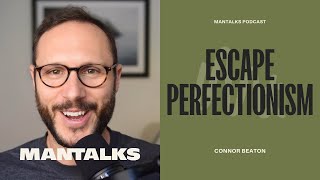
Connor Beaton (speaker) explains that perfectionism is an impossible, self-created myth that functions as a justification for self-punishment when expectations aren’t met. He describes how perfectionism robs people of witnessing and celebrating progress and fulfillment, traces its origins to early messages (e.g., needing approval), and reframes failure as a privileged, informative part of success. The transcript contains both diagnosis (how perfectionism operates) and prescriptive moves (honor failure; celebrate wins).
Chapters
The thing that I think that most people miss out on and don't talk about when it comes to the concept of perfectionism, why it exists, why we aim for it, where it shows up in our life and what function it serves and how we can actually move out of that space of perfectionism. The thing that I think that most people neglect to talk about is the fact that perfectionism and self punishment are inextricably connected, right? Perfectionism and your aim for it and your need for it inevitably morphs and transforms into the reason and the justification of why you get to punish yourself for not achieving some impossible task, some impossible expectation, right? Because the truth about perfectionism that we all kind of know, right, that doesn't even need to be said, but I'm going to say it anyways, is that perfectionism is a kind of impossibility. It is a myth, it's an illusion, it's a fantasy that you create and it's a fantasy that you create, an illusion that you create, a myth that you create because somewhere along the line you were maybe told that you weren't good enough and so you're trying to achieve the impossible, to prove somebody wrong, or you were told that you had to be perfect in order to be accepted. And, and so you've been striving towards this impossible goal. The reality of perfectionism is that you never reach it, you never get there. That's why it's a myth, that's why it's illusion. That's why you are continually trying to strive towards this kind of elusive target that you never seem to land on. And every single time that you miss it, every single time that you miss the target of perfectionism, what's on the other side, what's on the other side is punishment. What's on the other side is you self deprecating, shaming yourself, you know, villainizing yourself, guilting yourself, being angry, being disgusted, disappointed, eliciting from other people.
You know, anger and disappointment in you, right? Embarrassment, shame. I mean, it's just the litany goes on and on and on. So when you don't achieve this elusive impossible thing, it becomes the reason why you justify speaking harshly to yourself, not celebrating in your victories. And it robs you of the real essence of your work, of your efforts, of your progress. And that is arguably one of the most tragic aspects of perfectionism, is that you don't get to see your progress. Perfectionism robs you of witnessing the progress that you're naturally and inherently making. And it distracts you and denies you of Your ability to celebrate the things that you're already doing, to create direction, to have clarity, to have success. And this is kind of like Tony Robbins saying where he says success without fulfillment is the ultimate failure. Well, why do we experience success without fulfillment? Surely sometimes it's because we're doing things that we just genuinely don't care about, and so they seem inherently meaningless. But on the other side of that is that we are doing things that we genuinely care about. We're, you know, working jobs that we care about. We're in relationships that we genuinely care about. We're achieving goals that really are meaningful to us, but we aren't fulfilled because we achieve that goal. And we nitpick and criticize and become contemptuous and don't allow ourselves to celebrate simply because we didn't do it in a perfect way. And you've probably experienced this. You know, you've probably put this burden of perfectionism on you and experienced the tragedy of not getting to celebrate and feel fulfilled in the accomplishment and. And the success of a goal, of an aim, of an achievement, of a relationship or something that happened financially or within your work. And so the real question is, why are you punishing yourself? Not why are you trying to be perfect, but rather, why are you trying to punish yourself and to get clear on who punished you for being imperfect? Where in your history, where in your origins, the origins of your ego and your identity, did you experience.
The compressing of needing to be perfect for someone in order to gain their approval? So how do we break free from this perfection? How do we break free from this need and this drive and this sort of obsessive desire that some of us have in order to be perfect? It's that we remember that it is an absolute privilege to. To fail. That failure in itself is this beautiful thing that's an honor to get things wrong. That failure and imperfections make up the fabric and the inherent design and the tapestry and the weaving of success. They are inextricably connected. You cannot have one without the other. It's like you cannot have darkness without light. There is no such thing as success without failure. There is no such thing as achievement without getting things wrong, without falling 10,000 times and getting up 10,000 in one and having an achievement on the other side of that? And so in some ways, we need to honor our failures as much as we honor our success, as much as we honor our achievements. Because those are the things that. That we can look at and utilize and develop and learn from and be shaped by in order to Achieve what our next aim is, what our next goal is. You know, I get asked this question all the time, like, how have you been so successful in your career? How have you been so successful with your social media, with your business, with. With what you've done with the podcast? And I'm like, honestly, I failed my way to success. I say it every single time I failed my way to success. Every single failure along the way informed and sharpened and clarified the path that I was walking. But if I blinded myself to those failures or if I shamed myself to those failures, then I would have ignored the vital and important data that was trying to inform the next step that I needed to take. The next thing that I needed to learn the lesson that that was trying to be taught to me through that failure. And so we need to be able to honor failure in a very real way. And the next thing that we need to do in order to break free from perfectionism is to genuinely celebrate your wins. You need to be able to sort of parcel out to separate.
Diagnosing and looking at what could have gone better, what you could have done differently, how you could have improved from a very specific period of celebrating what you did. Right? Those two things can't be intertwined. You know, it's like if you've ever been at work or in a relationship, let's just say your relationship and your partner comes to you and they're like, hey, thank you so much for doing X, but I was really disappointed that you didn't do Y. Right? Thank you so much for taking out the garbage, but, but I was really disappointed that, you know, you didn't grab the almond milk on the way home. Like, this is a very California based example, apparently. No hate. No hate California. But when we receive, when we receive a compliment like that, when we receive validation and praise and a celebration coupled with what we didn't do wrong, it negates the first part, right? What we, what most of us, what all of us, what our brains are designed to do is to understand and look for the negative aspects to try and keep us safe, right? That's why we have these automatic negative thoughts. That's why our brain is a pattern recognition machine, is constantly trying to recognize patterns to keep us safe. And so what does our brain do when it hears that? Thank you so much for bringing out the garbage, but you, you know, I was disappointed that you forgot to bring out the almond milk. It focuses in on the latter part, you know, immediately. And so when we, when you try and celebrate yourself for a success for a victory, for an achievement. But you are caught up in looking at what you could have done better or what could have gone differently. You negate the celebration. You negate the gratitude. You diminish and erode the appreciation for the hard work. So if you are truly committed to moving away from perfectionism, which is not a helpful thing, I think we can all talk about this. You know, I think it's very clear when you look at most of the successful entrepreneurs, artists, musicians, you know, whoever you deem to be successful, and you listen to how they have got to where they are. It is through failure. It is through the doorway and the portal of failure. You have to walk through it and then you have to give yourself grace and permission to celebrate the work that you have put into it. Otherwise, you will arrive at your achievements and you will feel unfulfilled and they will feel hollow. And that will be another form of failure trying to teach you something. And what it's trying to teach you is to celebrate, to celebrate unencumbered by what you did wrong, unencumbered and. And unburdened by how you could have done it better. Honor your failures. Celebrate your victories. Celebrate when you have done something right. Your achievements, your accomplishments, the efforts that you put in to everything that you do. And as you do that, you will slowly dissolve this illusion, this dream of perfection because it doesn't exist and it's never really there and it's never achievable and it's this pretend utopia that you never inhabit. And so we dissolve that dream, we dissolve that desire. We eradicate the need to be perfect by honoring our failures and celebrating our victories. So thank you so much for tuning in. Leave your comments below and let me know what you thought if you're watching this on YouTube. And don't forget to share this episode, whether you're listening to us on the podcast on the YouTube channel with somebody that you know will enjoy it, man it forward. And until next week, this is Connor Beaton signing off.
More from Connor







How to Raise Strong, Unshakable Boys in Today's Culture, with Dr. Shefali Tsabary



