Evolutionary Psychologist: Polygamy Is A Part Of Human Nature
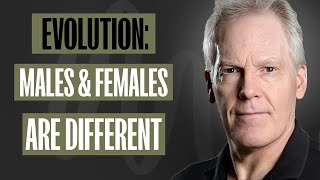
Connor Beaton talks with evolutionary psychologist David C. Geary about polygamy, sex differences, and intrasexual aggression. Geary argues these traits are rooted in human evolution and shape how we approach modern relationships.
Chapters
We look at primates generally when the males are bigger than the females and more aggressive and so forth. You almost always have polygonous relationships where the male has multiple mates. When you have monogamy, there's not as much male male competition and the males and females tend to be about the same size.
Polygamy is just in a social sense is, I think, making a bit of a surge in the west now. You know, you have people like Andrew Tate and his crew that very much seem to advocate for, you know, having many women around you at all times. And I think dating apps have inadvertently. What seems to have emerged is that the sort of top 5 or 6% of men are getting the majority of the attention from women. I've talked to a number of these men and a lot of these guys are like, well, why would I settle down? I have, I have 10 women that are okay with being in a, in a pseudo relationship with me.
All right, Dave, welcome to the Man Talk Show. How are you doing today?
I'm doing well. How about you, Connor?
I'm doing good. Yeah, I'm doing good. It's like, you know, it's the very beginning of the year. You're my first interview of 2024. So here we go. Yeah, which is great. And I've been running the podcast for eight years now and we, we finally just joined a network, podcast network, which was not a thing when I started running the show back in like 2015. And I didn't even know what a podcast was.
So what's, what's the network?
It's called Q Code. Q Code. And so they, they specialize in a bunch of different stuff. They have like these big produce shows where they bring in celebrities and it's, it's kind of like an old school radio show that you used to, you know, hear on the radio before there was tv. And they'll have these elaborate scripts, but they're also getting into wellness podcasts and therapy based podcasts and podcasts like mine. And so it's a very interesting network to be a part of. I think they're doing some interesting things. And the guy that started it actually helped to start Apple Podcasts. So he knows a couple things about podcasts. So hopefully that will serve our show well.
Great, let's start.
I wanted to start at a high level. There's a bunch of things that I wanted to get in today. We're going to talk about a number of things including, you know, the evolutionary case for something like vulnerability. But I wanted to start at a high Level so that all of the listeners, we're all on the same page. So in a basic way, what are the benefits of something like sex differences evolving in the first place? Why does something like sex differences even evolve in the first place?
Well, they, they, they typically evolve based on what's called sexual selection. So either competition with members of the same sex, like you know, males beating at each other, like seen a lot of nature shows, or, or females being aggressive with one another or make choices. So female birds, at least in northern hemispheres, prefer males with colorful plumage because that's correlated with their, their physical health, nutritional state and, and, and so forth. So things that influence, give advantage with, in terms of competition for mates and mate choices tend to evolve sex differences.
And for people that aren't really familiar with evolutionary psychology. Right. Maybe people that have kind of heard the terminology before.
You know, sometimes I think they, you know, there's, there's not necessarily controversy around it, but it's been co opted by certain people that have made it controversial sometimes. How, how do you describe what evolutionary psychology is to just the average person?
Well, it's taking topics that are typically studied by psychologists, which could range anywhere from mental illness to infant behavior, and trying to understand it from a cross species and evolutionary perspective. It's like, okay, are aspects of this behavior, do we find it across species? Could it have an evolutionary history to it? Meaning are there cost benefit trade offs to this particular trait? That and the benefits could they have provided advantages in ancestral environments?
And what, what would you say to the average person in terms of how it relates to modern day relationships which a lot of people, you know, sort of say that it's a bit of a shit show right now, Dating apps and whatnot. You know, how does evolutionary psychology or what does evolutionary psychology have to offer, you know, the everyday person in terms of understanding their marriage or understanding the dating realm that they happen to find themselves in?
There's a lot of work in evolutionary psychology on things like mate choices, what do women want, what do men want and competition, how it's expressed in various context or whatever. So I mean it's probably always been a bit of a shit show in terms of people's individual experiences. But given, you know, it's a basically a free for all. Now parents don't have a lot of say and other kin don't have a lot of say like they did in, in prior, prior generations and in other cultures today. So you kind of like on your own, you know, the government doesn't send you a pamphlet on how to.
Best dating practices. And then you add social media in there and it becomes, I'm sure, quite confusing. The basic issues of what, what men and women want are. Are probably the same. It's just the. There's a lot of noise out there as to how to best find that.
Yeah, I was going to say, thank God the government doesn't send out pamphlets on dating. That would be. Yeah, that would be a nightmare. That I could just.
Other waste of money.
Yeah. Right, another waste of money. Yeah, probably not really connected to any type of validation research. Let's talk a little bit about selection and sexual selection and competition. Maybe just give a little bit of an outline of what some of the main pillars are that go into sexual selection.
Yeah. So this comes from Darwin's 1871 book, although he mentioned it.
In his book on evolution in 1859. But any case, in that book he focused on male male competition. So if you look across mammals, if one sex is to have horns or some type of armament or whatever, it's typically males. If you look at who's the bigger, more aggressive sex, it's typically males. Not always, but, but, but typically males. And then if you look at the more colorful species.
Species with more elaborate mating displays and other sorts of things that obviously aren't related to survival and maybe even detrimental to survival, like the peacock's train.
Then that's driven by female choice, female preferences. They choose males with the prettier plumage and longer train and the best. The guys have to jump through all sorts of hoops. The best mating displays, the most vigorous and. And so forth. And that leads to the evolution of sex differences in those traits that facilitate competition or choice. Now, he, he focused on male male competition and female choice. We now know that there's also female female competition for resources such as food, but also sometimes for mates. And there's also male choice.
Interesting. Yeah. So, I mean, that's a fascinating part of it that I've always sort of wrestled with. Just this notion that there are certain traits that we can evolve, whether they're physical or otherwise, that aren't necessarily beneficial to our survival but are beneficial to sexual selection.
Right.
Like the peacock was a good example. Are there examples that relate to human beings that you can think of that tie into that.
That aren't beneficial for survival but are beneficial for selection preference?
Right, yeah. So.
We could look at something like male height and physical size differences. So in primates, when there's a lot of physical male. Male competition, male on male aggression and polygamy, you know, the Males have more than one dates, then the males tend to be bigger and more aggressive than females.
Which is, you know, beneficial in terms of male. Male competition and so forth. But to become larger and to maintain higher levels of lean muscle mass and other sorts of things requires more energy.
More nutrients, more food and so forth. Good living conditions during development and during early, especially during early adulthood, which is fine if everything's going fine, but if there is a collapse in the system, the food system or whatever, then the males would. Would starve first before the females. And I, I think, I think you've seen that in things like the siege of Leningrad and other, you know, catastrophic situations where, where things have basically collapsed.
Yeah, I, I saw an interview recently that was, it was just like a big debate between a bunch of different people, you know, feminists and guys that are mgtow and stuff like that. And one of the things that was interesting was that we've made a tremendous amount of progress in terms of equality within our culture. But when you look at the drafting rights, it's still only men that are eligible for the draft. Right. If America went to global war and whatnot, generally speaking, men are the ones that are going to get drafted into the war. And it's a. So that's that. I think that's not necessarily a physical evolution, but that's like a cultural evolution that is likely a byproduct of a physical evolution. How would you describe what human sexual dimorphism is and how does it play into sexual selection?
Yeah, so there, yeah, there's a lot of confusion about the term dimorphism and differences. Dimorphism, dye is two different physical kind of traits that, that are distinctly different. So the sex organs are dimorphic. You know, they have male typical and you have female typical. And those are. Are, you know, never the tw. Well, I guess the twain does meet occasionally, but. But they look different and most sex differences are more on a continuous scale. So height, for example.
Is better thought of as a sex difference rather than a sexual dimorphism, although it's often called a dimorphism. So. So most of the traits that psychologists and people would be interested in is a matter of degree rather than a merit matter of kind.
How have male brains and female brains evolved differently or have they evolved differently over time?
Yeah, perfect question. Lots and lots of.
Bad noise and arguments going on on that right now. And there's the full gamut from, you know, there are differences, but it explains 1% of sex, explains 1% of the variance, and you know, this area of the brain or that it, and being dismissed as trivial to the other end where they're saying that, you know, patterns of gray matter and white matter can be used to predict whether it's a boy or a girl or a man or a woman, you know, 93 to 96% of the time, which is a huge difference. So with, with those studies, it's the overall pattern that's there. Those studies have technical issues where you can kind of overestimate things a bit. So another way to look at it is to look at well defined brain networks. So we have certain areas that brain just, just doesn't want part work. It's, it's an integrated network of things and there are built in networks and if we look at those and look at the, the firing patterns of those and how they are synchronized together and work together and so forth and where the biases are, we can still predict sex about 86% of the time. So there, there, there, there are in my opinion substantial differences.
It's interesting, I think I, I don't remember who it was that I was talking to. I think, I mean I've interviewed hundreds, like several hundred people now, but I think last year I was interviewing somebody and they were talking about in children that there's some neuroimaging that's starting to come out that shows and hopefully I don't botch this, so you can correct me if I'm way off, way off base here, but there's some neuroimaging starting to come out that's showing that women, that girls have a more developed social part of their brain and boys have a more physics oriented part of their brain that's developing. So like the part, and I see this in my son where he's really, really interested in how things move through space and time, whereas a young girl's brain is more focused in on how are people interacting and why are they saying the things that they're saying and choosing. And, and so maybe if, if you're familiar with what I'm talking about, since I can't remember who I was referring to, you can throw me a lifeline here.
Yeah, I actually am updating my class notes and just kind of catching up on reading now. And there was a large scale study published just a year and a half or so ago that looked at 40,000 people, that this is structural differences, so physical size differences for 40,000 adults in this case. But I think it applies to children as well and they control for brain size and a variety of other Things that you need to control for, to say, okay, this area of the brain is bigger than you would expect in women, and this area is bigger than you would expect in men.
And so I looked at those, and I looked at the top 10 or so regions in each sex that are disproportionately large and thought, well, let's back engineer these.
Look at what these areas do and see if they're random or see if they, they fall together in a network. And some of the areas that women are have larger than expected areas of the brain. A number of them are in the language network. And so it's not just here and there. There's a number of them in terms of cortical volume, thickness and so forth that are associated with language skills that in particular give them.
Not only greater language fluency, which many people are aware of, but also greater sensitivity to nuances in language, what is spoken and how it is spoken. They also have larger than expected areas associated with social cognition. Just, just as you said, sensitivity to facial expressions, sensitivity to facial gaze. What is that person looking at?
Areas that would help them make inferences about the thoughts and feelings of other individuals. Areas associated with empathy and emotional reactivity and.
Kind of feeling their pain, sort of sort of thing. Yeah. So most of their, the areas that are relatively larger than expected in women are all coalescing around some type of social cognitive skill.
Is that like, how do we track what the evolutionary benefit of that was? Because that's a very interesting thing, right, that there's a sort of wiring and.
And.
Preference put on this, whether we want to call it social acumen or not, but this sort of like social emphasis within women. What's the benefit there for women? Is it just being able to better track, you know, what men are saying, what potential mates are saying? Is it to be able to understand where the potential threats are in terms of other women that are maybe vying for a similar mate as that woman? Like, what are some of the elements that play into that?
Yeah, so there's probably a number of things going on, or at least I've argued that there's a number of things. The empathy difference advantage seems to be found across primates, and that's probably related at least to the sex difference in child care, you know, investment in, in infants, if I could, that. That women really have a basic motive to develop a network, a close interpersonal network of friends and family that provide them with a social emotional support and resources, help with child care or whatever it is, or help at work, what, whatever is potentially stressful for them. The social skills that I'm talking about are really important for the development and maintenance of those types of BFF relationships.
Those skills are also important for relational aggression. So somebody wants to poach your romantic partner or your best friend, you need to be able to pick up on it. So you pick up on subtle facial expressions, vocal intonation, those types of things. And then you react emotionally to it, which motivates a response and a kind of rumination of thinking about trying to figure out exactly what was going on. Is it intentionally hostile or was it just a mistake or whatever it was. So yeah, I think it's. It's a combination of dealing with kids, building a social support network and dealing with same sex competitors, you know, dealing with guys as well.
Yeah, I was going to say also dealing with us are mysterious, you know, ways. It's interesting because I, you know, I run a company that's for men and you know, the podcast is generally geared towards men's health and wellness and psychology and betterment and, and it's fascinating, like on Instagram, how many questions I get from women really just trying to understand the men in their life. And I think what's been interesting for me over the last decade as I've done the work that I've done, is I've come to realize that for a lot of women we are as men, very mysterious creatures and they don't necessarily understand our behavior a lot of the times. But one of the things that I have come to know is women have a. As to what you're saying, they have a really keen, sharp attunement to misalignment within men and that threat possibility from other women specifically.
And I think in part I'm speaking from my own experience because in the past I have talked about this on the show. I was notoriously unfaithful for a very long time. And the women that I was with always knew, they always seemed to know what women were a threat. And it's like I wasn't hiding anything. It was very interesting. And they seemed to have this very keen. Maybe I was just shitty at it and maybe there's other guys that were better at hiding their shenanigans.
But they seemed to have a very sharp attunement to the women that were interested in me specifically. Not so much in my behavior, but more specifically the women that were interested in me. So maybe let's shift gears. And I don't know if that relates to what I'm about to ask you at all, but can you tell us a little bit about what intrasexual aggression is and how this plays out maybe differently between men and women?
Okay, so did you want me to talk about how the boys and men's brains are a little bit tweaked?
Yeah, let's start with boys and men. Yeah, let's do that.
Okay. All right. Yeah, so I'm still reading up and doing the reverse engineering on that, but I know other work as well. But you're right, your son fits right into that. Some of the areas where the male brain is larger than you'd expect are.
Visual object processing, object attention, attention to the features of objects.
Locating themselves in large scale space. So having a better understanding of physical space. So they're more attuned to the structure of space and objects than to nuances and, say, facial expressions.
Can I just interject there, when you say object processing, what do you mean by that? Just like analyzing what an object is or how it moves through space and time. What do you mean by that?
Yeah, identifying objects, recognizing them in their different orientations and so forth. I've argued that probably at least some of that is related to tool construction because most tool construction in traditional context is done by men and guys. Mechanical reasoning is much better than, than, than that of girls.
There are some social components to it, some areas associated with sensitivity to social hierarchy. So rather than individual.
Social cues, it's more of, you know, who's on top, who's on bottom type of thing. More abstract mapping of social, you know, a variety of social relations and space.
Sensitivity to angry male faces, for example. So guys are more attuned to the physical world, but they are also attuned to certain social things as well.
Yeah, it's interesting. I think it was in your conversation, I could be wrong, but I think it was a conversation that you were having with Chris Williamson. They were talking about boys tracking, like having a better throwing capacity and being able to track balls that are being thrown through the air. And I thought that was really interesting because again, I'm just going to use my son. I know it's like one data point, but my son, you know, he's two and a half years old and since he's, you know, since he was 2, he can, he can track and catch a ball, which when I looked, you know, online.
It was like three to five years old. Don't expect your child to, you know, be able to play ball or catch really until he's three to five years old. And here, here he is at like two years old. And he's fascinated by it, right? He's like, he wants to practice it, he wants to learn how to throw it, he wants to learn how to catch it. He's fascinated by how his trains, he's obsessed with trains right now. He's obsessed with how his train works, the sounds that it makes, how it moves through the tracks. You know, he's laying on the ground looking at the, at the wheels, observing how they move and he's asking questions about them and, and he's just, he's just immersed and obsessed with how things move through space and how they occupy space. It's really fascinating to watch. So can you expand on that a little bit? Because I think that that's very, it's a very interesting thing that I've seen in my own son.
Sure. So a couple of things there. The first is, is the throwing.
The sex differences emerge there at least by three or so, and then get bigger up through early adulthood. So guys are, and boys are better at, you know, throwing accuracy, distance, velocity.
Big difference there emerges very early on in life they're more interested in throwing and catching things. So there's a dodging component to it. So it's not just like a leftover from hunting because, you know, raccoons don't throw stuff back at you, but other people do. And so the dodging component there, and to be good at that, you have to be attentionally oriented for large scale space, as I said before, and you have to be attentive to non biological motion. So when people move or cats move or whatever, they have a characteristic pattern of biological motion. And that's one area of the brain that's sensitive to that A different area is sensitive to, or system of areas is sensitive to non biological motion, how objects move through space. And guys are better at tracking those.
Determining when they're going to hit you, which is what you need in order to block or to catch something there. I've argued and I think the evidence for it is very strong that that reflects an evolutionary history of male, male competition with projectile weapons. Spears probably started out as rocks and then spears and bows and arrows and so forth. You just take, take a look at history and how things worked out. It's very, very clear that there is. Men had to deal with projectile weapons and women didn't.
Yeah, I mean that's, that's, that is for sure. I mean it's, it's an interesting thing that we would evolve that characteristic and that trait to be able to, to track things and, and you know, be Able to throw. I mean, I was reading some other research last year that was showing. I think it was, I think it was 40 or 42%. Men, men have a punching capacity on average. If you took a man that's like five, eight and a woman that's five, eight and they weighed the same amount and they had the same muscle mass and whatnot, that men still have a 40 to 42% on average greater force when it comes to things like punching and throwing than, than women do and. Yeah, yeah. Is that, am I, am I accurate ish on there?
Yep, that's right. And if, and if you took the average man who's bigger than the average woman, the differences would be much larger. So the, the kinetic energy, you know, when, when you actually hit something, the differences are like one and a half standard deviations, which is huge off the top of my head. You know, so maybe 10% of the women might be as good as the weakest guys.
That's due, you know, the structure of the shoulders, different in the arms, big differences in lean muscle mass.
Especially in the upper body, which really leads to a huge difference in the amount of force and power that can be generated in a punch or with. I think guys also have a evolutionary history of using blunt force weapons. Yeah.
We really have a good track record there. I mean, it's interesting because I think one of the things that, I mean, my wife and I have talked about this quite a bit in terms of having kids growing up in, in the world today is like seeing, you know, seeing men and women competing together in sports like boxing or, or mixed martial arts. It's like, that seems so dangerous to me. You know, it's like the, there's, there's just very clear research and evidence that shows that men and women are structured physically different. You know, like women's hip structure is different.
There's, there's just a lot of bone density, the stuff like that. I mean, there's just a lot of things that are different between men and women. And when you put them in a ring together as an example, it's just a very, it's a very dangerous thing. And it's, it's, it's why I think evolutionary psychology and you know, the work that folks like you are doing are, is really catching a lot of attention because it's sort of, it's not directly pushing back on this conversation that there's no, you know, there's no difference between men and women, but it's saying, hey, there's actually a huge body of evidence that shows the exact opposite of that. Right.
So, yeah, I, I agree. It's probably just a matter of time before some woman is seriously injured. Especially when you get into.
You know, physical fighting, you know, boxing or mixed martial arts. As we said, the, you know, the differences in the amount of power that a guy can wield versus a woman, and even a guy who's had his testosterone, you know, lowered significantly, that does reduce some of the lean muscle mass. But it, but it doesn't, you know, merge the differences. This individual will still have a huge advantage, and it's dangerous and it's idiotic. I don't know how anybody could in good faith promote something like that.
It's almost delusional that you think men and women can just transfer bodies and are. And if they say they are this or that, then everything else goes away.
Right. I mean, it's interesting because the more I've dug into it.
You'Re right. I think one of the things that I was reading is that Even if you're 20 or you're 30 and you transition and you were born biological male and you start to transition and you start to take hormone blockers and testosterone blockers and you start to take estrogen, yes, your muscle mass, you know, might decrease, but not to the degree. I mean, you've still grown up as a biological male. So there's still the, there's still the advantage, and you're not going to lose so much of that. And on top of that, I mean, there's things like a, a male's lung capacity is much greater than that of, of a woman's lung capacity. I mean, it's just, it's substantial. And so you have things like swimming and, you know, endurance sports that require a good amount. I mean, that's, that's all about lung capacity.
Let's linger on that for a moment. Something like lung capacity. I'm a former singer, so lung capacity was a very big thing. I sang classical music for a number of years. Something like lung capacity. What's the evolutionary case or reasoning for something like men having a much larger lung capacity than women? Why would that have happened? As an example, I know I'm being very specific and sort of myopic on one thing, but I think it's interesting.
Well, yeah, I mean, it's related to overall cardiovascular fitness and capacity. So the lungs are bigger, the heart's bigger.
Blood, more red blood cells and so forth. Lean muscle mass requires more oxygen, more energy to maintain. You know, you need to get the, the oxygen in for. And to generate the energy through the mitochondria, you know, these little things in the cells. Male. Male competition requires considerable physical exertion. You know, if you're in a medieval battle, for example, you know, you can't do a timeout and take a break for a few minutes and catch your breath. And so the, you know, the physical competition.
You know, is associated with increased height, more lean muscle mass, but you also have to have all of the cardiovascular, you know, the heart and lung capacity to maintain sustained exertion of those systems, as you'd see during an actual fight.
Yeah, I mean, I think about, you know, sometimes I'll get lost down the YouTube rabbit hole and find myself watching, like, bears fighting or, you know, caribou blocking horns and stuff like that. And I mean, the endurance in that is just intense, you know, and you think about the evolution of human beings from primates and, you know, watch primates. I mean, they have. There's the. I can't remember exactly what it's called, but there was this documentary series, Netflix recently, that followed one of the biggest primates, one of the biggest primate bands. I can't remember what you call it. But throughout a number of years, and it was fascinating to watch them. But it's. I think it's interesting because, you know, a lot of people would hear what we're saying and say, well, that's not how we compete today. And, you know, that's not how men and women compete for mate selection. And that, you know, that's. In some ways it's true. You're right. Like, men aren't, you know, throwing down and battling it out in front of a woman for, you know, for mating preference or viability. But there are still these cues that I think are looked for, you know, and so can you just speak to that a little bit? Because I think that's. That's important.
Well, women prefer taller, muscular men to.
Shorter, less muscular men, even though.
It may not matter in a modern economy. The shorter guy may be just as skilled at whatever it is he does as the other guy.
But women still make those choices and they still have those preferences, which is a kind of a legacy, you know, and men still do throw it down sometimes. They're the ones, as you mentioned, who go to war and you want to be physically fit. If you're in a frontline division.
You know, that happens and could happen again at any time.
Yeah, I mean, it is happening in some ways, which is interesting. It's just a removed piece. What is it about height that is.
Not Necessarily attractive. But why? Is it something that women generally look for?
Yeah, probably if we look at.
Primates in general and when the males stick around, so usually in most mammals, the guy does his business and then he's off with doing whatever he's going to do.
In some primates, the guys will stick around for a while, maybe a few months, while the infant is breastfeeding, maybe for.
A long, long time. As in gorillas, where the males and females will stick together for a long time and the offspring will grow up and then leave for another troop.
One common theme, although it's still debated there, is that the males are sticking around. One function is protection of the offspring and protection of the offspring from infanticide. So from infanticide from other males, typically of the same species, bigger, more aggressive males are better able to do that. And outside of that context, bigger, more aggressive males in many contexts are more dominant, have more social influence, and therefore, whatever social respect or resources he gets, the women get access to.
Last year, I think, I think it was last year, I interviewed Frans de Waal. I'm not sure if you're familiar with his work, but incredible researcher and one of the leading primatologists in the world. And he was talking about how the, there's the, you know, he wrote about the misconception of alpha males and you know, how in some primate cultures, alpha males are the dominant, you know, keeping the order, keeping the hierarchy through aggression. And then there's another subset that are actually alpha males through coherence. And so they rule through trying to create some type of social coherence. But at the end of the day, there's still the, the, the looming threat of some aggression, right? It's like they keep the social coherence through a lot of different pieces, right? Like the grooming is a big part of it and encouraging that and encouraging resolution between, you know, people that are fighting within the tribe. But at the end of the day, that, that male still has the capacity to uphold the, the coherence of the group through some form of display of, of aggression. And so I would imagine is because, I mean, when I look at modern dating, I remember reading a stat that said that women on hinge, I think it was the dating app hinge that had height selection turned on, right? Because you can show what you want, preferences in the person that you're going to match with. Women that had height selection turned on, 80% of them said they wanted 6ft or above. And it's like 14% of the population is 6ft or above, right?
Yeah, they want 6 foot or taller.
That it's. It's interesting how some of those things that we've evolved to prefer are still very strong within us. Right. Whether. Whether we like it or not. And it's men and women alike. Right. It's just a very common thing. Can we jump back to. Because I think we've touched on it here inadvertently a couple times, but can we jump back to intrasexual aggression? And can you just maybe tell us a little bit about what that is and. And how it might be different between men and women?
Right. So. So intrasexual aggression, so competition male on male or female on female. So within sex competition and in primates and in human history and the population, genetic data and so forth suggest that for men there is two types, two kind of levels of competition. One of it is within group competition. So you're trying to move up that social hierarchy within your social network or group or village or whatever it might be. The higher you are up in the network, the more social influence you have, the more access to resources typically you have. And almost always you have more than one wife in traditional context.
So that's. That. That's often has a physical component to it. They often don't kill each other because they need each other for between group stuff. And the other component is between group. Between village warfare, raiding and so forth. And in that case, you need not only physical strength, but you also need leadership. And somebody who can put together a coherent group of males who are organized in a way that facilitates the competition is between group competition and within. Within group competition. Both typically have a. At least in traditional context and historically have had a physical component to it. Although you can also compete by being good at something that other people value. You know, you're a good baker or blacksmith or whatever it is. You can do something that people benefit from and that gives you prestige and you can move up the hierarchy in that way as well. It doesn't always have to be physical aggression, but I think that's how it started out.
Yeah, like as you were talking about that, I grew up in central. Northern. Central Alberta, Northern Alberta and Canada, which I always refer to as the Texas of Canada, except it's minus 36 months out of the years. Right. And I remember being a young man in my late teens and early twenties, because in Alberta you can go to the bar at 18 years old. Right. You can start drinking at 18 and not super proud of it. But we used to get into arm wrestling competitions and it was like this inadvertent sort of display of strength, and.
It was something fun to do. But if you're the guy winning the arm wrestling competitions.
I found that you'd still get noticed by the women. Right. It was like a very common thing that when the arm wrestling was done, there was some woman that was coming to talk to you. Right. And it was just this sort of, you know, even though it might seem ridiculous on the outside to some people, it was still this sort of display of, I'm strong, I've taken the time to build this strength, and it's a very real thing. And so, I mean, that's just one, maybe a silly example, but it's a very real example. And I mean, hell, it worked for me a number of times, so I can't complain too much.
Yeah, it's not. It's not silly. It's not like when guys have a conflict, they immediately start hitting each other with sticks. Right. There's usually a verbal component to it, a pushing, shoving, threatening. It escalates.
Yes.
As they're sizing each other up, things like arm wrestling and similar types of. Of strength, endurance types of things are sizing each other up. And guys do that just by looking at upper body strength and stuff like that. But also arm wrestling or running or whatever, whatever it might be.
Yeah. And generally, you know, you want to have a couple capable, strong men around you. Right. Just depending on the environment that you're in. Because, you know, everybody knows that there are not good men out that are out there, you know, and generally speaking, you know, the individuals that are. That are committing things like sexual harassment and whatnot, it's a very small percentage, but it's a very small percentage of men that are repeat offenders. You know, it's not generally. Not the guys that are like one offing it, you know, that's. It's not 100%, but it's a pretty high ratio of men that are. That are sort of committing that. So having the men that are around you that are capable and can spot that, because I think part of that. Part of that intersexual aggression within men is almost like a signaling so of, you know, you don't mess with the guys that I'm around or you don't mess with the women that are around me either.
That's right.
There's. There's something beneficial to that. So what does it look like for women? What does intersexual aggression look like for women?
Yeah, so they. They don't hit each other as much.
Yeah. Which is probably a good Thing. Although it would save a lot of time.
Yes.
Yeah, they're. They're more like the mean girls, that old.
Movie. The women have a lot of adaptations, physical adaptations, immune system and psychological emotional adaptations such as fear, anxiety, and so forth that increase their safety. And so safety is a big issue with women, which makes sense. It should be for men, too. But safe men aren't competitive among other men, so that the sexual selection kind of takes away from that. So they don't escalate to physical aggression as often as men. It takes. They. Some. They do sometimes, but it takes more to get them there. And even when they do escalate it, it's almost never as severe. You know, occasionally it is, but typically isn't. And that's a pattern that's. That's common across primates. The aggression's there and so forth, but it tends to be lower level. So with women, the aggression is, as I mentioned a few minutes ago, it's called relational aggression. And basically it is targeting.
The social support network of the individual, trying to question their reputation, for example, spreading gossip, spreading lies, often trying to do so in a plausibly deniable way. I'm really worried about Mary Jane because she's really drinking a lot and sleeping with a lot of guys, and we really need to try to do something about it. And so there, you know, it's couched as, you know, I'm concerned with her, but what you're really doing is spreading unpleasant information about her that would make her not a good candidate as a best friend and not a good candidate as a girlfriend for the guys in that social circle. So there's undermining of the reputation.
And there is attempt to socially isolate or totally push the woman out of the social circle.
So what you're saying is that women are the originators, the original curators of disinformation.
Disinformation, Yeah. I mean, guys. Guys do it too, but it doesn't affect other guys as much. I mean, guys harass each other and say stuff and whatever, and it's like, yeah, whatever. But. But for women.
They'Re. They're more likely to react with anxiety, depression, you know, downstream later on. So it's more effective when used against women. Then it's more.
It sounds like it's more of like a character attack, that there's. There's sort of like an assault on that other woman's character or her credibility in some way or even. I'm not sure what the word that I'm. I'm looking for, but, like not, not purity, but almost like sexual reliability or like sexual. Yeah, yeah. Like how, how would you, how would you put that? I'm, I'm missing the words.
She has no sexual morals. Thank you. Yeah. And, and so she's not a good long term partner for any, any of the guys in the group. You don't want to go with her because she's been with so many guys and you can't trust her and so forth. So it, it is, you know, a reputational attack for sure. Attempt to drive them out. For sure. And, and involves not only language manipulation. So for.
Nasty looks, rolling of the eyes, a lot of things that were kind of dismissive of.
Whatever the woman or girl is saying.
Yeah, it's interesting because I think in some cases it probably has a reverse effect depending on what the guy is looking for. If you're a guy and you're not interested in a long term monogamous relationship and you have, you know, a woman that's interested in you telling you that this other woman is very, you know, sort of like sexually open and active, you're like, oh great, you know, like you're telling me that she's exactly what I'm looking for here.
Yeah, yeah, yeah.
But, yeah, but, but typically it would be, you know, if two girls are interested in the same guy as a boyfriend, you know, longer term boyfriend, it would be, that's, it would be directed so that he got that information about that guy about this other woman.
Well, I was just going to say I wanted to take a little bit of a turn. I do want to talk about the use case for vulnerability here in a second, but I'm curious because as we're talking about this, what comes up is that we've sort of tugged on the strings of monogamy versus polygamy. And I'm curious, and I don't know if any of your research or work has dug into this necessarily, but I'm curious about what evolutionary psychology would say about the battle between monogamy versus polygamy and what the sort of evolutionary use case is for both of those structures.
Right, yeah. So, yeah, a lot to say about it. It's important topic. So if we look at primates generally, or mammals generally, when the males are bigger than the females and more aggressive and so forth, you almost always have.
Polygonous relationships with the male, has multiple mates. When you have monogamy, there's not as much male male competition and the males and females tend to be about the same size and so forth, and they typically live in Isolated groups where the male doesn't have a lot of access to other females anyway.
Where obviously, you know, the, the males are obviously bigger than females, more behaviorally aggressive, status oriented and so forth. Which is very consistent with an evolutionary history of, of polygony. About 85% of traditional cultures, higher status men have, you know, two or three or four wives or whatever it might be. There's a lot of polygamy in the world today. A lot of societies where, you know, high status men have more than one wife or they have more than one long term relationship. Really. Monogamy culturally evolved in Western Europe over the course of, you know, a thousand years or so. I don't fully know the, the full history of it, but, but it emerged in.
Western Europe and probably contributed at least in part to the success of Western Europe. Because when you reduce polygamy, you reduce male male competition. So males are less violent, at least with one another, and they're more cooperative with one another. And so you have, I would guess, an enhanced ability to form large scale, more cohesive male coalitions, which then would make them more effective against other leaps. So, you know, it has, you know, cost benefit trade offs and is maintained now legally in the US but it's not kind of a natural condition, it's a socially imposed condition.
It's interesting because I think in some ways polygamy is not in a marital sense, but just in a social sense is, I think, making a bit of a surge in the west now you have people like Andrew Tate and his crew that very much seem to advocate for, you know, having many women around you at all times and many of them are your sort of sexual partners. And I think dating apps have inadvertently, because there's been this hyper prioritization of women's selection preferences within the dating apps. What seems to have emerged is that the sort of top 5 or 6% of men are getting the majority of the attention from women. And so a lot of these guys, you know, I've talked to a number of these men and a lot of these guys are like, well, why would I settle down? I have, I have 10 women that are, are okay with being in a, in a pseudo relationship with me or, or being in an open relationship with me. And I can, you know, I, I can go on dates with them and I can have a good time with them. And they all have, you know, different elements that, that make me happy. And so I, I don't want to settle down into a monogamous relationship. And so. But then a lot of those A lot of those women are oftentimes wanting some type of monogamous relationship. And so they're sort of waiting in the wings, you know, waiting for this guy to sort of settle down. Right. And I think it's creating a bit of an interesting challenge within our culture because, you know, I did a whole episode on how I think research was showing that like, at one point in 2021, 66% of young men between 18 and 29 hadn't been sexually active in the last year, but it was only 33% of women in that same age bracket. And so a lot of those women were dating older men. And a lot of, you know, those older men are in their early 30s, they're more financially secure, maybe more emotionally secure. But a lot of those guys, you know, are saying, I, you know, I don't want to commit a relationship. And so a lot of these women find themselves in a situationship with, with these men. And, and then the younger guys who don't necessarily have the financial stability and et cetera, et cetera, et cetera, have a much smaller pool to choose from. So what's your take on, I'm not sure if you have maybe like a take on modern dating, but what's your take on all that and how dating apps have affected the way that we mate and date?
Yeah, disturb that. Yeah, yeah, great question. Yeah, that's called the operational sex ratio. So in historical times or cultures or whatever, where there are fewer men than women kind of looking for a relationship, men are better able to express their preferences, which is not settling down, having multiple relationships, not investing in kids and so forth. Just exactly what you're describing. When you have contexts where there are fewer men than women, women are better able to express their preferences. And there you have monogamy, not much cheating, high levels of male investment in the family and so forth, which is, I think, is what probably the majority of women would prefer. So the dating apps are creating a type of artificial operational sex ratio. So there are maybe just as many men and women who are open to long term relationships or some type of relationship. But because the pool is now expanded, women are going to express their mate choice preferences, which are higher status guys, usually older guys, guys who are physically attractive, physically fit, so forth, you know, socially confident in that. And that's not going to be the majority of guys. And so now they're kind of making themselves available to these guys. And so for that 10% of guys or 5% or whatever it is, the ratio is more really out of balance. You know, so there's five women for each of those guys. And so they're not going to come in.
Very frequently, at least eventually they'll, they probably will settle down. They hit 40. Your guys seem to have an age. It's like, all right, I'm going to do this until I hit this age, and then it's time to settle down. And so whoever they're with at that time is fine. And that's probably what these women are waiting for. But, you know, mating markets are competitive and the guys who are the most desirable are probably only going to settle down with women who are also very desirable in that. And then, you know, it kind of works its way down in, in a more natural context. We didn't have this huge supply, kind of an unrealistic supply out there, you know, that wouldn't happen. People would, would know each other and eventually sort themselves out, probably fairly quickly. So, yeah, it's, it's a mess.
Like a lot of social media. It really distorts things.
Yeah, it's, it's fascinating because you look at something like tinder and it's 71% or 72% men, but then they're all, you know, it's really, women have, women that are on that app have the pick of whatever they want. And so it really becomes about, you know, that, that status seeking. And what's fascinating is that we've condensed it down to very quick looks, right? I mean, you're, you're swiping through a profile, trying to get a sense of whether or not somebody will be, you know, good in bed or a viable mate or a viable, you know, long term committed partner. And it's all off of a quick glance and a bio, you know, and, and if that person hasn't curated it with the right photos or the right, you know, context in their bio, then, you know, you just pass on by and that person could be, you know, the person for you. I was looking at some research that's been tracking how people have met. And I mean, it's just shown that online matches, just people meeting online in relationships has just skyrocketed over the last decade. And meeting through friends, meeting at work, you know, meeting at work is almost discouraged now, which I think is, I mean, it's obnoxious, I think, you know, it's like we're really starting to cut down on the places where people can have real human interactions and actually find val, you know, viable mates and partners or even friends.
You know, work relationships are risky now because you can turn to HR or whatever stuff that would be flirty was, you know, acceptable. And what people did a few generations ago or now can get you fired. Which is unfortunate because work is a good place to get to know somebody. Certainly you get more information working with somebody for six months than you would on. I've never done Tinder, any of that. But the. A Tinder swipe.
Come on man, you gotta get on there.
Too busy.
I mean, I get it, I get it. I mean, hell, if I was single, I would not be on Tinder. I think that would be. I really, I really enjoy, you know, my wife and I met through a friend, you know, through a mutual friend. And I, I think that there's merit and value to what you were saying before, which is that the people in our lives have less say and less contribution to our long term partners than ever before. I think that that's wildly dangerous because it's. From a psychological perspective. It puts the onus and the burden more and more on the individual to, to, you know, figure out what they want. But there's also a kind of arrogance that so many people have, have adopted as if they know exactly what they want and need. And what I say to a lot of people is like, you might know what you want, but you have no clue what you need. You know, the majority of the time we do not know what we need. And that's the, that's the beauty of life and relationships is that there's, they're meant to teach us what we actually need because we can get lost in the arrogance of thinking that we know exactly what we want and it doesn't help us to expand or grow, etc. So on that.
Well, and you don't always get what you want. Most people get what they want. So you may have this belief that you're entitled to, you know, A, B, C and D.
But you know, whoever has A, B, C and D characteristics may or may not be interested in you. And so, you know, you have to kind of figure out.
What you have to offer and what that, that can get you. You know, the, the air, the arrogance isn't doing anybody any good because it's delaying and going to result in a lot of unsuccessful relationships.
Yeah, yeah. And you know, I think there's merit and value in being able to have your own preferences. I mean, there's no, there's no notch on that.
Right.
I think at all. Yeah, that part's totally fine.
Being realistic about it is what I'm saying.
Yes, that's also an important factor. Okay. Tell me a little bit about vulnerability and where vulnerability comes in from an evolutionary standpoint. And then I have a couple follow up questions because I wrote about the, the, what I called the myth of male vulnerability in my, in my book, but it was more of, of a cultural, social and psychological piece and less of an evolutionary piece. So, so where does vulnerability fit in with mate selection and everything that we've been talking about?
Yeah, so by, by vulnerability, I'm not really talking about emotional or social vulnerability. What I'm, what, what I've been arguing here for a while now is that the traits that have evolved through.
Competition, male, male or female, female competition or mate choices tend to be exaggerated in one sex or the other, which gives us the sex difference, say in height or cardiovascular fitness or whatever it might be. But many of those traits are costly to develop. You know, it takes more time, more food, more calories, nutrients or whatever to get taller. You have to be in good physical condition, you have to live in good conditions. And so because they're more costly to develop if something goes wrong, they're the first things to go. So they are vulnerable. They're kind of the best you got, but also the most vulnerable of what you have. And, and so by understanding that, we can key in these traits and look at, you know, the kind of a canary in the gold mine sort of thing. If there's.
Toxic sorts of things in the environment, you know, physically toxic things, or the environment or the population is deteriorating, some of these traits are going to go first. So if we just using height as an easy example.
We know that height is increased substantially, I mean like 6, 7 inches over the last five or six generations in some populations in Europe and the United States, for example. And what's interesting is that as the populations have gotten healthier, healthcare is better, nutrition's better, you have, you know, vaccines to reduce illness during childhood and so forth, everybody's gotten taller, but men have gotten taller more quickly than women. So the sex difference in height is larger now than it was 100 years ago. And the sex difference in height is larger in economically developed countries than it is in poor developing countries. And so basically what that says is you're living in stressful, difficult, disease prone conditions. Men's height takes a bigger hit than women's height.
And so it's more vulnerable even though men have the, have the advantage.
Interesting.
We see that with other things too. If we look at. Women generally have advantages in personal memory, called episodic memory, verbal fluency, so forth, depending on the task. But Episodic memory, for sure, in the sex difference there, this time favoring females, increases in healthier populations. So if you look at the healthiest, healthiest European populations and the more struggling European populations, the sex difference is bigger and the healthier ones. Women get sick with anorexia, for example. Those social cognitive advantages that we talked about at the beginning of the talk are compromised and they begin to lose their advantage. There's.
I was smiling as you were talking about that, because my wife has the uncanny ability to remember every piece of information, and I do not. And it frustrates the. Out of her because she's like, how come you can't remember this? I'm like, that's just not important information. Like, I just. My brain just does not store that stuff.
Well, women remember the details of things much better than men. And I think it's due in part to this relational aggression sort of thing and the BFF relationships. So somebody kind of rolls their eyes and says something potentially nasty to you at work. You're not sure whether it's. Whether it was intentionally nasty or just, you know, they had a bad day or whatever. You remember the detail. You go back, you talk to your best friend about it, and you rehash it. What does she say? What did the face look like? And you're trying to evaluate that you need that detailed information for that. The guys remember the gist of it, the bottom line, but they don't remember the details because it's not important in terms of male. Male relationships. And it frustrates women because you're not as good as their best friend. Yeah. Decoding all of these things, right?
Yeah. Yeah. I mean, it's. I joke that I'm just very present to the moment. And that's why.
I was like, that's why I can't remember those, you know, those details or that person's name. And I was like. And. And. And I think the nice thing is, is that it's almost like having.
This is a. Maybe a terrible analogy. I hope I don't get in shit for this one. But. But it's almost like having a computer or a calculator, right? It's like you. You remember less math, and when you have a calculator there, that's helping you with it.
Right.
It's like, I joke with my wife. I was like, you know, I have a personal memory bank that. That is normally with me that's retaining all that data and information. I was like, you know, so it's good if you went around then I'd probably put more effort into it. But. So I'm going to ask you a speculative question before we, before we wrap.
Okay.
Because I'm curious about this and it's, and it's just your thoughts based on the trajectory of where our society and culture are moving, the overemphasis on dating apps, the, you know, the sort of digital age that we're living in and everybody moving online, metaverse, yada, yada, yada. How do you see human relationships and sexual mating selection preferences shifting as we enter more and more into digital spaces and create things like AI, which, you know, we're going to have men and women are going to have AI partners soon.
Yeah.
Right. So how are those things going to affect and impact our mating selection and our relationships?
Well, you know, living online, spending a lot of time on, and Twitter, whatever the social media is. You know, I mean, you're kind of socially engaged or you feel socially engaged, but you're not really developing social skills, your ability to deal with people one on one in a real dynamic interpersonal sort of thing. Those skills are going to deteriorate.
As you get less and less experience with them, or if you're a kid, they're not going to fully develop to, to begin with. And, and so I, I think.
It'S undermining our social competencies to some extent. Not only for, for mating and dating and stuff, but, but just generally, I think it's a bad idea to only live online and certainly, you know, figure, you know, men don't understand women and women don't understand men. And, you know, if you're dealing with, you know, a dating app or somebody online, you're not getting the full information. You're not really fully getting to know them. And if you never interact with, with the opposite sex in this extended way because you're always online, you're working online or whatever, you never really going to figure out the other sex very well. So I think it's going to undermine these relationships. And I think that's why we're seeing a lot of guys not having sex, which is, which is, you know, they're not getting out and, you know, you have to take chances. Yeah, the AI is, is, I think, going to be a bigger problem.
You have all of these guys on that you were talking about who the women aren't interested in. At least, you know, in the context of the dating app. They're in the real world. You know, the most desirable guys would eventually get hooked up and then women would get more realistic other women and they would Start dating these other guys. And a lot of them probably have a lot of traits, characteristics. They probably have a lot to offer, but they're getting kind of swept over now because of these more superficial types of presentations. I think a big hunk of those guys are really going to get sucked into the AI phenomenon because they're lonely and, you know, people want romantic relationships, they're going to get sucked up into it, which is going to take them out of the mating market, at least some of them, or at least, you know, undermine their skills or undermine their.
Willingness to take a risk and ask somebody out or go out and try to figure out how it works. Then you have a lot of women who have very high expectations, but they're not going to attract guys like that. They may go for it as well. I mean, it's completely disrupting the natural process that people go through to figure out how to deal with the opposite sex and deal with competition from members of their own sexual and figure out how to make relationships work. It's not easy thing to do. It's not something that's built in because in traditional cultures and pastime, a lot of these things were just arranged for you. And so there isn't even that history of free choice type of thing where there's built in, yeah, you know, how to do it sort of thing. I said the government doesn't send you anything. And so, yeah, I think it's just going to further disrupt and undermine a lot of people's ability to deal with these relationships and figure out how to make them work.
Yeah, I would agree with that entirely. I think it's interesting because I've thought more and more about how do I prepare my son for a future that seems very unclear, but one of the things that I've landed on is social skills. Being able to have a high level of social influence and capacity and ability to interact with people and communicate. I mean, that has served me incredibly well. I'm not good at a lot of things, but I am very good at being social. And I think my upbringing was a big part of that. I got a lot of time in nature and I got a lot of time with other kids. And you know, it's. It's hard because when I look at a lot of how some kids are raised. I mean, I was watching this video the other day of kids that are. Are getting addicted to technology and they, you know, as soon as a phone gets taken away, they're. They're so disrupted internally or, you know, they're. They're Having withdrawal and they're sitting there scrolling through the air, right? They don't even have a phone in front of them, but they're pretending to scroll through TikTok or whatever it is. And I, it's just so heartbreaking in some ways. But I think, I think people in the future that have a high level of social competency are going to be like, it's going to be like they have a superpower, you know, because there's going to be so many people that are just used to interacting with their personal AI. And I do think it's going to be so much easier for men to check out into AI generated porn because that's, that's coming right where you're just going to have personalized pornography that's curated for you from an AI and women to check out into almost like a curated romance novel where the guy from 50 Shades of Gray is your personal boyfriend and can tell you everything that you want and is emotionally attuned and all those types of things. And so I, I think what you're saying is, is very spot on. Any final words of wisdom to leave folks with based off of what we talked about today? I know that we dove into a few different topics, but anything that you want to leave people with based off of your work and what you're seeing in the world today?
Well, yeah, just to follow up about what you said, if you have kids, they probably have online friends, but make them at least a couple times a week.
Deal with, have their friends over the house and tell them to put down the phones so they actually interact with one another. I think parents are going to need to actually orchestrate that more than they do now. You know, when I was young, my mom would just throw us out of the house and that was it. We were kind of wild and we found other kids to play with. But now, you know, parents are more protective and so they don't even do that anymore. But so, you know, kids need the, the, the social experiences and the adults do as well. You know, there are, you know, bars or speed dating or other types of things where you actually have to deal with real people. And even if you get turned down, which most guys will most of the time, eventually something will work out. So, you know, if you want to do the online stuff, that's fine, but kind of force yourself to actually deal with other people. And if you're looking for a romantic relationship, deal with real life people that you can interact with. And if you're not very good at it, practice. I mean, Meaning going out there and, and doing the best you can. You'll screw up a lot of times, you'll get embarrassed, you'll get frustrated, but. But you'll get better over time.
Yeah, I agree entirely. Well, I really appreciate you coming on the show and this has been a wonderful conversation. I've learned a lot and I learned a lot just prepping for this conversation, diving into your work and, and, and into your books and, and so I really appreciate the work that you're doing and putting out in the world and just the way you present it in a very tangible way that's easy.
Especially for guys like me to understand. So thank you so much for joining me. Where can people go to learn more about your work? We'll have all the links for that in the show notes, but where can people go?
Yeah, good question. I don't really do social media because I'm pretty busy and I, my prediction is it can be addictive and is a big time suck. Kind of like video games and so which I like also, which is why I don't play them when I retire, I'll play them. So.
So I've written a number of articles for Quillet. Some of them are behind a paywall, some of them aren't in my website where you have the academic types of things. I wrote a few things for Psychology Today, so I have a blog there mostly just summarizing.
Some of the chapter stuff that's in my, in one of my books, Male, Female. I actually wrote it basically thinking about my, my undergraduate class and sex difference, those. So that's like what men want, what women want, those types of things. Great.
Well, we'll have, we'll have the links for all that in the, in the show notes so that people can check that out. And thanks again very much for joining us. For all the folks that are tuning in, don't forget to man it forward. Share this episode with one person that you know would find it interesting or fascinating that we want to listen to it. And as always, until next week, this is Connor Beaton signing off. See you next time.
More from Connor




How to Raise Strong, Unshakable Boys in Today's Culture, with Dr. Shefali Tsabary





Anxious, needy, overthinking in love? That's a pattern, and it can change. Check the description 👇
