Fertility Facts No One Says with Gabriela Rosa
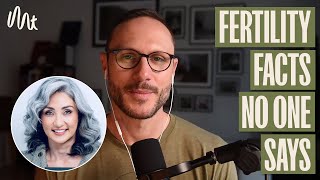
Transcript of a Man Talk Show interview (Connor Beaton with fertility specialist Gabriela Rosa) discussing contemporary concerns about human reproduction. Covers distinctions between infertility vs fertility rates, the 40/40/20 rule (female/male/embryonic factors), the importance of preconception optimization, male-specific risks (smoking, alcohol, heat, occupational toxins, insulin resistance, sleep), cultural narratives about having children, and practical advice for couples and men to improve chances of conception.
Chapters
All right, Gabriela, welcome to the Man Talk Show. How you doing today?
Very well. Thank you so much for having me.
So, fertility, what is happening with our ability to reproduce? What's going on? There's a lot of conversations around it. It's like in the news, you know, I think a lot of men, I mean, on my show in the past, I've talked about how, I mean, I haven't personally talked about it. Guests that I've had on the show have talked about how it know, sperm counts are, are down, testosterone's down. And it seems like more people I talk to, the more that people talk about having challenges with, you know, conceiving. And I had, I had a gentleman on the show that talked about how, you know, your, your.
Like, your sperm count was a good indicator of, of health as a man, which I thought was very interesting. So it seems like there's a lot of things playing in, but maybe give us the broad picture what's happening with fertility.
Yeah, I think it's such an important part of health, really. It's a proxy marker and a health indicator, you know, in terms of what our quality of life is going to be in the future is very much determined by what's happening, reproductively speaking. And I love having a male captive audience to have this conversation. I will say, and the reason is that, you know, fertility very much, when it becomes medicalized, and often it is the case that it becomes medicalized when it hasn't been easy, it becomes very female centered conversation, you know, in terms of it's a woman's issue for the most part in most people's minds, and yet it really isn't, you know, fertility is a team sport. It requires, you know, so many things to go right for us to be able to deliver a healthy baby at the end of this. And I say ask because, you know, fertility really is 40% to do with female factor, 40% to do with male factor, and 20% to do with embryonic and other factors. And so by the time we get an embryo, there's very little that we can do to ensure viability of a healthy pregnancy. And the time to optimize fertility really is prior to a conception even takes place. So we really have to treat it as a opportunity because, you see, it's not only an opportunity to optimize male health when we're talking about fertility, it's an opportunity to optimize trans, transgenerational health. Because fertility really is a generational process. You know, all of us were in our grandmother's wombs. And when you think about it from that perspective, it's like, hang on a second, how did that happen? Well, it's simple. You know, women are born with all the eggs will ever have, and your mother, while she was being gestated in your grandmother's womb, already had those eggs in process. Right. And so we all come from of what happened to our ancestors really is going to impact what happens in our future. So when we're talking about health and the health of a future child and the health of future generations, we really are talking about the fact that the present moment really is the most important when it comes to what are we doing today that's going to essentially lead to the future of being able to have a healthy baby and our children to, to have healthy children. So there's a lot to unpack there. But I think that when we look at this conversation as it really should be looked at, which is, yes, a healthy body is a fertile body and it takes two very healthy prospective parents to create a healthy baby, that begins the conversation from a very different perspective. Even though if we really look at it for what it is, healthcare systems globally, and I treat patients in every continent other than Antarctica, so I can really speak to the fact that, you know, no healthcare system is better than other, you know, in terms of when it comes to fertility. And I'll talk a little bit more about why that is the case in a moment. But when we are looking at it from the perspective of, you know, things not going quite as easy as it should, because in the general population, if you look at how easily people get pregnant, within 12 months, almost 94% of people have been able to conceive and most of those people will go on to help have healthy babies for the most part. And when we talk about within a two year period, 96% of people have essentially been able to conceive. So it becomes a subset of the population, of the general population that struggles. Even though it feels like there's so many more people, that isn't necessarily the case. The issue with that becomes where you know, because it is easy for most people, the solutions that are available to people who struggle are essentially going to be dictated either by what the healthcare system can offer and how much it can afford to invest in helping people who are struggling or privatized availability of care, which then becomes.
Say, possibly misalignment of interests, you know, from a profit perspective versus what patients can actually experience. So there's a lot, you know, that goes into this whole context and I think that people really need to be aware from it, from that perspective. Because if we don't advocate for ourselves, when it comes down to things not being easy, it's usually quite difficult to get the care that you need.
Yeah, it's such an interesting time. Like, I mean, I have two kids. You know, my son's four and a half, my daughter's 15 months old, and I don't know, like, my wife and I, we kind of talked about, you know, leading up to conception and, and talking with friends and, you know, sort of being immersed in the conversation online. Such an interesting time because there's sort of this inflection point of people seem to be having challenges conceiving getting pregnant. There's also a lot of conversation around, should you have kids? I think that's. That's the. It's a very interesting narrative. It's like that for so long, just the propagation of the human species was just like a biological imperative that we never really questioned. And then all of a sudden, we find ourselves in this place where, I mean, I know a lot of people that have said, I'm not going to have kids because of whatever reason. Right. Climate reasons, or I'm not going to have kids because I don't want them to bring. Bring them into the chaos of the world, which I always. That. That one I always struggle with because I'm like, when has the world not been absolute fucking chaos? Like, this is arguably, like, the best time. Like, even though it's insane sometimes, you know, you read social media just like, what the fuck is going on? It's still the best time to bring a child into the world. And I remember having a conversation with Esther Perel, and we were chatting at a. Like a gathering, and I was saying, you know, I like, what do you say to people that don't want to have kids, that think, like, the world's too hard, or, I don't want to bring my kids into this, or I don't want to contribute to, you know, climate collapse or whatever it is. And she's like, you know, that if you look back at the time when the most. Most births have happened has always been in the most dire of situations for the human species. That's almost always when we reproduce more. And she's like, because we all kind of know that. That there's this, you know, intrinsic joy that can be, you know, had because of it. So anyway, I'm just saying it's a very interesting time because there's conversations around, you know, overpopulation of the earth. And then there's, you know, population collapse. I don't know if you have a perspective on that. Maybe we don't need to weigh in on that. But I'm curious to get your thoughts on everything I just said.
Yeah, absolutely. The entire time that you were speaking about this, I'm smil smiling. Because that is exactly. That is exactly the issue.
Just all of that. All of that.
And here's. Let's disentangle it, because I think it's really interesting that you. That you mention it. You see, the thing is, the reason people think people don't quite understand the difference between infertility rates and fertility rates, they are different, right? So infertility rates are essentially people struggling to get pregnant who really want to be. And those rates have been pretty stable over time. And so, you know, it's one in six couples have been infertile for the last 25 years plus, you know, so that rate really, I haven't seen a major change in that data from the beginning of my career 25 years ago. However, fertility rates is where whether people decide and populations decide whether they are going to have one child, zero children, four children, ten children, children, however many children. And so what ends up happening is that in, for the most part.
Depending on levels of education and levels of employment, level of earning capability, that is where people are going to have differential views on having children and not having children. So in Western societies, there is exactly, as you said, a lot of contention around climate change, bringing children into the chaos, et cetera.
In Eastern societies or African cultures or other cultures that are not so focused on, I guess economics probably is a good way to describe it. They're less focused on whether they're going to have, you know, one child or 10 children. It's more exactly what you said is essentially the way in which Western cultures are going, which is. It never used to be a question that you would grow up, you would get married and you would have children. That was never a conversation amongst dinner tables for the majority of families across Western cultures. It was just a given. It was expected that you would grow up, find somebody, get married and have children. That is just how it is. And in a very heteronormal, normative way, you know, so it's just very basically how things are done now. 20, 25, 20, 20, whatever, 30. We are now having the conversation of.
Who am I, what am I, who and what do I want to focus my energy, attention, money and all of those things upon? People are now having conversations about whether they will even have relationships with another human or with an AI subset. Right. And so I think that there are a lot of questions that we are being faced with and we are asking ourselves that whenever, even part of our ideas to ask ourselves about. And that is just going to change many aspects of society, culture and so on. And, you know, for better or worse. And I agree with you entirely, we are certainly amongst some of the best times in humanity. You know, we have plenty of food, we have plenty of resources in many different ways. And so it really is an interesting concept that, you know, people are questioning, for the most part, many aspects of how we live life as humans, as opposed. And this goes far and beyond whether you will have children, you know, and if you do have children, what kind of family units are we going to have? I'm seeing more and more women who essentially are like, you know what? I haven't found the right person. I'm running out of time. I'm just going to go and have a baby on my own. And that was really never something that most women would even be able to have access, access to the finances. To be able to do something like this in the 1950s. I mean, it doesn't. Don't have to go far. Probably Even in the 80s or 90s, you know, it was a. It would have been a very hard struggle, even from the perspective that the ethics and approvals and commercialization of donor sperm and, you know, tools in order to be able to actually make these things happen weren't even in place, you know. And so there's a lot of very interesting developments I think that we are going to see in the next. You know, it's interesting because I started doing this work in 2001, and even from the perspective of when I first. When donor egg, which is one way in which, you know, if couples. If a woman runs out of eggs or if for whatever reason she can't have a baby with her own eggs, donor egg has been commercialized now since I would say probably mid-80s is where it started to become more accessible at a reasonable cost. These days, we have much, much more reasonable access. You know, for $5,000, a woman can go to Spain and get a donor egg and, you know, be able to have a child in the United States. It still costs 30,000 plus, you know, thousand dollars.
Of course it does. Ridiculous.
But, you know, it's possible these days for women to have access to things that they never had in. Well, and so that also is changing the narrative and the conversation. Women are much less willing to put up with things that they would have ordinarily put up with to be able to have a child if they really wanted one. And so, you know, it. It changes a lot of the dynamics of relationships as well.
It does seem like the landscape, you know, it's almost like you're familiar with Moore's Law in. In the sort of, like, technological process, process and, like, progression. It does seem like as technology has sort of exponentially changed that our human relationships and how we build family systems, all of that infrastructure has. Has kind of changed. And I do think that some of it is, you know, some of it's good, and some of it's. I personally don't think is great. I remember seeing somebody sent me the reel the other day, and it was this woman being interviewed. And I don't know what the context was for the interview, but she was talking about how she. She was like, you know, I'm. I'm never going to have kids. I want to be sterilized, and my bloodline ends with me. And I'm proud of that. I was like, oh, like, like, never. Never in the, you know, like, never in a human, you know, species would be. Be like, I want my bloodline to end, you know, like, I want my. Like, I don't want to have kids. I never want it to go on past me. And I thought, you know, I had a hard time with that because I think there's. I think there's.
You know, there's a lot of, like, hopelessness and almost like, nihilism that has crept into this conversation of having kids. And it's interesting because I do think that oftentimes there's a predictability between where somebody stands with having children and, you know, political beliefs and those types of things. I don't know if you saw the data that did polling around Trump men and women voters and then Kamala men and women voters, and it looked at, like, the top 20 most important values. And for Trump men, the number one thing was having kids, which I was super surprised by. And for Kamala voters, it was, like, second to last. You know, it was almost dead last. And so there's this huge discrepancy that seems to be playing out within our culture around what priorities are for people. And it's so. I find it so fascinating, just like a little, like, the nerd in me just finds it very, very fascinating of like, well, why are people choosing that and where are they going and what's the narratives that they're, you know, that they're sort of being told or that they're that they're believing and holding on to and what experiences have shaped that. But what.
What.
What are some of the. Just to kind of, like, pull us back in, because otherwise I'll go down an existential path. What.
Which I think this topic leads us down anyway. But y.
It does. But what are some of the contributing factors to the. The infertility rates? Obviously, we have, you know, things like men's sperm count is going down quite a bit and speed, and you have testosterone levels dropping. Is there a similar thing happening with women? I would love for you just speak about that a little bit.
Yeah, sure. So in terms of, you know, it's interesting because I always like to reverse this conversation when people ask me, what are the things that are affecting fertility? I actually like to think about this in terms of. Imagine if you were pregnant right now. Right. And I know that for men, it's kind of, like, hard to conceptualize. It's like, okay, where would that thing come out? We don't need to go down that far, but, you know, we just need to think about, okay, think about that baby that you want to eventually hold. And. And I know that men are extremely, you know, they're very protective of their kids and family and wives and all of those things. And so most men, when I say this to them, they will think about. If I was to ask you what it is that your partner would need to do to have the healthiest and best possible environment in order to be able to give your child the best possible start in life, what are the things that you think she would need to absolutely start doing and stop doing right now for that to be the case? And they will usually rattle off a list as long as my arm of the things that their partner could start doing and stop doing to ensure the best possible start in that baby's life. And I turn to them and I say, well, that's exactly what you need to start doing right now. Because, you see, we are already both men and women are carrying 50% of that little baby that you want to create right now. So all the things that would damage a baby's health, a developing child's health is going to have an effect on sperm and egg and the quality of those cells and the quality of every cell within the body. You see, fertility isn't an isolated department, even though, unfortunately, in medicine it's treated that way. You know, it's like, let's just isolate and compartmentalize this area. Let's get egg and sperm, and we'll make the meat and that should end up, you know, with a baby. The reality is that 70%, more than 70% of IVF cycles that get started fail. And the reason that happens is because essentially we don't have the primary building blocks to a healthy development of an embryo to begin with. And so if we don't approach it proactively and preempt the issues that we are going to, we end up with having to deal with the backlog of essentially consequences of our actions. Right. And it's not saying this in a negative way. It's not like, oh, you are dealing with the consequences of your, of your actions. It's like, actually there are things that you can do to improve and optimize your health and there are things that you are going to do that is going to damage it when it comes to fertility on the most part, particularly when you are not part of that 94 or 96% that gets pregnant easily, there is no getting around the fact that it's going to be work.
And I think that most people need to accept that fact. Right? If for most couples it takes an average of 3 months time to pregnancy, literally have sex, get pregnant, have a baby, if that has not happened for you as a couple, you already have work to be done, that's as simple as it gets. And I think that, yes, there are so many different exposures that we face in our day to day that it's hard to disentangle. Okay, but where should I focus? Because if there are a thousand things that you can do to improve your fertility and all you have to do is become part of that 4% that struggles, you will go down a rabbit hole by searching online all of the things that essentially is going to be the 879 things that you could be doing, and you will implement most of those, but none of them actually have the three that move the needle for you in your situation. And so you stay treading water and going around in circles and not getting the result that you want and it becomes disheartening. And you kind of, you know, I hear this so often when people come to me. I've treated now thousands of patients over the last 24 years. And I hear the same narrative every single time. I've tried everything and nothing has worked. So I go, okay, first you may have tried the 879 things that would never work or that are not enough in terms of value of effect to move the needle. But it does not mean that you've tried everything. It just means that different people respond to different things in different ways. And the best way to see this and to illustrate this point, we have all heard of people who have never smoked a day in their life and die of lung cancer. Cancer. And then you've heard of people who are chain smokers who never develop lung cancer at all. And you go, okay, but hang on a second. Same exposure, cigarette smoking. So why is it that we have a difference in how these people respond or how these people behave? And that's because of epigenetics. And so the way in which our genes express based on the exposures that we have is going to be different. And it doesn't matter if somebody is shooting up heroin and popping out one baby after the next.
And you are doing your green juice with, going to the gym and thinking that, well, that should be enough. Surely if it's not giving the outcome that you are looking for, I. E. A healthy baby at the end of nine months, it's not enough. And that's how we need to look at it. It's like there's no sugar coating that, you know, it's like, I mean, it may be that we're literally missing a minor detail. It might be a 2% out of the 98% picture that still means no baby. But unless you go and figure out what that 2% is, you are still going to have 100% no baby. And that really is the difficulty that so many people face when it comes to fertility. Because it's not easy, it's not straightforward and it's not obvious for the most part. But when it comes down to the really kind of high effect exposures that we know are going to negatively impact fertility, the obvious things are the most important to focus on. You know, I did a, I do a lot of patient education on Instagram. Gabriella Rosa Fertility is the account. And I did a post the other day was a carousel. I do these mini literature reviews, like literally looking at the whole evidence and really helping people discern, like what is worth paying attention to, what is worth actually doing something about and what isn't, because there's so much stuff out there and most of it is dishearteningly bad, you know. And so I look at these, these poor patients who are really, truly wanting to do the very best that they can and they don't know even where to start. So I thought, okay, let's have a look at the effect of something like alcohol compared to smoking compared to, you know, these kind of general exposures that most people have and are exposed to. And let's review them. If there was like literally only three things that I could tell men that you must do if you want to improve your chances of affecting a pregnancy, it would be those things. It would be quit smoking, quit alcohol for the time that you actually are wanting to affect the pregnancy. Because a cycle of sperm generation is about three months long. And if sperm is being affected, it is not going to be a matter of, oh, I won't drink this weekend so that I can improve my sperm and then next weekend go in a binge. And, you know, it doesn't work that way. Like, you actually need to do these things for the long term. You know, like I've had patients with 0.2 million sperm go up to 52 million by focused intervention and really doing the things that were required for their specific situation. Obviously be able to completely dramatically change and optimize fertility. So it is possible, but it requires doing the right thing for the amount of time that it takes. And sometimes one sperm cycle for optimization of sperm isn't enough. Sometimes we need two or three sperm cycles to see full effect of these lifestyle changes. But if you think about the fact that often when we are dealing with poor sperm count, motility, morphology, the next recommendation is going to be an ixy cycle or an IVF cycle because of poor sperm parameters. And you can literally within six months save yourself 20 to $30,000 from not having to go and do IVF. Well, that's kind of a good trade, you know, if you think about it in a, in a very practical, very objective way as, as most accountants would and most men also. Right. Because if you think about it like, why would you want to spend so much money on something that you actually don't need to by just making some minor changes? And really, at the end of the day, when it's all said and done, it's not just the minor change of being able to affect the pregnancy. The genetic expression of your child improves by having better quality DNA. And better quality DNA is only delivered by better quality sperm. So. And the sperm is not isolated from the rest of the body. So it's almost like the way that we need to look at it, every system within the body works as. Almost like if we were to equate it as a filtration system of the entire body, and we need to ensure that the cells are being developed in such a way that's going to have the healthiest possible baseline input. Well, that means that you have to be doing everything you can to optimize your health in general, in order to be able to improve your fertility, it's not going to be enough just to take some supplements today and not go drinking weekend and you know, maybe kind of like halve the number of joints that you smoke, you know, through the week, that's going to be fine. Quote unquote. Epigenetic imprinting is never going to make those behaviors fine. FYI, not me saying it, just look at the science, right? But, but if I was to be the, the Ming lady that tells people what they should and shouldn't do, I would say that if you want to have the healthiest possible child and you to give your legacy the best possible start, you'd want to be looking at those places for sure, you know, and really taking personal responsibility for what it is that you are bringing to the table. Because you see, this is a really important point that most people miss because fertility is a team sport. If you have a woman who perhaps you know, is her egg might be not, I guess let's say it's not a 20 year old egg, let's put it that way, right. So it's going to have to deal. The egg is responsible for fixing the DNA errors within the sperm. So an older egg is going to have a lot more of its energy wasted instead of it being used to reproduce that particular the embryo reproduction, the development of the embryo, it's going to actually have to be used to address the DNA errors and the DNA fragmentation within the sperm. And so if we start with a possibly older egg, let's say 40 year old woman with a partner who now has a partner that is the same age and that essentially doesn't have the best quality sperm, we are starting behind the eight ball as we say in Australia. You know, we are really not having an advantage when it comes to reproduction. If we look at that situation from a different perspective and we have much better quality sperm at the same age, we have a much, we have an advantage in terms of reproduction. The egg doesn't have to work as hard for the development to occur for that particular after fertilization for the embryo to develop in the way that it needs to. And of course that improves the ability that that embryo has to implant and for a pregnancy to continue. So that 40, 40 split is really a 50, 50 split. You know, like it takes as much responsibility for the man as it does for the woman to bring the best quality starting point cells to the conversation to begin with. And then of course, you know, from there there are lots of other things that you know will have to go well for a healthy baby to arrive at the end of that whole conversation. But it all starts with the healthiest possible cells at the beginning, before a conception is even in place.
So many good nuggets in there. I think the one thing that maybe I would just summarize or that stands out to me is this notion that.
Like, really, everything happens, everything starts preconception, you know, and, like, the. The amount of. It's sort of a funny thing to think about how little. I think this is one of the big shifts that happened. Has happened culturally, is like, there's very little energy or sort of credence given to wanting. It's like we want to give our kids the best life possible, but we don't think about what we're genetically bringing to them, you know, and that. That's a very interesting way of framing it, and I hadn't thought about that before, so I think that's quite fascinating, especially as, like, you're appealing to, like, the male logic.
Very, very well.
Like, had this conversation once or twice before. You know, my biggest look, I'll tell you what, like, quite seriously.
I would say 98% of my job.
Is convincing men that they are 50% of the equation. Like, you know, once we get to that, women can see that very easily. You know, and for the most part, as well, I think that women are tired of being blamed for something that is not. Not solely their responsibility, you know, and so. And men are kind of like, they want to help. And this is the thing that also breaks my heart a little bit, actually, a lot, which is a man at the beginning of the journey, they just want their partner. You know, all things being considered, let's say we're in a healthy relationship and, you know, the guy actually cares about the woman and actually wants to have a baby. Because this is another conversation, too, which is, you know, very frequently I see the very opposite of this, which is the dude is kind of, like, ambivalent. He's ambivalent about the woman. He's ambivalent about wanting a baby. He says all the right things, but acts in the complete opposite to what it is that they're saying. And the woman is kind of like, desperately wanting to believe this guy, you know, desperately wanting to kind of go, no, he's telling me he wants a baby, even though he's going and having, you know, 20 drinks on the weekend every weekend, and probably starting on a Thursday with his mates and, you know, going and doing all sorts of other things that probably are not going to be optimizing. Fertility. But, you know, she wants to believe that his continues to say it, but not act accordingly. And so many times I have to say to a man like, okay, stop listening to what you're hearing and observe what you are seeing and ask yourself, is this the partner that you want? Because you see, the reality of it is that I've had patients literally waste years of fertility potential because they hung onto a relationship with a guy who would essentially say, yeah, I want to have a baby, but didn't really, you know, and essentially were just like, dragging on the relationship. They didn't really want to see the relationship end. It was kind of practical, it was good enough in many other areas, but it really wasn't what both partners wanted. And so I think that there has to be a level of honesty as well, with oneself and with a partner to go, okay, am I ready in myself, in what I want for my life to hack, what it is that this is going to be when it isn't easy, you know, to really go after it in a way that matters, when things are difficult, complex, not straightforward. And I take my hat off to my patients, really, you know, because we treat couples in my clinic, we treat couples, for the most part, other than when women come in and they want to have a baby on their own. And these conversations. And I, and I have the most wonderful conversations with men who are. Are so with their partner in this process, and they want to do everything that they possibly can. And they've been told for years, through 10 doctors, Anna, there's nothing you can do. Just come in on this day, provide your sample, and, you know, that's all you need to do. And it's like, excuse me. So do you know what your TSH is? Do you know what your hormones are doing? Do you know? It's like, no, no. And I'm like, okay, so where are the results of your blood tests? And they go, I wasn't asked to do any. And I'm like, oh, my God, where do I begin? You know, like, where do I begin with the healthcare system and the issues? You know, But. But yeah, I think that there is definitely such an important point that you make, which is, you know, appealing to male logic is really important. And I think that level of honesty with oneself is equally exceptionally important. Because if we're not willing to look at the situation for what it is, doesn't matter what kind of logic you're bringing to the table, it's going to just, like, you know, ignored, so to speak. So I think that that's an important point that people need to take into account as well.
Yeah, I mean, it's a very, I think it's a very confronting thing, you know, to have kids.
And I think everybody kind of knows, like, your life's going to change. There's a certain maturation that has to coincide with it. You know, you can't keep getting away with the same adolescent or childish bullshit. And. Yeah, and I think for a lot of guys, I mean. Did you ever see. Do you know who Andrew Schultz is? The comedian?
No.
Oh, my gosh. Okay.
You're about to change my life. I better Google.
There is a comedian named Andrew Schultz. He's hilarious and he did a whole stand up special on going through the IVF process with his wife. And the whole thing is about the, like, exactly what you're talking about, right? Like they're trying to conceive. They can't conceive. And he's got this kind of like smug, arrogant attitude, like, it can't be me, you know, like, there can't be anything wrong with me. Like it must be you. Right. And then, you know, only to find out that it absolutely was him. And, you know, he was, I think he was on like some hair pill or something like that and.
Oh.
And it was reducing the mobility of his sperm to basically like nothing. Right. So it's as. It's absolutely fucking priceless. So I took my wife to go and see him at Madison Square Garden when he did his first show there, and it was amazing. The standup special is so funny. And then at the end he brought out his wife and daughter, you know, this sort of like, concluding thing, you know, they got burned. But the special is 100% worth watching. Whether or not you're trying to conceive or you have kids or not is just priceless. It's so good.
I love that.
It's certainly vulgar at points. I'll just give that caveat. I love, like vulgar humor usually. It's certainly vulgar, but I do think that, you know, he, he kind of talked about what I think a lot of men go through, you know, which is like, there's a kind of vulnerability of like, well, what if something's off with my body? You know, that's maybe.
Emasculating or might say something about like, my, my sense of, like, virility, my, my perspective of who I am as a man. And so I, I do think that that that process of, you know, conception can be very confronting for men as well. And. Yeah, I mean, I know a lot of guys have gone through that and are just like, oh, man, like, what's. Is this something off with my body? And d. But I like this idea of preparing your body to be a vessel of. I was going to say it in like, the coldest way possible of like, distributing like, the highest quality genetics.
Well, I mean, that's how we need.
To look at it.
You know, it's very objective, you know, actually, just to. To kind of circle back on this point that you're making, because I think it's such an important point for most people and men to understand. You know, what you're describing here is exactly the reason why most couples delay seeking care. Because for the most part, there is this idea. And again, if we can just peel back the curtain a little bit. Don't hate on me too, guys, but let's just peel back the vulnerability curtain for a moment and just go like, being a real man actually means stepping up and facing hard truths. You know, really looking at things for what they are, not better than they are, not worse than they are, and really being able to go, all right, what is it that is happening here? And whatever it is, I'm going to have to handle, right? And so rather than delaying handling the inevitable, why don't we just figure out, okay, yes, it might be hard to swallow, it might be hard to take it, it might be difficult to accept that, yeah, there's something that's not quite right, but from that place, there are things you can do. You see, Whereas if we delay and circle, go around in circles and go backwards and don't do the thing, we're literally wasting fema, our fertility potential at every turn. You see, a woman has a 12 to 24 hour window of opportunity to get pregnant in any given cycle, every single month. That is 12 days a year.
12 out of 365 days for every one of your little baby delays.
Because, oh my God, what if there is something wrong with me? I'm not hating on you people. Just, you know, hear me out though. It really means that a woman is literally losing another month and another month and another month. And what happens is this, you see, we start to see biological change. It takes a good six months. An egg maturation cycle is 350 to 375 days long. It's a year. So from the eggs we are born with to.
The egg that's going to be ovulated, the ovulatory follicle, it takes a year to get from primordial follicle to primary follicle, from primary Follicle to ovulatory follicle. So imagine if we delay seeking care, and it takes a good six months to start seeing positive change. The last kind of 120 days, the last four to six months, where it goes from primary follicle to ovulatory follicle. The eggs are most sensitive to damage and to good positive intervention. So what that means is that if we delay beginning the process of optimization by three months, we are delaying seeing results by nine months because of that six months that it takes to see biological change, whereas the sperm quality can improve within 90 days, you see. And so that becomes a situation where we're no longer talking about simply, you know, not doing something or delaying by three months the start of doing something to improve and optimize. We can be talking about delaying a year if we don't play our cards. Right now, if a woman is 30, that is going to be less consequential than if she's 42, you see. And so delaying seeking care and answers. That is, what is the quality of my sperm? What is the quality of my health? What is actually happening here right now can essentially mean, let's say that, you know, because somebody's scared to go and have a semen analysis, they delay three years. And then you go to find out that, well, actually, now the woman is 42 and it's going to take us a year to get that sperm to a place where it can actually affect the pregnancy. That has put you squarely into the position of if you are successful, being able to have one child if you're lucky.
And that's it.
So then what we also need to take into account is that miscarriages happen 50% because of male fertility, 50% because essentially the sperm is not good enough quality for that development of the embryo to be maintained, and then implantation can fail. And then there's a whole lot of things that, that, you know, don't go as smoothly as they could. Now, if we think about the fact that, you know, usually when a woman has a miscarriage, again, it gets blamed on the woman, but it's not solely 100% due to the female factor. It's again, 40% female factor, 40% male factor, 20% embryonic and other factors. And out of Those other factors, 50% of that is going to be to do with female and male, right? And there are other things that obviously we need to take into account in terms of, you, uterine receptive receptivity and so on. But really, at the end of the day, we have to take into account the fact that none of these things happen overnight. There is biological imperative in every single one of those steps. You know, every four months, every single one of our red blood cells is completely new. And that is the way that we need to think about the fact that, you know, egg and sperm also are developing in those kinds of. And so whatever it is that you're doing today, it's not going to be enough, as I said before, to do it for five minutes and go, oh, that's it. You know, I've done this for a month, I've gone on my health kick for a month and I've done my detox, you know, for the last three months. Okay, that's a great start. That's a great start. But that there's only a start when it comes to wanting to have a baby, especially when we know that things haven't been straightforward. Because the stop point is really only when you're holding your baby. And really then you, you're preparing for a different phase. You're preparing to be around for as long as possible to raise that child. So really optimizing health isn't necessarily a begin and end kind of situation. It's, there's only really a beginning if we want long term quality of, of, you know, quality of life and health.
Yeah, yeah. It's interesting because it does. I think there's.
I think there's a kind of push that, that for a lot of men, it can help them. I mean, I found for myself entering into like the conception process and having a kid and thinking about having a kid. There was something about it that I think kind of pushed me to mature in a way. And I remember, you know, years ago when my wife first and I first got together, there was, it was kind of like, well, if we have them, you know, that's great. And I think there was a way in that, for me personally, where I was hedging, you know, that I didn't want to admit the, the reality of how bad I did want to have kids, you know, and it's like, well, if we, if we can, great. If we can't, then, you know, no problem. It's like, it was like a way to distance myself from the possibility of, well, maybe this doesn't happen or maybe there's something off or maybe it's going to be hard to do that. And then as we got closer to like, yeah, let's, let's try and have kids, then it was like, oh, I really want to have kids, you know, and, and then you. The, like, you know, the. The researcher came out and, you know, doing all the sort of, like, what do I need to do? And how do I. What. What's my part in it? And so I do think that there's a responsibility piece there that we as men can. Can take on. And I do think that for a lot of guys, it's very deeply confronting. And I do think that for a lot of men, we. We oftentimes feel. I've heard this from a lot of men of, like, feeling the. The pressure of wasting a woman's time. And I hear that with a lot of men of like, oh, I don't want to waste her time. You know, we've been dating. And I mean, I have clients like that right now. Guys that are with women that are in their late 30s and he, you know, they feel under this tremendous amount of pressure of like, she wants a kid. He's trying to figure out, like, do I want to have children with this woman and is this the relationship? And do I want to get married? And it's a huge thing because I think for a lot of men, you know, the. As much as our society from an economic standpoint has changed, the legal system hasn't necessarily changed. And so a lot of men know, like, if I have a child with this woman and it doesn't work out with that woman, I'm still on the hook for paying for that child in a. In a larger way than she probably is. So I think. I think men and women just have different considerations that they bring into it. And I do know that a lot of men. Men feel this kind of pressure. I don't know if they necessarily talk about it openly, but I do know that a lot of men, it's like, oh, I feel this. Oh, like I. I have this pressure to figure it out faster. I don't want to waste her time or I am wasting her time. And there's a guilt and a shame about that. And I do think that that can contribute to men paradoxically taking longer, you know, because the stress of. I have to make a decision vision. But it sounds like what you're saying to kind of just recap some of the pieces. Some of the main things are.
Better, from what I understand. Better sleep, less stress, you know, reduce this, like, get rid of smoking, drinking weed. Like, all the. That would just be like, not. Not good for you. Like the basic. That would not be good for you. Like, that's a good starting point. Or are there other things that. That men can do? To improve fertility.
See, I love that you already knew that without we even really in depth talking about it based on the, you know, act pregnant now to get pregnant later situation.
I like. That's a good model. There you go, there you go.
And, and, and that's really what it is, right? It's like, what are all the things that you would absolutely start doing if you're pregnant right now? What are the things that you would stop doing? So, of course, course sleep exposures and exposures, mind you, there are toxic exposures and there are beneficial exposures. So, you know, having your healthy nutrition, having, you know, your nutrients, all of those things are going to be good exposure. So not all exposure is bad, but they will lead to either health or disease. So you've got to choose your exposure, right? And when it comes to toxins, definitely it's going to be something that. It's not even a question. Like, you know, these days when people ask me or when men ask me, you know, do I need to stop drinking? I'm like, do you want a baby or do you not? You know, it's, it really is that distinctive. Like, you know, my, my mini literature review that I published on, on Instagram, it's very comprehensive actually. It's got an almost a million views. So it's like, people clearly are like, okay, this is something that I need to understand more about. And it is because it's one of those things that out of all the possible things that you can do other than direct toxins, like for example, you know, if you work in an occupational environment that is going to be diesel mechanic or you know, like those kinds of very high toxic exposure environments. And if, by the way, that is the case, and there are many exposures of occupation that will negatively impact men, men especially, because men still have the highest toxic exposure occupations compared to women. Right. And sperm is highly sensitive to those exposures. So ensuring that if you are a builder or you work with chemicals, or you essentially are surrounded by an environment that could potentially comprise of toxic elements, that you use protective gear as much as possible, if you don't, are not given protective equipment that you invest in it yourself, because ultimately it is your health that is at stake. You know, like I cannot underestimate proper oxygen masks and you know, for dealing with exposures, toxic exposures, like even painters and builders and you know, like, you'd think, oh, those are kind of like common. But you know, a lot of the patients that I see, they're coming from these types of environments where their sperm is Being affected because of these, these factors. I treat a lot of doctors, you know, who work in hospitals who have a lot of exposure to radiation and, you know, other toxic exposures. So it's really important to assess and audit your environment because the things that are in your environment that you are faced with on a daily basis are going to impact your health and are going to impact your fertility, either in a positive way or a negative way. Things that I also would encourage people to be really cautious about, particularly men, you know, exercising near main roads, types of exercise that you do. Cycling is absolutely one of those things that should be avoided because that pressure on the testicles and anything that keeps the testicles. I was talking to a ballet dancer today, you know, who essentially is a patient of my program and his exposure to heat because of the costumes is massive. Right. And so we had to talk about, okay, well, how do we minimize that? What are the things that we can do? So sometimes occupational exposures that we don't think about can be, you know, like for farmers, for example, who basically are sitting on tractors all day long or exposed to pesticides or all of those things are important things to consider for the general population. One thing that I think is a huge exposure that most people don't consider and really need to is unfiltered water. You know, unfiltered water has thousands of chemical substrates and, you know, chemicals that they mix with other chemicals that become additional chemicals that essentially, if you are not filtering, actively filtering out of your water by using a proper reverse osmosis water filter with a mineralization capsule, you are putting your health at danger. Right? There's like everything from the oral contraceptive pill to cocaine in unfiltered water. And essentially, you know, you might actually find that it's impacting you way more than you think. When you remove it, you start to see the benefits. Besides, I mean, gosh, unfiltered water just tastes like rubbish. So, you know, it's really just not something that I would recommend. But certainly for fertility and for general health, like investing in a good quality water filter. And if you can, an entire house filter is actually an even better investment. They're not as expensive as they used to be. They certainly have come down in cost substantially. But it is paramount in terms of protection of health and fertility. So things that are just like the big rocks, you know, I like to think about the big rocks to put in place optimal nutrition. You know, there's many, many studies that show the association between inflammatory diets and poor sperm parameter and sugary foods, high carbohydrate foods and lowered sperm parameters. There's really interesting research coming out about the impact of insulin resistance on male fertility. Most people don't even understand that they have insulin. They don't even know what it is, let alone that it's affecting them. But one really interesting thing about insulin resistance and sperm parameters is that, that if you are over 30 and you have a average diet, I'm not talking about, you know, like obviously if you are.
Predominantly eating protein as opposed to carbohydrates and there's many different diets that obviously will kind of.
You're describing my diet.
Yeah, you're going. Yeah. So you're going to, you're definitely going to have less of an issue when it to comes comes to, you know, insulin resistance. But for mo, for like let's say average population, if we're looking at somebody over 30 that just eats an average diet, it's not a matter of if they will develop insulin resistance in the future. It's a matter of when that happens and when you develop insulin resistance. And I'll talk about in a moment how you identify this because it's very, it's usually not identified because the right tests aren't done. But if you don't identify diet, what ends up happening is that between insulin resistance and prediabetes is really a short few years. There's research that shows that once you develop prediabetes, you will, if you, unless you intervene radically to reverse that condition, you will develop diabetes within a period of 10 years. So it's, you know, one of those really important high, like out of all of the non communicable diseases, you know, cardiovascular disease, cancer, diabetes, we know that diabetes is on the rise. We know that by 2050, you know, the majority of the population, you know, adult population is going to be affected in some way. And unless you see insulin can be three times higher than what is ideal for it to be before blood sugar irregularities actually show up on blood, blood tests. So doing a fasting glucose is going to do absolutely nothing. To understand whether your health is at stake here, you actually need to do a two hour glucose tolerance test. Now in order to do that test, most doctors will refuse it unless there is reason to think that you have a glucose imbalanced condition. But I really think that, you know, from the eight, like, you know, like how you recommended to do colonoscopies from the age of 50. Right. I think that a two hour glucose tolerance test should be something that just gets done routinely every Three to five years. And if there is any insulin at any point in a glucose tolerance test above 10, so you measure at zero, you measure it 30 minutes, because most people miss that measure. That measure is usually one of the most informative and it's usually missed. So you have to actually request it specifically for it to be added. And then you measure it 60 minutes, 90 minutes, 120 minutes. And by doing that, that if you see at any point within those measurements that Insulin is above 10, you are at risk at insulin resistance. So then when we know that information, we can start acting, right? We can start doing things that are going to reverse that condition, because it's still possible at that stage to reverse the condition and optimally improve sperm by actually making sure the metabolic health. One of the really important things that, you know, people need to understand when it comes to fertility, fertility is that the underlying, the driving force of fertility is metabolic health. So having good quality muscle, having mitochondria that work well. So you're zone two training, you're building muscle, definitely not using steroids because that's going to negatively impact your fertility in a really big way. And usually as well, you know, like if somebody has low testosterone, sometimes the best way to address that is actually going to be by looking at what else can you do to optimize your health. Getting enough sleep. For example, there's a really interesting study that I came across showing the impact of.
Six hours or less between five to six hours of sleep for one week actually decrease male testosterone in the equivalent of being 10 years older. So literally aged men by 10 years from just one week of six hours, four, five to six hours of sleep per night. So if you think about it in those terms, it's like there's a lot within your disposal to really go, okay, so rather than prioritizing Netflix every night, let me prioritize making sure that I'm getting to bed on time, you know, and that is something that is going to optimize overall health, overall androgen capability, you know, and of course, fertility overall. So there's lots of things that people can do, and sometimes it's about educating yourself on what those things are. Are. I run a free program called the Fertility Challenge. I've been running this program now because public health education is really a really huge passion of mine, because I think that the more people understand, the more they can actually go, okay, what can I do to help myself? And understanding leads to self advocacy, which is the most important thing when it comes to infertility, because do not Expect that your IVF doctor is going to want to understand what is wrong with you. What an IVF doctor's job is, is to run an IV cycle so that a woman survives at the end of it. That is their job and they do that job exceptionally well. Some couples do need ivf, most couples do not. And when we have a situation where over 70% of IVF started IVF cycles fail, well, we surely want to optimize everything that we can so that we either prevent its need or increase the chances that it's actually going to be within the 30% that actually work. Right. So the fertility challenge is a great place for people to actually go, okay, what do I need to learn? What do I need to know? How can I help myself? And you know, beyond the act pregnant now to get pregnant later, which is essential when we're talking about this issue.
Yeah, it's, it's sounds sort of similar to, I mean, I've had a few doctors and researchers on the show to talk about, you know, things like erectile dysfunction and premature ejaculation and stuff like that. And oftentimes there's a correlation between what's happening in the, their metabolic health or in just their health in general that's impacting, you know, their ability to perform in that way. And it's, it's funny how, how much you. Not funny, it should maybe be obvious, but how much of our, of our emotional health, our psychological health and then our actual physical health impacts these things that we then take for granted. Yeah, so it's, yeah.
And also it, it's also really interesting because, you know, when it comes, when we start to deal with still in the realm of infertility, then we also have that bi directional effect, you know, where you have the fact that it's not working makes a man not be able to actually become aroused in the same way because they fear, what if this doesn't work? What if I can't get my partner pregnant? What if, what if, what if? And then of course, we add to what already is a difficult situation another layer of complexity that does need and warrants, you know, support and, you know, being addressed. I think that's important for people to realize as well that it is okay to seek help. You know, it is okay to have conversations and ask for help. There is nothing wrong with you as a human if things aren't quite going the way that they need to. And sometimes, you know, the lightest of interventions can actually provide the greatest of improvements. And being aware, aware that there is help There is support. There are ways of gathering that information in ways that are, you know, I guess.
Supportive rather than confronting is. Is available. And I think that it's important for men to understand that as well.
There is, like, there's a part of me, I was about to say something. I'm like, am I going to say this to the. To the Harvard doctor? But. But I am. I am going to say it because you might not ever hear it on another show. And so we are going to say it. It sounds like what you're saying is being more fertile makes you more fuckable.
And look, I tell you what, here's the thing, right? There is something extremely, like, sexy about a man who takes charge in every area of that life. Like, it just is the thing. I can't put it any other way. Like, seriously, when a man is proactive and they go after solutions and they like, yes, yes, please.
I love that you. I love that you ran with that with me. Thank you so much for not leaving me out to dry. Don't you worry.
I used to host a podcast for my patients called Talk Sex with Gabriella Rosa. So we can talk sex anytime time.
You're good. You're good. Well, listen, thank you. Maybe we will next time. Maybe that's what we need to go down the path. We need to go down next time. But thank you so much for joining me. Where can people learn more about your work and kind of dive into everything that you're doing?
Yeah, they can go. Instagram is a great place. Gabriella Rosa Fertility. They can Google me. Gabriella Rosa, G, A B, R, I, E, L, A, R, O, S A. Also, my website is fertilitybreakthrough.com so if you can't spell breakthrough, don't worry. Just Gabriella Rosa will get you there.
Well, we'll have it in the. We'll have it in the show notes. So everybody just click it. Whether you're watching on YouTube or on Spotify or wherever you're tuning in, it'll be in the show notes. Just check that out. This might be a great episode for you to listen to with your significant other, so don't forget to man it forward. Share the episode. Check out Gabriella's work. And as always, thank you so much for tuning in. Until next week, this is Connor Beaton signing off.
Sa.
More from Connor







How to Raise Strong, Unshakable Boys in Today's Culture, with Dr. Shefali Tsabary



