Former Navy Seal Shares The Secrets To Winning Gold And Surviving Trauma - Dan Cnossen
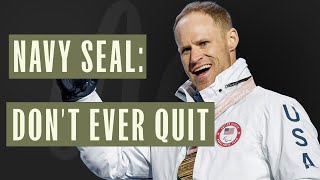
This is a long-form interview with Dan Cnossen (former Navy SEAL) conducted by Connor Beaton. Key content in this chunk: Dan’s early life and decision to attend the U.S. Naval Academy (offer arrived senior year, January 1998), motivations to join the Marine/SEAL community, BUD/S training challenges (water fear, Hell Week, teammates and teamwork lessons), service and deployments, and the defining combat incident in early September 2009 where he stepped on a buried IED in southern Afghanistan. The blast caused catastrophic lower-body injuries (double femoral artery bleed, perineal wound, broken pelvis, colostomy) and required dozens of surgeries (over 35, in the 40s). He was medevaced to Bethesda and later transferred to Walter Reed for rehabilitation; timeline milestones: inpatient through January 2010, fitted with short prosthetics January 2010, standing on prosthetics and visiting Coronado flight line March 2010, ran one mile continuous on prosthetic legs by September 2010 (one-year anniversary), and later pursued Paralympic cross-country skiing/biathlon leading to competition (Paralympics mentioned for 2014). The chunk emphasizes themes of resilience, teamwork, post-traumatic recovery, and the role of adaptive-sport communities in rehabilitation.
Questions this video answers
Early September 2009.
Over 35 — in the 40s (speaker's estimate).
He completed BUD/S and arrived at a west-coast SEAL team in 2003.
January of his senior year (1998).
He was 28 when he started and turned 29 during the two-year tour.
Chapters
So in the course of launching this operation and in the middle of the night, climbing up to the top of the hill, I stepped on a buried improvised explosive device underground. I think it was a pressure plate. I don't really know, but I'm just kind of told after the fact. And I saw a flash of light under my night vision goggles, but I didn't hear anything. But I'm told from a friend later that it was a massive explosion.
All right, Dan, welcome to the Man Talk Show. How are you doing today?
Doing well, Connor, thanks for having me here.
Yes, sir. Well, this is the, the honor and the pleasure is all mine. And I'm very fortunate and grateful to a mutual friend of ours that, that put us in touch. I heard a little bit about your story a few years ago and had the, the fortune of, of watching you in the Olympics, I think, in 2022. And I, you know, I feel very fortunate often about who I get to speak with.
But there's moments where the people that I talk to, I really feel humbled by. And just being in your presence, I feel very humbled. You know, you feel like a very genuine human being and somebody who has really lived in a lot of ways. And so I really admire that. So I'm, I'm looking forward to this conversation very, very deeply.
Thanks for the compliment. I'm looking forward to it as well.
So let's begin as, as we always do here on this show. Tell us a story about a defining moment in your life that made you who you are today.
Defining moment in my life. I would say there's the obvious, which we may get into in our talk. When I stepped on a bomb in Afghanistan, but I would go back and I remember there was a day, it was a snow day. I grew up in Kansas on a fifth generation family farm. And it was in January of my senior year in High School, 1998, and a snow day. So I wasn't in school. And I was kind of hoping that I would get this letter in the mail from the Naval Academy where I had applied to go to school. And I remember seeing the mail truck deliver mail. So I ran down, we have a fairly long driveway, ran through the snow to get to the mailbox. I saw a big application kind of envelope looking official correspondence from the Naval Academy. I sprinted back to the house. My heart was racing. And I opened it up and it was an offer of admission to the Naval Academy. And I remember calling my dad at work and then my mom after that at work to tell them the news and for me, I'm really just. My whole life changed from that point. The whole trajectory, really.
That's incredible, man. Well, first off, I mean, I grew up in Northern Alberta in, in Canada. And so I feel like I understand your snow days a little bit. So we had, we had a few of those. But it was usually, it usually wasn't the snow that did us in in terms of why school was canceled. It was usually like it's minus 45 degrees Celsius and school is canceled. You know, the cars aren't starting. So that, that was the, that was the thing that usually got us. But tell me a little bit about what created the, the initial impotence to want to move towards the Naval Academy. Because it sounds like you were quite young. It sounds like you had, you had some direction early on in life. Where did that come from?
I don't know where that came from. But I do know that as soon as my freshman year in high school, I, for whatever reason, wanted to go to the Naval Academy. I had been very interested in military related movies, war movies if you will. I was a reader. I would read anything I could get my hands on about the Vietnam War and World War II and other books as well. I really like to read, but I was drawn to the human element of combat. And I thought that the Naval Academy allowed me the most diversity in terms of career in the military. You can go into the Navy where you can fly, you can be on a ship, a submarine, you can go into, you can go into special Operations, you can serve in the US Marine Corps. One fifth of the class graduating goes into the Marine Corps. And that's like an army unto itself. Marines don't want to be called an army, but that's kind of like all the career options available in the Marine Corps that you could go into from West Point, which is for the Army. So it just seemed like I could do a lot of things. And then I had gone to the Naval Academy in my senior year earlier, prior to this offer of admission to check out the campus. I went with my dad and sister and Annapolis is a beautiful town. I had also gone up to West Point and it was kind of dreary and gray that weekend when I was up in Hudson River Valley and, and it just seemed kind of like a kind of depressing place. The cadets were all wearing gray, weather was gray. But when I went to the Naval Academy weekend, it was sunny and there was an Army Navy soccer game and we got to go out of town after and got to do this like Monster mash the next morning. So it just seemed like that's where I wanted to go, and I wanted to be a Marine, and that's really what drew me there. And so setting those goals in high school, early as my freshman year, kind of kept me on track.
You know, oftentimes I've. I've noticed because I've interviewed a number of seals now and men in the military. Was this something that was in your family? Like, was. Was there just an honoring of the Marine Corps and. And the U.S. military? Was that something that was there, or was this really, like an individual thing where you just immersed yourself in both books and reading and it sort of sparked something in you that. That you were drawn to?
It was a combination of. Of both what you just said. But also, my father had served in the Marine Corps during the Vietnam War time frame for three years. And by no means was there any pressure on me to go in the military, but I thought that the Marine Corps certainly was an elite institution and that would be an honor to be a Marine. And I was drawn to wanting to go into Marine Corps infantry and had hopes of maybe getting into the reconnaissance program or something that's even a little bit more special. That's. That's kind of where I was when I entered the Naval Academy, in my mind, what I wanted to do.
Yeah. Okay, cool. So, you know, I think by now seals especially have become quite mainstream. You know, you've got guys like Goggins, and you've got Jocko, and I think that there's a lot of stories about Blue Buds and the training that people go through. What was that experience like for you? Because, you know, you hear about Hell Week, you hear about the training that leads up to it. You hear about, you know, just everything that's expected academically and physically and psychologically. Tell us a little bit about what that experience was like for you and how you actually prepped yourself leading up to it.
Well, by the end of my freshman year at the Naval Academy, I wanted. I had changed my mind. We. I went to the Naval Academy in 1998. There was not a war going on. Now, keep in mind, in a few years, when I'm a senior, 911 is going to happen. But in the first year there, it was peacetime, and I quickly learned that the spit and polish discipline of the Marine Corps was not settling with me very well. And I kind of like this countercultural element of. In the SEAL teams or what I perceived at as in the SEAL community, unorthodox, you know, unconventional. This Kind of thing, you know, not. We don't care about uniform so much, you know, and I, I now have a different perspective on this, but at the time it was like that, you know, longer hair. This is kind of a cool organization. And, but beyond that it's, you know, if you want to really push yourself to the limit, this is, this is where it is. And coming out of the Naval Academy, you can go right into SEAL training, buds, Basic Underwater Demolition, SEAL school is arduous. You know, this is really going to push me to the limit. Also. My friends wanted to do it, people that I kind of gravitated towards. And so there were many reasons going into this, but to be part of something special and to challenge myself. But I didn't know how to swim, which is a big problem, A big problem problem if you want to get selected out of the Naval Academy because water competency is in so important into to doing this job. And I just wasn't exposed to swimming really as a kid. We would take vacations to the Lake of the Ozarks in Missouri and my grandparents had a house on the lake, retirement home. They've been farming and, you know, it's kind of the golden years. But they would make me wear a life jacket in the lake. And so I just really didn't have much. I had no experience in open water and just all I did have was some rudimentary swimming pool lessons when I showed up at the Naval Academy. So I had a long way to go in order to get into BUDS and then to get through. But so the water element was so difficult for me that by comparison it made other things seem easy. So doing log PT or running with a boat on your head or whatever it may be, at least I'm not in the swimming pool right now. And so. And then of course, when we did have swimming pool evolutions, I had more anxiety. But the, I guess the positive spinoff from that was that it made other things to me. I would look forward to the other things.
Yeah, I mean I've, I've watched and read about some of the experiences around like drown proofing. I don't know if that's the exact terminology where you have to learn how to essentially let yourself sink to the bottom and then push back up. And you have to do this for, you know, a period of time where you're almost like fighting against the natural instinct of your body to try and stay afloat, which actually wears you out. And so it seems like there's a whole bunch of things that are baked into buds that are testing your, almost like testing your limits as a human being and altering the way that you perceive situations, life, you know, the experiences, et cetera. But I want to come back to that in a second and just ask you, you said that seals, there's something about seals that seem to be countercultural. And I would agree with you. From the outside, it does seem like seals is somehow different from a lot of the other, you know, military branches that you can move into. So what is it about seals that's so compelling and what is it that makes it somewhat countercultural, maybe compared to the rest of the, the branches?
Well, I can say if I took the macro view, you know, the seal community.
Still has discipline, pride in the uniform, commitment to service and all of that. And that thread runs through all the branches and in sub communities within the military. But yes, there is a little bit more of, I would say free thinking is encouraged. You want that. And as a leader, I wouldn't want a bunch of automatons around me. I would actually want to be challenged. And I think that kind of challenge, as long as it's inculcated the lower level decision making and problem solving and taking initiative and not waiting for orders from, you know, the lower level fireteam leaders, if you will, like that really can be effective in combat situations. And so I think that's, can that, that's part of what makes a good fighting force. And also if you can train to do something underwater, by comparison, doing it on land seems relatively easy. So. But in terms of culture, you know, and it goes back and forth, but one of the things, you know, I don't really care about someone's hair. I don't care if they haven't shaved in a few days. I care about what they can do operationally and tactically and how they perform and their commitment and are they a team player? That's what I actually care about. And yet often it just seemed like from higher up it's coming down, like, you know, the guys need to get the haircuts and this kind. And I can, because ultimately we do operate with the Marine Corps in the army. And when we go overseas, oftentimes the Marine Corps and the army owns the battle space. And if you look like a bunch of, you know, hooligans, it creates an impression amongst the, the regimental commander who's a Marine. And so we really have to keep that in mind. And it, that's just part of it.
So when you went through buds, what would you say was some of the most challenging aspects of it for you, like what really tested you? Because I mean obviously it sounds like the, the water component of it and the swimming and that that aspect was really challenging. But reflecting back on it, what were some of the greatest lessons you took and then what were some of the greatest challenges that you faced?
Personally, I think in order to get through this training you're gonna, you have to learn how to be a good teammate. If you're self centered.
Your teammates are going to find ways to try to get rid of you and will probably be noticed by the SEAL instructor staff. And that's, you really should learn how to be a proper teammate in order to get through the training. That this should just be, I think it's either acquired or natural ideally. But I, as, I think as an officer going through, I learned that by putting the interests of the team, the welfare of the team, thinking about someone on the team who may be struggling, that that would actually take the focus away from myself. And that was a valuable lesson that by putting the mission or the safety, the well being, the welfare of the team first, that, that then actually makes it easier for you yourself to get through difficult situations. I learned that I was challenged certainly by the water. I was challenged the very first night in hell week, but which is a Sunday night by a telephone pole that my team was under that was just incredibly heavy. I think the instructors had tampered with it and we were in last place in this race and I had them in my face and just, you know, with their bullhorns and it was just a tough situation. I was really frustrated because we were in last place and they weren't letting on, if they did know that this log had been tampered with, this telephone pole, they weren't letting onto that knowledge. And so all the pain and the frustration was just mixing and I, in a moment of, of kind of weakness and frustration, I almost succumbed to the pressure to quit and I, and, but I got through it and I learned that.
In order to get through something like this, you know, just take a few more steps and, and because I was telling myself just take a few more steps and then you can quit if you want to. And I take those steps under the log and okay, I'm not ready to, you know, take a few more and take a, you know, if you think you're, if you think you're done, just create a small task, a small goal and then get there, realize you've done that and then do it again and do it again. And so, you know, advice I had been given was don't ever quit in, in the moment, get through the evolution, no matter what it takes. And there's some segmentation probably, you know, creating within that evolution some shorter goals and small wins, so to speak. But after the race, after the evolution, then you, if you really want to quit, then you can quit. But generally speaking, when it's over and things settle down again, you're. You reassess. You're like, no, no, I, I can do this. I got through that. I can get through the next one. Let's go. So that, that kind of being able to take what is a seemingly impossible physical task, and it's, it's, it. The magnitude of it really exists entirely inside your head. But if you can segment and just focus on what's going on right now in, in the immediate future, taking, you know, small steps at a time, that this can, you can achieve massive things and do what you think was impossible. That was a very valuable life lesson that I learned. And in order to learn something like that, I think you just have to be thrown in the arena and you have to experience the doubt and the pain and the frustration and the sleep deprivation and all of it. And getting through that, it's a huge confidence builder. It really is. I was later in training.
Challenged from the dive phase because I'm not as comfortable in the water. But, you know, you just through the exposure, I come. I came to really like being in the water. Now I can say that this source of fear that I once had being in the water, not knowing when I'm going to get my next breath, because there's a lot of challenging scenarios that they put you through in the beginning with the dive tanks on your back, on your back, that can be really uncomfortable. But ultimately, okay. This source of fear I have eventually becomes a source of love. And part of it is just, I think, recognition of what it took to get over it. And really the first part was throwing myself in the environment and, you know, challenging myself that way. I think no matter who goes through buds and if they're being fully honest with themselves, they're going to be humbled at some point that that's just the nature of the training. It could be one given day that you're not feeling as well, you're worn down. I had a friend who seemed to just rock everything, Just a total stud through the training. And then near the end, we're doing the obstacle course. And you do the obstacle course just about every week, a timed obstacle course. The times get faster and faster, but by the end of training, you pretty much. You have it dialed in, and it was kind of damp out that morning, and we're nearing the end of the entire training program, and a silly obstacle like the low. The low wall with the rope on the. The front side where you just kind of shimmy up. He just couldn't get it. He couldn't get it. And it was. And he kept trying and trying, and he totally failed the. The O course that day, which wasn't a big deal because he had enough passes. That wasn't a problem. But it just. It absolutely humbled him that day. And I remember thinking, you know, for someone who was just so good at the O course and I wasn't really all that good at the obstacle course, that for whatever reason, that day, it just wasn't his day and it humbled him. But for me, there were many other times when I was humbled. A lot of it had to do with. With the water, with life saving, for instance. I. Which is in the very first phase. But I had come up to the point where I was. I had failed the first time, failed the second time, and this. The instructor that I had with it had played college football. He's probably 240 pounds with a weight belt, a dive belt with weight on it around his. His hips, pretending like he's drowning. And I'm supposed to do the proper techniques and just take me to the bottom of the pool. Fail. You know, you have to keep them above the water so they can breathe. And I was going to the third try, and it's. It's past this or you're rolled out. And when you get rolled out for a performance failure, you go in front of a review board, they decide whether they can keep you in, training you to the next class or kick you out. So it's a lot of pressure, a lot riding on the line right here. This third try, sitting at the pool deck, waiting for this, knowing I have the same instructor again, this huge guy, and he's going to pretend like he's drowning. I have to do the right technique. And in the water, in the deep end, you know, this is all going through my mind, but I just had to convince myself, like, I'm going to drink half the swimming pool if I have to, but I'm going to keep his head above the water and get him to the other edge of the pool. And I got to the end and they said, pass. And I was super relieved about that. But there was just moments like that when I was. When I was challenged and I came out of the, of the training just feeling overall very confident.
You know, I think as I have listened to stories about buds over the years, and I hear you recant some of your experiences in a very vivid way. You know, this guy is 240 pounds, got a weight belt on. There's a natural, you know, I would imagine natural internal concern of like, you know, I learned to swim to come into buds. You know, I'm not, I'm not like, the water is not my friend. It's like you grew up swimming all the time and diving and shit like that. Like I'm sure that some of the guys did. I'm struck by the emotional intensity that I think must happen in those environments. You know, the like massive highs of passing those tests and then the massive lows of when you fail and then the intense experience of having probably the drill sergeants, you know, like you're talking about with that light post on you, right, and you're in last place. And there's stress and frustration and, and bitterness and there's probably just anger towards them for got their bullhorns in your face. How. Tell me a little bit about what you've noticed in terms of the caliber and the quality of emotional resiliency, emotional processing that some men have or that some people have that go through buzz and how that actually plays into who's successful and who's not.
Yeah, that's a, that's a very, very good question. I don't think I've really.
Fully thought about that in terms of emotional makeup and how that varies through the training. I, I certainly remember people just being visibly crushed when they had failed in evolution or after they quit. And it, and you're thinking if, if you're crushed after you quit, why, why did you quit? Why not just stick through it? And I don't, I don't know why people quit. I mean, presumably everybody who starts this training, I remember we had about 198 in our class, like in the very, very beginning, before it's even first phase. This is just an indoctrination period. So let's just say it's about 200 people and we're going to graduate. 26 originals or something like that that get through all of it. That presumably these people have worked long and hard and everyone wants to do this job and yet some succumbed to, to this temptation and they, and they ring out or quit or decide they don't want to do this anymore, decide in their mind, you know, rationalizing. I don't want to do this anymore. The instructors don't like me, so I, you know, this kind of thing. But maybe an ability to compartmentalize that, that could be useful. I, I don't know if these traits are what you would want in many other aspects of life, but they can be useful in, in getting through extreme situations like this. The ability to comp. Compartmentalize, I think can be valuable, but I think we know psychologically, ultimately it may not be the most healthy thing to have.
And I think one of the things that we'll probably get to in a bit is just like this concept of post traumatic growth that has beginning to. Has begun to emerge more and more within our culture, right. This notion that not every trauma leads to trauma, but that can actually lead to growth. So there's this thing called post traumatic growth, where a lot of people after a traumatic event, not a lot of people, but a subset of people will actually thrive after a traumatic event, car crash, an injury, health incident, et cetera. And there's a lot of research going into what makes the difference between somebody who goes through a traumatic experience and has immense amounts of PTSD versus those who go through traumatic experience and then are thriving on the other side of it. And so I think the reason why I was asking the question was that there seems to be something also within you where you go through hard situations and come out the other side and learn to thrive. And I'm sure that there's a tremendous amount that goes into that. But I'm curious if there's an internal. Like, do you know what has allowed you to go through. Like, if you look at buds, for example, and you know, you're. You've got the bullhorn in your face and you're in the freezing cold water and it's cold outside, and you got this drill sergeant yelling at you and this heavy ass pole on you, and it's a very emotionally taxing experience. What allows you to kind of move through that emotionally and then like a duck after kind of, you know, wiggle itself and let the stress off. Like, how do you cope with that amount of stress, personally and emotionally?
Well, I think at the, at the risk of trying to self analyze myself, I would say that I tend to be someone who compartmentalizes that. I have emotional walls that get constructed in my personalized, that are erected and that I can. But maybe this is the reason why I can get through difficult situations because I can just focus on what I need to do and get through it. But that, that may have repercussions or consequences. In interpersonal relationships and this kind of thing. So. But I, you know, I don't, I don't know in terms of SEAL training, getting through buds. Well, I had, this was, my goal, was, my whole goal in life was to be a Navy Seal. Now I'm, I'm willing to bet that all 200 members of their, our class who started that, who classed up, would have said the same thing. But some of them quit. A lot of them quit. Why is that? Maybe they didn't want it enough.
Maybe it was easy because they didn't, you know, you showed up and you didn't know anybody and you, you know, you're not going to get judged by your peers. Whereas I showed up with five of my closest friends who were living in a cramped apartment eight miles south in Imperial beach from Coronado to training center. And I, you know, couldn't possibly tolerate going back to that apartment even for just the five days it would take to pack my stuff up and get out of there and go somewhere, you know, that I couldn't, I just couldn't do that, you know, because I knew these people. And so it could have been a combination of internal and, or external factors, but I think ultimately it comes down to ability to compartmentalize. And then in segment and, you know, instead of thinking of this mammoth task, you don't know when something's going to end, you don't know how long it's going to take, but you can start to just focus on what you can do right now. Can you throw out some positivity into the atmosphere to encourage your teammates? Can you focus on the mechanics of what this evolution requires for success, the aspects of performance, drilling into that or just, you know, compartmentalizing away from the pain? I, I think that if anything, this, the training selects for people who have grit, and that is very, very valuable. With the nature of warfare changing and the nature of threats changing, I don't know how much we need to continue selecting for grit, but certainly in the kind of World War II Vietnam frogman kind of scenarios where, you know, you may be out on opera extended operations in extremely difficult conditions, cold water, cold air, mud, whatever, you know, or jungle heat and fatigue and malaria, you know, that you, you do want to select for that. And that's the genesis of our training is based in World War II and those kind of conditions. Whether that needs to be the same going forward, I don't know. And, and, and some people say, you know, you may be selecting for grit, but are you selecting for, and I think we're selecting for people who demonstrate good teamwork skills, who are going to be good teammates, but you're not necessarily selecting for ethical decision making. And that's kind of where the controversies come around. You know, is this training necessarily. Because it. In the training, you know, instructors are saying it pays to be a winner. You got to find ways to win because in combat. You got to find ways to win because losing in combat has severe consequences. So it's. It's win at all costs. That mentality can be a slippery slope. And. And that's really, I think, what the community's been dealing with the last few years.
Yeah, I mean, it's been. We're not. We don't need to go down this path, but it's been interesting from the outside to see.
You know, some of the commentary within former SEALs and some of, like, the beef. Like the beef talk, you know, that has emerged just from the outside between seals. And I think that. I mean, it's interesting that what you're saying, right? This sort of like, win at all costs, be the. Be the best at all costs, get through, survive at all costs. There's merit in that. And I would imagine that people are selected in some ways because of their grit and their determination and their ability to focus in on the present. That seems to be a really important attribute. Focus in on the present. The right here, the right now, the next step, the what's in front of me. And I think that is such an important lesson for many of us in our normal everyday lives, where we're lost in the existential horizon of 10 years from now, which is an important, impossible thing to try and visualize and create. But a lot of people are, you know, they're overthinkers. They're chronic overthinkers. And what are they overthinking? They're overthinking about, you know, somewhere way down the road or somewhere way back in the past. And so I think there's a lot of value in what you're saying. I appreciate you going down that rabbit hole with me.
Let's.
Let's keep going. So you go through buds, you become a Navy seal. What does deployment look like? And we'll just sort of lead ourselves up to the event happen. Like, what was your first deployment look like? How did it feel? What surprised you?
Yeah, I got through buds in 2003, and I showed up at a team on the west coast in San Diego. And you realize that nobody really cares that you went through Hell Week or that you have a trident because you're just a new guy. It was such an honor to be part of this community. I felt so much respect for people in the community and realized that as a junior officer.
I don't really know anything. This awkward position of kind of technically, you know, officers outrank the most junior officer technically outranks the most senior enlisted member. But clearly that's not the case in the SEAL teams that an experienced salty master chief knows so much more than a junior ensign or lieutenant junior grade just out of training. So that's just a sometimes difficult situation to navigate. It can be awkward. I think that there's probably many parallels in the corporate world. People, you know that someone who's been doing a job and is really a subject matter expert for 30 years and a fresh college graduate is placed in a managerial position over this person. And it can be, it can be difficult to navigate those situations. For me, I was thinking at the beginning, like, what if I, if I ask a question? It's a stupid question, but it's actually better to just ask questions if you don't know something. And I learned that that creates a sense that you do value the expertise of the other people that, whom you're asking questions to. And so my first deployment was to Southeast Asia. My second deployment was to Southeast Asia. I thought that SEALs would always be deploying to Afghanistan or Iraq. 9, 11 had happened my senior year at the Naval Academy. And I knew that if I, well, if I get through this training, if I can go to the training and get through the training, I'm going to be going to war and then Iraq. The invasion of Iraq in 2003 kicked off when I was kind of getting near the end of my training. I was, had already graduated buds, but I had some follow on training to go through before I got the Trident. And so now it's a two theater conflict, definitely going to war, which is what you train to do. And it really makes the training sink in in terms of its import and consequence and so you take it seriously. And I think this is what any true team guy or SEAL would, would want is you want to put your training to the test. And I mean it's awesome to be part of a community where people want to go put their training to the test. The ultimate test is this test of combat. The operations we're doing have significance and positive impact on the battlefield and we can make a real difference. But my first two deployments were to Southeast Asia where we're just training other nations special operations forces to do whatever it is internally that they're doing. And this is still important. The U.S. state Department and the Defense Department has these missions. It's just, it's not what I realized when I would have been going through the initial training before I knew anything else. So dealing with a little bit of frustration. Also this is a leadership challenge too, because the frustration I can feel, I can tell it's. The guys have that as well. And I'm, I'm an assistant platoon commander in these tours. I had to do a dissociated tour in 2007 where I was doing more like support work and learning just other aspects that go into operations. I deployed to Iraq and didn't really have any combat experience, although I went on some operations. And so by the time 2009 came around, well, actually 2008 into 2009, I was assigned as a platoon commander. Finally a platoon commander tour, which typically happens five, six, seven years in. For me. This is six years into my career and where I'm the officer in charge of a SEAL platoon. In this case, it was 18 members, two, two explosive ordinance disposal Technicians assigned to the platoon. So about 18 member platoon. And as an officer in charge, you, you are in command of the platoon, responsible for the execution of the missions, typically as a ground force or assault force commander, the planning of those missions, the debriefing of the missions, the safety of the team. So a lot of responsibility on my shoulders at a relatively young age heading into the platoon commander tour.
And how old were you?
28 when I started and then I turned 29 in the two year tour.
So I just gotta say, I was a complete shit show at 28.
You.
Know, riding a thousand cc motorcycle at like 300 kilometers an hour street racing on a highway. And you were leading a sales team while I was traveling the world singing opera. So cool. I'm glad that we lived relatively the same life.
This is why I said I felt humbled to speak with you at the beginning of this conversation. All right, so you're leading a platoon. You can, you're commanding a platoon in Afghanistan, 28 years old, 2009.
Walk us through a little bit of what that deployment was like, what obviously you can't give details of like the mission, the missions that you were on or what you were doing, but just a little bit of detail around what, what life looks like and then maybe just walk us up to, to the incident and what happened.
Sure. I was, as a platoon commander, scheduled to go on the deployment early in advance of the rest of the team. This is something that is Very common. You would just, as key leaders and key personnel within the platoon, go early, which is what you do. You take a little extra burden. You know, a six month deployment might be seven months, because you want to get on the ground early and link up with the unit that you're going to be replacing and to see how they're planning, executing and debriefing operations and to learn some of the tactics and techniques and procedures that are, you know, used in, on our side as well as on the enemy side and meet all relevant players. And it just, it just takes time so that by the time the rest of the team shows up, you're in a position of a bit more experience on the ground so that you can flow more seamlessly into operations. And so it's a phased turnover, which just makes sense. But I had gone out early and advanced the rest of my platoon and on this first.
Turnover operation, where I would really just be shadowing, just kind of seeing how they're doing it and not in any sort of leadership position on this one and getting a feel of the landscape and just how things are going on. So we launched on the, this particular night for this turnover operation. Two helicopters and it's going to be a night, a nighttime assault operation, really, just kind of a pre dawn, pre first light, late night kind of target assault. Very, very standard. Just trained to do this kind of thing in a, but more rural environment, so more kind of like a land warfare kind of situation. And there was a key piece of terrain that overlooked the target. And I was part of a side element that was assigned to go to the top of this large hill and clear and hold the land. Really, you know, high ground could be an advantage like this. So that was our task. We knew that there was a structure up at the top of this hill that it needed to be cleared. And we didn't know if there's going to be anybody up there. But once we, according to the plan, had cleared the hilltop, owned it, we would radio down at the main assault force and they get going with their job. So in the course of launching this operation and in the middle of the night, climbing up to the top of the hill, I stepped on a buried improvised explosive device underground. I think it was a pressure plate. I don't really know, but I'm just kind of told after the fact, and I saw a flash of light under my night vision goggles, but I didn't hear anything. But I'm told from a friend later, years later, who was down with the main assault force also from the same team. He just was down with the main assault force, that it was a massive explosion. I didn't hear anything. I think your ears blink or so I'm so. So I'm told. But he looked up with his night vision goggles at the top of the hill and saw a massive mushrooming column of dirt and thought everybody up there was dead. And. And there were 10 of us or so up on the hilltop. Nobody was responding to the radio calls. So just silence. He's thinking, everyone's gone. And I'm laying in the dirt, realizing something like this must have just happened. Not knowing exactly what I had stepped on, but a bomb must have gone off. This is not good. Are my teammates even alive? I didn't know if any of them were alive and I didn't hear anything and I couldn't really move and only my arms seemed to work. Couldn't see anything. Night vision was gone. Is. So was my helmet that they were mounted on. So really just not a good situation. I remember kind of feeling panicky for a second or two because I couldn't do anything. And I knew this like time, just time is of the essence. The next thing I know though, my teammates were upon me and none of the. I think their bells had been rung, but none of them been. Had been critically injured. And that was so important because the situation that they faced is I have a double femoral artery bleed. I'm not going to make it more than two minutes unless they start doing, you know, tourniquet application immediately, that we're now compromised in vicinity of enemy forces and we have to get out of here. And that's going to require lifting me and dragging me down off of this hill. And there are likely going to be additional. And indeed there were buried improvised explosive devices that need to be either cleared, were avoided. And so that's the situation they face. And what's remarkable to me is that these were not my platoon mates. These were from the other platoon, you know, and they're responding like this. These are sons, husbands in some cases, brothers, fathers in some cases, you know, and they're putting their lives in the line. And I just met them recently and a couple, one I knew really well from a previous assignment and a couple I knew from before, but, you know, some I just had just met. So that's just remarkable to me to be part of a community like this where you're putting. You're putting a teammate, even if you don't know that teammate specifically. But. But because of the. The community and and, and just the culture that you're going to put your life on the line to try to save me. And, and it's not just my teammates up on the hill, although first and foremost I have to express gratitude to them. But the pilots, because the helicopters that had got like, gone all the way. It was a long flight from the airfield for this operation, had gone all the way back. Now the plan was to bring them back to offload another detachment of army Special forces and Afghan commandos. But the pilots were getting really low on fuel. This is a deviation from the plan. And they really were throwing it out there to hang on scene to get me onto the helicopter. My teammates were dragging me off of this hilltop over sharp, craggy rocks. It was just the most, the most pain I've ever been through. But you don't. The choice here for me is either pass out or stay awake. And that. That was my struggle, was to just try to stay awake. And most likely I was in and out of consciousness, but I was fighting, trying to hang on, trying to hang in there, trying to. And, and, and, and stay. Stay in this. Stay in this, you know, and not thinking anything else, really, truly, I don't have any. I remember this, and I don't recall ever, ever thinking that I wasn't going to make it through this, that I wouldn't see my family again. Those thoughts, they're just. They weren't in my head. It was staying awake, staying. And then the pain, the pain. And I think the pain really brought me into this, this moment right now, right here. And my teammates were getting me off the hill. They got me loaded onto the helicopter within one minute of it nearing the bingo fuel point where they would. The pilots would have had to leave because the. The helicopter will chop out of the sky from lack of fuel. So they don't screw around with that. If, if they hit bingo, Philip, they're. They're gone. It's just. They're not gonna. So they got me on board within one minute. And I am told all this later that, that this was so precarious that everything had to line up. It had to line up exactly the way that it did to get me out of there. Because from this, this, the moment that that explosion happened, the ground force commander down below in the senior. The senior enlisted advisor were immediately starting to do the casualty evacuation plan. Immediately respond. Like all of that had to happen like clockwork in order to get me out of this very remote exposed position in the middle of nowhere in southern Afghanistan. And so, I mean, for so at so many different levels, I have a lot of gratitude to even be alive here. Not to mention the fact that what I stepped on, the bomb was enough power to potentially destroy an armored vehicle, but it. Not all the explosive powder detonated. And so for that as well, I'm just incredibly lucky to be here.
Man, oh, man. Well, I appreciate you sharing that with us. And it sounds like you had the grace of some exceptional operators around you and some really exceptional leaders who are able to act quite quickly and, and put their training, you know, into action, and sounds like you put your training into action.
You know, immediately. And.
You know, there's something to be said for serendipity, you know, as you're talking about. There's. There's a kind of. There's a quality of, like, awe and wonder that I can't help but feel in the midst of your story, you know, as you're talking about all these things sort of lining up and.
Coming together so that you could be here, here on this, in this conversation with me today is. Is quite miraculous, which maybe we'll talk about later, that might tie into perhaps your foray into divinity school in 2016. But we'll, we'll. We'll potentially circle back on that one later. Okay. But we can't leave everybody on the cliffhanger. So you get helid out back to base. I would assume. What happens after, like, what's your condition? What's the state that you're in? What's the. What's the. The process that you go through?
After that, I was dragged onto the helicopter, and I remember shaking my friend's hand, the platoon leader that I was shadowing, who I knew from before, knew from the Naval Academy, and just really rock solid guy and really was from everybody's telling me after, just cool, calm and collected up on that hilltop.
And.
And so, you know, he. He really managed things quite, quite well. Shook his hand, he got off. They're going to remain on scene to continue with the operation. But the tail ramp of the helicopter went up and there was. I remember there was a light in my face, and I'm told there was a flight surgeon on the helicopter, and that was it. That's all I. That's all I remember. But I do remember the light going in my face. And the next thing I know, I'm waking up in a hospital room, and it turns out it's Bethesda Naval hospital in Washington, D.C. but I didn't. I didn't know that. And my mother was looking at me. She's right there. And I'm. You know, this is like, this is, this is shocking because I think when you're in a medically induced coma, which I was in, you don't have a sense of the, of time transpiring like you do when you sleep normally. You can kind of, if you take a nap, you can kind of roughly gauge how much time, you know. Yeah, you have an idea of whether you slept an hour versus whether you slept eight hours. But it's not like that with a medically induced coma. It just was like all of a sudden my last memories were being dragged on the helicopter and now I'm here in this hospital room. So it was very, very much a displacing kind of feeling. But I had been taken back to the field hospital and rushed into surgery. And I believe when this operation ended, all of the operators came through. They were getting ready to put, they had summoned, I believe, the highest ranking SEAL officer in country to put the Purple Heart on me before I died. The doctors were not saying it looked good, that it, that it was that close. Where experienced medical professionals were saying, it's not looking good, he's probably not going to make it. That the operators from, from the mission came through after it ended to say their goodbye and all hearing all this after, it's like, whoa, I, it was, it was that close. And yet I wasn't even.
Maybe at a subconscious level, I was fighting, but my sense of identity, my brain, my, you know, my, my own willpower, what I associated the person who was under the telephone pole refusing to quit, you know, that, that sense of identity wasn't there because this was just a black hole. I don't have any recollection of this. These days are just gone. So. But when I wake up in the hospital, I'd been through all this, transported to Germany, flown in a flying hospital airplane, a C17. That takes you back. And my mother and sister were alerted as to what had happened. They understandably were not a good place, but they flew to Washington D.C. and that's where they were when I arrived. And I'm still in a medically induced coma, but a few days later was ready to be taken out of it, or so they thought. And they kind of did. Whatever you do to take me out of the medically induced coma, and that's when I wake up and, and I'm in, in this whole new situation now, the, the situation of finding out what has happened and what is the rest of my life gonna look like.
Are you comfortable with sharing a little Bit about what the injuries were. Just to give scope of what you're waking up to.
Yeah. Yeah. So I. After. Well, after, I think, first commenting on my mother's coffee breath that was hitting me, which I was not a fan, I just had to. I was also like, what's going on? You know, are my legs gone? And I think maybe I knew, but my blankets that they had on me, I had a. I had a burning. Burning fever. And in this ICU room where I was, they had it as cold as you can make it. And I still was shirtless, sweating, and had, like, ice packs on me because I was burning up. And I. I had blankets over my lower body, and I wasn't looking down that way. And when I remember waking up and no one was saying. No one was telling me anything specific.
And so at one point, I just asked someone, are my legs gone? And I remember that medical person saying, yes. And it's just. I remember that moment because it's just so.
Bizarre. And to hear this, that. That. This. This. This is.
Real. This is. You know, this is the situation I'm in. I'm in this. This isn't a nightmare or something. Although I was having nightmares that were kind of fused with the burning fever that I had, and they were kind of centered on my last waking experience, kind of driving me down into a downward spiral of near delirium. I had a broken pelvis. I had a colostomy bag, had a coming out of my bladder. The. The blast had basically come from the rear and just basically torn right up into, like, between my legs. And there was a big hole, a perineal wound that was gaping open. And so I was going through surgery Monday, Wednesday, and Friday. Week after week, I had hand surgery. My hand had some broken fingers, some shrapnel in my jaw, but by and large, my upper body was going to be okay. And for that, I came to learn to be really thankful for that and certainly into this next phase of my life as a Paralympic athlete. But to have my arms, to have my vision, to have my hearing, to have my brain, you know, I think certainly I was exposed to a concussion, but by and large, my brain is. Is. Seems to be operating fine. I have the same personality that I had before, and so there's a lot to be thankful for in this situation. But it takes time to realize that, because in the beginning, you're just thinking about what you don't have, what you're missing. But, you know, with time and with a sense of perspective, I could start to think about these other things that I do have that I, what can I still do, what can I train to do, what's possible, what's not possible and, and going from there.
You know, I don't always know where to go in these conversations depending on what the, you know, what's being brought up. And I'm just.
I think there's a, there's a part of me that's putting myself in your situation. There's a part of me that, you know, I have a two year old son is imagining myself being bedside, you know, seeing my son in that situation.
I think what is really.
There'S many, there's many different aspects to where I could go with this, but I think the immediate one is I'm not sure how I would personally handle that or deal with it. And.
I can imagine myself defaulting into logistics. You know, okay, what's, you know, what's really going on? Tell me exactly the surgeries that I need and what's, you know, what's happening in my body and what needs to happen next and this, this sort of very prescriptive and logistical way of being. And then I think there would obviously be the moments of like, well, how the hell am I going to deal with this now in my life? What's my life going to look like? You know, how am I, how is my life going to change on a day to day basis from waking up and working out and getting coffee and making myself food and interacting with people and so.
How did you deal with all of that? Because your whole life has just changed in that moment. So talk, talk to me a little bit about like, yeah, there's the logistical side of things. And from my understanding you went through almost like 50 surgeries, is that right?
Well, I wasn't, I wasn't exactly counting, but I would, it's definitely, it's over 35, I would say. Yeah, in the 40s. And I, I think to your question, there's a, there, there's multiple things, There were multiple things going on. There was the disconnection from the platoon thinking, you know, this just happened. I had all these goals within my own career, but really just was so focused on this deployment and being, being the kind of leader that I had wanted to be in, in combat, you know, nervous about it. How am I going to do, you know, what if something happens to one of the members of the platoon? What if, you know that that is probably the worst thing that can happen if, if somebody were to die on this deployment. And I can think about calls that I made or didn't make that had any kind of bearing on that outcome. That. That. That would be the worst thing that could have possibly happened on this deployment. Not thinking about anything happened to me. If something does happen, it's just thinking about likely death. Not thinking at all that the middle ground, that something's gonna happen to me, not to one of my guys. I'd rather have it happen to me. Well, I want to think that I'm the person who thinks like that. Is that really true? You know, questioning that. Do I really. I would rather. If it had to happen on that hilltop, I'd rather have it happen to me. I'm single. I don't have kids. These other guys, you know, I don't know their situation. Maybe they mentally want to be wired to handle this, but I can handle it. You know, thinking that. But do I really feel like that, questioning it?
That's one element of stuff that's got, you know, kind of that military side of things. And then the other side was, like you said, just the practical aspect. Am I ever. When am I going to get out of this hospital? Is this ever going to end? The surgery? Am I going to be able to drive a car? Have a relationship?
What. What is daily life gonna look like? How do you shower? Do you sleep on prosthetic legs? Will. Will I be able to walk? Will be in a wheelchair? I don't really know. And then a more.
I would say, like a higher level or kind of a spiritual level, you know, how do you find fulfillment and meaning in life if you can't do what you feel like you really should be doing? Because I felt like my calling was to be a seal, or at least that's just how I felt at the time, and that I can no longer do that job or be part of this team. So there was a lot going on, but then, yeah, you. You fall back kind of on the day to day. And I had a lot of visitors in the hospital. A lot of people coming through. Military networks, Naval Academy network, the Seal network, people who just were in the D.C. area and are in that kind of beltway environment and wanted to come lend a hand or say, you know, drop off a care basket or something like that. That's great. All that kind of was flooding and overwhelming in the beginning, and I would have. If I could have apportioned it, I would have spread it out over many weeks instead of concentrating on the beginning because I wasn't getting sleep. Visitors coming through, entitled to want to see me because they drove a certain Amount of distance and. And that kind of thing. So a lot going on. Surgery, surgery, surgery. But.
I would. In the rare moments that I had and I was having a hard time sleeping, I would rig up therapy bands because I. I'm a believer in trying to exercise and trying to move, and I was stuck in this hospital bed. I can't even get on my side or stomach because of this external fixator. Can't get in a wheelchair. Looking forward to that, though. But I can rig up therapy bands. I'm going to do that. I requested for therapy, therapy bands to be strapped onto the scaffolding around my bed, and that was something I looked forward to. I would try to go from visitor to visitor. I'd try to, you know, see how long I could go without pushing the pain button. But if I did need to push it, I'd push it. There were just things I could do to kind of segment the day and break it up and then. And then you develop a routine, and that helps you kind of just get through it and you go day by day. And I don't. I don't know that I was really consciously thinking about any of this so much because that. That would. That would probably be too much of a stretch to claim that I was doing that. But as I look back on this experience, it's what I did. You know, you just go day by day. And I remember there was one night when I really felt sorry for myself when everyone had left. And, I mean, it was rare that I had any time during the day that I was by myself. I mean, just constantly, people coming in, visitors, medical professionals, someone doing a test, getting wheeled off to surgery, coming back, just very busy. I mean, people thinking, you know, people giving. I didn't. I couldn't even read because I didn't have the mental focus because of all the opiates that I was on. But I didn't even have time. And I think people were thinking, like, I'm just bored laying there in my room all day. It was anything but that. There was just so much going on, and it kind of just made the days go by. But then I couldn't sleep at night. And there was one night I was just frustrated because I wanted to sleep. The lights are out. I can't do anything. You know, I don't have a phone or anything. You know, there's just. I'm just laying there with my own thoughts, and I just kind of broke down. I remember that. And felt sorry for myself. But I think it was cathartic, and it Cleansed. And then I just was, didn't, you know, it was out of my system and it was just moving forward and trying to make progress. And I mean, to kind of put in perspective how far I had to go. I remember because I was in my, on my bed, on my back for so long that when it came time to practice sitting up out of bed, that I had two physical therapists, one on either side of me holding my arms. And they're like, it's going to, this is going to be tough. It's going to be tough just sitting up. And I'm like, yeah, you're not going to be able to sit. Apparently when you lay down for so long, you can't actually, I, they let go of me and I couldn't even sit, I couldn't even sit unsupported. So like, to go from that to learning how to walk on two bending prosthetic knees that are heavy, it's going to be a long road. But when I eventually transferred from Bethesda Naval Hospital to Walter reed, both in D.C. but they were separate at the time, they since integrated. Where you went to go to learn how to walk was Walter Reed, but that's where the majority of the amputees were. Bethesda Naval Hospital. It was only kind of inpatient straight out of Afghanistan or Iraq on the combat ward. You know, I didn't really have a lot of interaction. It was kind of in my own bubble. Go over to Walter Reed, start physical therapy all of a sudden surrounded by dozens of injured service members and it was this, this, this community and just a special place to be. Any given time at the therapy room, there'd be 20 or 30 of us going through physical therapy, but floating around the hospital there several hundred. And that's when things change in terms of my perspective because I, I was all of a sudden around people who had it worse, didn't have it as bad or just whatever, but everyone was in a different place mentally. But also just, just the sheer variety of physical amputations. Some people were triple amputees, some are quadruple amputees. And I'm, I just, you can't. Then it, it become, you can't feel sorry for yourself next to someone who's missing four limbs. Not even close to 19 year old missing four limbs. I can't.
I just, how could I feel sorry for myself next to that person? And then it becomes kind of competitive too and like, okay, let's see who can run first or this kind of thing. It was kind of an Unspoken competition. But there was camaraderie and then. And then this sense of perspective. And that really started to change things for me. And then I could focus on this as a sport. Kind of learning how to walk is a sport because it's going to require a lot of training and commitment and discipline and hard work.
It's interesting, as I hear you talk about the rehabilitation and being around the other people who had been injured.
It's interesting because in the therapeutic space and in the work that I do and my organization does with men, while very, very different from that women, we talk extensively about the importance of.
Doing the work that we need to do around other men, being around other people who are going through some kind of a similar circumstance, whether it's going through the divorce or the selling of the company or the transition or whatever that transition is, but being around other people that are moving, moving through that transition with you, and that, you know, grief needs to be witnessed and that our pain needs to be witnessed, and that sometimes just that act of having what we're going through be witnessed amongst other people that are in similar situations can be one of the most important elements of us moving through it. You know, I think it's when we collapse into ourselves and we try and go through those spaces alone, whether they're purely psychological and emotional, whether they're relational, whether they're financial, physical, etc.
When we collapse into solidarity, I think is where we really begin to struggle. Isolation can be incredibly harmful in the recovery process, regardless of what that recovery process is. And so, so wonderful to hear you speak, the way that you're talking. You know, I couldn't help but smile, like. Like, who's going to run first? And it's like, yeah, man. Like, yeah, that's. That's incredible, you know, and so when, when we're talking about your recovery process, can you give a bit of a timeline in terms of what it looked like from the incident to, you know, maybe being able to walk with prosthetics? Like, how long of an arc are we talking about here?
Yeah, I was injured in SE. Early September 2009. I was in the ICU.
Through October.
I was an inpatient until.
January, with December being allowed, like some day passes kind of situation where you could go out for a little bit but come back and you're still an inpatient, January outpatient. So that's about three, four months now. Starting to do physical therapy, getting fitted in probably January, getting fitted for stubby prosthetic. Like, you know, non. They're short. I'm maybe 5 foot tall on these things, which I was not 5 foot tall when I was walking on my legs. I was five, nine. But so the five foot, that was kind of weird to be five foot tall. But they don't bend and they're a lot easier to learn how to walk on in the beginning because these knees that are going to bend underneath me, that's really complicated to walk on two prosthetic knees in the beginning, you just from that low point when I could, couldn't even sit out of bed unsupported, you know, I just needed to build up core strength and hip strength. So starting on these short stubby legs was important. That's January. But my goal, my goal in this, in near term with the prosthetics is I had this idea I'm going to be on the flight line in Coronado when my platoon gets back from the deployment in March sometime. And so we need to make this happen. So I, I was, I just working hard and in March, so I was injured. In September 2009, March 2010, I was on prosthetic knees, needing to walk with two canes, one for each arm, and flew out to Coronado and was standing on the flight line when the guys got back from the deployment. And I don't know what it meant to them, but to me it meant a lot to do that. I don't know that they even knew that I was going to be there. But they're coming off the C17 and then we just filed through and for me that was to be up on the prosthetics, not in a wheelchair was important. That was a driving thing to keep me going forward and then, and then from there it's so this is March. I don't know when I lost the canes, but at some point you just, just getting a little stronger, like stronger in the hips to be able to move them in balance and this kind of thing. And I do remember that in September 2010 at the one year anniversary of the injury, I had prosthetic running legs. I went to the track with a friend and we started running around the track and I did two laps. It was like feeling two laps around the track is 800 meters, it's half a mile and I'm feeling like, okay, let's do this, we're gonna do the full mile and did that full mile continuous without stopping. So I can say at the one year anniversary I ran one mile continuous on the track and I was very proud of that. I hadn't done that before. And I was proud of that and was starting to phase out the wheelchair and not really use it anymore. I don't really know the milestones beyond that. It just kind of became, eventually I don't use a wheelchair at all. And I'm running the army 10 miler at some point when I was still at Walter Reed. You know, this kind of, it just, the progress just gets really rapid at this point. But that's kind of a general timeline.
And then in 2014, competed in the Paralympics. So that's, that's like pretty. Yeah, that's a pretty incredible transition. So where did the, the desire, the urge to move into the Paralympics come in? Because you're going through this recovery process. I would imagine, as you're talking about, you're, you're questioning a sense of like, what is my mission now? You know, what's my purpose, what's my function in life and what do I want to, you know, go after? What were you contemplating as you were going through your recovery process in terms of what do I do with my life now? Because I can't, I can only imagine that most men in that situation are going to be like, okay, what the hell do I do? So what was going through your mind and how did you decide to move forward and take the direction that you took?
Well, I tend to be goal oriented, if you can probably tell from this conversation. But I think setting goals is a great way to get through difficult challenges. And sometimes the goals change. And it's not to say that it to, to always. I mean, there's a potential downside of this too, that is to be aware of, you know, always being future oriented. You're not living in the present, or if you're on this track of wanting to achieve something and then the next thing, and the next thing, that, that, that can be dangerous as well. That cycle never ends. But by and large, I found in my life when I had a really powerful internal, organic goal, that, that, that, that moves me forward. I really wanted to go to the Naval Academy. I don't know why I really wanted to be a Navy seal. I don't know why it was within me, but I recognize it. I don't necessarily know where it came from, but I know it was there and responded to that. And in this situation in the hospital, I've really wanted, I really wanted to run. That. That's what I was thinking about. I don't know why it was like, I'm gonna run and not thinking much beyond that. And different people respond in different ways. But that was the person I was before was the person who liked to go running and trail running and running on the beach at sunset in Coronado, hiking, mountaineering, taking pre deployment leave or post deployment leave to go down to Chile and hike in Torres the Pioneer park, to go to Yosemite, hiking and just love mountaineering training that I got to do in Alaska or in Northern California. That I love that. And, and so this was a part of who, who I am. And I'm now going through this setback. And I know things are going to be different, but there was a common thread that's pre injury into post injury. And it's like, I like to be outside, I like to be active, and I get a lot of enjoyment from that. And that's kind of just what I fell back on. Not really putting any pressure on myself to do certain things. Some, some conversations were occurring where people would try to inject what they thought maybe I could go do. Like, oh, did you ever think about doing this or that or that? But ultimately I just fell back on what I wanted to do. Nothing, nothing too ambitious. I just really wanted to run. And then that started happening and I kind of was liking the sense of being an athlete. And I learned at some point about the Paralympic program. This was started after World War II for injured British service members to rehabilitate through sport, and that this has grown much above and beyond veterans, but that there's a whole Paralympic team under the Olympic Committee and you can train in whatever sport it is. Adaptive sports were something I was getting exposed to through soldier rides and through other various outings. You know, there's an adaptive sport for just about everything that's out there. Walter Reed had such an array of programs for injured service members to go fly fishing, to go hunting, to go golfing, to ride the bike, to go scuba dive on and on and on and on, skydiving, et cetera, you know, you can. And I started doing a couple of those trips and realized that I like this. I like the community, I like training and I like being active, but I really like is being in the woods. That's just who I am and from growing up on a farm. And I like, I like covering distance under my own accord and considered myself an endurance athlete of sorts. So I found out about the Paralympics. It was kind of okay, this is, this is where I want to go. Went to a sports camp, met the cross country coach. This was a sports camp in San Diego. It was very serendipitous that the cross country coaches from the Paralympic Team were at a summer focused sports camp in San Diego. For me, given, given the route that I ended up going, they invited me to a camp on snow specifically for cross country skiing and biathlon in Montana. And I mean, in full disclosure, I thought biathlon was running and swimming, but it's actually cross country skiing with marksmanship. So that sounded really cool coming from my background in the seal community. And okay, getting on snow, that's going to be different. I've been really exposed to some snow and military training, but certainly didn't have a lot of experience on skis. What is that going to look like? I go to Montana, West Yellowstone, Montana a few months later and learned that you can cross country ski from the seated position, from a seat on two cross country skis, propelling yourself with two poles, double poling and that you can do biathlon. And so now I am experiencing being in the woods again in a way that I hadn't been for two years, ever since my injury, that I had started hand cycling, started running, but I'm not in the woods with cross country skiing and groom trails in these pine forests in West Yellowstone, Montana. It was just awesome. It was like hiking that there's this new way I can do this. And so for me this was, I just knew that I want to train, I want to be an athlete wherever it goes. This, this is just something that I want to do right now with my life and that there would be certainly some healing effects that come from this.
So team, for everybody that's out there listening, Dan and I are having some technical issues. I think it might be my WI Fi because I'm in the office in the city right now, which maybe you've heard some horn honking and ambulances going by in the background. But we are going to pause this conversation and do round number two where we are going to talk about Dan's accomplishments and achievements in the Paralympics. We're going to dive into Division Divinity School and some of his road to gold. So tune in for round number two if you enjoyed this conversation. As always, don't forget to man it forward, share it with somebody that you know is going to enjoy this dialogue. And don't forget to subscribe on whatever channel that you're listening to so that you can get round number two delivered to you. Dan, thank you so much for joining me. I really appreciate you and I appreciate your flexibility in diving into round number two.
Thanks, Connor. I'm looking forward to the continuation of our conversation.
Yes, sir. All right, team, be well. Have a great week. And we will talk to you soon.
More from Connor







How to Raise Strong, Unshakable Boys in Today's Culture, with Dr. Shefali Tsabary



