Has Society Failed Men?
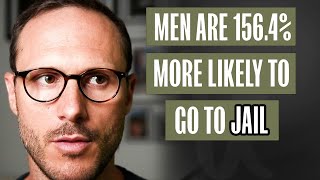
Connor Beaton argues that society is failing men in education, family structure, and mental health, with boys falling behind in school, father absence causing harm, and male suicide rates rising. He says cultural responses blame individual men instead of fixing broken systems.
Chapters
Has society failed men? It's a very interesting conversation to broach because it elicits all kind of feedback, reaction, emotions, commentary, and it's a very complex topic. There's a couple truths that I think most of us can agree on when it comes to this notion of how society failed men. One is that when we are talking about the plight of men, when we're talking about less men going to college, we're talking about men checking out from work, we're talking about more men dying of suicide, we're talking about more men growing up in fatherless homes without role models in their education institutions. We look at a lot of the issues that are happening within male culture and society and a few interesting things happen. First off, there's this notion within our society that if women have a problem, if we see data of women struggling in certain areas within our society, in society and culture, when we see data of women struggling, when women have a problem, we ask, what can society do to change it? How can we restructure, reorient the systems that really drive our culture and our society in order to benefit and help those women? Right. And we've passed a lot of legislation that has oriented that. And you can argue that recently some of that has been infringed on. And I don't want to get too heavily into a debate about that. But generally speaking, as a generality, as an almost rule, when women have a problem collectively, we ask society, what can you do? How can we change society in order to orient around the problems that women are facing? But on the other side, when there's a problem within male culture, when men are having a problem, we don't say what can society do to help. We say, well, what did men do and what do men need to do to fix it? And we don't often talk about, especially within mainstream media, especially within, I would say, predominantly left wing, left leaning media outlets, which is very interesting because generally speaking, liberal and more progressive political ideologies have traditionally been the ones to really advocate for disenfranchised people. And so this notion that when women have a problem, we look at what society should do to reorient, but when men have a problem, we ask, what have men done to cause this and what do men need to do to change it? I think it shows and sort of speaks to how society is failing men. There's this very prominent notion that all men have power and that all power is hoarded by men. And so because of this very sort of basic view of the world, what ends up Happening is that there's a lack of sympathy, a lack of empathy when it comes to men. There's a lack of empathy for the challenges that men face, whether it's, you know, post divorce losing children, whether it's within their health, whether it's within mental wellness, right? And we can see if we look into the data very clearly within our modern culture that men are struggling. And there's a lot of conversation about, you know, men being in decline, right? As I said before, less men going to college than ever before, less men getting into relationships, less men having sex than ever before, more men living at home than with a significant other, which is, I believe, the first time in history that we've been tracking that data that that has, you know, begun to occur. And so we can kind of see that, yeah, men are really struggling in a lot of ways and that men are in decline in a lot of ways. But the conversation that emerges from the majority of society is pull up your bootstraps. You know, how did men cause this? How, you know, what do men need to do to fix this? Versus maybe there's certain systems and structures within our society and within our culture that are actually incredibly important when it comes to a man's life and a man's development. And there's a few very basic things that we can look at that point to some of these systems and structures. Number one is the education system. It's very clear and there's a lot of research. If you want to go into Richard Reeves book on boys and men, he did a good job of pointing, pointing out how the education system in many ways has become very clear that it benefits young girls more than it does young boys, because young boys, our prefrontal cortex actually develops slower and later than a young girl's. And so young boys are naturally at a disadvantage when they enter into the education system, not because of any fault of their own, but mostly because their prefrontal cortex just isn't as developed yet. And so learning, memorizing, regurgitating social skills, all of these things are hindered. Language development, et cetera. And so there's some schools, especially some private schools for boys that have begun to, what's called red shirt boys, which is to basically hold them back a little bit. And so you can kind of see in these sort of dark recesses that some people are making an attempt to try and solve for some of these issues. But. But when you look at the broader conversation within society.
That'S not taken into consideration whatsoever. Another thing that's very interesting That I think really impacts a young boy's development is a family system. And when you look at data around children who are brought up in a single parent household, and that's predominantly a single mother household where the father is absent, children are five times more likely to commit suicide. And when you drill down into that data, it is predominantly men. It is way more men than women. Children that grow up without a father in the household are nine times more likely to drop out of high school. They are 10 times more likely to abuse a chemical substance. They are 14 times more likely to commit the. To. To commit grape. We'll, we'll just put that word in there because they'll get censored off of YouTube and they are 20 times more likely to up in prison. And again, when you go into all this data, what you really clearly see is that it is disproportionately affecting men. And then when you start to go into the conversations in mgtow communities and red pill communities and black pill communities and in all of these online sort of sub factions of men and masculinity, what you start to see is, are the conversations of men who feel disenfranchised by society, men who feel disproportionately. I don't even feel disproportionately, but are disproportionately impacted by things like divorce, by things like losing their job, these types of experiences that men are facing. What's very interesting is that they're often mocked, you know, they're often laughed at. And a good example of this is Jordan Peterson, I think it was a year or two ago, was speaking on stage and was asked about incels, which are involuntarily celibate men. And these are men who fundamentally believe, and maybe rightfully so, believe that they have no option to get a woman, that they're just not a viable mate or match for women and that women won't actually choose them. And these are oftentimes guys that have tried to get dates, they've tried to, they've gone on dating apps, they've swiped right, you know, they've said yes to thousands and thousands and thousands of women and had nobody to respond. Just total crickets. So this type of mass rejection in the digital space from women being rejected in person, et cetera. And so they've, they've decided to check out entirely. And the interesting thing is that yes, some of these men have done some egregious things. And this isn't to sort of circumvent their behavior or justify Their behavior. However, when you listen to the modern day conversation narrative about incels, about men going their own way, about any of these, about any of these conversations that are really focusing in on what would be called, quote unquote, men's rights, they're laughed at, right? They're really laughed at within especially more progressive, liberal leaning media and sort of politicized, oftentimes by the right and sort of played to right, because that's what the media does. They sort of play political games these days, but they're, they're laughed at. And so for the most part, we really see that within our culture and our society, men are starting to fall, they're starting to falter, they're in decline in many different ways. And the, the problem that is emerging is that when we try and have these conversations, when men start to talk about, you know, the reality of divorce court and how, you know, disproportionately advantaged women are when it comes to getting divorced, yet we live in a time where those disproportionate advantages were in place, you know, for 40, 50 years ago, when women were reliant on men. But we've entered into a space where 42% of households, women are the breadwinner. So women are no longer reliant on men. But to bring some of these concepts up, these, some of this data up, some of this information up, and to talk about how maybe society needs to alter to better address the challenges that men are facing emotionally, psychologically, etc. It's met with this sort of anti female, anti woman rhetoric, like, oh, you must be anti women. Oh, you don't care about women's rights. Oh, you don't care about whatever, you know, disparaged groups, rights. And it's like, no, no, no, no, that's not the case at all. That's a false equivalency. I can be talking about the plight that men are facing. I can be talking about the challenges that men are facing in divorce courts with their mental health, with the rising suicide rates, with the number of men that are, you know, going to prison, that are homeless, right? The majority of men on average that are homeless, that are in prison, that experience violence, police violence, et cetera, those are all men, right? The number of men that are, you know, killed, the number of people that are killed at work or in a job that is disproportionately men, right? But to talk about any of these issues is to kind of walk through a landmine field of being called all kinds of names, right? And so it's a very interesting thing to say, hey, maybe society has something to do. Maybe the structures and the infrastructure and the conversations that are around this have something to do with the decline in men and masculinity. And that's a problem also for women because what it means is that for women it you have less viable options for mates that are out in culture and society. And so it would just make logical sense to me that we would want to have these conversations about how men are struggling and what we need to do about it, not just in a conceptual way, but actually in a social way. Right. Because there's very real social changes that we can make. And so when you hear people talk about the value of the family, what they're really saying is maybe young girls aren't going to be impacted so much by growing up in a single parent household environment because they're likely to have their mother present, but young boys statistically are going to have a much harder time. And we know this and the data is so clear and.
It'S just so clear and nobody in the field really disputes it. And yet to have a conversation about it is to elicit or all of this sort of backlash. And so those are some of the ways that I think society is really infringing on our ability to have this dialogue about how men within our culture and society can improve. The last thing that I would say is this whole notion around men emotional intelligence. You know, men being should be open up and men should talk about it more. And if men just talked about it more, then everything would be okay. But I think that that doesn't actually fit in with some of the challenges that men are facing. Right. Some men, they don't need to just sort of talk about the hardship of their life. They actually need very real help and support. You know, if you sat down a boy in grade one or grade two who's really struggling because he got put into school earlier than he probably should be, because developmentally he's behind. Sitting down with him and talking to him about his feelings isn't going to do anything about the fact that he is developmentally behind all of the girls or the majority of the girls that he is in class with. Right. Sitting down with a man who is on the other side of having worked two jobs to support a family and then to have his wife leave him for whatever circumstances. Right. And him losing half of his net worth, half of everything, half of his 401k is divorce, having his rights as a parent extremely limited to seeing his children Maybe he wants to be very active in their life. Him just talking about what that's like doesn't change the fact that in those examples, the circumstances within society and the structures that that man has gone through and engaged in within the judicial system, within the legal system, aren't set up to actually support him and, and his wife or his excellent wife in an equal way. And so if we want to talk about equality and we want to talk about all these things within our society that are helpful, it does seem like society is failing young boys, it's failing young men, and it's failing men in general. And I think it's failing because we have this perception ingrained to us. And, you know, we talk about where that comes from. And I can hear some people saying, well, it's the patriarchy's fault, but let's just put that aside for a second. We have this notion ingrained to us that when men are struggling, men need to figure it out, and that society and culture shouldn't enter into that conversation like it would with any other disparaged group, with any other group that is struggling or facing some type of challenge. So I'm curious to get your perspective, because obviously this is a very charged topic. You, you know, I tried to keep it as apolitical as possible without going down the rabbit hole of, like, it's the left's fault and it's the right's fault. And I don't actually think that that's helpful. I think that this is a bipartisan conversation. I actually think that this is one of those conversations that we need to be able to engage in. Because as I've said before, as other people have said, Richard Reeves and Chris Williamson and a bunch of other men have said, to talk about the challenges that men are facing does not mean that you are anti woman. Right? In many ways, when we're talking about these issues, we're pro women, right? Because we're trying to support the development of men socially, economically, psychologically, emotionally, spiritually within our culture. And who generally benefits from that are women, our children, our businesses, our society, and our economy. And so this benefits everybody to engage in this conversation. So I'm curious to get your thoughts. What did you think I missed? What did you like about what I said? What part of this would you like me to dig into further? And do you think that society has failed men? And if so, how come. So if you're watching this on YouTube, comment below, get in the conversation. Otherwise, DM me. Let me know what you thought about this man it forward. Share this episode with somebody that you know will enjoy it. And until next week, this is Connor Beaton signing off.
More from Connor




How to Raise Strong, Unshakable Boys in Today's Culture, with Dr. Shefali Tsabary





Anxious, needy, overthinking in love? That's a pattern, and it can change. Check the description 👇
