Healing TRAUMA In Community Will Change The World - Dr. Thomas Hübl
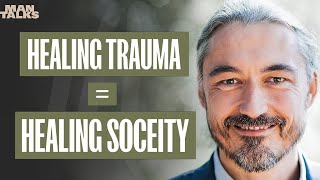
Dr. Thomas Hübl explains how trauma lives in the nervous system and drives polarization. He argues that attunement, a relational skill we can practice, is essential for collective healing. His book Attuned explores how interdependence can heal trauma at scale.
Chapters
We know too much already about trauma to now consciously perpetuate it. So we need to step in and also be active and create those architectures. And I think what the two of us are doing in different ways, we are doing this already in communities, but that needs to be much more mainstream if we want to reduce public health care costs, criminal raids, racism, antisemitism, if you want to reduce many of the social issues, the inequality in our societies. These are all symptoms that can be reduced through collective healing processes over 5, 10, 15 years.
All right, Thomas, welcome to the mantalk Show. How are you today?
First of all, thank you, Conor, for having me. And, yeah, I'm good. I'm very active and busy right now. We're doing many projects. But, yeah, I'm good. I'm good.
Yeah. I was going to say that was a big, deep breath you took there, like, hmm. Well, I'm launching a book, maybe a Little Bit of Chaos right here. But that's good, that's good to hear. So let's just start off with the question that I ask everybody, which is tell us a story about a defining moment in your life that made you who you are today.
I would like to share two things that are kind of close. One is I was.
When I was 16, I signed up to be a volunteer at the Red Cross, and I became a paramedic and then a trainer for paramedics while I was studying. And I spent a lot of time volunteering. So I think the volunteering is something like giving back to society and being of service is always something that I really appreciate and highly value. And, and I remember one moment that, you know, as a paramedic, you see every walk of life. You see the things that many people never see. And I remember I once was called to a place where a woman needed our help and she needed to be brought to the hospital. And she was, she lived in circumstances that are very, very poor.
And.
Like, unbelievable circumstances. And.
And I know we came to the, we came to the hospital and, and she gave.
Me a tip.
And I thought, well, that's amazing.
We, you know, like money.
She gave you financial money A bit, you know, But I thought, wow, because I, you know, we, you go through every, every part of society from the high society, as a party, you come everywhere. And I thought, wow, this is amazing. Like, this woman in living in these circumstances and feeling that she needs to give something.
Kind of blew my mind. Somehow this, this experience stayed with me because I had many other people that have, that had lots of money that never Gave some tip or money, because we all were volunteers. So we don't. It is in our free time. And I thought that that was one moment that stayed with me as a kind of a. I don't know if it's a defining moment, but it's something that.
Kind of taught me a lot about values and kind of dignity and human relationships. And the other one is. Is something more professional from my life is that, you know, we did a lot of collective trauma work. And maybe that's something we're gonna talk about later. And I remember we took a lot of groups through very deep Second World War, Holocaust trauma processes. And with every group, we come to a place where it's very clear that this is the edge of our known universe. This is the edge of what we can consciously still perceive. And. And it's. And we. And here it stops. Here is the beginning of what we call maybe the unconscious or the collective unconscious that we, all of us, as a collective, cannot feel or see beyond. And I, for me, this is and was. Every time that happens, it's such a humbling moment where we see how much pain we, as human beings inflicted on each other and how much we needed to suppress in order to survive. And when we meet the intelligence of suppressing or absencing or the anesthesia that we all carry somehow inside, and that happens on a collective level with hundreds of people, it's a very strong experience.
And that taught me a lot about. I don't know what I know today about trauma or collective trauma. This was also very defining. These are very defining moments for me professionally. And also humbling how much, I don't know, pain we went through as human beings to be sitting here, all our ancestors went through stuff. And we are having this conversation now. So I think these are two things maybe that really had a big impact on me.
I appreciate you bringing that up. And we certainly will talk about collective trauma and working with that. And know it's interesting because a lot of the work that we do with an organization is large group work with. Specifically with men. And it's very interesting to see and hear the stories of them going back into their lives with their families, their careers, when their nervous system has had a chance to reorient through a tr. You know, through the trauma that they've been carrying and reorient towards safety and trust of another. And I'm making a sort of assumption here, but I'll put it out and you can agree or disagree or maybe restructure it, however feels necessary that when we Experience trauma, it alters our internal perception, it alters our nervous system in some ways to not feel safe with a lot of the times relationships, whether that's our relationship to the world and society or that's relationship to others. And we don't feel safe when we don't trust trust. And so what I hear you saying is that a big part of that, that work that you've done, and we're going to go more into this after, but a big part of the work that you do is a reorientation of someone's internal perception and their nervous system to towards safety, towards trust with others in relationship, whether that's the again, relationship to world culture, society or, or just, you know, individual relationships with partners and friends. So yeah, maybe I'll just pause there and get your thoughts on all that.
Yeah, very much so. And, and if you look like that most of the trauma in our world stems from inappropriate relationships like relationships that either are violent or are abusive or neglecting. And, and so I think what you just bring up is just a social awareness how often we by ourselves like a self awareness or like a social sensitivity that sometimes when people react the way they react, they actually are insecure or scared or afraid and that's why they come across distant or reactive or however. And how often we take that personal versus being able to hold a space for it and not get entangled in the interpersonal dynamic that it might create. I think that's already a huge learning I think for all of us. And also that the simplicity of I feel you and I feel how you feel me, that awareness, that's the basic building block of relating and it's the basic building block of creating safety, interpersonal safety. When we feel felt, we feel safer. And, and I think that's something important for us to know but it's also something important for us to practice that we can be somebody that more and more people feel safe with and that has an ecosystemic effect wherever we live and, and impact the world. So yeah, that's very powerful what you said.
Well, it's, it's interesting because I think in some ways trauma especially alters our capacity to feel safe within ourselves. And as you were just talking about. Right. Being able to be aware of what other people are feeling and experiencing.
Is a, you know, sort of a building block of being in relationship with them. But if we don't feel safe within ourselves, I would imagine it's very challenging to really be able to be aware of what other people are going through or that becomes a Coping and safety mechanism, right? Like that hyper vigilance of what are they thinking and why are they upset? And you know, and all of that is a sort of self referencing of am I okay, am I Safe, you know, etc. So, well, let's, let's go down the, the rabbit hole here a little bit. And I think this will probably take us towards collective trauma and you know, how we begin to heal that. I would love for you to just, maybe we'll start high level and just talk about what it means to be attuned, why this is relevant and important right now, and maybe a bit of a description or definition just so that people have a reference point that they can return to as we continue to navigate through this conversation.
I think we are all wired to be social and I think we all feel the pain of what it means when relationships are being hurt, when we feel isolated, when we don't belong, when we are feeling marginalized. And so I think it's very good to know that our nervous system is wired to be social for millions of years. And I think that's an important aspect. So attunement is not something foreign to us, but it's actually something that is inherently built into how our bodies, our nervous systems, our psyches are wired. The second part is that.
This simplicity because often we make relationships, they seem a bit complicated or complex, but when we break it down, like I feel you and I'm aware of how you feel me when you talk to me or listen to me, having that awareness is already a very attuned process. Because how does that work? That my nervous system fuels your nervous system. And if we are both relatively relaxed and open, or with more professional terms, we would say if our social engagement system is open. Some people say when my heart is more open, but what that means is that my nervous system is regulated, then I feel you. Feeling me is a natural part of how we create social systems, how we are with our friends, how we are at our workplace, and, and how we are, of course, with our families and loved ones. And now attunement is the practice or the refinement of that very basic process that we are all doing. If you go to a room, if you go to a party, or if you come to a new workplace, the first thing all of us are doing consciously or unconsciously is feeling how it feels. Does it feel safe? Are people open? Are people tight? Like, how does it feel? So it's not something magical or.
Like a kind of a enormous superpower. It's something it's a superpower that we all have anyway. And so. But what we can do is we can practice to refine that superpower. And where I have carry trauma or where I have unresolved issues in myself, I cannot be fully attuned to you. Doesn't mean that I cannot be entirely attuned to people. But in the parts where we are hurt, attunement doesn't work because our nervous system shut down a part of the relational aspect. And so in our work, we are saying often that we need to train and integrate. I cannot train a part of myself that is traumatized. I need to integrate that part first. We can talk about what that means. So the healing of our traumatizations is. Is very important. And then I can train that part. And sometimes people try to do one or the other. And I think, why not to do both? Have a practice that provides both. And like that, we upgrade our relational capabilities. And I believe we become a remedy for a systemically traumatized world or within a systemically traumatized world. Because it doesn't matter if I'm leading a team in an organization, if I'm a parent, if I'm socially active in society. Relational skills are the basic data connection. And if that data connection doesn't work well, the conversation that we both are having now isn't working well. All the text messages and emails that we send to each other, they can be great. But without data connection, they have very little impact. So I think that achievement is based on resonance, and it's very important. Attunement is based on an embodied experience. My body and your body are highly refined biocomputers. And when we use our whole embodiment, we can feel so much information about each other that is very important when, if you want to be creative together, if you want to be of support in difficult moments for each other, if you want to create healthy families and healthy education for our kids. So attunement, I think, is a very, very important process. And in 20 plus years of working on very, very difficult trauma situations, the superpower is relating, presence, relating.
I'm going to try and in my own words, sort of condense some of that down because I think there's some really valuable and important pieces in there. So maybe one is our bodies have this natural capacity to be attuned. Two is, I think the subtext to some of this is usually nobody tells us or teaches us how to work with that attunement. I think that seems to be a part of the equation. And then three Trauma creates what my mentor calls impasses or interruptions to our ability under certain circumstances or sometimes most circumstances, to attune and be in relationship with other people. So is that roughly accurate for what you're saying? And then is there anything that you would add in there?
No. Perfect. Perfect. And I want to underline the remark you made. And often we in schools or education systems, we are not being trained. Like I think we often don't read the manual of how amazing is the biocomputer that we are living in. And I think if we were trained better, I think also our careers, whatever we do, would be more impactful if we had that training. So I want to underline what you said. The rest was perfect. Yes.
Yeah. I've been working with men for 10 years and one of the biggest challenges is that we have been taught to over index the rational mind to such a wild degree that sometimes part of the process when I'm working with an individual or with a group is just beginning to release the almost like obsessive stronghold on the rational mind as the only frame of orientation towards existence and the only filter and the only sort of lens of perception that we see the world. And when we can start to release that grip, I'll tell a quick little story. This will be very brief. I remember growing up I was very much sort of trained under that orientation, right? The rational mind. Think, be highly intelligent, be super smart, be funny, be witty, et cetera. And that was okay. But when I, I started a career when I was. Maybe not it wasn't a career, but I started singing in my late teens and early twenties and I started singing classical music. So I started to get trained as an opera singer. And so I was singing in German and Italian and French and all these different languages and the, this fascinating thing started to happen. I'll. I'll never forget where I joke that I got a degree in breathing because that's really what singing is all about, right? It's like controlled breath, controlled yelling, especially opera. And suddenly my body started to dethaw or I started to actually connect with my body and realize how much tension and stress I was carrying and the frustration that would emerge just out of breathing and singing. I mean, it was wild. It was such a beautiful and profound experience because in many ways I look back on, on those years and start to realize how little awareness or attunement I actually had to the information that was coming in through my body. And my life has radically changed since then, you know, because I've gone and done A whole bunch of practices, breathworks, you know, all that kind of stuff. But that's just a little example of sort of waking up to this form of awareness that I, that I think you're talking about. If I'm not mistaken.
That's so beautiful. Also your description is very beautiful. And.
And I think you also described two things that trauma kind of freezes part of our experience in our body and our body awareness. So we are less connected to our bodies. We feel even if you do a lot of sports or I don't know, we do all kinds of stuff but doesn't mean that we are really feeling and living in our body fully. And the other thing I want to also underline, you said something that's also in the understanding of trauma. Very important that the rational mind is amazing.
If it's connected or when it's connected with our emotional intelligence, our physical awareness. Because then the thinking is connected with the sensing. And I often call this sense making. Then things make sense. How do we know that somebody is authentic? When, when I listen to you, I feel your experience.
And what your body tells me and what you just shared with us feels like congruent. That makes sense to me. I can feel what you say. But when we are hurt or when we are over rationalizing, the mind is actually not in sync with the rest of the experience. The mind is kind of a top down control system not to allow more feelings to arise. And I think in a very scientific, rational based society that distinction is super important because it doesn't mean that we are saying we should use our mind less. We need our mind for science, technology, breakthroughs, solving complex issues. It's great, but in connection to the rest. Otherwise the mind becomes the top down control system of nature. And it, it keeps the incent like the shutdown going and like this. We can't heal. So there must be a moment through something in our life where exactly what you said just now happens is that I feel that I am, that something in me is melting. Did I notice how much tension I needed to create? Like, because tension is emotion is the reduction of emotion. So for many people the healing is reversing tension. It's into sensations and emotions, digesting those and that opens our body into more fluidity. So then we feel more dynamic, more creative, more fluid, more related. But we don't feel weaker because many people feel oh, when my, when the tension in my body that I'm used to melts away, I'm becoming weaker. And the opposite is true. You become more dynamically Related. You're not becoming weaker, and. But this fear that comes up for many people is also the fear that needs to be felt or needed to be felt. And that's why we created the tension in the first place in our body. And so that's a beautiful process with the thawing, like, with melting the ice of our pain and coming into a deeper resonance with life. And maybe the last thing I want to say. That's amazing. I didn't know about your singing career, but I think as a musician.
You share one of the best ways to speak about attunement, because if you hit certain tunes or if you're attuned to the right intonations, you are attuning all the time. And that's a beautiful example. I think music is a beautiful example to explore, to explain attunement. So that's. That's fantastic.
Yeah, I. I appreciate that. I think that. Yeah, I won't go down that rabbit hole right now, but I think maybe that's for another conversation. You. You said something that I wanted to just touch on before we go into something that I wanted to talk to you about, but I think you said something along the lines of tension being the reduction of emotion. Did I get that right? And can you just elaborate on that a little bit? Because I feel like the. Especially the guys that tune into this that are very tense and carrying a lot of that tension right in the shoulders and the chest and the neck and the jaw, you know, in the diaphragm, probably just had their ears perk up and be like, wait, wait, wait, back up. So let's just dig into that a little bit more.
Right? Yeah. Yeah. So a lot in the kind of. In the healing or integration work, we say a lot. Okay. Or I would say often in my classes that all the tension that we carry inside is unlived experience.
And so it's experience that we couldn't digest and integrate. That's why a lot of healing work starts when we say, because often the past was painful. And running, keep running, is a way not to face that. And there's. In many people's lives, there's sooner or later a moment where we feel we have to slow down for a moment. And once we slow down for a moment, the past catches up. Whatever we couldn't, or, you know, it was too overwhelming, we couldn't feel in the past whatever we experienced or what our ancestors experienced. And I will come to that in a moment. Then, like, slowing down is the beginning of reflecting. I start to deal with My past. And that I see. Well, when I deal with the past, I'm actually not dealing with something in the past. I'm dealing with how the past lives in me as physical tension, as dysregulation in my nervous system, as constant reactivity in my relationships or isolation in my relationships or distancing. And then I get to know my inner world more. And there I see that numbing is a very intelligent function and not a stupid function. Every defense mechanism that we needed to implement is highly intelligent. And we did that because it was the best we could do in given circumstances. I often say as an example, so if somebody as a child, a small child needs to get hospitalized and some decades ago at least often parents couldn't be with their kids in the hospital so they could visit them, but they couldn't stay there the whole time. So being in a hospital without parents for 1, 2, 3 year old child is a existential crisis. It's very scary. And so to shut down one's body in order not to feel the tremendous flood of fear is intelligent. So later on as a grown up.
We are being invited into feeling our bodies, but actually it's hard for us to connect to the body and we constantly pop back into a thinking about our body. And then we could say, oh, I cannot feel my body. Or I can say as a 2 year old I managed to turn off the overwhelm or the massive flood of emotions in order to survive better. If I approach it in the second way then I'm not dealing with a dysfunction, I'm dealing with my intelligence. And that gives me much easier access to reverse that process and slowly come back to my body sensations because I learned to be with that mechanism. Same as trauma is. Many, many people think trauma like, or when we talk about trauma, we are talking about the response that happens in us in relationship to a very difficult, overwhelming situation. And that trauma response is intelligent. And so often that's pathologized. But when we turn it around, it's actually an intelligence we can learn to work with. And I think for many people that's a revelation because then we in ourselves, but also in our social systems, we de pathologize some of the weaknesses and actually turn those into, into very important intelligent functions. And I think turning tension, body tension is a way to feel less. And being faster, like being too fast is a way to feel less. So if we want to feel more, we need to slow down it, which naturally already starts to bring up stuff, even if the first thing I feel is frustration. As you said, or I become angry or I become restless, but at least I'm feeling that. And then, and then that I can slowly in relaxing into the sensations, or I become scared. And then in relaxing into the sensations.
I begin to digest the emotions. So tension or absence, numbness is being turned into an emotion. If we can stay with it, either by ourselves or with some support or in some groups as you work, so then we can support each other to begin to feel these emotions and see their value. And I want to say one last thing that I think is important, especially also for many men. When my daughter comes to me and she says, daddy, Daddy, I'm scared.
If I have a busy day. And I say, oh, don't be scared. There is nothing dangerous in the house. So what did I do?
I devalued my daughter's emotion. Don't be scared. Sometimes we do even this hand movement. Don't be scared. And my daughter clearly needs an emotional connection. And I gave her a rational response. There is nothing dangerous in the house. So what that does, it alienates my daughter's emotional experience from me in herself. So she stays with her stress and her fear more alone. And. And she doesn't feel met because she doesn't feel my own emotional response to her. The other option would be, did I turn to my daughter and I say, yes, I feel you're scared. Come to me. I be. I feel her. I feel her fear. That gives her nervous system an impulse of feeling. Felt her stress levels go down, her fear levels get reduced. And through the connection and the nervous system synchronization.
When she's a bit more relaxed, then I can say, okay, let's have a look what happened? And then I bring rational leadership or parenting into the situation. I can bring my mature perspective, but only after I met her, not before. And I think oftentimes when emotions are not so easy for us to really go through an experience, when other people come with it, then we try to do the same. And like that, we pass it on to the next generation.
Yeah, let me fix this for you.
Exactly. Let me fix that.
Yeah, let me fix this. Solve this. I usually say that numbness is a sign of fullness, not emptiness, because I think for a lot of guys, there's a perception that when we feel numb, we're not feeling anything. But I like the way that you put it that it's sort of. It's actually the emotion almost like changes its form, you know, moves from a liquid or a gas to a solid, you know, within us energetically or emotionally. So I like. I really like the way that you describe this. It's brilliant in some ways. Where does polarization fit into this? Because I think as you were talking about some of this and as we've been sort of talking, we talked offline about a few things. But I think that polarization seems like it's interwoven to everything that we've been talking about, whether it's trauma, whether it's this numbness and freezing. So where does polarization fit in individually? And I almost hesitate to ask the why question, but I'm going to do it anyway.
From your perspective.
What would you say has been causing such a rise in polarization within our world and within our cultures? Because it seems to be rampant. Like it just seems to be almost cancerous within our societies all over the world.
One aspect is when we look at trauma for a moment, again.
We can describe two sets of symptoms. We did almost, we mentioned this almost, but we didn't mention one thing. There's a lot of stress in the system when we go through a very overwhelming situation. So our nervous system is on high alert, or not even alert in fight and flight or freeze mode, depending on how intense it is. Then our nervous system has the capacity to shut down and numb the overwhelm in order to survive the situation better. So it's amazing. The numbing that you spoke about is actually a function that is intelligent because it helps us to survive better or go through something better. So it's, as you said, it's not a dysfunction, it's a function. And the third part is in the moment that shutdown happens, it's like you take a stone and you throw it into a window and you have a crack in the glass. That crack and the shutdown create two. From that moment on, we look at the world as out there. Certain parts of the world that I cannot feel are kind of at the distance. So distancing myself from the intensity of my experience creates immediately a distance from certain parts of the world. And everybody who comes into that area of my distancing is not close to me.
So the experience is that there are parts of life that I feel more connected to, and there are parts of life that are more at the distance. And that's the beginning of the internal process of othering, because I other a part of my experience. So I begin to other a part of the world. That's why I often ask people, when I say, when you go through the forest, where is nature? Because nature is not just around us. My body Is nature too. But we often say I am part of an ecosystem. I would challenge that. I would say, is that really so? Or are we the ecosystem? We are individuals, but we are the ecosystem too. But we often don't feel like that because of that process of trauma that goes on already for thousands and thousands of years that was here in the world that we were born into. There was trauma already when we came in. And so we got some collective normalization of symptoms that we often say that's how life is. And I would say, no, many of these things are not how life is. This is how life is when it's hurt. But we need to add that small part because that helps us to support its healing. And so polarization is based or where is society? Society is not around us. I'm also society. So society is through us, Nature is through us, the planet is through us. We are an integral aspect of it. And I think the more inner fragmentation we carry, the more projected fragmentation we experience in the world. And then whenever we ever hear about a polarizing event, my inner fragmentation becomes so uncomfortable that I need to join aside because my internal space is not big enough to hold the tension. So whenever we can host tension in us, we don't polarize. But it's uncomfortable to feel that tension. But if I'm not willing to feel the discomfort, then I become part of the polarization. And some suddenly I'm joining a side. I'm really convinced that are right and they are wrong. And, and, and that doesn't mean that's a different process. But it's often very merged in people's minds of giving up high value systems. I can, I can be very grounded in high value systems, but I don't need to other the others. These are two different things. If I have a very high level of ethical kind of inner guidance or way of living, that's one thing, but that's not the same process than other the ones that don't have that or don't live that way or have a completely different set of values. And so I think for all of us it's important that.
We see how we polarize or do that in our smaller circles. Because that often happens. If I gossip about you, because I'm not honest with you directly and I start talking about you with a colleague that we have in a. Let's say we work in the same organization that's already creating polarization and splitting. We are seeing the polarization. Many companies or organizations are full of that, what I call social erosion that when we talk badly about each other with others. We are creating polarization and we are creating clusters. And that's an unhealthy relational process that is toxic in an ecosystem. And I think the more we opened it up and we saw it, I think it was very obvious through Covid, we didn't talk anymore about vaccines and viruses. We talked in bubbles and fragmented bubbles. And then social media comes to it that creates these digital suits that it doesn't confront you anymore with so easily, with contradicting opinions, with tensions, with personal processes to go through the clarification. So it's much easier to stay in these clusters of the ones that are right. And I think that's a very detrimental process to our capacity to host polarization in ourselves, to feel the discomfort, but to stay connected to that. It's much easier to join the ones that are the right ones on the right side. And I think we have to really turn. Our practice is an individual practice, but there's a social practice aspect to awareness that how we are in society as citizens needs to become like a spiritual or inner awareness practice. Especially in the times when our. The data speed is speeding up constantly, so we are more and more exposed to triggering impulses more and more often. So the access we have to society and to meals, and if we are not regulated in ourselves naturally, then we become more and more dysregulated through that flood of information. So I think that's a very important question and maybe could have just an own conversation just about. That is interesting.
Well, I feel like you may have just invited yourself back on the show to have that conversation. But, yeah, I mean, I often say that the people who are able to regulate in the coming years, especially in the next sort of like five to 10 years specifically, are going to have a kind of superpower. Um, because I'm a big. I studied Jung for a long time, and I've said it on the show before, but I think from my frame, we've sort of externalized the collective unconscious, right? We've created the Internet and social media, which operates as a external medium of the collective unconscious that we then interact with on a daily basis. Right? We can see other people's commentary and their unconscious thoughts and their unconscious reactivity and their shadows and all those. It's just all spewed out online. And we've never, ever, ever had the experience of our nervous system being in relationship, even in a digital form, to other people's nervous system. And I think one of the things that I hear as again is an Undercurrent to what you're talking about is how I would sort of summarize it is that we share a collective nervous system and that our nervous system is deeply impacted by, by the nervous systems around us. And part of my, my guess, part of how we deal with this polarization is by creating more coherence and more congruence within ourselves, but also within the people that we are surrounded by, that we interact with, that we speak with. But I would, I'm. I would maybe love for you to expand on that a little bit. Like how do we deal with this polarization? Because I would imagine that this kind of leads us into the collect trauma healing. I would guess that those two things are interconnected. So how do we start to approach this collective trauma healing and this dealing with polarization? And where do we begin?
Yeah, you, you said it already. Many aspects yourself right now, beautifully, because we are using similar metaphors. I love what you just said because I often say, look at the Internet, we externalized our conscious and unconscious collective dimension. And look at the Internet and the dark web and it's beautiful. I mean on the one hand it's, it's tragic. On the other hand, it at least gives us the opportunity to subject, object, transcend, like our inner identification. When if we consciously look at that, what you just said, then it's a kind of a. Aha. Wow. Yeah, right. We unconsciously build something that kind of externalized our inner architecture. I find this always fascinating. But coming back to, to the coherence, I think how we approach that is through. And that's also what you do with your work is to create more coherent hubs, communities where we have individual and collective practices. I strongly believe we are going into an age of collective healing. We are. That doesn't mean that we won't do any more one on one work, but one on one work in collective healing spaces is much faster, deeper it goes faster to the point because there's a much stronger resourcing system around it. And I think creating coherence in large groups that is based on certain principles. Safety, I feel you feeling me create honesty, transparency, authenticity, humility. I think is a very important part that I'm more and more on where I am on my journey of development. I think that creates. That is very trustworthy, like a healthy self assessment is very trustworthy. And, and that we create communities where through relational exercises and through a deeper connectivity, we have more related hubs. We, we don't pathologize defense mechanisms, but we are also not unconsciously supporting those by having a kind of a collective learning and awareness process. So first that we become aware of what we usually support. And I think there are many steps to building coherent communities. And, and I believe we have to work or become a collective voice that says it's every citizen's responsibility to take care of the legacy of the life that we were born into, which means our ancestral and collective heritage, which often carries in different parts of the world. If that's the second World War, the Holocaust, if that's racism and Native American genocide, colonialism, gender violence, I mean, you just name it. All around the world there is a collective legacy. And I believe even if many people don't do this, I don't think everybody needs to do it. But what I believe is we need a collective architecture that will be funded by the government, which means it's deeply steeped in the awareness of the population that this is a needed thing. Like there weren't any hospitals at a certain time. Hospitals didn't exist. Just they exist. Somebody built, said, okay, that's a need we have that people who need urgent care have a place where to go. And I think we don't have that yet to take care of those legacies. So we, as Freud and others said, that's subject to the repetition compulsion that we constantly reenact these re traumatizing cycles. And that needs to stop. And we know too much already about trauma to uncon. To now consciously perpetuate that. So we need to step in and also be active and create those architectures. And I think what the two of us are doing in different ways, we are doing this already in communities. But that needs to be much more mainstream if we want to.
Reduce public health care costs, criminal rates, racism, antisemitism, if you want to reduce many of the social issues, the inequality in our societies, these are all symptoms that can be reduced through collective healing processes over 5, 10, 15 years. And I think that's something we all have to work for because it doesn't exist yet on a level that is strong enough.
Well, I think that that is both beautifully articulated and a very bold mission that I 100% agree with.
It's amazing how quickly these conversations go. And I feel like I just got to sit with a friend and have a wonderful conversation about everything that is meaningful. Maybe what we'll wrap up with is I would just love for you to tell the listener about your book. We've inadvertently been talking about your work, but your book Attuned Practicing Interdependence to Heal Our Trauma in Our World. It's out. It's wonderful. I started reading it recently. I went on a trip to Austin and I'm not through the whole thing yet, but what I've read so far is really, really wonderful. And I feel like there's a lot of congruency and coherence in your mission and the way that you talk about things. So where can people learn more about you? Where can they find the book? We'll have the links to all of this in the show notes.
First of all, I share your sense. I also felt in this hour I feel a lot of resonance and I think there's so many more things we could, could be talking about and that we share and we are passionate about. So that's really beautiful. So thank you for that. I appreciate that. And about the book, yes. Etioned describes like the development of relational competencies for everybody. Basically. It describes it also more in depth for people who use that professionally, not just as therapists, but also as therapists or coaches, consultants, but also as team leaders, leaders, whatever, any everybody that needs it, including us as parents, obviously. And so there is the whole practice. A big section of the book is on, on developing relational capacities and attunement practices. And the book also formulates that what I call IAC fluidity is like the individual ancestral and collective trauma or liquefaction of trauma in order to induce change processes, which I think are deeply important. When we look at climate change, it is a reason why it seems very frustrating to change something that we know already so deeply needs to be changed. And it seems like there's a lot of sand in the engine. Global collaboration conflicts that are happening right now need global solutions. So we need to get to a next level of what a friend of mine, Denzel also calls the intraconnectedness or other people so called intraconnectedness that I'm not just part of an ecosystem, I am the ecosystem. And that's why I have an ecosystemic impact that I can become more aware of. That's why I also talk in the book about interdependence. And so for everybody who is interested in that, I think, I think there's a lot of work that is very needed right now in this phase of our individual and collective development.
Very much so. Very much so. Well, thank you so much for your time and for everybody that's out there, don't forget to man it forward. Share this conversation with somebody that you know will enjoy it. This might be a good one for you to listen to. With a friend or a partner and have a bit of a discussion around. I always find that that's helpful with my friends. I tend to do that with the shows that I tune into or or even the conversations that I have on the show. I'll send it to a buddy and say check this out and let's have a convo about it. So men it forward, share it. Don't forget to check out Thomas's book and work. We'll have the links for that in the show. Note you can find it on Amazon. And until next week, as always, this is Connor Beaton signing off.
More from Connor







How to Raise Strong, Unshakable Boys in Today's Culture, with Dr. Shefali Tsabary



