How Men Can Reclaim Potency & Emotional Leadership, with Luke Bateman
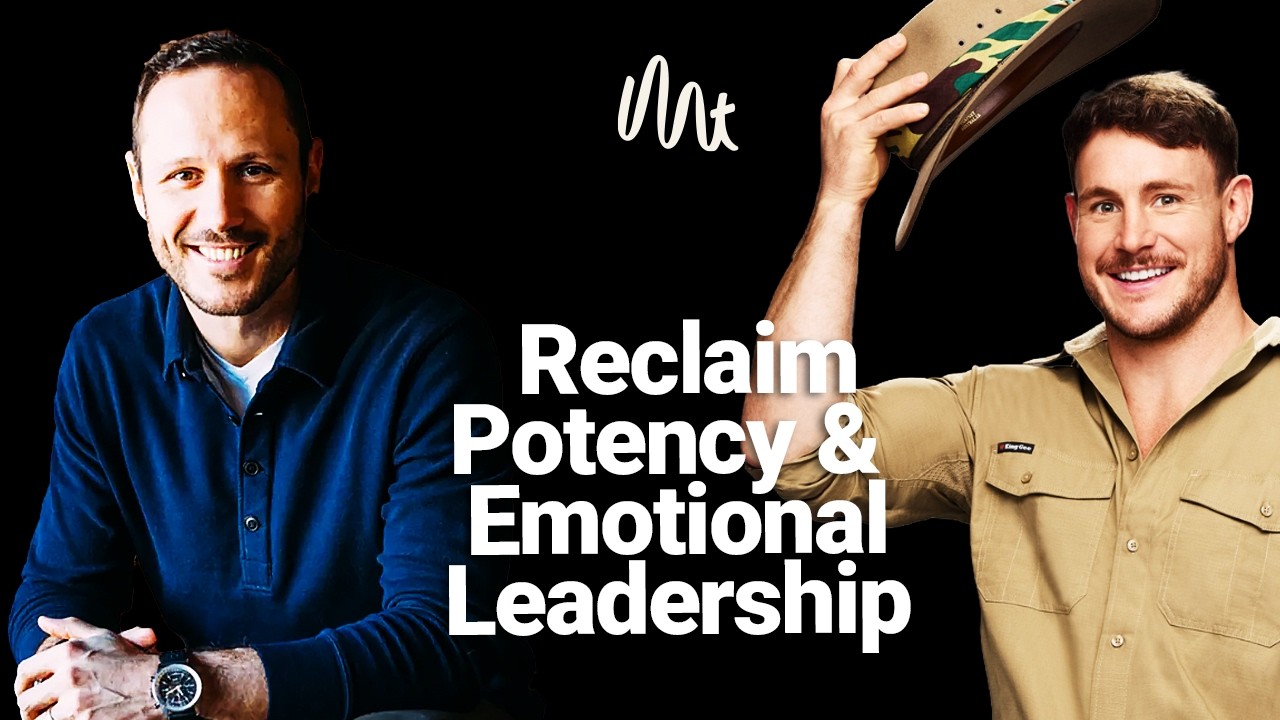
In this ManTalks interview, host Connor Beaton talks with former NRL star Luke Bateman about the profound identity loss he experienced after retiring at 25, the subsequent spiral into gambling, substance abuse, and suicidal thoughts, and how he rebuilt his sense of self through vulnerability and narrative work. The conversation expands to critique the historic masculine narrative that ties male worth to external status, productivity, and physical dominance, arguing for a shift toward emotional literacy, inherent worth, and compassionate leadership. They discuss the modern gender “war” amplified by social media, the need for men to embrace vulnerability as strength, and how redefining “high‑value” men involves emotional competence and authentic potency, whether physical or creative. The dialogue also touches on cultural changes, the rise of fiction as an antidote to information overload, and offers several book recommendations that provide both escapism and male role models. Throughout, both guests stress the importance of personal narrative, mentorship, and community in fostering healthier masculinity.
Chapters
All right, Luke, welcome to the ManTalks Show. How you doing today?
Good, Connor. Thank you very much for having me on, mate. I appreciate it.
I like the hotel wall, the hourglass wallpaper that we're rocking in the background. It's awesome. It's like 1970s, like Austin Powers vibes.
Okay, this is literally— this is the John and Yoko room at this hotel. So I'm just— I'm interstate at the moment, interstate in Australia, just doing some work. And obviously the company that I'm working for, they booked the hotel room. So, I get here, get to check in and walk up and I walk in, I'm like, holy hell.
Yeah.
So, it's very interesting, but it's very, very cool. The Jordan Yoke suite.
Nice. Well, we're just going to dive straight in. I'm just going to rip the Band-Aid off and we're just going to go because I have so many questions and I think we're going to have a fun convo. But, you developed a pretty significant career as an athlete. And then stepped out of that career, went through some pretty trying times with addiction and recovery. And, I know for a lot of guys, when they have an identity that's so strong and so robust and they have a clear path of like, this is who I am, I'm good at this, this is what I'm doing, and then that gets taken from them or it ends or they have to retire or the business gets sold or collapses, It can really be turbulent to have that type of identity loss. So, I'd love for you to just start there. What was it like for you to go through almost like an identity death? And, I don't know if you'd call it that, but what was that like for you and what did you learn?
Identity death is a great word for ego death, massive ego death because when you're a professional athlete, you have an extremely large ego. But, It was really difficult. And the thing for me was, is that from a very young age, you know, from the age of probably 6, 7, 8 years old, my identity or my worth in the world really came from being an athlete. You know, that was what was always really glorified. That was always really encouraged. That's what everybody knew me for. You know, growing up, like, I was the— like, I was the athlete. You know, I was the kid that was good at this and good at this. And even all the, all the, I suppose, yeah, all the recognition I got in the world was around my, uh, athletic achievements. So that began very young for me. And then I was fortunate enough, you know, through my teenage years, I really focused on rugby. Uh, rugby league is the, the version, but, uh, that's, uh, the semantics for, for probably many of your audience over in the, in America. But yeah, so rugby league was, was my sport. And I did that through my whole teenage years. I signed my very first contract when I was 12 years old.
12?
Yeah. So, you know, this is my— this is everything to me. This is not a part of my identity. This is the entire thing. And my entire teenage years were aimed towards being a professional rugby league player. And then once I finished school, I went into the professional environment at 17, 18 years old. and became, you know, debuted in the— in first grade at 20 years old. So this was, you know, I'd never— my entire life from a young child was all about being an athlete and performing a, you know, role as an athlete and a player, a rugby player. And then I retired at the age of 25, you know, 2020, and that was when I was going through, you know, severe addiction and mental health issues and things like that. But that was the entire death of, of Luke Bateman. You know, I was— I'd created this caricature of who I was, uh, what gave me worth in the world, what gave me purpose, what my place was, what my identity was. That was all tied up in being this NRL player. And I had to— I was fortunate because my life just completely crumbled and destroyed. You know, I lost through addiction, I lost friends, I lost my partner, I lost family members for a while. Like, I was so isolated and alone and my life just collapsed and completely disintegrated around me. And in the wreckage of that, it was sort of like, okay, well, who am I? What do I do? What do I actually stand for? What's my purpose? What's my worth in the world? What's my narrative? You know, I think because that's That's a big thing we lose as people. We love narrative. And I didn't have one as a person. My narrative was completely gone. So, I had to rebuild that and start again at the bottom. And it really took a lot of examination and introspection and reflection upon all of the sort of lies I told myself, all of the things that I'd attached myself to, and really working out that know, my worth as an individual is really quite inherent to me. And I know, and we'll get more into it about, you know, the messaging that we give men and how we sort of, I suppose, how we bring young boys into, into manhood, which we do so terribly. But yeah, I really had to redefine everything about who I was, where my worth was, and what my narrative was as a, as a human. So, it was incredibly difficult.
Was the addiction, like, in hindsight, was the addiction and the addictive behaviors a byproduct of that identity loss, or was that something that you were dealing with because of other circumstances?
I would absolutely say the addiction came through the falsehood of my identity, you know, because I sort of always tied myself so much to external factors. So, I was always— my worth as a person was always tied to my performance, my financial status, my social status. Everything in my life was so tied to external factors so that whenever anything external sort of failed or was lessened or whatever, or was rattled, my identity was rattled, who I was. Like, Luke Bateman was rattled because I was like, oh my God, that's the thing that that's my identity. And now I've lost some, you know, or I've got less money in the bank, or I'm not playing as well as I should. I'm not getting the praise that I should for my athletic performance. So that's my— that's attacking me personally. Like, that's an internal loss of value. So I think the addiction really came between how I experienced life internally and how I— or the expectations placed on me externally by other people, they were really at war with each other. And I was in so much internal pain. And it was such, you know, I was living so inauthentically externally that my internal world just rebelled. And the only way I could really cope, the only way that I could cope with it was through numbing, was through It was through silencing, and I did that through substance abuse. I mean, my addiction was gambling. Gambling was the thing that I was powerless to, but I was abusing drugs and alcohol as well, very heavily. And they were the things that just numbed me and allowed me to sort of escape from all of the internal pain that I was feeling.
Say a little bit more about the loss of narrative, because I think this is something that I've been sitting with a lot as, you know, culture sort of becomes collapsed and, and at war with itself. And there's hyperpolarization within politics. And yeah, just individuals seem to have lost the capacity to be in relationship with people that they disagree with. And I think that whether we like it or not, we're always living through a version of a narrative. And sometimes that narrative is just not the narrative that we want. And as individuals, like, I run this 3-month program called the Men's Self-Leadership Program. And at the end of it, part of what I do— and I've run like, I don't know, 55, 60 of these groups— and at the end of it, I'll have men write a mythological narrative of their life.
Yeah.
And so, they give it a title, they give it chapters, and they write the arc of their life in just a couple pages, right? Not like Not 300 or 400 pages, but just a couple of pages. And, they write the arc of their life, but they're not a person, they're a mythical character, they're a mythical creature. They're a tree, they're a bear, they're a wolf, they're something other than a human. And, it's really meant to contextualize the story of their life and give them a sense of direction and a sense of place in where they actually are in the narrative of their life because so often—
Yeah.
In our day-to-day, we're right in the story and we can't actually pull back and view the narrative.
Yeah.
So, I'm curious from your perspective on a couple of things, and you can kind of take this wherever you want. One, what do you think has happened to our collective narrative? 2, what do you think has happened to our narrative, our masculine narratives? And 3, what do you think has happened to our individual narratives? And, you don't have to answer All of those, you can sort of like pick and choose what you want. But that's something that I've really been thinking about lately.
Yeah, no, and all great questions. And I think I love that where you talk about, you know, being able to identify where you are in your narrative, because that's something I talk to people about all the time is being able to locate yourself. And I talk about that much more in terms of an emotional sense, like being able to locate yourself emotionally and understand what your emotions are telling you. So, I enjoy that. But I'll touch on like the community aspect first. I think we've really, we have, we've really, and social media and the internet has a massive role, have played a massive role in this. And I think that social media companies have a really big, you know, they've got a lot to answer for because this extreme polarization and the, I would say like the unweaving of social fabric and the inability to sit with discomfort or sit with disagreement and be able to take something away from it. You know, I think that's something that we've just completely lost as a society. And being able to sit down with someone who has different views from you and say, is there something, you know, and greeting it with curiosity instead of hatred, uh, that's something that we, we've really lost. And, you know, I think that that's come about through And I don't want to get into the weeds of things, but when you talk about, you know, capitalism and things like that, these really large systems that we live within that we don't, uh, that we don't understand, you know, how they shape our lives. I think that sort of really needs to be much more educated so people can, can see the, you know, the gears working behind the scenes. Uh, in terms of like a masculine narrative, or I, I really struggle with the word masculinity and femininity at times, um, because they're just sort of, they're parts of humanity. But what our narrative as men, you know, I think it's always been so tied to external factors, and especially within the last 100 years, and especially post-war. You know, the narrative that men were given was, you know, you don't cry, you don't talk about your feelings, you just go to work. And if you work hard, you'll sort of be successful and you'll be able to provide for a family. And that's what you— that's your role. And that's really changed. And we haven't really— and we haven't changed or grown with the changing of that narrative. And it's really harmful to both men and to women. But we really need to, as I said, we've tied all of the narrative of man to external factors, be that, you know, social status, financial success, career success. All of these things are just so tied to external factors instead of being able to sit with young boys and say, you know, your, your worth as a human being is really inherent to you from the moment that you're born to the moment that you die, your worth does not change across the span of your lifetime. And the narrative that you, you know, really want to do is, is how do you show up for yourself? How do you really grow a rich internal world? How do you find a lot of meaning and a lot of joy in your uniqueness? You know, I think we've really tried to, to push men into a very strict narrative of what manhood looks like. And we've given them this sort of zero-sum game that has pushed men into a constant scarcity mindset. And it's, you know, your worth is tied to, as I said, external factors. And if somebody else has more of it than you, then there's less for you to have. It's this really zero-sum game mindset that we've pushed men into. that obviously leads to really becoming desperate to have certain things. So, I think we really need to peel back that, change the emotional language that we give young boys, and really let boys know that their worth is inherent to them their entire life, and their meaning and purpose really lives with inside of them, and it can't be tied to external factors. So, that's sort of the narrative. I suppose that's like a broad view of where I think those narratives sit. And I can't remember what your— Last one was we had, we had sort of like social, uh, masculine. What was the third narrative that you asked about?
Yeah, it was like cultural, masculine, and personal.
Yeah, personal. Yeah, with that, you know, as I said, where that personal narrative is very not tying it to external factors, uh, which, which is really difficult to do for everybody, not just men, you know, not just men. We live in such a world where external factors are so impressed upon us from such a young age that this is your purpose in the world is to be tied to productivity, is tied to financial success, is tied to having material items. That is what success looks like. And changing the narrative of what success looks like for people, what social status looks like for people, what is glorified, what peer expectations are amongst men and women, that's sort of— I think that that's where we really need to to change our narrative?
Yeah, I think it's interesting. There's a whole bunch of strands that we can sort of pull on in there. And I agree in the sense that, you know, we— I think that we need to do a better job of communicating to boys specifically that they have worth, that they have value, and that that's not inherently anchored to what you do and how well you do it. I do think that that is a very important developmental step. Like, when you look at developmental psychology, we go through these different stages, and part of the stage is what can I do and how well can I do it?
Yeah.
And that produces self-esteem. And I think part of what we've confused within male culture and how we raise boys and how we, you know, develop men is you are what you can do and how well you can do it. And I agree that I think that that's very detrimental. Like, one of the things that I say to my son, because I have a 5-and-a-half-year-old son, I say to him all the time, like, I love you for who you are. You are worthy of my love no matter what, no matter what you do and no matter what you accomplish. And I do think that part of my role as a dad is to help him be exceptional at something.
Yeah.
You know, but, but have those 2 things be somewhat separate. Like, I love you for who you are and you are worthy of my love. And, you know, I say to him all the time, I'm like, man, I'm so glad that you're my son. You know, I'm so glad that you're my son.
Yeah.
And, and in that, he's getting a sense of like, oh, I have worth, I have value. And so I've always pushed against this like red pill idea of, you know, what's the saying? Like, women are born with value and men have to build it. And I, yeah, I get what they're saying of like, you as a man have to build status and you have to build, you know, success and you have to go out and, and sort of build those things. But the idea that men don't have inherent value, I think, is, is wild. It's a wild thing to say to a young man.
No, I absolutely agree. But it's the thing where it's like, when you— when we talk about success and status, It's like, well, what does that look like to you? Because we've given boys this thing of, well, success is financial, success is career, and status is wealth, and status is the car you drive. So, it's redefining what is successful and what is high status for everyone within society. We should really be saying to boys, like, a very high— people with high status are extremely emotionally intelligent, are extremely kind, are extremely generous with their time, you know, extremely charitable. That's what, you know, that's what status and success looks like. Being successful means having loving, wonderful relationships with the people around you. Yes, you know, being competent, and competent breeds confidence. Being competent in something is extremely important. But what do you want to— like, what's the thing that you love the most? What's the thing that brings you joy? Like, I love being competent in writing. I love being competent in reading. Like, though, you know, they're not normal. They're not historically— what would I say? You know, they're not historically high-status things. You know, I love reading. Being a very competent reader brings me such joy. But, you know, growing up, that was, you know, being a reader was never seen— I was never told, oh, being a great reader is really successful. So, I think it's It's really changing that narrative of what is successful as a human being and not just chasing success in terms of career and finance. And I'm not saying in any way, shape, or form that that's bad or that's not important or whatever, but focusing on it solely as your worth or your value in the world is so harmful to us as human beings. When it's really, you know, that's just one pillar of your, you know, of your whole.
Yeah.
Yeah.
I mean, I think it's interesting because generally speaking, what, like, the narratives that men and women have lived inside of have oftentimes been very much influenced by the culture and by the times. You know, if you go back to the Romantic period, I mean, I don't know if you know this, but like, I have a degree in music, and I sang classical music, I sang opera for a long time. And so I got to study those periods of history through an artistic lens. And part of the thing that I found interesting was, you know, it was very— I was like a living, walking juxtaposition, in the sense that like, I was riding a motorcycle and working construction to fund my opera career. You know, it's like, Yeah. such a weird, you know, such like a weird story that I was living at point in my life. But I remember reading, you know, in the Romantic period where it was very commonplace for men who were well-read, well-written, that wrote poetry, that wrote music— like, those men had, those men had a status that really was valued at that time.
Yeah.
And I think in a, I think in an industrial age and in a post-industrial age, that just got deprioritized to such a degree where we've put a huge emphasis in on your ability to produce. And like, I do think that part of the challenge that men bump into is having their inherent sense of worth be tied to how much can I produce, like as a production unit in the, you know, in the economy, how much can I produce? And it's like, well, that's a hollow, empty game that even if you're winning it, because I've worked with so many of those guys where You know, they're making so much money and they're just like, what is this for? Why am I doing this? I don't really like myself, you know? Or they like win the game of what they're trying to do. They become the most successful whatever, and they win all the awards and have the money and sell the company. And they're like, oh, I still fucking hate myself, you know?
Yes.
And so I agree with what you're saying. And I think that there, there just needs to be a rebalancing of those things. And I do think that that's happening in a lot of ways. What, just out of curiosity, on this vein, what do you think— I'm going to use the term, but like, what do you think? And maybe you can alter the term if you want. But what do you think makes a, like, a quote unquote high value man? What do you think makes a fulfilled— I know, because the term gets thrown around all the time. Guys, it just— but here's the thing, it resonates with men whether we like it or not. It really lands for a lot of guys.
I know. And I sort of, I understand the sort of, I suppose, you know, I really do understand the— I understand like the understanding that men receive from it. It's like what receives like higher status, I suppose. What are you asking? What do I think it looks like currently or what do I think it should be?
What in an ideal world, like if you were to, you know, wave the magic wand of Merlin and, and create a different narrative for men, what would that look like? What would it look like for a man to embody value in a way that is contributive to society?
Oh, great, great question. And I think for me, you know, in a perfect world, what it would look like perfectly is men really being leaders in an emotional space. Like, and I thought, you know, I, I think back to my childhood and, and I grew up in, you know, probably quite similar to you. I grew up in a very blue-collar community. I grew up on a, I grew up on a farm. So it was all, everybody was working in, it was mining, it was diesel mechanics, farmers, truck drivers, like everybody, you know. And when you talk about, then you talk about literature, you know, it wasn't high status at all. And but I never saw any men within my community ever label struggle, ever label emotion. I've got a biological father and a stepfather. I've never seen either of them cry. I've never had either of my fathers come to me and say, man, I'm having a, I'm having a really hard day. And I think that being leaders, like, I think that what really, what I would love to see receive status or be a high, a high-value man as much as I've I hate that word.
I got you, Luke. I got you to use it.
I got you. We're going to clip it.
We're going to clip it. We're going to send it out to Fresh and Fit.
Luke Beaton used the word high-value man. No, for me, it would really be like the men who are very grounded in who they are, in what brings them joy, in being emotional, in being open, in being vulnerable. I wish vulnerability, received huge levels of status. I wish I could sit down with my father and have him say to me, like, I'm really struggling with this, but you know what? I'm going to get through this, and I can feel this way, and be real leaders in terms of an emotional space and show how— and show others how we can feel something and we can struggle and we can be going through something, but we can still show up. And we can still be strong, or, you know, still be— what'd I say— still be competent, still be competent in whatever it is we're trying to do while experiencing these emotions or while experiencing hardship and being able to get through it. Like, that's what I wish would receive such status as men and just be more open. You know, there's this great— and this might be a little bit off topic— but there was this great I had a great conversation recently around boys and reading, and it was basically they did this study where they got young boys to go and select the books that they wanted to read. And when a young man or a young boy, he got to pick whichever book he wanted, he picked— he just picked the story that he wanted to read. He was like, this looks cool. He didn't care whether it was a pink cover. He didn't care whether the lead was female. He didn't care. He just cared about a cool story that he wanted to read. But then when they asked the same boys to pick books for other, other boys, they would go and pick like the, the masculine book or like a male protagonist, things like that. So we as men live in this world where, because we never had our fathers talk to us about their internal worlds and we never had our, you know, we never socially, we never got socialized to talk about hardship, to be vulnerable with each other, to talk about our emotions, to connect with each other internally, we developed this sort of image of what all men around us were like. And it's such a false image because every— all the men around us are all the exact same. We're all going through the same thing. Like, we're all thinking the same thing, but no one wants to say it. So I think what should receive higher status as men is being vulnerable, is being real leaders emotionally, being able to connect with each other and being able to, you know, I really love the idea of protection as a, as a, like an emotional thing, being a, being a safe place to land for anybody within your community, you know, being that place where someone says it comes to you and says, hey, I'm really struggling. And being that person who says, come sit down. Like, I don't have the answer. You don't have the answer, but together we can work it out. You know, that's what I wish was high value amongst men.
So, emotional competency would be— and I agree. I do think that emotional competency for men in many ways is going to be an attribute that is going to separate the wheat from the chaff, you know.
Yes, but even, you know, if men want to be, you know, and this is the funny thing, I think, because with emotional competency and emotional literacy, that also brings you so much success in all the other areas of your life that you're looking to be successful in. Like, if you want to run a successful business, you want to have a successful relationship, you want to be a successful parent, you know, you want to be a successful athlete, All the emotional literacy is the groundbed of all of that success. You know, that I think that that's where we really fail with this messaging is like, hey, you know, you build this foundation over here and that will just sprout wings in all other areas of your life.
Yeah, it does seem like the, like the missing link. You know, I think I've talked like I was on Modern Wisdom I was on Chris Williamson's show a couple of years back. I've been on a couple of times, but the one episode that we did, I talked about like the, the trauma that was taken back from World War I and World War II and how a lot of these men, you know, they came back and they had to shut a part of themselves off, which was the emotional compassion or empathy. They had to shut off the part of themselves that was oriented towards vulnerability because that would literally get you killed on the battlefield. And, it was such an intense thing that the human species went through. And, so many of these men came back. My grandfather fought in World War II. And so, I got to hear it, I got to see it, I got to hear stories from my dad and my uncles. I got to talk to him and hear about it and in hindsight see the the sort of pattern and the pain that existed because of that, that was then, you know, it's taken a couple generations to sift through.
Yeah.
And I think we're returning back to this place of, you know, men are starting to really thaw in a big way and having to figure out. But I think it's challenging because I think a lot of men, depending on their, you know, their upbringing, their religion, their, uh, their political ideology even, or the expectations that are put on them in their family. They hear the word protection, they hear be a leader, and there's a certain way in which that has to— they think it has to be done. I'm curious as to why you feel like vulnerability is such an important attribute or element to that. And maybe can you expand on that? Because it evokes a certain response in guys.
Yeah, yeah, yeah. And I think, you know, when we talk about vulnerability, I think comes with this sense of weakness. It's sort of like, if I'm vulnerable, I'm weak. And vulnerability is strength. Like, vulnerability is absolutely one of the most powerful things that we can do as human beings, you know. Uh, but And it's, it's a, it's a hard, it's a hard question to answer. But when we talk about— sorry, can you ask me that question again?
Why do you think that vulnerability is such an important attribute and like value that you— because it really sounds like you place that in high regard as something that men really need to embody.
Yes. So vulnerability comes with such a sense of weakness to it, or it has this like idea of weakness tied to it. But vulnerability is strength for all human beings, not just men. Like, we are human beings, you know, that's— I really want men to understand that about themselves too. Like, first and foremost, they are humans. But vulnerability for men, why I place such importance on it was because that was my path out of addiction. And, and I talk about this very openly as well. You know, I had a suicide attempt. And the thing that stopped me from getting help, the thing that stopped me from— or the thing that led me to that point was because I refused to be vulnerable first with myself. I refused to be honest and vulnerable with me. You know, I didn't— I was never, ever vulnerable with myself. I was never able to sit with myself and say, hey, mate, this is— you're really hurting here. You're really in a lot of pain. Like, you're really suffering. I was never able to do that with myself because I was always, you know, that's weakness. That's weakness. I need to be strong. I need to be tough. I can't show weakness. You know, in all the cultures I grew up in, be that sort of farming communities or rugby sporting places, Weakness was to be rejected. Weakness was to be avoided. You know, anything weak— you couldn't be weak. You had to be strong. You had to be tough. You had to be resilient. You had to be impervious. You had to be the biggest, toughest, meanest bloke you could be. And so that was my whole thing. You know, that's what I was like. I was like, I never was able to be vulnerable with myself. And my pathway out of that, my pathway out of addiction, my pathway out of depression, out of suicidal ideologies, was through vulnerability first with myself. And then with others. And then I built such a beautiful, strong, resilient life, a resilient identity through vulnerability, you know, being able to sit with someone and say, man, this is what I'm feeling. And it's really hard, but I'm not going to let that stop me from doing this. Like, my feelings don't get in the way of my actions, but I can really share those with other people. And in the sharing of it, it gave me strength. It gave me support. It gave me the ability to understand myself. So when we want to talk about, you know, being a protector or being a leader, I think vulnerability is the best way to protect people, to lead people, is by saying, hey, this is what I'm feeling. This is my internal world. This is what I'm struggling with. These are my thoughts. Being very open with those so that people then connect with you, understand you, and and resonate with you. And then saying, okay, this is what's happening, but this is what I think that we should do. This is what I'm going to do. It gives people a very clear view of how you navigate that, of how your decision-making process was, and of how you take action despite feeling certain things or despite certain hardships. And that's also the way that we protect ourselves. You know, we— the protector narrative comes with such a sense of like physicalness. Physicality to it. Like, to be a protector, you must be physical. But then, you know, if your whole identity is being physical, what would happen to you if you, you know, got in a car accident and you became a paraplegic? You know, I'm not— that's a very severe sort of thing. But what would happen to you if, once again, this is such an external factor that you've got your protection tied to, you lose your physicality in some way, shape, or form? And as you grow older, you are going to lose that.
Yeah.
You know, we're not always going to be 25 years old, able to throw around huge amounts of weight in the gym and be very strong and fit and stuff. You know, what happens when you're 60 or 70 and you aren't that physical young man anymore? Then how do you— how do you define your protection? You know, so protection really comes through being, as I said, being that emotional, emotional protector where you are a soft place to land or a safe place to land for, for not just, you know, your partner or your children or your family, for your community, being that person that can hold space for other people. That's why I think vulnerability is so incredibly important and just fundamental to being a strong, resilient human.
It's, I mean, it's interesting because in my book, I wrote a line that was, you know, in the male culture, we've adopted this belief system that says that strength equals suppression and that how a lot of men are taught to be strong is to suppress anything that they deem to be weak or could cause other people to view them as weak. So, insecurities and fears and doubts and all that kind of stuff. And, most men are crippled by that. And, I think the challenge that a lot of guys bump up against is that there are men that work in certain fields that in those moments, they do have to have a certain level. Like, if I've worked with a bunch of Navy SEALs, a bunch of first responders, firefighters, and police officers, and it's like there are times where they have to sequester certain parts of themselves to the side in that moment to be of service to other people, to protect themselves, to protect their colleagues and whatnot. But we can get stuck in that gear. It can become our primary mode in life. And, that same way, if you're a Navy SEAL and you're on the battlefield and you're trying to make sure that the rest of your team is safe and that you've got their back and they've got yours, that same mode doesn't necessarily translate when you're at home with your wife.
Yeah.
And, that's challenging because what I really hear you saying is there's a certain level of emotional literacy that's required to be emotionally strong.
Yes.
Is that accurate?
Yes, absolutely. And but even I would say that, you know, for 99.9% or even more men in the world, they're not Navy SEALs, right? So, I think once we take on these roles or you take on, you know, careers or jobs or whatever that require a defined set of skills, that's really like being competent in that is very important to you and developing that is extremely important. And that's— there's absolutely nothing wrong with that. But the foundation behind all that, whether you be an accountant or whether you're a Navy SEAL or firefighter or a gardener, no matter what, you have to develop your skills in your area and they're extremely important to you. And And that's a very, very admirable thing to do. But beneath all of that has to sit that emotional literacy, that emotional language, or that emotional foundation that allows us to still connect and be very strong, resilient humans. I think that that separation between role, whatever that be, and your humanity, they really need to be defined because I think for so long we have neglected developing ourselves as fully integrated humans and really placed our value in our skills and our roles.
Yeah, I agree with that part. And I think what's challenging for a lot of guys is that they, depending on their career path, and I've seen this a lot with men that are in high responsibility roles in their career, especially, or they have high responsibility with within their family system where they get caught because it's almost like their emotions become viewed as a threat to their ability to perform and make the decisions and execute on the things that they need to execute on. And, it's almost like the data or the information of the emotions starts to become seen as a hindrance to getting the job done. And, and, you know, I, I think that, like you're saying, in certain circumstances that might be true, but it's, it's maybe rarer than we think. And, and a lot of the times I do think that, you know, as we move forward, as culture is changing, as roles are changing, as society is shifting, I do think that the, the men in the future that kind of run laps around everybody else are going to be deeply emotionally literate because they're just going to be able to have a skill set that other people don't. This is something that I've been working on with my son. And, I was joking around, a buddy of mine's been staying with me and I'm like, man, raising a human being is no joke. It's like raising a functional human being to be regulated and self-aware and courteous. It's like, man, that takes— it's a huge lift. It's a huge lift.
Yeah.
So, you know, I totally agree with that, that piece. But do you think— do you think that we are in a place where— well, maybe I'll just— I'll make a statement. You can agree with it or disagree with it. It seems like there's a huge gender gender war, that like men and women are just— there's so much animosity and resentment that has built up in the collective psyche between men and women. And it's all over, you know, the internet. People get attention because of it. Um, what if you agree with that? What do you think has contributed to that? And then what's this sort of— what's some of the pathway out of it? Like, what can we as men do to de-armor the situation of this gender war that seems to be happening? Because it does seem like men and women are just so frickin angry with one another. That's like, it's gotten out of control.
No, I completely— I genuinely completely agree. There is such like animosity between genders in there. And there is a real gender war. And once again, I see this draws me back to like the social media aspect of this as well. Because I think like big social media companies have a lot to answer for here because that outrage and that black and white and that us versus them, that really receives likes, views, clicks, followers like that really receive that. The algorithms love all of that us versus them sort of stuff. So I think we cannot absolutely like you cannot sort of divorce the role that social media has played in that. But also too, you know, women for so long have been so oppressed within the world. And, you know, men have held power, men have held financial security, and women have really started to— and it's not anywhere where it needs to be, but, you know, women have started to break ground in those areas where they're starting to become independent. They're starting to have their own security as human beings. They're not reliant upon a man. They're not dependent upon it. Women don't need men anymore. But this gender war is so harmful to us because men and women need to be in connection with each other. They need to be in collaboration with each other. They need to be in communication, cooperation with each other. Like, Daddy, we are human beings. Men and women just need to be friends. Like, we need to be in connection with each other. And it's so harmful to not have that because this whole idea, and I think it even draws back to that, like, you know, the lone wolf mentality, you know, where, or the self-optimization, the solo optimization. It's like, no, no, we grow as humans. We heal. We repair in connection with each other, both men and women. And I think that the way, you know, that we can begin to— I love your question about how we can sort of change that because that draws me back to vulnerability. Like, it really begins with vulnerability and sitting down and saying and being very vulnerable about ourselves as men and saying like, hey, this is where— or this is sort of This is what I'm feeling. This is what I'm going through. Being real leaders in terms of vulnerability to say, this is where I'm at. This is how I'm feeling. And I know that it's, you know, I'm not certain where to go, but is there— where can we do this together? Where can we go with this together? Like, let's collaborate over how we move forward. And I think that healing really begins with vulnerability and creating those safe places, safe spaces for men and women to have these hard conversations instead of standing on opposite sides of the fence and just hurling sort of hatred at each other. Because, you know, gender war truly just dissolves social fabric and it will just drag everybody to the bottom.
I'm going to double-click on something because I know it's like a— just from, you know, reading comments online and seeing posts and Can you clarify what you mean by women don't need men?
Yeah. So in terms of— that's more in terms of like financial security. You know, 50 years ago, women needed men for— to live. Like they genuinely needed a partner, a husband to provide an income. So that they had money to live upon, whereas women are becoming, you know, very independent now in terms of financial security, where they go, well, I don't, I don't need a man to pay for a house. I don't need a man to pay a mortgage. What I actually need is a partner, you know, someone who's going to support me, someone who's going to meet me halfway. And, you know, in terms of the household load, in terms of the emotional load, like the women for so long carried the load of child rearing, of the emotional load of the house, of all the, you know, unpaid labor. And now they're going, hey, I want a partner who can help me with this, who can support me, who we can work together to build each other up and achieve so we can both achieve our goals and find real joy in working with each other. I think that that The narrative, when we talk about narrative, like the narrative of what's expected of each person within relationship with each other, men and women, is changing. And we as men have this really golden opportunity to grow and develop as humans and meet women where they want to be met at. And I think that we're really failing that as men currently.
Yeah, I mean, I do think that we as men—
Would you agree with that?
I think for the most part, I think, I think it's challenging sometimes for guys because we, we can oftentimes be like just very linear and logical and it's like, okay, so what role do you want me to play? And a lot of the times men really are looking for function. Like, what is my function?
Yeah.
How can I succeed in this dynamic? And, and we can, we can be overly rational in that way. And then I think part of what's challenging with the modern, uh, relationships is that I think men are very like— I think that generally speaking, a lot of men are like, well, what role do you want me to play? Like, you know, I think that the conversation online has become like, well, we don't— you know, women don't need a man. They don't, uh, you know, there's also a whole field out there. I think that part of the gender war is like, well, you know, would the world be better without men? And, you know, all masculinity is toxic masculinity and like all that kind of stuff. And so I think guys can get caught in that and get very jaded by that because I think at the heart of it, like, we do need one another, you know, like we do need one another collectively. We do need one another relationally. There Like, I think that there's a part of us that does want deep connection. And that is a need that, you know, it's like, my mentor is, you know, he created his own attachment model and developmental model. And one of the things he's talked about is like, attachment is fundamental. You know, being— having healthy, secure attachments, that desire is a need.
Yes.
And that need is fundamental for the functional development of human beings. And so, my worry sometimes when I hear the modern conversation, not what you're saying, but what the modern conversation can sometimes get into, it's like, don't need anybody. It's like, well, that's also not healthy.
Yes. And that brings me back to this, when we talk about lone wolf, solo optimization, and doing everything, you're going to go and optimize, optimize, optimize, and you don't need anybody else. It's like, it's such a false narrative because we do.
Right.
We need other human beings. We need each other so integrally to who we are. And that's both, like, both men and women. And what I would say, you know, around that sort of, well, what do women need? Like, that's where, that's where I say, well, let's ask women. Like, let's sit down with women. Let's be in conversation. Let's be in collaboration. together and actually work out what we need. Because at the moment, you know, like this gender war where we're sort of like men are over here and women over here and we're not talking to each other, we're not connecting with each other, and it's hurting both of us. Like, we need to, we need to heal and we need to return to each other because, as you said, like, we absolutely need human connection.
Yeah.
Yeah.
I think, I think for some guys it's, it's like because it's shifting and changing. And it is quite unclear of like, you know, because you ask, you know, 100 different women and there's like different variations. And so I think for a lot of guys, it's like, well, what is expected of me? What is wanted of me?
Yeah.
How do I be successful in the dating world or in the relational world? And I think it I think it has shifted quite a bit. And I do think that emotional literacy is a huge part of it. I mean, I'm obviously an advocate for that. I think that not for women, women will benefit from it, not for kids, kids will benefit from it, boys will benefit from it. But for you as an individual man, I know that for me, deepening that emotional literacy and being able to understand like, okay, what do I feel? And having that inform, oh, this is something I want. That's not okay with me. There's a conversation. There is a boundary there that can inform and create a kind of compass. And I know that for some men, myself included, they almost need to go on a kind of odyssey, you know, just to bring the cultural zeitgeist in. But they kind of need to go on an odyssey of, like, Who am I? And for some men, that does require— I think that's why a lot of men are drawn to the monk mode and that kind of thing where they need to go on some solo quest, like in a video game. They need to go on some solo quest to find a part of themselves so that they can bring it into relationship. I think the challenge and some of the problem is that that gets glorified within the culture, you know, as like the way to, you know, being the, the, you know, the superior man, the ultimate man. And that, I think, is challenging because you can get stuck in that gear. And, and you can forget that the point of it is to come back into relationship, is to come back into relating with other men and other women.
Yeah, I love— I absolutely love that you said, you know, the point is not for a partner. It's not for your children. It's for yourself because that is step one. Like, you know, when I think when men say, well, what do women expect of me? Like, that's not the question. The very first question, the very first question you need to ask yourself is, what do I want for myself? Like, you know, that's step one. Like, forget about who you need to be for your partner, for your boss, for your children. Like, who do you need to be for yourself? That is the very first question. That draws you back to that idea of that solo sort of journey in per se. But I mean, even Odysseus, he didn't do it all alone. He had his men a lot of the time. And it is that thing, it's like, well, I need to work this out and I'm going to have to do the work on my own. This is my responsibility. No one else is going to do this work for me. And this is a solo journey internally. But it doesn't have to be a solo journey externally. And feedback and sort of advice or wisdom from people around us, guidance is so important. Like, yes, you'll do the work on your own. And that's very— and that's also really, what would I say, like, that's very meaningful. Like, I do, you know, through my journey with addiction and rehab and recovery, that's very meaningful to me. But that was not done alone.
Yeah.
Like, I had therapists, I had family, I had friends. You know, that was— yes, it was a solo journey, but it wasn't done alone. So, I think that that's— yeah, that's that part of it.
Yeah. I think very few men thrive in going into the cave all by themselves for the, you know, 2 years and completely cutting off from the world. Like, even myself, like, my journey, journey has been deeply, deeply informed by solid male mentors in my life, like real elders that I happened to stumble across who invested in me, who really took me under their wing. So, I think that's a valuable part of it. I think the other thing, I just want to touch on one more thing and then I want to get into fiction and narrative because I think this is a really important piece of what you do and what you're so good with.
Yeah.
I think that having talked to so many men, it is a deeply confusing time because it's almost like the narrative of men, of masculinity is shifting so much.
Yep.
And there's competing forces that are almost like trying to push men to certain camps. And I do think that for a lot of guys that I've talked to, or that, you know, because I read all the YouTube comments, maybe to my detriment, but I read them nonetheless. And like my Spotify comments and on my Instagram, because I'm curious. It's like, it's data, you know, it's like what people feel and what they think. And, you know, yeah, it's feedback, right? And what I hear from a lot of men is it's really confusing what women are saying that they want. And that is a genuine experience that I hear husbands saying. I hear single men saying. And I think that that's part of the transition. I think any transition and change where roles are shifting and changing is just going to be commonplace. How do you square— and maybe you don't have an answer for this, I'm giving you all the hard questions. We're just going to keep going into all the crunchy areas. How do you square the vulnerability that women are often saying that they want with the knowledge that the majority of women still really love men that are more dominant, for lack of a better term. Because I think what happens is that— and my wife and I have talked about this, and we had a conversation with friends the other night about this— that there's been polls and there's research that's done that women want sexually, or I'm talking about sexually, women want a more dominant man more than men think women want a more dominant man.
Yeah.
And, I think for a lot of guys, they're trying to walk this tightrope where they're like, okay, my wife wants me to be vulnerable. She wants me to help around in certain ways, family, emotional load, household load, all that type of stuff, still earn the money, do all those types of things. But also, once in a while, she wants me to take command and take charge and be in that role. And I think for a lot of guys, they have trouble squaring being vulnerable, being open, being emotional, but also having a deep connection to their own charge, like their own primal nature. So can you talk about that a little bit? Because I think that's an important one.
Yeah.
You know, easy, easy questions.
Yeah, easy, very easy, very easy question. No, no. And I've only been sitting here saying, he's like, man, I don't have the— I don't have the perfect answer for that, you know. Like, I'm, I'm not the— I'm not the be-all and end-all, uh. I, I have my sort of— I have my own learnings and my own thoughts, but I, I can't sit here and say, oh, I've got the— I've got the perfect answer for that. And I think that that's, you know, that's even something that we as humans need to do at times is say, like, I actually don't have the answer for that, but that's a great question, and we should talk about that. Like, we should, you know, like that, you know, like saying, I don't know, but let's talk about it because maybe we can figure it out together. I think that that's something that's really important when we always look to someone for an answer or think that there is a solution. It's like, maybe that— maybe we don't have a solution yet, But in talking about it, in having those conversations, in working together, we can come up with an answer. But what I would say, and the way that I've kind of squared that for myself is, and this draws me back to when we talk about vulnerability, it's like vulnerability is not weakness, but there is a point, there is that thing where it's like if you just wallow in vulnerability or you wallow in sort of this That doesn't help you and it doesn't help anybody. So, there does come a point where it's like, okay, step A, vulnerability. Step B, action. And that's going, okay, I'm going to be vulnerable. I'm going to say, oh, I am feeling sad, or there is this weakness and I feel insufficient here or deficient here, or I'm struggling with this and being able— but then on the flip side saying, but hey, I'm still gonna go do this, and I'm still making a decision, and it may not be the right decision, but this is the— this is what I'm doing. This is the action that I'm taking, uh, despite this. And I think that that's even stronger in and of itself. And if you want to, you know, talk about, you know, women or even, even men, like other people, that is— people really respect that, and people will actually view that as, as strong. And being able to— as I said, it's not that— it's not just 100% vulnerability. It's vulnerability plus action. And then, you know, then doing something despite, you know, maybe being scared or being fearful around something. That's how I would square that myself. You know, it's making certain that you don't just wallow within a an issue or something going wrong or an emotion, just allowing that to overwhelm you. Yeah. I know. What are your thoughts around that?
I think it's, I think it's the modern conundrum for most guys, you know, is they, they do want to feel strong. They do want to feel like they're effective leaders in their life. And I, you know, I said to a friend the other day, that I've kind of been supporting and mentoring. He's quite a bit younger than me. You know, he's in this relationship where he's really been trying to, like, gain the woman that he's dating. He's been trying to gain her respect. He's been trying to do things to get her to respect him. And I was like, that is antithetical to respect. You know, that's antithetical to strength.
Yeah.
And I said, when you stop doing the things that you know are going to allow you to respect yourself, and you're trying to get her to give it to you, that shifts you out of this place of—
Self-empowerment.
Yes, of strength, of self-leadership, of being able to respect who you are. And so, we have to move back into that place. And I think part of it is, as you're saying, it's like, okay, we have to open up, we have to be vulnerable. I think part of that is we have to also do it in a way that we respect.
Yeah.
And I think that that's hard for a lot of guys because they're like, well, maybe it's new territory. They don't know how to enter into that or have these vulnerable conversations that are confronting and challenging, whether it's about the relationship or sex or money or whatever the heck it is. So I think that's part of it. And I also think that we as men still— I think it's still okay for us to connect to our primal nature and to be a physical human. You know, like the, you know, the saying, it's better to be a warrior in the garden than a gardener in the war. It's like, it's okay for you to want to be— like, I like being primal. I like being feral. I like, you know, I practice Muay Thai. I like to know— I like knowing that I can kick somebody 6'2 In the head. I just like that. It just feels good inside of me. And so, I think that we all have to find our own brand of where and when do you feel potent as a man, not where are you seeking power, but when do you actually feel potency inside of yourself.
Yeah.
And then being able to bring that genuinely and authentically into your relationship where you're like, You know, I feel really potent in this way, and letting the person that you're with experience you embodying that, you know, experiencing you having that vitality. So, I think that's a really important part of it. And, I agree with what you're saying. It's like, you know, there's no one-size-fits-all for some of these questions.
No. Yeah. But, that's the thing, like, I, I absolutely— like, I understand and agree with what you're saying. And your thing is like, you know, your physicality, or, you know, you feel potent when you're doing those things. But I feel really potent when I'm writing poetry, you know. That's where, like, you know, and that's— and that's good. That's what I'm saying. Like, it's like, I, I want every single human being, regardless of gender, to feel that potency, to feel like physicality, to feel strong within their body. But that doesn't have to be, you know, for men, that doesn't have to be physical strength. You know, that doesn't have to be Muay Thai. Like, and there's absolutely nothing wrong with it being physical strength. Like, that's great if that's where you feel potent. I love that for you. Like, I support that. I encourage that. I want you to feel so incredibly potent in your strength. But if that's something else, then we should, we should like cherish that just the exact same way. Like, I love like When I write a poem, I go, I feel so invigorated and I feel that vitality, you know, that really brings me that level of vitality. So, allowing men to go, hey, this isn't a one-size-fits-all. This isn't one narrative for you. This— we can expand what this means to every area.
Yeah, same. Yeah. I mean, I've written a bunch of poetry. And it's like, yeah, I think it's one of those things where I agree with what you're saying. I think there's no one size fits all, 100%. And I do think that there's the ability to find that potency in creative endeavors and artistry, pottery, poetry, whatever it is.
It doesn't have to be one thing.
I love going to the gym too.
I really enjoy being able to. I really love being able like to move like a massive amount of weight. That makes me feel very manly and strong. And then I go home and I write poetry and it makes me feel the exact same way, right? Yeah, yeah, yeah, absolutely.
Okay. Well, on that note, let's talk a little bit. Let's just wrap up with fiction books. I mean, I think there's a multitude of— we could have a whole— maybe we'll have like a round 2 on just this. One of the things that I've seen is the personal development— Tim Ferriss actually did a whole article on this, but the sort of self-help therapeutic genre, personal development genre, those types of books are being bought way less. The whole industry has just tanked by a lot.
Yeah.
And, one of the things that he was talking about is that there's been this huge shift to fiction. And, you have book series like, what is it, The Red Rising? I don't know if you've read that series.
Yes.
I've been super, super— I've been hooked on Dungeon Crawler Carl lately. I have just gone down the— I'm like 6 books in. I can't get enough. And there seems to be this huge surge of fiction. And I'm curious from your perspective of what's causing that shift. And then I would love for you to give some books that have been deeply meaningful for you that maybe aren't the traditional self-help books that as a man, they've really affected you.
Yes, great question. And, you know, I'm actually surprised to know that the self-help genre is sort of really tanking or also in a decline because I've read many self-help books that are incredible, that have really shaped me, that have really, really helped me. So, I don't want anyone listening to think that they shouldn't be reading those books.
No, no, they absolutely should. They're amazing.
Yeah, they were foundational. Some of those books were foundational to my recovery and things like that and gave me such wonderful wisdom and insight. But I think we live in a world now, especially once again, talk about social media, when we talk about the internet, with screens, you know, I think the shift to fiction is really coming through a desire for people to actually return to real slow-form entertainment, to that sort of something that is something that's not a 20-second dopamine hit. You know, they— people really want that long-form, slow-burn sort of entertainment or content, content digesting, probably, or content intake. That's— I think that that's probably a real effect of that pushback against this huge technological sort of age that we're within. And it's also that escapism because we live in a world that is really difficult for a lot of people right now. Like, a lot of people are experiencing such hardship and struggle, and it's not a great place to be living for so many people. And they're so disconnected from people around them and being able to, one, escape, but being able to connect with characters that they're getting connection within fiction that they're not getting within the real world. So, they can escape from this harsh world and they connect with these beautiful stories, with these beautiful characters that bring them so much joy. I truly believe that people are finding such joy within fiction and rediscovering that joy within narrative and within long-form storytelling that they've been sort of bereft of for the past, you know, 10 or 20 years. So that's why I really think that you're seeing that big shift back towards fiction. It is truly at its core, it's just that enjoyment, that pure joy that people are feeling.
Yeah, I agree with that wholeheartedly. It's like I do think that's part escapism. I do think it's part like people are just, you know, I think some people are like therapied out and there's so many like opposing, you know, and it's really interesting. I've been— I'm not a therapist, but I'm sort of like outside of the therapeutic industry. But, you know, I've trained therapists and psychologists and stuff like that. My wife is a therapist. And so I'm like in that space.
Yeah.
But it's really been interesting to watch. There's like a Just like, you know, there's so much controversy that seems to be happening within the therapeutic industry. And there's, you know, therapists attacking one another and massive disagreements. Like, so funny to just like watch it going on online.
Yeah.
So I think there's a multitude of things, but I think you're right. I think people just want to escape. They want joy, they want something light, they want something fun. You know, they want to get away from the noise of social media and geopolitics and all these things that it's like we've had so much contact with the realm of, I can't really do anything about that. It's like that's what people are just immersed in every single day. They read news stories and see politics and fighting online. It's like, okay, I can't really affect all of that shit. And so I need a break from it. And I think the break is really phenomenal fiction. So, so from that, maybe close us out with like, what are a couple of books that— and they can be self-help and personal development, but I would love also some, some fiction books that have really affected you that you think, especially for men, that they would find value in.
Yeah, yeah, yeah. And I'll get into book recommendations, but just quickly on that, we are so oversaturated at the moment. Like everyone is just, everyone's just tapped out because they're just like, they've just been absolutely inundated with every entire world. We will never ever, we didn't evolve to handle it, you know. And so I think that that's really, that's another move back towards that fiction because it's like, well, this is, I'm disconnecting from everything that's going on and I'm just connecting to one story and I can handle this and this brings me a lot of fun and joy. But yeah, so, and leading on to My recommendations. So I always go to a couple, but I always say to men— this is my first place for men— whenever a man will come up to me and go, I've never read a book, where do I start? And I go, oh, I've never read a fictional book. They go, I've never read fiction, where do I start? And I always say to them, Matthew Riley. So Matthew Riley is— he's an Australian author, but he's like, you know, global bestseller, sold tens of millions of copies.
But just, just, just own it. You're plugging your, your homeboys. Yeah, you're national. Yeah, you guys are homeboys. I'd be doing the same thing. Here's my fellow Canadian author.
Yeah, yeah, yeah, yeah, yeah. So, so Matthew, Matthew Riley, truly. So Matthew Riley's books are, they're a mix of sort of fiction and they're like magic realism, but they're set on Earth. So I would point people towards, uh, Ice Station, which is the first book in his Scarecrow series. And the Scarecrow series is around like a US Navy team, like a SEAL team. And they sort of— he's got 4 books. So it's— Scarecrow is the leader. Shane Schofield is his name, the main character. And he's the leader of a SEAL team. And they sort of have different, you know, like world-ending sort of plots that they have to overcome. a phenomenal place to start, uh, because it's very— it's like an act. They read very action movie. They're fast-paced. There's guns. There's, you know, there's gunfights. It's very high adrenaline. So Ice Station by Matthew Riley, or there is, uh, The Seven Ancient Wonders, which is the start of his— it's a 7-book series. It starts with 7 and goes all the way down to 1, uh, but it's set on Earth as well. But it's all, it's all based around historical mythology. And like, as I said, you know, the 7 Ancient Wonders, the pyramids, like, it's, it's really, really fun. It's really cool. And again, it's like, it's high adrenaline, it's gunfights. So start with Matthew Reilly. But if you're looking for more fantasy, 2 really foundational books for me is The Painted Man by Peter V. Brett. I read it when I was 13. It was the very first sort of dark adult fantasy book that I ever read. I've loved it ever since. It's been my favorite book. I got to hang out with Peter when I was in New York last month. It was a dream come true. So, The Painted Man by Peter V. Brett. It's about demons who— when the sun sets, demons come up out of the ground, and humanity sort of hides behind wards. And then the young protagonist, he discovers sort of offensive wards, and he takes the fight back to the demons. Really great. There's a lot of that. And the thing with that one is there's a lot of that You know, journey of a man, or that sort of odyssey journey where it's self-discovery, it's coming of age, it's working out who you are. It's that solo journey of a man within that. And then the last one I'll give you is Magician by Raymond E. Feist. It's an all-time classic. You've read it? Yeah, yeah, yeah, yeah, dude.
I, I crushed the entire 32, 31.
Yeah, yeah, yeah, you have the whole— yeah, the, um, the Riftwar Saga, or the Riftwar Cycle, I think. I think it is. Yeah, the, the— man, it is phenomenal. One of my favorite series. I've read all 32 as well. It's continued, by the way. There's another series following it. But anyway, but yeah, Magician is such a great place to start. You know, Thomas, Pug, Duke Boric, like there are just such— especially for men, there are so many male arcs in that book and so many role models. I said, you know, Magician was the first fantasy book I read when I got out of rehab. And there were so many role models and wise sort of older men for me to look up to. And I think that for men entering fiction, you will find such wonderful wisdom. You know, there's so much self-help and self-development within fictional novels, and so, so many beautiful male role models within fictional narrative for you to learn from, to look up to. You know, they were, they were truly men that I really looked up I still look up to and respect. So, yes, there, that's where I start. Matthew Reilly, start with him because he's sort of like a good onboarding. And then The Painted Man or Magician for more real high fantasy. Or I'll throw in another one too, which is Assassin's Apprentice by Robin Hobb, and that's an incredible series as well.
Cool. Yeah, I started reading Magician last year and I got hooked and I read through the whole thing. And I think one of the cool things about that that I was blown away by is that it spans The whole 32 books span like 500+ years.
Yes, he is. Yeah.
Multiple generations, and there's legacy involved in it, and, you know, multiple worlds. I was like, I was, I was like, how does the author hold all of that? You know, he must have just like world maps and family maps. I was like, holy shit.
Um, isn't it so how connected or how, how invested in sort of like the family lines You get, you know, you, you— it's like a great— it's like a great-grandson or a great-granddaughter, and you're— and you feel so connected to them.
Yeah, yeah, yeah. It was, it was nuts. I was like, yeah, I mean, I, I started reading it, and I think I got through the first like 3 or 4 books of the Riftwar Saga, and I was like, well, I gotta know what happens to Pug. And so I was like, I guess I'm in for the first— for the full 32.
Yeah, yeah, yeah, yeah, yeah, yeah.
It was, it was It was good. I would throw out there, if you want something like really light and fun, Dungeon Crawler Carl has been absolutely hilarious by Matt Deniman. It has been so funny. And then if you want something, my other recommendation, I read this in university, that was just so surreal to read, it is a book called Birdsong by Sebastian Faulks. And it's a novel, uh, set before and during World War I, and it follows this one character, and there's like a love story, but there's, there's tellings of him— he, he becomes one of the guys that's in the trenches, uh, digging the tunnels to the other, other trench with the mustard gas. And the writing is so real. I just remember reading it and being like, holy crap, like, I feel I felt claustrophobic reading it. Like, it was so hyper-realistic. Like, I've never— I've rarely come across writers that have like that type of hyper-realistic writing where you're just like in that space. So Sebastian Faulks' Birdsong is one of my all-time favorites. But man, listen, this has been a blast. Thank you so much for joining me.
Yeah, thank you.
Thanks. Thanks for digging into some of the hard areas and having just a fun conversation. For the folks that are listening, where should they go? Where can they find you? What do you got up and coming?
Oh, man. I mean, yeah, just— I'm Luke Beaton on socials, but I've been— I don't need people to like go and follow me or anything like that. They can if they want to, but I've got my book coming out next year. It's a fictional fantasy novel. So just keep an eye out for that, guys. Yeah. Cool.
Well, we'll have the links for that in the show notes. And we'll definitely be checking it out. We'll have to have you back on when it's live. And yeah, yeah, man, thanks so much for joining me. We'll talk soon.
Thanks, Connor. Appreciate it.
More from Connor







How to Raise Strong, Unshakable Boys in Today's Culture, with Dr. Shefali Tsabary



