How To Get RESULTS With Male Clients (And Why Most Coaches/Therapists struggle to work with men)
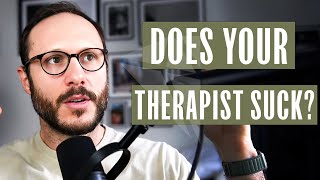
Connor Beaton (YouTube, 7 Mar 2024) explains why many coaches/therapists struggle to get results with male clients and gives seven practical approaches to improve outcomes. He argues therapy is female‑oriented (estimated ~72–75% of therapists female), which often leads facilitators to over‑validate and under‑scale toward men’s needs. Core recommendations: move men from cognition into somatic/direct felt experience (DFE), tolerate and hold intensity, build concrete competency plans, work with resistance, repurpose the inner critic, confront specific self‑deceptions appropriately, and provide a friendly/attached supportive stance.
Questions this video answers
Approximately 72%–75% (speaker's estimate).
Chapters
Why is it that so many coaches, and specifically therapists sometimes struggle to get results with male clients? Now maybe this is an experience that you've had, right? You are going through a relationship problem or you're dealing with something individually, or maybe there's something that is going on in your professional life and you hire a coach or you go and see a therapist and within a month or two there's a deep level of frustration within you because you're just not getting the results that you want. Or maybe you listening to this and watching this are a coach and a therapist and one of the things that you have struggled with within your own practice and business is actually helping men get results. Now I've been doing this for over a decade and I've got more than 10,000 hours of working with men specifically under my belt. And I've learned some really significant lessons along the way. And one of the things that's always surprised me is the number of men that come and work with me in some capacity, whether it's a weekend, whether it's one on one or a group environment. And they say the same thing. I've been in therapy for X number of years and the last hour was more impactful than all of that. And it got me thinking, why is that, why is it that so many therapists and coaches struggle to work with men in an effort, effective way that actually yields results? And there's a number of reasons why that is. I'm going to lay it out and then I'm going to talk to you a little bit about how do you actually get results with the men that you're working with. Now, if you're not a coach or a therapist, this is still going to apply to you because this is going to help you identify who you should be looking for, what qualities you should be looking for in an effective coach or therapist or. All right, so number one, when it comes to, and don't know how else to say this, but like, why do they suck? Like, why do so many coaches and therapists suck at working with, with us? Right, with working with men. Well, in large part the therapeutic industry is very female dominated and very female oriented. And it's, it's not how it initially started. Right. The, the psychological industry was largely founded by men, but has been largely taken over by women. Right. It's like 72% or 75% of therapists are female and that number is only increasing every single year. So representation in terms of studies, in terms of research, all of that kind of stuff is really geared towards female mental health and well being and then sort of copied and pasted over how we deal with men. And there are some fundamental differences in my opinion, after having worked with a lot of couples, having worked with women, and, you know, predominantly having work, been working with men in how we need to approach working with men because they are different. And part of the challenge, and this is the first thing that I think is one of the big issues and why a lot of therapists and coaches don't get results with men is that they're approaching working with men in the same way that they would approach working with a woman. And so there's a heavy, heavy emphasis on figuring out what your experience is, what you're feeling, and then validating that feeling and validating the experience. Because for a lot of women that is very productive. That's very helpful for them. It's not to say that that's the only part that they're looking for, but, but in large part that is what a lot of women say when you really listen to what they're saying that they get out of therapy. A lot of what they say that they get out of therapy is, yes, some understanding, but in large part.
It'S a validation and a confirmation that somebody else is witnessing what they're feeling. Now, for men, that can be helpful, certainly that can be helpful, but that's not the totality of what most men are actually looking for. So there's some very simple reasons I'm going to give you in terms of where most coaches and therapists go wrong. Number one is that they don't know how to get a man out of their head and into their emotional body, into their direct, what I call their dfe, their direct felt experience. So whatever that man is experiencing internally, they struggle to get that man out of his head. And this is why a lot of talk therapy or a lot of coaching and can be redundant for a man, can feel frustrating for a man because he'll go in and he'll stay up in his head. You know, he'll stay up in his thought process where he's been, you know, mulling over the same problem for years, right? Maybe decades. And he just stays stuck in that place. The second thing is that a lot of coaches and therapists don't know how to help men feel that their feelings, they just are not sure how to facilitate getting a man into his emotional body and into what he's actually feeling. And then outside of that. And this is part of the reason there's a lot of coaches and therapists that are, that are not afraid, but they struggle to handle the intensity of what a man is carrying, dealing with or when he does start to feel the, they struggle to the therapist or the coach struggles to deal with the intensity of what that man is dealing with. And I have dozens and dozens of examples of this where men, you know, shared some part of their childhood trauma with a therapist or a coach who then they started to break down and cry or you know, they started to feel some of the rage and the anger from the abuse that they experienced as a child and the therapist started to shut down and, and, and was non responsive. And so there's a, there is a very real challenge where sometimes a man's intensity within a coaching and therapeutic environment is very confronting for the person facilitating. So you have to be very good at being able to deal with intensity. I'm going to talk about that more in terms of how do you actually get results, how do you actually work with men and male clients in a way that is really super effective? Next is kind of what I talked about before, which is that oftentimes within a therapeutic space, men are, and I think this may be Chris Williamson that said this, but men are often treated like hairy women, right? Where their problems are being overly validated, how they are feeling is being overly validated. But there's not a lot of solution orientation, there's not a lot of developing competency, there's not a lot of feedback or direction. And, and those things are sort of omitted from the equation and the tactical parts because men were very oftentimes very tactical. Those parts are often left out of the equation. So that's another piece. And then there's three more. One is they get stuck in a man's intellectualization of the issues that he's dealing with rather than the experiential part of it. And so I've worked with a lot of men that, you know, run hedge funds, are investment bankers, are, you know, corporate CEOs, are founders of Fortune 500 companies, and these men are wicked smart, right? Your boy's wicked smart. They are so freaking smart. And yes, I hope that you got that reference, but they are so smart. And what happens and what happens for them when they go into most therapeutic or coaching environments is that they can talk so well and they can intellectualize their problems so well that what ends up happening is that the facilitator, the coach or the therapist or the psychologist ends up getting sucked into their intellectualization of what is happening and they get lost in that guy's sort of like cognitive horsepower. You know, that that framework that he's so used to relying on next is that a coach and a therapist can struggle to help a man build competency in the areas where he is genuinely strug struggling. Again, a lot of therapy doesn't focus in on developing strength or skill or competency. And that is a lot of what a man is oftentimes looking for when he goes into some of these settings, right? He's wanting to be more confident or competent in communication in his relationship or sexually in the bedroom. Or maybe he's wanting to feel more competent when it comes to, I don't know, setting boundaries, whatever it is. But he wants to develop some type of competency, especially if he's a man struggling with self worth, self confidence, value, self love, all of those types of whatever word kind of gets plugged in there, that man. You know, there's obviously some deeper pieces that he's needing to work on, but part of it is that he's needing to develop a certain level of competency and proficiency in some area in his life that he feels like he's lacking. And then lastly is working with a man's shame or inner critic. So every man has an inner dialogue. And after working with thousands and thousands and thousands of men, what I've come to learn is that most men have a very volatile, hostile, sometimes aggressive, or even abusive inner dialogue. The way that they speak to themselves is incredibly harsh. And the level of shame that they're carrying can sometimes be borderline debilitating. And so because of that, one of the things that a lot of people, a lot of facilitators struggle when it comes to working with men is helping that man actually work through his shame, is helping that man actually develop a healthy level of inner dialogue. So this brings me to how do you actually get results with your male clients? And this can range for a number of different coaches, therapists, et cetera. And if you're watching this or listening to this and you're not a practitioner, you're not a facilitator, that's okay. These points are what you should look for in a coach or a therapist, right? They should be able to do these things when you start to work for them. All right? Now, one of the things that I want to just say, first and foremost, which is super, super important, is that a lot of research has been done on what are some of the most important elements in terms of a therapist client relationship or a coach client relationship. And there's one thing that is super important, which is the level of trust and, and rapport between the client and the therapist. And this is especially true for men, right? If you're working with a man and that man doesn't trust you or he doesn't respect you, then that work is going to be very, very limited. If he feels like you can't relate to him or his experience, if he feels like you're not somebody that he can respect, then that's going to be a fundamental problem. It is fundamentally going to be an issue because at some point he is going to question the validity of your direction, your guidance, your questioning, et cetera. So developing that rapport in the beginning, having a certain level of transparency, having a certain level of groundedness, directness, really starting to understand what that man, what that individual man needs in terms of how to develop and build that rapport between you and him is going to be essential. Because without that, everything else I'm about to tell you is kind of a moot point. All right, all that said, number one, how do you effectively work with men and get results? The first thing is get him out of his head and into his body. Out of his head and into his direction. Felt experience. Again, what I call the dfe, direct felt experience, AKA help him feel his feelings. Now, most men are trying to solve emotional problems, relational problems, with rational equations, with rational thinking, and the two are often very, very different. So if you're working with a man who's coming in and he's telling you, you know, I just lack confidence, I'm really lacking confidence, I'm lacking self worth, and I just don't really like myself. What that man is saying is that he is carrying some type of heaviness within his body, right? He's probably grown up in an environment where he was shamed, he was abused, he was neglected, he was abandoned. He was taught at some point in his life through direct experience or inferred experience, that he lacked value in some way, shape or form. And for a lot of guys that come in to work with a coach or a therapist, a lot of guys that I've worked with over the years, some of them suffer from what I call emotional constipation. Emotional constipation simply meaning they have all of these emotions stuck in their body and no one has been able to help them actually access those emotions. So there's a couple things that are very important with helping a man to get out of his head and into his body. Number one is stop asking, how do you feel about that? Stop asking, what Are you feeling right now? A lot of the time a man, when he hears that question is maybe going to be defensive, maybe going to give you a very surface level answer for whatever reason. We don't need to go into that, but he's going to, he's going to give you an answer that might not be deep and sufficient or he's going to say, I don't know, I really don't know how I'm feeling. Because for a lot of men, they've lived disconnected from their internal experience, from the direct felt experience. So asking him how do you feel about that can sometimes yield a very poor result. Right. And a lot of men are like confused and like, I don't really know. And you know, like I'm literally, you know, that's him saying, I'm literally here so that you can help me figure that out. Right. He's trying to give you some insights. So what do you do? Number one, the breath will help him get out of his head and into his body. Number two, you can ask more skilled questions that will help him identify what is going on in his body. And here's some questions that you can use just to help you. So number one is when we talked about that, what was going on in your body? When we talked about that, what was going on in your body, what. Or as you described that circumstance with your dad, with your wife, with your girlfriend, with whomever, what did you experience in your chest? What did you notice about your breath? Or just tune into your breath right now, notice what's happening. And that will help a man shift the point of his consciousness, which is usually, and this is one of the big issues, usually a man's consciousness is engulfed in, in his thoughts. This is what I'm thinking on repeat. This is what I'm thinking, thinking, thinking, thinking constantly. So you have to help him maneuver some percentage of his consciousness onto his physical, somatic, felt, sensory based experience. So those types of questions can be very helpful. Right. As we talk about this, just pay attention to what happens in your body. Pay attention to what happens in your breath. What are you experiencing as you talk about this? And you might need to give him some verbiage around it, right? Did you feel tightness in your chest? Did you feel, did you notice your, you know, your foot tapping on the floor constantly and your knee bouncing up and down? You know, are you aware of any tightness in your belly? Do you feel heat in any part of your body? So start to help that man become more consciously aware of what's actually Happening beneath his neck, right beneath his. His brain and his thoughts. That will go a very, very, very, very, very long way in building the trust and the rapport. So leverage those types of questions. I'll have more on this in the future, but start there. Number two is make sure that you develop the skill and ability to be with his intensity. And so one of the things that I always tell men when I start to work with them is just a very basic thing, but I mean it. And so what I'm going to tell you this, but what I'm going to say is, do not use this if you don't think that what you're about to say you mean. Okay, so what I usually say to men is, I want you to know that no matter what you have to bring, no matter what you have to feel or talk about, I can handle it. I can handle it. I can handle whatever it is that you have to talk about. And now for me, that's true. I have heard thousands of men's stories over the years. I have heard some terrible experiences that men have gone through when they were kids, when they were at war, some of the most devastating and heartbreaking things. And I have been able to guide those men through those experiences. And so it's very helpful for you to communicate that you can be with that man's intensity, that nothing that he has to talk about, say, feel, etc. Is going to be too much for you. So this part is really important because so many men have walked through their life with the story or the internal belief system or the narrative that what I feel is too much, right? If I get angry and I let somebody else see that anger, it might be too much. They might shame me. If I let myself feel the devastation and the grief of the loss of this marriage or that parent or whatever it is, then I might be judged or somebody might know. Might not know what to deal or not. Might not know what to do with that. I don't know why I couldn't spit that one out. So that's a very common experience for most men. And again, like I said at the beginning of the video, for a lot of men that's been reinforced in therapy where they've disclosed something that was brutal for them or really hard to talk about, and they were met in a way that was woefully or brutally insufficient, Right? Maybe the therapist or the coach or whomever they were working with, they broke down and got emotional, and it took away from what that man was feeling. Maybe they made a comment that shamed that man, or whatever the case may be. But it's very, very often that men feel an unconscious or conscious fear around sharing the, the truth, the intensity of their experience, because they are worried that the other person isn't going to be able to handle it. They're not going to be able to hear it, see it, understand it, et cetera. And so for me, it's not that I've seen it all. That's not it. It's not that I've heard it all. It's that I've heard so much at this point that I know that no matter what a man has to bring me, I know it's not going to be too much for me and I know I can help him through it. Now, that is me communicating to that man. I feel and know I am extremely competent in what I do. And this is what men respect. This is what men are looking for. Do you know what you're doing so that I don't have to think about whether or not you know where this is going. Because for a lot of men, what takes them out, out of their processing, whether it's processing a trauma, whether it's figuring out their purpose in life or their mission, or, you know, an infidelity and an affair in their marriage, or whether they should stay in a relationship or leave or sell a company, whatever it is, what takes them out of that process is when they start to question you as the facilitator. And so for a lot of men, what they need is that reassurance that followed up by the reality of it. Right? Followed up by you being able to actually guide them through it and actually have the skill and the competency to move them through it. So make sure that you develop a really robust nervous system. Because in some ways, and this is my colleague and good friend and mentor, Dewey Freeman. He's 74. He's been doing therapy for 40 plus years is amazing. But one of the things I learned from him is that really great therapy and really great coaching. You're sharing your nervous system with that man. You're actually helping that man regulate sometimes by extending your nervous system to him. So that's a little bit more complicated and I'm not going to get into that right now. But you have to be able to hold that man's intensity. All right? Next is be able to identify. So this is number three, be able to identify where he feels and maybe really is lacking competency, right? Lacking proficiency, and be able to help him create a very specific plan to be able to develop strength in that area, right? So if a man comes in to you and he's like, I'm just numbed out. I just don't know how to feel my feelings. Great, no problem. I can help you with that. I can help you figure out how to feel your feelings and to stop numbing out. And it's not going to wreck your life, because that's a big fear for a lot of guys, is if I start to feel what I know is down there, what's going to happen to my finance job, to my real estate job? What's going to happen to, you know, this very calculated, logistical way of living that I'm so used to. So help him develop a very specific plan. And this is where you come into place where he can start to develop competency, right? Maybe he needs to be. Maybe he wants to feel more capable when it comes to communicating with his wife or his girlfriend. Maybe he wants to feel more capable or confident in the bedroom. Maybe he is wanting to have better boundaries, set better boundaries in his relationship. Whatever a man is communicating to you that he wants to develop or you identify that he needs to develop, there needs to be some type of pathway, right? And you need to communicate that over time of like, hey, when you take this step, right, when you go home and have this conversation and set this boundary with your partner, that's a part of you developing competency in this area. And for him, he'd be like, oh, okay, great. Like, we're on track, we're on the mission, we're moving in a direction. Then men need to know that when you're working with them, you're moving in a direction and you're on mission and you're on task and you're, you know, you're. You're both aimed at something that is helping him to improve and better himself. Next is learn to work with a man's resistance. Every man is going to have resistance. That's all right. What happens for a lot of coaches and therapists is that when a man is resistant, they begin to personalize the coach or the therapist begins to get frustrated. I just can't get him to see what I want him to see. And then it all goes to shit. And so his resistance, you need to learn to work with his resistance. And how you do that is that you start to realize that a man's resistance is protecting him from something. So if a man is resisting, even, you know, see this all the time where guys come in and they're like, hey, I need to feel My feelings, you know, I'm numbed out. I know it's ruining my marriage. I, I know it's having a negative impact on my kids, but I don't know how to stop it because I've just been living this way for so freaking long. When you start to work on that process of helping him develop a deeper connection to his emotional body, he's going to have resistance towards doing whatever needs to be done in order to have a deeper level of emotional intelligence and emotional proficiency. So in order to do that, the, the big thing that needs to happen is you need to start to explore when he's resistant, it's not a bad thing. How might he be protecting himself and what might he be protecting himself from? And that's going to open up a conversation that is going to be likely very important for that man's development and the two of your relationship and work together. So learn to work with a man's resistance. Just a couple more. Next, number five is repurpose his inner critic. Repurpose his inner critic. So what do I mean by that? Every man has a very harsh, very demanding inner critic that I've ever worked with. A lot of guys have this sort of like self loathing inner critic. And one of the things that we need to do as practitioners is learn how to help that man repurpose the inner critic. There's a bunch of ways to do this. I'm going to have a whole video on a man's guide to working with his inner critic and healing his inner critic. So stay tuned for that and that'll give some insight into how you as an individual or you as a practitioner can work with the man's inner critic. Next, last but not least, there's two more. They're pretty quick. Next is learn how to and when to confront him specifically to confront him on his bullshit. Every man has a certain level of bs, some more, some less, but every man has a certain level of bullshit. And a lot of men come into coaching and therapy because they want to be confronted on something. And where a lot of coaches and therapists go wrong is they get this part wrong. They do it too soon, they do it too often. They do it in a way that's obnoxious or breaks trust. They are scared to make him uncomfortable and so they never confront him. But you have to be willing to confront him and make him uncomfortable and let him be uncomfortable specifically around his own bs. So you have to figure out what that BS is. Last but not least, number seven is be a friend learn to be that man's friend. Why? Because men oftentimes don't have a lot of friends in their lives. And, and they have been so used to being isolated that if you can help that man attach in a healthy way, a lot of really good therapy and a lot of really good coaching is helping that individual repair their attachment and actually learn how to have a secure attachment with boundaries, with, you know, limitations, right within the limitations of being a therapist or a psychologist or coach or whatever. But be that man's friend. You are on his side. You are on his team. You want him to win. Take a stake in that man's life and if he can feel that from you, it will pay dividends. It will absolutely pay dividends on your work. So thank you so much for tuning in. If you enjoyed this, don't forget to man it forward. Share this with somebody that you know would enjoy it, man. Maybe you send this to your coach or your therapist. Maybe this is something that helps you find a new coach or new therapist that you can work with. And if you have any other insights, if you're watching this on YouTube, drop it below. Don't forget to comment and subscribe. And if you listen to this, don't forget to rate our show wherever you are. Tuning in till next week, Connor Beaton signing off.
More from Connor







How to Raise Strong, Unshakable Boys in Today's Culture, with Dr. Shefali Tsabary



