How To Navigate Modern Relationships - Mr. Todd
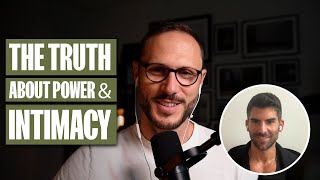
Connor Beaton talks with Mr. Todd about why modern relationships feel broken. They cover social media's role in black-and-white thinking, attachment wounds, sexual mismatches, and communication strategies. Mr. Todd's core advice: normalize the struggle, learn to talk, and when your partner asks for something, just do it.
Chapters
All right, Mr. Todd, welcome to the Man Talk Show. How you doing today?
Hi. Thank you for having me. I'm good. I can say that I am good. How are you?
That's good. Yeah. I can say that I'm good. Yeah. Wonderful. Let's dive straight in, man. Why is modern love and relationships such a mess? What the fuck is happening?
Well, relationships are really, really challenging. They are going to stir up everything from our past, our present, cultural shit. Trauma wounds absolutely everything. And that's going to happen, and it's going to feel extremely overwhelming. And none of us really have that many tools to manage our emotions, to communicate properly when we're having large emotions. And so we're kind of walking into this very scary place. So relationships generally are very hard. They're going to stir up very difficult emotions. But then we start thinking about what we hear about relationships, the pressures around relationships, the new social values around. Around relationships. And I believe that that just exacerbates relationship. And we're told who to desire, what to desire, how a relationship should be, what a healthy relationship looks like. And now more than ever, we are experiencing so much social pressure to have relationships that are basically perfect. And anything less, we're really encouraged to leave, which is not that simple. So there's a lot of external pressure, there's a lot of internal pressure, there's a lot of emotional challenge. And so cumulatively, it's just an entire mind fuck.
What did you mean by the new social values of relationships?
It seems as if any relational challenge lately is being reframed as something unhealthy. The pendulum has collectively swung from one direction, which is historically, trauma wasn't addressed. We denied abuse, we denied violence, we denied practically everything. And so now, in response, I believe this is a collective, cultural, individual, familial, intergenerational, whatever, trauma response where we've all become so hyper vigilant around putting relational challenge under the microscope to the point where we're viewing relational challenges as unhealthy. And so, as opposed to working through these challenges and being present for those challenges, both for ourselves, our partners in our relationships, we often hit a wall of, is this right? And then spend days, hours, weeks, months and years agonizing over the details of a relationship with everybody but our partners. So these are the pressures, these are the new social values in terms of what we expect now from our relationships, that they should be basically everything, all the time, with little room for disappointment, with little room for unfulfilled need, with little room for conflict, with little room for self. Doubt. When the reality of our relationships is it's filled with self doubt, it's filled with disappointment, it's defined by forgiveness and tolerance. I could go on and on, but those are the values.
No, I think that's important, right? I grew up in the peak Disney generation where Disney was really pushing this view or this perspective of love, of romance. And I think it's everywhere. It's not just Disney rom coms and modern movies that make relationships look like this whimsical thing where everything's perfect and of course there's a little bit of hardship, but the end of the day you sort of find your way through it in a very comical kind of way and come out the other side and everybody loves everybody and it all works out really well. But that's not the reality. Did you see Marriage Story with Adam Driver and Scarlett Johansson?
No, I. I didn't see it because I think everyone said it was really depressing. And I was like, well, I'm not.
Gonna watch that, Yen. And I watched it and I think it gave a real look into what some couples go through where they love each other, they can't make it work. There's lots of tumultuousness and heat and resentment that builds up over time. The complexity of both individuals lives coming together in the relationship. And it was raw. There's moments and there's scenes in that movie where you're like, fuck. Some people are having these types of arguments that are very real. I'm curious, based on what you're talking about, these new social values, do you think that people have become more fragile relationally, more fragile individually? Like, how would you define that?
I don't know if I would say people have become more fragile. We've been given permission to feel more sensitive. We have permission now to feel our feelings, we have permission now to call them out, and we have permission now to want more from our relationships. So I don't know if I would phrase it as a fragility, which was more. As more of an expansiveness and a richness to our emotional and relational lives, which I think historically, older generations might view that as fragile or weak because historically feeling emotions, expressing them, asking for validation really wasn't part of the equation. So I think we've just become more open and in that place, it is a much more vulnerable place. And vulnerability is really scary. And so I think that it just creates a lot of anxiety. So we are not necessarily fragile. I think everybody is deeply, deeply relationally anxious. And for good reason.
It's scary so would you say people are less competent with being transparent and authentic? Is that a better way to frame it?
I think people are less educated and therefore less skilled. We're still getting all of this fairy tale information partly from Instagram, partly from TV and media and all of the pop culture places that we can witness life unfolding. And so that leads to less competence. But I do believe that relationship is a skill that we need to learn. And most people don't get the opportunity for a variety of reasons, but it is a skill. And so, yeah, sure, everyone's incompetent.
How do you think something like Instagram and TikTok then have impacted relationships? Because I think sometimes from my view, I do think that there's a lot of accounts that help and support and that give good information. And at the same time, it seems like there's a lot of people that then are now becoming psychoanalysts and they're psychoanalyzing their partners and labeling them and like, he's a this or she's a that. Avoidant attachment, anxious attachment, bpd, narcissistic personality disorder. Like all that type of shit gets slung around. I think there's pros and cons to it. But how would you say from your perspective, that the education on social media has impacted couples and relationships?
The labels, the diagnoses, everyone's a toxic narcissist. It's a bit out of control. I generally love all of the good and bad content on social media. If I was growing up and had access to this type of information, regardless of the quality, I think I would probably have fared much better in my emotional well being as a kid. And my last relationship may have been better as well. There's a whole spectrum of information on social media. I do think that the presence of content is really fucking great. Even just the memes that satirize mental health or relational challenge. Great that we can start laughing about some of things and acknowledging them. I think it's less of a content issue and more of a user issue. And the same thing I would say about dating apps. People are like all dating apps, terrible and algorithms and blah, blah, sure. But also it's a user issue how we've internalized culture and to understand things in such a black and white way. So when someone is presented with content that is a bit black and white and we could say maybe there's some nuance there, most people don't want the nuance. Most people want the black and white. They want direction, they want answers. They don't want to tolerate any kind of pain or challenge. And so it's a user issue and people seeking out specific information and they can get it. Because TikTok Instagram blogs aren't designed to communicate nuance and complexity necessarily. It's a marketing platform essentially. A lot of it is, yes, informational, educational, but when it comes down to it, it's how do you get a sound bite into a very small image or a 60 second video that's usually being created for the purpose of getting some kind of engagement. So again, I mean, I think it's a cultural issue that we can see most people wanting this kind of black and white approach to life, similar to medicine, similar to this kind of biomedical view of identify disorder. That's generally the way that we think about quote, unquote problems is that we do take this very scientific way, even if people aren't realizing it. The black and white all or nothing approach is a scientific method.
How do you think that people can use social media effectively to support themselves in the relationship or in dating apps? Because I think what you were saying is true to some degree. I do think that the apps play a big part in it and the way that they're structured to sort of gamify and keep your attention. I do think that some of the apps have a role and responsibility in the shitstorm. But the user part is true. How you use it is very important. How would you say people can use social media to educate themselves about relationships? And then how would you say people can best use something like dating apps? I feel like most people have a pretty negative view on most dating apps.
I agree with you. The app thing I'm just thinking about, we want to create change. If we want to have people feel more in control. I don't know, Mark Zuckerberg or whoever the fuck controls all of the stuff, social media rules and algorithms, it's shaping and defining culture. But we are also part of culture. So I think the onus really does fall on how we can better use it. How do we do that is to really start thinking about things, honoring our lives and our relationships and the complexities that they fundamentally include. To stop looking for these kind of black and white solutions that if you're not looking for nuance, if you're not honoring complexity, you're missing something, you're avoidant in one way or another. To really be able to take more of a system systemic approach to the ways in which we're thinking about things as opposed to they're toxic, they're bad, or I'M toxic and I'm bad because it's usually one or the other. It's either them or me. The blame, the contempt is for others or ourselves or both. Within that context, there's a huge story. It would be best for people to approach all of this content on social media and everywhere, opinions of friends with thinking more deeply about the story and the context behind the experience, as opposed to evaluating the experience. So to take a post or reel or whatever the fuck and to say, okay, that's interesting. How does this fit into my story and what is my story as opposed to how do I evaluate this relationship based on this information?
I think that's interesting. One of the things that I found is also creating some restrictions around it, like some limitations, because we have access to it all the time. And having some of those restrictions and limitations can be helpful. And then curating what you follow because the algorithm can just serve you a shit soup, just constantly feeding you stuff to just try and keep you on the app. And same with dating apps. I know some of the founders of some of the top dating apps that are out there, and it's no different than anything else. They're designed to keep people on the app. And when you look at something like Tinder, it's designed to hook you in. And the algorithm is designed to continue to keep you swiping. And there's a very specific way that it does that, by hijacking your dopamine centers and making sure that every fourth or fifth person that you see is intriguing enough to you, that you stay there. And that sort of hunt part of our brain center that's baked into our evolutionary pieces gets activated. But I do think that we have to have some limitations and restrictions around it. I remember, I worked at Apple, this is a long time ago. And I remember watching this one young guy in the break room for weeks, every day on his break, he would spend the entire time swiping through Tinder. And I was like, man, what are you doing? Are you having any luck? How's this going? And he's like, yeah, I'm having dates and I'm talking to women and I'm getting laid. And I was like, but you spend all of your free time at work on this app just swiping through and like talking to people, like, is that a good use of your time? And it was interesting because for weeks and weeks and weeks, that's what he spent his break time doing. It's just so hijacked and obsessed by it. It let's kind of Take that and go into why people get so lost in love and relationships. Obviously there's the neurochemicals in our brain that helps, but what else is really going on that causes us to lose a connection to a deeper sense of self? When we get into relationship, we kind.
Of fundamentally lose a piece of ourselves. The chunk really depends on the person and their specific story and their history and their trauma. When you go from living a life as an I and you shift to a we or an us, that's a fundamental shift in your identity, this identity of self loss as being this horrible thing. It's kind of hard to enter a relationship without losing touch with a piece of yourself. And that's not to say that you shouldn't attempt to get it back or work on that. It's just to say that when you merge with somebody else and you integrate lives together, compromise and negotiation, and co authoring a relationship and a life together causes some parts of yourself to disappear completely, fall behind, take a backseat, whatever, and that's okay. And again, that's not to say that, you know, leave it there, forget it. It's just to say that you can design and co create your relationship however you want. But I just want to normalize that self loss out of a relationship actually is pretty normal that this culture and culture within a relationship kind of requires it to some extent at varying levels, depending on history.
Yeah, why don't we get so lost? And I think just to follow up with that, how can people gain a sense of strength or gain a sense of a broader context for who they are within a relationship?
I think we have to start with each specific person's story. There isn't a specific reason why we could say collectively everyone gets lost. We could say though, however, that collectively everyone gets lost because of something specific within their history. Usually something specific with their attachment history and their experience growing up and how they learned to be themselves. So we have to rewind and start from the beginning to understand the present and, and why it is that someone may get lost. And that is specifically related to attachment relationships. How we learn to love, how we learn to receive love, who we have to be to get that love. Many people had to really suppress themselves during childhood. Many people given weren't nurtured, weren't given the space to be themselves. And so as a result, later on in life, in their adult relationships, they're going to participate in these relationships in very similar ways. So that's a really big piece of it. Another big piece of it is gender. And the gender Scripts that are often given to people based on traditional values. Another piece of it could be finances. I mean, there's a whole variety of reasons, but this is why I'm saying systemic approach to really understand the nuances in each little layer of the onion that is our self or relationship or whatever. But I really do think it comes down to understanding our history, our attachment relationships, and how we learned to do relationships and that blueprint and better understanding that in order to understand fully how we are showing up as adults in our relationships.
How would you say our original attachments and the systems that we grew up in impacts the way that we communicate or do? Conflict as an example, in all the.
Ways we habituate and learn, we learn and habituate. If there are certain rules in your family, rules that define if you are allowed to bring up disagreements and disappointments, specifically how apologies work, how you fight or not, if you shove things under the rug until they build up, until you can't walk and you're falling down, and that's when you bring it up. All of these rules and dynamics are established during childhood, adolescence, and even young adulthood. And up until our 20s, it's usually not until later on developmentally that we realize, wait a minute, something's not working. I want to make a change or relearn something. But those are the specifics in terms of the dynamics and how we express love. Is it through verbal affection? Is it through just spending time together? Does it involve a deep emotional connection, or does it just involve companionship? So there's a variety of different ways how this stuff shows up.
How do you see that? Also influencing how people show up sexually within a relationship and express themselves or.
Communicate what they want, desire wise, that's complicated. It's both in terms of culture and history. Our sexual selves and how we express ourselves and communicate is both based on the cultures that we exist in. So religion, school, sex ed, cultural values around sex, gender identity, stuff like that. But also they're shaped by more psychological and relational dynamics, like attachment relationships. Many people, their parents weren't interested in them as kids and didn't ask questions and didn't empower them to verbalize themselves later on as adults or when they start having sex, they're certainly not going to during the most vulnerable thing we can do with a partner, say, this is what I want. I want it exactly like this. Let me show you exactly what I want, because this is what's most pleasurable for me. The exact opposite happens. As most people then with parents who are disinterested Sexually will not be able to be assertive with their needs or preferences and may even feel shame about them based on some of those cultural aspects. So it shows up directly. But most people, when they experience that, they think there's something just specifically fucked up with them when it's really very meaningful story.
Yeah, it's usually an unconscious pattern that's emerging.
Yeah.
How do you work with people when there is a disconnection between them sexually? Let's go through a couple different situations because I think sex is usually the place where all of the relational challenges show up. What Jung called the shadow shows up. Where our fears and insecurities show up. And so it really is the intersection where all of that comes to bear. Let's say a couple, one person is wanting more sex than the other person is wanting more sexual connection on a frequent basis. How do you work with them and what elements are important for them to know about in order to either bridge that gap or understand one another so it's not causing so much conflict.
That's basically every couple. It's really, really rare that in a long term relationship spanning years or decades that you're going to have two separate people with stressful jobs in lives that are going to want to have sex at the same time of day and at the same frequency and for the same duration. And it's just not going to happen. Every relationship is going to have some kind of mismatch at some point. And if you haven't gotten to that place, just wait, you will. So it's a pretty normal part of relationships that most people get freaked out with. They don't talk about. It becomes this huge issue. They enter my office, one person's crying, it feels completely undesirable and disgusting. And the other one feels so much pressure to do it that they can't do it. And it's this whole mess. And so the first thing is we have to normalize this. This idea that we're going to be in a relationship, we're going to fuck all the time. It's just. It's not realistic. So it's okay. It's not a red flag. But it does require some exploration and some communication and some understanding. So what I would normally do is I would start with the normalizing thing. But I'd also want to know about different aspects of the relationship. Because sex can be impacted by different dynamics in a relationship as can desire. It can be impacted by stress at work, it can be impacted by physical illness, it can be impacted by loss and financial stress. And Literally, absolutely every part of our life can impact our desires. So I want to know about all that story. I want to know about the partner's story. There's a lot of storytelling. And so I want all of the details. I want the details about the sexual connection. Is there a sexual connection? For many people, the sexual connection they feel is just based on the beginning, the novelty of it. And then when that wears off, distance often occurs. So I just want to know about everything. What do you want? Most people are talking about wants sex, you know, more, which is vague. Most people aren't just talking about the quantity or the frequency. They're talking about wanting connection. Because sex, most people relegate to this kind of salacious, like category that's separate from any kind of relational dynamic or any kind of love. But sex is an expression of love. If you're in a long term relationship, some people could say that it is one of the biggest expressions of love. And by sex, I don't mean penetration, I mean any kind of naked, pleasurable exchange that's mutual. So for many people, sex is love. I want to know the whole story about that. It's really important to understand sex as a story rather than a position or a frequency issue. And that's why I think a lot of the challenges with sex arise is that people are just thinking about their genitals. They're just thinking about how much, as opposed to the who, what, when, where, why. The whole fucking huge cloud of factors that really influence our own sexuality, our partner's sexuality, and how the two come together.
So having a couple, let's just say, talk about what their stories are about sex, the meaning of it for them individually, the story that they have about sex in the relationship, all of those pieces. Also, what was a story about sex growing up can also really be informative. Sounds like that's a huge part of what you're talking about. Especially if there's different religious upbringings, which can really influence the story around sex, that can play a big part in it. Okay, that's helpful. You talked about like different times of the day. I think one of the things I've heard a lot of couples talk about is he's a morning person and she's an evening person. He's this and he's a that or she's this and she's that. How do you bridge the gap between people that love to have sex at different times of the day? Because it seems like that's a fundamental, like biological thing, or maybe it's a habituated Thing, how do you get couples to talk about that gap?
It's like any other compromise, any other difference. If someone wants to eat at 6 and another person wants to eat at 8, you, you can either eat separately or not eat at all, or pick a time in the middle or switch off. There's a variety of different ways that you could approach it. But what we're talking about is compromise and negotiation, which is what we do all the time. But when it comes to sex, avoidance, anxiety and shame creep in. And so it really prevents the daily negotiation that we do sometimes automatically without even thinking about it. And so it becomes this whole thing of how do we do it? And then it becomes scary and then it becomes risky. And then what most people then do is they just don't talk about it. But it's a negotiation just like anything else where you have to compromise. You have to be empathic for your partner's story. What they want with the hope is that you both want to please each other in one way or another. Sounds simplistic because they think at the surface it is, but there's so much beneath the surface that prevents people from accessing that kind of, well, let's do 7 o' clock and just meet in the middle. But that's basically what has to be done.
What about talking about sexual desires or fantasies that are confronting. Like I have a male oriented audience, although I do have a lot of women and quite a few like gay couples that came into the show. I preface that because men oftentimes what are the three things that I should do and what are the five things that I should do? And so how do you recommend that a couple engages in the really sensitive, sometimes embarrassing conversations? Conversations around here's how I want to or here's how I want to be, or here's the role player, the fantasy that I want to. An act that maybe you've never talked about. Like how do you recommend a couple gets into that conversation when they can feel for a lot of people very.
It's harder not to. Which I think is something for people to just play on repeat to themselves that it's harder not to have these conversations. We're talking about our bodies, we're talking about a loving connection, we're talking about a big deal. And so if we're avoiding and not speaking and communicating and expressing and honoring and blah blah, blah, that's a lot harder because it creates disconnection, it reduces pleasure, it reduces the frequency of orgasms, it could create resentment. The list goes on. So it's much harder to avoid these harder conversations than it is actually to just feel uncomfortable and have them. So people have to be reminded that they're capable, competent, and can be resilient in the face of this discomfort and actually fare better to tolerate some of that discomfort than if they were to just say it's too uncomfortable. I can't tell them this, they're going to be upset at me. You know, you're going to be resentful and you're going to feel a disconnect with your sexual connection. You may start pulling away. You may then convince yourself that you don't have a sexual connection with them and so on and so on. So the real danger is not addressing it. So the first thing is to really understand that you are going to be uncomfortable. And that's okay at the beginning. If you've not ever talked about sex and you have a history where you grew up in a religious household that shamed any kind of non traditional sexual expression, you're going to have shame and you're going to have anxiety. And I would go so far as to say that every single person has sexual shame and anxiety. You have to become aware of some of this stuff. You know, if you want to work on your sexuality, which I think most people do in relationships, they want more pleasure. You have to start, you have to be prepared to have difficult conversations and understand what prevents you from having those conversations, which is perhaps maybe the more important or more specific part of this question, which is not how do you do it? But what prevents you from doing it. And then you have to start having these conversations.
Yeah, it's like starting with what is confronting at an edge, but not so confronting that it seems unbearable or undoable, I think for individuals to start with, okay, this feels uncomfortable, but I feel like I can talk about that. But this feels extremely uncomfortable. And that feels like maybe too much right now. And so it's like taking the path of least resistance sometimes can be really helpful to just begin that. I've noticed in working with people that the more repressed or more suppressed things are, the more they have a desire to talk about the biggest, scariest thing. And that's part of what's keeping them stuck. It's like, I got to talk about this big thing that I want to do or try instead of starting with the thing that will lead you down that path, does that make sense?
You ease into it, lube it up. You also don't need to just out of the blues talk about like, how was your day? Oh, it's fine. When you give me a blowjob, you can simply say, okay, can we just talk about something? I. We haven't talked about sex in a long time. This is something important to me, important to us in our relationship. You open to having more conversations about this? Start really slow. You don't have to dive into. You give terrible head or whatever, or why don't you give me more oral sex? Or I don't. I think just. Just getting on the same page of can we talk about. This is a really great place to start. This is important to me. You're important to me. Can we build on a conversation that's ongoing about sex?
Where do you think couples go wrong sometimes in these conversations? Like, are there patterns that couples fall into when it comes to not prioritizing their sexual needs or starting to go down that path and then having it go sideways?
There's so many people can become very blamey and critical. And so when it comes to sex, that's the last thing you want to be blamey and critical about. You really want to approach sex with a soft and caring and loving tone and manner. And that's kind of the first issue is you never want to touch me. People say, or why don't we have more? You know, it's very blamey, as opposed to enlisting your partner, collaborating and making it something that can actually be fun. Because at the end of the day, we have to remember that we're talking about sex. This isn't death. And it's something that has to be fun and light and collaborative and bring a couple together. It's a. It's a really big issue that can couples have is if they're avoiding it for so long that they get resentful. And then when it finally does come up, it bubbles out in this contemptuous, critical, blamey way. So you don't want to do that. Oftentimes the other thing is that someone will bring it up once and then say, I brought it up. I told them, and you know, they didn't do anything. Talking about sex is an ongoing conversation that you may have to bring up a lot. You can't just provide your partner with a directive or a preference or tell them something and then expect, because I told them to, they should do it. Although that's how we often approach most relational things. Whether it's sex or giving me more fill in the blank. Oftentimes our partners are resistant or having. Have challenges talking about sex because of their own issues. And it's so hard not to take that Personal or not to shut down. But many people are personalizing and shutting down. It's incredibly difficult not to. But keep at it. It has to be ongoing. Don't shut down, don't give up. Because that's what happens is people bring it up and their partner says, no, I don't want to talk about it, not right now, whatever. And then they never bring it up again. So you have to really, really wrangle that scared little kid inside of you and say, no, this is important to me. I'm going to bring this up again. I know this is important for us. Blah, blah, blah.
Yeah, I think that segues into the chapter in your book that was really great in the chapter is Too Good to Leave, Too Bad to Stay. And I thought that was such a great title because I think it really summarizes where a lot of couples are at. Where a lot of people get stuck, where there's this resistance that starts to build up towards talking about the really hard shit. And those conversations never get had. And so the relationship is good in some ways, but then it's not great in others. And so can you just break down that notion of too good to leave but too bad to stay and how that manifests within couples relationships?
It's a binary approach. It's a black and white approach that I think many people get to. It's a really hard place to be. I've been there. It's awful. But what I write about in the book is the third option. The people often get paralyzed. They want to make pro con lists. They talk to everybody but their partner. And the third option is that this is a couple's issue. You have to talk about this with your partner. And the third option being working on the relationship, that all relationships have good and bad parts, but most people, they hit a wall and then they feel paralyzed and don't know what to do. And then they torture themselves and probably their partner in the process and saying, this part's good and this part's bad and I want to leave. But then what about this? This becomes an obsessive place without an end. And so because of that, it's really helpful to include a partner in this because it's a couple's issue and you're thinking about ending the relationship. It's something you want to include your partner in. I don't ever want to do a relationship alone again, meaning alone and not with a therapist. And so I do think that at that point most couples are not equipped to handle their relationship or work through that question. And I do think that people need help, a therapist, a coach, whoever the fuck, an outside party to help guide you through that process because it's too much pressure.
I had somebody on the show, his name is Francis Weller. He's a therapist that specializes in grief. And he's wonderful. But he had this saying that just like it takes a village to raise a child, it takes a village to raise a relationship. He also talks about the relationship as this sort of third body, which I've always loved, that there's this sort of like third entity that your partner and you create when you come into relationship. And we forget that that relationship, that third body needs nourishment. And it has a bunch of requirements. And one of those requirements is that that it requires community, just like we do. And I wonder what your take is in our modern times where so much is virtual and online. Do you think that our relationships are starving for more community? Not just us individually, but how do you see that playing in. In terms of having community for our relationship itself, outside of our therapists or coaches?
Relationship can't thrive on its own, at least not in the. We expect our relationships these days to thrive. Doing what? I've really come to realize the diversity in relationships, that some people are perfectly fine. Companionship without emotional connection, having a relationship without sex, having sex with other people, not having community, isolating themselves in the relationship. It's a personal thing. Ultimately, if I was to give my opinion, I would say yes, we need community. People need to have a sense of independence and friends outside the relationship, in the relationship. It's also fun to share friends and have new experiences. And it's a big piece. I think maintaining a relationship and having that. That still feel fun and exciting. It's also kind of hot to see your partner socialize and different aspects of themselves and see their personality really come alive in a way that's separate from who they are with you.
Yeah, I think that's a pretty important point. I mean, because you work with, you know, couples of different styles and sexual preferences and choices, do you find that straight couples and non straight couples deal with very similar issues or are there distinct issues between straight couples and non straight couples?
With more straight couples and increasingly more with queer couples, child care, child planning, family planning is more frequent. But that's not to say that queer couples aren't similarly having those conversations. But I think there's more pressure and there's more expectation and more urgency and anxiety around family planning and childcare for straight couples. And just the roles then that unfold out of that creation of family in terms of, of mother, father, lover, partner. And negotiating all of that is difficult and challenging and ongoing sex. I often do see differences between straight couples and queer couples. Straight couples, it seems as if they are talking about sex less. And I do see a lot of queer couples that are talking about sex more. But in terms of the dynamics, the challenges, there's so much similarity beyond some of that in terms of what we want and this kind of universal fear of not being loved and what we all do to try and control or prevent that fear from happening.
Do you think that there are certain challenges that are more distinct for queer couples than straight couples?
Many of the queer couples that I see are addressing and managing and trying to unpack and understand non monogamy more than some of the straight people that I see. Non monogamy, polyamory, blah, blah, blah, is something that queer couples have been exploring for a longer time than straight couples. I think now, culturally, we've just started to give straight couples permission to do that as we expand and normalize a variety of different relational structures and sexual expressions. But more and more straight couples that I'm seeing are coming and saying, we're thinking about opening a relationship. It's freaky. We don't know. Whereas many queer couples are saying we're feeling pressured to open the relationship or it is open and how do we have the rules? And so it's a bit different.
Let's touch on that, because I think that is a very common conversation. It's a very modern query about non monogamy, being polyamorous, opening the relationship, that type of stuff. How have you seen that work? Whether it's first straight couples or queer couples. How does that go?
It goes in a variety of different ways. I think. Oftentimes people think that it's more problems or it's less problems if it's monogamous or, you know, it's usually evaluated based on how many problems it's creating. But relationships are problematic whether they're open or closed or involve five partners or two. It's hard to say, you know, does it work or does it go well or what happens. What happens is there are problems. There are problems with people who are, are only sleeping with each other. There are problems with people who are sleeping with each other and others. There are problems with people who aren't sleeping with each other and only other people. I think fundamentally there are challenges that come up. The content might be different, the lyrics might be different, but the music remains the same.
What Are some of the ground rules or some of the structure that you found to be helpful if a couple, for example, is looking to open up their relationship? And sometimes it's helpful to have an expert's opinion on that. So for the people that, that are considering opening a relationship, what should they consider before they even go down that path and then what some of the structure that they can put in place to support that transition first.
Opening a relationship isn't a solution. It's not a solution to conflict or lack of sexual connection. It will just create more sexual disconnection. Opening a relationship is more about a preference and a desire than it is about fixing something problems, the same problem. It'll still be there whether you're open or closed. I could say communication is the most important thing. You know, we often say communicate, communicate, communicate, communicate. Some people don't want to talk about it, some people want to know, some people don't want to know. But I think from the very beginning, communication, establishing rules and exploring and expressing preferences and really being brave to share jealousy and really creating a safe space is necessary. And so oftentimes that is done through communication, through check ins, through therapy, through reading, through a variety of different ways. But it's just important to create a safe space in a relationship for all sorts of things to be talked about and emotions to be held and to share what the preferences are. But those personal preferences have to be shared.
The couple's going to open up the relationship and one person is wanting to have it open and the other person just wants to sleep with that one person and nobody else, or they both want to have the freedom. What are some of the things that people can put in place that will support whatever decision that they're making?
If there's a mismatch in desire where one person wants to and the other doesn't, and that's really hard. And that will require some ongoing conversation and maybe compromise on both people's parts and a real honest look at what you can and cannot tolerate and maybe some experimentation. But the important part, I think, is that both people feel like they're on the same team, that it's a team approach, that it's not like you're doing whatever you want and I'm doing whatever I want and we're so separate. There has to be some kind of team approach where you're cool authoring these structures or rules or whatever. One person cannot unilaterally make these decisions. And so that means both that one person cannot do that and also that the other person can't let the other person do that. You cannot just sulk down, withdraw, dissociate and disconnect. And that's a recipe for disaster. So mutual involvement and team work is really, really necessary.
How do you see things like power and power struggles showing up within sex in a relationship? I think it was Oscar Wilde. He said everything in life is about except for sex. Sex is about power.
You know, I thought it was Oscar Wilde and I have that as a quote in my book. It's not Oscar Wilde. No one knows who it is. Annoying. Anyways. Yes, Great quote. Yeah.
Anonymous how do you see power showing up and power struggle showing up within sex? Because I think a lot of times when a couple is going through some type of power dynamic or some type of power battle where there's a one up, one down position, somebody feels like they're more entitled to things or they do more in the relationship or there's an unfair thing that can really impact sex. How can a couple work out in the bedroom those types of power struggles?
Sex is about power and usually what comes up is powerlessness or disempowerment. And usually that surfaces as avoidance, silence and withdrawal as an unconscious expression of powerlessness or anxiety or both. And that comes from attachment issues, childhood history, etc. Rarely do I see that it's just one person overpowering another one or their partner. It's usually a matter of powerlessness and withdrawal and a silencing of oneself that then requires a relearning learning of how to feel empowered in one's body and doing so with a partner, with someone else. So it becomes about more of a relational dynamic that triggers a sense of powerlessness for people that then requires that relearning of how do I empower myself, how do I prioritize myself? And those are the relational dynamics that often get missed when it comes to sex is that most people focus on the mechanics and logistics and stuff like that. When it's really this huge relational dynamic with power being a defining feature of it, or disempowerment rather.
Do you think that it's beneficial for a couple to talk about how they want to explore power sexually? I remember having a conversation with Esther Perel once and and we were talking about this. When men feel powerless in a relationship, that's where a lot of the issues stem from. Relationally, a lot of conflict happens when a man feels powerless. A lot of disconnection happens when a man feels powerless. And the same can be true for women. But her position was that men are especially Sensitive to that. And it does seem like couples oftentimes are trying to explore their relationship to power in the bedroom. And so do you think that it's helpful for a couple to say, hey, here's how I feel powerless, and I would love to explore this in the bedroom, or here's how I would love to feel powerful in this way in the bedroom. Do you think that that type of language or communication is supportive, or do you think there's a different way to frame it that maybe is going to land better?
I love that. That sounds great. This is how I feel powerful. This is how I can feel empowered. How do you feel empowered? How do you feel powerful? The sex or not?
I want to end with quote that I found on your ig. You said, if your partner asks for something, just do it. Don't get into a whole thing. Don't get defensive, don't evaluate if it's valid. Just do the thing that makes your partner feel loved. Love for you to unpack that and give some context for it.
I got a lot of for that. Because I bet I'm saying that, that saying, like, if it's against your religion and causes you pain, just do it anyway. That's not what I'm talking about. You know, I'm talking about the things that we do for our partners because we love them being reasonable things like, if your partner is asking for more affection, hug them. So many people are being given directions by their partner of how they prefer to be loved, whether that's affection or spending time together or literally anything. And there's just simply not putting effort in doing that. The whole goal of being in a relationship is to really focus on, how do I want to be loved, how do you want to be loved? And really doing that. If you're not doing that, don't be in a relationship. To be really blunt about it, I see so many couples when it's like someone is longing so desperately for their partner to simply just text them more often or to make a date night for them or to hold them or to ask them questions, then there's another partner who's just simply not doing it. If there are things that we can specifically do that will have a positive impact on a relationship, we have to do them. And if you can't do them, then there's a really big story that both partners need to explore as to what that means. Especially when it's something like more affection or positive affirmations or attention or time together or, you know, major things that create that metaphorical glue that keep couples together and sustain connections. You know, we want to do those things. If you love going to the baseball and your partner fucking hates it, go to the baseball game once in a while with your partner if they want you to go. We do things for our partner in that sense, but the minute we withdraw, refuse, stamp our feet, there's something going on there to look at.
Listen, man, this has been great for everyone that is out there. You should definitely go and check out Todd's book, how to love someone without losing your mind. Todd, where would you like people to go to read more of your work and just learn from you?
You can find me on instagramourdivensense.
Awesome. It's a great handle handle, by the way. I love that one. Thank you so much for tuning in, everybody. Don't forget to man it forward. Share this episode, maybe with your partner, maybe with your person. Share it with somebody that you think would enjoy it and that you might want to have a conversation about what we got into. And as always, until next week, Connor Beaton signing off.
More from Connor







How to Raise Strong, Unshakable Boys in Today's Culture, with Dr. Shefali Tsabary



