How to Support Your Anxious Partner When They're Anxious: A Man's Guide
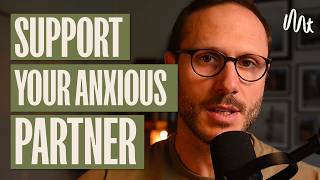
Connor Beaton explains how men can support anxious partners. Anxiety shows up as racing thoughts and physical arousal, often triggering social avoidance, irritability, or hypervigilance. The key moves: limit reassurance, use co-regulation like breathwork and touch, and help your partner build their own self-soothing tools.
Foreign.
Team, welcome back to the Man Talk Show. Connor Beaton here and today I'm going to be talking to you about how to help your partner when they are anxious. So if your girlfriend or your wife is somebody that struggles with anxiety and you're not really too sure what to do, whether they have an anxious attachment, whether they just struggle with anxiety in general, we are going be talking about what anxiety is, the signs that your partner might be anxious and the signs that oftentimes we miss and then what to do specifically. Now, what I want you to know up front is that just because she's anxious, just because your partner is anxious, it doesn't mean that there is something wrong with her or you or the relationship. And it doesn't mean that there is something for you specifically to fix. What happens for a lot of men, especially the nice guys or the guys that find their worth and their value and sort of providing solutions within a relationship is that they can get caught in this loop. That every single time that your partner gets anxious or has some anxiety that your rational brain turns on is like, okay, let me figure out how to solve this problem. And that can create more anxiousness in your partner. It can cause them to feel like there's something wrong with them, perpetuate the anxiety. It can frustrate the crap out of you because you know, you, you are very likely not able to solve their anxiety or fix it indefinitely. And so it can create all types of, of challenges. So what is anxiety? Well, the anxiety that I'm talking about in the way they're going to be talking about is an excess of energy in the body, right? So neurologically when you look at the brain and you look at the, the different centers of the brain and the, the neurons that are firing in different centers of the brain. Brain, when you're having anxiety, the, is very similar to the parts of the brain that are firing when you are having excitement. So the anxiety that I'm talking about is an elevated state within the body, an elevated energetic state and an elevated alarm state in the body. So it might be an excess of thoughts, might be an excess of unwanted physical sensations, it might be an excess of emotions that feel a little wild or uncontrollable. And it's generally an excess of future based realities, future based worrying. Now that worrying just to sort of hone in on that, that one piece for a moment, very common for people with anxiety to be experiencing something in the present that they are worried is not going to go away, right? It's like, oh no, I feel anxious. Is this ever going to go away? Am I going to have to deal with this all day now? Is this going to be around until I go to bed? And that can spiral up the anxiety. So that's the anxiousness that I'm talking about. Generally speaking, when people have anxiety, depending on the severity of it, and this is all to contextualize it for you, because maybe you and your partner have never really talked about how they experience their anxiety, which I would encourage you to do if they are comfortable with it. But generally speaking, you can think about anxiety as the sensation that things are starting to move very quickly and move very quickly, energetically, either with within. So your emotions are starting to go fast, your thoughts are starting to go fast. For a lot of people, their breath and their heart rate start to elevate when they have more anxiousness and more anxiety in their body. And so that state, that physiological state or the mental state that they can find themselves in is often sets off the alarm system in their body and they want to escape from it. It's like, get me the heck away from this. I don't want to feel this way. How do I, you know, how do I get rid of what I'm feeling right now? So the anxiety can be caused by a number of different things. It can be from past trauma, right? It could be remnants of, like, a PTSD type of situation. It can be because that individual is lacking some self worth, and it manifests in the relationship as anxiousness. It can be because of past betrayals from you or previous partners and a host of other causes. So there's many different things, things that can contribute to anxiety for that person. Knowing some of their triggers can be helpful. But to be honest, anxiety can, you know, set in at strange times. You know, it's like when you were a young man. Oh, boy, this is gonna be an analogy. Here we go. It's like when you were a young guy and you would be in, you know, random places when you're going through puberty, and all of a sudden you'd be getting. You'd get a boner, and it. It would have. No, there'd be no reason for it, right? You're like, you're on the school bus on your way to school, and all of a sudden you have an erection. You're like, what is this doing here? Like, why do I have this right now? You know? Or just strange situations where you all of a sudden have an erection. That's what anxiety is like for a lot of people. That's A terrible analogy because erections are great and anxiety for a lot of people is not so great. But that's what it's like. It can just happen. And at certain moments, when you're least expecting it, with no real prompting, you know, with no real external or internal trigger. Now again, it can be helpful for that individual to start identify what they know. Some of their triggers are. You know, for some people it's going to be certain social situations. For other people, it's going to be certain conversations within the relationship. I mean, we just go down the rabbit hole, but those can be helpful. I'm gonna give you the signs now. Okay, let's talk about the signs. I'm gonna talk about women specifically. Some of these are going to cross the border into how men display their anxiety. But let's talk about how to know when your partner is anxious. A good sign is that she may not want to be social on a regular basis or that there's certain social situations that she does not want to be in because those situations might cause her to feel anx. I remember I was with a friend recently, one of my wife's friends, and we were out in a public setting, lots of people around, and we were walking. And I noticed immediately that as we, as more and more people started to come around us in this social setting, she, her whole body language started to change. And I just went and put a hand on her shoulder and I said, how you doing? She's like, man, I feel so anxious right now. And I was like, yeah, I can tell. So certain social environments might cause her to feel anxious.
Different, different moods and swings. You might notice that she's eerily easily irritated or constantly overthinking. Those can be a manifestation of anxiousness and anxiety in certain people. Constantly checking in on you and the relationship like, oh, are you okay? Is everything all right? Are you all right? That can be a really, really strong sign of that anxiety that can manifest in your relationship where, you know, she might just text you and check in on you or constantly checking in on you. Again, it's not a personal thing. You don't need to personalize it. It is a manifestation and a byproduct of her anxiety. Negative selft talk. You might notice that sometimes she self deprecates or puts herself down and you're like, where does that come from? That can also be a part of the anxiety. Another big one that I see very common in a lot of professionals is hyper busy and overworked. So some will, instead of dealing with their anxiety directly they are constantly busy. So this is the person that's like working super, super hard, comes home, needs to be cleaning, needs to be busy doing busy work, kind of like doing nothing all the time, but doing something all the time and can't seem to sit still and just find calmness and peace. That is a very big sign that they have anxiousness and anxiety in their body and they don't really know what to do with it. And so they're trying to bus it out. Last one. Is this kind of like paranoid? This, this sort of. I hear a lot of guys say this like, you know, my, my partner, my girlfriend, my wife, she's paranoid. She's paranoid that like, I'm going to betray her, I'm going to do something or I'm not telling the truth. And it's like I've, I'm telling her exactly how I feel and what I think, but she just doesn't believe me. That can be a, another sign of anxiety. Again, it's not to excuse any behavior that might ensue from that, like digging through your phone constantly or, you know, invading some of your privacy or whatever that looks like. But that paranoia sometimes can be, can come from that anxiousness of, is he going to betray me? Is he lying? Am I safe? Because remember, anxiety is an excess of energy that is generally coming from the experience of lacking safety. I am unsafe in some way. And what that can do is cause your partner to try and over rely on you, try and over index on ensuring that there's safety within the relationship, that it's solid, looking for different cues. She might also be very hyper vigilant in noticing like any subtle changes in you. So if you're tired or if you're stressed out and overwhelmed in a certain way. Um, I've seen this a lot in couples that I've worked with where the guy's like, I just can't catch a break. Like, she just is so hyper vigilant and hyper tuned into what I'm feeling and thinking and going through that. If I'm ever off, she's like lasered in on it. And it's almost like it's not okay for me to not be okay. And that is a very common theme. I'm going to get into what to do next. But that's a very common theme that, that can cause some frustration in a relationship. Okay, whenever you are not okay, you're stressed, you're overwhelmed, you're maybe a little disconnected or withdrawn, that's going to activate the crap out of her. Anxiety. And this is why a lot of anxious attached people get in relationship with avoidant attached people and why it's so hard for that dynamic to. To end. Oftentimes when an anxious and avoidant come together, it is a recipe for a disaster in the but it's also a recipe for a very hard ending because they almost never want to let go because there's something about it, that dynamic, that activates the avoidance and activates the anxiousness and it can be intoxicating in some ways and really, really frustrating in other ways. So what do you do? What do you do? How do you support your partner when they are anxious? Couple different things. If she's worried about the relationship, right. Asking questions, are we okay? Are you all right? You know, like, are you thinking about it? I don't even know like what I don't want to, I don't want to give some examples and then like get in for this. But like, are you, you know, do you think about other women? Are you sure you want to be with me? You know, do you think about leaving me those types of worries and insecurities that can come up from, from an anxiousness. There's nothing wrong with reaffirming your commitment, reassuring that you love her, and reinforcing that you want to be in the relationship. Sometimes that is the prescription that's necessary. Now what I want to put as a caveat and asterisk in here is it's not your responsibility to do that all the time in the relationship. So you, you need to have a conversation with your partner, with your anxious partner when their anxiousness is not hyperactivated and say, hey, listen, I love you. I love reinforcing that. I want to be with you. I'm happy to reassure you in moments when maybe worry and concern happens. But I really would love for you to start working on reassuring yourself and looking for the clues and the cues that tell you that I really want to be here. Can you start to do that? So get her buy in and commitment so that the reassurance and the, the, the reaffirmation that you want to be in the relationship, that the relationship is stable and okay, doesn't rest solely on your shoulders. And this is what a lot of men do. They see a mission. They're like, oh, I can reinforce that I want to be with you. And then that becomes all consuming. So get her buy in to have her start to look for the cues and the clues that the relationship's okay, it's stable, you love her, you want to be in the dynamic, and that will help her move into a more secure, less anxious space. Number two, begin to help co regulate. Now, there's a number of different ways that you can do this. I'm going to give you a couple of them because this is one of the biggest things that you. That you can do with your partner when she's not anxious. Ask the question based on what you know about yourself and your anxiety. What do you know or think would help you when you're anxious? So what can I actually do to support you? She might have some ideas. She might have no idea at all. Either one is okay. But exploring this as a couple can be incredibly helpful because she might say, you know what? I just need you to put your arm around me, or I just need you to give me some words and remind me that I'm okay. You know, those types of things. The next thing that you can do to help co regulate is have some code words to lessen the possible embarrassment of when she's feeling anxious. So I'm going to use an example. In my marriage, this isn't about anxiety, but it's about being hangry. My wife, when we first started dating, she'd get hungry when we were traveling. I remember we were in Paris once, and we were exploring the city, and I could just see her getting more and more and more crunchy. And I was like, what is going on? And she's like, I'm so hungry right now. And if we don't get food, food, like, I'm gonna. I'm gonna tear somebody's head off. And I was like, oh, okay. And so we created code words lemonade, pink lemonade, and Arnold Palmer. And it was like degrees of hanger. And so she would say, I'm lemonade right now. And I was like, oh, okay, we gotta find food. So if you put some language to, this can be very helpful. Especially if your partner is somebody that struggles with social anxiety, they might not want to just come out and say, hey, I'm feeling anxious right now. That might feel overwhelming confronting, et cetera. And so if you have a little bit of playfulness around it and you have this shared language, and she can come to you and say, hey, lemonade. And that's the signal of like, oh, she's got a little bit of anxiety. It's like, okay, well, here's what I can do. I can put my arm around you and you know, et cetera. You can have some. Some mechanisms to then co regulate together during that space. So have code words that can lessen the possible embarrassment and next begin to attune to the possible signs that she might be struggling. Changes in breath, changes in body posture and body language, changes in communication and the way that she's engaging with you or other people. There are patterns, right? People that have anxiety, they have very specific patterns of expressing that anxiety through their body, through their breath, through their language, how they begin to maybe start to shut down or pull away or close off. And so start to attune yourself to the external signs that you see that she might be experiencing anxiety. Because then you can check in, hey, how are you doing? How are you feeling today? That can be helpful under certain circumstances. But what I will say is, please do not over ask your anxious partner how they are doing because what that does is cause them to then self reflect. And for some people, they're going to start to worry like, oh, am I okay? And like, why is he asking? So start to tune into the signs for yourself. And you can be preemptive if you've noticed like, oh, she's doing that thing where she's starting to close off and she seems like a little squirrely and she's like frantically cleaning something. That's the sign. Okay, that's the sign. I'm going to go in, I'm going to give her a big bear hug and get her to take a couple breaths with me. Next, physical touch, physical co regulation. Okay. For some people, they've, they've, when I've worked with couples, they found that, you know, helping your partner get some of that energy out, that excess energy, like, hey, I'm going to hold your hands. Let's jump up and down, let's stomp our feet right now. I'll, I'll shake your shoulders a little bit. Playfully, right? Not aggressively. We're not trying to like shake the baby. That's a very dark joke. But playfully. All of this is playfully bear hug. A little bit of a squeeze. What I do with my wife is I'll wrap my arms around her. I'm not giving her a tight squeeze and hug, but I'll give her enough of a hug that I'm like, I've got you. I could pick you up right now. I'm holding you. And then I'll say, take a couple breaths with me and I'll lead that like deep inhale, nice long exhale. And I'll just say, soften into me. I got you. And guiding your partner through that in that way can be very helpful for her, even if she's not really aware that she's anxious. And even if she's not anxious, sometimes it's just nice to have this, this baseline that you've created in your relationship of regulation that you are leading the charge in of regulation in the, in the dynamic. The last thing I'm going to say is about.
Not going along with the anxiousness. But you know, sometimes with anxiety, people will want to change plans, they'll want to cancel things, they'll want to shift behaviors, they won't want to engage with things that they have agreed to engage with. And generally speaking, I like to use the 8020 rule. So if you are the non anxious partner, it can be very beneficial to be a stand for moving into the places and spaces that might be anxiousness inducing or that your partner not actively anxious inducing, not like trying to jump out of an airplane or anything like that. But in the places and spaces, the conversations where that person knows they're probably going to feel a little bit of anxiousness. And so if you are the stand for moving into that space, that can be very helpful. The 8020 rule comes into a lot of the times people with anxiety are going to want to back out, they're going to want to change plans, they're not going to want to do, especially if it's somebody that has social anxiety. And what you can do is be really grounded and somewhat firm in saying, no, we're going to go do this. And so 20% of the time you might need to shift, you might need to alter things, you might need to stay put and just breathe and support them. 80% of the time you can support your partner in facing, leaning into the anxiousness. Right? As the saying goes, the only way out is through. The only way through the anxiety is to face it and not hate it. People with anxiety generally hate their anxiety and they, they really loathe when it comes up, whether it's just with you in a sexual encounter or it's in a conversation with you, or it's in a social setting. Generally speaking, when their anxiety comes up, it's like, oh, here's this thing, I hate this part of me and da da da. And that can cause them to start to collapse. So if you can support them in facing the anxiety by having some of those hard conversations, engaging in the places and spaces that might be anxious and support them in a kind of exposure therapy. Again, you are not their therapist. It's not your responsibility to fix them. It's not your responsibility to do this for them. But it can be your responsibility to hold the frame that this is where we are going to move. And usually that is best if it comes from a place of I trust you and I see you as somebody that can face this. I see you as somebody that can make it through this, this experience. Not just your anxiety as a whole, but this maybe anxious inducing situation. So those are my rules of engagement. The things that I have found to work really, really well for couples. Comment below if you're watching this on YouTube, let me know which one really landed for you. Definitely meant it forward. Send this to somebody and probably listen to this. If you're in a relationship with somebody that has anxiousness, if they are comfortable with listening to it, send it to them and say, hey, what about this really resonate? Maybe there's a bunch of stuff that they're like, I disliked 90% of what he said, but that 10% really hit great. Take that 10%. So share this with your partner. And as always, this is Connor Beaton signing off. See you next week.
More from Connor







How to Raise Strong, Unshakable Boys in Today's Culture, with Dr. Shefali Tsabary



