Humble The Poet - What Is Love?
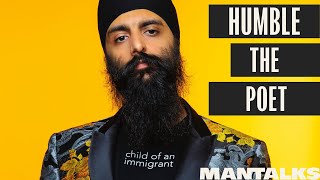
A recorded interview (Connor Beaton with Humble The Poet) that blends personal storytelling with applied philosophy about love, creativity, and identity. Key moments: Humble recounts his grandfather's death and its effect on his life choices; describes immigrant Punjabi family dynamics and gender/role hierarchies; explains his shift from elementary school teacher to full-time artist, a failed songwriting deal, ensuing debt and recovery; he crowdfunded his first book (305 contributors raised $26,000, largest single gift $1,500 from a Harvard professor). The conversation pivots to Humble’s new book How to Be Loved (opening chapter about an August 2020 breakup) and core ideas — love as what remains after other emotions, self-love vs. self-respect, vulnerability, service/sacrifice, and practical pathways to build relationships and inner resilience.
Questions this video answers
305 people contributed and raised $26,000.
A $1,500 contribution from a Harvard professor (head crowdsourcer at Harvard).
August 2020.
January 11, 2023.
The podcast references a book launch on December 27 (year implied around the recording).
Chapters
All right, my friend, welcome to the Man Talk Show. How you doing today?
Fantastic. How you doing?
I'm good, man, I'm good. It's interesting. When your team reached out, I started to go down a rabbit hole of looking at your stuff and your work and I was like, oh, this is really cool. I love this. And this is going to be a great conversation. And so, yeah, I just love what you represent. I also appreciate the work that you put out in the world. So I'm excited to dig in and pick your brain apart a little bit and get to know you, the man behind the writing and the poetry and the music. So with all of that said, tell us a story about a defining moment in your life that made you who you are today.
Yeah. So in 2000, 2009, I was in my kitchen eating, eating lunch. I'm watching tv, eating lunch. And my grandfather walks in front of the television and starts having a conversation with my dad. And I'm sitting there kind of like, what's, what's going on, bro? Like, you're right in front of the television. What's happening? Obviously, it's my grandfather. The last thing I'm going to do is say anything to him. So I pick up my food and I take it up to my bedroom. The next, I went out to run some errands. The next day I was going on a three week trip to Thailand and my flight was super early in the morning. I think I got my, my dad to drop me off. So I didn't wake up my grandfather to say bye. I didn't wake up my mom or my sisters either. And I went to Thailand. And then a week and a half into the trip, I get a call, I get a, I get an email from my sister saying, call home. And then I called home to find out that my grandfather passed away. He was completely lucid, completely healthy, walking, doing everything. And I think he had a stroke. And then he passed. And I remember telling my dad, getting on the phone with my father, and my father's the oldest son of my grandfather, and saying, hey, I'll come home. And he's like, why? Why would you come home? He goes, everybody else was around him on the deathbed and he still died. Why would you come home? What do you need to come home for? He was like, stay. He goes, if anything, you should use this as a reason to enjoy your trip. And then I saw the change that had in my father. And this is probably a year later is when I wanted to quit my job as an elementary school Teacher to pursue art full time. And my father said, do whatever you need to do. We're all going to be dead soon. And I know that was heavily impacted by his grandfather, but I think, you know, this constant reminder that our time here is temporary. Even recently reading a quote saying, you know, life is just a waiting room for death, you know, and what you do in that waiting room is completely up to you. And I think so often when we're not living consciously, when we're kind of in autopilot, then we have all this pressure to be, to do, to accomplish. But when we're, when we're actually mindful of what's going on, like this could be whatever the fuck we want. And I think that reminder of, you know, I didn't say I didn't get a chance to say goodbye to my grandfather for the trip, but at the end of the day we, you know, even these, these kind of romanticized ideas of our relationships, people in our family, it's like, look, you know, I think if I passed away today, am I thinking about anybody who hasn't said goodbye to me or who hasn't said I love you? I know who loves me and I know who doesn't. I don't need them to say it one more time if it's the last time we ever see each other. And I think it was a, it was a massive change in my, in my perspective of life because it made me stop romanticizing things and really taking more control and feeling more empowered to be like, look, man, like nobody makes it out alive. What are you going to do? How do you want this life to, to be? And how do you want to, you know, and if, if you could live to 100, how would you want it to be? And I don't think I want to arrive to death safe. I don't want to arrive in a nice, beautiful little package. I want to be a worn out baseball glove used and abused by the time it's all said and done.
That's a good way of putting it. There's a T shirt for you, right? When I die, I want to be a used up baseball glove. I think that's, that's such a good way of putting it. And I love that perspective. And it's interesting because it sounds like your grandfather had a very meaningful place in your father's life. But it also sounds like he had a very meaningful place in your life and impacted you and that his loss really sort of left a mark on you. And it's interesting because as you were Telling your story. I got images of my grandfather, who was just this. He had these fierce, steel blue eyes, and Even at like, 89, 90 years old, he lived to be 93 or 94. He just had this vice grip handshake. He was, like, old school Canadian farmer, you know, had a farm in Saskatchewan and had a funeral home for a number of years, and then had all these bright ideas that he should go be an entrepreneur, which he didn't really land on. But I got images of him and the impact that he had on my life. And so I was curious if you're open to sharing just a little bit of the impact that your grandfather had on you and what maybe you learned from him about what it means to be someone that walks through this world and has an impact or lives a sort of meaningful or fulfilling life.
Yeah, I remember, you know, when you think of your grandparents, you think of grandparents like they're old. And I remember being eight and participating in this, like, local, kind of, I guess, athletic competition. And there was a sprint, and I won the sprint. I raised a bunch of kids and I won this sprint. I got a medal and everything, you know, and my dad's talking about, like, Ben Johnson, you know, maybe you can go to the Olympics and all this. You know, I'm eight years old at this point, and then I remember my grandfather hearing about it and then saying, let's race. And I'm wearing running shoes, he's wearing dress shoes. And he beats me in the race, like, in a shoe. Like we ran the length of a soccer field or something, and he just completely beat me.
Just annihilates.
You just completely annihilate. And I just, like, just. He was wearing a korta pajama, which is just a very basic, you know, what the old Punjabi men wear and dress shoes. And I always had this front pocket, and it was always full of money. You know, I always remember, like, thin pockets. And he had, like, a $50 bill that was red because we're Canadian. And, like, you know, and. And. And it bleeds out. You can see all of this and just being shocked, like, it totally, like, put me in my place. I'm like, I thought I. I literally thought I was the fastest kid in the world. Thought I was already on pace to get a gold medal for Canada. And I think, you know, my grandfather was a farmer. Like, he. You know, he grew up. Grew up in the farms out. Out in, actually, Rajasthan, in the northern part of India. And I think, you know, he was. He would only come. He would only Come visit us every six months. He would stay in India during this, during the winters and then come during the summers and sometimes skip a year or two.
Smart, smart man.
Smart man.
Avoid the Canadian winters, right? He's like, nah, I'm not staying here for this.
Yeah, minus 30, I don't want that completely. And you know, I think it was, you know, his. And, and an interesting thing, you know, the, the irony of it all too. So my grandmother was probably 4 foot 7. You know, she was this tiny, tiny, you know, I had a giant German Shepherd. I just 140 pound German Shepherd. And you know, and my grandmother was old school. Whenever she did something she would like squat on like instead of like cooking on a table, she would cook on the floor. She'd have her cutting board on the floor, she'd squat down. Cause that's what they did in the villages. And she would, she would like cut up the vegetables squatting on the floor versus like what we would do standing on a counter. And I remember my, my, my big German shepherd, always her business to try to see what she's doing. She would like punch him in the face, like full punches in the face. And you know, and he's so big, he's not, he's not impacted by this. And he thinks she's playing. And it was just always this beautiful relationship. But it was always because she was super, super tiny. And she passed away. My, she passed away in India and my, my grandfather, she made breakfast for my grandfather and then she went to lie down and then she became unresponsive, which in a village in India is the definition of death at this point. So my grandfather calls and says, your grandmother has passed away. Who knows if they had a 911 system she could have been revived, who knows. But ever once she passed away, my grandfather started carrying a gun. You know, he carried, he had this pistol he never carried before and he wore it on the outside. And I don't know if it was to signal to I guess rivals in the village that I'm still, you know, I'm still here and I'm still healthy and I might have lost my person who has my back, but I'm so protected. But there was something beautiful about that because physically she wasn't a presence. But I think they had, they had this beautiful relationship where they're, you know, married for 50, 60 plus years.
So I think you know, seeing, seeing that relationship, you know, had. It also had an impact. And you know, I'm, my parents made the transition over to Canada and then I was born in Canada, but to kind of see these three different worlds, like the new immigrant world, the old school world, and that, I think that had a huge impact. And I think also just the reminder too of, like, I don't remember my last words to my grandfather because that, the reason I told that story about the kitchen, that was the last interaction I had with him, you know, where he kind of stood in front of the tv. I was watching it and I, I was annoyed and I got up and left. And I think that kind of made me mindful about how I conduct myself around people as well. And, you know, all of those start to tie in together once you start looking back at it. And I think the big thing around that idea was, and also the older you get, you start to learn that they're flawed human beings themselves. You know, my grandfather was my kind grandfather, but he was also my mom's father in law and he wasn't so kind to her. Same thing with my grandmother, you know, and also the fact that I was the son of the oldest kid, so we were. I was treated different versus my cousins who were like, yeah, he was. Papa G was nice to you, bro, not us. And you know, because they have, you know, they have the little hierarchies in their ideas and, you know.
Yeah, can you, can you tell me more about that? Because I think that's like, do you feel like that's culturally specific? Like I. One of my questions was going to be, you know, you saw your family come from, I don't know exactly what you call it, like the old world, the old country and then to Canada.
Yeah. So the state in India my. My parents are from is Punjab. And then my dad was from. Even though he's Punjabi. The states, the states in India are all broken up by language. So Punjabi's in Punjab, Gujarati and Gujarat. But my dad, even though he was Punjabi, they, they had a line in Rajasthan, which is much more desert. Think deserts, camels, all of that. And that was a state right below Punjab. So kind of he was in like the Buffalo of Canada type situation right on the border. They pretty much, you know, my, my father was probably the first person in the family to ever go to post secondary education. And he went to university out there and, and got a master's degree in economics. And he marrying my mom is what got him into Canada.
Interesting.
Yeah. So just the way the immigration works is you got to get married to get into the country, but they had an arranged marriage. And the arranged marriage, you know, that's what Got my dad into the country, but then that's what got all his family into the, into the country. And my dad has two, two brothers, two younger brothers and two younger sisters. And there is a clear hierarchy in terms of, you know, and, and roles for the genders and, and all of that. So my dad's two brothers. Yeah, my dad's two brothers specifically. They have sons and those are my cousins. They're all younger than me. Great guys. But they would say, yeah, it was just completely different. Whenever my grandparents went over to their house to stay, it was a completely different, like they were much more disciplined, were much more harsh on them.
Interesting. I mean it was, you know, the, the thing that sort of came forward to me is like, what was it like for you because you grew up in Canada. And you know, I'm curious, in terms of like the roles that men played and the roles that you see maybe men play socially within Canadian culture or American culture, how did those things differ for you? What did you take from your grandfather and your father in terms of what was valuable and what you've maybe left, not left behind or put aside to sort of carve your own path? Because I'm, maybe my follow up question is like, how accepted is the path that you've taken within your, within your family? Did they embrace this artistry that you've gone down?
It's interesting because I think there's this, this, this kind of umbrella layer of dissatisfaction, you know, from my parents towards many of my choices. They came to this country with a very narrow understanding of what success could be. You know, so for them, the joke often is for, for people in South Asian descent is that there's only one job and that job is called doctor, lawyer, engineer.
So if you're not a doctor lawyer, acceptable. Yeah, if you're not a doctor, lawyer, engineer, um, then you've, you pretty much failed that life. So even, you know, even before pursuing art, I, I went to, I went to school and I was doing. And first I was, I went to York University for, for I t. Which my parents didn't understand. They didn't know what that was because I wasn't a doctor, lawyer, engineer. And also York University versus having two older sisters that went to University of Toronto which is considered a much more prestigious school. I went to the party school. They went to the prestigious school. So my father, yes, my father used to refer to my university as like the urinal of, of universities. And then, and then when I told him I wanted to be a teacher, he's like, you're gonna, you're gonna wipe noses and, and tie shoelaces for a living. Like it was very, you know, and this is his way of just being like, these aren't, you know, these aren't the things. And then I remember, you know, but then when I wanted to pursue art, I think him losing his father changed him. And then that's when he was like, look, we'll all be dead. Do what you gotta do. But there's always the, the, there's a heavy pride. So my, my, my, my family, our cast is jut j a t t and that means farmers. So I was raised with this like, heavy pride that I'm, I'm a farmer. And it wasn't until I became an adult I kind of understood kind of the, the basis of that. So farmers are a lot. And, and you're from Alberta, so it's, it's a lot like the oil workers almost where it's probably the highest paying gig you can get without requiring a lot of education, you know, so I'm sure you met a lot of these oil worker guys. And, you know, I was there.
Yeah, I was there as a 20 year old.
Yeah, yeah.
Working, working in gravel pits.
And yeah, you guys are making a boatload of money, but you guys are, you know, you guys, you guys aren't, you know, PhDs and stuff, you know, I mean, so there's a certain air that comes with that. So that's what judges are. The farmers are very, very proud because they don't, they also don't have bosses because you own the farmland. So now everyone depends on you. They need you for the food. And then you view yourself as the nucleus of the economy. Like the shoemakers are making shoes for you, the car makers are making cars for you. It's such an interesting thing.
The boss.
Yeah, you're the well. Well, this is how they view themselves, right? And in Punjab, punj means five odd, means river. Punjab is the land of five rivers. So it's the most fertile part of India. This is where all the farmers are that translated over to cancel. For example, my next door neighbor would like ring the doorbell and ask to borrow a bicycle pump. And my mom would be like, see, like they're willing to beg for anything, you know, like, and, and that was a thing where it's just like, you don't ask for nothing. We always take care of ourselves. And, and I'm, and you know, and, and I got it to a point. And, and I understood it too, you know, and I guess the modern equivalence would be like, you know, if you were, if your kid was a doctor, how would you feel about them? Like dating a janitor. I don't know how much it should actually matter from personality standpoint. Maybe economically it might be a different story, but the thing with Jutsa, like again, there's no education here. These are just loud, well off people. That pride I could definitely see kind of get trickled down. And also, you know, a lot of the challenges I think that we face as people is that we, we have small village mentality, you know, where we, we understand ourselves in relation to other people. And you know, I think for, for us and for on this side of the world, you know, that's probably like middle school is like the biggest village we can be a part of where things still make sense. And then, you know, because we, we exist in hierarchies and we're tribal and all of this and then it just gets, you know, it just gets messed up when you move to a Toronto or Manhattan or Los Angeles or any big city where it's just way too many people to understand anything. But we still have these people pleasing mechanisms in us because that was related to our survival. So I, I witnessed that because my parents grew up in that village and I went to the village and I saw the village and I saw the village drama and I saw the village hierarchy and they had traditions and some of the traditions were cool. Some of the traditions were completely like, like the women, the women of the village had to hide their faces whenever they passed. I met my great grandfather, I met my grandfather's father and whenever he was in the room, all the women had to hide their faces. And I had never like the, only when he was, I have no idea. So I'm saying like, I have no idea. And again, I'm, I'm like 13 at this point. I'm a Canadian kid. I'm watching this, I'm like, this is so weird. You know, later on I get in trouble for wearing shorts because I'm not dressed appropriately. Like there's just a bunch of weird. Whatever their rules are for the, for their world, it's there. But that's the world that they've had for like, you know, 500 years. Like this is what they've been doing. And so I think for me it was recognizing that. I see if roles are clear, irrespective of if the roles are fair, if the rules are clear, a level of harmony gets developed. It becomes a well oiled machine. And I, I, I, I realized very quickly that My parents crossing the pond and coming to a whole different world was going to turn that into a transition period. And I think that transition period, not only for me culturally, had its growing pains and wrinkles that need to be ironed out. I feel like we're in that in modern society. You know, I think 50 years ago, the roles of men and women were clearly defined, irrespective of whether they were fair or not. I'm here to comment on that. But those were the rules for generations and generations. And now we're in the transition period with those roles are being reviewed, explored, and with that going to come a lot of discomfort. So I think for me, that was something that I really pay attention to. So some of the things that, like, I carry forward is, you know, for example, is like the hospital, you know, being hospitable, you know, Punjabi, someone's in your home, you don't offer them food, you give them food. You know, people need a place to stay, you give them a place to stay. All of these things are really good. Some of. Some of the. The old school stuff that they had, like my aunts weren't allowed, my dad's sisters weren't allowed to get educated. Their roles were to take care of my dad and his brothers while they went to school, Stuff like that. I feel like, you know, you're. You're denying every human being is a potential innovator, and you're denying people the opportunity to be an innovator and a contributor to this world by denying them education. So I think that role, those roles were. That's what the roles were, you know, and I don't think it was useful. And there's also just this, because of this village mindset, this is like, we keep everything in house. We handle everything in house. Things aren't handled, though. They're just kept in house.
Yeah, it's interesting that you're saying that, because what I was about to interject with is. I remember I worked in the gravel pits of northern Alberta, and I was a laborer. Like, I was just the lowest of the totem plunt, right? With the shovel underneath the machines and whatnot. And a lot of the men that drove the trucks, the gravel trucks would come and get different size of aggregates and then bring them to be the base layer underneath the road. A lot of them were Punjabi, and I remember having a lot of conversations with them as a young man. I was like 18, 19 years old. I grew up in suburban Alberta. There's not a lot of diversity there. And one of the things that really struck me and stood out about it, they were all very kind and wonderful men. But I was struck by how tight knit the community was. Like, they all knew each other, they all lived close to each other. Some of them were brothers or related and they lived together. And I was like, wow, you guys really have just a really strong community. And I looked at my family system and I was like, we're definitely not as close. And I'm sure that that has its pros and its cons in terms of like, you're talking about keeping things in house. But that really struck me because I think in a world where we are over indexed in online communities and maybe malnourished in in person communities, there's this interesting transition and battle, like you're talking about, of roles changing. You know, it's like 42% of American households, women earn more than men. They're the breadwinners of the household. Right. So there's this big influx and change that's happening. I think, you know, these sort of older traditions that we've had for a long time has started to erode and it's, and it's interesting to see the impact that it's having on, on everyone collectively. So it's interesting to get your, your take on, on some of that. I want to shift to your book in a moment, but one of the things that I, I really want to ask is what brought you into, into art, into creativity? Like what called you into writing and producing music and writing poetry like this. Such an interesting trajectory away from it and, and teaching.
Yeah, I think it was always there. I mean, you know, creative writing in elementary school, when we had to do that, I was, I was loving it, doing it, coming up with great ideas. I remember having a book, you know, horribly based off the Freddy Krueger films, where I wrote a story about my teacher killing off every student in the class. It was like the third grade. So it's just very. And that was, I'm sure that was welcomed, you know, by your age, you know, and this is probably like 90s. It wasn't, I wasn't flagged. It was not flagged nothing, ironically, it wasn't flagged. But I think the kids loved it because every kid was in the story. And it would be like hilarious things like my teacher's name was Ms. Snow and I was like, Ms. Snow took Jason's head and put it in this pencil sharpener and sharpened his head until he died. It was just super funny things. Super Freddy Krueger, Nightmare on Elm Street. It's all he did. He just went one by one and killed every character. I just ripped that off. But.
But it's very inclusive of you. Humble.
It was extremely inclusive. But it was. I remember, like, that, you know, the 90s version of going viral was like me reading it every day. And I remember my teacher was just, like, shaking her head. You know, it didn't raise any flags in any capacity, but I'd always been doing creative writing. It's just something I never thought of. You just always think your math and your sciences are always much more going to lead to something more pragmatic. So I think it was more about honoring that side. And I think when I became a school teacher and I was no longer a student, I no longer had homework, and I'm living an adult life for the first time, that's when I started exploring it and going to coffee shops and doing spoken word poetry and trying different things. And then YouTube came along. I started posting stuff up on there. And then organically, you know, this is before the world of intense algorithms. So you post stuff up, people find it, and organically, kind of building an audience from that. And people started to come to see me live. And then just. Even then, just thinking, okay, well, this is what I'll do for fun. This will help me meet girls. You know, this is cool. Like, and I can fund it because I have a job and I'm still living at home at this point. I'm gainfully employed living at home, so I don't even have a lot of. You know, I'm saving most of my money.
That's the sweet life right there. That's the sweet life. You know, it's like, oh, it's just money in my bank, and I have very little to spend it on outside side of, like car insurance, gas, and dates, you know.
Yeah, yeah, and the phone bill, I remember. Yeah, that was. That was a great time. So then I started investing in, like, making music and creating art, and it was just super fun. And then things got serious when I met a producer who said, you know, we. We could get a songwriting deal and. And the deal was going to be worth way more than I made as a teacher, because I was never going to leave my job. I was. I was comfortable. And it was a government gig, and, you know, the last thing I wanted to do was voluntarily make myself uncomfortable, which is complete foreshadowing for what life needs to be. So I took this deal, I quit my job, and the deal turned out to be fraudulent. So now I Had no job and no deal. And then that's when the fun began. So now it was like $80,000 in debt, living off credit cards, no job, no understanding how artists make money. And then that started the whole. And then by then I had moved out. And then very quickly, I had to move back in, sell all my assets, sell all everything, sold all my equipment, sold everything that I could sell to start paying off debt. Because those debts were not only to the banks, they were also to friends. And took me four years to get out of debt. And through that journey of learning different ways artists could make money, I continued that journey moving forward, finding out, okay, oh, there's, you know, you could sell merchandise, you can do live appearances, you could write for other people. You can, oh, here's certain grants and things this country that you can get provided. So it was a very slow toiley road at that point. And then in those four years, learning how to get out of debt taught me how to make money. And one of the big things I started doing was just writing, doing a lot of writing and sharing a lot of writing and realizing people connected with that a lot easier than they even did with the music or the spoken word poetry, because it was just there in black and white and they could hear it and consume it the way they wanted. And I self published my first book in 2014, and I crowdfunded it. And 305 people gave me money, gave me $26,000. 305 people. And the biggest single contribution I got was $1500 from a Harvard professor that I had never met.
Really?
Yeah. The large. I had a lot of people give me $500 as well. And the vast majority of those people I didn't know for more than six months.
Wow.
Yeah, it was a really interesting journey of putting myself out there. I think, you know, this is when I started to realize the armor of pride, or the fortress of pride, can also be a prison. And that was the first time I put myself out there. I was vulnerable. I was like, look, things aren't going well. I'm trying to figure this out. You know, help any way you guys can help. And I still struggle with that. But that was the first time I realized, like, hey, you don't know who's paying attention. You don't know who's got your back. All you can do is go out there and ask for help. Which is a far cry from what my, you know, my parents raised me to do, which was never ask for help. And only through therapy that I learned that, you know, in my household, I had emergency coverage. If shit hit the fan, my parents always had my back. But on the day to day, small things that I had problems with, I never thought to even go to anybody for help. And those little day to day things start to add up. So that, that was a big lesson for me, which was, you know, be vulnerable, put yourself out there. Vulnerability is not a weakness. Hiding your vulnerability is a weakness.
Yeah, I love that notion of, of pride becoming the prison that we are locked in. And I think about like when I started Man Talks, we, I was doing events in person. And you know, the first event had like 40 or 50 people at it. We didn't do any traditional marketing. And one of the things that I did is at the end of every single event, I would say, I created this concept called Men It Forward. And I would just say, man it Forward and just share what you learned at this event and what you enjoyed. And because we would have men come and tell their stories as if it was the last talk that they would give in their life, as if they were going to die the next day. And so they would, they would talk about their three defining moments in their life and what they learned from them. And so that's why I asked that question at the beginning of every single podcast. And I've done like 700 podcasts now and over the last several years, and the events grew, I'm getting tingles right now, I'm getting the goosebumps. But the events grew because at the end of every single one, it was a very hard thing for me to do is just ask. But I had no money, you know, there was no investing in the events. And so I would just say, go tell one person what we talked about here and invite them to the next event. And over the course of like a year, we started having like 3, 400 people out every single month at the events. And it was so wild. And it's the same with this podcast, right? I mean, we get, you know, over a hundred thousand downloads a month now. We're in the top 1%. And I've never spent a dollar on marketing. I've always just said, you know, man it forward. Share this podcast with somebody that you think needs to hear it. And so it's so powerful to hear that part, you know, of what you're talking about, of just, you never know who is out there, who just fucking believes in you, you know, and, and to open ourselves to that kind of love, I think is very hard. It's very hard to Fathom, I think, for, for some of us, that other people might believe in us more than we believe in ourselves or other people might believe in us that we don't even know exist. You know, we don't even know who they are.
And so I went to Harvard to visit him.
Did you really?
Yeah. I mean, why not? Because when I got the email, the email was literally something like KBU Edu. So I was like, this email looks fake. I don't even know what HBU is. And it's a Harvard Business School HBS or whatever it was. And then it said $1500. And so I emailed me like, hey, excuse me, did you add another zero by mistake? Like, you know, I don't want someone to, you know, spend more money than they intended to. He's like, no. He goes, I've been following your journey for a while. I'm, I'm very proud that you have taken the business into your own hands. And I think more artists should. And he ended up being. Because I was, I was crowdfunding, and he was the head crowdsourcer at Harvard. So he was doing. He wasn't crowdfunding, he was crowdsourcing. So he was the guy that anybody, people around the world, let's say NASA, for example, if they had a problem, they would go to him and it would be like, hey, look, here's an issue we're trying to solve. And then he would have a network of like, nerds and be like, hey guys, I got $50,000. Whoever can solve this problem? And then he would, he was, you know, and this is like pre, this isn't pre Internet. This is like 2014, 2015. But like, he had, I guess there's still a little bit of an analog network. So he had, he had, he was doing all his work in crowdsourcing and working with, you know, kind of communities, building things together. And when I went to his office, he had a Andy Warhol quote that said, business is the most interesting type of art. And I remember, you know, and, and, and, and I think even, you know, to, to your conversation, we also have these definitions of what things need to be. You know, like in the beginning, I was this artist and money was evil and got to keep my soul pure. And then to see, like, Andy Warhol be like, no, this is. You are a creative being. Use that creativity towards business. Because business is, is, is, is the, one of the most important parts of this for you to keep doing it. And I think the interesting thing is I was having a conversation with a, A Friend at the dog park yesterday, and we were talking about this idea of men do challenging things for the sake of the challenge. And, you know, we might say that about, okay, I'm going to learn how to change my oil. I'm going to go to the gym, I'm going to build a shed, you know, and it's like, cool. These are hard things, and we're going to do them for the sake of them being hard. But it's like, okay, what about being vulnerable? What about putting yourself out there and being like, hey, I'm doing an event, whether five or five hundred people show up, I'm putting myself out there. I'm going to do a talk. You know, I might shed some tears. I might do all of these things. And it's like, these are also hard things that we need to lean into, you know, and they're going to provide the same level of benefits as, you know, the ice bath and the hardcore workout and the, you know, the learning a new skill and fixing your toilet or whatever it may be. And I think that's, that's the, the side of this. I think again, we're going back to my grandfather's time. That wasn't an option even for my father. Like, this idea of vulnerability, not an option. And I remember even when my grand. My grandfather died, he was staying with us when he passed away. My grandmother was in India when she passed away. And I remember all the siblings being in a room talking about who gets to go, you know, and them taking my, my youngest uncle out of the, out of the conversation, being like, you're not going to. And my youngest uncle being like, she was my mom too. And he's like, you know, but my father trumped his, you know, my father's like, nope, I'm going. We're gonna, you know, he's gonna come and you guys handle all this stuff over here. And it was just like a really, you know, kind of a. You start to see how these systems, they work sometimes, and sometimes they totally blow up in your face.
Yeah, that's wild, man. That's, that's a wild thing to think about of having a family member say, you can't go to your own mother's funeral, you know, to have your brother or siblings say that.
I can't imagine it wasn't even going to be a funeral. It would have just been, you know, I don't even, I think it was like, just to get accremated or what have you. I don't even think my, my father got to see her one last time. Do you think she got cremated immediately? Like, there's no cold storage in these villages. Right.
Like it's Right. Right.
It's a whole thing. And then it also just makes you think about their. Their relationship with life and death. It's a lot different. My father lost two siblings as a kid, you know, just. Just to the elements. And it's like, you know, and out here we value life on such a different capacity. You start to realize how that's a privilege in itself.
I feel like there's such a unique position, as I hear you talk of, like, bridging, being the bridge between the understanding of the value, but also the maybe detriment of this sort of old way that we have existed as a human species and the new way that's trying to emerge. And I think it's so important for our society to have people that can speak to that transition as it's taking place. And I feel like you do a good job of doing that. And so with that, I'm going to segue. I'm going to be the bridge, just for the sake of this conversation, and move us into talking about this notion of how to be loved. How to be loved. And you have this book coming out and you talk about the simple truths for going easier on yourself, embracing imperfection and loving your way to a better life. I think we've inadvertently been talking about some of the pieces that you talk about in the book. But I had to ask. When I started to go through the book, I don't even know what it's called.
Even though I just wrote a book and I have it in there, the dedication, it says, to the lion and the puppy, we'll forever be family. And I was stopped there. And so I would love, if you're open to telling us about the lion and the puppy and why that's in the sort of dedication.
Yeah. So the. The opening chapter of the book is about a breakup that I had with my fiance. So the lion is my fiance, and I had. We had purchased a puppy and that was going to be our family. So the premise of this book, you know, this book was written originally when. When I got. I got engaged, I was trying to. You know, I was. There was already challenges I was feeling in the relationship, and I wanted to have a deeper sense and become a better partner. And I think through the initial research and taking a deeper understanding of love, because I think at that point, my understanding of love was what we're taught in tradition, religion, television, Disney porn, and all that. Other stuff. I quickly realized that the issue isn't my relationship. The issue is me. And, you know, watch the quote from Esther Perel yesterday saying, you know, you're not ending a relationship with a person. You're ending a relationship with a former version of yourself. And I realized very quickly that I was carrying a lot of anxiety because I wasn't in a situation I should have been in. And I wasn't with somebody who was toxic. I wasn't with somebody who was unpleasant to be around, but it wasn't going where I needed to go. And the opening chapter is about the breakup and the ending of the relationship. You know, that was August 2020. So it's been over two years now. And, you know, we are still on good terms. And she had said it to me. She said, you know, when people. People ask me about you, I said, look, we're not together, but we're still a family. So it's, you know, it's to honor that. And, you know, the puppy's still healthy. She's still great. We're still on. We're still on great terms. And, you know, she was still the catalyst for this book being written. So, yes, I dedicated the book to her.
Love that. Love that man. Thanks for. Thanks for sharing that. Love is a very broad topic. And I appreciate the fact that you, you know, in the book, in the opening, you talk about. You're like, I'm not an expert on love, you know, and that's not why I wrote this book, is to. Is to, like, solidify some, you know, expertise or position myself as an expert on love. And with that in mind, you know, love is a very broad topic. How do you start to define what love is? Because I think what's interesting about the beginning of the book is that some of the ways that you talk about it are very spiritual in nature, you know, and, like, just one of the sections is to love one is to love all.
Yeah.
And, you know, that feels. I've studied a little bit of Hinduism, a lot of Buddhism, you know, grew up Christian and very curious about religious components and just spiritual endeavors. And so I'm. I'm wondering if you feel like there's a connection between love and spirit and soul, how you define love? Like, I'm just going to ask you some massive questions that.
That are.
That are huge in nature, like where. Where do you begin? Because the book starts with, what the fuck is love?
Yeah. I mean, and I appreciate you prefacing that with the fact that I do not claim to be a love Guru in any capacity. Again, I was an elementary school teacher before all of this. I was taking ideas and simplifying them for eight year olds and then rapper, writer. I put words together. I put words together well. So the way I like to frame myself is the kid at the front of the class who takes really good notes and doesn't mind sharing them. That's what this book is. I'm sitting at the front of the class of love, enthusiastically paying attention and I'm taking really good notes and I'm. This book are my notes, my notes on love. And I think, you know, the way I approached defining love was really identifying what love isn't. All the things that we kind of consider love or we chase. I think the authentic emotion that we all have is this thirst for love, this desire for love. But there's so many facsimiles of love, you know, attention, affection, adoration, power, clout, control, pleasure, validation. All of these things, you know, can give us kind of a taste of what we may think is love. It has this deliciousness to it, but there's no nutrition to it, you know. And I think recognizing that, I think spiritual, you know, a beautiful definition I heard of spirituality is just the art of dealing with suffering. And when we're not cognizant of our suffering. I think just because we're not aware that we're suffering doesn't mean we're not suffering. I think we approach the idea of take, getting, acquiring. We have to acquire things. I want, I want, I want, I want. Not realizing that the want is the suffering, you know, so we want to attain, obtain, obtain, obtain. Whether we're in a, you know, in a consumeristic society where we buy to be happy or whether we think it needs to be. I need to obtain love. I need to be worthy of love. I need to get abs. I need to get a lot of money. I need to get, I need to get stuff to be something. It's either this or it's that. I think that idea, you know, is, is something that, you know, takes, you know. And I think the true, the true peace comes from not wanting. It doesn't come from getting, it comes from not wanting, which is a, which is a, which is an interesting kind of idea to tell somebody who's never felt like they've had enough if we live in lack. And I think the important part here from a spiritual, spiritual context is love is what's left when we get rid of all the other shit. Love doesn't come from getting anything. Love is. Love is you know, love is the screen this movie is playing on. Love exists beyond duality. And to give a good context, that helped me understand this idea of the tree of good and evil. You know, God said, don't eat from the tree of good and evil, you know, and that's what kind of, you know, doomed, you know, humanity. The tree of good and evil is duality. Looking at the world in terms of good and evil. And she bit from the apple and that changed the perspective of you, you know, versus things are just happening. Life is life. I'm taking deep studies of surrender right now. And it was the idea of like, look at your day to day circumstances. The way you look at the rings on Saturn or the way you look at the lines on the road. Like you don't have an opinion on these things.
These are occurrences that occurred. They have nothing to do with you. Nothing has anything to do with you. Going back to the four agreements, don't take things personally. So I think for me the spiritual understanding is really taking yourself away from the idea of want. And so for me, defining love was realizing that love isn't something that you earn. It's not a prize, it's not the pot of gold at the end of the rainbow. It's not something that you can be enough. You know, there's a really big push right now to tell people you're worthy, you're enough. Like these are measurements of a person. You know, you don't look at a flower and say you are worthy, but you are enough. You can pluck a petal off a flower, it's still a flower. You know, I can, I can cut your left ear off. You're still a. You're still a person. Enough. Enough applies to your gas tank in the car if you're taking a long trip, you know what I mean? Like that's how we measure. Do I have enough gas to get somewhere? Do I have enough money to buy this movie ticket? Like, am I enough of a person? No. Like these are ideas that have been planted in our heads for different reasons, often to control us, you know, whether it was to keep us behaving and in line in a large society or to make us buy shit, you know. And I think defining love is really saying, hey, look, when you let go of these ideas, what's going to be left is love. And I use Naval Ravikant's definition of love is love. What? Love is what exists after all other emotions have ceased to exist. That's what remains. And so for me, it was really understanding that and, you know, and again, and in the context of my own relationship being like, oh, okay, the issue isn't I have the wrong partner. The issue is I'm not in. I'm not primed to realize love. You know, like, you could be reigning love all over me, but I'm. I'm a bucket facing the wrong way, and I can't hold any of it. The work I have to do is that, you know, the work I have to do is to flip my bucket. You know, if love is the breeze, the work we have to do is to open the sales. And that's internal work. That's not external work. And going back to that breakup I had, you know, that was. That was killing an old version of myself. The person that existed, who had to exist in that relationship with the family expectations and the direction they were heading and the promises that were made. You know, the only way to kill that person was the end the entire relationship. The theme of all the work I've ever done has always been we gain more by letting go. And, you know, so the way I view love is. Love is. Love is all you are, the source of love, and love is the verb. It's not the thing. It's the action. It's the sacrifice. So for me, you know, the spiritual element of this, and I think this is important as well for anybody listening who, you know, you know, I made the Christian reference of the tree of good and evil. This is a popular wave of Eastern philosophy coming over this side with yoga and horoscopes and whatever else is happening. And I think the important thing is to recognize is if there isn't an element of service and sacrifice, you know, beyond yourself, it's not a spiritual journey. You know, they. To sell any product, you make it about the person you're selling it to. And, you know, spirituality is being sold to us, and they're making it about us, and they're making itself absorbed, you know, but that's not spirituality. Spirituality is killing your ego. It's killing what differentiates you from everybody else, that what divides you from everybody else. What makes the drop think it's separate from the ocean. And that comes through service and sacrifice to something beyond yourself. So I think that's really important. So for me, it was recognizing that a lot of the things that I was taught about love through, again, as I said, pop culture, media, religion, tradition, all of that, it didn't agree with me naturally. And it wasn't until I took these deeper dives and started to realize that, okay, love Isn't a thing that I win. Love is something that I have that I just have to realize. You know, the light shining on me, the breeze is there. I have to do the work to realize the love that's always there and creating those pathways. So as broad of a topic as love is, I viewed it as, no, love is love. And what you're doing is, you know, love an individual. This is the Peter Cron idea. You create pathways. You know, instead of saying, I love you, you say, you show me where love is, and you create pathways between you and another person, or you and an activity, or you and your favorite flavor of ice cream. And that pathway allows love to flow. And, you know, pathways require work and maintenance. And relationships are built. They're not had. You're not in a relationship. You're building a relationship. And I think there's these little key. These little key changes in phrasing will create a key change in perspective which will allow us to view this in a much healthier way and outside of the spiritual, much more pragmatic. It'll. It'll get us moving and much more mindful. And I think the biggest goal of writing this book was to get people more aware. You know, I'm here to. I'm just here to. I did the work, I did the research. Here's what I learned. Let's all become a little bit more aware. So the next time, you know, you decide you need to find us a romantic partner and you're chasing a spark, here's the data that shows you that spark is not a good thing worth chasing. Here's data that proves that that spark might be an alarm bell that you should run the other way or, you know, the next time you think you can say no to somebody, when you, when you, when you want to say no, you know, here's why it's important to say no. Because self love requires you to be your own best friend and stand up for yourself and establish your boundaries. And boundaries don't push people away. Boundaries just teach people how to be around you.
Yeah. So good. I mean, there's so many important pieces in there that I've had. Peter Cronin, the podcast, he was wonderful. And I think one of the things that you were talking about of love being the thing that's always present when we can strip away the sort of distractions. And there's a gentleman I had on the show called Rupert Spira, and he's a non dual teacher and one of the most phenomenal orators. I want to say about meditation and awareness. And he talks about loving awareness, that we can return that when we move all these sort of distractions away, when we. When we see that everything that is put out is a fragmentation of love and loving awareness, that we can return to that space. And I. One of the other things that stood out was this notion of surrendering. I've been very averse. Surrender adverse in the past.
Me too, brother. Me too. Yeah.
And one of the things that, like, clicked for me somewhere along the way, and it was just this, like, I can surrender towards something. You know, surrendering isn't always an act of moving away. It's not always an act of moving away from something. I can surrender towards something. And for me, that shift opened up a lot for me because I knew I was letting go of something. I was. I was very aware of, like, okay, when I surrender, I'm letting go of something. Something's dying off, something's moving. Like I am moving away from something, But I'm also in that moment, simultaneously moving towards something and calling something in. I love that notion. Because even if that moving towards is a descent of some form, you know, is entering into that period of things falling apart, because that can reveal a lot. So there's a. There's a lot in what you just said. I'm curious if you have a few more minutes. I know that technically our time is up, but do you have like five?
No, I'm good. My next thing's not for an hour, so I'm good.
Cool, cool, cool, cool. Okay. So one of the things that I definitely wanted to dig into because I get this question all the time. This concept of self love is very rampant on social media, right. I want to love myself more. What does self love mean? Self care, all these kinds of notions. And I've always talked about less about the notion of self care and self love and more of this idea of self respect and self competency. Right. Finding the value and being competent at something. And so I'm wondering if you can just unpack a little bit how you view self love. Is it valuable? Self care, where it fits in, but more specifically the relationship between self respect over self esteem? Because I think a lot of men. And maybe I'll tie this in and make this a little bit more poignant and less broad. A lot of men that I've worked with over the years are trying to be more confident, right? They want to be. It's like I don't feel confident at work with women in my lives, in my body, you know, in My, whatever it is. And they want confidence. And so I think there's a big push to have more self esteem or to love yourself more, to enact self care. And I'm wondering for you in your work and in your journey, what's your take on that? Where do we begin to build that confidence? Is that something that we should be pursuing or is there maybe a more. More worthy endeavor or aim?
So I have a chapter in this book about, you know, a friend named Marquise Cole, who's a retired NFL player who didn't get into. We were at an ice retreat, a Wim Hof ice retreat, and he didn't get into the ice. And everybody kept giving him pep talks to get into the ice. And he's like, no, no, no, I can do it. I've done worse. I'm just, I'm not doing it today. I'm just not. It's not happening for me today. And I think there was a really interesting thing about that because he didn't feel the need to prove himself to anybody. And, and then ironically, everybody went inside. Somebody else was hesitating to go in. He went in the ice with that person to help them. So the altruism was the motivating factor for him to get into the ice. He had no other reason to do it other than that. And there's this, this idea of, you know, we, I think we have this idea that, you know, confidence is loud, you know, which is often cockiness. And I think that is our belief that we are better than others. And I think confidence is understanding that you're not lower than anybody else. And I think, you know, in the spirit of going easy on ourselves, it's realizing that, look, we come from tribal groups and we understand ourselves in relation to others. And the acceptance of other people means a lot to us because for a long time that determined if we survived or not. Because if we were ostracized by our community, that would have led to death. So being rejected by a group or a community can still trigger those feelings of death. The death doesn't apply anymore. But you know, and we don't live in small communities anymore where people cut us off, where we have nowhere to eat. You know, that doesn't happen anymore. And so I think that's a big thing to realize. And what I loved is Tom Bilyeu's quote on confidence, which was, you know, confidence is being the quickest to admit you're wrong. And I think, you know, it's a counterintuitive way to look at it and I think that's the important thing, which is confidence isn't this kind of loud noise. It's this quiet assurance that you have in yourself. And it's not a fear of what's happening around you and how people view you. And that's where self respect comes in. Self respect is how you view yourself. Self esteem is how others view you. And I think, you know, I'm living in Los Angeles and I'm seeing how social media is turning everywhere into Los Angeles. Los Angeles is the city of entertainment. Los Angeles is the city of for display purposes only, you can go to a movie set and all the buildings are beautiful on the outside and you go behind, there's nothing there. They're just facades. And then, you know, that created a city and a population of facades. But now social media has added, you know, a metrics, counting likes, comments follows. So now that's subtly encouraging us to live in these facades. You know, let's look happy instead of being happy. So we're making more and more decisions for our self esteem. We've outsourced how we feel about ourselves to the world and, and you know, and now we're getting these messages. This is what a man's supposed to look like. This is what a man's supposed to be. This is how they're supposed to act. When the truth is self respect is how you feel about yourself. And then the moment you feel good about yourself, you know, you rely much less on the opinions of others. And that self respect comes from just doing challenging things, you know, again, getting in the ice, working out, picking it, you know, being vulnerable, all of these, these things. And what you do is you, you, you build a, a healthier relationship with yourself in that capacity. But also like any other relationship that you're going to create, we have to do that with ourselves. So, you know, I have a chapter in this. Love is being your own nurturing parent. Love is being your best friend, actually creating these, spending time with, with yourself. So many of us are afraid of just being alone. When I mean alone, I mean not on your phone, I mean, just sitting there doing absolutely nothing alone isn't a punishment. Loneliness is the punishment of being alone. Solitude is the reward of being alone. How do we turn our loneliness to solitude? By enjoying our own company, by not avoiding what's happening in there, by cleaning. You know, and my, my, my personal favorite definition of meditation is just doing nothing. Sitting there doing absolutely nothing. And the reason that I find that an important definition is because you don't have to Worry about, am I doing it right? If we say focus on your breath, then you got a little voice in your head like, am I doing it right or focus on the love? I don't know what that means. If I just say do nothing, just set an alarm and do nothing, you know, and just let the inbox of your mind start to clear itself out and, and, and reduce your dopamine addiction, I think a lot from there happens. I, I bookmarked every, I bookended every section of this book with love stories. And one of the love stories is involving a girl who's not spending enough time with me, not returning my calls quick enough. And I finally get on the phone and we're having a little bit of an argument about, you know, her not making me a priority. And then at one point I'm saying, look, like, don't you get lonely? And she goes, I get lonely all the time. And I'm hoping this, you know, will invade her to spend more time with me. I'm like, so what are you going to do about that? She goes, I dance. And I'm like, what do you mean? She goes, when I feel lonely, I dance, I start to move and I feel my body and I connect with myself. Because the only antidote to loneliness is connection, which is also the only antidote to addiction, which is connection. And the thing is, we don't realize we can build that connection with ourselves. And dancing allows you to be more aware of your physical body. When is the last time we've looked in the mirror completely naked and looked at our body from a non critical lens and not looked at ourselves and said, oh, I need to lose some weight over there. Oh, I wish my chest was bigger, I wish my shoulders were bigger. I wish I didn't have, you know, a belly or I wish I was taller. Like, you know, self love is saying thank you to this bag of bones and meat that has held you up since day zero and has made every adjustment for every poor decision you've ever made and tries his best, you know, to be there for you. That's what self love deeply is. It's actually loving yourself the way you love somebody else. Self care. The challenge with self care is there are so, you know, we live in a society that's selling us everything. And there's so many things in self care that subtly signal to us that we're not enough as we are. You know, oh, I got to go to the spa and get a facial. I got to go get my makeup done. I got to get my Nails done. You know, these still signify that, like, you're not good enough as you are. I got to go get a haircut. I got to go. I don't know, whatever. I got to go do light therapy or whatever other dumb that they sell us right now. And it's like, it's not so, dude, the light therapy.
But, dude, the light therapy is where it's at. I don't actually know what life therapy is.
I'm trying to think, what is that ultraviolet? The red stuff, the red lights. Somebody just gifted.
Infrared. Infrared.
Infrared. Yeah, but. And again, I'm not saying. I'm not even questioning the validity of these things versus the idea that, look, this doesn't count as self love because you're still subtly signaling to yourself that I'm not good enough if I didn't do this stuff. Self love is loving yourself the way you would love a little baby in your hands, the way you would take care of your sick mother. The way, you know, they don't require anything. They don't need to be anything to qualify for your love. You don't need to be anything to qualify for your love. And we have this kind of. It's so morbid because we think we have to be perfect, even though perfect doesn't exist. And if perfect did exist, he who was perfect could not be vulnerable, because there's nothing to be vulnerable about. You know, we have to focus on, let's divorce perfect and marry progress. It's okay. You know, let's make progress. Pick intentions and pick directions. Don't set New Year's resolutions to lose 10 pounds. Set a New Year's resolution to eat healthier every day and let that be a lifelong journey. And. And make small changes to your diet every single day. It doesn't have to be a big, massive change that's going to fizzle out in a week. You know, let's celebrate the progress that we're making. You know, you talked about, you know, how many podcasts you've done where you. It's not about you hitting 700 podcasts, and it's not about getting 100,000 downloads. It's who you've become on the journey. Who. Who. Who is day one Connor versus now. And I think that is a really important thing. And that's where the self respect comes, you know, And I think for me, the. The big lesson I learned through a lot of this journey, you know, when my father said, you know, don't worry, you know, do whatever you got to do, we'll all be Dead. One day what I was doing was I was leaving the zoo. I was in a zoo, I was in a cage, you know, getting a weekly, a bi weekly salary. And I was safe. Even though I felt like I was trapped, I was also safe. And somebody was throwing me my meals every two weeks. And I spent one summer hanging out with an artist thinking, oh my God, the jungle looks like it's so much fun. And then I got thrown into the jungle and I realized, oh crap, I'm no longer safe. And what I realize now, it's, it's been over 10 years, is it's who I've become on that journey, you know, of surviving the jungle. Almost getting my head bit off all these times is not, you know, is not what I've accomplished, is who I've become actually as a person. And my, my greatest source of pride, you know, being a full time artist and, and, and traveling the world and doing all these really cool things, is that I haven't lost one friend on this journey. I have all the same childhood friends, you know, I've only made more friends, I've only established more relationships. I've learned my lesson in terms of what really matters on this planet. And it's, and, and it's the relationships because those are the pathways to your love, you know, and, and, and that's, you know, your relationship with yourself, your relationship with others and your relationships with your favorite things. And I think, you know, so often we think that wanting, wanting, wanting is going to give us, but it's the people that make us not want anything. When nothing, when you're around them, nothing else matters. When you're doing that activity, nothing else matters. That's what we should be striving for.
Yeah, I love that, I love that. I think something that you said before really hit home, which is this notion of like artistry in business. And when you said that, it was interesting because I felt in my previous career, well before I used to work for Apple, but before that I was a classical singer, I was an opera singer. And it's interesting because I get asked all the time, do you miss singing? And I'm like, no. Not even, not one day have I ever woken up and missed that. Because my creative life force is so deeply embedded into the work that I do today. Like in this convert, like in this conversation, I feel creatively alive.
Yeah.
You know, producing this podcast and doing the work that I do with men and running retreats and weekends and working with clients, like all, all of that, all of it. I feel so much more creatively alive. So, anyway, listen, man, I. I would love to talk to you for the rest of this hour, but I unfortunately have to pause.
This has been phenomenal. I really appreciate talking to you. I hope, if you're open to it, I'd love to have you back on the show sometime next year, anytime. And just. And just keep jamming and go and go deeper. I appreciate you sharing about your life and your work and your perspective because it's very, very valuable. So for. For everyone that's out there. We'll have the links to Humble's new book on the description, but there you go. How to Be Loved. How to Be Loved. You can buy it everywhere as of today because this podcast is. We're recording it a little bit before the holidays, but it'll be coming out right after your book launches, I think, on the 27th of December.
Correct? Yes.
Yeah. And then just finally, very, very briefly, where can people find you if they want to follow along with you and your work?
You can follow me at humblethepoet on all social medias and my website is humblethepoet.com awesome, brother.
Thank you so much for being here for everyone that's out there. As I said in the show and as I always do, man it forward, share this conversation with one person you know that will enjoy it. And as always, until next week, this is Connor Beaton signing off.
More from Connor







How to Raise Strong, Unshakable Boys in Today's Culture, with Dr. Shefali Tsabary



