Improve Your Mental Health w/ PSYCHEDELICS: Open A Window Of Courage
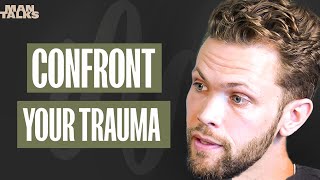
Paul Austin explains how psychedelics activate different brain receptors than antidepressants, downregulating fear to enable trauma processing. Johns Hopkins research shows mystical experiences correlate with improvements in depression and addiction. He emphasizes harm reduction, preparation, and integration work over rushing into high-dose ceremonies.
Questions this video answers
2006
~100 milligrams psilocybin; ~10 micrograms LSD
November 6, 2023
Chapters
Can you say a little bit more about this notion of improving mental health through the usage of psychedelics?
Psychedelics largely activate the 5ht2a instead of the 1a receptor, and that is tied to an experience of catharsis. It's tied to the capacity for us to actually confront trauma stories, narratives in our past that may be difficult or challenging to handle an everyday waking consciousness, because it. It's opening up a window of courage, and it's doing that largely by downregulating the fear response from the amygdala.
All right, Paul, welcome back to the Man Talk Show. How you doing today?
I'm doing pretty well, Connor. Thanks for having me back on the show. It's good to be here.
Yeah, it's been a hot minute.
Um.
We were trying to discern whether how long it's been be, you know, before we hit record here. I think it was pre pandemic. So I'm gonna go with like three or four years.
Since. Since you were on the show. And, yeah, lots has changed since then, which is exciting for. For you, for us. And, yeah, we'll just do. We'll do what we always do, which is start with a defining moment. So tell us a story about a defining moment in your life that made you who you are today.
So when I was 16 years old, it was a Sunday after church, and a couple days before.
That Sunday, my parents had found out that I'd been smoking weed, that I started to smoke cannabis. And they sat me down. And my parents, you know, I grew up in a religious household. Not overly conservative necessarily, but definitely traditional values. And so my parents, I mean, growing up in the 70s and 80s, were really anti illegal drugs in every way possible. And so they were horrified that I had tried cannabis a few times. And my dad looked at me, you know, we're having this discussion about it and why I did it, and, you know, why, why I made that decision. And he looks at me, and my dad's a very kind man, and we. We have a great relationship. But he said, you know, I haven't been this disappointed since my brother passed away in a car accident 25 years ago.
And, you know, at that point, I was just overwhelmed with emotion. I stormed out of my house. I remember it was like a rainy, late October day in Michigan. Cold. Walked around my neighborhood for 30, 40 minutes and came back home and didn't talk with my parents for the rest of the day. And that more or less set the tone for my relationship with illicit substances. That if this was something that I wanted to engage with that I would have to keep it separate and sort of away from my family and my parents, that there was clearly a lot of stigma and something to be ashamed of in working with this. And yet intuitively, deep down, I knew that it wasn't, it wasn't a bad thing necessarily. Like the, the sort of logic of it didn't make sense. And so that same friend who introduced me to cannabis introduced me to psychedelics a few years later. And I had the, you know, classic mystical experience with a high dose of lsd, which then led me down a path where I, you know, believed that intentional psychedelic use could really help people with healing and transformation. And sort of the end of this story is in 2018. So about five years ago now. Michael Pollan wrote how to change your mind, which many of your listeners probably have heard of. And so my dad and I have a thing where he sends me a book to read and I read it and then I send him a book to read and he reads it. And so I sent him Michael Pollan's book to read and he read much of it and as a result of that, became open to the potential of psychedelics. So he started to microdose. And then just a few months after that, I led him, guided him through a high dose psilocybin journey. And so he went from being horrified at my use of cannabis to open and curious about psychedelics. And I feel like that anecdote is like a microcosm of culture at large in terms of what's happened the last five years, that a lot of people who had been skeptical or, you know, worried about the stigma or, you know, worried about this being a dangerous legal drug now recognize and realize the science behind these and are becoming more open to working with these powerful substances.
I really appreciate that story. And what a wild ride, man. Like taking your dad through a psychedelic journey. I feel like there's tons of people listening to this that are like, man, I'd love to do psilocybin with my parents or like take my dad through that. Um, for sure. I joked around with my mom that she, that she should do a psychedelic journey. I don't know if she would now where she's at, but, but a wild thing to say the least. Why do you think that culturally, for so long, psychedelics have been really villainized? Like, I get what happened in the 60s and 70s with the LSD push and, you know, there was a little bit of recklessness, but there was also an amazing amount of research. But why do you Think that cult, these medicines, these different forms of psychedelics have, have been so villainized in, in modern culture.
Well his, historically psychedelics have always been used in.
The underground, at least within modern civilization as we know it. So there's a fantastic book that came out a few years ago called the Immortality Key, which explores this relationship between psychedelic substances and early Christianity. And as part of that the author went and did research on the Eleusinian mysteries which were an event that went on for over a thousand years, maybe even over 2000 years in ancient Greece where people like Plato and Aristotle and Marcus Aurelius would have this intense experience with a substance called kuchiyan, which is very similar to our modern day LSD in terms of what it, what it facilitated. And they couldn't talk to anyone about that experience on penalty of death or excommunication. And if you look at sort of the lineage then of psychedelics through particularly western culture, they're always used in a way that's secretive, in a way that's esoteric, in a way that isn't necessarily for everyone, but it's for an initiated person who is willing to sort of go beyond the boundaries of normal conventional thinking and behavior. And so what happened in the 60s is all of a sudden in a more globalized world, LSD came on the scene. It was shown to be very effective for a number of clinical cond. But when it got out of the clinics and into the mainstream population, it became very associated with the Vietnam war protests. And Richard Nixon's advisor at the time, John Ehrlichman, later came out and said, we knew we couldn't make being a hippie illegal, but we can make the drugs that they were using illegal. And so they shut all of it down. And so it's not illegal from a science, because of a scientific perspective, psychedelics are anti addictive. Research has shown that, incredibly effective. But what they do is they, they wake us up. You know, there's this awakening process, this, this experience of gnosis, of, of divine truth that often comes from working with psychedelics. And that can be very disruptive and destabilizing. And it's very anti authoritarian. And so a lot of structures in our world and in civilization, they need order, they need hierarchy, they need, you know, people to follow the rules. And so if you have a lot of people who are waking up through high dose psychedelic use, that can often tip the scale into maybe an overly chaotic direction. And so as we're entering this third wave of psychedelics and you know, we're on the Verge now of the FDA approving MDMA for ptsd. Colorado has legalized ayahuasca and psilocybin. Oregon has legalized psilocybin. We're really on the cusp of something that's never been done before, which is in a globalized, interconnected world with 8 billion people. What does it look like if all of a sudden, psychedelics become accessible to a mainstream population? And I think, on the one hand, a lot of people are enthusiastic and optimistic that these could be very potent substances to treat a range of mental health conditions, that these may help us to, you know, become better leaders and become healthier and a more sort of spiritual society. And on the other hand, a lot of people are worried about, you know, if a lot of people are all of a sudden taking 5 grams of mushrooms or drinking ayahuasca, what are some of the downsides that we may experience? What are some of the horror stories that may come out of that? And that's why for so long, I've focused on microdosing, because I think microdosing is a great middle way for a lot of people. They can still experience a lot of the tangible benefits of working with psychedelics without necessarily having to go through this rite of passage, this ego death and ego dissolution that could potentially be destabilizing for them. It really, you know, Andrew Huberman, which I'm sure many of your listeners know, if he often talks about the necessity of willful participation. Like, if you're getting in a cold plunge, you know, and you're. Someone just throws you in there, you're gonna be. You're gonna hate it. And physiologically, it's not nearly as healthy as if you're, like, committed, you have the courage, you decide that you're gonna do the cold plunge, and you're gonna see it out. And I think psychedelics are very similar. It really is a rite of passage. People have to want to do it. They can't be forced to do it. But if someone has the courage to see it all the way through and the necessary support, it can be, I think, transformative in many ways.
Would you say that part of the psychedelic experience is a kind of contact or interaction with the unconscious?
Jung would often talk about the sort of collective unconscious that when we're able to tap into these archetypes, when we're able to tap into these. These larger systems that we find ourselves surrounded in, then we can access wisdom that would otherwise be inaccessible. And whether or not Jung did psychedelics is, I think, a point of debate. Carl Ruck, who was one of the first people in modern times to talk about the Eleusinian Mysteries, was on Jordan Peterson's podcast a couple years ago and talked about how Jung lived in Taos in the early 20th century and may have worked with mushrooms at that point in time. But I think it's unlikely that Jung worked with. With psychedelics. Another way to think about the unconscious is the physical body, as I would put it. And so there's a way in which when we work with psychedelics, they put us in touch with, you know, traumatic experiences that have maybe been stored somatically in the physical body, and they allow us to release that. And then the last metaphor that I'll touch on is Huxley talked about how we have this aperture of consciousness that a normal, waking, everyday consciousness. It's pretty closed. You know, we can access about 10% of the mind, you know, and that when we work with a psychedelic, it all of a sudden opens up that aperture more and more and more, which allows us to tap into these archetypes. So I'm not necessarily, you know, a Jungian expert or an archetypal expert, but I do believe that psychedelics put us in touch with material of the mind that would otherwise be inaccessible. That often feels like it's not just ours as an individual, but it's something that we share with our community.
It's something we share with nature in the earth. There's. There's this feeling of interconnectedness that psychedelics facilitate that I believe, put us in touch with parts of ourselves that otherwise many of us wouldn't be able to know or understand.
I would love to have been present if Carl Jung did psychedelics.
And so, you know, like huge, huge student of. Of Jung. And one of first mentor was. Was basically like a pupil in. In many ways. And I was. That was. My first foray into psychology was through the. The gateway of Carl Jung. And it's interesting because in many ways he talks about how.
The unconscious mind is constructed of. Of myths and symbols and archetypes. And what's fascinating about the dreamscape and then also the psychedelic scape or state is that in many ways you're touching on that almost mythological, archetypal, you know, riddled with symbolism.
That element of it. Now there's other parts of it, but it is interesting to see that that element of it is very strong. So, yeah, that would be fascinating, the book that you're talking about, Immortality. Q Actually had Brian on the show when his book came out. It was a wild conversation. I need actually It's a good reminder because I need to have him back on the show. Because I was like, dude, you're blowing my mind. Like, you're telling me that the Christians in the 16th century had a psychedelic drink and that they were controlling the production of this and, and that. You know, then it went underground. I was like, this is insane. Like, this is just too much.
It was. Well, even. I think for me, the more even revolutionary thing is, you know, his belief is that early church communion had psychedelics in it and that when it became the official religion of the Roman Empire, the psychedelic component was taken out of that. And, you know, I think the interesting note about the Jung story as well is according to Carl Ruck, you know, when he maybe would have done mushrooms was around 1910, 1911, which was just a couple years before he started working on the Red Book. And so Ruck's sort of story or narrative is psilocybin is the thing that really broke Carl Jung open and allowed him to get in touch with all of this fantastic material that then influenced, you know, his. The. The sort of core tenets and framework of Jungian psychology. Again, I don't know if that's true, but. Or not, but it is an interesting story at the. At the very least.
Yeah. I mean, for anybody that's. I mean, I've read the Red Book a couple times now, and for. For people that have gone through it, it is. Some people find it hard to read because it is sort of mythical and mystic in nature. Right. I mean, it's him in many ways taking you through this wild ride of his dreams and the, the characters that he's interacting with in those dreams. But. And so he kind of oscillates between reality and the dream world. And that's.
It's.
It can be unnerving for some people if they haven't had psychedelic experiences or they've done dream work. It can be unnerving for some people to really get into that. And it's interesting because he. He seems to. And I don't want to get too off, off target here and talk about Jungus, I'll talk about him forever. But. But he sort of does this wonderful job of bringing people into the liminal space, you know, this territory between the consciousness and the unconscious. And. And in some ways, the reason why I love his work so much is the way you were describing psychedelics sort of largening the aperture of our consciousness. I feel like that is maybe unintentionally one of the main missions that Jung had set out to do with the people he worked with, with his practices, with his work, with his, with his writing is like, how do you expand people's aperture? And there's many different ways to do that, and psychedelics is certainly one of them. Can you say a little bit more about this notion of improving mental health through the usage of psychedelics? Because I think there are still many skeptics on it. And I'm curious if you can maybe break down some of the ways in which, you know, having these types of experiences can improve our mental health. Because, you know, I think the average person is like, I'm gonna go do some drugs and feel better about myself. Like how's that gonna last and how's that gonna work? And I think generally the people that tune into my show probably have a, have had some experience with psychedelics or know about it or, or whatnot. And so we can probably go to, into this part of the conversation. We don't need to sort of stay in the, in the kiddie pool, per se.
Oh, good. Okay, so then let's start with the neurobiology because I think that's, that's probably a good way to, to, to root it. So. And I'm going to compare it to traditional, let's say antidepressant medications. So with SSRIs, Prozac, O Loft, Lexapro, they often work by activating the 5ht1a receptor. And that, that, that receptor is, is tied to sort of a bluttoning or dampening effect. And so when we take an ssri, these emotions or these feelings often get sort of pushed below the surface, which allows us to quickly navigate everyday life in a, in a better way. The downside of that is the repressed material.
Still has to be integrated. And so people will notice that after they've been on an SSRI for some period of time, a lot of the efficacy starts to wane. But they can't just get off of the SSRI because it has, it's quite difficult. The withdrawals are quite difficult. And so that maintenance model is like a band aid and it can be a very good short term. But what we're noticing is when people are unessried for a very long time, there can be a lot of negative consequences as a result of that. And so psychedelics act in a very different way. Psychedelics largely activate the 5ht 2a instead of the 1a receptor. So the 2a receptor, and that is tied to an experience of catharsis. It's tied to the capacity for us to Actually confront trauma stories, narratives in our past that may be difficult or challenging to handle in everyday waking consciousness because it's opening up a window of courage. And it's doing that largely by downregulating the fear response from the amygdala. So the amygdala is a little almond size shape thing in our, like, deep, deep in our brain, the reptilian brain is what they call it. And whenever we have difficult or traumatic experiences that we're starting to recall, our nervous system often becomes overwhelmed, which makes it difficult to really process them. And so when we work with a psychedelic like psilocybin, it downregulates that fear response, which means the repressed material that's been stuffed into the subconscious and unconscious can all of a sudden be brought to the surface and processed. And usually the efficacy comes from a process of forgiveness, a process of love, that when we're working with a psychedelic, we are at times, not always, but at times overwhelmed with these feelings of gratitude and awe and love. And that even when we blame ourselves for traumatic experiences that have happened in the past, which is often what happens, that we can actually find a way to deeply forgive and love ourselves, which does this sort of. It's like this alchemical process for trauma that helps it to become integrated. So I think that's like, that's the science y part of it, right? Which is important to emphasize and sort of root in a little bit. The more spiritual aspect of it, which is also rooted in science, is. In 2006, Johns Hopkins published a groundbreaking research paper that showed that psilocybin could occasion mystical type experiences. Which is a fancy way of saying when, when, when. When I do mushrooms in a safe setting, I have an experience that is ineffable. I have an experience where I'm connected to something greater than myself. I have an experience where I feel this deep sense of gratitude, love, reverence, awe for life and existence. And that the more powerful the mystical experience, the greater efficacy on depression, addiction, and alcoholism. So, in other words, what those researchers were showing is that when we have this really deep and meaningful experience with psychedelics, that connects us to something greater than ourselves. That on a scientific level, we can measure how we're happier, we're healthier, we, our mood is better, we're less depressed, we're less likely to go back to alcohol and other harmful addictions, because the feeling is a feeling of unconditional love. And so that feeling of unconditional love, even if we had good parenting. And I feel very fortunate that for the most Part I had good, good parenting. Our parents can never really, truly love us unconditionally. That comes from something greater. And so psilocybin opens up this window where we can feel, in many cases, the first time, a deep, deep sense through our entire being, a sense of unconditional love, which is a state that becomes imprinted. And so then after the psychedelic experience, a lot of the integration that we go through is how do we remind ourselves of that experience and of that feeling, and how do we actually change our behaviors in such a way where we love ourselves more and more and more, where we're actually practicing, you know, a way of living that really honors our body, that honors our mind, that honors our spirit. So that might look like meditation, that might look like, you know, fasting. That might look like cold plunging, that might look like vulnerability. In relationships, there's a lot of ways that that can show up, But I think the core of it is how are we really, deeply taking care of ourselves, because only by filling our own cup can we then go out and support and serve others. And I think that's the other half that sometimes gets lost in the psychedelic conversation, especially in a sort of overly individualized west, is the mental health benefits. For me, my I are fantastic for a lot of the reasons that we just talked about. But what is equally important for mental health is a sense of service, a sense of giving to other people, a sense of, you know, working or having a career where we feel like we're making a positive impact. And so what I've found in my work with psychedelics over the past several years is that a lot of people who go through this experience, and maybe they work a job that they hate, or they're in a career that they don't like, or they're in a toxic relationship, right? By making those internal changes and starting from within, all of a sudden, then the external. Their relationships with, you know, their partner, their relationships with their career, their relationships with their family, all of those start to shift and change as a result as well. So mental health, you know, catharsis, confrontation, facing our demons and loving those demons, I think is a huge part of the efficacy. But then equally important is this sense of service, the sense of gratitude for life, this sense of really giving ourselves up to something greater than ourselves. I think that's equally important for mental health.
Yeah, it's. I love the way that you framed some of those pieces, and I think that you did a good job of almost, like, framing the psychedelic experience in a way that somewhat mirrors the therapeutic you know, that a good therapist is helping the client or patient or the individual move aside or push through the fear that's in the way from them confronting or, or understanding or having some catharsis around the experience that's underneath, whether that was a traumatic event or an abuse or neglect or an abandonment or whatever, whatever it is. And helping somebody go through that challenging time.
In a way where they can step outside of the pattern that it's created. Because all traumas create a kind of repetition, this like compulsive repetition trying to bring us back to the trauma, to heal the trauma. And however, it usually just repeats the, the experience of the trauma, unfortunately, until we can do that. And I think one of the things, if I'm not mistaken, one of the things that psychedelics also do are sort of like turn down the volume on the default mode network, which is connected to our, sort of like the noise that's in our mind on a daily basis. Right. That voice that's like, don't do this or why'd you say that? Or you know, why are you thinking this? Or like, you know, whatever the hell your chatter is internally, but it can turn that part down so that we can actually move more into an experiential version of our existence versus a commentary about our experience in any given moment. Is that roughly accurate or like, how would you, what would you add into that? Or change?
Yep. Michael Pollan is a great metaphor in his book, which is that it's like a, like a snow hill, like when you go to Vale or Breck or you know, Whistler, wherever there's clear paths that everyone is going down again and again and again. Right. And those, those are similar paths as what we have in our mind where if there's something that happens externally, we're triggered or we react in such a way as if we've always been reacting. And what psychedelics do, it's like psychedelics drop a fresh, fresh layer of powder and they allow us to make new tracks. Which is of course their, their, their impact on neuroplasticity and that window of neuroplasticity. And in, in having that fresh powder, all of a sudden we feel like we can make choices and decisions and not be sort of a prisoner to our past stories and narratives. And I think the other important aspect in this, just to touch on what you mentioned, because I think bringing up this overall therapeutic container is really important that psychedelics are, you know, they're non specific amplifiers is what Stan Grof has called them. And so Stan Grof Said what the telescope did for astronomy and the microscope did for biology, psychedelics will do for psychiatry. So they allow us to get into things instead of looking external, internal, that are deep in our subconscious or unconscious, bring those out and transform them. And that's why what we emphasize with a lot of the coaches that we train in our training program through the Psychedelic Coaching Institute is that the efficacy of psychedelics is not just the drug or the medicine itself, that it's happening within a larger container of transformation. And that psychedelics are simply, they're a catalyst, they are an accelerator. They are something that makes it easier to.
Confront what is difficult and challenging material, which is why they really require a safe set and setting, a way that people can fully surrender to them. Because if that set and setting isn't present, then the power of psychedelics is either lost or potentially traumatic because of how potent, you know, they can be.
Can we just layer on that last piece what is a recipe loosely for a bad trip?
Because I think over the years, you know, I, I've been talking about psychedelics on the show for a number of years now. I, you know, I, I think that they have amazing benefit. I've been quite open about, you know, doing ayahuasca and psilocybin has always been my medicine of choice. I really think that it's powerful, powerful tool in many ways. And I've also had people, you know, reach out and say, look, I've, I hear this conversation, but like I just had a bad experience with it and I don't think I'll ever go back. And what with whatever drug it is, right, Acid or LSD or MDMA or psilocybin or ayahuasca. And so I'm curious about like, what's the, if you, what do you want to avoid, let's just put it that way. How do we set ourselves up for success?
The one thing I often talk about is to start low and go slow. That a lot of people, when they first start to work with psychedelics may, you know, take five grams of mushrooms or go and drink a bunch of Ayahuasca or Smoke 5 Meo DMT, which is a very, you know, very, very, very, very potent psychedelic. And so usually what I tell folks is, you know, start with microdosing or start with something like MDMA or even ketamine, because the likelihood of having a re traumatizing experience is much lower with a small dose or MDMA or even, you know, ketamine. So I think that's like the first perspective is this you know, a lot of people who come into this are really looking for immediate impact. You know, maybe they've tried many other things, especially for certain mental health conditions, and the none of those other things have worked. And so they're really looking for a miracle to some degree. And so I think to manage those expectations, to know that this is a path that may take three months, six months, a year, five years, 10 years, right, to continue to unfurl and integrate is one important part. The other part is, I would say, the basics around set and setting. So your mindset going into the experience, making sure you give adequate time to preparation, you know, meditate leading up to a high dose experience, learn how to anchor in the breath, maybe even do something like breath work before you go into a high dose psychedelic experience.
Have a coach or a guide or a therapist that is present with you when you're going through with this, and then really pay attention to integration afterwards. Because even people who have, let's say, a challenging experience when they work with psychedelics, that may be material that had to come up, you know, that may be material that has to be processed and it could be dark and hellish and it could be filled with paranoia and death and all these really nasty, difficult things.
And sometimes we need that shadow to really come up in order for us to grow and develop and evolve as a human. So I think knowing that there's professional support who can, who can be present with you is a really helpful point. And because most of the bad trips that I hear about are people who are drinking alcohol and taking mushrooms. They're maybe at a rave or a festival or a party, and they just sort of inadvertently do it without giving it much thought or consideration. Or folks who, for example, they might think they're microdosing, but they're, they're not. They're taking like a gram of mushrooms and they're doing it like five times a week. And so they're just taking too much too often. That's another sort of common trope that I hear. So I feel like the educational component is very easy. Like a microdose is a hundred milligrams of psilocybin, right? For LSD, it's about 10 micrograms of LSD. It's not a gram of mushrooms, it's not a half tab of acid. That is not a microdose.
I was gonna say if you're doing, if you're doing a gram of mushrooms as a micro dose, like, good fucking luck at work, buddy. That's gonna, that's gonna be. That's gonna be a little bit harder to function. And yeah. You're like, yeah, anyway, keep going.
Well, and, and because you're putting yourself in such a suggestible and vulnerable state that you're gonna be way more sensitive to all of the external stimuli that you're around. So it's like find a setting, a home, an apartment that, where you could just really relax. And again, have a friend or professional support to help guide you through this. And to start low and go slow. I would advise against someone's first psychedelic experience being three ayahuasca ceremonies in the jungle or smoking bufo 5 Meo DMT. I emphasize this metaphor of the lotus flower. And the lotus flower is, you know, to plant a new seed of self. To plant a new flower, you first have to till the soil, which is the therapeutic work. We all, even if we don't have the big T trauma, like an adverse childhood experience, we all have trauma from being human. And so how do we first till the soil? Work with our shadow, know our shadow, understand our shadow. Microdosing is great for that. Mdma, ketamine is great for that. Once we have, you know, tilled the soil, the soil is healthy. Then we plant that new seed of self with psilocybin or lsd, and then we water that new seed of self. That's the integration, you know, with microdosing, with meditation, with breath work, with lifestyle changes, with relationship work. And then when we really want to fully blossom as that lotus flower, fully blossom into enlightenment. That's where things like ayahuasca and San Pedro and 5 Meo DMT can be very, very useful tools. But I worked with psychedelics for, I think, seven years before I ever tried ayahuasca. And I worked with psychedelics for 11 years before I ever tried 5 Meo DMT. So there is this thing to be said for be patient, be wise, don't be in a rush, and don't look at these tools necessarily as a panacea or a fix all that. They're going to help facilitate an opening. But you still got to do the work. You still got to show up. You still got to commit to the change. It's not necessarily just rainbows and butterflies because he ate, you know, a few grams of mushrooms like there. You still got to put in the, the time and the effort to, to, to change your ways. Psychedelics make it easier, but they're not necessarily foolproof.
Yeah, I appreciate how grounded you are in the conversation because I think, you know, I've, I'VE seen people do what you're talking about, which is like their first foray into psychedelics was going down to Peru or Costa Rica and doing five ceremonies back to back and then coming back and they were just blasted right. Like they were having problems orienting who they were and how they fit into the world because, you know, they just went and had such a big experience, you know. And my buddy Traver Bohm, who has his own show, always talks about, he's a big Brazilian jiu jitsu guy.
Nice.
And so he always uses the analogy of like the white belt and the black belts, you know, and everything in between. And I like that notion of like working your way through psychedelics, you know, knowing that you're a white belt and actually finding your way through there. And I'm with you, man. Like, I think I, I did three or four years worth of psychedelic journeys with psilocybin before I went and did any ayahuasca. And so I really appreciate the groundedness that you're, you, you bring to this conversation because I do think that's important. And I think sometimes I worry, you know, I have a two and a half year old son. Sometimes there's a part of me that is a little concerned because we all know what it's like to be youth and to rebel and to want to, you know, give the middle finger to the system or mom and dad or whatever. And with these substances, you know, much more commonplace and much more accessible. I have concerns sometimes that, you know, they'll be misused and not so much with psychedelics. I think that'll happen here. And there's. My main concern is actually with, with weed, with THC and how wildly potent it's gotten. You know, I think it's really gotten out of control to a place where of course it can be a medicine, of course it can be helpful and generative. But I think, you know, if you're 15 years old and you smoke some of the weed that there is today, I mean, that can create a psychotic break and that, that maybe is not recoverable from. And so, you know, I think with all of these things there's a level of not caution necessarily, but just level headedness that we need to bring to it. I, I really appreciate the work that you're doing and the way that you talk about these things because I think it's stewards like you that are going to usher this into our culture that in a level headed way where there's, they're taken seriously and with responsibility and you know, I think that didn't happen the first time we tried to inject this into our culture. And we paid the price, right? We, you know, so many people got locked up and research grants got stalled and all that stuff. And so we got set back decades in specifically being able to integrate these things into the therapeutic world. So do you have any thoughts on or sort of like concerns culturally, you know, with kids, you know, using these medicines and stuff like that?
I'm glad you brought up the jiu jitsu metaphor, because the way I'll often talk about psychedelics is as a skill. So that's even the promise that we make to a lot of the coaches that enroll in our, our facilitator program. It's like we're going to help you up, level your skill in psychedelics. We're going to help you go from being a white belt to a purple belt to, you know, maybe a brown belt to eventually, hopefully a black belt, right? And that's going to take years. Like, I'm, I, I've been working with psychedelics 14 years, and I still feel like there's, you know, I haven't reached the ceiling by any stretch of the imagination. There's still more deconditioning, there's still more exploration, there's still more, all of these things. And I think that concept of psychedelics as a skill.
Really emphasizes the importance of literacy when it comes to not only psychedelics, but altered states or states of ecstasy, and.
That we had a certain degree of literacy in ancient Greece. Right now it was pretty confined to a certain subsegment of the population, but there were clear structures set up to hold that container. And when the Eleusinian mysteries were eliminated, you know, 1700 years ago, we lost touch with that lineage and that wisdom. So we essentially now find ourselves at a stage where as a culture, we are more or less completely illiterate as it relates to psychedelics and altered states. So what happened in the 60s was it was sort of like, you know, we, we put our training wheels on, and I think the training wheels fell off a little bit. And so now what's happening in this third wave of psychedelics is we're starting, okay, we, the training wheels are staying on. We're going to take them off pretty soon. We're going to learn how to ride the bike, you know, and ideally, it's not as if everyone has to become a black belt necessarily. There are some folks just like in jiu jitsu, who do it for fun, who do it as a hobby, who do it to stay fit, who do it for the community aspect. They don't necessarily want to become a master at it.
But we should enable everyone who wants to work with these substances to at least be able to get the basics down. You know, the other metaphor that I use, it's like you don't have to become a world class chef in order to make yourself a sandwich and cook yourself some eggs and you know, bake some chicken in the oven or grill some chicken or grill some steak. But ideally you know how to prepare some food for yourself so you can, you can live and survive. And I think psychedelics are, are similar in that way. And it's, it takes time, right? Like we, as a culture, we've been cut off from this for 50, 60, 70 generations, right? So it takes 2, 3, 4, 5, 6 generations to get a feel for how we properly integrate this into culture at large. And so I think in the immediate term, and to sort of get back to your specific question, in the immediate term, I do think there needs to be a level of discernment that's practiced when it comes to how do we roll this out. Right. A lot of people have said we don't want psychedelics to become the new cannabis, right? Where it's found, where it's everywhere, where a lot of the risks are not necessarily talked about a lot. We want them to be pretty contained. We want them to maybe be difficult to get access to. We want them to have a lot of sort of warnings and cautions. And I think slowly what we're seeing is as people become more and more educated, they are approaching this with more reverence and responsibility. They're realizing, oh, if I have trauma, I should go to see a therapist or a clinician. I'm not just going to take a bunch of mushrooms at home necessarily. So I think that process of developing the necessary structures and systems and then the more parents, quote, unquote, the more parents that have these experiences with psychedelics, right. You are now way better informed and capable of talking with your son about this and helping him to navigate the nuance. It's not, it's not the sort of like black or white of you either do this or you don't do this.
Celibacy approach of like, just don't have.
Sex, just don't do drugs.
Yeah.
It's like these are the considerations, these are the risks. And I think, I think the beautiful part about psychedelics is we have historical archeological evidence of their use as tools for this rite of passage, which I'm sure you've talked about at length on this podcast about that in indigenous societies particularly, the men would go through rites of passage where they would become, or the boys would become men as a result of going through this. And psychedelics were one of the least dangerous ones in many ways because from a mind perspective, they facilitated this state of death without putting the actual physical body in harm's way. Like I hear about some of these rites of passage where they put bullet ants and gloves and you have to hold the, the gloves or you send them out into the wilderness for a week to fight a bear. You know, like, you don't need to go through that, that, that sort of physical torment with psychedelics. And so what more parents are considering is like, you know, if I have a 13 or 14 or 15 or 16 year old son, you know, how could I might, how, how might I facilitate a process of transformation for him in a really safe container? So we can go, oh, these aren't just drugs to be messed around with. These are substances that if used with a level of reverence and responsibility could be dramatically beneficial. And I think that is the, the benefit of psychedelics over cannabis. That cannabis is much more like just another alcohol. It's can be highly disassociated. People can get easily addicted to it. Psychedelics don't necessarily have that same, okay, I'm just going to use this everyday type of, type of vibe.
Yeah, I, I agree with that. I know a number of guys and clients that I've worked with over the years who they're like, I've never heard people talk about weed addiction, but I definitely feel like I'm addicted to weed. And it's like, yeah, dude, yeah, I.
Had that for five years and I've only this year got out of it because I did, I did a, an ayahuasca dieta in the jungle where I did five ceremonies in 10 days and cut everything out and didn't talk. And, and that's finally got me on the path where I can like get myself out of it. But it's, and I was never pleased about it. I wasn't like, I was, I wasn't in denial. I'm like, I know I have an issue with this. I just can't get myself to get off of it. Like it's that sticky in some ways. So it's, it's, it's worse than most people are willing to I think admit at this point in time.
I would, I would agree with that. And I really forgot for people that are listening want to know more about.
Marijuana. There's a really great episode that Huberman did actually where he breaks down. It's like a two hour deep dive into the research on cannabis. And man, was that eye opening. I was like, holy shit. Because it really gets in with your nervous system and bonds with the neuroreceptors specifically for your nervous system. I think it's one of those things where in the coming years we'll learn more and more and more about it. But let's shift a little bit because I want to talk about this notion of where psychedelics meets. Our capacity to lead ourselves individually, our capacity to, to lead others. I remember listening to, to Joe Rogan once years ago. I can't remember who he had on his show. It might have been Michael Pollan. But they were talking about how like every world leader should have to do, you know, psilocybin or ayahuasca before they.
Maybe Paul Stamets. That sounds like a Paul St. Yeah, yeah, yeah.
Before they step into power. And I, you know, I got to chuckle. I remember laughing out loud at that and thinking like, man, how different would the world be if everybody in power had to go through some psychedelic journeys? Like assisted, you know, real genuine, not just like, here's some mushrooms and you know, go wander off in the forest and good luck, but actually assisted psychedelic journeys. And, and so it kind of, it's always gotten me thinking about the impasse of that and the impact that psychedelics can have on leaders. And so I just, I would love to open that up to you in terms of how, how can using psychedelics or psychedelics as an experience impact us as leaders, either within ourselves, within our systems, our family systems, or our work environments.
So let's go back to this. Write a passage, the boys to men, because I think that's a good, good context to, to focus on. One could easily make the argument that most political systems, most businesses, most.
You know, health care are. It's, it's run by this sort of boy mentality, right? That a lot of our current culture is rooted in the superficiality of the ego, consumerism, materialism, what is best for me. My eye, right? And this is a very boy thing. It's like I need all of these resources to. And I'm going to hoard, I'm going to hoard, I'm going to hoard, right? And when we work with a psychedelic, it often puts us through this ego death, ego dissolution, where we come to recognize and realize that true health, that true, well being, that true leadership is about reciprocity. It's about giving back, it's about taking care of others. It's about watching out for others. So even in most indigenous societies, the chieftain or the tribe is often the poorest in those indigenous societies that their role is to help with the sort of redistribution of assets and resources to ensure that everyone is taken care of. So they would host these potlatches, right, where everyone would come and they would gather all the access and they would make sure that everyone in the community had enough. Because those leaders recognize that to stay in alignment from a spiritual perspective, they had to ensure that their community and their tribe was, was well taken care of, because that ultimately is the best way to survive and thrive. It's much more about the collective than just the me, my eye. So I think the first thing is how do we get people in leadership positions to recognize the futility of a growth at all cost mindset, of hoarding, of.
Consumerism generally and extractivism. And I think that new paradigm that is, it's. It's starting to emerge in many ways, that new paradigm of regeneration, that new paradigm of systems that are rooted in interconnectedness, that recognize the importance of nature, and building systems like biomimicry, that reflect nature, these are all fundamental aspects of becoming a steward. And so I think when I think of being a boy, we think of being a leader. When we think of being a man, we think of being a steward. I think that's the big shift that we often need to honor and pay attention to when it comes to where we're going, is how are we stewarding life around us rather than sucking everything out for our own personal individual gain. And then what comes from that is a system that is not incentivized by.
Growth and extraction and ecological destruction, but instead it's a system that's incentivized by what I call existential wealth. The wealth of existence, right? The wealth of being, the wealth of relationships and community and the ecology and that my belief is that psychedelics are a tool that can help to accelerate our transition between these two places. So you talked about liminality before. And so right now it's like we're starting to leave the shore of being this sort of immature society. We're starting to leave the shore of extraction and consumerism and materialism, and we're just getting into this abyss. And I. And I think it's no coincidence that everyone perceives that the world as we know it is falling apart, right? Like, you know, Covid and then Russia, Ukraine, and now with Gaza, Israel and China. Taiwan and, you know, mental health epidemic and ecological epidemic. And like, we are now getting into the abyss where we can no longer ignore what's happened. And so we need really great leaders who are willing to be courageous, who are willing to adapt, who are willing to navigate uncertainty, sometimes without, without regards for their own individual life, to sort of steward what is coming beyond us. And I think that that shore that we're reaching, I mean, I truly believe in the ingenuity and capacity of the human species. I think technology, like AI, we will figure out a way to navigate and integrate. I really do. I really do think that. And that we will find ourselves, and it might be a generation from now or two generations from now, living in systems and paradigms that are much more sustainable, that are regenerative and that are much better for more people. The challenge is, I think this sort of, is it going to be fast enough and quick enough? And I think for some people it will be, and it may not be for, for all. But again, I do, I do think that psychedelics.
Are a tool to accelerate that process. You know, one more, one more sort of anecdote or, or metaphor on this is Ken Wilber, who I'm sure you're familiar with and, and some of your listeners.
Became best known for writing about integral theory in, in many ways. And he wrote a book called the Religions of Tomorrow, where he talked about how in the Renaissance when the printing press was invented, it wasn't that the entire population immediately became literate. So back to literacy, right? It wasn't that they immediately became literate. It was that the mercantile class.
The sort of top 10%, if you will, of people learned how to read and write as a result of the printing press. And then they went out and said, how do we build the university and academic system to ensure that the structure is created for the entire world to learn how to read and write? And so they built a system that then allowed many generations later, for the entire world to become literate. And I think what's happening now is as we talk, as we hear about, you know, Aaron Rodgers drinking ayahuasca and Steve Jobs doing LSD and Elon Musk being a big proponent of psychedelics, right, we're hearing about how the leaders, creators and builders of tomorrow are starting to work with psychedelics, awake to this truth of their sovereignty and divinity and, you know, take radical responsibility for everything that happens to them. And they are now, many of them, taking on the responsibility of going out and building these systems of tomorrow. And that those systems then will be the structure that's necessary to develop. I would call it a spiritual literacy around this truth of interconnectedness, that we cannot continue to perceive ourselves as separate or individual from what is outside of us. That what is fundamental to this shift, this paradigm shift to go from one sort of shore to the other, is a recognition that when we harm something outside of ourselves, we also harm ourselves. And I think that that process, that, that, that, that wisdom, that recognition, it's bubbling up more and more. And I, I, my, my true belief is that in this next generation it will hopefully become the sort of predominant way that the leaders and builders and creators of tomorrow perceive, let's say, reality or our existence.
I'm trying to think of the guy's name, Daniel Schmachtenberger. Schmachtenberger.
He was giving a talk recently, and I think he was talking about AI and this sort of reorienting of the system that we inhabit. And, and I always find it fascinating to listen to him. He's Definitely my top 10 people to interview and speak with.
And he was talking about just the notion of this interdependence that. I think in some ways you're sort of pointing to that. I believe that one of the benefits of psychedelics is that for a lot of people, the byproduct of it is this irrefutable knowing of interconnectedness. And you don't have to. It's not something that you have to explain or define or, you know, even really fully understand.
Rationally. It's actually something that I've found a lot of people who have had a psychedelic experience, what they come away with is like, oh, I, I get that I'm connected to other things, all other things, and I don't need to rationally know what, why that is. And when you have that, you can start to see this interdependence that I rely on you and you rely on me, and the environment and nature and the trees and the whole sort of ecosystem becomes the. You start to see the threads of interdependence. You know, that there is a reliability and a relying on one another that is so important that can get lost when we are hijacked by the ego and, you know, the other, quote, unquote, lesser parts of our nature. And so what are your thoughts on that interdependence? And, and what can individuals or leaders do in order to move us towards a deeper understanding of that interdependence?
Well, we, we live in a world that's alive, right? The, the predominant thought form Right now is of materialism and physicalism, which is that inner matter is dead, right? And so when we work with the psychedelic, we come to realize that everything around us is imbued with consciousness. It's imbued with life. And so this, as you talk about it, this interdependent system, it's a complex system. And this is what Schmachtenberger talks a lot about, right? And complex systems.
Require challenge and difficulty to grow and adapt. And so right now, the sort of industrial system that we've existed within the last three or 400 years, it's clearly being.
It's being transformed before our very eyes into this system of true, I would say, interconnectedness. And so the way I think, you know, the sort of classic advice is to always start with ourselves. That, you know, change comes from within. Be the change you wish to see in the world, as Gandhi put it. So for anyone who's in a leadership position, whether that's a leader of your family, a leader of your community, a leader of your business, a leader of yourself.
First of all, it's like we have to take full responsibility for everything that's happening, right? And it's only once we take full 100% radical responsibility for everything that's happening that we come to realize that we have a choice. We have autonomy. We. We can choose to create something new. And then, you know, really looking at what I always. What I always believe to be true is that the best. The best lessons are in the wisdom of the past. Taleb talks about the Lindy effect, that the best ideas and technology are ones that have been around for hundreds, if not thousands of years. What's important for any leader who is looking to sort of pioneer the future of tomorrow is to make sure that that's rooted in the wisdom of what's come before us, the sort of archaic wisdom. And again, what we've seen and what we know is that archaic wisdom is for thousands of years, pre Industrial Revolution, we lived in harmony with nature. We lived within nature, we lived in relationship with nature. And I feel like that needs to be retrieved. And the systems of tomorrow that we build need to be in relationship with nature in order for us to have a fighting chance of not only survival, but really to continue to thrive as a. As a human species. And psychedelics are a great tool, I think, to accelerate that process. And as we've talked about, they aren't the thing itself. What we are awakened to when we work with a psychedelic is the thing itself. And that wisdom and that power is what can often act as a catalyst for the change that. That the world needs to see.
So good, my friend. So good. Yeah. As you were talking, I couldn't help but think, well, we are nature, you know, and that's. I feel like there's just like this obvious forgetting that has happened of like, yeah, well, we are nature. Right. So it's. It's such an interesting.
Peace. I mean, I moved my family out of Manhattan and upstate, and we have, you know, five and a half acres of land, and we're sort of smack in the middle of forest and, you know, trees and rocks and. And it's so wild to have watched my son grow up in this space because it's. He. Much like myself and my upbringing, I was very. This just. That was where I felt like I belonged to and. And to see him just the exact same thing, you know, there's just this freedom that he has in nature. And so anyway, I've really enjoyed this conversation. I love the. The branches that we sort of reached out onto and some of the places that we got to speak about for people that are wanting to know a little bit more about your work, you know, the projects that you're working on and the trainings that you offer. Where can they go?
So if there are any coaches or practitioners or people who want to step into this realm more and more, we have a training program at the Psychedelic Coaching Institute, which is pretty easy to remember that Psychedelic Coaching dot Institute is the URL. If someone is just starting their path or they want to go a little bit deeper on it. The Third Wave is a phenomenal educational platform. We have guides. We have a directory of retreats, clinics, therapists and coaches. We have a newsletter. We have a podcast, the Psychedelic Podcast. So that's at the Third Wave co. And then if anyone just, you know, wants to connect personally, I'm on both Instagram and Twitter @PaulAustin3w and, you know, send me a message or DM me and I'm happy to answer any questions that your listeners might have about this. This topic.
Awesome, man. Well, thank you so much for joining me today. This has been a blast for everybody that's out there listening. As always, don't forget to man it forward to share this episode with somebody that you know will enjoy it. This might be the thing that you listen to with your partner or buddy or friend and have a bit of a discourse and dialogue about the role that psychedelics play either in your life or in the role of society. And I always find that those are fun conversations. You know, listen to a show with a friend and then discuss them. So thank you so much for tuning in. And as always, this is Connor Beaton signing off. We'll see you next time next week with another inspiring episode with another inspiring guest.
More from Connor







How to Raise Strong, Unshakable Boys in Today's Culture, with Dr. Shefali Tsabary



