Is Social Media Poisoning Your Relationship?
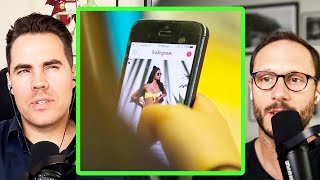
This YouTube interview (Connor Beaton with a guest) examines how social media harms romantic relationships by promoting hyper-comparison, unrealistic portrayals of partners/lifestyles, and simplistic advice that relationships should be effortless. Speaker B describes personal examples where social media-triggered yearning, anxiety, jealousy, and perceived betrayal create conflict. The conversation shifts to actionable communication strategies: practicing presence and attunement (putting devices away, eye contact), validating feelings rather than dismissing them, setting boundaries, and using direct prompts like “What do you want me to understand about that?” to help partners feel seen and heard.
Chapters
How would you say that something like social media has infiltrated modern day relationships? And from your perspective, what's the impact been on the average couple who's, you know, both on social media, maybe multiple social media platforms? How have you seen that impact relationships?
Well, social media has done a lot of things and I think the biggest challenge is this hyper comparison. So whether it's people comparing themselves to other people's lifestyles and feeling shame or unworthiness, comparing oneself to another person's body, to another person's partner.
It really presents often a illusion of what's really going on. So I'll tell you this experience in my relationship, my partner will look at Instagram and she'll see someone writing about, you know, how much money this couple makes together or how great their tantric sex is together. And there's something in there that sparks her yearning and desire and something's important to her and she brings that to me often in a, tries to request positively, but sometimes it's in a more anxious, you know, needy way. And we work through that. We use the dialogue always to try to, you know, get, to get, get to the bottom of things. But the point is, is that I can see something or she can see something on the Internet. Creates kind of an anxiety in us that maybe we're not enough or we need to do more in some way and then it can start creating conflict and misunderstandings between us when we take that stuff personally. And all the.
Content itself is not a true picture of actually what relationships are about. Beyond this, I see every single day that I open any social media platform a million bad ideas and just, just takes that are completely wrong. For example, your relationship should be easy.
You know, and.
If you've been in relationship for, for more than six months, you know that it's not easy, you.
Know, you know, and it's not supposed to, it's not supposed to be easy. I agree with you on this one. I have, I've seen a lot of content out there that's like, you know, he should just know what you want and be able to meet your needs. And, and she should, you know, if she doesn't figure out what you want, then, you know, leave them. I'm like, who are these people espousing this? Like, it's just nonsense. I think, I think it's so detrimental to the average person because there is something inherent. Like, look, I'm not saying that your relationship should be the most difficult thing in your life. I'm not saying that it should be the most challenging aspect of your existence, but your relationship, like anything else that is worthwhile, you know, having the type of body that you want, having the type of bank account that you want, having the type of vocation and career that you want or business that you want, that is going to require a significant amount of effort. And this notion that relationships should be effortless really seems to have infiltrated the collective conscious in some way. I see all these small messages and large messages that advocate for some type of non responsibility that you're, you're not responsible for advocating for your needs or your wants or your desires or, you know, just like how you want your relationship to look.
So yes, I'm on the same page. Tell me more, what else, what are some of the other messages that you see that are harmful?
I think just one thing on this point of easiness. I want my relationship to be easy. Everyone wants their relationship to be easy. And that is an entirely different conversation because you can say, okay, this is my want and this is my desire. So how can we make that come alive? How could I co create that with my partner to the best of our ability to maybe reduce our suffering, increase our understanding, increase the felt sense of intimacy and connection? And that takes work, you know, it takes commitment. Social media. I think one of the most triggering things for partners about social media and you know, traditionally I hear this from women a lot and I've seen a lot of writing from women on it is their male partners following booty models or porn stars or you know, the.
Stereotypical girl who's in a bikini on her Instagram every day with the scantily clad photos. And that, that's very triggering for partners because they're feeling like, well, why are you following this girl? You know, why are you liking all of her photos? And it feels, to some people, it feels like straight up betrayal. It registers in their body as abandonment. And at a lesser level, there's just general feelings of jealousy. And I see and notice a lot of male partners meeting that with defensiveness, meeting that with dismissiveness or avoidance, and basically invalidating their partner's feelings, which is another way to really increase the amount of fighting, is tell your partner that they don't make sense and they just need to relax.
When your partner feels unseen, unheard and invalidated, they just get more anxious and they typically are going to use negativity to try to not feel that way.
Can you though? I think those words get said a lot online.
In conversations about relationship. This notion of like, yeah, I'll have guys come in to men's weekends or come to work with me. And it's like, yeah, my wife wants. She keeps saying that I. I'm not seeing her. I don't hear her. She wants to feel more seen. She wants to feel more heard. That type of language, I think, sometimes can be vague. I think for a lot of guys who, you know, we're pretty rational and logical most of the time, where it's like, okay, I mean, I do see you, and I do hear what you're saying. So can you dig into that a little further and give some tactical examples for the guys that are out there listening? They're like, okay, I've heard that from my girlfriend. I've heard that from my wife. Decode this for me. What the hell does it actually mean?
Yeah, yeah. So what does it mean to actually make your partner feel seen and heard? How can we break that down a little bit? When your partner says something to you about their experience, and if we're talking sort of in a heteronormative sense here, that the guy is hearing something from his woman, how can you maintain a sense of.
Presence, which is like, durable curiosity about her? Turn off the TV channel of your life.
And just be with her experience for a moment without having to fix it, without having to change it and see what kind of difference that makes. And can you hold this pose, as John Wynlam likes to say? Can you hold this pose for 30 seconds, for 10 minutes, for an hour? You know, and that might be hard to do it for a minute. For many people, it's near impossible to do it for a minute until they learn that this is important. They start making an effort, and slowly they're able to do it. And they're going to have setbacks and make mistakes. But can we turn off the TV channel of our life and just actually be with our partner for a moment? Get curious about them instead of getting defensive or offensive in order to protect ourself and our identity or our sense of power.
And there's a couple key things you might do, which is to turn off distractions, put your phone down, turn towards your partner, make eye contact with them, and try to practice this thing called attunement. It's just being with your partner in the moment, hearing them out. And that doesn't mean you should let your partner go on for two or three hours on a tirade, putting you down or criticizing you. Boundaries are important, but when the time is right and you're both available to just be able to do that, to try to practice this more often.
It's really about seeking understanding rather than proving yourself right.
I like that. I like that some. I think my wife and I led little couples follow up workshop last night for a virtual group that was part of a workshop that we led for couples. And part of what I said was sometimes we need to put the context aside and put the experience forward, you know, so it's like sometimes we get lost in. I find myself doing this too. I'll get lost in the details of what my wife is saying sometimes. And I'm like, okay, like, you know, this is going on, the relationship, or she's talking about something that's happening in her business and I'm trying to track all the details and, you know, figure out how she might be feeling because of that. And in what I've found is when I can put the context aside, when I can actually just put the details aside a little bit and go more for her direct felt experience. Like, what's actually going on inside of you? You know, as you're talking about this, what's it like? What are you experiencing? And I'll ask certain questions that I found to be super helpful. Like, what do you want me to understand about that? Like, that's a godsend of a question I found. You know, it's just, what do you want me to understand about that? Well, I want you to understand that when my mom said this or this happened in my business, that it made me feel X, Y and Z. And I'm like, oh, okay, got it. I understand that now. And so I think that sometimes to come back to social media, there's some very beneficial stuff that's out there. I love your content, by the way. I think you've done a very good job at curating some messages and teachings that are very practical and tactical and understandable. I do think that there's a lot of content that's out there that's like nonsense, you know, where it's just lost in the minutia. And sometimes these things in relationships aren't more simple than we are making them to be. You know, they're more simple than we're making them be. So I love the breakdown that you're saying. Anything else that you would add into that in terms of ways in which we can support our partner in being heard and being seen and prioritizing those things for, for them in communication?
Well, one of the things, Connor, that you just said, you just described this moment with your partner where you're trying to sense more of what her Experience is you're trying to sense more of what she's feeling. This is a kind of relationship mastery. This is something that all people have an ability to do, but we just don't know how. We need to learn. And it's really about empathy. Can I sense what my partner is experiencing right now, what they're feeling, what's happening with them, and just step outside of my own self absorption for a moment, my own opinions and ideas about right or wrong and just sense more about what's happening with them. And for so many guys, what we do is we try to meet our partner's emotional reality with logic and it never works. And part of the reason that happens is about the way that boys are actually socialized to begin with, which is boys don't cry, suck it up, stuff it down and let's move on and don't be a baby. So we actually learn to compromise part of our core self, which is about sensing and feeling. Part of that is actually repressed. It's not nurtured or developed in certain ways through society and in family systems. And we learn to become more thinkers and actors. And isn't it interesting that if you resonate as someone who's a great thinker and you take action in life, that you are probably attracted to someone who's more of a sensor and a feeler. And their emotional reality sometimes is triggering to you because of how big some of the emotions are and how much it doesn't make sense. And this is part of the dynamic about opposites attract, that the person who's more of the thinker and the feeler is attract or thinker and actor is attracted to the sensor and the feeler, the person that's more in touch with their emotions, the person that cries more, they're with, they're attracted to someone who is able to take action, doesn't get as overwhelmed with circumstances, is able to quickly come up with solutions. And these people have a lot to learn from each other once we can can get past the fact that our partner's difference is not a total threat to our reality, that they can be different and we can be safe. You.
More from Connor







How to Raise Strong, Unshakable Boys in Today's Culture, with Dr. Shefali Tsabary



