Jason Wilson: Escape Emotional Incarceration! (men need to cry)
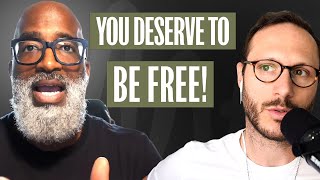
This is a transcript of a YouTube interview (Man Talk Show) between Connor Beaton and Jason Wilson about "emotional incarceration" — the self-imposed suppression of emotion many men carry from childhood trauma. Jason tells defining personal stories (his mother's dementia; caring for her), describes the viral video of a boy breaking a board that catalyzed his public work, and defines emotional incarceration as a prison men choose to stay in out of shame and fear. He links suppressed emotion to anger, poor health, work-identification, inability to rest, and higher suicide rates; cites Dr. William Frey's research on tear chemistry; and locates intergenerational trauma (including racial trauma) as a factor. Jason explains using martial arts (Cave of Adullam) as a training model combining physical discipline, emotional safety, and rituals (board-breaking) to teach boys to face fear, fail safely, and build comprehensive manhood. He promotes practices (reflect → release → reset → rest), upcoming book Battle Cry, and calls for broader cultural models of comprehensive masculinity.
Chapters
Trauma starts when we're younger, and if we're not intentional about seeking therapy to release the trauma while we're young, you see a lot of old men walking around with broken boys inside. When we're emotionally incarcerated, our emotions become our masters. They become the warden of our mental prison, and we can't escape. And as a result, we become angry. The majority of the men I talk to who reach out to me, they know they're emotionally incarcerated and want to break free, but they feel worthless, man. Like they don't even deserve to be free. If you look at the majority of people, not just men, but women too, who say they're grinding, they look wore out. They're always tired, bags under their eyes. Yeah, man, I'm just grinding. And they keep going. Okay. And so as long as we're grinding, we can't rest. I often say, either you're gonna rest now or you're gonna rest in peace. We identify with our work because we feel that we're worthless if we're not working. Foreign.
Jason, welcome to the Man Talk Show. How you. How you been, man? It's been. I think it was like 2017 that we.
2016, man. December, right before Christmas. I never forget it.
Oh, my God, man.
Just, you know, we had a great time, man. It was really good to just hear your perspective and your background as far as it relates to the issues that men are feeling. Me being an African American, you know, I only see it through a certain lens. But when you and I talked, I said, wow, this isn't just a black man's issue. This is a man's issue. And so, yeah, I never forgot our time. And then we were rushing out the studio, man, and the freeway in LA was so packed. We were like, man, I don't know if we gonna make it. I know. Flying to Canada, right? Weren't you?
Yeah, I was. I was flying back to Vancouver. Yeah. So the time I was living in Vancouver, and for everyone that's listening to this, we. We were on a show called the TD Jake show in Los Angeles that. That was filming and where Jason and I met for the first time in. I guess it was. I guess it was sort of like October or November.
No, it was. Listen, I'm telling you. Is this December? I. I never forgot it because the year was. Because that's the year the video went viral for our Academy. And then it was. Everything was happening so fast. And so we get a call in December. I'm like, wow, okay, this is a cool way to end the year out and so I remember it was right around Christmas, my man, and we just met up out there, and it was really good time, man.
Yeah, yeah, that was a blast. And then we got stuck in traffic on the way back for our flights. We're like, shit, we're not gonna make it.
I think I literally walked onto the plane, and then they shut the door behind me, like, I was certainly the last one, and I just managed to make it, which was good because it was the end of the day. But. Well, listen, man, maybe what we can do is just start a little bit off with, like, I usually ask all my guests the question, tell us a story about a defining moment in your life. And I feel like you've had many having the honor of knowing a little bit about your life and, you know, getting to spend two hours in an Uber with you in the streets of Los Angeles.
But I would love to hear, you know, what. What has been a defining moment in your life and how. How has that affected you?
Man, there's just so many, Connor, like you were saying. But I would say the one, if I had to rank them, you know, from five to number one, the one that transformed my life the most was when my mother developed dementia. And at that point in my life, actually, she had just passed that year you and I met. She passed April 2016, and she had developed dementia, I think was 2010. We noticed it two years prior. And at the time, con. I was just. When I talk about my new book, I'm just. I was just a masculine male. I only knew how to express masculine attributes or exude masculine attributes. So I knew how to protect Mama. I knew how to provide cut the grass, you know, fix things around her house. I knew how to.
Deal with the pharmaceutical companies who were trying to. Who were stressing her out, trying to charge her more money for a medication and she could afford. So those things were normal. I was used to that. But I wasn't used to watching her have a nervous breakdown and then having to console her to have to tap into emotions that aren't masculine. So, you know, for clarity, as you and I know, the word masculinity is just an adjective. It was never meant to describe the comprehensive nature of a man. We're too deep for that one adjective. So masculinity is attributes such as strength, boldness, aggression, power, or it can be something as simple as masculine attire. Okay. But I needed to become what is called a comprehensive man. So I had to tap into more emotions. I had to be strong but sensitive. I had to Be courageous, but compassionate. And the key thing kind of I learned from that season with my mom. I learned how to freely live from the good in my heart instead of all of my fears. So I had to learn kind of how to be patient with her. When she started repeating or asking the same questions over and over again, the masculine male was like, mama, you already said that. I just answered that one time. I mean, no, 10 times. That was frustration, but it wasn't nurturing. It really wasn't love. So once I became patient, I would say, I will answer that question, Connor, 20 or 30 times and wouldn't be flustered. I learned how to walk with her. I created a concept called the emotional roller coaster. And so when a man is mastered by his emotions, he becomes a slave to them. So my mom, dementia. Anyone knows who has a care school person with Alzheimer's and dementia, Their emotions go up and down, up and down. And as their caregiver, you have to stay steady. If not, you get on that ride with them. You're both your world. Everything is just up and down. I learned, my friend, just to be as a caring parent. I let her experience the ride because I couldn't get her off of it, because it's a mental, mental struggle with mom. But I would patiently wait, walk alongside the ride, look up when she comes back down. I hold her hand until she steadies herself mentally and walk away. And so I. I learned how to comb her hair, man. I learned how to do her nails, file her nails, polish them. One day, the caregiver was just overworked. I had to clean my mom and bathe her. And at that moment, my mother looked at me, and it still chokes me up to this day. She looked me in my eyes and just said, thank you. But that's a defining moment in my life. That's when I broke free from what I called emotional incarceration. I finally became a comprehensive man. And that's why I truly believe, when she passed in April, my man, the video went viral. I believe in June, and it hasn't. I mean, my life has changed drastically, but I couldn't have handled what I'm dealing with now if I hadn't become a comprehensive man, if I hadn't gone through what I went through with mom. And so. And that's what just brings me where I am today, is that look. You know, my desire is to help men break free from emotional incarceration and live from the good in their hearts. You know, we as men, we know like, man, I wish I could do this, but I can't because of society's definition of what it means to be a man. So that was the most defining moment in my life.
Thank you, man. Thank you. I appreciate that. And you know, I think a lot of people can resonate with that, whether they have an alcoholic or addictive parent, you know, sibling that they're trying to take care of. Where we're put in the position of helplessness in some ways. And I think for men that is, it's a real test of our manhood in some ways, a real test of our masculinity. When we're thrust into a position of helplessness, the true version of you is going to start to shine forward. Do you control? Do you try and exert power? Do you try and dominate? Do you allow? Do you become compassionate? Do you live with grace? That's what I really hear and what your story exudes to me is that you found this kind of grace as a man that is incredibly potent. Can you shed a little bit more light just for the listeners that might not know about the video that you're talking about? Because I think one of the things is that I have had the pleasure of witnessing your life unfolding. That video happened. I had seen the video and then we met on the TD Jake show. And then, I mean you've written a few books since then. You were at the White House with Obama. You were on Rogan's show recently. It's just like, you know, everything has exploded. So, so tell, tell the listeners about the video and what, what was transpiring in that video Because I think it's actually quite crucial.
Yeah, the video is actually on YouTube. It's entitled Emotion Breaking Emotional Barriers. And one of my recruits, Bruce, at the time, I believe he was eight years old, he was taking his initiation test into our academy, the Cave of Adullum. And he had to. Well, it was a. I mean you have a spiritual side to this test and the physical. So we make sure our boys are comprehensive as well. So he passed the spiritual side. So now it was his turn to show us that he has the skills to train with us moving forward. So he had to simply just break this board, you know, that was in front of him and was crazy. Connor, many don't know that he broke that board very easily the week prior. But what Bruce was dealing with, it wasn't a lack of physical strength or technique. It was a fear of failure. And so he could not break that board with his non dominant hand. And then he just started, excuse me, Started crying, and I dropped to my knee and I said, it's okay. So we cry as men. And then I coached him through his emotions, allowed him to express what he was feeling, and then once he gathered himself mentally and emotionally, he was able to break the board. When that video went viral, it has over 150 million views now worldwide. Not just YouTube, just in social media, just everywhere. When it went viral, Connor. Our phones. We have a nonprofit called the Union, and we serve youth and families in metro Detroit. The Cave of Adullam is one of our programs, for a better word, for lack of words. It's a program under the umbrella of the. Of the Union. We had to shut down our nonprofit for two days at least, because we were. Our phones wouldn't stop ringing from this video. I didn't know it was viral, my man. I didn't. Because you think 2016 was viral? You know, it was kind of like a new thing for me. And my wife called. She says, jason, what's going on? My phones won't stop ringing. Is there a video you posted? I'm like, yeah, just posted a video of Bruce. What's the big deal? You know, I just posted it so fathers would see how to be patient with their sons. Man. Men from all over the world were calling and crying on the phone, not only with our male staff, but our women staff, saying they just tired of holding it in, Just talking about the times, as when they played football or in the military, when they were yelled and cursed at, when they just had to suppress their fears and just run through situations. And as a result, that suppression, they still do to this day. And it puts their lives. They put themselves in compromised positions. And so that's when I woke up. Like, wait a minute. There's something connected here to man and crying. Something is. Is off here. And sure enough, I started studying, you know, the. The power or the benefit of tears. And a guy named Dr. William Frey, he's a biochemist. He discovered that tears not only contain 98% water, but also stress hormones when we cry from trauma or emotional pain. And these stress hormones get released from our body when we cry. So now, when you tell a man or tell a boy, big boys don't cry. Or what doesn't kill you can only make you stronger. No, what doesn't kill you can kill you eventually if you don't change the way you're living. So these miscellaneous mantras and the way we've been traumatized as men throughout our lives is. Is. Has caused us not to live healthy lives so that's why I never bought into the term toxic masculinity. There's really no such thing as toxic masculinity, because again, like I said, masculinity is not a definition of manhood. It's an adjective. Okay? It's just a group of attributes again, strength, boldness, aggression, etc. But a man becomes toxic when he allows himself to only be defined by masculine attributes. So when a man doesn't know how to verbally process what he feels and he's stuck in being a masculine male now, he hits things or people to express what's hurting inside of him. We go grab alcohol or drugs because we're hurting from abuse as a child and we can't really articulate it to our wives or therapists. And this is what I saw that was happening. And that's what prompted me, I guess, to write my first book, Cry Like a Man. Because it wasn't just myself that was suffering, but it was men worldwide.
Yeah, thank you for that. I think you articulated that quite well. And you know what, what came up as you were talking about tears and crying really was the work of, like, Besser van der Kolk, who talk about the body keeps the score that our bodies retain pain, they retain trauma, they retain abuse. And if we don't allow ourselves to process those things, to actually feel those things, we hold onto them and we have no other choice but to release them in these other ways that you're talking about. And so I've heard you talk quite a bit about this concept of emotional incarceration. I would love for you to share that a little bit more because you've worked a lot with young men and specifically with young black men. And I was hoping that you could shed some light on what you see. Like, where does emotional incarceration start? How can you. How can you define that for us? Where does it begin? I would love to just hear a little bit about that.
Well, emotional incarceration is a self induced, basic, A daily sentence where we. It appears to be a safe space where we're alone in this cell. And what's strange or different or unique about this prison or this cell is that the door stays open because we as men know that we can walk out at any given moment, but we choose to stay inside so that we keep ourselves from being misunderstood and also hurting others. Emotional incarceration for me started when I was young. Like for most people, you know, trauma starts when we're younger. And if we're not intentional about seeking therapy to release the Trauma. While we're young, you see a lot of old men walking around with broken boys inside. And that's all you see. And that's what's happening. And so I say self induced because we choose this for me myself, I can't tell you how many times I would stay on the couch depressed and my wife and daughter wanted to go out and have fun at the park, but I didn't want to go. And I couldn't articulate why. But it was a feeling of a lack of self worth. And I would just sit there, man, and the whole beautiful day would go by. But in, the only time I really could express a consistent happiness was only on special occasions like my birthday or father's day. But other than that, I would stay guarded because of the pain, the words of abuse that I took from my dad or even the death of two of my brothers, the homicides and losing my best friend of a heart attack. You know, I can go on and on. These things happen to us and the body does keep the score. And as a result, when we do not release what's going on inside of us, the capacity, we reach our limits. And so when something happens, a guy could cut us off on the freeway, we're going to lose and hit the horn, like, what's. I'm ready to fight and get out the car. And that literally happened. I wrote about it in my new book and it was sad because I heard about it on the news here in Michigan. But two road rangers up north, both legally carrying guns, got into an argument with their families in the car. Collin, pull over in a car wash, get out and shoot each other to death. And they both die in front of their families. And I say, I say, you know, I tell men, I want you to just. Let's stay here for a moment. What would be your thoughts if you're lying in your own blood, gasping for. For air, and you see your family over you crying and screaming? Was our ego worth protecting that much? When we're emotionally incarcerated, our emotions become our masters. They become the warden of our mental prison and we can't escape. And as a result, we become angry. Anger itself is not bad. Unresolved anger is bad. And because of that, we become the worst versions of ourselves. And what's heart wrenching or heart rending about this, Connor? The majority of the men I talk to who reach out to me, they know they're emotionally incarcerated and want to break free, but they feel worthless, man, like they're not. They don't even deserve to be Free. Even when, like, suicide, you know, that we're likely to die by suicide. Three to four times as likely as women. I remember seeing one doctor, we was on the track. He recognized me from social media. Make a long story short, he wanted to die by suicide. Very successful man, beautiful family. I said, have you seen therapies? A therapist? Have you, you know, went to counseling? He says, yeah, but all they keep telling me, think about my family. What about this? What about that? And he was like, man, what about me? And that's the thing is, man, it's like we've grown to. We've gotten to the place where we. We live by what we do instead of who we are. That's why we can't rest. I joke about it in Battle Cry, how when Nicole, my wife, would come home and I'm taking a nap, bro, I would get up, like, and start working. Like, she couldn't see me resting. I'm serious. So when I said that on Joe Rogan, I got so many messages from men again of different ethnicities, saying, dude, I thought it was just me. We identify with our work because we feel that we're worthless if we're not working. And that's a bad place to be in as a man.
Yeah, I mean, I think in many ways.
We as men often have to build our value, right? We have to build our worth. And it's not given. Right. It's not a given thing. I think in many ways, women have a kind of inherent value in the fact that they can birth children. They have this incredible gift that we just don't have. And so I think in many ways, men are trying to find a sense of value, a sense of worth in the world, and we can very quickly attach.
Our quality and our caliber of self worth, our worth to our family, our worth to the world in what we do, not who we are. Right. We. Not. Not who we are, not the presence that we have, but what we do. And we can put so much emphasis on that. And I'm curious for you, you know, when you talk about this. This idea of, like, I need to be busy doing so I don't get caught, you know, slacking.
Exactly. Or resting.
Or resting. Yeah. Like, what do you. What do you find is the. Is the story that a lot of men have around rest, around replenishment?
I mean, again, I mean, it's several factors, man. You got the grinding mentality for one, and that's. That's bad. But also, you know, this is deep. As you were talking, our wives are referred to what the better half. You see how, how many messages where we're told as men. And so the grinding lifestyle is promoted. Everyone says, I'm on the grind. I'm doing this, I'm doing that. It is written that life and death is in the power of the tongue. So when you look up the word grind, again, it's similar to masculinity if you don't understand what it means. You think being a man only means you're strong, aggressive, a provider and a protector. You think you fit in this little box. If you do not look up the word grinding, you think this is really a word of productivity. It's not. It means, I mean, in one definition, it means to torment, to oppress, to wear down, to pulverize. You know, that's why if you're in a machinery shop and someone yells grinding, or the supervisor hears something grindy, they hit the stop button on production, because that's not a good thing. And if you look at the majority of people, not just men, but women too, who say they're grinding, they look wore out. They're always tired, bags under their eyes. Yeah, man, I'm just grinding. And they keep going, okay, and. And that's the problem. I tell them to grinding instead of man up. We have always man up all the time. We need to open up. And so man up. You know, we. We've been saying that now kind of for what, maybe 15 years now, and truly came from a place of encouraging men to keep fighting or become something. The problem with that phrase is that it insinuates that we're not doing something correctly. You understand? It actually came from the cowboy era, when the cowboy will fall off the. A horse said, man up, cowboy up, get up. That's all it means. But as soon as you tell a man, a man up is subconsciously is telling him he's not doing something correctly. That's why the phrase didn't work. And so as long as we're grinding, we can't rest. I often say either you're going to rest now or you're going to rest in peace, you know, and that's what's happening. How many men you see? And for me, I take pictures because I use it in my presentation of an elderly couple. Either they're at the mall, the restaurant, and I just took one recently when I was flying back to Detroit. The man is on a walker, barely can move, but the wife is helping him along. And when I say that man, like, whoa, I see that way too much. Because again, we identify Our worth and our work. And that's a major problem to why we're not resting. Why? This is another alarming statistic. Nine out of 10 people who live to be over a hundred are women. Say that again. 9 out of 10 people who live over 100 years of age are women. When the last time you seen on Facebook or social media, you see the woman, this grandma, she's 102. Yay. When the last time you seen a man this grandpa, he's 105. He don't see that, bro.
It's always. It's always the sage, you know, the guy that's been sitting there meditating.
Yeah, he's all. He look old, but he only 70, right?
And so, you know, I'm like, okay, let me sound the alarm the best that I can. Like, look, this is not healthy. And then was also another tragedy, man, our wives don't want this life for us. Okay? I've surveyed several, even on social media. They don't want this life for us. I remember it was Father's Day, my friend. And it was a meme I saw at the top. It was a beautiful, like a gourmet hamburger, Perfect bun, lobster, filet mignon, steak is the meat. Lettuce, romaine lettuce, tomatoes. It was fabulous. And that boy was like, this big. And that represented Mother's Day at the bottom. The Father's day burger was a trampled McDonald's cheeseburger. Like, somebody stepped on it. So it was hilarious, you know? But when I looked at the comments, you know, the women were like, I tried to do nice things for my husband or my father or my brother, but they won't let me. And then this is so true. How many father's days? And I said this a men that were like, wow, do we stop our families from showing the love they have for us? What do you want for fathers that dad or nothing. I'm straight out. I'm okay. I do what I need to do. Or your birthday. Because again, we feel all we're supposed to do is work. And that's a major. That's one of the major problems with us. You know, without rest, man, we can't function correctly. And it's a tragedy. Yeah.
I mean, I feel like what I kind of hear you implying is that we need to broaden and expand how we define our sense of purpose as men. We can become so myopic and fixated on just providing, just making money and making things go within the household. And we can get caught in that, in just finding Meaning and finding purpose from our work. And we can forget that there's, you know, a much, a much broader picture out there that we can find meaning and purpose in parenting and being a good father and being a husband and, you know, in, in creative endeavors. So you use, you use martial arts as a form of training men and teaching men and, you know, within man talks. Like our slogan is, it's not therapy, it's training. You know, and I really appreciate that approach because I think, I think for most men, we, we desire training. You know, we crave that. We want to like, work. You know, we want to work our bodies, we want to work our minds, we want to work our souls. And you use the vehicle of martial arts. And so I would love to hear a little bit about, like, how did you come into. Into martial arts? When did it enter into your life? And how do you use that as a tool to support young boys and young men in stepping into a more mature version of masculinity? Again, I know there's like five questions at once.
We have to, we have to. We have to be careful how we say for men to step into a mature version of masculinity, because that's not. We're trying to do into a mature version or comprehensive manhood. Like, bro, we, we've been conditioned, Connor, to say we're just masculine. When have you seen a woman say, I'm just a feminine male or I'm just. I'm defined by femininity. That don't happen. You know why? Because most women have to be anything and everything they have to be at any given moment. Harriet Tubman had to be compassionate and courageous. One sister, her name is. I forgot her name. But she actually, she was a power lifter, I believe. And she lifted the car off of her dad, man. It collapsed on him while he was fixing it. She lifted the car off of him. That's a masculine attribute. But yet she's a mother and loving wife. You see? You see, women don't allow themselves to be confined like we do back in the day. And I get to your question, but back in the day, bro, how many women. What was the saying? A woman's place is in the kitchen? Remember they used to say that. They used to say there's pictures of women just only can be in kitchen. You watch Leave it to Beaver. I know I'm older than you, but you would see his mom only just staying at home, cooking and cleaning the house. Women didn't buy that. They say, oh, I'm bigger than that. I'm more than this. And they were created more than that, just like men. So now to your point about, you know, martial arts, I. My father, you know, he was in the same city but wasn't actively in my life. And I would see the martial art movies and you see the teacher and the student and that like father and son relationship and again him getting trained. And it wasn't just learning how to fight, it was just seeing someone overcome their fears and lack of confidence. How they transform from something so passive to becoming an assertive man with confidence and vigor. And so at 12 years old when I started practicing on my own because I used to love the art ninjutsu and there weren't any qualified teachers of ninjutsu in Detroit in that day. So I would just buy Black Belt magazine and practice myself. I eventually got enrolled in several. I've trained this martial arts man probably for almost 27 years now, I believe. And what I discovered when you see all these grown men training, it really was a self defense because majority of them already knew how to fight. Majority of the friends I knew carry guns. In Detroit, I haven't seen a fist fight in years because they shoot, everyone has CPLs, they carry guns. So why were we sweating and working so hard, getting injured training in martial arts? It was because we were trying to break away what was stopping us from being the best version of ourselves. So the reason I started using martial arts with boys at first, Connor, I only used it for discipline. But when I started the Cave, well, developing it in 2006, there was a plethora of boot camp programs around in Michigan. They even had scared straight programs where they would take boys into prison and they would pay the prison guards, you know, give them money to help straighten these boys out, scare them into not coming to prison. It appeared to be a great thing. I even participated in a few. But then I quickly discovered you can't help a boy heal from trauma by re traumatizing him.
I learned my man, that our boys didn't need more discipline, they needed more love. So then I started making the cave of Adullam more than masculine. I made it comprehensive. And so I started dealing with meditation, allowing them a safe space to share what was they're dealing with in their day to day lives. To release the trauma before they get used to suppressing it. The martial arts is so powerful because even the board breaking ceremony, that board represents a mental barrier in your life that could be fear, lack of focus, unresolved anger, a father wound, lack of confidence and Them breaking it in our academy is symbolic to them, having a basic understanding of how to overcome it. Because it's not just physical. We actually teach them how to introspectively win the fight before you face one grappling. As I was talking with Joe Rogan about, there's nothing like having someone invade your space and you have to deal with them. It's easy to strike and keep people off of you. Rephrase that. It's not easy, but it feels better when you can and keep someone off. When someone comes in, it's like, whoa, what's happening? That's what we fear the most. Even mentally going inward or introspectively to deal with our own self. When you grapple, when someone throws you, like the principle we teach, we do judo as well. Connor, this is interesting, my man. If you're not relaxed when you're getting thrown, it hurts twice as bad, okay? But when you relax and you're taught how to break, fall, how to hit the mat at the right time and you're like, really loose, you get back up and you're ready to throw your. Your partner. Isn't it interesting that the majority of accidents caused by drunk drivers, the drunk driver majority of time lives, but the people that he hit die. So I was talking to a friend of mine who's a police officer and from their studies, it's because we're alert. We're like, whoa. We brace ourselves for impact. The drunk driver is like this.
So when we throw each other, we're relaxed. Boom. The principle is what I teach boys who fear failure. When you prepare yourself for the fall, you'll be able to rise when you do. So when you fail or you learn from a mistake, you'll be able to rise much faster if you practice it and you stay calm and understand it's just a part of the process. And so that's why the Cave of Adullamus is sought after. We have almost 500 boys on our waiting list. I have men reach out to me every day saying, man, you have to do one of these for grown men, because again, we're walking around with broken boys inside. And so martial arts, you can't escape yourself. Basketball, football, golf, tennis, we can hide it, man, we just hide it behind the scale. In martial arts, especially if you do jiu jitsu, you're not winning all the time. You can forget about, okay? And you got to deal with yourself. And you're going to work and you're going to work. And so we combine all of the artists. Well, not all about five or six, so that we can deal with. Because if you just grapple, you're still not used to getting hit in the face or kicked. If you just get hit in the face, you're not used to someone grabbing you, trying to take your back and choke you. Even a person, boy. And that I tell my boys, make sure whoever is behind you is for you. And Jiu Jitsu, the last thing you ever want is someone to take your back. So we're constantly trying to make sure they don't take it. In life, it's the same thing. I'm making sure people who are in my circle, who are around me, I'm constantly moving to make sure nothing gets behind me so I can't get choked out of me lusting after a woman or addiction to alcohol, whatever. I got to make sure I don't go down those blocks or where that drugstore is that I know has my favorite alcohol or whatever. So I make sure it doesn't get behind me so that it can tap me out.
Yeah, man. I mean, I feel like there's so many good pieces in what you're. In what you're saying, you know, make sure that what's behind you is for you, I think, is a really important component for a lot of men. And, you know, how we build relationships with one another. And I think a lot of men are. I don't know if you've seen this as well, but I've seen a lot of men struggling to maintain or develop really meaningful relationships with one another because there is that fear. We've been told to kind of separate from one another, like we're in competition with one another. And so just as a natural byproduct of that, we never really let the men in our lives in. In a manner where we can stand shoulder to shoulder with them or where we. Where we can allow them to have our back, you know, to trust them to support us in that way. I think the other thing that stood out to me is just the notion of being humbled by defeat. There's a great poet, Rilke, and he talks about the merit of a man being defeated over and over again and having that be a form of teaching. And I think a lot of us.
Because our value comes from our work, because our value comes from what we do, we are often obsessed with perfection, with succeeding, and with not failing, you know, with not being defeated. But I think when I look at my life, it's like, man.
Life is. Life has choked me out more times than I can count And I've tapped. I've tapped so many fucking times. But that's why I am where I am today, you know, it's because I have. I have learned from those defeats. You know, I've allowed those defeats. I've. I've. You know, I've. I've entered into them time and time again and let them mold me and shape me. And so I'm just. I just want to pause there and get your thoughts on anything that I said, because I feel like, man, you.
Said a lot, man, you said. I mean, you hit a lot on the hand, especially about the camaraderie piece, man, we all desire it, but we're afraid of it just as much, you know? And it's a proverb that says, iron sharpens iron. So as one man sharpens another. The biggest issue, my man, is that we keep our swords sheathed so we can't see. When we reveal that blade, we see, whoa, my man, he's hurting because he has no edge on his blade. I see him trying to cut away the sin or his struggles in his life, but it's not working. And what has happened is, bro, we've become polishing partners instead of sharpening partners. We above our sword so we look good, but when we go to cut at something, we get stuck in whatever we're trying to cut out of our way. And the reason that is because it's hard to encourage someone to change their life if we're still doing some shady stuff ourselves. You know what I mean? So I don't say nothing, you don't say nothing. But that's not what we need. We need. I'm going to say something. And then he said, well, man, you doing that. Thank you. Great. You know, what's it. The pot calling the candle black. It doesn't mean someone's not wrong. It means two. Some. Two people need to change. You see what I'm saying? And so I welcome that, you know, so when you constantly encourage your friends, like, man, you shouldn't. You're drinking a lot, my man. And then you got some stuff. And he know it, man, you. But you was looking at such and such. And you marry, you need to change that as well. You're right. Let's. Let's encourage each other to change and be the wars we're supposed to be. And we desire camaraderie, you know, God created us that way, bro, even with the woman. It's not good for us to be alone, but yet we. I'm telling you, man, it's because We've been conditioned to suppress these toxic thoughts and emotions and then we become ashamed. Then we start feeling that we are alone when we're not alone in this struggle. But when you isolate yourself in this self imposed mental. I said induced. It should have been self imposed mental prison, emotional incarceration. You think you're alone, but when you step out and look down the hall, there's hundreds of jail cells just like yours with men inside of them, with open doors. And I share that man so much, I titled my book Conor Battle Cry. Because you know, that's a shout that a soldier yells when he's going into war to. To. To intimidate the enemy, but also encourage the fighters with him. We don't even yell battle cries no more, bro. We're silent and we're suffering in silence. And we good at looking the part. You know, Joe Rogan called it a facade that we all know was bs. Okay, we know it ain't. It's impossible for anyone to be strong all the time. But what do we say to each other when we're hurting? Stay strong, bro. You can't stay strong. We're subconsciously telling each other when you're weak, when you're weary, that something is wrong with you. Because men don't get weak. Men are strong all the time. Men don't cry, men don't take naps. Men grind forever. And that's why men die before women do. We don't live as long because we live these lifestyles that we allowed again. We, we know inside this is garbage, bro, because we feel it. It's like, man, I lost my best friend of a heart attack. Drop dead. Perfect physical shape. I haven't seen anyone as strong as him, naturally, and as fit as him. A loving son, faithful dad, 41 years old, kind of dropped dead of a heart attack. Why? He was stressed out, so he lifts heavyweight, which is a positive stress, which really isn't bad. But when you compound that with stress in your daily life. And it was ironic, bro, that in the gym he was so strong he wouldn't let people spot it. You know, a spot is when you're trying to help someone push more weight or when it's too heavy, get it off of them. And in life, he did the same thing. I didn't know these things, bro, until he died, I didn't know the things that he was dealing with. How many men are like this? How many men. How many families have to bury us before they can really find out what's going on inside? And it's it's just. It's. It's time out, man. And. And no one can tell me otherwise because I've been to all black conferences. I've been where I had to speak in Sioux Falls, where it was just three black people, a thousand men. The rest was my white brothers. And after I get done talking, it's lines of them talking to me, breaking down. And these. Are you talking about masculine males? These men, they could tear bark off trees with their heads, but they were tired of only being looked at as men who can tear bark off trees with their hands. You know, and it's like, okay, it's time to not only yell the battle cry, but face the fight that we run from the one that's inside of us. That's why therapy is so important for me. Prayer, reflection. I have a four steps in my. My book. I tell a man to reflect, release, so that you can reset and rest. So before I go to bed every night, I take a moment to reflect on the heavy things or anything that I've dealt with during my day. And then I allow myself to release the things that are toxic that will not be of a benefit for me to keep. So the system that we teach our boys is to cast or to keep some things we need to keep. That's why I don't buy into the motivational teachings. You know, it's like, dude, I can't be happy all the time. Every emotion is fleeting. Okay? Every emotion is fleeting. So what if I was offensive to my wife and it makes me feel sad because I'm convicted? Do I just throw that away or that's. That's that negative energy. I don't have time for that. I got to stay happy. No, I need to keep that. Feel that conviction so that I can apologize to her for being impatient or rude. Once I release everything after even keeping and then releasing that after I reconcile, now I can reset, bro, and then I can rest. And unfortunately, we don't even give. You talked about grace. We need to give ourselves grace. We're so hard on ourselves. Like, our fathers had the master plan. First of all, children don't come with manuals. So when you deal with African Americans, it was. So when I was writing Battle Cry, I had a great brother, man, who just gave me a different perspective. So. And he's a white. White dude, very cool. He was like, why do you think black men struggle with releasing or being emotional? He says, I want you to talk about that. This is what's missing. And I thought on it. I Did some research during slavery, Connor. Could you imagine you being black and your children are sold to the highest bidder like puppies? And then you look back, your wife is traumatized and your sons and daughters traumatized. You don't have time to entertain the grief, the extreme grief of seeing your baby sold like a puppy. Because why? You gotta still provide and protect for your family. Imagine that being suppressed.
Intergenerational trauma is proven. It's in your DNA, and it's passed on.
My grandfather was lynched. I. I saw with my own eyes what happened to my mother and her siblings. Minds.
Four out of six of them suffer with dementia. One of them was struggle with alcoholism. Okay. They couldn't let go of the pain because after he was lynched by police in Fort Pierce, Florida, the police terrorized my mother's family so much that my uncle had a nervous breakdown. And then they were ostracized from the community because black people in the community were scared to be around them.
It's in the blood. And so now you really have to be intentional about releasing it. And then for my white brothers or my brothers of another mother. I don't care what your ethnicity is. If you look down the lineage, who were your father's role models? Humphrey Bogart? John Wayne? We can go down the line. Hyper masculine males over toughness. And I get it. I used to. I mean, don't get me wrong. The world needs us to be masculine. The problem is they also need us to be comprehensive. This world needs to experience what a love feels like from a warrior, from a man. You know, more than just me protecting and providing. I'm bigger than that. And we saw the truth in this. When Kobe Bryant died with his beloved daughter, I think it was nine other people in the helicopter crash. We'll start servicing over the Internet, Connor, images of him being what? A protector? No. A provider? No. A nurturer. You saw him hugging Gianna, kissing her. Then what happened? Worldwide, bro. Men started posting pictures of themselves with the hashtag girl dad, with them being nurturers with their daughters. But we did. It took someone to show that so that these men could change and transform. Even Yeshua or Jesus even said the people will not believe until they see signs and wonders. How can a man expect to be a comprehensive one if he don't see a comprehensive man? What does this look like? And so I'm. I'm thankful that I went through.
The years of getting tapped out. Like you said, the. The emotional struggle that me wanting to give up on life, I still wage These battles every day, Connor. But because I'm broken in such a way by the most high men could see my success and my struggles and gain hope. Because I don't just show you my highlight reels. Neither do you. That's why I respect you. You don't need to just see my highlight reels. You need to see everything. When you study and you playing football or any sport and, and you're, you're watching film, you don't just watch their best moments, you watch their bad moments. And that allow you to become better when you play them. That's how we should be in life, bro. But because we're taught that we only can be.
That'S all we, we try to be and it's all we look at and it's, and it's, it's. It's. When I say game over for that, you know, so I'm thankful for brothers like yourself, you know, who are sharing this message. It's. It's just time out, man. And the world is in dire need of comprehensive men. It would change our, Our lives first. See, I was about to say our families, because we typically put them before us. We put the work before us. Everyone else matters but us. You're going to change our lives, then it'll change our marriages, then it change our families, then it'll restore our communities, then it'll change the world. And that's why me. And we stay under such great attack. And. But sadly, bro, we've. We've given in. We've. And understandably so, because I know what it feels like to sit in a mental prison. And I can walk out any day but choose not to. And so I'm just. I'm hoping that, you know, those who even watching now that. Look, man, you know, you. It literally just takes. Takes for you to do this, to get up, get off that bed, in your cell. You don't have to rush to the door, but start taking a step. And you may need to stay in that one step because you've been through so much. Stop being hard on yourself. You've been through a lot. You've seen a lot, you heard a lot. Maybe just stay in that one step for a moment and just stay right there. Then when you're ready, take the next one, then take another one. And eventually you'll not only be out the sale, but you'll be out, out the prison. And that's, that's what I hope, man, will, you know, gain from my life. And I'm able to empower men to Do.
Well said, well articulated. There's so much wisdom in that. And I think the, the two things that stood out to me, one was breaking what I call one dimensional masculinity, you know, breaking that, that mold and that concept that we just have to fit into this one dimensional version. And then secondly, you know, I think I talked about this recently about the rise of, of somebody like Jordan Peterson, you know, why he's become so popular. And I think men like yourself, men like him, even men like Rogan to some degree, are the modern father fillers, you know, the father figure fillers for a lot of men who have experienced both, you know, in your generation and my generation, who have experienced this sort of plague of absent fatherhood, you know, of being around men who, growing up in communities and households where we've just lacked masculinity entirely. And this is something that I'm writing about in my book, is it's one of the most detrimental things that we can experience, that we have, have. And so I think men like yourself, men like Peterson, men like Rogan.
Are brought into prominence in some ways because we as men feel this lack of fatherhood and we're looking for it, right? It's like, where's the fatherhood in our culture? Who are the men that we look to for guidance to usher us into or give us permission to open in the way that you're talking about? And so I just, you know, I just, I have the utmost, deepest respect for you. I just want to thank you for everything that you're doing. The man that you are, it is so fucking important. It's so needed. You know, it gives me goosebumps when I, when I get to a chance to talk to somebody like you. Because I see it, you know, I see it every day. I see it in the men that I work with. I see in the men that I talk to. You know, we have, we have a group called the alliance, and there's hundreds of men from around the world in that group. And what I see in a lot of those guys is a lack of being in an environment where they've had and been nurtured by really potent fathers, really powerful, grounded, competent men like you're talking about, right? More complete men. And I think that that's needed because we're malnourished. I think a lot of men are starving in some way. So thank you. Thank you, thank you any. You know, I feel like we could, we could do this for a few hours. And when, when is your, when does your next book come Out. When can people expect that to drop?
Well, actually. Wow, time is flying, man. It comes out next month. It's called Battle Cry Waging and Winning the War Within. And I mean, you're saying so much, man. I love Father Phillips. I love that. And you said malnourished, but I said male nourished. We don't have comprehensive males in our life to really help us become comprehensive. And then what's interesting about our fathers, you know, and one thing I had to really apologize for because especially with a couple of my white friends, you will see, you know, the perfect looking home. Dad, mom, the dog, moms, I mean, brother, sister. And I came to find out, you know, just from sitting and listening that it looked good. He says, but it wasn't. And we have the image, but dad's hung around more with his friends than me. And sometimes kind of is worse to have a dad in the house that doesn't spend any time with you than one that's not in the house that doesn't. And so in Battle Cry, I talk about once we get healed, we have to go back and get our fathers. Okay. And because they didn't, Connor, they didn't have, you know, they couldn't talk to each other like this, right? They would never. And they would die on their sore before they, I mean, it was just fall on their sword. I mean, before they tell you what they're struggling with. So my father, I had to do that with. I had to go back and give him a moment to break free from emotional incarceration before he died. As a result, my friend, I was 38 years old, I believe, and I finally heard him say, I love you, son. He couldn't say that before. I have friends right now. Father is still living rarely say I love you, son, because they weren't taught to. They showed you their love by what their work. You know, I love you because what I do for you, and that's, that's major. And so, yes, it's called Battlecry, comes out next month. And you can pre order it now just to make sure you have your copy. It's. I'm just really blown away. It's, it's selling really well. Of course, being on Joe Rogan helps. And then just a seed of men like a truck driver posted publicly on YouTube, on the, on the video saying, you know, he just driving his rig and cried almost the entire episode because he, he, he, he's held so much in. And so just to think that we can play a role like that, bro, in Just helping our brothers break free from emotional incarceration to be the man that they desire, to be the men that they need to be and the life that they long for, man, is truly an honor. And. And, you know, that's my desire. I want men to not only have enough hope to yell a battle cry again, but I'm giving them the mentor and spiritual tools that worked for me to help them overcome all the vices that keeping them in prison. So, again, thank you for this opportunity, man. I always, you know, love just talking to you. I'm proud of you as well, man. All the things that you're. You're doing. I mean, that was 2016, man, and a lot has changed for you as well.
Yeah. So just thank you and keep doing what you're doing. It's. It's not enough of us, but we're needed and just continue to help. Help men, men and, and to give them that safe space for them to be transparent and truly, that's. That's the source. Well, the beginning of being liberated.
Beautiful, Beautiful, man. Well, thank you so much. Thank you for your time. Today we'll have the link for your book and your work in the show notes. So for everyone that wants to check out little bit more out about what Jason is doing or find his book, which I highly recommend, you can find that in the show notes and then don't forget to man it forward and share this episode with somebody that you know will enjoy listening to it, that could benefit from it. And that's it for today. So thank you so much. This is Connor Beaton signing off.
More from Connor







How to Raise Strong, Unshakable Boys in Today's Culture, with Dr. Shefali Tsabary



