Jeremie Lotemo - Navigating America, Masculinity, And Partnership
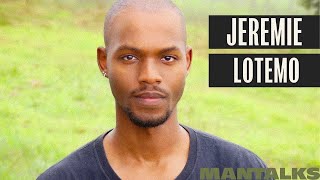
Connor Beaton talks with Jeremie Lotemo about moving from Africa to America and what that shift taught him about masculinity and how to show up in relationships. Lotemo describes navigating two very different cultural worlds and what responsibility actually means.
Chapters
All right, Jeremy, welcome to the mantalk show. How are you doing?
I'm doing well. I'm doing well. Thank you so much for having me.
Yeah, man. You know, I've been following your work on Instagram for a while. I try and keep my eye out for people that I would like to have a conversation with and kind of like, pick their brain. And you're one of those people. I've seen a lot of your content. I like the way you position things. Your audience seems to really resonate with the way that you put relational content out in the world or talk about masculine and feminine. And so I thought it'd be great for us to sort of dig in. But with all that said, we got to start with the question that I ask every single guest, which is tell us a story about a defining moment in your life that made you who you are today. Which fun fact. I don't know if I've actually ever shared this on the podcast before, which I don't know why I haven't done that, but this question was in the origin story of Man Talks, like, eight years ago, I did live events. And so initially, Man Talks was live events, and men would come and share their Life story in 15 to 20 minutes, and they would share the three defining moments that they wanted to share with people as if they were going to die tomorrow. So if you think about just being however old you are, I mean, I'm 39, turning 40 this year, and sharing your three to four greatest life lessons as if you were going to die tomorrow. So that was the premise of Man Talks. That's how it started, was with these defining moments. And then when I started doing the podcast, eventually I was like, well, I should just ask people that question, because the stories that came out of it were wild. You know, they were really phenomenal. So I just. I wanted to give you some of that context and probably the audience as well, because I don't know if everybody knows that, but. Yeah, I'll hand the mic over to you.
Yeah, yeah, it's a. It's a great question. And there's so many events that come to mind, and so I'll just share one of the most recent ones, which happened about two years ago, and it was after I had hit, I wouldn't say rock bottom, but it was after I had came out of rock bottom and I was making more money than I've ever have. I was part of a really fast growing marketing agency in Atlanta, and I was leading. I was one of the youngest account managers there. And I was just doing really well. And after about maybe a year and a half of being there, I was so unfulfilled. And I was like, damn, I thought this was going to be the thing. I thought this was what was going to make me happy. And I just wasn't fulfilled. And so what I did was I sold my car, closed the lease on this home that I had, and I said, I'm going to go to Mexico. And so I went to Mexico for six months. And in that time, it was really profound for me because I isolated myself from everything that I knew. All of my family, my friends. Nobody could get in contact me. Nobody could come to my house and say, hey, Jeremiah, let's go to, you know, let's go out to dinner, let's go to, you know, play some basketball or whatever it is. Nobody could reach me. And it was a kind of like a conscious isolation. And in that time I was doing something that I didn't know I was doing. I was just like, I'm just so tired. I don't want anything to do with my surroundings or anything that feels familiar to me right now. And so I threw, I plunged myself into the land of Mexico for six months. And I traveled from Cancun all the way up to Palenque, which is these high mountains. And I stayed with these indigenous Mayan people known as the La Candones people. And in that time, the reason that it's so profound for me was because most of my life I was kind of tied to responsibility at a very early age. So I'm a genocide baby. And during that time, I had to take on a lot of responsibilities that my mom needed me to take on. And so in this period that I gave myself six months in Mexico, I actually allowed myself to put down the responsibilities to say, you don't have to do this for anybody. You don't have to be anything for anybody. You can just be yourself and go wherever you want for this. And I didn't know I was going to be there for six months. I just gave myself like, you're just going to go to Mexico. And it was a one way ticket. So there was no return flight. I was just like, just, do you just be yourself? You don't have to be tied to what people need from you or what people expect from you. And in that time, it was the first moment that I had ever felt that I had a choice of whether to take on this responsibility or whether to not take it on. And in that I found that I wanted to now Take on those responsibilities that I felt a sense of. It was the first time I've ever felt that I had a choice in the matter. And that actually catapulted me into all of the work that I'm doing now was giving myself. And I didn't know I was giving it to myself or life was giving it to me. But in that time, I was finally able to, like, put the burdens down, put the demands down and just breathe for six months and just allow myself to just exist and discover what that felt like for me. And so it felt like I was unplugging to. But I didn't know I was gonna plug back in at a very deep level, so. And that catapulted me into the work I'm doing today.
Nice, man. Well, I was gonna ask what got you into the work that you did today, but you've kind of answered that question. And a couple of things stood out to me there. You know, one is just the usage of solitude in a generative fashion. You know, rather than, oh, I'm going to go and isolate myself because I don't know what else to do, or I'm going to go and remove myself. I like the way you framed it. It's like I'm going to go and choose solitude to actually unburden myself from the responsibilities I've been carrying for a long time. And I think that resonates with men a lot. You know, I think that men, we often pride. And I'll just speak for myself. I like carrying responsibilities. I actually enjoy that. You know, I like being responsible for. For things, for people. Not responsible for them in the sense that, like, you know, I'm responsible for how they behave. But, you know, I like being a business owner as an example. Like, I employ a number of people. I like the responsibility of knowing that their livelihood is. Is part of my responsibility. Like, there's something that I really enjoy about that, and I think that's the case for many men. But I also think that those things can become the weight that is dragging us down, you know, especially because I work with a lot of guys who are carrying responsibilities that they don't want, you know, or that they don't need or that don't bring their soul alive or light their heart up, you know, like, they're just. They're carrying responsibility that the world or society or their family has said, you need to go and carry this. You know, and so they're like, oh, okay. I guess in order for me to fit in, in order for me to be a man of value, in order for me to contribute, I need to pick up this responsibility. So I'm curious to get your thoughts on what role do you think responsibility plays in the average man's life? And maybe if you can say a little bit more about the role that responsibility has played in your life because it sounds like it's a pretty integral part of you.
Yeah, yeah, yeah. I love what you shared. Kind of the aspect of it that allows us to kind of maximize our potential and how that can be a double edged sword. Right. And it's like at the same time we're maximizing our potential and at the same time these are the same things that kind of weigh us down, that feel heavy, that feel that end up leading us to isolate ourselves from the world. And you know, in a. More like disconnected from the world in a way. And so for me, responsibility has been important in my life because it's been an indication of my own maturity. And so at that time of my life, when I was able to kind of put down these responsibilities for a moment that were imposed upon me by my family, by society, by my group of friends, when I was able to put down those responsibilities that were imposed upon me, I was able to take on the responsibilities that felt genuine and authentic for me. Like, oh, I love showing up for my family in this way. I have, you know, six siblings and I love them deeply. But there was a lot of responsibility that I took on that was imposed by my parents expectations. And then from just that break of just, okay, this is okay to relax this and put this down for a bit, I was able to recognize what was authentic for me in terms of responsibility. And so, and then that's when I realized I wasn't coming from that place where it's like, I'm not running away from responsibility and getting into that space to where how much of this do I want to take on? How much of this do I have the capacity to take on? So I think for men it's important to develop that quality of like, I want to be here for my family, I want to be here for my tribe, I want to be here for my nation, my city, whatever it is for you. Because it's an integral part of, I think, masculinity. Because, because like I said earlier, it maximizes our potential. Because in that responsibility we're also being in service to something greater than ourselves, something greater than our egos, something greater than our own selfish desires. Right? My desire to be seen as a great man, my responsibility to my Tribe invites me to go beyond that, beyond that kind of relationship with myself, to form something a bit more deeper. So I think responsibility, and that's the beauty of it. It has its own shadow, like we talked about, but it has a really, really tremendous. It's a tremendous catalyst to growth and maturity. And men that shy away from responsibility, if it's emotional responsibility, if it's responsibility to their families, to their child, to their career, to their job, to their purpose and their gifts. You can see kind of like that boyhood psychology that's still there where it's, you know. You know, afraid of shame or afraid of being guilty or afraid of, you know, failing others. And I think that's the beauty about responsibility, is that we get to confront those parts of ourselves that are afraid of failing other people, which, for me, that's really what it came down to. I didn't want to fail my family. I didn't want to fail my partner. I didn't want to fail my community. And in that responsibility, I can even form a new relationship with failure as well.
Yeah, I like this notion of. I think I've said it before on the show, but my sort of definition of health is our ability to choose. You know, the more. The more that we have the capacity for choice, to choose a responsibility that we want to take on, the healthier. I guess we could use that word. Our lives naturally become right because there's a kind of dis. Ease and disease that starts to take over when we're. When we're carrying responsibilities that we really have or feel like we have no choice over or haven't chosen. There's one thing I want to go back to. I wrote it down, and I want to circle back on it, and if you're cool with it. But you said I'm a genocide, baby. And I. I'm wondering if you can just. Can you give us some context for it?
Yeah, yeah, yeah, yeah, for sure. So I was born in 94, and I was born in Africa, in Congo. And the reason that that event or that year is really important is because my mom is Rondanese. And so in 94 was the Rwandan genocide. So that's when it actually started and began. And there's a whole film made about it. There's a lot of documentaries about it. But during that time, it was very traumatic for my mother because, you know, you have two brother tribes and clans essentially at war with each other. And being in Africa during that time, you know, your features, your face gives you away. Right? Your long neck and your long nose tells me what part, what tribe you reside with. Right? You can't say, no, no, no, I don't. I don't know those people. No, no, no, I don't. I don't rock with them. Those are my people. It's like, no, your long nose, your long neck, it tells me who exactly like, who you are. Right. And so. And so with that, it makes my mother's face, like, gives her away. Like her face itself gives her away. And so she was always in this kind of fight or flight mode where she was hiding, she was concealing herself, she was, you know, trying to. And, you know, at that time, it was me. And I had two other siblings at that time. And so I had to take on a lot of responsibilities as I got older. We left when I was five in year 1999. But before then, I don't remember much, but she's told me that, you know, she required a lot of me at a very young age, you know, and as much as my older brother as well, but to kind of help her through that, because she couldn't go outside, you know, she couldn't do a lot of things for herself. And so as a young boy, you know, five, even as we transition into the United States as refugees, those responsibilities were still a thing that, you know, cooking for my family at a very young age, protecting my siblings when my parents. Parents were gone, and watching for any intruders. Like, at a young age, 7 years old, I'm, you know, monitoring the home, like, you know, being vigilant in case of, you know, predators or anyone outside that might, you know, run into the house or anything like that, putting my siblings to sleep. All of these things that, you know, very adult, like, mature responsibilities that I took on at a very young age and was essentially. I lost a lot of my childhood and. But I got accustomed to that. I normalized it at a very young age. And so that's why that experience was so profound for me, because I was able to kind of just like, feel that I didn't have to do any of those things anymore and that I was okay to put them down and I wasn't disappointing anyone, which was really hard to do. So. So, yeah, just to give a little context around, you know, kind of like, my background and my upbringing.
Yeah, I mean, well, now I have. I feel like, hours worth of questions. But.
So there's. There's that, uh, you know, because I think one of the things that we talked about before getting the call is just, like, the wildly different experiences that I think we maybe have had in our lives. You know, I grew up in Northern Alberta, which is like, we went home for Christmas and it was minus 35, you know, and so it's just absolutely frigid cold, and it's one of the coldest places on earth sometimes. And the stuff that you're describing just doesn't happen there, you know, and so the context that, I mean, I just don't have context for it. It's just so, so far removed. Can you maybe give us a little bit of insight in terms of from maybe what you remember or at least what you've gleaned in your own work, what it was like transitioning from where you were living in the environment that you were living in and the culture that you were living in to the US and coming to something so wildly different and how you integrated into this culture and society. Like, what did you bring with you? You know, what have you tried to keep within yourself from the culture that you grew up in? I'm just. Just curious about that part. We won't spend a lot of time here, but I think that it's. It's valuable because I. I would imagine that your journey and what you've seen has contextualized the work that you do and how you actually approach speaking about some of the relational dynamics that you. That you talk about.
Yeah, yeah, yeah. Thank you. Thank you so much for. For that question. So the transition from Africa to Oregon, which was the first place we moved to Oregon.
Wait, why Oregon? Portland, Oregon.
It was Portland, Oregon, in the year 1999. You can just imagine. My Lord, dude, you just plopped a group of refugees into Portland, Oregon. I am completely ostracized. I don't know where I am. This is a completely new world. And you plot me into, in the year 1999, one of the widest places that I could ever go to. And so the reason we went there is because we had a host family that was willing to take us in. And so we were refugees, and we were trying to get out of the situation that we were in. It just wasn't conducive for raising a family. And we had a wonderful host family, two elderly. It's an elderly couple that took us in and taught my. My parents the whole, you know, shebang around how to navigate America, economy, finances, work, getting a job, all of these things. And so in that time, I was not around any people of color. And so those were actually the biggest, I would say, initiations or periods that I went through that were very like, different. Very unique. And so from that, we. We were there for about three years, and then we transitioned to Richmond, Virginia, and I was still in the very predominantly white area. And then after about three or four years there, we moved to Atlanta. Like the dirty South. Like, you know, like, just imagine most of my life, I'm in these predominantly white areas. And I love it. I love the community. I never met, you know, kinder people in my life. And then I get into Atlanta, where it's just like, oh. Oh, my God. It's just like this massive culture shock.
I went. I went to Atlanta when I was 18. My uncle was living there.
Oh, my.
And it was. I was so 9, 11 happened right September 11th. And then I went in November to, like, you know, a couple months later. And, yeah, I just. It was such a culture shock for me. I think I was, like, 18 or 19. You know, I can't remember how. Exactly how old I was, but I just remember being like, what? Like, where the hell did I just get dropped into? Like, this is wild.
This is so different.
Is like, you know, where I grew up in Alberta, there is diversity in some senses, but. But, you know, there's.
It's.
It's predominantly, like, people from Asia, people from India, you know, and then to go to the culture of Atlanta, where I was like, whoa, this is so different. And, like, you know, people are talking to me differently and they have different language, and I was like, whoa. So I can only. Like, that's probably just like, a very small amount of what it must have been like for you. Like, but please carry on.
Yeah, yeah, it was. It was. It was wild. I was in fourth grade, so I knew nothing about this world. And it was just very interesting. Even engaging with other teenagers at. For the first time that were also, like, the same complexion as me was also completely new to me. Interacting with girls was also completely new to me. And so those were some of the biggest moments that were very. Like, it took a while to kind of grasp and understand and kind of ground myself into. But, you know, coming back to your question, some of the biggest things that kind of influenced my work now is that piece there where I was around these different cultures and I was immersed in them. Like, this wasn't, you know, an inside scoop into what these cultures feel like or engaging with them. I was immersed in it at a very young age, and I was able to kind of relate to different people on. On different scales. And for me, the reason that shifted my work was because through that time, I was constantly shape shifting Like, I was just constantly adapting to my surroundings, but never connecting to what was authentic for me. Because as a young boy, I didn't want to be ostracized. I didn't want to be isolated. I wanted to belong. And so what I did in order to belong was to kind of morph myself into whatever was popular and ever what was cool, into whatever would gain me respect. And so in from each of these different places that I lived, once I got to Atlanta, that mode even heightened because I was like, whoa, I have a chance at belonging. You know, I have a chance at feeling connection and creating community. So I just morphed myself into anything that I felt would allow me to like, not be ostracized from my own people, my own community. And that influences my work because in that I didn't realize that none of this was what I wanted for myself. I didn't realize that till at the end of high school when I asked myself like a big question, which, because I had moved again, I moved a lot while I was in Atlanta, but I had transitioned again all my senior year to another school. And I was just so sick of adapting, shape shifting, like, oh my God, now I have to be, to pretend to be another guy at this new school and figure out who's the cool guy and how can I embody that energy. And I got so exhausted. Like the, the skin suit, the tight suit that I had been wearing, just, I exhausted it. And so I realized, like, I didn't want to do this anymore. And that kind of actually started to turn a certain wheel and started to ask a lot of different questions and kind of brought me into my own spiritual awakening.
Well, again, like, like I said, I'm, I'm mindful of how much time we have because now I feel like I've opened up a can of worms where, you know, we can have like a two hour conversation. The first part is just about, you know, that, that piece. But I do want to ask a follow up question. And then, and then I, I kind of want to get into, get into some of your perspectives on, on men and masculinity, because I feel like you have such a unique vantage point, you know, coming from a different country, entering into the United States, you know, being in a predominantly white area, moving to a place that's much different in terms of cultural diversity and kind of getting to see men in different walks of life in different parts of the country.
Yeah.
And so I'm curious about that, but what would you say was the most sort of challenging and Surprising aspect of being in a place like Portland, Oregon, and then being in a place like Atlanta, Georgia. What was the most challenging aspect? Like, did you experience feeling ostracized in either of those cultures? Did you experience feeling welcomed in one of those cultures or the other? You know, were the people really that different? Because I think one of the things, as a Canadian who has moved to America, the conversation about racism is just so prominent, and I just didn't grow up in this country, and so I'm always taking the standpoint of just asking questions to be like, you know, how prominent is it? And how do people experience it? And. And. And what does it look like for you? And, you know, are people really that uninviting? You know, because I've, you know, up in New York, and for the most part, people are pretty welcoming. You know, they can be sometimes for sure, because they're, you know, they're New Yorkers. Right. It's just like.
And then.
And then Jersey, you know, my wife's from Jersey, and so I've got the, you know, the Jersey Shore side of things, which is very. That's a very different culture. But I'm curious to get your perspective of, like, what was the big challenge? What was surprising for you? You know, where were people really welcoming? And just kind of give some, again, some context for that. I think that might be helpful.
Yeah. Yeah. Really, what was most surprising for me was when I was in Portland, when I was in Richmond, I felt more welcomed. I actually felt more at home than I did once I got to Atlanta. I had to create my home in Atlanta, like, a sense of community. I had to create it. It wasn't, like, present already. It wasn't something that I could actually feel and connect to in the environment. Like in Portland and Virginia, it was already there. This welcoming energy, this level of kindness, this level of acceptance, it was exuding off of the people that I was interacting with. You know, we had a. My parents are Christians, and so we had this community that they were connecting with, and. And I was a part of while I was staying in Virginia and in Portland. And they. The. The level of kindness that was. And. And openness and welcoming, it was intense. I was like, what is going on? Like, how did they. Why are they like this? Do they know us? Did we do something? Like. And so, you know, to the point where things that my parents couldn't manage because they were working so much, the community just took on. Just took on those responsibilities. Like, don't worry about it. We got it. We'll Be there for you. And so when I moved to Atlanta, that was not the experience. It was like we. We struggled to receive community support from communities, and there was a welcoming in terms of the. The church that we were a part of. Right. Because we're all kind of brothers and sisters in Christ and things like that. But outside of that there, there, I didn't feel that level of welcoming, that openness from the community, not even the church community, and definitely not the. The kids I started to interact with at school. You know, I was being made fun of, like, immediately, and I was like, whoa, what is going on?
For what?
This is the thing in Atlanta, like, you know, especially even people of color, we kind of judge people based on what they're wearing. And so at a young age, I used to wear hiking boots. My mom used to dress me. She used to put me in loafers.
You were Oregon style. You that Oregon just followed you. Portland followed you to Atlanta.
It was like the worst setup ever.
Yeah.
And it was so drop and dramatic. Like, my mom just set me up for failure. I was just like, oh, my God, the haircuts, everything, it was bad. But in Portland or Virginia, I didn't have any kind of concern around being made fun of at all. But the moment I got into Atlanta, I was like, walking around with four stripe Adidas shoes and being like, roasted, baked, like, everyone's letting me know, like, yo, those shoes are not cool, bro. And I was like, and it's a huge adjustment to try to find out, like, why is my attire isolating me from the people around me? Like, how is that happening? And so that was the biggest challenge was to kind of realize that this is something people value. Like, what you wear tells them about who you are and whether they would like to connect with you. That was a completely different shift and something that I've never really kind of accepted as. As a value of my own. But I did adapt to it, and it maybe even internalize it to some extent. But that was probably the most challenging thing to kind of come to is like, people judge you and determine whether they want to be your friend based on what you wear and how you speak, which was something I didn't experience in Portland or Virginia.
Yeah, I mean, it's interesting, man. I'm always curious about people's stories. I think I always have been. And just the lives that they lived. Because the more, you know, this is. I don't even know what episode number it is. And I've been fortunate enough to talk to a lot of really phenomenal people with really interesting backgrounds and lives. And even just in my own work, working with people from all over the world, I mean, the more that I talk to people, the more that I feel like I have a depth of understanding or grounding in just the humanness. It's very easy for us, us to lose sight in our hyper polarized time of the dense story that is somebody's lives that we're often just completely lacking. You know, somebody cuts us off in traffic or acts like an asshole at the coffee shop or, you know, at the grocery store, and we are just missing the entirety of their lives that would help us to just give an ounce of compassion. And so I love having these conversations with people like yourself who are, are so willing to share their story and have done some legwork to unpack some of the ramifications of their life, which I think is so valuable to be able to say, this is the life that I lived and this is how it impacted me. One last question and I'll take you off the sort of like, personal hot seat.
And this is more so just for, you know, like, did your family make it out okay. You know, did your parents make it out? Did your siblings make it out?
Yeah, I just, I felt an urge to just ask that question.
Yeah. So in regards to transitioning from Africa or just in terms of being a part of this new culture, new world.
Yeah, in terms of, you know, making it out of what was a very hostile place, maybe. I mean, that's a good distinction. How about we do both? Did everybody make it out of the hostile place? And then did everybody integrate? Okay.
Yeah, yeah, so, so, yeah, everybody made it out. My, my immediate family made it out. There's a lot of relatives that I still have that are in, are still in Africa, in different parts of Africa. But that's, you know, that's, that that's been their home for forever. But my family, definitely, we were able to transition completely. It was a sexual successful transition. My parents got well adapted to, you know, the, the environment completely. And, you know, my dad's credit score is like 900. He just gets it. He just was able to adapt and understand everything and, and, and they're doing really well in terms of the integration. I think there's still, there's, there's a lot. You know, I'm, I'm considered the black sheep. So there are things that I broke free from in terms of cultural conditioning, in terms of, you know, patriarchal values being upheld in my family and things like that that were very, like, oppressive by nature that were that still my family is kind of embraced along with being a part of, you know, what comes with, you know, being a man in America. Like, my dad internalized that, being a woman in America, my mom internalized some of more of like the negative connotations and notions around that are still some that they have yet to break free from. And I think my siblings in their own ways are kind of breaking free from that as well, which is beautiful to witness.
Well, that is a good segue into. One of the things that I wanted to talk about was this notion of how you approach, you know, men, masculinity, how you work with men and masculinity. I know you talk a lot about masculine and feminine dynamics and in your content, what would you say are some of the differences or distinctions between how a man is represented in the culture that you grew up in versus the culture that you are immersed in today? Because I think one of the things that I've noticed is there's this rise. And you and I were sort of talking about this before the show, but there's this sort of like, rise in what I call hard masculinity. You know, it's sort of like one dimensional version of masculinity that is you have to act this way, operate this way, say these things, do these things. This is how women are. And I think it's. I think it's appealing. I can see, I can understand the appeal in some ways. Right. Because it's like everything. The rational mind is satiated. Here's how everything goes and you know, here's how everything operates and everything's figured out and it's very wonderful to some degree. But there does seem to be this rise in this sort of very hard. It's not stoic masculinity, I don't think. I think it's just like this very hard type of masculinity that. That certain individuals are. Are embodying. So I'm curious to get your take. I know I just sort of asked you like three or four different questions, but I'll let you pick and choose where you want to start.
Yeah, yeah, I love that. I love that. So the differences I've noticed in the culture that I grew up in and watching my, my dad, my. My uncles embody a certain expression of masculinity, and then being around, you know, modern day men in today's world, working with men that were raised in America or raised in different parts of the world, the only difference that I've noticed is degrees and What I mean by degrees of subtlety is that in my culture, with my father and how he was raised, the degrees of subtlety are not there at all. They're amplified. I mean, they're not amplified. They're. They're not even trying to hide it. Essentially, in modern day masculinity, it's like it's covertly expressed, right? And so in my culture, like, they'll let you know, you know, this woman that I just married is now my property, right? And so therefore, like, I've had, I've been a part of, you know, weddings where there's a celebration of a wedding, but the man comes to the father and gives him, you know, thousands of dollars letting him know, like, thank you for allowing your daughter to now essentially be my property. But it's in the open, it's out, it's bold. They're not trying to hide it, right, because they don't see anything wrong with it. And if I was go to Africa today, I'm pretty sure that's at its height, you know, at a very heightened scale. And so that's why, you know, some of the issues that men face today and women face today are in a way very, very small compared to some of the things that people in, you know, Syria or Saudi Arabia or Yemen and all these other countries face. Because the level of oppressive masculinity, it's not, I'm not trying to hide it. This is what I believe and this is what I know to be true. And you either follow that or, you know, there's death or there's whatever it is. So that's what I was a part of. My father's word was law. He wasn't trying to pretend like he cared about what we said. He said, I don't care what you say, like, and so there's, there's this boldness around his oppression and his dominance and, and he embraced it fully, you know, to the most unhealthy extent. And there was no self reflection of, like, maybe I should. None at all, right? And so what I noticed the difference is, is like with modern men that I work with and even that I've been around with friends groups, you know, mentors, role models and things like that. There's a subtlety to it, right? It's kind of masked under different, different guys, right? And that could be, you know, I'm, I'm spiritual, right? So let's, let's do this cacao ceremony or whatever. And there's, there's a level of oppression or manipulation happening There, but it's very covert, right? And, and with the culture that I grew up in, it's very overt. There's. There's. Nobody's trying to hide it, right? And so that's the biggest difference. And I think with a lot of what men are embodying today, when we talk about, like, hard masculinity, there's, there's that overt embodiment, right? And it has a lot to do with what I see as more of. It's. It's an emotional bypassing, right? It's bypassing an avoidance at the extreme level where I'm ignoring all of what I'm feeling. I'm ignoring my. My vulnerabilities, I'm ignoring my sensitivities. I'm ignoring, you know, my feelings and emotions, all of this. I'm ignoring it to the highest extent. And that's how I show up in this rigid, hard embodiment of what I think is masculinity. And it's, and it's very performative. You know, we can see, we can see. It's, it's. It's performative empowerment. Men are trying to feel empowered by embodying this, but it's performative because you have to keep it going. You have to remind yourself that you're not invulnerable. Like, you have to remind yourself that your feelings are something that you have to suppress and tuck away and avoid, you know, ever. Ever noticing or acknowledging. So it's definitely performative. And so those, those are the two differences that I've noticed.
I'm curious. This is something that I've grappled with over the years when I, you know, when I hear the terms of, like, the patriarchy or toxic masculinity, which I, I have been very vocal on this show. Like, I don't, I don't side with that terminology at all. I don't think that it is helpful. I don't think that it's. I don't think that it actually supports a conversation for men's development. I think for the most part, it's. It's shaming. And, and not only is it shaming, but, like, we would just never advocate for that in any spiritual context or any psychological modality. We would never say, like, oh, your. Your anxiety is toxic, your depression is toxic. It's like, well, how do you work with something that's toxic, right? That's just a sort of oxymoron when it comes to being able to integrate aspects of who we are. So with all that said. With all that said, I think one of the things that I've tried to grapple with over the years is this hard masculinity that we're talking about this sort of one dimensional version of being a man, sort of suppressing emotions, et cetera. Is that actually about masculinity and being a man or, or is that something that has a more religious connection? Because for me, one of the things that I've noticed is that a lot of the men that want to embody this type of what it means to be a man are following a religious doctrine Almost always. They're almost always following a religious doctrine. And so I almost feel sometimes like it's a bit of a misplacement and a misjudgment on society's part of saying, well, masculinity needs to change, or, you know, the definition of, of healthy masculinity needs to change, or the patriarchy, et cetera, it's like. But don't most of those constructs and those ideas and those ways of being trace back to a fundamental religion, like a fundamental religious ideology? So I'm curious to get your take on that. It's more so just something that I've kind of been grappling with because I can almost always see a man that's embodying that style of what it means to be a man and see somebody who is a very devout and extreme evangelical Christian or somebody who's following a very extreme version of Islam, or somebody who's following a very extreme version of whatever. Right. Sort of name their religion, Mormonism or et cetera. So I'm curious to get your take on. Do you think that religion plays a part in the very extreme gender roles that we're talking about culturally and, and, and if so, you know, how do we go about necessarily doing anything about that? Maybe that's not even a question that we should answer right now. Stick with the first part.
Yeah, yeah, it's a great question. You know, even when I think of my, my dad, he's very, very religious. You know, he's, he's by the book. Like, he doesn't literally buy the book by the book. It doesn't necessarily live by it, but he loves the parts that kind of like, you know, enforce his own ideas. And so, so, yeah, I think there's a, there's a very, and I think that's a lot of where it really began because when you think about patriarchy in the sense of, you know, overthrowing the matriarchy around 4, 4, 500 B.C. there was a, an embrace of the dominator model that men kind of essentially took on and the patriarchy, it's a dominance based hierarchy. And so the hierarchy informs us of our position in the world and our position in society and, and possibly our position in the relationship. And so when we kind of subscribe and adhere to this model, this hierarchy, what happens is I need, as men, I need to know where I stand in this hierarchy. And so other people inform me of that. So for example, my partner based on this hierarchy, if I'm adhering to it, she's essentially below me, right. And if I am a person of color, there are other people below me, right. And so they inform my status, they inform my value, and they inform my worth. So the dominator model allows me to kind of be more inclined to always winning, like trying to remain on top. And that's what you can kind of see within this embodiment is how can we remain on top? Because if I'm not on top, then that means somebody else is above me. Right. And that's, I notice for, for men it's kind of hard to embrace this aspect of maybe somebody else being better than us, maybe somebody else be more masculine than us, or whatever it is. But in, in the religious aspect of it is kind of coming back to how religion has essentially used these teachings. And I, I don't think they're in their essence or how they were before, but I think when we entered into this dominator model, they were kind of used as, as a form of oppression, but as a form of kind of solidifying men and our status on that hierarchy. So it became a means as a tool to kind of validate, encourage, and kind of inform others of our status. Right. When we think of your story of Adam and Eve and how that played out and how we've been using, let's say, women as scapegoats to our own shadow, the responsibility to our own shadow. We've been using women, we've been using the feminine and as a scapegoat to that for thousands and thousands of years.
Right.
And so that places us in a different position than, than women or the unmasculine. Right. And so a lot of men adhere to that and they subscribe to it, and now they become agents of it. Right. And enforce it in their marriage, enforce it in society, enforce it once they get in positions of power. Right. What I feel is it's a transparent admission of our own insecurity. Because if I don't feel that I'm on top of you, that means I feel less than myself or I feel less than a man, Then what does that say about how I really feel about myself? What does that say about my inner landscape and what's going on inside of me? Why do I need to subjugate others in order to feel powerful? That's not really power. And so that's the hard question that isn't really being unraveled, you know, with men that are embodying this. Is that, why do you need, you know, this person to. To stand on top of this person? In order for you to feel powerful, in order for you to feel worthy? Like, why do you need that? And I think this model kind of allows us to avoid that question. What I think is the Dominator model allows us to avoid that question and just continue to kind of live out what we think is masculinity or what it means to kind of be a man. So that's my perspective on that.
Wouldn't you say that matriarchy is just another form of a hierarchy, though? Isn't that just another version of a hierarchy?
Hell, yes. So a lot of things that happen when we kind of get into this New Agey concept is that people think that, okay, we need to throw out patriarchy and embrace matriarchy, which, no, both are oppressive systems. And so in a world where we want relationships, relationships require two equals. Like two equals come together. In a matriarchy, there is somebody that appears to be higher or more powerful than another group. And that's the same with the matriarch. They're both shadows of the feminine and masculine. Patriarchy is a very deep, expressed, very exacerbated expression of the masculine shadow. And the matriarchy is the same thing. For me, we don't need either. We need partnership. And partnership is equality. Right. Two whole beings coming together to create something, to build something. So I think what we're stepping into is. Is neither patriarchy or matriarchy, but what does partnership look like when I respect your uniqueness, I respect your powers, I respect your gifts as a man, as a woman? And how does that look like when we come together to build a relationship, to build a community, to build a tribe, or to build laws?
Yeah. I think what's interesting for me, and I don't know if this. I don't even know where this fits into this conversation, but I remember I had a gentleman on the show named Stephen Jenkinson, and I've had him on a couple times. Very wise man, very interesting character. And we talked about the origins of the word. The etymology of the word patriarchy is it's often, you know, used in this manner of being positioned as the kind of problem with society.
Right.
It's like, here's the problem and the solution is just the dissolution of patriarchy. And he said, you know, the origins of patriarchy is patros and archi, which means father and to uphold. And so the origins of the two words is actually a kind of reminder to uphold the father and uphold the mother, and that those two things can coexist. And I really liked that framework because I think, you know, sometimes it's helpful for us to pull the origins of words into modern culture and have that be a part of the equation and to see that, yeah, there's probably value in upholding the father and upholding the mother. And I don't think that those things necessarily need to mean that, that a father and a mother fit into these very staunch roles. You know, like my wife and I don't fit into those very staunch roles. You know, she works, she's got a kick ass career, she's launching a book and all of those things. All those things I think traditional roles would generally not allow for. But at the same time, I would say that in our household, we do uphold the father, me, and we do uphold the role of the mother, her. And that there's value in that. And so I think within our culture it's such an interesting time because there's just so much polarization. And I think that I agree wholeheartedly with the core tenet of what you're saying, that we're moving into a place of relationship. And I just think that oftentimes how we're doing that is very cumbersome and ineffective. That it's being done with a lot of vitriol and resentment and hostility. And it's just ugly in some ways. It's like, so it's ugly sometimes. But maybe let's move on to that topic of masculine feminine dynamics of building healthy relationships and what you see as being some of the core values and roles of the masculine and the feminine. Because it's. I think that that is probably a worthy conversation. I mean, everything that we've been talking about is worthy like this. There's nothing that we haven't talked about that hasn't been fascinating for me and like, interesting. But how do you see masculine and feminine fitting into this conversation? How does a couple go about, regardless of where their perspective is starting to build, the type of relationship that you're talking about? Right. That there's a sense of, would you say equality or egalitarianism? Like, how would you. How would you sort of define that?
Yeah, I think those principles and values are going to be there. I think they have to start with kind of this inner exploration and kind of comes back to what we talked about earlier, which is, you know, what do I want? You know, what is authentic for me? What am I bringing into this partnership, right? And that could be my emotional baggage, that could be the things that I haven't addressed, that could be my repressed shadows. All of these things that those. Those questions have to take place first. And even if you're in partnership, if those questions aren't even being asked, those questions aren't taking place in the conversation, you're not really setting the relationship up for success. So, you know, for men that are dating or women that are in the dating positions, that aren't in marriages, aren't in relationships, those are some of the opportunities, those big opportunities to kind of set the relationship with the marriage up for success by asking these difficult questions. Because whatever we create with the other is going to be a manifestation of that internal world, right? That inner landscape, those shadows that I've been avoiding most of my life around masculinity, around femininity. My partner is going to be a direct mirror into that world. And if I do not want anything to do with that, I am interested, very interested in avoiding that. I will sabotage or disconnect myself from the possibility of maybe transforming myself, looking at myself on a deeper level. So I think that is. And that's the foundation, you know, whether we're willing to look at that or we're not, is the foundation that we set for the relationship. So for the people that are in relationship that are curious, right? That are excited, that are passionate and that have that level of courageous will to look at those things, the relationship really can take into this form of, like a sense of equality. Because what I see in relationships that manifest as codependency or unhealthy partnership is that there's an imbalance of power, right? And that's usually, you know, somebody that's over giving and someone that's not giving enough, right? Or somebody that's, you know, always doing the emotional labor and someone that's not taking any emotional responsibility or whatever it is. There's always an imbalance of power taking place. And we can see how that manifests in society, but it really happens in relationships first. So setting ourselves up for success looks like us forming new relationship with our power, right? And Bringing that forward into the relationship. So as a man, if I'm afraid, you know, I'm coming with a nice guy syndrome. I'm afraid of my own power. I'm afraid of my anger. I'm afraid of responsibility. My partner is going to point me to that place. She's going to poke at these parts like, damn, dude, you are afraid of being in your leadership position. Like, man, you really do not want to, like, acknowledge that you have some anger in you. And that's okay. She's going to poke those places inside of me and I'm going to poke places inside of her. But to set the relationship up for success, I have to be willing to see that. And I have to know that when I walk into the relationship, this is what I'm setting. This is, this is what I'm asking the other person to do. And that journey isn't going to be easeful.
Right.
But it can be rewarding if I come to it with that intention of I'm ready to see what I need to see. And I think from that, it doesn't have to always be work. It doesn't have to always be serious. But that foundation kind of sets up for other possibilities like pleasure, joy, excitement, bliss, you know, manifestation of huge, wonderful careers and things that every partnership is capable of creating. But if we can't bear the pain of vulnerability, of the pain of being seen by another person, then we can't actually hold the pleasure of being seen by another person creating joy with another person. They're, they're, they're one in the same thing. And so I think when we come to the relationship with that intention, we create a possibility for that to happen, you know, because we want to come, we want to experience all of the joy and all the beauty, but we don't want any of the pain that comes with relationships. And I think that starts with kind of being willing to be reminded of our blind spots and the things that we can't see.
Yeah, I mean, it's, it almost sounds like there's. What you're pointing to is personal responsibility, the will and willingness to explore our inner territory within the relationship. You know, the stuff that starts to emerge that we generally don't want to look at, which is very, very helpful. Right. And, you know, the insecurities that might show up or the expectations or, or even as we were talking about before that this, the expectation of I need to operate in a very specific way within this relationship in order to be loved or successful and et cetera. Why equality? Why that Specific word within a relationship. Tell me a little bit more about. Do you think that. And again, I'm just going to make this super clear because I'm asking a question. I'm not pointing out my belief. I'm more so just poking and prodding to. To pull yours out because I can. I know my audience sometimes. Sometimes people are like, wait, do you believe. Why do you feel like that? Why do you feel like that word equality is so important in a relationship? Do you think that a relationship that's not prioritizing equality is going to erode in some fashion? Do you think that a couple needs to be focused on equality? Or is equality an outcome that manifests out of people doing the type of work that you're describing?
Yeah, the second part. The second part. So what I say by equality is more two whole people coming together. So however that manifests is unique to every relationship, is unique to their biology, is unique to their traditional background. Right? So equality manifests different for me in my relationship. And it might difference manifest differently for you and a group of other people. Right? But that works for them. Right? And that's the beauty of equality, is that it doesn't look the same in every relationship, it doesn't look the same in every culture, and it doesn't look the same in every society or nation. And so for me, in relationship is that that piece where two people come as whole people, right? And then that the byproduct of that is equality. And so coming as a whole person means that in the relationship, or if I had the privilege of doing this before the relationship, is that I learned what it means to belong to myself again is what I learned what it means to connect to my inherent whole wholeness. And that doesn't mean I feel, you know, completed. I don't need another person. It just means that I come back to the place inside of myself that is essentially never apart from me. Right? That's never disconnected from the world. That's. It's entirely. I can. I can see the unity in every aspect of myself, right. I know my worth. I can connect to the part of me that is courageous again, I can connect to my authenticity. Doesn't mean I know what that looks like externalized, but I can just connect to a certain extent and sensitize myself back to the part of me that, okay, wow. Like, I'm a whole being. I'm a whole individual. And the relationships that I create with other people are a cherry on top. They're not the whole Sunday. They're a cherry on Top of. To what I feel brimming and connected to inside of myself. And so creating from relationships from that place creates a possibility of what I'm mentioning as equality. Because without that, without that level of wholeness that I'm coming to the relationship with, I will always create codependency. Right. There will always be this manifestation of an imbalance of power because I believe that the person can connect me to something that I don't have inside of myself. Right. And that could be love, that could be power, that could be, you know, attractiveness. Right. Or confidence. Right. I believe that they are. Are the reason that I feel that inside of myself rather than recognizing that they're just a bridge reminding me of that. It's already here. But if I come to the relationship with the awareness of that, then all the things that I'm going to create out of that relationship are going to be manifested from what I think is a sense of equality.
Yeah, I appreciate the way that you describe that, and I agree, because I think what I've seen is that when people enter into a relationship with the fixation on equality or like things need to be equal, what almost always ends up happening is a type of scorekeeping. It's like, you're doing this and I'm doing that, and I'm bringing this to the relationship and you're bringing that. And it's kind of this comparison that starts to unfold that I think is oftentimes very detrimental. And so I appreciate that you're. I think what the framework that you're describing is, is very beneficial for the majority of people because then, then there's a sense of fairness in the relationship and there is a sense of what you bring to the table is equal, even if it's wildly different to what I bring to the table, you know, and what I'm bringing into this relationship, you know, what I bring to my marriage is very different to what my wife brings to the marriage. But there's an equal standing in the sense that I value deeply what she brings to the relationship, and she values deeply what I bring to the relationship. And there's a mutual respect for one another's qualities and traits and contributions. And so I think that's. That's valuable when you are. I, I mentioned one of the. To sort of get into this before we talked, before we hit record. When you are creating content, do you find that you, you create content differently if you're speaking to men versus two women? And, and what are. If. So what are some of those differences and why do you feel like that's valuable? Because I've. This is something that I've definitely noticed within myself where if I. Well, maybe I'll just let you answer the question.
Go ahead, go ahead. You don't need my answer. Let's hear yours.
So what I notice when I'm speaking to men is I prioritize myself in essentially being an accountability partner for men. And that means, like, hey, bro, like, we. We got some things to look at. There's a lot of work we have to do. We've been asleep for a long time. So my tone I tried to take on is more of like an accountability partner, right? And that means, like, bro, you're not showing up in the relationship, right? Like, you're emotionally disconnected. Like, that's creating a lot of the issues that you're having or the lack of, you know, connection or sensuality or that you. You're. You're deprived of in the relationship. So that. That's more of the tone that I take on is kind of like this accountability partner. And so for women, I. For me, the tone that I've noticed is, is this space that my intention is to ignite compassion for the masculine. And that's the only thing that I feel I'm maybe even capable of doing. You know, when I speak to women or if I have a post that's directed to women, I have to detach from the fact that I cannot actually speak to women because I'm not a woman. I don't know their direct experience, but I know the man's experience. And therefore, if anything, that I share can ignite someone some sense of compassion. Because I think, you know, when women get very intimate with their issues, their. Maybe their even resentment and kind of exhaustion with the way men are showing up today, what they find themselves disconnected to very immediately is the compassion that they can extend towards men's issues, the struggles that men have, the responsibility that men have to take on and bear, and the weight of that and how we haven't had much support in embodying the things that we want to. In becoming the men that we want to be. We haven't had much support. We haven't had role models. And so, you know, when that you're. It's. It's a very hard position to try to step into something that you've never actually seen yourself. And so what I've noticed for women is there's this loss of that compassion. There's this loss of the recognition or the acknowledgment of our humanity. And so what I noticed for my message around women is how can I curate a message that kind of ignites that level of compassion or ignites that acknowledging of their. Their partner's humanity? Like, oh, shit, he's also in the same thing, like, in the same system that I feel oppressed by, and how is that impacting him? Right? And so one of the biggest messages that I can get from women that I've received that actually kind of fulfill me on the highest level is like, wow, I have so much compassion for my partner. Like, wow, I never saw it from that perspective. And that, for me, kind of like, it takes the cake, you know, I mean, it's interesting.
I like the way that you're. That you're describing that, because I almost always am just speaking directly to men. And I find that women enjoy listening to my shows, listening to these types of conversations, reading my content, et cetera, right. Reading my book, et cetera, because it's almost like being a fly on the wall in. In, you know, behind. Behind the curtains of a man's conversation, right? And I find that a lot of women tune into that and write me and DM me because they're like, I love your conversations. I'm learning so much about men. And I. Honestly, that wasn't my intention when I started Man Talks, but it's. It's become this beautiful byproduct where I think it's bridging the gap in a lot of ways. I'm curious about one last piece, which is this notion of men stepping into the work. You know, whether that's going to therapy, hiring a coach, seeing a psychologist, you know, joining a men's group, et cetera, et cetera. What are some of the constraints that you see modern men facing within stepping into that work? And then secondly, do you feel that maybe like black men or within black culture, there are different constraints? Because I know the constraints that I experienced growing up within Alberta culture, which I think I told you before, like Texas or Canada, right? So you just picture, you know, inviting a guy in Texas to. To go to therapy. But what are some of those constraints? And do they. Do you think that they differ for men within the black community?
Yeah, yeah, for sure. I'll start with the piece around the men in the black community. So there's definitely a stigma in the black community around mental health, right? It's not really. It's growing in its. In a sense of. We prioritize that on a larger scale now, but there's definitely a stigma around men, you know, and Just. And I'll just speak to my experience just as even a little boy in fourth or fifth grade, black men, even being seen as smart, intelligent, or answering questions or knowing things and having self awareness was made fun of, right? Like, me raising my hand and wanting to, like, you know, be active or participate in the classroom or whatever it is was made fun of. And as I got older, being able to speak eloquently, being able to articulate my words right was also made fun of. So this is just a small scale now you're talking about, hey, like, you have trauma you need to look at. If this is still the space that we're communicating between each other as black men and black women, where it's like we're still kind of making each fun of each other for articulating words or talking white, quote unquote. Like, that carries over when I'm addressing my trauma, when I'm ready to confront my shadows. And that's what it looks like when now, you know, as a community, we don't prioritize mental health. We're not having big discussions around, like, you know, things that we've went through or things that we've experienced. And so part of kind of unraveling that is by normalizing, like going to therapy. And I think it's hard for black men in general. I think black people in general, because religion was always the substitute for therapy. So in certain situations that we've been in, as far as, you know, slavery goes, all these things, religion was therapy, right? When you think of, you know, a family on a plantation home being experiencing this high level of oppression, their haven was not, let's talk about what's going on inside of our bodies. Their haven was, let's go to the church, let's pray, let's like, confess how we're feeling, let's release this and then go do it again tomorrow, right? And then face whatever we need to face tomorrow. And so religion was the substitute, right? And so there's a collective piece there, there's a generational piece there where we have to kind of adjust and shift the landscape to religion is a very important part. It's a very integral part of who we are as people. But therapy, mental health, confronting the things and addressing our own pain is a huge piece of that. And it's also shaping how we relate to religion as well. You know, that's a whole nother conversation.
That's a big one, you know.
You know, spirituality, all of it can be a form of bypassing, right? The human has a High capacity for avoiding pain. And you can bring me to a religion, you can bring me to a sanctuary, you can bring me to a guru, and I'll still avoid myself. And so that's a, you know, different discussion. But we have to start with kind of acknowledging that as a people, like, we've gone through a lot. And I think the layers of oppression are so dense. When you're systematically, you know, oppressed, it feels so hard to. Because what I'm trying to do first is just take care of my family. And that's already a layer in itself that might take me my whole life to acknowledge and to even be capable of as a black man.
Right.
But if I accomplish that, the next layer then will become, okay, like, how do I feel about myself? How do I feel about what I've accomplished? And then the third layer from there might be, okay, let me self reflect. What has my life been a part of? Like, what do I want? Right. But kind of those first, when you think about primal, essential, instinctual needs, those needs are very hard to come by. You know, safety, consistent income, all of those things are very hard to come by. So it's hard for me to move into this different tier of self actualization, self realization, you know, self reflection and the expansion of my self awareness. That's a higher tier. But these very grounded, basic, fundamental needs are very hard for me to get by because I'm oppressed systematically, like on. On a systemic level, I'm oppressed and. And I'm essentially, you know, denied these things. Right. And so I. There's so many hurdles that I have to kind of navigate and overcome in order to just meet these basic needs, meet these basic essential needs. So I think those are some of the things that men are facing. Because I think when I ask myself, do I need to go to therapy? Like, is it time to look at the things that I've been avoiding? There are so many basic needs that I have already met before I could have asked myself that question. And I think, you know, a lot of black men and a lot of black women just don't have that privilege. And it sucks. And I think it's takes people that have had that privilege, like myself, to come into spaces, to come into communities and to offer that and to support that and to create spaces where that's something that we can start to even normalize or we can even say, like, you know, those big basic needs can be met. And also you can prioritize this at the same time, like both can happen. And let's make sure you have communities. Let's make sure you have spaces where. Where it feels like that's not an impossible task for you, you know?
Yeah. I mean, I think one of the. One of the aspects that really stood out to me was the notion of church and religion being not replacement, but the thing that is more normalized to go to first. And I think I've seen that over the years from a number of people that have come to work with me. And I'm always sort of surprised. I don't know if this is because of the style that I put content out or the way that I speak, but I'm always surprised at the level of spirituality that people often come into the conversation with and how religion can sometimes have been the barrier for people to step into a therapeutic context, you know, because it's like. Well, and often I find myself sometimes working with an individual or in a group setting, helping that individual come to terms with what it means for them to be doing this type of work because their religion or their relationship to God should have been sufficient enough, and it should have. And so there's kind of like this religious shame or the spiritual shame that exists in the cultural conversation where people are like, oh, but my relationship to God should have helped me figure this out, or my religion should have helped me figure this out. Like, I shouldn't have to be even entering into this conversation to do this work. And so I think we also. I think that the therapeutic industry, the coaching industry, could also do a better job of opening the doors to those types of conversations and recognizing that. I mean, I grew up Roman Catholic, you know, pretty strict for the most part, and I've studied theology. I just. I love studying religion and spirituality. I think it's wildly fascinating and wonderful, but I think that those types of conversations need to be had. So listen, man, we could go on forever and ever. I want to honor your time. I feel like you're the type of individual that I love that just lights me up to have these types of conversations. Your story, your perspective. I really appreciate what you bring to the table. And so thanks so much for digging in with me today and. And traversing some of these topics and sharing your story and your perspective. For people that are wanting to learn more about you and your work, where should they go? Where can they find you?
Yeah. Thank you so much for having me today, brother. I mean, this is a wonderful conversation. I was happy to connect with you. Huge fan of your work and excited to dig into your book so people can find me at. By ermeos. So that's B Y E R M E A s. And that that's my site where you can find a bunch of free resources, ebooks, my podcast and some of the programs that I'm creating this year. And also by Ermias, on Instagram, on Twitter, on TikTok, where I share a lot of this content and a lot of what me and Connor talked about today.
Awesome, my friend. Well, we'll have all the links for that in the show. Notes if you enjoyed this conversation, as always, man it forward, share it with somebody in your life that you know is going to enjoy it, man or woman. Share it with them, because these are the types of conversations that we want to get out in the world. Don't forget to leave a rating and review. And as always, until next week, this is Connor Beaton signing off.
More from Connor







How to Raise Strong, Unshakable Boys in Today's Culture, with Dr. Shefali Tsabary



