Josh Radnor - Giving Up Alcohol (not psychedelics) Changed My Life
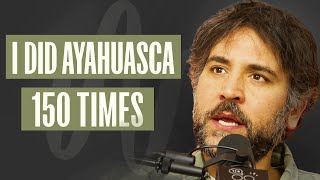
Actor Josh Radnor quit alcohol and pornography, then spent years working with plant medicines like ayahuasca and psilocybin. He talks about fame from How I Met Your Mother, grief, masculinity, and how dogs and community became central to his healing.
Chapters
Drinking porn. I would describe it like driving with the emergency brake on. Like, I'm still. My life's still going.
Yeah.
You know, it's just like I had the feeling like there was a drag, like I could be moving a little faster.
It's like, where's the smoke coming from?
Yeah, yeah, yeah, exactly.
Burning and I don't know what it is.
Getting porn out of my life and alcohol out of my life were the two best kind of excising things, like. Like cutting things out. Those are the two best I've ever done because I have an addictive personality. I just have the thing. I have the thing. More is better. I have that.
Ye.
You know, if something's good, more is better.
Well, listen, Mr. Josh Radner. How are you doing, brother?
Hey, man. Well, I'm. I'm like, overall, very good.
Good.
I'm just having, like, as I told you, I'm having that. A weird kind of day where I just feel like my rhythms are a touch off, but I feel. I have a feeling the more we talk, I'm going to just drop in.
Yeah.
And I'll feel. I'll feel back. Back in my body.
Somebody was telling me today that it's the Scorpio lunar eclipse.
Oh, sure.
Yes, that could be.
I actually find myself, like, when I don't know what's going on, and I feel weird and someone's like, where's in retrograde? And I'm always like, thank God. Like, it feels. It feels like, okay, there's a. There's an astrological reason everyone's feeling it. It's not just me. I like it when it's not personal.
Well, the funny thing was that I was interviewed, I was telling you in this studio next door this afternoon on this other show called Almost 30, and she was talking about how I can't remember what it is. Something about the Scorpio lunar eclipse. And I was talking about how I had this dream last night of this guy who's very intense in my dream, who actually had lunar eclipse for eyes. So he was peering at me and he had the lunar eclipse. So maybe I'm dialed in and you're a Scorpio and I'm a Scorpio video. I'm dialed into the lunar eclipse. I didn't even know I'm channeling something. Yeah. But she made a point of checking in with me to make sure I was okay. She's like, are you. Like, how are you today?
What does it mean? Is it a very intense moment? Like, for.
I have no Idea. Yeah, I don't know. I think I. I don't know. Somebody sent me something about it because this other woman actually had a. That I'm going through this training with a mentor of mine, reached out and said, I had a dream that I was at your house having a party at your house for the lunar eclipse.
Wow.
And I was like, wow, that's. That's pretty wild. So something's happening. You know, Mercury's not in retrograde, but Scorpio is in eclipse.
So with all that said, it doesn't sound good.
Maybe.
Maybe you're just feeling what I am supposed to be feeling.
You know, there's some transference.
There's some transference. It's like, I remember when I went and did my Ayahuasca event. Every single. I went and did four series down in Costa Rica, and every time that I felt like I had to throw up, somebody next with me, next to me would start.
Oh, yeah, that's quite a bit.
And I was like, this is. Thank you so much for taking the bullet for me.
Someone starts crying for you, it's, like, really weird. Yeah. Yeah.
Anyway, I have been thoroughly looking forward to this conversation. I have so much love and adoration for you. And anytime that we get to spend together, I just. I feel like there's a kindred spirit sitting across from me, and I've loved our hikes, I've loved our talks, and so I am really excited to just selfishly get to know you on a deeper level through this medium that I have come to love and for the people that are a part of my life, through the listenership, to get to know you, because you're. You're really a special human being.
Oh, thanks, man. Yeah, you know, I've. I've. You sent me the Martin Shaw episode, which I just flipped for it, and I've done a deep dive into Martin Shaw. Like, I can't urge people enough to, like, this guy is really saying something in it, and also, like, the best voice of all of the voices, so you can listen to him forever. But I love that so much. And then I. I just started listening to your podcast. I listened to the. The small ones, you know, that I listen to the big interviews. I just listen to Richard Reeves, which I didn't know you got him on because I sent you that article, which is so cool, but I love that one. I've loved so many them. And I think, you know, it'll sound like just. We just. You just had me on here so we could compliment each other. I think you do an amazing job. Like, I, I think you, you're, you're a great interviewer and you're so curious and you, you know, you, you, you disclose appropriately. Like, you, you, you tell people where you are on your journey and where you've been and where you've come from and where you're headed. And I, I think that, you know, I'm getting a lot from it. And we, I, I feel like we're contemporaries. Like, I think about, like, if I was a teenager, in my 20s, like, I'm in a, you know, I'm in a men's group. I've been in a men's group for years, and I'm one of the older guy. I might be the oldest guy in the group, but, like, some of my very dearest friends are like 29, 30, 31. And I think about being that age. Like, I didn't have anything like this. I was not talking. I, I actually didn't understand the importance of leaning into, like, male friendships. Yeah, I, I was actually like a female centered person, both, you know, sexually, romantically and friendship wise. And actually someone said to me, if you want to heal your relationships with women, lean into your friendships with men. Like, that's where you're going to get a lot of healing around the feminine. And I, I didn't understand. I totally understand that now. But I'm just thinking, like, what a great resource for young men to have your channel and your, these podcasts, your book, which is incredible. I'm not done with it, but I'm about halfway through it. It's just, it's so good. And I just, I just feel like it, like crystalline waters for people that are lost. And there's so many crazy messages floating around. Mixed messages around manhood, masculinity, male. The word even feels kind of provocative. You were talking with Richard Reeves about that?
Yeah.
So I just hats off, like, I think you do an amazing job.
Thanks, man.
Yeah, thank you.
I appreciate that. And, and I, I agree. And there's threads in what you said that I already want to pull on, but I want to stick with the one aspect of the structure of my show because my show is not super structured, besides this one piece, which I've asked everybody for years now, which is tell us a story or stories about defining moments in your life that have made you who you are today.
Yeah, yeah. We were saying you say you sometimes surprise guests with that. And I'm like, well, if you've been listening to your podcast, it's not a Surprise.
Yeah, I mean, I think I'll. These are. These are a little broader. They're not super sharp stories. Maybe the first one is. But I cut two things out of my life, that and years ago. But I don't drink alcohol and I don't watch pornography. And I've talked about both of these somewhat, but never in a. In a kind of. I've never really linked them as much as I probably will attempt to do now. But anyway, I went to. I.
I first sat with ayahuasca in Brazil in 2007. I did six ceremonies in Brazil, had an incredible, incredible experience with it. And then I came home and I started to lose that magic from it. And I didn't realize until I went back to Colombia a couple months later and drank three more, did three more ceremonies that I resumed my pretty good drinking habit. And then the effects. The good effects from ayahuasca started to. And that summer, I actually, Actually, this might be the pivotal moment. I got punched in the face. I got punched in the face twice.
Not in a metaphorical way.
Yeah, no, no, no. I got literally punched by a guy in Columbus, Ohio. I. I had met this woman, this nursing student whose name I won't say. And I was back in Columbus, Ohio. I was seeing my family, and I gave her a call because she had given me her number. And we went out and we just started downing cocktails, you know, and I. And then she mentioned that she had a boyfriend, which I did not know about. But I thought, you know what? I'm just in town for the night. Doesn't bother me if it doesn't bother her. That's where I was at that point, you know? So we're down in cocktail, and.
Cut to this guy he knew we were out together. He shows up at one of the bars we're at, tries to get her to leave with him. She refuses.
Oh, boy.
And then we go to another, and I'm just hammer. The. The idea that I was driving is outrageous, you know, But I drop her off, and he was in the parking lot kind of waiting for her. He cuts me off and I, you know, he gets out of his car. He's. He's blocked me off, and he tells me to roll down the window, and I stupidly roll down the window. Don't. That's a tip.
That's another tip.
Don't roll down the window. You know, you've had your mom's Toyota Camry, right? If. If the guy is after you.
So I. He said, get out of the car. Like get out of the car. I'm not a, like, get out of the car guy. You know what I mean? Like, I've never been in like a fight fight like that.
So. So you. I could have been there and it would have been.
You could have helped. You would have been there. That would have been helpful. I don't think you would have said that if you were in the car. But I, I'm. I'm seat belted into my mom's Toyota Camry, lowers the window, and he says, get out of the car. And I said, dude, I was not trying to sleep with your girl. Right, okay, so. And I was. I was so drunk that I. I felt the sting of it, but not quite right.
No, you got the alcohol numbing and I.
And I. Oh, no, no, no. I said, no at first. I said, I'm not gonna get out of the car. That's when he punched me. And then I was shocked and I said, I was not trying to sleep with your girlfroop. Another one. That one uncorks blood everywhere. Just like, in the nose. Yeah, he got me right in the nose. The first one was the eye, second one was the nose, and I'm bleeding everywhere. He. I think, sees it, and I think he felt like he did his work. So he gets in his car, drives away, and I get home and I'm just, you know, like. Like a month or two, like a month and a half after, after deep heart opening, spiritual experience, I'm suddenly hammered, covered in blood, scrubbing blood off my mom's leather, you know?
How old are you at this time?
I'm 32.
Okay.
Okay.
Yeah, that's good.
And you know, my. I had to wake up my mom because I. I called a friend, I think, who was in la, like, and they were like, I couldn't get my nose to stop bleeding. And they're like, you probably shouldn't lie down, you know?
Right.
So I had to wake up my mom. And then my dad comes in the morning and, you know, they put like frozen peas on my face and I'm just like, humiliated, you know, I'm like, you know, like, hey, mom and Dad, I got this life thing figured out. And I'm like, no, I don't. Then I go back to Colombia. A couple months later, I go back in August. This is before the third season of How I Met yout Mother. And it's my second ceremony there, so it'd been my eighth ceremony total. And I had an, an entire evening about my drinking. Like, an entire evening. I saw, I Won't even go into all the visions, but almost the entire night was about my drink. And I had never considered my relationship to alcohol. I have. There's. I had an alcoholic grandfather who I never met, so I knew I had this kind of genetic predisposition. But I wasn't a. I wasn't a bad drunk. I wasn't a surly drunk. I was quite charming. No, when I told people I quit drinking, they were like, you didn't have a drinking problem. You know, everyone insisted I didn't.
Yeah.
But I called. I called my buddy Dion from the Miami airport and told him, I think I. I think I. The message was clear, like. Like it was an invitation. It wasn't like you have to, but it was like your life would be better if you cut alcohol out. And I called my buddy Dion, who'd been. So. He got sober when we were in grad school. So I knew him for a lot of years, and he was really big and, you know, 12 step, and. And I told him, I think I gotta quit drinking. But right when I said it, I started weeping. Like, I just. The let go felt really big and scary.
Yeah.
Because I'd never socialized without drinking. I. I mean, it was so reflexive to order a drink, dinner, you know, wherever. And I also think I. My drinking had ticked up considerably since I'd been on how I met your mother. I was. I was uncomfortable about a lot of things, so. So I didn't drink for about four years. And then I. I tried. I thought, I can drink like a gentleman. I tried. That didn't work. And I tried one other time, but it's been about seven years, I think, since I've had a drink. You know, since 2007, I've had way more time not drinking than drinking. And I just want to say, like, I work some 12 step program, but they're not around substance abuse. And I'm what you call California sober. What's that? So I'll smoke pot, and I. I'll partake of psychedelics. You know what I mean? Like, I'm not a sober. I like to. I like to alter my consciousness. It's just. I don't do it with alcohol anymore. Yeah, and that's worked out pretty well.
For me, which we're gonna. We're gonna talk about at some point. I want to just maybe pause here for a second before we get into the porn side, because I'm like, you know, do you get punched in the face with the porn? But.
It'S interesting because I had A similar.
You know, I quit drinking three or four years ago now, and same thing. I was. I was really. Well, at that time, I really wasn't drinking very much, but there was something in me that wanted to see what I would be capable of without substances. Yeah. Period. And. And so, you know, I. I've been sober without anything for a while now, but it started in an ayahuasca journey as well, where I have addiction in my family. Specifically alcoholism.
Yeah.
And. And I've seen it really erode and destroy a few people's lives in my family.
Yeah.
And it was interesting because in one of the ceremonies that I had, I was in. I don't know how much of this I want to tell out of respect for the one person, but I had a very. I had a very intense experience where I could see the addiction in my family being transferred through the lineage and into me. Yeah.
Wow. Yeah.
And it became so clear in that moment that this addictive pattern was what had taken my grandfather because he died very early on in my mom's life. And there was addiction on my mom's side of the family. There was addiction on my dad's side of the family. And I had these experiences where I could see how the addiction had transferred into me. Yeah.
Yeah. It wasn't unlike my. Well, Well, I will tell you that what I saw that night.
I was in this little tiny one bedroom apartment in Los Angeles. I got the show, and I was still in that for the first year. But I then bought a house, a really nice house that I was in for a lot of years, but I hadn't moved in yet because I was getting some work done on the place. But I did have a huge barbecue. And I invited all these people over for this barbecue. My friend Rachel and I went to a BevMo or something and. And we bought so much alcohol. There were probably 50 people that we had alcohol for. 150. You know, there was so much alcohol. And I had a vision when I was in Colombia. I thought I saw my house. And the only thing that was there was alcohol. Like, that was all I had moved in. And that was all that was the only remnant of me or the evidence of my owning or being in that place was just booze. And I really. It startled me. And then I saw myself in my apartment drinking wine. These wine bottles just went down and down and down. And it wasn't like I was drinking them, but I was. And I was getting drunker and drunker and drunker and drunker and falling into the couch. And then I. My part of my spirit, like, lifted out of the inebriated body and just shot through the sky, went to that new house and then shot up into the. Kind of astral, into the heavens. And I. And. And I was with, you know, ancestors and. And angelic kind of beings. But it was. It was like the alcohol felt really heavy. It felt like. Like cement around my feet. Right. And without it kind of what you were saying, like, what am I capable of? It felt like there was much more ascendant kind of energy.
Those were the two. I really. That really stuck with me. But the whole evening, like I said, was about. Was about it.
So powerful, man. And I think we'll. We'll come back to this a couple times in terms of. Of psychedelics and exploring that. That territory, because it. I think it's played a huge part, from what I know. In your life. It's played a big part in. In my life, for sure. But I want to come back to the porn. I don't want to.
Oh, sure, pass that up.
Because you said that those two things were sort of connected and. Yeah, they were. They were monumental.
Yeah, I mean, it's. It's actually like, not that dramatic a story.
I. This is maybe a year or two after I had quit drinking. It's interesting when you dial down one addiction and another one kind of goes up like. Like, you know, whack a mole.
Whack a mole with your unhealthy behavioral.
Yeah. And I. Like, for instance, when I stopped drinking, I thought I never had a sweet tooth, and suddenly I was craving dessert. And it's like, oh, you get a ton of sugar from alcohol, and you take that away. You actually are into sugar. You're just getting it in a different way. But I was dating this woman that I really loved, and I had a really. What felt like a really healthy sex life. Healthy attraction. I didn't, like, long for another person. But I remember there was this day my porn had ticked up. And I remember there was this day where I was. She was, like, leaving, and then she had to come back. And I was, like, dying for her to get out of the apartment so I could watch porn. And it wasn't like I got super deep down the rabbit hole. I just knew my psyche is too fragile for that shit like it is. I assume you can do it like a gentleman. And it's not like a moral, ethical thing with me, although I do think there are moral, ethical issues involved. But for me, it was. It made me sexualize every Woman I saw, it made. It made me objectify every woman I saw. And I. I just thought I would like to be healthy, like, sexually, energetically. And it felt like a drain on my libido. And it felt like that energy again. Like that energy could be used. You know, all these things made me feel. Drinking porn. I would describe it like driving with the emergency break on. Like, I'm still. My life's still going.
Yeah.
You know, it's just like I had the feeling like there was a drought. Like I could be moving a little faster. Yeah.
It's like, where's the smoke coming from?
Yeah, yeah, yeah, exactly.
Burning. And I don't know what it is, exactly.
And I. And I stopped and I had one relapse. I was in Spain, traveling around. I was writing this movie, Liberal Arts, and I had one relapse. And for some reason, and I think this was like, I. I look at it as a very spiritual thing, but for some reason, I just haven't been. I haven't gone back. I haven't. It's been years. Like a lot of years. Like 2000, 10 or 11. And those two things, like getting porn out of my life and alcohol out of my life, were the two best kind of excising things, like. Like cutting things out. Those are the two best I've ever done because I just have. I have an addictive personality. I just have the thing. I have the thing. More is better. I have that.
Yeah.
You know, if something's good, more is better. My friends, Joe, you know, my. My friend gave me my Burning man name. He calls me Booster because I'm always like, we should boost. What? I mean, like, let's boost. Let's crank it up a little bit.
Get a picture from like, Mad Max, you know, where they're like, spraying the silver on with the top. In the Tom Hardy movie, not the original, but the Tom Hardy movie, it's like, get the boost.
Oh, I don't remember that.
But yeah, anyway. Yeah, that's. I. I get that.
I have that personality too. And. And I just. It just. Those were just two really good decisions, you know? Where.
Where do you think that comes from?
The addictive thing?
Yeah. Like, a buddy of mine had a saying of, like, as a. Whenever I would ask him, you know, do you want to smoke a little bit more weed? Do you want to take a little bit more mushrooms? Do you want to drink a little bit more? His response was always the same. And it was as a classic. Over consumer of everything. The answer is yes. And so. But I feel like I have that part with him. I've joked around that like there is a 500 pound fat man inside of me that just wants to eat junk food, smoke weed, get drunk, watch porn and all the time and like that that exists within me. And I don't know if everyone has that or if that there's some of us that just have more of that part that is stronger.
Yeah. I mean, it's an interesting thing to tease out and I don't know if you could land on something definitive because I think part of it is there is addictive tendencies in certain people.
Yeah.
I think I have them in certain ways. And in other ways I'm incredibly disciplined and incredibly can. Can walk away from certain things. Yeah. And I also, even the. Though I amplify my consciousness occasionally, I do it fairly sparingly. Do you know what I mean? Like, I'm not like, it's not an everyday thing. I don't wake up and do you know, I see people who are like, they exist on pot. I just could not do that.
And. But I also think there's something young about it, like adolescent, like about addiction. Well, about addiction, but also knowing your limits. Like, it feels like a. What? I just read a great quote that was. Someone said you can't know, you can't know what your limits are until you've like passed them essentially. Like, you only know what your limit is when you've gone way past your limit.
Yeah.
You know, so in some ways there's a kind of like turning the knobs of like life where it's like you're experimenting. Like, what if I. What if I drank seven nights a week? Oh, that doesn't work. You know, what if I never watched what I ate and I'm over 35? Oh, that doesn't work.
Yeah.
You know what I mean? Like, you have to kind of, like you just have to kind of experiment on yourself and determine. So that's why when people say I don't like anything that's overly prescriptive or says all people need to do this, it's like that's actually not true. You know, I used to be an incredible, incredibly energetic ayahuasca evangelist until I realized, you know, it's a very rookie mistake.
I'm buying a T shirt that says you do ayahuasca.
And the first thing everyone says it is like, we need to get every world leader in politician in a room and do this. And I understand. It's a very sweet sentiment. It's like, oh, this is Very heart opening. And all you feel is peaceful afterwards. You don't want to wage war or even get in an argument. Like, you're just in your heart. I get that. But I, like, should my dad do Iowa? I don't think my dad should, you know, even though I've. I've offered, you know, but. But, like, there are certain.
I would have loved to have been there for that conversation. So.
Dad, listen, there are certain people, I think that maybe, you know, meditation might not be for them, you know, like. I don't know. I. I just have found certain things that work for me, and I'm still making adjustments as I go because I'm changing. Like, I'm a. I'm a work in progress, but I have found certain things. Doing certain things works for me, and not doing certain things works for me.
I think that's one of the things that I appreciate about you. One of the many things that I feel like we have in common in a time where there's such a polarizing, almost fundamentalist approach to everything, Everything, even in the therapeutic industry. Like, this is the way. And it's like, well, what if there's other ways?
Yeah, right.
And that seems like paradox seems very challenging for the individual to hold in today's.
Yeah. And for me, it's like an essential thing. You know?
What. What. What in your life would you say has contributed to you.
Moving towards that? That urge to hold. Paradox, that desire to, like, not get locked in of, like, this is the only way that I should live my life, and this is the way that I should here in life.
Yeah. Well, I think I had a really good experience in college academically, and I found that, you know, it's kind of like the. The. The great truth, they say. The great. You know who said this? John what's his face who used to talk to dolphins. I forget his name. John Lilly. He was very interested in interspecies communication. But he did say this great thing about there are. Oh, no, maybe he didn't say this. You know what? Fact check this. Tell your listener. Someone said. Oh, no, no, no. He said, the. The eleventh commandment is thou shalt know, not bore God. Which is incredible.
That is pretty damn.
But someone said there are lesser truths and greater truths. It might have been a quantum physicist. But the lesser truth. The opposite of a lesser truth is an untruth. But the opposite of a greater truth is another great truth. So I had this experience in college where I realized that something could be true, and its opposite could be true. Just that basic Kind of fact that, that, that the opposite of a truth is not always an untruth. Sometimes it's another truth or looked at from another way. I also, I do want to give some credit to my dad. My dad is not an alarmist. He's not. He's a. He's a sober man. And I don't mean that in the classic. I mean he has a sober mind and he's. He doesn't go zero to a hundred. He doesn't get. You know, my mom reads, you know, about politics and goes crazy like I tend to do. But my dad just doesn't do that. He just, he was a trial lawyer for years, so I think he's very studied at seeing both sides of things. And sometimes you don't want that. When it comes to issues of like, injustice or something, you know, there's certain things that are like, we would like to lean into this side of things. However, I do think that there's something.
I think there's something wise about meditating on paradox and saying. Or not even paradox, just our own fallibility. I'll tell you something else. Being an actor for all these years has really helped me be a compassionate person. Because if you play someone who people might think is a villain, it's disaster to play them as a villain. You know, everyone thinks they're a hero or everyone thinks they're trying their best. So you have to really get under the skin of someone and say, why are they like this? And I think, I think compassion is the antidote to that knee jerk kind of Twitter mob mentality that we're living in right now.
I agree.
Which is like, burn them at the stake, run them out of town. No forgiveness, no reparation. You know, I remember you and Richard Reeves were talking about that. Like, you know, there, there's a great impulse behind some of these movements. And, you know, if, I don't know if you. I, I went really deep on the Rwandan genoci years ago. I read a bunch of books about it. And it's just. And I was there and I went to the museum. I don't know why I got so into it. Not into it, but I was very. But they did these. They did these, like. I forget what they're called, but they were like these. The villagers would gather around, and they would gather around the people that had killed their relatives. And they had these. They got to say whatever they wanted. To them, it was like a restorative justice kind of movement. They had already spent time in prison or they were about to go to pr. But they, it was just this different way of thinking about justice where it wasn't throw them away and lock away, you know, lock the key. It was like, how do we repair a society that has been so torn asunder? And how do we. But I, you know, I think we have to do that for ourselves too. Like, I'm in this somewhat funny but not super funny argument with my dad over the years because he always says, I'm not a forgiving person. And I'm like, let's test that. Well, but he also says, you know, we're Jew. We. We're Jewish. And he always says, I'm an Old Testament guy. And I'm like, first of all, that's wrong. Like the Torah and Talmud is loaded with admonitions to forgive.
Yes.
You know what I mean? That's not a, that's not a fuzzy New Testament idea. That's actually. And I, and I also think, you know, when we, when we don't forgive, we are one. It's indicative that we're very hard on ourselves. You know, that's something. That's another thing I've had to really work on is like how hard I was on, you know.
And so.
I think being an artist, that where my job is actually empathy has helped me let myself out of some kind of prison and let other people out of a prison that I might otherwise want to keep them in. I'm not always, I don't, I'm not always great at it. But, you know, resentments are killers. They're just, they're not. And they don't help anyone.
But what I think is fascinating is, is that. That I'm not going to forgive you is the holding on of the, the pain and the suffering. You know, it's like, it's like some kind of statement of like, I'm going to hold this hurt.
Yeah.
And, and it's, and it's going to, I'm going to feign honoring it. But what I'm really doing is trying to punish you.
Yeah, but it's the, you know, it's that classic. Like having resentment is drinking poison and hoping the other person dies.
Right.
Right. Like, it is corrosive on the spirit, on, on our spirit to hold that stuff.
Yeah.
But, but it's, there's something, there must be some kind of dark pleasure in it. You know what I mean?
That's probably true. Yeah.
People hold on to it enough that there must be some weird pleasure.
Yeah.
We get something from, we get something from it.
Yeah. It's like the knowing that that person has somebody who is hating them. You know, it's like, you know that I don't forgive you.
And.
And at the end of the day, like, you'll have to.
It also, you get to be the righteous person. You get to be the good person, and the other person is the villain.
Yep.
And that's very easy. That's a very easy binary to live in. But, you know, I think, like, when you really do some interrogation of yourself, there's a great story that I love about Carl Jung that. That one of his proteges said he was the easiest person to sit in front of because he had so interrogated his own interior. And he found inside himself everything. He found murderer, he found hero. He found child molester, he found saint, sinner, everything. He found everything. So when you had to confess something to him, he didn't. He didn't flinch. He didn't say, like, ooh, how could you? You know, he was like, me too, essentially. Like, even if he didn't do it, he knew that he was capable of everything. I found that on ayahuasca. I've saw. I've seen some real darkness in myself, you know, And I think that because I've seen that darkness, it's like. I don't know, I feel less like, you know, all the people who crusade against whatever, and then they're busted for that very thing. That's just not an integrated shadow. That's just like, they've never done any work on looking.
I gotta say, my favorite is always the senators or the governors who are so against gay marriage or the pastors or anything. And all the. This, like, news story comes out of them getting blown in their office and it's like, yeah, of course.
I gotta say, I love those stories. Like, I find I have a dark pleasure in those stories.
There you go.
Because, you know, hypocrisy is just the most odious thing. You know, it's like, but. But if we don't take a hard, deep look at ourselves and our. You know, in all the stuff. I mean, that's what I find. Like psychedelics and ayahuasca in particular is like, I have gotten some nights that are just a tour of my shadow.
Yeah.
And I. And I have no illusions that I am. I am oriented towards, hopefully towards virtue, towards doing the right thing. But I'm also, like, I'm a sleazeball also, you know, Like, I'm a. I've got a real degener in me. Also a lazy gluttonous thing that just wants to, you know, bring me grape, feed me grapes, massage me, tell me I'm great, give me awards.
Yeah.
You know, without any sacrifice, without any service.
Yes.
You know, I mean, that's what's brilliant about the 12 step model is it says you're.
You.
You have. You have put yourself on the throne even though you hate yourself. You are on the throne at the center of the universe, and we're going to get you off that throne, we're going to get you into service, and you're going to start feeling better about yourself. Because we don't actually want to be on the throne where we're, you know, His Majesty the baby, you know, it's not what we really want to be.
Yeah, yeah, yeah. And I. I think the. The other thing that AA inadvertently and maybe directly does is it helps people repair their attachment, you know, is like every single time you're in those moments where you want to drink, where you want to slide back into the drugs or the. Whatever it is, whatever the addiction is, what do you do? You call somebody.
Yeah, yeah. You call someone and say, how are you doing?
Yeah.
You know, sometimes it's just like, oh, three minutes of not my story. Right. Is like a mercy.
Right.
You know?
Yeah. Can I get out of my own.
So I always think about 12 step or any addiction model as essentially like, what false God are you enslaved to right now? Whether it's drinking, drugs, sex, food, gambling, like there you actually are in service to a God. It's a false God or it's a God. It's a small God, it's a lesser God. It's powerful. But you are worshiping something. It's like David Foster Wallace said, like, we all worship. You know, what are you worshiping? And what I think it does is it says, we're going to stop you worshiping this God. We're going to direct you towards something true, something deep and true. And has always been here and is benevolent and is on your side and wants you to be healthy and wants you to be connected and. And of service and. And it redirects that. That, that worship. You know, I love that.
I love that. I think we will come back to God and come back to worship because I agree, and I think that many of us in today's culture, not maybe not necessarily the people listening to the show, maybe, but I think that many people have.
Got caught worshiping things that are dubious and unhelpful.
Yeah.
And brutal to the rest of.
And not. Not to be overly political. I won't even say his name. But there's a. There's a politician that like. Like all he worships is money and status. Uhhuh. And he's considered like, the Christian choice. And I'm like, I'm. I'm. I. I know a little bit about Christianity and I have great love for the religion, but I'm pretty sure that's not what.
Not it.
That's not it.
My favorite. And I've. I've actually talked about this on the show a few years ago because, remember, at the beginning of the pandemic, I was starting to see this rise of memes of Jesus with an AR rifle.
Oh. I. I find that to be. That is such idol worship to me.
Yeah.
Such wild. It is. It is odious.
Yeah.
Odious.
It's. So. Yeah. Anyway, we. I don't think we need to go too far down the rabbit hole, but I. You know, it. We are in this very polarized time where people are. Are not only lost, but I think that they're. Internally, they're so chaotic.
Yeah.
That.
They'Re just grasping for something to hold on to.
Yeah.
As the, the ship of humanity is tossing and. And going faster than it ever has.
Yeah. And. And tribe identity, like, all that stuff can be an idol that's very easy to snatch and wear and worship and say, this is who I am. I mean, it's an interesting thing. Like, there's certain perennial. Perennially true things. Like if you say, like, we're all one, like, you'll get killed for that now. Like, you can't say that. I might ask you to edit that out. But I'm just saying, like, it's. It's wild that you can't. Like a vision that would. Would have been, you know, coming out of the mouth of Martin Luther King or, you know, Abraham, Joshua Heschel or someone like these kind of visionaries is now would be a. Quite a provocative statement. You know.
Yeah. Let's take a left turn into How I met your mother.
Okay.
And just take a brief stop there. I don't want to spend too much time there because.
Well, for a number of reasons.
But.
Tell me a little bit about the moment in your life when this really started to hit. Right. You got cast in this role. I know. I'm taking like a sharp left turn from what we're talking about.
Well, it's not, It's. They're. It's all related. Yeah.
So you get. You get cast, you get in this role, the show starts to blow up.
What's happening in Josh Radner's life as all of that is transpiring.
I mean, that's a big question.
Getting punched in the face.
Yeah, getting punched in the face. Truly going down to drink some ayahuasca. And then I continued drinking ayahuasca for years and years and years. I still, you know, I haven't done it for a while, but, but.
You know, I, speaking of false gods, I don't know, I don't want to call it false, but for years the theater and acting, that was my God, you know, an empty theater was my cathedral. Like that's where I wanted to be. That's where I felt the connection to spirit.
I get that.
And then when I, when I got what I thought I wanted, I found myself in more despair than I had been in, in certain ways ever. Because before you get what you want, you at least have hope that when I get this thing, I'll be happy. You know, it's a, it's very, I'm sure it's beyond America, but it feels like it's in the waters of America. Like when you get this thing, you're going to be happy. And I think that there's an under discussed and under researched and under.
Yeah, like not enough people talk about the despair of success. That, that, the, the, that the, the despair and the confusion and the alienation that comes with getting the thing you thought you wanted. Where everyone in your life is saying what a great thing, you did it, you know, and you feel, wow, this feels not like that now. I like some of the work. I like the regularity of the work. Like I said, those first two years, I was drinking a ton. My stuff with women was kind of out of control.
I was trying to enjoy, quote, unquote, the spoils of success, as culture says you're supposed to enjoy them. And I found that it just didn't bring me happiness. In fact, it brought me more.
The God shaped hole in my heart was opening more and more.
So I leaned into, I, I think I found ayahuasca and spirituality, meditation. I was meditating before I was on how I met your mother. But I think I, I, I was like, no, I need something true. Like I need what is true, what is truth. I needed to, to find it. So I, I leaned more heavily into that stuff. Some of which bore a lot of great fruit and some of which was a kind of like misdirection or it didn't, you know, But I, I started to get very clear on who my friends were, who my community Was.
Why is that. Why do you think that that happened?
Well, because a lot of people want to be friends with you for reasons that maybe aren't. You know, they're. They're just like, you have to be careful. A lot of people approach you and want to hang. Is that if you're on tv, would.
You say that's because of status or appearance or like, what's the. What's the predilection towards that?
I don't know. I mean, I. I was pretty good about not going. There's a. LA is a delightful place to live, by the way. You just have to know where not to go. There's certain places you just don't go. You know what I mean? Like, you and I, I lived a pretty modest life. I'm not super acquisitive, so I wasn't like buying tons of cars or do. And I wasn't like out at the clubs, you know, definitely bottle service.
Yeah.
So. So in some ways I had a. I had a. There was a part of me that was. Led a more modest lifestyle, but there was another part of me that just knew I needed to find my tribe. I knew I. I fell in with some really special people that were kind of California based, more, you know, hippie. Hippie people that are still some of my best friends in the world who just like, believed in something, you know, they believed in love and gratitude and some of those relationships are, you know, not in my life, but a lot of the big ones still are. But it was very clarifying. I gave a talk in India in, I don't know, 2016, maybe 15, at this place called the INC Conference. And I talked about how unnerving success is and can be and how to use it as a kind of spiritual practice. You know, Ram Dass says this great thing about whatever's in front of you is your spiritual practice, like whatever your life is. You trust that that course curriculum has been designed perfectly for you, you know, and it was weird to say, like, my yoga, my. My spirit. My practice was erosion of anonymity, being super success on a super successful show, but also feeling, you know, kind of trapped by it. And I ended up. I directed, wrote and directed two movies that during that time which were like, saved my life because I got to get behind the camera and I. And I flexed my wings as a writer and felt so good. So in some ways. Can you.
Sorry, can you just say what those two movies were?
Yeah. The first one was called Happy. Thank you.
More, please. Which is phenomenal.
Thank you.
Thank You.
And the second one's called Liberal Arts. They both premiered at Sundance. They both, you know, had this great kind of welcome into the world. And.
So I, I. I felt like. Because in some ways, I re. And. And. But I should say also, we were on the air pretty quietly for about three or four years. And then I think the fourth season, Netflix put us on, and that just changed everything. Like, our rating, our weekly rating started to go up really high. And then we just. With the cast, we talked about this. Like, everyone started to be like, it's weirder out there. Like, people. More people are stopping us and looking at. You know, it's a weird thing. You walk in to grab a coffee and, like, people looking at you. I don't want to overstate it, because I go a lot of places and people don't look at me. The worst thing you could do is overestimate your face. You know, you walk in and, like.
Are you looking at me?
Do you know who I am? Yeah, you probably know. And they're like, no, can we have the salt? You know, they're just, like, asking for. Can we take this chair?
I'm always baffled if somebody does. Right. Like, I was in. We were in New York last summer, and I went into a juice shop, a juice store, and I, like, got a smoothie, and I walked out, and somebody said, like, Connor Beaton. And I was like, yeah.
What?
Yeah, yeah.
That must be so cool, though.
It's a very strange thing.
The difference is, like, I was on, like, a broadcast network show.
Yeah.
It's familiar. I've gotten recognized in Africa, India, and. And I don't always feel like they're. But I feel like if someone recognizes you, they're like, I watch your YouTube channel, or I'm listening to the content you're making.
Right. It's so different.
It's very different. Honestly, if someone comes up to me and says, like. Like, I love your music, or I love those two movies you made, because they just feel like they're more of an offering from me.
Yes.
Whereas I was more of a. I played in the orchestra of How I met your mother. I wasn't the composer or the conductor even.
I like that. I like that analogy. Yeah. I mean, I never expected. So it's like, that's. I think it's a huge, hugely different thing. What would you say was the.
The. The. The, like, essence of what made the show successful? Because for me, I didn't watch it. I think I only watched, like, the last couple seasons, and.
For me, it was Like a case study in modern masculinity with the three main characters.
Oh, that's interesting. That's interesting. That's a great. Yeah.
And maybe that's just my. Because, like, that's the lens that I see through.
Yeah. All the time I've actually talked about that I was gonna make a joke that it was. It was just all the Canadian jokes that were. That probably put it over the edge.
That brought me in. Every time there was a Canadian reference.
I was like, yeah, I remember the day they said to Kobe Smolders there. It was, like, halfway through the first season, and Carter and Craig, who created the show, came up to her, and they were like, hey, we're thinking of making your character from Canada. Would you be cool with that? And she was like, that would be delightful. And then it's just like, eight years of Canadian jokes. Like, relentless.
They were awesome.
They were good. They were good. Well, the great thing about Canadians is, like, they can take a joke, you know, that's like, part of the national character 100.
If you.
Yeah.
If you've ever watched, like, the. There used to be this show called Red Green.
Yeah.
On Canadian. On cbc, and it was basically, like, these two ultimate Canadian dudes using duct tape all the time on everything.
Yeah.
And it was just like, duct tape and Crazy Glue and hockey sticks, and it was. It was ridiculous. And then there's this new show called Letterkenny.
Oh, I've heard of.
This is hilarious.
I heard about it. Yeah.
And they all. They all sound like your cliche Canadians, you know, like, yeah. Oh, how are you doing there, bud? What are you doing today there? You know? Then they all talk like that, and they're getting into fist fights on the farm.
My favorite thing to talk to Canadians about. And I. I'm almost sure I've asked you this. Okay. Every time I meet a Canadian, I'm like, you love the Tragically Hip. Like, that's. That's my go to. Because it also, like, if you're not Canadian.
Yeah.
And you ask about the Tragically Hip. I've never met a Canadian who doesn't light up, say, I love the Tragically Hip. How do you know them? And can we be friends now? Like, it feels like it is one.
Of those obscure references. And if.
And not in Canada. They're like a stadium. They were stadium.
They are. There's a stadium band in Canada. I saw them. There was. I can't remember what year it was. There was this big outdoor thing called stage 13 that I went to one year.
Yeah.
They had, like, Tragically Hip and Do you know Metric.
Do you know. Okay, I did a benefit in Toronto and ended up sitting at their table. They were great, but they're a Canadian band. But.
So what made a hit? What made a hit?
What made it a hit? Well, let's go back to that thing. I have some theories, but you never know some of it. You know, William Goldman famously said, like, no one knows anything in Hollywood. Like, like, it's very confusing why things hit what they. I thought. I think it's really smart and funny. Like, it's. In the most basic way, it's a smart and funny show. It is. It. If you didn't know it, you might think, oh, it's like a garishly lit sitcom with a laugh track. How funny can it be? But it's really funny. It's narratively very funny. The way they would nonlinear kind of. They scramble the narrative a lot. Yeah, it rewarded. It's like a puzzle, and it rewarded. It tickles your brain in a fun way. I think it's about formative times in people's lives. That post college kind of move to a big city, finding your tribe, feeling lost, not knowing if you're gonna. If career's gonna work out, if love going to work out, if. If you can, you know, afford to stay in the city. All that stuff. Those are. Those are kind of basic things. I do think the thing about masculinity, I would always say. I always said that it was a gender flip. So Ted and Marshall, my character and Jason Seagull's character were much more. Almost like stereotypically had, like, feminine. We were like, you know, were very interested in relationships, wanted to talk and hold our women. And.
You know, we were romantic.
Yeah.
And then you. And then the women were like, no nonsense. Right. Straight talkers. You know, Robin was like a cigar smoker.
Yeah.
Didn't want to be held after sex, you know, And I think they flipped the gender thing, which made it really funny. But then Barney, the character that Neil played, was kind of like this parody of hyper masculinity.
Yeah.
This kind of, like, ridiculous. The issue is, like, some guys take that seriously, and they're like, yeah, that guy's off. Barney's amazing. It's kind of like Gordon Gekko. Like, Oliver Stone clearly didn't believe that Gordon Gekko was supposed to be, like, a model American. But then you have all these stockbrokers in the 80s and 90s that have Gordon Gekko posters. It's like, oh, God. So I do think it Was this, it was this gender flip. It was this really interesting thing, but I also think that it spoke to. I have a lot of guys come up to me and say. I have a lot of women come up to me and say they relate to Ted, which is very interesting. But I have a lot of guys come up to me and say, I never felt more connected to a character. And I will say this, this is, this is an interesting thing that I feel like I can talk about now because I'm not as close to it and not as sensitive. When I was on the air, I felt like there were some people that were like, fuck Ted Moses. Like, I felt like people. Some people were angry at him, the hatred. They hated him because he was emotional and he was messy and he was all these things that men are trying not to be, you know, stereotypically, like trying to keep it together, not show their emotions, you know, not be confused and lost. And I had to model this kind of male vulnerability at a very. Character's pretty lost. Yeah, he, he is. And he also, yeah, he's lost. He's goofy. You know, he makes some really wrong moves. Like often.
He'S insecure, you know, which you're like, we're not supposed to be overtly insecure.
And he also had some really heroic, virtuous qualities like which, which I, I believe in. But I heard a lot of men, you know, my. I become friends with this guy who's from Canada actually, but he said, I. I always felt like I was so emotional as a man and I never saw myself modeled in culture until your, your show, until you and I. I find those very moving, you know, that, that I was able, that I was asked to do that. You know, I think that, I think it was valuable culturally and I think the, I think the. I think it was about love and it was about friendship and it was about, it was. Towards the end, it was about death. So I think it was. I think it bit off a lot of bigger things than a multi camera sitcom normally does.
Serious stuff.
There's some serious stuff. It acknowledged. It was also one of the rare multicam sitcoms that made you cry every once in a while. And I think that if every fourth or fifth episode you're kind of tearing up at this, you know, show that could also make you, you know, belly laugh or have inside jokes with your friends and a whole different coded kind of language like, that's a cool show.
Yeah.
You know, I have a much more.
I have a much more peaceful relationship with the show than I Than I used to. I. I used to be very. I don't know. I was confused about it. It was like. I didn't feel like it was mine, but I was so identified with it. My face was so identified with it.
You know, there was a weird thing where I started to feel they took certain things about me and put them into the character, like his intellectualism. Like, I'm. I'm. I'm a reader. I'm a. I do crossword puzzles, and they start putting that into the character. So then when I started being myself publicly, people were like, you just like the character. And I'm like, no, they made the character like me. You know, like, you have it wrong.
Yeah.
You know, and I just wrote this muse letter. I don't know if you get my muse letters, but I wrote. I. I wrote about this and said, you know, that. That he was a part of me. He. In that I play. I played a part that was a part of me, but it's not all of me. And it can feel very claustrophobia inducing to be reduced to something where people say, you're just this one. And I'm like, I didn't even write those words.
Yeah.
Like, I was just doing my best as an actor. I was contractually obligated to wear the red boots and, you know, do that stuff. But. But I also. I. The blessings outweighed, you know, the other stuff. So.
Yeah. I mean, I love that perspective. I think culturally, at that time.
My. My sense of it, like, when I watched it, it really was these sort of three. You know, as a guy watching it, there was sort of like, these three male characters who kind of represented different archetypes of modern masculinity. Floundering and trying to find their way.
Yeah.
In different versions.
Yeah.
You know, and I think for me, it was interesting because I could see parts of myself in each character.
Totally.
You know, it's like, oh, yeah. I'd been the. Like the womanizing Barney, and I'd been this guy that was lost, and I've been this guy that was so romantic and, like, so obsessed with the relationship.
Yeah.
And just trying to find, like, who am I in the. In the wash of society.
Right. Yeah. And I think. I think that question, who am I? Might be, like, the meta. Like, the baseline question of how I met your mother.
Yeah.
Like, who am I? And. And he couldn't meet the woman he was supposed to be with until he knew who he was. So I think that's part of the journey of it. You know, Would you Say that that.
Is.
A true statement for most men.
Again, I'm wary of anything overly prescriptive. For me, it's a true statement. But I know I have a lot of friends who got married in their 20s.
And I know a lot of women who got married in their twenties who. They told me all this stuff that I spent the last decade or two figuring out in relationships, out of relationships they had to figure out under the umbrella of marriage. Right. So you MARRY Someone at 25 or 27, at 37, at 42, at 48, like, you're a. You're a different person. And the question is, like, are you growing at a rate commensurate with your partner's growth? Are you growing in the same direction? Have you heard that thing, like, everyone gets three marriages, and if you're lucky, they're to the same person?
I haven't, but that's great.
Yeah. Isn't that cool?
That's really good.
Yeah.
I think in part that's why I actually waited so long to get married. I mean, I guess I wasn't so old, but I was. I think you weren't old for a.
Big city, but maybe for like a. Yeah.
Yeah.
I mean.
I mean, I grew up in a small town, you know, like 30,000 people. Yeah, smallish. But I was 35, you know, and I think for, you know, marriage rates, they're getting older and older and older, and people are having children later and later and later. And I think for me there, I actually felt this kind of responsibility to, like, get my shit together before I entered into that large of a commitment.
Yeah.
You know, and I. I think a lot of men that I've talked to over the years feel a similar sentiment of, like, should I give myself to something, to a commitment that's that large, without really having a more full and broader scope of who I am or at the very least, give myself time to. To, like, mature into who I might be. Yeah, that doesn't always need to be the case.
But I had this talk with Ben. Ben Lee, who I. Who I've made, made a lot of music with an Aussie songwriter.
And he. He would say, when. When guys would say, like, I want to get my career settled before.
Yeah, that's a big one.
Yeah. And he said every Fortune 500 CEO, like, was married when they, like, got their first loan for their business. You know what I'm saying? Like, it's not. It's not like they were at the top of their game and then found their partner. I mean, maybe some of them. But, but by and large, I feel like the right relationship can be rocket fuel on your life.
I agree.
You know, I agree.
My life has definitely gotten a lot better.
Yeah. And I think it makes things, it's kind of like I don't have any kids, but like, I know my friends who've had kids, the first time they hold that baby. There was someone on your podcast that was talking about that. I forget who it was, but they were saying like when I held that my child and I realized, oh, like around time is over.
Yeah.
Like I got to get real serious about everything.
Yes.
And I think it can be a call to step into a, a deeper, more actualized version of yourself if you realize that you're not living for yourself anymore, you know, whether it's a partner or a child.
But you know, I, I, this stuff has taken me a lot longer than it's taken other people. I'm 48, you know, I'm with someone, I'm gonna stay with, with her, but it's, it's taken me a while, you know, and I, and I think there was some sort of meta weirdness of being asked to model this search for so many people. And I wasn't, I, I never, like, God forbid, I never told anyone I love them on the first date. I was like, my joke is like, people say I, I gotta try not to get married on the first date. I had to try not to get divorced on the first date because I was always looking for like what, you know, that was how my mind worked. And that's something I've had, had to work through.
And was that looking for something that was wrong? Was that a, like a byproduct of childhood? Was that something that happened because of dating or.
Sure. I mean, everything. I, I think ultimately I had to accept the fact that there's something in me that wants to be alone. Huh. That wants to push people away, that wants to find. I would make a case against people. I always knew where the exit signs were, you know, and this is stuff I really actually needed some help with. Like I, I, it was right when I, I ended how I met your mother. And I, I was right about to turn 40 and I was like, I have no idea how to be in a really, I couldn't. I had one relationship that lasted three years in my 20s and I had a series of year long relationships, but a lot of times just being single and kind of on the hunt, you know, and there was something about, about turning 40. I was just getting sad. Like I was getting. There was a sadness that was coming and I realized men who don't look at this, like really look at it and curb some of that behavior. It just doesn't age well.
Yeah.
And I was so scared of being just the, the, the, the older guy in the bar when the lights come on, you know, And I'm like trying to take home some younger girl and I'm like, what am I doing right? You know? And I just didn't. So I couldn't. I. And I always felt like there was something like, why have my, my, why have like all my high school friends except one? Like, why have they all figured this out? Like why they all, why they all figured that out? Like, I don't, I didn't. Was there a day in school I missed where they explained, like, this is how you like have like long term committed relationships.
Yeah.
And I, and I, and I, you know, but was crazy because I'm, I, I'm really good at friendship, you know, I agree. I'm really good at being vulnerable and talk like I had a skill set that should have been good for this, like transferable over. Yeah.
And I, but they are, they are different beasts.
They are different. I mean friendship is a component of a, of a romantic sexual relationship, but it's not the whole deal.
Yeah.
You know, but I, I, Something in me was like, I need help, you know, So I reached out. I, like, I, I actually got some help. I actually, I stopped dating for a time. You know, the vag vacation. Yeah. I just got real. Like I started to look at the, the parts of me that were self, you know, defeating or, or, or just didn't. Because there was a point where I was like, do I want to be in a relationship? Like, maybe I'm just like a confirmed bachelor. Like, maybe I'm, you know, that used to be a code for something else. But maybe I'm just someone who will have a series of relationships and that will be my life and I'll have. But I, but I, I did want to do it. You know, there, there's a thing of like, I, I'm really interested in life. I'm really interested in experiences like, oh, I've never done that. Let's do that. You know, I don't want to do everything. There's certain extreme sports I have no interest in.
I see like the people going through the small crevices in the cave, like 400ft underneath.
No, no, no interest. No interest. No, none of that. But, but in terms of like life checklist of not like, quite a bucket list. It's not like, you know, have to go to the Amalfi coast or whatever, which I would love to, but it's more like, like the big things. And I had all these relationships that were really exciting, really cool people I had. You know, I would only be in a relationship with someone if I thought they were great. But it was like I couldn't take that next step. But I started to look and say, okay, I've had all these experiences, I've had all this professional success, but the thing I really haven't done is. Is gone super deep and said, I'm here and I'm not going anywhere. One thing I loved that Martin Shaw said. He might have said it on your podcast or might have said it on another one, but he said, men around soul work, we have to trade at some point, we have to trade growth for depth.
Yes.
And, you know, that just landed on me so much. Like at some point I just didn't want to amass, you know, like I said, I didn't. I'm not interested in stuff.
Yeah.
I mean, I would like my career to keep, keep, you know, blooming. But at some. I. I always wanted, you know, a friend of mine really love lovingly reflected back to me. He said, I feel like when you're at a crossroads, even if it's at the 11th hour, you always break towards depth, you know, and it's true. Like, I, I want to feel that my life is, Is more about depth than growth.
Yeah.
You know, or, you know, take another analogy. It's kind of like I don't need to own all the land, but I want to be a good steward of the land I have. You know, I want to till it. I want it to be fertile and I want to. So I'm, I'm, I'm in the process of getting more of that clear of what my land is, you know, and how to be a conscious gardener of it. But it's taken me a while.
I think that that is. I'm with you, that whenever my life has presented me with those inflection points.
Yeah.
That I have had a predilection towards just like a, A desire to move deeper.
Yeah.
And I've never really known what it was or where it came from. And. And maybe I never will. And maybe that's not the point.
Yeah.
But that has been a part of my North Star.
Yeah. Yeah.
Because I've seen what the ascension oriented growth obsession has done for a lot of people.
Yeah.
And.
When I've pursued That I've actually never really felt.
Fulfilled.
Yeah.
I've never felt satiated.
Yeah.
And it can be. I can. It can be really exciting. I can really get into that part, and I. I always feel this tension between this part of me that's just like, go for the growth. Go for the growth. You know, like, go after. Build things as big as. Do whatever the. It takes.
Yeah.
And I have that living within me, but there's this other sort of, like, hand on the shoulder that just says, go slow, go low. Yeah. You know, and that. Whatever that is, whether it's my grandfather or the older mentors that I've been so blessed to have in my life, that voice is always there, and I've always listened to it. It's like I've been fortunate enough to have some elder.
Yeah.
Thing in my life that's pulled me more towards that depth.
Yeah. I think it's probably. We never talk about it directly, but I think it's probably part of our connection is an attraction to that. That depth. You know, I. I will say also that another kind of poison kind of thing that's laced into success and fame. Yes. And money is that no one asks you to drop this stuff.
No one says, like, you're.
You're.
You're allowed to stay in a suspended adolescence much longer if you have that stuff. Like. And. And to me, I. I just. I. I kind of felt like I wasn't busted. I just. I turned myself in. I was like, you got to get me off the streets, you know?
Well, you. So when you say no one asks you to drop that stuff, what are you referring to?
I mean, being unmarried and struggling with relationships at 40 in Hollywood. Successful.
Right.
I don't know. Like, maybe some people might say, like, what's going on with that guy? But most, by and large, people don't.
Yeah.
You know, and you can. You can hide out there for a long time, and. And it's not even any sort of slam against. And I was that person. Like, I. I just knew that the life that. That felt like my heart was yearning for was.
I just. I just had to drop a lot of that stuff. And I had to say, you know, I think. I think that part of an adolescent idea is I can have everything.
No limitations.
No limitations. So part of my addiction. My addiction kind of template was variety and options.
Yeah.
I wanted all options. Yeah. I wanted to be able to date every woman that I was interested in. I wanted to live every possible storyline. And I think part of my growing up was acquainting myself with the truth that getting older is a huge part of getting older is loss.
That there is that, that. You know, I, I recorded this album in Nashville that's going to come out later this year called. And it's called Eulogy. And the reason I called it Eulogy is, is because each song is like this mini funeral for this part of me that, that served me up to a point and then has to be kind of retired and buried and also kind of kissed on the forehead and honored. Like, I don't want to say these parts weren't they. They helped me get across the river. Right.
You're not going to have like the angry Jewish funeral.
No, I mean why, why do that? Why do that? But, but I felt.
You know, just acquainting myself with the inevitability of, of, of law, like grief and loss and to say. I was just talking to a friend of mine who has now a 10 year old kid and he said I'm. There's a part of me that I, I could miss the like baby or the toddler, but then I'd miss this cool 10 year old that I'm living with. Right. Like, but, but there's still, there's grief in people getting older. There's grief in our getting older. There's grief in, oh, I'm choosing to be with this one person. That means I'm not going to be with these other people. I'm not going to live these other lives. But at the same time, if I just stay in the world of options and variety, there's grief in not going deep and not having that soul expansive experience. So I think that in some ways you have to choose. Are you interested in growth or depth? Depth, you know, and, and you know, I, I end up making even career decisions. I, I'm always like, I should be. I should have said yes to that thing that was more growth oriented. But I was like, but I didn't think it was good. It's like, well, but it was a big hit. You should have done it. You know what I mean? Like, and, and, but I, I end up, I almost feel like I had this very big mainstream success, but my heart is like an indie artist who, who kind of like really just tries to choose integrity at every turn. But I, I think, I don't think it's so binary. I don't think you have to have, you know, there's certainly.
They're not exclusive.
No, there's certainly great artists that seem to be in their integrity and people find them and I would love more of that, you know, but I. But I do feel like I'm constantly. That. That is the question. Growth versus depth for me in this moment, you know, if I'm weighing a decision.
So limitations, endings. I mean, what's, what's interesting, but what I hear you saying is one of Carl Jung's proteges talked about this. This concept called Puerto Earnus, which.
Oh, I know all about.
Puerto Earnest is the eternal boy. Yeah, Right. And I. What's interesting is that I think in our culture, Our culture really idolizes youth, you know, and longevity, this notion that. That freedom means that you should be able to do whatever you want, whenever you want. And there's no endings. There's no limitations. We don't grieve losses, we don't grieve death. Death. You know, Stephen Jenkinson, who I've had on the show, you know, I've talked about, said, like, we live in a death phobic culture.
Yeah, right.
That we're so afraid of endings, but there's a maturation that comes with the acknowledgment of those endings and then the pursuit of those limitations. Right. The. The. The acknowledgment. And so I want to just return to your relationship, to relationship relationships, and maybe inquire a little bit around what limitations have you had to explore? What endings have you had to put into place in order for you to find your way into a deeper orientation within relationship?
Jesus, Connor.
I mean, first of all, I would agree.
I think it's part of the.
I think it's a real grievous problem in our culture that we. And this goes back. I think there might have been, you know, whatever. You can quibble narratively with the end of How I Met your Mother, but it was about death. And my friend Alec Lev, who did the How I Met yout Mother podcast, we were talking about this. He said, I think some of the outrage about that was people were angry that we reminded them of that. About death.
Yeah.
And that can be. It's so weird. For the most common thing ever is. Is like a contra. Like, people get angry if you remind them.
Yeah.
You know, my. My girlfriend is a psychologist and she did her PhD. You know, her dissertation on the connection between love and death and how a more presence, awareness of death and mortality in a relationship increases intimacy and connection in a partnership. And I one time said to her, like, how do we. How do we stay at this? How do we do? And she said, we remember we're going to die. You know, like like, you know, it's like, till death do us part. It's like. It's not forever, actually. It's not forever.
Yep.
You know, and sometimes I, when I remember the fact of mortality, it wasn't Richard Reeves talking about, like, if you had one more year to live, would you be okay with how your year is going or how it went? And these are great exercises, actually, like death meditations. Because.
It'S so crazy that our completely immature relationship to aging and death, and I'm a product of this culture, I also have an immature relationship to aging and death. I'm just trying to remedy some of it.
Well, it's funny that you then attracted the woman that you did.
I know, right? I know, I know. And, but, but, you know, that was a depth move. Yeah, right. And.
And I remember the, the night we met, I asked her, you know, what she did, and, and she, and she said, I, I do. I had specialized in this love and death work, but I'm stepping away from it. And I said, why? And she said, I felt like I needed more experience with both, that it was becoming kind of too academic or clinical. And I wanted to, to, you know, have a little more love and a little more death before I talk. I could talk about it with some, you know.
Yeah.
And that really struck me. I thought that was a really beautiful thing. So, you know, the, the funny thing is like, life. I'm listening to. I could not recommend this highly enough, but Nick Cave, who is an Australian songwriter, Nick Cave and the Bad Seeds, he lost a teenage son years ago, I think 2017, in a tragic accident. And he has become this kind of like grief elder, you know, he's just like the most eloquent voice on the scene, I think, about grief and loss and time. And there's this book called Faith, Hope and Carnage, which is a series of interviews he did with a journalist named Sean o'. Hagan. I think he's a journalist, but I'm listening to it. It's a great listen. But he talks about what he realized about the kind of grief he underwent, which he called an annihilation, complete annihilation. And he said what I tell people and what I learned from my fans and from people who reach out to me is this is common. It's common. It's coming for everyone, this kind of loss. And we can bury our head in the sands around that, sand around that, or we can absolutely surrender to the non negotiable kind of aspect of that. And he even says, even if, if you are, have the Great good fortune to be loved deeply. Your absence, your death is going to annihilate someone. You know, it's just Jenkinson talks about this, just woven.
Yeah.
And I think when we, when we're in a death denying culture which we're in, we hide our elderly, we hide our. We. We bury people very fast. You know, it's like in it. When we get shocked by death.
Yeah.
I don't know why we even get shocked by it anymore. Like, it, like it is absolutely baked in. You know, I did have a really interesting thought. I've been, I've been going to the. I try to go to the gym every day.
I love how excited you get about. You just got like, yes, I'm excited.
I have this thought, I was in the sauna at the gym and it's a very hot, very good sauna and I try to stay in, you know, as long as I can. And I thought, man, if I didn't know if that door wasn't openable, this, I'd be in hell. Right. This is hell. But if it's 10 or 15 minutes with the option to leave and for this, this heat to end, it's really pleasurable. Right. And I had this thought, immortality might be a kind of hell, that if there was no option to leave or end this thing, and I'm not sure, who knows, this thing might go on in various ways. I don't know. I believe in the kind of immortality of the soul on some level. But, but the fact that we have an exit, and in fact I think that exit is what makes it. Was it Martin Shaw said in another thing, God, I love that guy. Martin, if you're listening, I love you, Martin. But he said.
Humans, what we have over the angels is we have these bodies and we have, have the, the finitude, if that's a word, like the finite. Like we have death. And because of that, being a human is much sexier because there's pathos and there's sadness and it's going away. Even, you know, an orgasm. In, in French, you know, they call it a little death. Right. Like there's something absolutely tragic about being human.
Of the orgasm.
Well, no, there's something tragic about just being a human being and there's something hilarious about it. You know, like, like Jenkinson talks about this when you hold your baby and you say, I brought you here to die.
Yeah.
Like fundamentally that's what it is. And I'm going to have to prime you to be okay because I'm not going to be here if all goes well, I won't be here when you die.
Right.
So you're gonna have to be. Have enough kind of knowledge and stamina and wherewithal to do it without me. I mean, it's. It's like if you. If you spend enough time meditating about it, it makes you want to curl up in a ball, it makes you want to weep, it makes you want to say thank you, it makes you want to laugh, because it's so goddamn funny.
It's true.
You know, and. And I think all the best art is about love and death and grief. You know, all the. All the. The best songs, all the best podcasts. You know, it's like, I want to talk about this stuff because I feel like to not talk about it is a kind of. It creates so much internal dissonance.
Yeah.
If we're not talking about the fact that we're dying every moment, that we're getting closer to the grave every moment, it. It feels like we're not talking about the elephant in the room. And I think that children know it on some level, and they feel it. They feel they're being lied to. And then. Then we grow up and we become the liars ourselves.
It almost seems like I've thought about this, and Vienna and I have talked about this, that part of our role as parents is to actually help our son and help our kids.
Know what to do with suffering, know what to do with endings, know what to do with death. Like, we had a. I think I shared a little bit about this with you, but, like, we had such a. A wild experience where right before Code was born.
Our. Our dog Bronx was diagnosed. Yeah, I remember.
I remember.
Right. And so there was this very strange, immediate dichotomy.
It was like they high fived right on the one way in way.
It's like this revolving door of life and death, of love and death, and. And it was. You know, I. I've had a lot of people pass away in my life.
Life.
Bronx was this incredible character. We really loved him. But we sat with him in his final moments. Right. I put my ear to his chest. I listened to his heart literally stop beating. Vienna held his paw and looked into his eyes, and we were just there crying and breathing and just being with him in his final moments. And.
At first, it felt like this tragedy, like we were being robbed of something.
Yeah.
You know, because both of us had this picture in our mind of our. Our child laying with our dog.
Yeah.
All the cliche Instagram photos and videos that we had seen of like, yes, our golden retrievers. It's just gonna be beautiful. And, and, and then he wasn't there. And it was, Honestly.
It moves me right now as I talk about it because it was one of the most, most profound experiences in the sense that the, not the joy necessarily, but the joy of getting to be with him in those final moments was not the same as welcoming my son into the world, but it was a measure of profound experience that I really didn't expect to just be with him. And it made me grieve for the, the, for the people who don't get that.
Yeah.
You know, who are ushered out of this world, out of their body.
With no one around to hold them. You know, because when we're, hopefully when we're ushered into the world, there's people there to welcome us and greet us and hold us. And so I feel like I got a very deep lesson in what parenting is. You know, like, God was sort of like. And by the way, day.
Yeah.
You should probably prepare your son or the, the weight that culture is not going to.
Yeah.
Actually help him learn how to deal with. Yeah.
Thanks for telling that. I got, I got real emotional listening to that. I, I.
I would say that I, and it's not, I'm not laying this at the feet of anyone. I did not get a good training in suffering. I have had to learn that along the way.
Yes.
Which you do. You know, if you're paying attention, you learn.
Like, you kind of have to.
I didn't get a, I didn't get a. I had to. Life had to teach me when things don't go my way, when there is loss, when there's grief, like, how, how. But, but I think it's those moments that reveal who we are, you know, essentially at our essence. But I, but I also.
The third thing I was going to talk about and the pivotal thing I had mentioned to you was getting my dog, Nelson.
Yeah.
Speaking of astrology, a friend of mine got me an astrology session with his teacher. Who do you know? James Hillman.
Oh, yeah.
Yeah. So his son Lawrence is a really amazing astrologer. Lawrence Hillman. And he's not. Woo woo. He's not a prophet. He's not predictive. He talks in archetypes. Like, he talks in a very Jungian language. Awesome. Incredible. Right. So I had this really powerful session with him and he asked me if I had a dog. And I said no. I said I was, I've been allergic my whole life, you know, and he said, could you get a hypoallergenic dog. And I said, probably. And he said, I think it would be a very good idea for you to get a dog. And I said, why? Why is that? And he said, it would be very good for you to be loved by something for no reason.
And I immediately logged it away. And a couple months later, I, I, I started, you know, this kind of search, and I, and I ended up with this. You know Nelson.
Yeah.
You know Nelson. Well, you saw Nelson. You spent a lot of time with Nelson his first year of his life.
I did, yeah. Yeah.
Your, your wife, Vienna, one of her favorite things on the earth is to pick the black gunk out of Nelson's eyes.
The boogers. The eye boogers.
She loves it.
She's like such a, she's such a mom. She's so good at that.
I know she got mad when I would do it. She was like, that's my job.
Yeah. Do not steal this from me.
Yeah. But.
Nelson has radically altered my life. And.
I remember two things. One, I was very nervous about the first week when they were like, you have to run him downstairs every two or three hours. And I thought I was going to be so angry that my sleep was. And I just woke up so effortlessly and I scooped him up, and I remember the feeling of holding. He was so little, you know, walking him downstairs in the middle of the night, and it was so tender. Yeah. And it was so beautiful. And I was out in the, you know, cold, like, waiting for him to go, and he would just look up at me. And my friend Ed says.
He said, we love babies because we clean up their poop. We love dogs because we clean up their poop. Anything we clean up their poop, we love, you know, so weird. And it's, it is weird, but the truth is it going back to that kind of thing of like, we want to be dethroned. Like, like part of my pain as I was getting older was I was too focused on myself. I didn't have of another thing outside myself that I was really paying attention to. And Nelson, all he does is love me back. But I feed him, I walk him, I clean up his poop. I do, you know, I do all these things, and it's just this. I get this deep love back. I get this shattering heart expansion. And the other thing about Nelson is that you get a dog. And part of the, the gift of a dog is you get the 10 to 15 years. Right? Like, you don't get, get 30, 40 years.
Yeah.
You get what you get. Yeah. And the moment I fell in love with this dog, which was very fast. I. I could. I can make myself cry just thinking about what you. What you described with Bronx. Like, the moment of goodbye. Yeah. And how much, like, I'll have to. Sorry. Like, how much I'll have to thank him for.
Yeah.
You know, and I used to never understand when people get emotional about their pets. I was like, I wasn't an animal person until this dog just showed me, like, what that relationship can be. And also, like, what a teacher. You know, what a teacher of, like, loving for no reason. Because I think, like a lot of people, I learned a very conditional love. I thought I had to be excellent, perform, achieve to get love. And Nelson doesn't care if I book a big job or, like, he doesn't care. He's just excited I'm home.
Yeah.
You know, and there's something so. So sweet and achingly sweet about that, you know, and that he's going away, that he won't be here forever. And it's just like, what a teacher.
Yeah.
You know, what a teaching. Like. Like a ferocious teaching. Yeah.
I love that notion of getting loved for no reason, you know, for no reason whatsoever. I feel like the moments that have in some ways defined my marriage and my relationship.
Have been these moments where I've either been loved in a moment where I thought I should. I didn't deserve it.
Yeah.
You know, Or I've been loved for no reason.
Yeah.
Whatsoever. It's like, oh, I didn't do anything, or.
Yeah.
There's not a.
This isn't impressive.
Loving me for no reason. It's not because I'm performing well or whatever it is. And vice versa. You know, where I've been. Where I've been conscious enough to actually give that to Vienna. And it's. It's something that I feel like we're all craving for, you know, at our cores is just that sense of I belong, and I belong just because.
Yeah.
And I think part of the challenge that I see with a lot of men is there's this narrative out in modern society that says women are born with value and men aren't, and men have to build their value. And I see this pushed out through certain channels quite a bit.
Almost saying, like, you as a man don't have value until you've earned it. And I think that that value is different from the status that is often being talked about. But, yeah, it kind of breaks my heart a little bit to know that there's a lot of men that are out there who have probably been very successful, had a lot of achievements, or maybe done nothing and have never experienced that getting loved for no reason. Or if they did, they rejected it.
Right.
Because they, they are, they are under this spell that says you have to have done something in order to be valuable, in order to then receive love.
Right. But then you do something that by all accounts, by society standards should. Could secure you.
Yeah.
That love. And you don't feel it.
Right.
And in fact, like me, you feel more despairing than ever. I mean, I think that. That a relationship at its best, a good relationship. And there's no such thing as a perfect relationship, just a really healthy. Rooted in. In the kind of good, honest stuff. It'll. It. It helps rewrite some of these terrible scripts in our heads.
Yeah.
You know, my girlfriend says this great thing that family is the only thing you get to do twice. You know, the first one you didn't have much of a say in, and the second one you get to have a little, you know, you get to have more say. A little bit here, a little bit. Not all of it.
It's a collaboration here and there.
Yeah. But. But I think we have to rewrite some of this stuff because.
You know, it's. It's. It's also like, I think there's a lot of wounded, hurting men out there who think when I get this, I'll finally feel happy or I can get the kind of woman I want. And in some ways, you won't believe me when I tell you that won't be actually the case. So you actually have to do it, you have to get it, you have to go out, you hunt, you do the thing, you come back with the spoils and maybe for. It does work for a little while, while. Like, I don't want to say it doesn't work at all. Like, there's a kick. I mean, but it's a bit of a drug. Right. Like, you spike up and then you crash.
Yeah.
I. I just think that there are sturdier things too. And not to say we shouldn't work or strive or succeed. I'm. I'm for those things. But there are sturdier things to kind of put our, you know, throw our lot in with and, and relationship and love and community and service and dogs and, you know, all that stuff is so, so, so good.
Let's let our final stop of this conversation.
Be in the. In the spirit realm and in the realm of plant medicine.
Sure.
Because that has played a huge part in your life and we've talked about it. A little bit. We don't have a tremendous amount of time left, but maybe just for. For my own knowledge and for the people that are out there, maybe just give a little bit of context of your journey with plant medicine and. And a little bit of what's come of it for you or come from it, I should say.
Yeah, it's easy to do this in five minutes. Yeah. Right.
I'm like, like. So I left this to the very end.
Well, like I said, you know, I. I started working with ayahuasca in 2007, and I did it for years and years and years. Multiple times over the years, I've done, you know, probably 150 ayahuasca ceremonies. I. I've done some peyote ceremonies, which is not as much my medicine, but I respect it deeply. I've worked with San Pedro cactus, which is another interesting plant. I've only done it once, but I had a pretty profound experience with it. I've worked with some heart openers that have been really powerful. Sassafras and MDMA and psilocybin. Psilocybin, yes, a lot of psilocybin.
Lsd, which I think can give some gifts, is an interesting medicine. But, yeah, psilocybin, I have very powerful experiences with. You know, for me, it was like one of the. One of the big gifts is.
It almost like reanimates the world. Not reanimates. It allows you to see how animate the world is and how, oh, these trees are alive. These trees are beings. And. And with ayahuasca, especially the. That we. It's not just three people in this room right now. There are. There are things happening that we cannot see. And some of these medicines allow you to see. They also allow you to see kind of in cellularly, you know, where there's a ethno or anthropologist named Jeremy Narby who wrote a really interesting book called the Cosmic Serpent, where he was with this Ayahuasca tribe and he. It was so curious why I. People see snakes in ayahuasca. And he thinks that it's the double helix of your DNA that you're actually kind of in your. In your body kind of seeing this.
Cool.
I mean, I. I think that I always come back to this Aldous Huxley quote, who, you know, he wrote Brave New World, but he also wrote the Perennial Philosophy, which is an incredible book. And he was this towering 20th century figure, but he was very interested in psychedelics and medicine, meditation, world religions. And he was asked at the end of his life, you know, You've tried everything. You've literally tried everything. Like, what. What did you get? And he said, I'm embarrassed to say that, like, all I really got was try to be a little kinder, you know? And when I come off these journeys, no matter how hard they are, because ayahuasca can be quite harrowing. I mean, it can be and rigorous and tough, but when I. When I come back and I. Sometimes I have to comfort myself in the midst of it and say, if I can say, you know, you're going to be having blueberries in the kitchen, talking about this in, like, three hours, like, just hang on, you know?
But I find that it just. It just the. The. It's a cliche, but that kind of journey from the head to the heart is really treacherous, really hard. It's. It might be what every story is about, ultimately, but, like, when I'm home in the heart and I know that I am loved and that I'm capable of love, that I am here for a reason.
That I'm connected to something much larger than myself and my own ego, my own needs.
That I'm not going to hell, that I'm not being punished.
You know, as Richard Rohr says, like, everyone who gives it up to find God meets a lover, not a dictator. You know, it. It acquaints me with something benevolent that is at the heart of this. The heart of the heart of the heart of the heart. The beating heart of this thing is benevolent, you know, and that's a lot. What I get from. From these medicines. And the fact. I was thinking about this the other day. You. You drink these plants, you know, and.
These plants are virtuous. Like, they're. They're telling you to apologize to that person who you hurt. Right. Like, what. Why is this plant telling. Why isn't the plant telling me? You need to double down on your resentment.
Right.
It never tells you that.
Invest more in your 401k.
Yeah. It doesn't tell you any of that stuff, right? It tells you, like. Like, it. It. It illuminates your sacred path for you.
Yeah.
And it tells you to. To be more, you know, kind or. Or, you know, magnanimous or whatever it tells you, but it's a. They're virtuous. And there's something about me, like, I believe in virtue. Like, I always. I. I don't like rooting for the villain. Like, I want the hero to win, you know? Like, I. There's something very. I don't even think it's childlike. I think it's like I had a meditation teacher who said, we love sin, but we actually love virtue more. Just. He's like, a little bit more. We love it a little bit more. So I. I want to make art that is reflective of the things that I learn in this, you know, with Ayahuasca and psilocybin and these other medicines that I, you know, I think have to be used very cautiously and sparingly and with great reverence, you know, set and setting and all that. Like, do not take these recklessly.
If anyone says, don't go to a party. And do.
I always. Don't, don't. I mean, that terrifies me.
Yeah.
Think about that. It's not a party. It's the opposite of a party medicine.
You know, can you imagine?
Oh, God.
Just horrible.
But I. But I think there's. It just. It puts me in touch with my best and bravest self and makes me want to live more courageously and more lovingly, you know, that's it.
I love it. I love it. I feel.
That there's a sense of, like, awe and wonder.
Yeah, that's another thing. It reacquaints you with those things. Awe and wonder. Those are great.
What this. Maybe. Last question, and we'll. We'll end here. What would you say, if at all is the connection between God and awe and wonder?
I think. Think Abraham Joshua Heschel, who is a great Jewish theologian, friends with Martin Luther King. He was just a kind of towering spiritual figure from the 20th century. But he said, to be spiritual is to be in awe. You know, I think one of the things, and this is why I actually really like plant medicine, is because we get habituated to the material world. Especially if you're. You're the same house in the same bed and the same face you're looking at, everything becomes flat. I. I always thought. And again, I don't have kids, but I always thought one of the. The special things about having a child is that the child is seeing things for the first time. And it reacquaints you with that feeling of discovery and wonder and awe. But for me, with plant medicine, you know, you're like, oh, I've seen this tree a lot, but not this way, you know, and there's something. It brings you back to more childlike, open, innocent state. It restores you to innocence. And I think that's the point of all spirituality is, like. It reacquaints you with, you know, it's not like, you know, like the. The part of you I'VE seen it, done it all. You know, nothing, nothing amazing amazes me anymore. But to be amazed. Yeah. Like, oh, I'm always looking to be amazed. You know, I want to be awestruck. I want to be struck dumb with wonder, you know, splendor or.
So I think, I think there is, I think there's a deep connection. You know, in any holy book, when a human.
Encounters the divine, the first thing they are is afraid. And the angel always says, do not be afraid. Or God says, do not be afraid. I think Richard says this, Richard Rohr that, you know, it's the most common phrase in the Bible and it appears 365 times. I don't know if that's exactly true, but it would be amazing if it was true. But this notion of do not be afraid, but there is something about when we encounter. That's why I always think like, like when we get to either the moment of our death or, you know, these, you know.
Defining moments in our lives, whether they're birth or whatever, like, you, you just are, there's just. You can't speak. Maybe that's why I'm having trouble finding words. Right. Like it's pre, preverbal post verbal. Like there's something our, our minds short circuit and we're, we know we're in the presence of something so much bigger than us and, but we are it. That's the thing. We're also. That we can't be separate from that. We actually are getting in touch with the foundational element of what we are and where we came from and where we're going. And just, you know, I forget this, by the way. I will forget this when I leave here, you know.
Yeah.
But I'm glad that we're talking about this so I can at least remember it for today day.
That is a beautiful place to.
Find our own limitation in this conversation and this ending.
Feel the loss of it. Yeah.
There's so much more that I would love to talk to you about. So maybe a part two in the future.
Sure, I'd love that. And, and I, I, I really do. Connor, I, I, I love what you're up to.
Thank you.
I think you're doing great work here. And I, and I, I can only imagine there's just so many people that are inspired by you and learning from you, and it's awesome.
Thanks, brother. I appreciate that. Appreciate that, Appreciate you. And for everyone that's listening and watching, make sure you man it forward. Make sure you share this episode with somebody that, you know will enjoy it. I gotta do the normal thing, even though we're sitting across from each other. And until next week, this is Connor Beaton signing off.
More from Connor







How to Raise Strong, Unshakable Boys in Today's Culture, with Dr. Shefali Tsabary



