Lisa Bilyeu: Red Pill Movement Is Setting Up Guys For Disaster
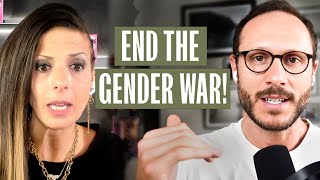
Lisa Bilyeu argues the red pill movement misleads men about attraction and relationships. She discusses how her father's initial refusal to let her marry shaped her pursuit of authenticity, and explains why couples need negotiated roles, explicit communication about expectations, and shared definitions of key words to actually connect.
Chapters
The red pill just wants the blanket statement. How many women has the guy slept with? If she's got a high body count, don't date her. If she has an Instagram account, don't date her. Like, that is absolute bullsh t. And it just. It's setting men up for disaster. Because you're saying that a woman isn't good if she slept with a couple of guys. Why? That comes to my opinion, it comes from insecurity. It comes from a place where you may feel inadequate, and so you don't want your partner to have sex. Slept with other people just in case. Now, what I would say is the most attractive thing, literally, if I have to, like, just say, like, lisa, one thing that women love is confidence. Not arrogance, though. Confidence.
The hardcore red pillars and the hardcore extreme feminists probably just need to get it over with, and we can, you know, end the gender war.
All right, Lisa, welcome to the man talk Show. How you doing today?
Ah, dude, I am so excited for this discussion. Let's go.
I know, right? It's like. It's like girl boss meets man talk show, right? That's my dream come true. I know. I was like, this is gonna be fun. Okay, before we get into the whole conversation about relationships and dating and confidence and all these pieces that you have a ton of value to offer, and I wanted to ask you the question that I asked so many guests over the years. I've been running the show for eight years now, and I've asked this question to so many people. So tell us a story about a defining moment in your life that made you who you are today.
There's one that comes to mind that sticks out beyond anything else that really built the foundation to who you see. And that was the moment that I'd been dating my husband, and we were just dating, and I'm Greek Orthodox, and he comes from Tacoma, Washington. And so we're dating. I fall in love. He falls in love, and I'm very traditional Greek. So he went and asked my dad for his blessing to marry me, and my dad said no.
And at the moment, that moment, I'm daddy's girl. I admire my dad. I adopted every belief my dad had. So he said that, you know, I was going to, you know, I need to learn Greek. I learn Greek, he tells me to believe in God. I believe in God. Like, I don't question anything, and I don't realize it because I'm a kid. So I blindly started to listen, and my belief system ended up being his belief system. And in that moment was the first time that I'm like, oh, here's a point where I have to decide whether I'm living the life for myself or for my dad. And now fill in the word dad with everybody else. So as I was growing, as I married Tom, as we start to build our company, Quest, as we start to do things, that one defining moment taught me, whose life am I living? And when I keep deciding it's me, I then am able to propel myself forward. And so what happened was when my dad said no, I had to ask myself, how do I proceed? I don't want to disappoint my dad, but it doesn't resonate with the person I want to be. And that became the thought process where I said, okay, as sad as it may be, the truth is, if nature takes its course, my dad's going to pass away before me. So when I turn 50 and my dad is no longer with me, am I going to be okay? That I made a decision based on his wants and needs, not mine. And the truth was no. So now you take that and widen it. We start Quest Nutrition. Everybody tells us we're nuts. You have no idea what you're doing. Do I listen to them or do we keep going? I realize no one's going to fight for your dream more than you will. So every time those moments happen, every time someone was a non believer, every time somebody said that something couldn't happen or be, you know, work, I just won't go back into myself. And I have since learned to actually shut out the external noise so that I can keep showing up in my true authenticity. And so that one moment has allowed me to do that in every aspect of my life, to always go inside myself. Now the last piece though, Connor, that I want to share though, is that when my dad said no and I asked him why, he broke down, all the reasons that it couldn't be possible. You come from different cultures, you're used to, you know, my dad takes financially good care of me. So he was like, you know, the guy you're about to marry doesn't have any money and he doesn't have a good job and, you know, so he breaks things down. Now, in that moment, I actually listened to him. What can I learn from his negativity and how do I use that to get stronger? And so now with that same idea that I did, that one moment, I do that with everybody. So when somebody says, nobody, you can't start a protein bar company. What do you know about protein bars? The Truth is, they were right. We didn't know anything about protein bars. But that again gives me an understanding of what is the thing that I'm missing and I can go out and learn it. So that was a defining moment for everything I've ever done.
I love that. I mean, it's such a good example and kind of shocking. It's not what I was expecting. I didn't expect. Dad said no. It's like, oh man, that must have been such a hard moment for Tom. Like I remember having like sweaty palms asking my now father in law for his daughter's hand in marriage. And he said, I mean, he said yes. He was, he was thrilled. And so I can't imagine being in that moment be like, no, yeah, it.
Was, it was pretty rough. And I can share the ending but we can keep going. But it was one of those moments that I think actually was also what helped propel Tom forward because he said, look, I respect you, but I'm still going to ask her to marry me. And Andreas, that's the name of my dad. I promise you, the guy you see today is not going to be the guy that is going to take care of your daughter. And so then you can imagine, we build Quest nutrition, we become $1 billion company. And my dad goes from not really knowing what we're doing, I don't understand this protein stuff to. He then comes to L A and he comes to LA and we take him around the facility. Now at this point, Quest was announced as a billion dollar company. So we have 300,000 square feet of manufacturing and shipping space. We have over 3,000 employees. And so you walk into the manufacturing and it literally looks like Willy Wonka's chocolate factory. And so like bars are just coming off of the, you know, the belt. And so at like 1.5 million bars a day we were making at that point. And so as we take my dad around the facility, right at the end, after my dad's seen everything, Tom turns around to my dad and says, andres, do you remember when you asked me how I was going to take care of your daughter? And he said, yes, I do. And Tom goes, how am I doing now? And in that moment, my dad just started to cry and he was like, my son, my son, I'm so proud of you. But that really, I don't want to pretend that that wasn't a driving force for Tom. He was like, I promised your dad. And being know, very traditional Tom as well, he was just like, I won't stop until I provide for you. And that was one of those moments that I think Tom needed as a, you know, congratulations, you've actually done it. But.
The success wasn't guaranteed, though, so that, it's not like that moment was always going to be guaranteed for that outcome. But the point being is that you don't listen to negativity. No one knows what you can be made of. Only you do.
Yeah. It's such a good reminder. I'm curious before we move on to this from the story though, because I feel like there's a deep lesson there. I remember Gabor mate talking about how, you know, when we grow up, there's certain moments in life, in our childhood where we, we have to choose to trade authenticity for safety or belonging. You know, this notion that, like, I have to trade authenticity, I have to trade what I want, what I need, what I desire, in order to get your acceptance, mom or dad, in order to get your love and belonging. And that pattern can be so freaking hard to break out of. You know, I think so many people, I think this is a real struggle that so many people have learned to, through their life systematically trade that authenticity for a sense of safety and belonging. And as you were talking about that, I was like, okay, the story is amazing, but like, how did you then continue to break out of that pattern of I'm going to go along with what you want or what you need in order to feel safe and belong? Because it sounds like you had to shift that quite a bit. What did that look like?
Absolutely. I think I had to acknowledge that I was getting tremendous validation from my dad, from my parents, from all the people around me by fitting into that box. It made me feel good. Right, so you're such a great daughter, you know, like, and so you get that validation. You, you really want to make your parents proud. You go into people pleasing mode and then you get into that, that cycle. And so for me, in order to break free, I had to firstly identify, yes, I get my validation from all the words of accomplishments that my parents give me, but it doesn't serve me. And I'm so goal oriented that if something serves my goal, I will move towards it. If something doesn't serve my goal, I will move away from it. So understanding that that idea that I show up for everybody else, everybody else's ideas of what I should do in my life doesn't serve me. I need a way to get out. And so instead of just pushing back, saying, I'm not going to do it, to your point, it is a struggle. So my first Step was how do I actually give myself the validation so I no longer seek it from someone else. And that became a just a goal of like, okay, you're going to spend a few months just focusing on yourself. How do you bring validation to yourself? That can be to the individual, but for me it was, I want to be the type of person that I say something and then I do it. So I say that I'm going to go to the gym today and I'm going to lift weights. Did I do it? It's me against me. So it's got nothing to do with external forces. It's got nothing to do with even like money or anything like that. Because if you don't have the finances to go to the gym, you can get down and do push ups. So if you say like set yourself for goal, and this is exactly what I did, I want to do 50 push ups in one, in one go. All right? I was at like four push ups. But what I did is every day, or not every day, but every couple of days so I could make sure that I got a healed from the saunas. I would show up and I would do those push ups. And incrementally I became proud of myself that I was the type of person that even when I was tired, even when I didn't want to do the bloody push ups, that I showed up and I did the push ups. And what I started to see is once I was able to set a goal for myself, achieve that goal, I started to validate myself, I started to see the results. And so that last part of seeing the results ended up being that beautiful loop that then encouraged me to do more. What else do you want to do? Set another goal, Work hard towards it. Be the type of person that says they're going to show up and then rinse and repeat. And so eventually when someone comes to me saying you can't do something or you should do something, I just go back to, I don't need your approval. And that's why I'm not going to do this thing, because it doesn't resonate with me. So it's those two things of does it actually serve you? Does it resonate with you? And then are you doing it because you are seeking approval? If so, what else can you do to meet your own approval? And so validation as a whole to me is like, it ties to your identity. So you get pride or I got pride by saying I was the good Greek wife. You, Connor, may have validation in being an amazing host. So your identity is the host. And you get that invalidation by being a host. But now what happens if you actually don't enjoy it anymore? What if you want to stop your podcast and you're like, I really don't like this anymore? You may keep doing it because you're getting validation from the identity you hold to. So it's two parts. It's reassessing how you can bring validation into something else and then your identity tied to something that actually is malleable, that serves you. So for me, my identity is the learner. It's the person that will show up when I say that I will. It's the person that will do the thing that is hard, that will fail and get back up. That's my identity. And so as you can see, all of my validation tied to my identity allows me to tackle anything now, whether it's my relationship with my husband, whether it's building a business, whether it's friendships, setting boundaries, all of that. I now use that framework and those principles in every area.
Yeah, it's like the reclamation of the validation. You know, you have to like, pull. I hear what you, what I hear you talking about is this notion of like pulling the nets in of where you normally fish for validation, right? Like instead of trying to get it externally, you like pull the nets in. You're like, okay, I can produce this internally. I'm going to, I'm going to create behaviors and choices and decisions in my life where I can generate that validation internally rather than trying to go fishing for it externally, which is massive. And I think that relates for a lot of guys as well. Like, I think oftentimes we. I know for myself, like, I didn't have a system of validation internally for so long and so I chased it from women, you know, and it just created a lot of terrible relationships that, you know, ended in disaster for a long time. But it was this outsourcing, you know, I was like outsourcing constantly because I didn't have that mechanism of validation internally. So I love that. Let's shift gears because I'm mindful of, of a little bit of time, but I also want to get in and pick your brain on some of these things. Let's start high level. What do you think? Like, I almost wanted to say, like, what the hell is happening in modern day relationships? Like, maybe we'll just start with that. Like, what the fuck do you think is happening in modern day relationships? Let's just go there.
Oh God, that's such an open ended question. Okay, so I think that women are starting to realize they don't have to be the stay at home wife that they were told that they should be. And so the opportunities now are widening for us to be able to do the things that we've always wanted to do without being, I would say, trapped. Now the problem is lying that if do, if you believe in hypergamy, which is, you know, you date across or up. If now women are leaving the household, they're now becoming extremely educated, they're now going into the workforce, now they're crushing it, they're earning six figures. Now if hypergamy is real and women only date across and up majority, let's just say I don't want to like just pigeonhole every woman or every guy. But on average that's what's happening. So now as women are having, let's say, higher expectations or like, hey, I'm, I'm bringing a lot to the table, which I love, by the way. I'm all for female empowerment, but the truth is I think that now it's now becoming more difficult for guys to get the girl. Now the problem is, is that that isn't only what women want. And so yes, we may date across and up on average, but the truth is if you put in front of me an extremely wealthy guy that's six foot, let's just like do all the things that people say that supposedly women want, right? So he's six foot, he's muscly as hell, he's earning seven to eight figures and he's verbally abusive to you and he's unkind and he diminishes you every step of the way. And he isn't a gentle, he won't pay for dinner and he has high expectations that you just can't meet. He's trying to control you and you've got someone next to them who isn't who, let's say just works, works at Starbucks, let's say. And so he's not making the seven figures and let's say he's five foot five, but he's kind, he listens to you, he shows you respect. He's not a pushover because I don't think women want pushovers. But he's romantic, he cares about you. Which do you think women are going to choose?
I. My instinct is that they are going to choose the first first learn the lesson and then choose the second after.
And you're probably absolutely right.
Yeah, it's like you got to learn, like you got to learn the lesson of what you don't want before you move towards what you do want. So I think if, I think if a woman has had that experience because, you know, you can't always see the verbal abuse, you know, you can't always see that. And, but I agree, I think they're going to choose the second, right? They're going to choose. I think this is the thing that has blinded men a little bit is I think the red pill community has.
Has like injected this notion into masculine consciousness that says that women only care about status and that status trumps everything else. And I think that that's not always the case, you know. So yeah, I think, I think the most women would choose kindness and I think because of that, we as men have under indexed kindness understanding as a, as a, as a valuable trait that creates status as a man, you know, like having emotional intelligence, I think is a valuable trait that levels up your perception or the perceived perception of status. I don't know. What do you think about all of that?
Yeah, I do a thousand percent agree.
Because look, I don't want to blame the movies and stuff, but you do see, right, you see these over the top charismatic men that have, you know, a lot of money and women are swooning over them. So you think, oh, that, that is what. Yeah, that looks great, right from the outside. That looks wonderful. The guy's handsome, he's treating you right, he's making your dream true financially, he's lavishing you with all these things. But the reality of that, what a lot of that can come with you don't consider until you get into that relationship. So to your point is that they pro most of us, I did the same thing. I went for the guy that had the nice car with a nice rims because I thought that growing up being Greek Orthodox that you go for a guy that can provide. And so nice rims and a nice car were a signal to me that they actually have the money to be able to provide for you. You. So I get why. The thing is that once you see it, you realize there's so much more complexity and exactly what you said, the red pill community have completely neglected all the nuances that come with it. And so by saying to guys, go out, make a lot of money, be a dick to women, like none of that is actually true, but there is a bit of truth to it, right? So there's. How can you hold two competing ideas in your mind? When I met tomorrow, he was confident, he was sarcastic. And then we go on a date and he's sweet and he's kind, and he tells me that he wrote poetry, but he's still stoic. So here I am realizing that I actually want both, because it's not that a woman wants. I don't believe, again, in generics and averages, that a woman wants a guy who can be pushed around and can't protect them. A woman wants to feel safe. Now, that doesn't mean you have to be massive in muscles, but you better believe if someone was to break in to my house today and Tom was like, please, I'm running out the door, do you think I can respect him for that? No. A woman wants to feel safe. Now, imagine Tom didn't work out. The fact that even if he didn't work out, he runs straight for that intruder. And he's like, I don't care if I have to die to protect you, I will die to protect you. That type of strong mentality in feeling safe for me is what was attractive. So there's very, like, nuances and things that we're talking about. And the red pill just wants the blanket statement. How many women has the guy slept with? If she's got a high body count, don't date her. If she has an Instagram account, don't date her. Like, that is absolute bullshit. And it just. It's setting men up for disaster. Because you're saying that a woman isn't good if she slept with a couple of guys. Why that comes to my opinion with utter. It comes from insecurity.
It comes from a place where you may feel inadequate, and so you don't want your partner to have been. Have slept with other people just in case. Now, what I would say is the most attractive thing, literally, if I have to, like, just say, like, Lisa, one thing that women love is confidence. Not arrogance, though. Confidence.
So if you come in and as a guy, you slept with a ton of women, but you have the confidence, I don't necessarily care how many women you slept. Now, I do get that there's a difference between men and women there, but the messaging out there for men is doing a massive disservice to them because now they're trying to be something that they're not. They're trying to abide by the hypergamy, you know, narrative. And then you've got women who have been at home. I think it was like, even in the 50s, that women still didn't have the right to.
To. To parenthood with their kids if they left the husband in the 50s. So you have to understand why women are pushing back so much against things like this because we've been at home for too long, we haven't been told that we're any good. Then over time you end up potentially in relationships with a toxic partner. But now you've got nowhere to go. Why? Because you can't get a job that pays well. You've been a stay at home wife for 20 years, so you don't actually have any money in your own bank account. Your husband actually owns it and if you leave, they actually get custody. Custody of the kids.
Now maybe try to move, because I know your audience is very masculine, try to move yourself out of the equation and maybe picture your mum in that situation.
Would you want that life for your mum or your sister, whoever you care about? Your grandmother?
Yeah, of course.
So you can understand why we have been pushing back vehemently over the years because we get trapped in abusive relationships. I've seen it too many times because I'm around so many women that's like, you know what I really like empower women to do is speak up and be honest. And so I understand where we've gotten to. But the truth is there has been that knock on effect the more that women go into the workforce. And so understanding why I think it's 1 out of 3 guys under the age of like 35 aren't having sex.
Like growing up. That stat is insane. I'm 44, so hearing that stat now is insane and makes me sad. And question what? Why aren't guys going out and having sex? Why aren't they going out and chatting up women? Why aren't women comfortable going on dates with guys? Like what is happening? So coming back to your very first question is it's a very complicated concoction of all these different things and all these different messages really making society bifurcated into one or the other. Either you're a hardcore feminist or you're a red pill, one or the other, which one do you stand for? And I'm like, no, no, no, no. The reason why me and my husband work so well for 23 years together in 21 years of marriage is because I absolutely have a massive masculine side to me and I have a massive feminine side. So I actually understand and can understand both sides and I can feel both. I can feel absolute compassion for the guys out there and I can feel utter empowerment to the women that have been trapped. And my husband is the same. My husband is a hyper masculine man, but also has a massive side that is super feminine. So he can be empathetic, he can see a woman's perspective. And when you're able to be in the middle and see both sides of it, I think you're able to then be able to communicate better in order to be able to have that type of relationship. But if you are hardcore one side or you're hardcore the other, you're not open to hearing the other person's side of the equation. And then how the hell can you communicate and come together in peace and harmony? You can't.
Yeah, it's funny because there's. There's so many layers to this. I was, like, thinking about how you and I probably need, like, three hours together to get into this. But, you know, I think all jokes aside, like, when I was listening to you talk, the first thing that came to my mind is, like, the hardcore red pillars and the hardcore extreme feminists probably just need to fuck. Get it over with. And we can, you know, and. And the gender war, you know, like, end this fucking bullshit that seems to be unfolding in society. You know, it's like. It's just ridiculous in some ways. But I think. I think part of the challenge, Lisa, that I have, like. Well, here's what I'll say. I get exactly what you're coming from. I get the pushback from women. And I think that we've. We've pushed the ball so far that a lot of men, they look at the dating stats on Tinder and Bumble, and they see that the top 5% of men are just cleaning house, and the bottom 50% are getting no swipes, no conversations, no action. And so it's easy to sell hypergamy. Right. I think they then look at some of the stats within college campuses where women are dominating college campuses and men are, you know, retreating from that space. They see that men are less likely to be in the workforce than a woman. Women now are within a certain age range. Women own. Women under 40, I think, are more likely to buy a house than a man is. Right. You have 42% of American women out earning their male counterparts. And so I think that when men hear some of the, like, the. This happened back in the 40s and the 50s, you know, like, this stuff happened way back then. I think sometimes guys are like, yeah, but that's not what's happening anymore. And things have changed so much that we're in a completely different place. And it's moving in this direction that I think a lot of men can see that guys socially are somewhat in decline and. And that it, you know, I think for a lot of men. It's like it is. It has become harder. This is the narrative. I don't believe it. I don't think that it is. You know, but it's. The big narrative is it's become harder for a man to approach a woman, to get a woman to date him. And when you look at things like hypergamy, it's like, if you're a guy that's making 50, $60,000 and you start dating, a woman's making $150,000.
Yeah.
I think the narrative for a long time, two men and two women, is that men, you should be the provider, you should be the breadwinner. And, you know, women, you should look for a man who's a provider and a breadwinner. And when you look at 42% of American households, women are out earning their male counterpart. It's like that, I think, is creating a. A role reversal that we culturally haven't talked about. And I think there's a ton of people in relationships that are in this new relationship style that hasn't been talked about. There's no guidelines. There's no sort of like, here's what you do in this new sort of form of relationship. And so I'm curious for you to comment on that. And I'm curious for you to comment on, like, what do you think modern women. And. And I know you can't speak for all women, but I. I just want. I just want to get your take on this. What do you think modern women really want men to know and understand that maybe we haven't quite gotten.
Okay, so there's a lot in there. So I will first say I actually do think it is harder for men now today and go up to a woman and chat, for sure, because women's expectations have also changed. So I get that the dance has changed, but what hasn't changed about the dance is there's always going to be one leader and one follower. Always. And if there isn't, that's where I think relationships will get into trouble, because you cannot have two followers. Think, I mean, literally think about someone dancing. You just step on each other's feet. So when you talk about a relationship, think about a business. You can't have two CEOs. If you have two CEOs, one of you is obsolete. So now how do you know which one follows and which one leads? You have to have that discussion. And I think that that's part of the problem, that I am just an advocate to what works and how do people have wonderful relationships and So I am not saying that a woman should be the follower and a man should be the leader. That's up to the individual in their relationship. But I just know for myself, being a freaking strong person, that I've worked on my confidence, I've really, really worked on my self esteem. I still want my husband to lead and I don't see that as a weakness. And that's kind of the message I'm trying to really propel out into the world where it's like, what type of dynamic do you want with your partner? First of all, you have to actually say those words. You have to communicate and then have an agreement of who's the leader and who's the first follower. And some of the problems that I find is, is that I understand that the guys don't necessarily know. I'm not sure am I supposed to lead. Women are saying they're badass. So I don't know if they're gonna, you know, the man splaining if they feel like I'm stepping on their toes. And now I think the guys are stuck not knowing what to do. But the women freaking feel amazing about being powerful. And so I have compassion for both sides. So that's where I go. You just have to decide who's going to lead, who's going to follow, and then understand and decide what, what that means to you. So for me, I actually find tremendous strength, strength and confidence in saying that, yeah, my husband absolutely is the leader and I want that. That doesn't make me any less of a woman. That doesn't make me any weaker. That doesn't mean that I don't have my own thoughts. That doesn't mean that I don't set my own boundaries. Non negotiables. I don't. I'm not a pushover, but I'm very clear on the role that I want to play in this relationship. And the truth is, I think a lot of women want guys to play that role without diminishing who they are and their confidence. So as an example, I was talking to some friends of mine, very, very strong, powerful women. And one of my friends is single and she was like, she's got her own business, she's earning more than six figures. I mean, amazing. And so she's going out on this date, she's like, Lisa, I went out on this date and, and I'm sitting there and she's quite traditional as well. Even though she's fairly young. She's like, I expect chivalry, so I expect the door, the Guy to open the door for me. I expect the guy to pay for the first meal, Just preferences. So she goes on the date and she sits and the waiter brings over the bill at the end of the dinner. And he looks at her basically like, are you going to pay? And in that moment, she turned around to him, which I appreciate, and was honest, and says, I'm the type of woman that likes the guy to pay on the first date. His response was like, oh, my God, thank God. He's like, I went on a date last week. The bill comes, I go to pay for it. And the woman got offended that I went to pay for it. So now the poor guy is on this date and he's like, I don't know what to do. I don't know. I was brought up as a gentleman to pay for dinner, but I just got my head bitten off last week by this other woman that didn't want me to pay. And it as an insult. So I get the complexity of this. And this is where we go. We have to be honest, we have to communicate. Because as the world is evolving, I don't think women should diminish their dreams. I don't think women should diminish what they want out of life. If they decide to go into the workforce, if they decide to make seven figures, eight things, like, hells yes, we shouldn't diminish that. But at the same time, I want to respect what a man wants and what a man needs as well. And so how do we come together Instead of bifurcating each other, it comes back down to the communication. So if. Which is what I appreciate, that what my friend did, she just communicated instead of judging him. Right? One thing she could have done is paid for it. And then being like that asshole, I can't believe he made me pay for it. Right? That's what a lot of us will do. Instead of in that moment saying, I'm the type of person that fill in the blank. And if they're the type of person that doesn't receive it, amazing. Now you know they're not for you. Because if you're looking for someone that pays for dinner and they're like, yeah, no, sorry, I don't do that. Cool, great. Now you don't have to waste a second date. But don't ever pretend that you're somebody you're not just to get the date. It won't serve you. And then also don't diminish your dreams if you're a guy as well. If you want a woman in all fairness, if you want a woman that is going to follow and you want a woman that wants to be the stay at home wife, now they're calling it, right? The trad wives. If you want a trad wife, go for it. I'm not here to judge you. But if you're a woman and you want a guy that respects you, that is chivalrous, that opens the door for you, hell yeah, find a guy that is like that. But don't be afraid to communicate because I think we're so worried about the judgment of it all. What is it going to mean about me if I do this or if I, as a, you know, badass woman, what does it mean if I say to a guy I want him to pay? I'm really trying to encourage women that actually what that says is, you're a woman who knows what she wants.
Yeah, I think it's. I think in part it's.
We've never really had so much social pressure before. You know, I don't think that we've ever. I think the Internet, like I. I've talked often about how Jung had, Carl Jung had this idea of the collective unconscious, that we're all sort of connected in this collective unconscious way. And for me, I think that when we created the Internet and we created social media, we created a technological manifestation of the collective unconscious. You know, that there's this. There's this externalized version of our interconnectedness where we're constantly interacting with people's opinions and their shadow and their fears and their insecurities and all the bullshit that comes along with that, that we never had to deal with. And so I think that what happens is that a lot of people get stuck in this, like, unidimensional, the single dimensional version of how they should be as a man or how they should be as a woman, you know, how you should be as a, quote unquote, good feminist or a good man or whatever it is. And that might not actually really be authentic to what you want and what you crave and what you desire. And so I like what you're saying in the sense that it sounds like you're really advocating for people to own the complexity and the nuance of who they are and be able to express that, you know, unapologetically to say, here's what I really desire, here's what I really crave. Is that right?
Yeah, absolutely. Because, look, selection matters. It matters who you end up with, how they think, how they interact. If you want a healthy relationship, you're going to need to be open in your communication style. And so why not start from day one? Don't waste your time. Time's too short. So on day one, be an open communicator. Obviously you don't want to share everything about your entire life, but be an open communicator and see how they respond to it. Because when people me what the key to a relationship is. I used to say communication, but I've actually taken that back now. It's not. It's having a growth mindset. Because no matter what how I communicate, if you aren't open to hearing my message, if you aren't open to discussing it, to talking about the hard things that may not sit well with you, I don't see how that relationship can work in true authenticity. And so that's why I say when you select somebody, select the person that can hear who you truly are, because eventually you're going to want to. You've got two choices, right in the relationship. You can either keep pretending for the rest of your life or it very much will come out in the wash. When it comes out, how are they going to respond? You don't know. So now it's kind of like a lot of people, I think, end up in relationships and stay there because they end up feeling their pot committed. And if you're not a poker player, it means that you've already invested time and money into something and so the last thing you want is to not play your hand just case you win. But the truth is, is that would you rather spend five years in a relationship that you don't want and then get out of it, or keep going and spend 10 years in a relationship that you actually don't want? It's like there's only one way forward. And so do you just suck it up and say, okay, what can I learn from those five years in that relationship that didn't serve me? Or you know, or don't do that. But in my opinion, in order for you to truly be aligned mind you have to have those discussions of who's going to lead, who's going to follow. What are your expectations in this relationship? How much sex do you want? Do we share bank accounts? Do you believe in God? If we have children, how are we going to bring them up? Do they take your name or do they take mine? Are you going to stay at home with the child or am I going to stay home? Are you going to clean the diapers? Like, I get so granular with my husband over everything and it's Hard work. But let me tell you, if you're willing to put hard work into your career and your business, then why on earth are you not. Not willing to do that for your relationship? Unless it's not important to you, which, in that case, applause you. Right. Like, whatever life you want. But do that work, get granular, just like you would a business. And I. I feel like that ends up becoming the stepping stones and foundation to a successful marriage or relationship.
Yeah, I think to add in, like, I think it actually builds the foundation of that, like, secure attachment. You know, like, a colleague of mine says that that going through a hard time in relationship with somebody is the building block of attachment. And by having those hard conversations to say, this is what I want, this is who I am, this is what I desire, all of those hard conversations are what is going to build the, like, each brick. Each conversation is a brick that goes into building the foundation of the attachment.
Right.
Of this secure connection. So how. How did you. Are you okay to just speak a little bit about your relationship?
Yep.
How did you guys navigate? Because I think for a lot of couples in modern culture, they're, you know, they're both working, they're both trying to provide. How did you guys navigate the conversations about, like, who's leading where and. And what those decisions look like? And, you know, is there a, like, secret code word for when somebody needs to back down versus the other one? Right. Like, how did you guys navigate that? Because. Because I think my wife and I have a joke that we're, like, two stubborn hearts and two massive big personalities. And so this is something that we've. We've chatted about before. I'm curious to get your perspective, Effy.
Yes. So we definitely have the code words, for sure, but I'll start with how we navigated things. So a big key is. Is to understand who you are fundamentally what your values are. Because before you get into a relationship, know who you are, are, and find a person that actually complements that, not erodes it. And so the very first key was my husband Tom. His core values are efficiency, kindness, and he really, really is ambitious. And so if I was to ever ask him to lower his ambition, by definition, that's me asking him to not be the person he wants to be.
So if I know that fundamentally, him as a human being, this is what brings him life, this is what makes him tick. Now, if we're talking about the roles in our relationship now, when we started to talk about kids, he was very honest, and he said I would resent Our children if they or you ask me to lower my ambition. So in order to never resent my wife or my children, don't ever ask that for me of me. Now, what does that actually look like? Take it one step further. That looks like he's not going to get up with the baby in the middle of the night because he said for me to be able to show up and build a business and feel good, you've only got, you know, your cognitive load, you've got to protect it. And sleep is like one of the biggest things that you need in order to protect your cognitive load. So he just, we just broke it down to 30 principles for him to be able to show up. Like that. First principle says he's not going to wake up in the middle of the night and he's not coming home at 6pm and eating dinner with the children. Those were based on his values. And I could only respect it because I married a man that I knew was ambitious. So knowing how that shows up, and I like to call it on an average Wednesday, how that action show up on an average Wednesday is the important thing. Because people, people can absolutely get caught up in the idea of being with someone ambitious because I'm like, oh my God, he's successful, he's earning all that money. But what comes with it? Are you okay that your husband doesn't come home or wife come home at 6pm and eat dinner with you? Are you okay that when there are problems in your personal life that he may still be working, how do you handle those moments? Are you okay? Let's just take like a doctor. People say, you know, oh my God, I really want to marry a doctor. But are you okay with the life that you doctor brings to your, you know, to your life? They're getting up in the middle of the night because they've got an emergency call. You go on your vacation and you actually have to cut it short because they've got heart surgery. Like all the realities that come with it, know who you are so you know the realities that come with you and the realities that come with your partner. So Tom and I literally went through every single thing. Now with me being into business, I went from being a stay at home wife, cooking and cleaning for him every single day, to telling him, baby, I love you more than life itself. But cooking and cleaning doesn't make me happy. That was me owning for the first time after eight years, this is actually who I truly am. And I didn't tell you, this is my fault. It was me with My own insecurities and my own shame and guilt. But this is who I am now. In that moment, Tom had a choice. Now, his value system, which is what he said to me, is, babe, what kind of husband would I be if I put clean underwear ahead of your happiness? Happiness. Now, that didn't mean that it was easy for him. We had to do an entire transition period. He had to emotionally grieve. The wi fi used to be I wasn't going to cook for him anymore. I wasn't going to clean for him anymore. But now let's go back to the average Wednesday. How does that then transpire to the average Wednesday? Because in theory, it sounds great. Husband supports you, he's got your back. But on average Wednesday, when he gets home and he's hungry and there's no food waiting for him, or on an average Wednesday when he's waking up and the morning and there's no clean underwear, what does he do? Now, in that moment when it actually happened, I didn't do the laundry for, like, over a month. And this was early days. And he just. He turns around, he's like, in one room, he's like, babe, I don't have any clean underwear. So I'm sitting there waiting for, like, oh, like, the guilt, the shame starts to sink in with me. Like, oh, my God, am I a bad wife? Is this the point where he's like, enough's enough. I'm fed up of it. And so he just yells, so I guess I'm going to work commando. Bye. And he just goes to work with no underwear. Now, what that, in that moment that did is it was more uncomfortable, metaphorically and actually physically for him to go to work without underwear. But you better believe his value system made him proud that he did that. His value system, that he's. He would rather encounter the uncomfortable moments in order to serve the bigger picture of his wife's happiness. And so that's what an average Wednesday looks like when you're changing, when you're evolving, and when your roles may evolve. But we took nothing to chance, even to the point where he voiced his opinion last year. Now, I've been married for 21 years, and last year, as you change and evolve, your needs change and evolve. And so he pulled me aside and said, you know what, babe? I actually really miss you taking care of me. This is last year, and we've been in business together for 15 years now. I didn't shut him down. Again, our relationship is based on truth. So when it's based on truth, and he says that to me. I don't shut him down. I was like, all right, tell me more, babe. And he's like, you know, there's a part of me that used to love when you anticipate my needs. And I was like, okay, what does that look like? Like, in what way? And he's like, really? In food? He's like, that is the thing that if you could anticipate my needs in food, I would feel seen and heard. So I was like, cool, what does that look like? Let's drill down even more. What does that actually look like? And he was like, well, if you can preempt my knees. I was like, all right, well, I know that you eat lunch at 2 o', clock, so how would you feel if I ordered postmates or doordash to automatically be delivered at 1:30 and it's at the front door for you? Does that serve the need? He's like, yes. I'm like, okay, but do I have to tell you or do I have to go and get it and do I have to plate it for you? Like that's how specific. Why? Because I actually care about making him happy in my values and morals, though I'll never go against that. So he's like, no, no, you don't need to plate it. All you need to do is just let me know that it's here and I will feel appreciated and heard. Cool. Okay, I can make that work. So that doesn't go against my morals, my principles. It actually fills my heart up because I have two sides to me. I have this freaking badass in business. I like to crush it and do the hard things. And also I have a tremendous nurturing side where I love to take care of my husband. And so being able to go, I love this. This is what he needs. How do we implement it? I'm going to set an alarm on my phone every morning to pre order him postmates.
Right?
And so I come out up then with a strategy that allows me to do it so that I can actually fulfill my promise that I've made to him. Now, the final piece of this whole question is words. Absolutely. Tom and I will butt heads now that comes to a understanding that someone has a frame of reference that they that you may not share. Now what I mean by that is a frame of reference is how you just think of the world. World. And we assume other people think of the world like we do. It's like that is how it ought to be. So you don't question it. So here's a perfect example. My husband comes and meets my loud Greek family for the very first time. And I don't know if you've ever been around a Greek family. Everyone yells, everyone talks over each other. We don't pay attention. It's like, that's the dynamic of a Greek family. Now my husband comes in, my family's their usual, and I'm like, oh, my God, he's gonna love them. Like, they're so them. It means that they're comfortable around him, which is a very good sign, right? So I'm seeing this as this real positive thing, my frame of reference. We then leave my dad's house, and I'm like, what did you think? And he's like, that was the most disrespectful conversation I've ever had. And I was like, what? And he's like, babe, I love you so much, but I can't believe that everyone's yelling at each other. Your dad asked me a question. He ignored me. His frame of reference is you never interrupt anyone. You don't shout in a family. So his frame of reference led him to a conclusion that was polar opposite to mine. Okay, now, just when you're in a relationship, imagine that happens 10,000 times a day.
Because even the word that you use versus the word that I use is different. So what Tom and I have done is we've created in our own. Like, we don't actually have it written down, but we actually have a dictionary of the words that we use that we've come to an agreement of what that word means. So if we use the word important, that's one of our key words. If I say the word important and you're interviewing the President of the United States, you drop everything. If he says the word's important to me and I'm interviewing Michelle Obama, I say, sorry, Michelle, I gotta bounce. My husband needs me. Now, we never abuse that word. We maybe use it maybe once a year. So you can imagine the weight that word brings things. And we've agreed that's what we're going to do. This is what the word means to us, and this is how we're going to act in accordance to it. So when you were saying you and your wife sometimes come at each other, me and Tom do as well. And we're. I'm Greek, so I'm very heated. And he's a very strong, masculine man, so he's very dominant. So you have those two colliding things. Sometimes when we're both very strong in our conviction, how do we break it it, because that's the key. You have to break it. Now, what I realized was when you know, when you're talking to or you're having an argument, let's say with your spouse, and then the phone rings and you're like maybe angry, you're, you know, yelling, maybe you're yelling and then it's like, hello, you can have a destruct, a disruptor that takes you from angry to polite.
Now, if we all know that is true, how do you manufacture a disruptor in your relationship? So what Tom and I did is I found these little stones. They would literally, I mean, like, they were like a dollar from like the dollar store. And it happened to say love in the middle. And so Tom has one of those chips and I have one. And we've agreed that those little love tokens, when we're in a battle, like, because it sometimes does feel like a battle, whoever is the most emotionally sober in that moment is the responsible party for pulling out the love chip and giving it to the other person. And what we've done is we've agreed what the love chip means. This means I love you more than life itself. So however you're feeling right now is just an emotional moment. I'm not going anywhere.
And that then became the disruptor that allowed us to build our, our skill sets on how we navigate arguments. And now we don't need the love chip. But, you know, because we've adapted and really, you know, kind of refined how we talk to each other, but those are ways that we've been able to navigate those types of circumstances.
So good. So good. Well, we didn't get a chance to get into AI and how it's going to affect relationships. Well, I think we're going to have.
To pause next time then, Connor, because this is something I desperately want to about talk, talk about more.
I know, I know. I was really excited. So we'll do, we'll do a part two. I'll, I'll schedule with your team, but thank you so much. This was awesome. We'll have the links in the show, notes to your book and your work for everybody that's out there. Definitely check out Lisa's book Radical Confidence and go follow her on Instagram, on YouTube. She's got a great show with some phenomenal guests out there. So definitely go check it out. Lisa, thank you so much for joining me. I appreciate your time today.
Thanks so much for having me and any guys out there, just wanted them to know the book is, does go over mine. My husband's relationship and everything we just spoke about. So I do think it's super powerful for guys to also be able to read it and understand those types of dynamics a little more. So thank you so much for having me, Connor.
Of course. Of course. Round two coming soon.
Let's do it.
More from Connor







How to Raise Strong, Unshakable Boys in Today's Culture, with Dr. Shefali Tsabary



