Love Isn’t Enough: The Truth About Modern Relationships with Jillian Turecki
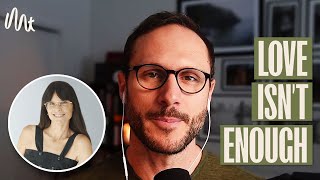
A recorded interview on The Man Talk Show (YouTube) where Connor Beaton converses with Jillian Turecki about contemporary relationship problems in Western culture. They diagnose social media and a pendulum swing from neglect to overcorrection (focus on needs/boundaries) as drivers of dissatisfaction, argue that love alone is insufficient for durable partnership, and distinguish lust/chemistry from love (love as choice and acceptance). The discussion also covers compatibility (shared vision vs. sameness), disagreement and repair, masculine emotional reliability (‘‘nice’’ vs. ‘‘good’’ men), and why you cannot truly convince someone to love you; the episode concludes with a plug for Turecki’s book and channels.
Chapters
Foreign.
Welcome back to the Man Talk Show. How are you doing today?
I'm doing well. Thank you so much for having me.
Congrats on New York Times bestselling list. What a huge accomplishment.
Thank you. I appreciate that.
How are you? How are you feeling about the book and how well it's been doing?
It feels great. You know, it's always. Feels pretty amazing when you pour your heart and soul and everything into something and it's received well, you know.
So.
Yeah, it feels really good. It feels really good.
I think there's a. There's a special kind of acknowledgment that, like, if you've written a book and published it, you know, the pangs of that. And so from the outside, not for.
The faint of heart, right?
From the outside, it's like, oh, yeah, that was probably a hard endeavor. And then, you know, if you go through it, you're like, this is. This is some shit that people just, you know, you got to live it to get it.
You have to live it to get it. It's. It's definitely one of, like the hardest. One of the hardest things I've ever done. It's definitely, like.
It'S. Yeah, it might be the hardest thing I've ever accomplished. Let's just put it that way.
I get that.
Yeah.
Well, let's. Let's dive straight in. I want to start a little broad. I know last time that we talked, we had some really great conversations that people really enjoyed. We talked about some hard, hard subjects around relationship and the shifting dynamics of relationships. What would you say is happening to relationships in the Western world? And why do you think. And I'm making a presupposition, a sort of prejudgment here, but why do you think that men and women are so dissatisfied with them? There seems to be a lot of frustration and a lot of dissatisfaction around relationships, around dating, around what's happened.
Oh, there's just. I don't even know where to begin because there's so much to talk about. Well, one thing is social media. There's like this interesting self involvement that's happening where, you know, someone will share something on social media and all the women will say, yes, of course, you see, like, of course he did it that way. Like, men are this way. And then the men will look at it and say, dude, you know, like, of course he did that. What else was he gonna do? So there's just so much divisiveness between men and women right now. And I think that social media is sort of Feeding it because you're looking at one clip, one thing, and then people are all inserting their opinions. And so I think, I think that actually is feeding the monster in terms of.
Men and women having sort of clinging to these beliefs about.
The gender, who they date, you know, whoever they date, and, and creating these sort of limiting beliefs. You know, one thing that I also want to say is dating has never been easy. Finding your person, quote unquote, has never been easy. Finding love has never been easy.
People in different cultures, in different religious settings and in a different era didn't marry for love. They married for.
For becoming a united front.
In living life together to build a family.
And then maybe the love, and hopefully the love came. We live in a time right now where people want to partner for love even if it doesn't make any sense, meaning even if they totally want different things out of life, even if they have no idea or have never put any thought into how they're going to live with this person long term or given any thought to what a relationship actually means to them.
Versus just someone who you are going to love and be loved by as opposed to what really goes into a long term relationship. To make it. When I say work, I'm not saying just last because anyone can make a relationship last and be miserable, but to really make it work so there's satisfaction and some fulfillment there, that takes a lot of teamwork. It takes a lot. You have to be visionaries together. So I think that to answer your question, a lot of people are wanting a relationship under the framework of romanticism versus.
The framework of does this actually work? Do we make sense? Now, I'm not saying that love is irrelevant. I'm not going to marry or partner with someone who I don't have those romantic feelings for. But if we're thinking about marriage.
Think about why you want to get married. And the answers for people will be very different because for certain cultures it's because that's what you do. Because the value system is in the family.
Versus I want to get married because that's what I'm supposed to do. I want to get married because.
I'm going to be insecure if I'm not married or no one's going to ever want me, all these other things. So that I think is really at the root of it.
Do you think that? I mean, I think that relationships, and specifically marriage, but relationships in general, they kind of served a broader function and purpose, you know. And yes, it seems like we've. There's kind of Been this degree, the sort of degrading or, or stripping out of the purpose and the, and the function of relationship. And maybe that's kind of a, a logical way of saying it, but, but it did serve a purpose and a function. And do you think that not having that has hindered relationship, relation, relationships? Do you think that people should enter into a relationship really being cognizant of having a broader purpose for marriage, for a relationship outside of just love?
Like, yes.
You know, I think what we're really asking is like, do you think love is enough?
You know, do we need some love? Exactly. So there's, there's a couple of things. One is let's talk about the purpose of relationship. For me, the first one that kind of comes to mind, the lowest hanging fruit, is that we are not supposed to be alone. We're not supposed to be alone. We don't actually do well alone now. But we could also have amazing community. But unfortunately, especially in American culture, the community has been declining a lot in the last 30 years or so.
But first and foremost.
A relationship is so that you're not going to be alone.
A relationship also is.
So let's get to the second point, which is.
I think everyone assigns a meaning to relationship and it's their own personal meaning. But I do think, to answer your question, if someone is wanting a long term relationship, if they're wanting life, partnership, whether that's in the form of marriage or you don't have that legality there, ask yourself why and what, and what that relationship is actually going to stand for. I think it's an incredibly important conversation to have with oneself and with the other. Love is not enough. Love has never been enough ever to sustain, to sustain a relationship. But love is relevant in. It's not irrelevant, it's just not enough.
It seems like that's almost the, the point or the message in Romeo and Juliet. You know, it's like the, the core function of that dynamic is it's just like, it's just about love and it's kind of this, it's almost like a hysteria, you know, and there's a lot of complexities about class and not being able to be together. You know, all. It's like forbidden, you know, love. Yes, but, but I think in, in many ways what you're saying is right, is that there, there should be some other aim or some other purpose that coincides with love. Whether it's, you know, you're like, I mean, I have kids now and I. It's such a huge sacrifice and there's in. In a beautiful way, you know, in a really wonderful way. And it shaped me in ways that I could never have guessed. And I think that it serves this purpose of teaching something very deep about the meaning of sacrifice. Having to sacrifice yourself for others, you know, for others that need you, for others that, you know, require you to take care of them. And it feels a little bit like we've lost connection to that. You know, it's like there's this turning inwards towards. I don't want to say selfishness, because I don't. I don't think that that's necessarily it, but it's almost like the. The relationship isn't about we. It's about me. You know, like, that seems to be a very common narrative that I hear hidden in the wings of modern commentary around relationships. It's like, but I'm. I'm not getting what I want. And you're not acting. Acting how I want.
You're not meeting my needs. Right.
You're not meeting my needs. It's like, it's this very adolescent, childish.
Yes. Narcissistic.
Narcissistic way of. Of looking at relationships. And so I guess, sort of two questions, like, one, do you have a sense of what's contributed to that? And two, how do we go about viewing that within ourselves, seeing that and combating it?
So light questions, like questions.
Yeah, these are all. I know. Exactly.
Welcome back.
I know. I'm so happy to be here.
As people are doing more with the presence of social media and people like myself and you and other amazing people, and also some not so amazing, maybe people on social media, but all giving their expert advice and some not so expert advice on relationships. People now are. The beauty of that is that people now are kind of reflecting on relationships and needs and, you know, buzzwords like needs, boundaries, and communication in a way that was not. I mean, this is all very new. I mean, 10 years ago, there was. This was not happening at all. Like, we were not really. This wasn't happening unless you were, you know, very much in the therapy world or the psychology world, but the average person was not consuming this Right. Kind of content. It wasn't available. So. And what's happening is a lot of people, when they are heartbroken or relationship doesn't work out, they feel.
Betrayed in some way. They feel like they feel hurt. And so what they do, understandably, is start to reflect on, well, what are my needs and are my needs being met? And that's a very important narrative because I've worked with A lot of people who do not advocate for their needs and relationships. So. So.
There are some people who really need to be thinking more about what am I getting, you know, because they are so used to being in relationships with either selfish or predatory or mean people who were. Who were unkind to them in a relationship and not necessarily abusive, but just unkind, not loving.
That said, what it's creating is sort of this collective obsession with needs not being met. And I have done, you know, content on.
What you have to do if your needs are not being met. But I also tried to balance that content with. We get into a relationship to give love and to receive love, but give love to. To. To learn how not just to love ourselves, but how to love another. And so I believe. So that's the reason why I think there's been this collective me, me, me. And then also in that. Because, you know, there's a pendulum, right? The metaphorical pendulum. And as we start to correct some things, what happens always is that we overcorrect and the pendulum swings too far to the right when it has to go a little bit more to the left, let. Or vice versa. People are. Then.
They'Re reflecting on their attachment style. They're reflecting on their. Their stuff. They're reflecting on their past relationships. And there's this new trend of.
Of let's, let's go against the codependent relationship. And I think that people really have a misunderstanding of what codependency is. So in that there's this hyper independence, um, you can't make me feel anything. I am 100% responsible for my feelings. And, and the thing is, it's not that that's wrong. But relationships, no matter how hard we try to frame it as such, are not binary. They are complex. They are deeply nuanced, they are deeply contextual. You can't just say, oh, one person has to be the adored and the other person the adorer. This is something that I'm hearing lately, which is one of the most ridiculous things I've ever heard. But because it's so nuanced and we could talk about the adored versus the adored, because I've been seeing that out there. I don't know if you've been seeing that as sort of a trend.
Yeah, some different versions of it.
Yeah, yeah. So like, so versions of that. Trying to, Trying to make relationships so digestible. And the thing is, is that there. It's too nuanced. I mean, this is why I wrote my book is yes, there's certain principles that we need to abide by and understand. But there is so much nuance. Like for example, the adore. Is it better for the man or the woman to be the adored versus the adorer? And then everyone puts in their theories. It's, it's ridiculous. And anyone who's worked with couples knows it's ridiculous because if you are in a marriage or a long term relationship, you're going to have many, many ebbs and flows to your relationship. So you might lose a parent.
And then you are going to need a lot of adoration during that time, a lot of love and a lot of care when, when a woman first has her child, she is going to need more from her spouse.
When someone goes through a difficult time. So we are always switching roles and blending things and you know.
Yeah, yeah.
I mean I think, I think you're hitting on something very important which is that healthy, secure relationships, they ebb and flow in that who needs more, you know, and there's a give and take and a balance and who needs to be adored more in certain moments are praised more and given to more. And that should shift, you know, naturally with what's going on in people's lives. And I think when couples get stuck in.
In a kind of like needs stalemate, you know, of like well you're not meeting my needs and so I'm not going to meet your needs.
No, that's called a transaction.
Right. And I see this all the time in, in relationships. But I also think there's a rise in something that I've started to term as relational confirmation bias. And it's this constant seeking out of confirming that how you view the relationship is right. You know, and like, well this is how you're this way. And I saw online this thing about gaslighting or narcissism and you're that or anxious attached to this and you're that and there's this need to confirm exactly who that other person is and how the relationship is structured. And people get so locked into that mindset and that it, it sort of objectifies the relationship itself and becomes non relational. Yes, we actually cut off relationship by needing to go into this space of I know exactly how you are and how you operate and, and how this relationship goes and there's no room for the unknown, for the unpredictable. And, and I think that goes back to what we were talking about before we even hit record which is that most people have a very deep fear of the unknown. And I think really great relationships, part of their purpose is that we sort of walk together into that space. The unknown of ourself, the unknown of the other, the unknown of the relationship, the unknown of the future. What happens? And I think really great relationships, it's two people supporting one another as we sort of walk through the foggy forest of the unknown of life, you know, and what's happening. So any thoughts on, on anything that I just said?
Yeah, I have a lot of thoughts. One is, yeah, uncertainty is.
Being in a relationship means you have to be prepared for a lot of uncertainty.
Loving someone comes with uncertainty. People die.
People change. Sometimes people change so much that they become unrecognizable and it feels like a betrayal.
We change, life happens.
And so you have to be prepared for a lot of the unknown. And that's why it's so important that you choose a partner who you can face adversity with and who you can grow with as opposed to grow apart with.
Yeah, I agree.
Yeah, it's very important.
I agree. I usually tell couples, like, part of the.
Part of the sentiment I think of a really good relationship is, am I as dedicated to your betterment, your evolution, your sense of fulfillment as I am in securing my own?
Yes.
And that's a very hard balance to strike because we can get caught in either over indexing, you know, are you happy? Are you satisfied? And if you are, then maybe I can get my needs met. Or the inverse of that, which is sort of entrenching ourselves in this battle of, you know, making sure that everything is sort of around how we want things to go, you know, and so it is really, it's a tough, it's a tough terrain to walk.
Yeah, it always is. And it's, and it's.
The more complicated a person is, the more tough the more tough it is. Right. Because true. You know, the more you live in your head, and this is not, this is in no way a judgment. I mean, I totally understand, but the more you live in your head, the more you don't understand what it means to truly love someone. And that sort of. And the less flexible you are, the less open minded you are. All these, the more rigid you are with your rules, the more con, the tougher it's going to be.
In the book, you talk about lust and love.
Yes.
What, what is the difference between lust and love? Like, how do you define those things? And why does that even matter?
It matters because so many people who are in lust think that they're in love when they don't even recognize that that's not true. And because love is what happens after the honeymoon stage? Love is what happens after the, the, the butterflies have settled a little bit. And if you think that lust is love, those are the people who just keep having the three to six months, maybe year long relationships over and over and they can't make it last any longer. And they wonder why. And a lot of times it's because, well, I don't feel that. I don't feel that mania around this person anymore. I don't feel obsessed with them. I don't feel.
Like I'm not constantly thinking about them. Like 24, seven, you know.
Everyone, every human being. And my belief is that we're always seeking oneness. Like we want to feel this sense of completion. And I think that.
It'S because we come onto this earth and we forget that we are already whole and we feel incredibly fragmented. And we're always seeking oneness and we find oneness. Some people find it with their spiritual beliefs. Some people find oneness during some sort of romantic encounter, listening to music, connecting with nature. And so we're always seeking oneness. And then we meet someone and we think they're amazing. We don't know them at all. Basically, they are a representation of our ideal. We project our ideal of the perfect man or woman onto them. And they're amazing and we feel so good. What we feel is alive when we're around them. But they are just. They are just a metaphor for hope and novelty and change. And if you combine that with, I've been aboard, I feel a little dead inside. I don't, I feel a little lost. And then this person comes into our lives and we're, we're reawakened and we think, oh my God, this is it. No, what you're feeling is chemistry, which is a wonderful feeling. What you're feeling is attraction. What you're feeling is.
Again, your projection of the ideal love is.
Love is. I accept that this person is very different from me.
I accept that they think differently. I accept that they were. That they have different problems than me. I accept that they have different beliefs than me. I accept that they were raised differently.
And I accept all of them. And I love them and I.
And I want them to be happy.
Like their best interests are very important to me. They're as important to me as my own. Not more, not less, but as important.
And love certainly is something that's hard to define. And the meaning that we assign love in the first year is not the same as 10 years in. I think that we have to understand that love is Develops, it grows. We don't. When we're falling in love with someone, there's a lot of attraction and lust and passion in that. So.
Long story long.
It's important to understand that when you meet someone that you are very excited about in the beginning, what you're feeling is passion and chemistry and this is all great, but it's not actually love. And love is something that, that you don't just feel, it's something that you do. And it's when you really know someone, you know, you're able to see the various dimensions of them and you still choose them.
It's interesting because part of. As you were talking and sort of describing some of the attributes of love, I think that is actually very counter to what a lot of people are.
Inadvertently preaching today. Like, you talked quite a bit about differences and, and sort of loving and appreciating another's difference. And, you know, I think that's collapsed a lot. Going back to how we started this conversation. I think that's collapsed. You know, you see men and women sort of unwilling to date anybody that has a different political opinion. You have people really being, I think, divided more than ever and sort of clustering into these camps of I need you to agree and be more like.
Me than not, which is ridiculous. You'll never be attracted to that person, ever.
Why? How come?
Because it's, it's. It's the theory of polarity to sameness creates serotonin friendship.
Which all great. I don't. I think being with someone who's so different from you and you can't find any commonality, that's going to be pretty difficult. But if you're, if everything is the same, you got a great friendship. It's the differences.
We don't. We're not gonna.
It's what brings texture and nuance to a connection. And it's the texture and nuance that creates some sort of chemistry. It's different than you. It's exciting, that's stimulating. It makes you think if you want someone exactly like you, then you are.
Insecure, which is, again, I've been insecure too. So this is not to put anyone down, but you have to face it in yourself. And you're so afraid of feeling out of control in a relationship. But if you get someone who's exactly like you, you are eventually going to feel out of control in the relationship because you're not going to be attracted to them and then you are going to suffer because of that.
So differences are incredibly important. Where compatibility comes in in my mind is you agree on what a life well lived is. I think that's very important. How are you going to build a life with someone if you don't agree on what a life well lived is? I think that. I think it helps. Look, these are not the deal breakers, but let's not lie. It kind of helps that you can go to a restaurant and eat off each other's plates. That kind of compatibility is fun. It's not a deal breaker if you can't.
Yeah.
Enjoying having similar interests in terms of how you like to spend a Sunday afternoon. These are things that kind of contribute to a rhythm and a flow to the relationship. But the most important compatibility is do you agree on what a life well lived is? And can you have a shared vision of what the future is?
I do think that, you know, one of the things that we're kind of pointing at, which I think is very important, is is this sort of the collapse of disagreement in relationship. And that disagreement has become grounds for the break of a relationship. And it, you know, I think in many ways, when you look at the literature around attachment, around relationships, one prominent and hopefully. And hopefully sticks out for me at least above many other things, which is how you disagree and your capacity and willingness to go through disagreements with your partner is going to be one of the core foundations of the longevity of a relationship or the fulfillment or the depth or success. The intimacy, like all of it.
Yes, that's repair.
That's repair. Right. But we seem to be. I don't know, I think that some of. Of the commentary on social media and in the culture now is almost advocating for disagreement being the reason for fracturing a relationship, like almost, almost any kind of disagreement. And, And I think that that is really dangerous. Personally. You know, it's like I've in the last. And this isn't a political commentary or anything like that, but in the last four or five years, five years, I've really tried to do my best to maintain relationships with as many people as possible that I disagree with. And I don't see that being a core virtue or value in many people. What I see is more people choosing to maintain relationships with people who agree with them as closely as humanly possible. And that disagreement becomes the grounds for. For relational disconnect, including estrangement with family.
Which is very dangerous for a person's health.
Yeah, absolutely. I mean, I know, I know many people right now who are going, going through that and have gone through that over the course of the last five years. And it seems to be coming more and more prevalent.
What.
Maybe just speak a little bit about the importance of being able to disagree. And like, how do you maintain relationship with people that you disagree with and how do you maintain relationship with a partner specifically that you know, you disagree with? Like, are there core rules that we should follow? Is there a. I'm just thinking about the dudes tuning into this. Like, give me the five step action plan.
I know exactly.
Getting through disagreements with my, with my partner.
You know, I mean, it also depends what you disagree. I mean if you disagree on how you're going to raise your child, that's a pretty significant thing. If you disagree with how you're going to spend your money, that's a pretty significant thing. Right. But.
Look, I think life becomes better when we are open minded and we're, and we can say, I.
We. It's important that we don't have so much ego and narcissism to say that my opinion is the right opinion and we have to listen to other people's. Look, why does anyone believe anything? It's because we are viewing what the world through the filter of our own experience. So that includes how we were raised, that includes, which includes culture, it could be include age.
So it's important when we want to understand someone that we are curious about them. So the antidote is always curiosity. Hmm. Why do you believe that? Tell me more. What led you to believe that? And then what you will learn about a human being is a story about them. A story about when, you know, dad picked them up from school and this, this happened, that happened. And then from that point on I knew that whatever A, B, C and D had to happen, you know, these are the things that, that shape our lives. And so.
It'S not a good thing that we've fallen into the trap of, okay, we don't agree, then I can't even talk to you. And I think that the deeper, the deeper problem here is.
People not understanding how important their relationships, various relationships are and that there really is nothing more important than the relationships in your life. And so if you're just going to, not if you're not going to speak to someone like a family member because you don't agree with something or someone, a longtime friend, because you don't agree, you, you, you really should think again because.
There should be a lot more energy.
Trying to preserve important relationships than just saying, well, I'm right and so now I'm just going to be estranged from this person.
Yeah, I mean, I think like there's, I Want to make it clear that I think what you're saying is very important around. We do have to have some agreements.
Right.
Like in a relationship especially, you know. However, like, for example, when Vienna and I got together and things started to get serious, I said, you know, for me, I never want to raise kids in Manhattan. It's just a personal preference. I don't want my kids to grow up.
Did you meet in Manhattan?
She was living in Manhattan at the time. Yeah. And I was living in Vancouver.
Okay.
And. And so we did.
I grew up in Manhattan. I turned out okay. That's.
That's great. But that just wasn't for me.
No, no, no. I'm messing with you.
But yes, it's all good.
Yeah.
Did you actually Manhattan?
Yeah, I did.
That's amazing. That explains a lot.
Born and raised. Yep.
But so I had this, you know, I had this thing. So I was like, I want my kids to be in nature. I want them to grow up around that. It was very challenging even for me to live in the city for the years that I did. I loved it. It was a lot of fun.
But you're a nature. You're a nature guy.
Yeah, I'm a nature guy.
Right.
And I wanted my kids to grow up in that environment. It felt pretty important to me. It was a very deep. It was a very deep thing for me. And she had always held the vision of raising a family in Manhattan. And so we, and so we talked about it.
Right.
I was like, look, this is a really, like, big non starter for me. This is really.
It was a deal breaker for you.
It was a deal breaker for me. And, and I said, you know, but I like, talk to me about this and tell me. And it wasn't. It wasn't as strict for her. It wasn't like, this is a deal breaker for me. But I think because I came at it from a place of, you know, tell me why you would want to do that. Why would you want to raise kids in Manhattan? What would that look like? You know, let's. Let's discuss it. It wasn't. Well, if you want to do that. F you, I'm out.
Yeah, exactly.
And I think that's the tone. Like, we've lost curiosity. We've lost curiosity with people when we disagree with them, and we just move into this place of absolutism. And I think that in relationships is so, so damaging and it's disappointing.
It's very damaging. Disappointing. It's like with red flags. Like, certain red flags have to be an absolute if you notice someone being violent, yes, that has to be an absolute. But other things, when you're like, oh, they're. They're talking about their ex, just ask them, talk to them about it and then see what comes out of it. I mean, look, you had that deal breaker and look, you guys are married, so.
I couldn't let. I couldn't agree with you more. It's. It's really incredibly important. And people have just, you know, with all my respect, I think that we all just need to get a little bit off our high horses.
Yeah, fair.
Yeah.
Let's come back to the conversation about lust, because I don't want to move away from that.
Yeah.
For the people that. That kind of get stuck chasing after lust, what. What contributes to that? Because I think there's cycles that people get stuck in of not being able to differentiate between that lust and that intoxication that can happen. And so I'm kind of curious, like, in your frame, what contributes to that pursuit relentlessly of. Of lust? And how do we start to shift towards a more. I don't know how I want to frame that, but. Like a love orientation.
Yeah. Well, there's a couple of things. Like everything else, it's nuance. One is a lot of people try to escape themselves. Like they would use drugs or alcohol in lust, in that feeling. That feeling feels so good. That feeling makes me feel alive. That feeling makes me forget that there's lots of things that I need to tend to in my life that I'm not tending to. So we tend to. We tend to escape ourselves from that. It's immature. I mean, let's just call it what it is. It's. It's sort of a teenage way to approach it. It's. Look, it feels really good. It's a great feeling.
And we need to be able to transition it into more love. Right. A lot of people pursue it because that's what we've been taught in film and literature and television, that that is how it's supposed to feel. It's supposed to register to your nervous system as very imbalanced. All these hormones are being produced. There's a lot of cortisol, there's a lot of dopamine. And if we're someone who has a proclivity to chase dopamine. Right. To chase that excitement, to chase that. That adrenaline. You know, again, people who are anxious or depressed or don't really know much about love, like, they will chase that. And then we end because we think that that feeling is. Is what it's supposed to be. Sometimes also it's validation. If I can get this person, then somehow I'm good enough, then I'm validated. For some people, like men, it's a conquest. So I'm going to keep going, keep going, keep going and then try to get this person. It's almost unconscious and biological.
But most of the time we pursue it because it feels good and exciting and it's novel and it's uncertain and it's stirring up all these emotions inside until for some people it goes over the edge to dysregulation, mania, limerence. Feeling like you can't live without this person. Feeling stressed out. They, they're, they're not, they don't like you very much or they're not treating you like they like you very much. And.
And then you think that this is what love is and it's not.
Do you think that some people have to go through lust to get to love?
I think that. No, I think that lust is a stage. Right. So if you want a romantic relationship, romantic relationship implies that there is a sexual connection. So you have to have chemistry.
That chemistry in the beginning is sort of the lusty phase of things.
But you can also say, oh, like, yeah, I'm in that stage. Like you can. I want people to build a self awareness of like I'm in that stage where it's very exciting. I would even love it for people to talk about it with each other. Yeah, we're in that stage where everything is great, it's fun. But let's talk about some practical stuff too to see if this is something that's really going to work. But it's also a convert. It's called processing your enthusiasm. You can have that conversation with yourself where it's like, oh, that I'm feeling this, feeling that.
Why? Why might I feel so out of control? Okay, well, there's lots of different reasons why you feel out of control. One is maybe because you don't actually see your value and you're expect and you're trying to find your value through this person. Another one is, are you unconsciously projecting your ideal? This is what happens. This is what I see happen all the time. I've experienced it too, from both sides. You project your ideal onto the other person. And so let's say you're a man, since most of your audiences are men. And let's say you start seeing a woman and you know, oh, she's perfect, she's this that, she's so beautiful, she's so cool, blah, Blah, blah. She's like everything that your little like 14 year old self always wanted in a girl or a woman. Right. And then you get to really know her and oh, now you know, she's also a little anxious or she's got this flaw. She's got this flaw. You were never, you never loved her. You were in. You were, you were obsessed with your ideal. You were in lust with your ideal. And then what happens? She becomes the fallen hero or heroine because she falls off the pedestal and then you want nothing to do with her. You. So you start to pull away and you start to shut down. That is someone who needs help understanding what love actually is and probably needs more help than that. But this is what people are doing on some level all the time. When you love someone, you love them in their totality, their nuance, their quirks, their shortcomings, their depth. When you're in lust, you are not loving the person. You are loving your ideal of the person. And it is very fun. But you, but. And you can balance it with some self awareness. But most people are not self aware in that stage. Does that clarify?
Yeah, yeah, yeah. I mean, it's like we were joking around about like the stud muffin before. Yes, before we hit record. It's almost like the stud muffin effect, I think, because. And this is what a funny word to. I know we're going to use it anyways just for comedic sake. Because I think. What did I ask you before? Like, have you, have you ever chased, you know, the stud muffin or gone to the stud mut?
I don't even know what the stud muffin. Because I think that we were saying that the stud muffin is. Everyone has a different idea of what a stud muffin is.
Yeah, yeah.
And I think one person's stud muffin is another person's, you know, not so stud muffin.
Right. Or right, like gargoyle.
Yeah, exactly.
But I think, I think what you're talking about is that we all have this image of the person that we subconsciously or unconsciously think would be the perfect partner.
Yeah.
And lust is when we continue to project that onto people or think that that person is going to fulfill that perfect version that we have stored somewhere inside of us. And then they can never really meet that. I mean, this is kind of like when I, you know, back in the day pickup artists, you know, had this like whole method and I think it really played on having men operate a certain way that kind of hacked the system and made them seem like this kind of whatever it was right stud or, you know, operate in a certain way so that a woman sort of like saw him in a certain light, whether it was about status or, you know, power or whatever. And it was kind of infiltrating that system. Right. That we all have this part of us that wants the, you know, quote, unquote, perfect partner. So would you say that lust is when. Is when we are in pursuit of the perfect partner and don't want to deal with.
Not necessarily. Not necessarily. I think lust is just a. Is a natural stage of when we feel a lot of chemicals and we're very attracted to someone.
But I think that lust. We just have to realize that lust is just a stage. But the pursuit of that feeling you have to be careful of. And I'd be curious to know your thoughts. But upon deeper thought, I think men do this more than women. I think men project the ideal.
Onto partners. Both men and women do it, but I think men might do it a little bit more. What do you think?
I think that men likely do it more consciously and for women it's much more inadvertent.
Oh, I don't agree. Tell me why.
Because I think that oftentimes men are. We're easier to be enamored with a woman like we. We can be enamored quite. Quite like quite quickly with women. And it's not to say that women can't do that either. But I think there's a disconnect between. For me personally, when I see a lot of what the dating content out there that women are putting out and that women are giving to other women. There's a disconnect between oftentimes what women say and what women go for. And so I think there's a disconnect between. Women end up lusting after the man that they say they don't want. And so I think that's the unconscious. Whereas men end up lusting after the women that they say they want that they don't think they can have.
Ah, interesting. But I also think that men lust after the woman who he's decided is. Is his ideal woman. And then once she becomes real, he doesn't want her anymore.
I agree, but I think that's. That's the. That's what I'm saying is that in his. In his mind, it's. It's like this is the ideal woman that I want, but it's bred out of my own security insecurity. And I don't actually think that I can attain her or be with her.
Yes.
And so There's a. There's this, like, elusiveness where. And so they're. They're pursuing the image actively. Where I think for women, it's the inverse of that, where they're unconscious, consciously pursuing something that they think that they don't want.
Yeah. I mean, this might be another conversation, but I do. Yeah, we might have to go deeper. We may have to do like a whole other conversation in that. Right.
We're gonna do a pod. I'll tell you why, I'll share one. One piece.
Because there's.
There's a. Have you ever heard of the book A Billion Wicked Thoughts?
Yes.
Yeah. And so I think, you know, some of that data in there talking about. And you look at like a lot of romance novels about women for that, that are geared towards women. It's often portraying this version of a man that socially women say they are not attracted to.
Such as?
Such as, like this super powerful kind of monster. Like a little psychopathic.
Yeah. A little dangerous.
A little more than a little dangerous, you know, and so.
So she says she doesn't want him, but actually that's who she chooses.
Correct?
Yeah.
Yeah. So it's like, I want a nice guy. I want a man that will treat me well. I want a man that will be respectful and kind of all these things. And yes, those are the things that she wants outwardly. But there's a shadow, hidden unconscious desire of. I want a beast I can tame. I want a beast I can try and grapple with and tame. Instead of hidden desire.
Yeah, there's. Well, there's a hidden desire to be. To have him change for her.
Yes, for sure.
You know. Well, first of all, no woman wants a nice guy.
Why not?
Well, because nice guys are the most manipulative. They're the meanest.
Let me just do everything that you say. But I'm going to grow a whole lot of resentment towards you.
Right.
Yeah. What you want, and I think what women really want, is a kind man.
Who is. At a generous man.
And that's because he's giving from a place of generosity, not from a place of insecurity. He wants. She wants a good man. There's a very big difference between a good man and a nice man.
Okay, say more.
Well, the nice. The quote unquote, nice guy for thinking archetypically, is, you know. Yes, yes, honey, yes, I'll do everything for you. And. But I'm actually secretly hating you. And I'm only doing that because I'm incredibly insecure and I. I don't know how And I don't have any boundaries, so. But the nice guy, what's dangerous about the nice guy is once he's angry.
Yeah. He's slippery. It's, it's slippery.
Once he's angry, there is a monster, a true monster that comes out of him a good man. He's not going to be just capitulating. He's going, he's just a good person. He's doing things because he, because he, because that's from the kindness of his heart. Because he's got certain values and he's not going to turn into a monster just because he's angry. And a lot of nice guys turn into monsters when they're angry.
Yeah. Also. Okay, I, I think I agree with what you're saying. I would, how I would frame it is like when we as men.
Almost like we have, I, I've put it as be a little untamable. Like you have to have this part that is a little untamed and that you are, you're connected to, you're in touch with and you have some restraint over it.
Right.
It's not like this wild, destruction causing, havoc inducing drug doing part of you, but there's a part of you that is good, is, is kind, is all the things that you've described. But there's a part of you that's also a little bit wild that your partner cannot wrangle under control.
Well, I think it's more that your partner can't control. Right. So.
You know, I don't know if every woman is looking. I think that a lot of women like myself have always liked guy with a little bit of an edge, but, but the edge has changed as I've gotten older. The edge to me is just like you've lived a little bit. You're not naive. I don't like naivete in a man. You know, I don't like naivete. I don't want to be naive as a woman.
Yeah.
So I.
Yes, I think that there's.
You know, because we associate masculinity with something like with some sometimes untenable. But here's the thing. I think at the end of the day what women want is.
Or at least healthy women want is a man who can, who has, who is in touch with his feelings, who can be in touch with himself emotionally, but he's never, which I don't think is necessarily a fair expectation of a man. Let me just put it that way. But what she's craving is that he can be in touch with his emotions, he can Experience a. All a range of emotions, but he's never going to be crushed by the weight of his negative emotion that he loses control.
Interesting. Yeah. I mean, I feel like. I feel like we do need to have a separate, longer conversation on this.
And dawn and children, that's what they want from dad, too.
Right. There's.
There's that you're not going to completely unravel. We just don't want dad to unravel.
Right.
There's a.
There's a certain level of expectation, I think, of men that you are reliable to emotionally reliable, psychologically reliable. Like, you are really reliable.
Yes.
And I do think that that requires a bit of, like, you have to know your own monster.
Yes.
You have to know the beast inside of you that, like, I think the most. For me, the most dangerous men are the men that tell me that they. They don't have any anger. I'm like, you're probably a terrifying human being.
Yeah. Right.
I'm like, you're. You're either so disassociated from it, or you are just rejecting the fact that you have anger and you don't even know what the beast in the belly looks like or says.
Women go through this too, because we're told that an angry woman is a scare. Is. It is crazy. So I think that we really have to look at it less gendered and that everyone's relationship with anger is. Is often very repressed. What's. What makes it scary in men is that who's in jail, Mostly men.
Who. Who creates. Who does violent crimes? Mostly men. Not that women don't.
Yeah.
So men have that physical power that when they're angry, they can create a lot of wreckage.
Right. Yeah. I mean, I think. I think we're venturing into, like, biological territories.
Yeah.
And so I think this is probably a good time to, like, shift. But I. I think there's value in what we're talking about because I think this is something that I know men are contending with because they consume a lot of the content on social media that is kind of directly or indirectly telling them, like, cut yourself off from your own fierceness and intensity. But it's that same fierceness and intensity that we need to grapple with in order to have the emotional reliability that you're talking about and.
Yes. And that's why you do the men's work, Correct? Yes.
So I think this brings me. Because you talked about control a little bit, and, you know, how we can't necessarily control our partner and nor should we. Why can you not convince someone to love you. Because I think this is something that a lot of people.
Very important truth.
A lot of people get caught in the dating world of like. But if I can only convince her, if I can only convince him, why can we not do that? And, and what's the. Like, where does that actually come from? Because I think a lot of people try and try and do that. Like, let me.
It's impossible to make someone feel that they just. Something that they don't feel.
It's impossible.
You might be able to do it short term by completely changing who you are and manipulating them and be. And in. And in turn completely betraying yourself and exhausting yourself.
But then you're just holding them hostage emotionally and you know it.
Trying to get someone to choose you. I mean, look, in the very beginning when you get to know someone, there's a. There's a dance, right? There's a dance of attraction and seduction and all of that. But the moment you are saying something, doing something, being a certain way, that's not you, so that you can get yourself to be chosen. Look, there's a lot different reasons. I mean, for women it's, you know, I want to get married and have kids. It's, you know, for everyone, it's validating.
We have a very hard time facing rejection. We think if someone rejects us, then something must be wrong with us. Once we're attracted to someone, we have a tendency to put them on a pedestal and make them to be very important. And what I try to do is have people reflect on, well, the people who you've been attracted to. Are they actually good people? I mean, there are a lot of people who've been attracted to losers. And you have to be very, very honest with yourself. Like, hey, I gotta. I have to really question my attraction to someone, not put a loser on a pedestal. And by loser, I'm talking about, you know, a mean person who doesn't do anything with their lives and doesn't treat themselves well and doesn't treat other people well. That's a loser.
So in my book. Right. Yeah. You know, unkind, just not a good person.
Yeah. Character assassination attacks.
Yeah. Low character. Doesn't work on themselves. Degrading, you know, doesn't do anything with their lives. Blames everyone else. Just low character and is not kind, you know, maybe even abusive to the people in their lives. Losers. So, I mean, there's just no other way to really describe that. Right?
What, what happens? Let me ask you a more direct question. I think this will help Inform a lot of the men, because a lot of the guys that are nice guys or that are in codependent relationships. What happens for a woman when a man is actively trying to convince her to love him or to meet his needs? Because I see this a lot in men. They're trying to convince their wife, their girlfriend to love them, to show up for them. And it's a lot of like, here's how I'm worthy, here's why you should love me, here's why you should meet my needs. It's very linear and logical.
Right. But women do it too, correct?
Sure. Yes.
And it's a turn off for everyone.
And the reason why is because we can feel that that person isn't confident. We can feel that that person doesn't love themselves. We can feel that.
That they are.
Maneuvering from a place of insecurity.
Rather than a place it doesn't feel genuine.
And.
We tend to be attracted more to people who have a sense of self and a sense of autonomy. And the moment you are desperate to convince someone to love you, you are forfeiting your autonomy because you are just, you're. You're jumping through hoops to be enough for someone. And it is the law of the land that you cannot convince someone to love you. There is a big difference between fighting for your relationship. Let's just say this is a long term partnership. There is a difference between fighting for your relationship and fighting to be enough for someone.
And fighting for your relationship is.
We're having a hard time.
Really want to work on this. I want to work on myself. I want to work on our communication skills. We are too. You're too important to me. Our relationship is too important to me. Fighting to be enough for someone is like a chronic. Let me try to convince this person to love me.
And the only one who that really hurts is yourself. It's a horrible feeling.
How do we shift out of that behavior? Because I think for a lot of guys, I mean, for a lot of people in general, but again, you know, it's a man talk show.
Yeah.
For a lot of the men that I, that I see, this is. It's a big challenge for them because there's this. I have to prove myself, you know, I want you to meet my needs, but I don't necessarily always know how to communicate that and like what they are or, you know, it's. There's a lot of trying to convince that unfolds. You know, look at the change I'm making. Because a lot of the times things Will get bad in a relationship. And then a woman will say, if you don't change, then. Or if this doesn't change, then I'm out of here. And so then guys are like, oh, shit, I'm on the back foot. Like, look at all the stuff that I'm doing to change. Let me try and show you and convince you. So how do we shift out of that behavior? What does it require of us?
Are you. Are. Do you want to change for you? Do you see the value if. If. Because we're talking about change. Like, you know, she's giving some sort of ultimatum. Do you see the value in what it is that she's asking you to do? Do you believe it? Do you believe that this is a change that you need to make? Or are you just doing it because you're afraid?
Or can you be honest with yourself that what it is that she's asking you to do differently is.
Is something that you really need to do differently?
It's a tough dance.
It's a very tough dance, you know, because I like.
Do you ever watch. Did you ever watch any of the, like, the BBC Planet Earth movies?
Yeah, back in the. Sure.
Yeah. Yeah. You know what just came to my mind is the image of, like, those. Those birds, you know, in the guy. And, like, the male bird has got, like, the plumage up, and he's, like, dancing around, you know, and, like, doing the thing, and he's got the, like, hood up and. And there's all, like, the colorful plumage. And I think sometimes we as men.
Directly or indirectly, whether it's conscious or not, we sort of feel this pressure to do that, you know, to, like, prove ourselves in some capacity.
And this is what I like to tell women who date men all the time and how much that women. That men don't feel enough either. It's not just the women with their insecurity. Men have tons of insecurities that they bring to a relationship, and everyone in a relationship and these relationships are just trying to be enough for the other person.
So maybe what is required of that man is to say to her, I'm trying my hardest to be enough for you. And I feel like nothing I'm doing is good enough, but I'm really trying. Can you see this? Can you feel it?
So it's vulnerability. It's very, very, very important that men start to train themselves to become more vulnerable in their relationships, to express that kind of truth.
Because the truth. Saying the truth when it's hard is always vulnerable. But it's super important that Men are able to start telling the truth in their relationships.
It's an interesting paradox or conundrum that the more we try and convince somebody to like us or love us or that we're good enough, the harder it is for them to do that.
Yes.
You know, and the more that we, the more that we relax into our own sense of self worth, worth and, and self value, the easier it is for the other person to lean into that.
But nuanced as well.
We can train our partner to be a pleaser by always being hard to please.
We could trigger that in our partner. They love us.
They're human beings so they grapple with their value. And we're never happy with anything. We can, we can turn a person into a pleaser. So we also have a responsibility to not do that to our partner.
And so if you're constantly trying to jump through hoops, you have to talk to your partner about it because they're doing something that they shouldn't be doing as well.
Feel like we could go deep in the weeds on a few other things, but we're going to have to pause here today. For the people that are out there listening, where can they learn more about you and, and the book? It begins with you. The nine hard truths about love that will change your life, which I highly recommend.
Thank you.
Where can they fall along with the journey?
Well, the book is wherever books are sold and obviously you can also get the audible, audible version which I narrated my podcast, Jillian on love and just need to know my first and last name all over social media. So yeah, beauty.
Well, we'll have the links for all that in the show notes. Don't forget to man it forward team. This is probably something that be good for you to listen with a friend or maybe your partner and have some good dialogue and conversation about it. And until next week, as always, Conor Beaton signing off. See you next time.
Sam.
More from Connor







How to Raise Strong, Unshakable Boys in Today's Culture, with Dr. Shefali Tsabary



