MALE INFERTILITY: In 33 Years Men Will Be Infertile - Lucas Aoun
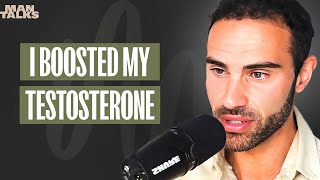
Conversation between host Connor Beaton and guest Lucas Aoun (YouTube: Boost Your Biology) about declining male fertility and testosterone, causes, symptoms, and practical strategies to optimize testosterone naturally. Lucas attributes declines to environmental xenoestrogens (plastics, grooming products), sedentary lifestyles, poor diet, chronic stress (cortisol), overheating of testes, and sleep loss. He outlines symptoms (low mood, low energy, low libido, sexual dysfunction) and physiological points (nocturnal erections, testosterone peaks in morning, testes ~2°C cooler than core). Natural optimization includes resistance training, sprint/HIIT + zone 2 cardio, balanced macronutrients with adequate dietary fats/cholesterol and micronutrients (zinc, magnesium, selenium), avoiding chronic caloric deficit, improving sleep (7–9 hrs), and reducing plastic exposure. Supplements and compounds discussed: Tongkat Ali, Fadogia agrestis, shilajit (250–500 mg studies), taurine (3–5 g/day), creatine (cregatine referenced as newer form), and pharmaceutical options like enclomiphene/clomiphene and pregnenolone with noted dosages and fertility trade-offs. Lucas gives perspective thresholds: medical low T <190 ng/dL; he personally considers <400 ng/dL low and 700–1,000 ng/dL ideal for many men. He cautions TRT reduces fertility and is often lifelong.
Questions this video answers
Below 190 nanograms per deciliter (medical model mentioned).
Lucas considers anything less than ~400 ng/dL low; ideal he cites around 700–1,000 ng/dL.
At least 7–9 hours per night; he notes sleeping ~6 hours regularly will reliably lower testosterone.
About 2 degrees Celsius cooler than core body temperature.
Studies cited used about 250–500 milligrams of shilajit.
Chapters
In 33 years from now, all men in the Western world will be infertile. Based upon the current trends and stats. If we have a look at the main killers of testosterone, I mean, number one is definitely drinking from plastic bottles. Different, like deodorants and creams and even sunscreen. That's also really, really damaging because they contain some of these chemicals that are known to actually build up in the body and actually become toxic over time.
If there's a guy, he gets his testosterone checked, he's doing the things, he's working out, he's eating relatively healthy, and he just can't seem to get his T levels up to where he really wants them to be. Are there other supplements or things that he can take in order to help him?
If we actually have a look at some compounds and herbs that actually will help to stimulate testosterone production, number one is.
All right, Lucas, welcome to the Man Talk Show. How you doing, brother?
I'm great, man, great. Great to be here.
Yeah, it's good to have the Aussie accent, you know, just repping on my show a little bit. I feel that I like it.
Yeah. I mean, it's funny because I. When I interview guests on my show, I'm always, you know, working with, you know, us coaches and influencers. So, yeah, now I appreciate, appreciate you having me on, and I'm excited to chat, of course.
Of course. Yeah. I mean, I. I like your work. I appreciate what you're putting out there. And, you know, obviously today we're going to take a. A big, deep dive into men's hormones, which I've had one other conversation not too long ago, and it went really, really well, and I found it fascinating. So let's just start high level. And then I really want to get into how do we naturally optimize our testosterone as men? You know, this is something that's interested me. I just turned 40 last year. You know, I've read a lot about when you have kids, your testosterone drops. You know, I got my testosterone tested for the first time, and, and I'm, you know, fortunate that my, my testosterone's in a good place. But I'm. I'm always curious about how to optimize those types of things. So let's just start high level. What the hell is happening with men's hormones in today's world? Right? You see all the headlines that, like, I saw a headline recently that said, spermageddon is happening. Men's sperm counts are dropping rapidly. Right? So you see those types of headlines, you know, sperm counts are dropping. Testosterone levels are dropping. What's going on with our home hormones and what are some of the things that are impacting them?
Yeah, absolutely. I mean, if we look at the trends at the moment, I mean, if we have a look at the massive decline in testosterone levels across the board amongst a variety of men, you know, different ages, anywhere from 20 to 40 years of age, we're seeing a number of men now suffering with low testosterone. And there's a few quotes that go around. I mean, there's one that's like, you're not the man your grandfather was like, that's one. The other one is that there's, you know, in 33 years from now, all men in the western world will be infertile based upon the current, you know, trends and stats. So look, I think the reality is, Connor, like men are being attacked from all different angles. Like we're being attacked from the food that we eat, the water that we consume, the pollution in our air, you know, lack of exercise, obesity, chronic inflammation, you know, poor dietary choices. I mean, there are so many different reasons for low testosterone in men. And I think a number of men should be focusing in on the consequences associated with low testosterone. I think this is a, you know, commonly misunderstood, you know, notion that testosterone is purely just for like sexual performance or bedroom performance. But really testosterone is the hormone that encourages resilience, confidence, drive, motivation and enables men to seek out their goals. So really testosterone is crucial for enabling adaptive behaviors and just pioneering. Good stuff.
Very cool. Yeah. I think it's interesting because the more that I've read into the declining rates of men's fertility and testosterone, it seems like there's a whole slew of different contributing factors. But can, can you maybe just outline what some of the symptoms are like if, if a guy's walking around with low testosterone, what are some of the symptoms that he can expect to experience?
Yeah, definitely. If we look at it from like a top down approach. I mean, first of all, from a mental health perspective, men that have low testosterone generally have a low mood. They just don't feel that vital. They don't feel like inspired or they don't really have that zest for life. So they, generally speaking, sort of like dragging their feet. You know, they're really struggling to get through the day, they're low in energy. They also may have symptoms of like sexual dysfunction. So potentially erectile dysfunction, premature ejaculation or libido issues, that's, you know, common complaints. And then also like one metric that's commonly used, although not the Very best metric is actually waking up with morning wood. You know, if you're waking up with a, with an erection, that's generally speaking a good sign.
How come? Why is the morning wood such a big indicator? Like, I'm so curious about that one.
I like the pun there. Big indicator. So it's, it's a sign that the body. So what happens during the nighttime? There's something known as nocturnal erections. And so we actually, men, a healthy man will get a number of erections throughout the nighttime and they may, may or may not be aware of it, but it's a sign that circulation is working well. So blood flow and circulation is working well, which means that their nitric oxide production is, you know, that's, you know, healthy and working well. But basically what we need to look at is that testosterone levels actually peak early in the morning. So that's why we recommend getting a blood test first thing in the morning fasted to assess your testosterone levels early in the morning. Because first thing in the morning your testosterone levels should be at its peak. And actually towards the end of the day, usually when most guys want the high, testosterone is actually testosterone is at the lowest point. So it just goes to show how important it is to pay attention to these signs.
Have you seen that guy? I don't know what his name is, but there's a guy that was an entrepreneur and he's trying to figure out how to like reverse engineer his aging. Have you seen this guy?
Yeah, yeah, Brian, Brian Johnson.
Brian Johnson. Thank you. That's what I thought his name was, but there's a different Brian Johnson who's in like the self development world. Anyway, this, it was interesting because I remember watching one of the videos with him and he was talking about like trying to have like the erection that he had when he was like 16 or something like that. And what fascinated me was how they were measured. One of the measurements that they were tracking was how long he had an erection at night. And it was something like two and a half to three hours. Two and a half hours to three hours a night is what a man can expect to have if he's like got healthy hormones and healthy testosterone levels that he can expect to have. Like basically a hard on for like two and a half hours a night. And I was like, you know, immediately my brain went to like all those stupid jokes, right? Like, no wonder I sleep on my side and you know that kind of ridiculous shit. But, but I was like, oh man. Like that's, that's wild that while you're sleeping, your body is going through all of these different cycles, you know, and I guess it kind of makes sense because I talk to men a lot about how, you know, in order to get an erection, you have to be in a more parasympathetic state. You have to be in a more relaxed state, like your nervous system. And the more stressed you are, the less likely it is that you're going to actually be able to move into arousal and get a hard on and et cetera, and maintain it. And so it makes sense that you know, when you're sleeping you're in a very relaxed state. But do you, I mean, do you know how that's working? Like, why is it that we're getting hard ons while we're linked to our dreams? Is our body cycling neurochemicals and, and chemicals in our body that, that are causing their erections? I know I'm asking you an out there question, but we'll just, it's okay if you don't have an answer to that one.
No, that's, that's, that's completely fine. I mean with the, with the nocturnal erections, you're definitely correct in saying that we have the two sides of the nervous system. We have the parasympathetic and the sympathetic nervous system, part of the autonomic nervous system. And you're definitely correct in saying that the parasympathetic nervous system, which is the rest, what I call is the rest, sex and digest. Like that's the parasympathetic, that side of the nervous system facilitates erections and actually the sympathetic nervous system facilitates ejaculations. So it actually, the sympathetic nervous system causes the quicker ejaculatory response. But generally speaking, when we're predominantly, you know, in that sympathetic state, that's generally high adrenaline, high cortisol. And if we're chronically in that sympathetic state, then we know that cortisol and testosterone have an inverse relationship. If cortisol is high, generally testosterone is going to be low. So yeah, it's pretty, it's pretty bizarre. I mean it's from a biological perspective. I mean it doesn't really make sense, does it, for, for a man to be waking up multiple times.
I mean, listen, better, better at 2 o' clock in the morning than 2 o' clock in the afternoon when I'm in like a meeting, you know.
Like I'll, I'll take it at 2 o' clock in the morning over just like I, I always joke around. Like my wife and I had this conversation, this conversation. We Had a, a couple of times now where we talked about what it was like for us to go through puberty and how different those experiences were as a. As a man versus a woman. And, you know, I remember her asking me the first time and she was like, what was that like? And I was like, honestly, it was pretty great. You know, there was like, there was some good parts to it, but the really challenging parts were that, you know, you're this young man or this, you know, it's kind of like a boy. You're like a preteen, and all of a sudden you're getting hard ons at random times during the day in random place for no reason whatsoever. And then you gotta, like, try and conceal the boner that you're packing and so that, you know, she was like, oh, I didn't even thought about that. I'm like, yeah, it was a very real. If you're a teenage boy, like, it's a very real thing to be walking around, you know, with, with Woods. So anyway, let's, let's get back on track now that I've taken us thoroughly off track when it comes to testosterone, when it comes to some of the things that are decreasing our testosterone and actually sort of like impacting our body's capacity to, to produce testosterone in a healthy way. I have a couple questions for you. I wanted to start with what you said about the relationship between cortisol and. And T production. So what's the relationship there? Why is it that the more stress that we're under, the more cortisol that our body's producing, that the, the less testosterone that we seem to have or. Or that it can have a very net negative impact?
Yeah, well, if we look at cortisol, I mean, first of all, let's describe this hormone for your listeners to understand it from a biological perspective and also some of its key roles in the body. So, first of all, cortisol is without a doubt a super important hormone. Without cortisol, we will actually die. It's that important. It's super important. For many biological processes. It helps to raise blood sugar levels when we have low blood sugar. So anytime you have. Let's just say anytime you have a very high carbohydrate meal and your blood sugar spikes really high. If it goes back down below baseline, you have a crash. Then what happens during that crash, cortisol is actually increased to raise blood sugar levels back up. So cortisol really has some pleiotrophic effects in the human body. And if we look at the cholesterol pathway. Well, if we look at the synthesis of cortisol and we look at the synthesis of testosterone, even though testosterone is made in the testes and cortisol is made in the adrenal glands, their synthesis and production is actually, you know, from the very same beginning substrate, which is cholesterol. Which is why they say, you know, if you go on a very low fat diet, you're going to lower your testosterone. And that's, that's correct. You know, if you go on a very super low fat diet, that's going to hinder testosterone production. So what happens is if we're in a chronically stressed state, you know, we're predominantly shifting our resources more towards cortisol and that's robbing the resources away from testosterone. So this is one of the reasons why men that work, let's say a 9 to 5 job in a corporate environment, they're really stressed, they're drinking a lot of coffee, they're under eating, they've got a lot of pressure from their boss and they're sitting at a desk all day heating up. Their testes are actually getting physically hot. This is leading to low testosterone and also an increase in cortisol.
As you were saying that I, I, I don't know if you're going to be familiar with the show I'm about to reference, but there was, when I was growing up, there was a show called King of the Hill and I, I grew up in Canada, but this show was like quintessential Americans. And, and the, the main guy, Hank Hill, like sold propane and there's an episode where he and his wife are trying to get pregnant and he has a, he, he goes in and finds out that he's got a low sperm count. And one of the things that the doctor is saying is that he, his balls are probably getting too hot because they live in Texas.
He, so he prescribes him, he prescribes Hank with basically like dunking his balls into, into ice every single day. It's just, it's a really funny episode. But that, that's what came up. So why, but, but to pull on that a little bit because I've, I've heard this before. Why is having your testes heated up bad for testosterone production? What happens?
Yeah, well it's funny you mentioned that because on YouTube, if you search icing test, icing testicles, testosterone, my video is the most viewed video on YouTube right now on that topic. And I'm, I'm actually big believer in icing the testes as a way to boost testosterone. But if we look at the actual mechanism, what's going on here is that the testes sit outside the, the male body for a reason. It's because they actually need to be kept about 2 degrees cooler than the core body temperature. And so this is specifically to enable sperm to survive. And so if we look at like thousands of years ago, using a, like being in hot environments or in a hot tub was actually at one stage considered to be a male contraceptive. Because by jumping into a sauna or spending hours in a hot tub, that can actually damage and kill sperm. And so, you know, this is one of the reasons why I always tell guys to, you know, if you jump into a sauna, make sure you bring an ice pack in there. You know, you might, you might. People might look at you funny, but just tell them you're trying to preserve your testosterone.
That's awesome. I love that. We've been talking about getting, getting a sauna, so I'm not going to say anything to my wife. I'll just bring ice packs in from eyeballs when we get it. She'll be like, what the hell are you doing? And I'll just be like, what? I was keeping the boys cool, like easy, relaxing. Okay, so stress not good because you prioritize cortisol production. And that has to do with. So just, just so I can maybe, maybe we'll back the train up. In order to produce testosterone, what are some of the key building blocks for testosterone production?
Yeah, so first and foremost, when it comes to testosterone production, there are various minerals and vitamins that are actually crucial for testosterone synthesis. And this is why men that go on a highly refined, processed, high sugar diet, lacking these essential minerals and vitamins, they actually have low testosterone because they don't actually have the right environment and the right raw materials to actually produce testosterone. So first and foremost, if we look at some of the essential minerals, I mean, some of the ones that are absolutely crucial are zinc, magnesium, selenium, taurine. You know, some of these minerals that are not really found in highly processed, you know, refined sugars. You know, this, this is why actually organ meats are considered to be highly beneficial for men, particularly if they're wanting to boost testosterone, particularly if they're wanting to maximize their nutrient uptake. Things like eating liver eating, chicken hearts, like beef hearts, spleen, you know, kidneys, A lot of these organ meats actually contain very high levels of cholesterol and also very high levels of bioavailable nutrients already in their active form. So the body is very easy, able to utilize the nutrients for, you know, testosterone production, thyroid hormone production and all that, all that sort of stuff.
Interesting. So you need, you need is. And is there like good cholesterol? There's good cholesterol, bad cholesterol. Right. So you need a certain amount of like good cholesterol in order for you to produce enough testosterone.
Interesting. Okay. All right, so we've got stress, big killer. We can talk about that in a moment. What are some of the other things that are negatively impacting our testosterone production? Because I think I want to paint a picture for a lot of men of what are some of the things not to scare them or say. You need to avoid all of these things all the time, because that's hard. And I have a two and a half year old, so avoiding stress.
A challenging thing. I was joking around that I'm living with the maniac that just says no to absolutely everything right now, no matter what it is. And you know, unless it's like bananas and choo choo trains right now, that's, that's where we're at. But I want to paint a picture for guys so that they have an understanding of what are some of the things that are impacting it. So are things like microplastics? I've heard that that's a really big issue. But maybe you can just list off a couple of the other things that are big hinderers or killers for testosterone?
Yeah, absolutely. If we have a look at the main killers of testosterone, I mean, we can actually look at it from like the testosterone lowering starter pack. That's what I call it. It's like a testosterone lowering starter pack. Number one is definitely drinking from plastic bottles or even storing your food in plastic, plastic containers. The reason for this is they contain xenoestrogens, which are known as endocrine disrupting chemicals. And these xenoestrogens, what they do is they actually can bind to the estrogen receptors in the body and actually promote estrogenic outcomes. So they can actually potentially promote gynecomastia or breast enlargement in men, so causing man boobs. And also they can hinder testosterone production. They can actually block the receptors that testosterone bind to to actually facilitate the effect. So if we're looking at like the, the biological consequences, I mean, you know, we really want to be avoiding plastic at all costs. And instead we want to be drinking from what I'm drinking from here, which is like a glass, you know, glass bottle.
That's going to be ideal. And Then if we have a look at like some of the men's grooming products and like different, like deodorants and, and creams and even sunscreen. And that's also really, really damaging because they contain some of these chemicals that are known to actually build up in the body and actually become toxic over time. Even though they're found in very, very small amounts over time, if we're chronically using them, they'll start to build up the body. If it's not good at detoxifying, then it'll start to build up and actually have a negative effect on hormonal output.
Yeah, it's, it's wild because I think the more we've learned about how, how much microplastics is getting into our food and into our bodies, it was like, what was it? I think, I don't remember where I saw this, but it was a piece of research that was saying that like, the average person is ingesting a credit card's worth of microplastics every year. That's like a freaking credit card's worth. Like, that's, that's an insane amount of plastic. And then you think that from my understanding, a lot of these microplastics can pass through the guts, that can pass through the lining because they're so small. They can pass through the lining in your lower intestines and then just make their way into your bloodstream. And that's how they get out into the rest of your body. Right. And so obviously that's a big one. What do you say about the stagnancy that most men get caught underneath? Because I think I heard saying a while back that sitting is the new smoking. Sitting and just being forced to sit in place at a desk 9 to 5, that that lack of movement is also a massive hindrance to men's testosterone level. What's your thoughts on that?
Yeah, definitely. I mean, if we look at the impact of sedentary behaviors or just lack of physical activity in general, that's going to lead to excess body fat. And excess body fat or adipose tissue can actually increase the conversion of testosterone into estrogen. So the more fat that you carry on your body, the more amount of testosterone you're going to be converting into estrogen. So if we look at like the types of physical activity that are absolutely essential for maxing out testosterone, we want to be aiming for physical activity that involves like high intensity, low or short duration activities. So that's like, you know, lifting weights, squatting, deadlifting, bench pressing, sprinting, doing Any sort of really high intensity activity. And on the flip side is actually if you engage in very low intensity, very long duration activities such as like ultra marathon running or like super long distance running or aerobic exercise, that actually drives up cortisol more so and actually can decrease testosterone synthesis. So that's an important distinction there. Physical activity is beneficial. I mean, I'll just share my regime, my protocol right now. I mean I've managed to get my testosterone levels to 988 nanograms per deciliter. So I'm just shy of a thousand nanograms per deciliter naturally. And as part of my exercise regime and protocol, you know, I'm still doing low intensity activity, but I'm doing like I've got a walking treadmill desk. So you know, I walk on that. You know, I try and hit like 15,000 steps, 15 to 20,000 steps per day. And then from an exercise like beyond that I try and go into the gym at least four to five days a week. And that's involving, you know, reps, around eight to 12 reps, you know, usually about four to five sets. So really just the type of physical activity is also really important to, to factor in.
Yeah, I think we're going to get into like nutrition and some of the things that we can also do, like some of the things that we can eat to not supplement but, but to support our bodies and the natural production of it. But I. One of the things that. There's two things that I started to do that I found some really significant results in. And I'm curious to get your thoughts on this. Number one is zone two cardio. Zone two cardio, I've found has been really good for fat loss. And then the second is sprints. I can't remember where I was reading it, but I found research, couple pieces of research that were talking about how any type of sprints, whether it's on the assault bike or physical sprints, you do five to eight sets of them, you, you do a 30 second sprint as fast and as hard as you can go, whether again whether it's on an assault bike or running and then a minute rest and that, that will, that basically like turns on your testosterone production. I don't really know the science behind that, but I've certainly found that as much as it sucks, I don't really. I bought an assault bike, I actually bought an assault bike and put it in, in my downstairs gym. And and so what I do now is I start every workout with 20 minutes of zone two cardio and so I'm curious to get your thoughts on those two things, sprints and zone two cardio. Just in terms of health, I don't know if you want to tie it into testosterone or not.
Yeah, absolutely. I mean if we look at so zone two cardio, I mean that's going to be highly beneficial for eliciting aerobic or cardio respiratory fitness. So improving your VO2 max. So the benefits there is that, you know, we're definitely going to be supporting, you know, the longevity pathways and we're going to be getting a lot of the, the mood benefits associated with exercise. We're going to be seeing like an increase in BDNF and nerve growth factor and things like that. But I think you've, I think you've hit the nail on the head. I mean if you're going to be doing exercise combining the both, both very high intensity activity plus a little bit of like you know, zone two cardio, maybe not more than 20 to 30 minutes at a time, that's going to be optimal for testosterone production because number one, the zone two cardio is going to be helpful for general circulation and blood flow and things like that. And then you know, adding in some high intensity exercise or HIIT training. Like you said with sprinting, when I was looking at developing a protocol myself to max out my testosterone, I was doing sprint training about two times per week. And when you do a sprinting session, you know, it's a very primal activity. It's recruiting large muscle groups. You know, it's going to be beneficial for activating the, you know, energetic pathways associated with like explosive power and output. And so if we do a combination of like sprint training and aerobic training, we're really going to see the benefits in terms of improving body composition. I mean, if you have a look at, just take a look at sprinters bodies for example, like they are absolutely jacked and you know, they're, they've got low body fat and they've got very high levels of testosterone and DHT as well. And so there is actually research suggesting that doing sprint training in particular, like, like actual running sprinting can actually boost DHT, which is DHT is Dihydrotestosterone and DHT is actually 3 to 10 times more potent than testosterone itself. And so that's why we see a lot of benefits associated with sprint training.
Yeah, it's, I think one of the things I was also reading was that when you do sprint training or, or interval training, it's also good for your hrv like your heart rate variability because you're forcing your heart rate to spike and then cool back down and spike and cool back down. And I think one of the pieces that I was reading was saying that it's not only beneficial for improving your heart rate variability, but it's also good for helping your body recover and recoup from stressful situations, right? So like recovering from, you know, a conflict, because when you go in, when you have a conflict with your partner, an argument or something like that, your heart rate spikes, you know, your blood pressure spikes, right? Your respiratory rate spikes, all those things spike and for everybody has their own version of how long it takes to cool down. And one of the things that I've seen with a lot of men is they'll report that it's very challenging for them to cool down after an argument, right? Like, maybe they can let go of what happened, but the physical response in their body is they just feel jacked or amped. And some guys, it takes a very, a very long time for them to actually have their, their heart rate come down, their respiratory rate come down, and et cetera. And so I've. I've found that with, with sprints as well, as much as they. As much as they suck, they can be very, very beneficial for that as well. So. Cool. Well, I think, I think we've covered some of the things that, that crush our testosterone production. Anything else that you want to add in on that front in terms of things that hinder or get in the way of testosterone production? Because I feel like we've done a good job of covering some of those things, but I wanted to give you a chance.
Yeah, definitely. I think one key factor that could be contributing to low testosterone is actually being in a severe caloric deficit. So extended periods of fasting for some men can actually be detrimental, particularly if they're not actually refeeding and eating a sufficient amount of calories. So if we look at being in a severe caloric deficit, some guys that train really, really hard and they deliberately fast as well, because they're trying to, like, drop body fat. If we're in that state of just, you know, chronic fasting, undereating, and over training, that's a recipe for low testosterone. So actually being in a severe caloric deficit is actually going to be a hindrance to testosterone production. It might help with body composition. You know, you'll definitely lose body fat. You looked more ripped and shredded. But, you know, it's not really a sustainable thing to do. Particularly, I mean, the perfect example of this Is, you know, bodybuilders, when they, natural bodybuilders, when they prep to get on stage to look amazing, when they get on stage, their testosterone levels are very, very, very low because they're in a. They've got very low body fat percentage. They've been dieting hard for the last 12 weeks. So that's something to just keep in mind. For men who might be undereating.
What about overeating? What about the caloric surplus? Let's talk about the late night potato chips and ice cream.
How does that actually.
Impact our body's ability to produce testosterone?
Yeah, so on the other side, if we look at a caloric surplus or overeating or overfeeding, I mean, this is going to lead to a state known as, you know, metabolic syndrome or insulin resistance, where your body is unable to utilize the nutrients effectively. And so a good example of this would be like.
When you eat a high carbohydrate meal, you know, you're actually finding that one to two hours after eating that meal, you're actually feeling fatigued and sleepy. Like that is a sign that something is off in the body. If you're eating a high carbohydrate meal and you're not feeling energetic and, and, you know, the goal is that you should be able to eat a meal like that and not crash, you know, two hours after eating. But for most Americans and even Australians here, like most men in particular, are overeating and they're heading into that obese category. I mean, this is not beneficial for the body because it's going to lead to chronically high levels of inflammation and it's going to also going to slow down the metabolism or reduce thyroid hormone output. So it's generally not the best thing for testosterone optimization.
Yeah, it's, it's interesting because that's something that I definitely battled with growing up. Like, my, my family called me the human garbage disposal. And you know, I had, I did admittedly have a pretty fast metabolism. And I, you know, when I got out of high school, I was working construction and, and, and working out. And so, you know, on the average day I was, I was putting out a lot of calories, but I was also intaking a, a stupid amount of calories. And I found that that, that's been my journey. That's been a huge part of my journey with health, with having myself feel good about my body. And the way that it looks is actually just portion control and actually just eating less because I have the capacity to eat a lot of food and My body doesn't mind eating a lot of food on a regular basis. And so I, I really have had to work diligently to, you know, not grab the potato chips or eat the ice cream at like 9:30 at night or 10:00 clock at night. Right. Or like go back for the third helping. Like that has been my battle for years and years and years. And it's just in the last like two, three years that I finally have wrangled it a little bit and, and got it under control to a place where, where I feel good. And part of that was. I've talked about this in the show before. Like last year my mission was to get in the best shape of my life by 40 because I turned 40 in November. And operation, operation 40 is a, is, was a green light, it was a go. But a big part of that was actually like controlling, not controlling but, but really being conscious of how much I was consuming because I am a, I am an over consumer. Like when I find something that I like or that I enjoy, I will consume the living shit out of it. So there's definitely like, what, what is it? The, the seven deadly sins. Gluttony would be my, would have been my superpower for sure. Like that would have been, that would have been mine. So I appreciate you laying that part out. Let's talk a little bit about what natural testosterone optimization is. How do we go about this? What are some of the key pieces of natural testosterone optimization? Let's just lay this out and then we'll dig into them individually.
Yeah. So a number of men, if they find themselves that they have low testosterone as verified by a blood test, they've, they've actually, if we look at, you know, the difficulty for men to actually get their blood test done, I mean a number of doctors, particularly in Australia, they'll actually refuse men for getting that. They'll actually make it very difficult for men to actually get their testosterone levels checked. And I think this is a real issue because, you know, this is if a man has low levels of testosterone and then is mistakenly put on an antidepressant because they have like low mood, I think that is not, you know, good medical practice, in my opinion.
But just to interject there, Lucas, what, how do we define what low testosterone is? Because I think this is also a very like widely debated topic. So I just want you to give like your, your version on, on where that, where that resides, if, if possible.
Sure, sure. So the, if we look at the medical model, the way that describe low testosterone is generally below 190 nanograms per deciliter. So less than 190 for total testosterone. But if we look at the, what I would consider to be low, you know, just remember that the reference range has actually what they've done with the, the average reference, the reference range for men, they've actually reduced the reference range. So if we look at a 50, 50 to 70 years ago, the maximum score that you could reach was around 1400 nanograms per deciliter. They've actually reduced it down because the, the global average has declined so much to around 1100. So in my opinion, I think that anything, yeah, anything less than, around anything less than 400, I personally would consider to be low testosterone and anything around about ideally we want it to be hovering. This is in my opinion from what I've seen with, you know, looking at tons of different guys, blood work, anything around 700, 800, 900, a thousand, that's going to be ideal for testosterone.
And, and maybe we should give some ages because obviously testosterone is naturally going to decline with age and a 60 year old man likely isn't going to be able to have like a thousand, you know, a thousand on. I can't remember what the exact measurement is, but from my understand that you're gonna see a natural decline, right? It's like 1% a year in, in decline. Once you hit like 35 or 40 to expect 1% decrease in your testosterone levels every single year. So that's optimal for, for what like a 30 to 40 year old or like where would you range that?
Well, ideally, if we're looking at men between, let's say 25 to 35, I would like to see their testosterone levels hovering around, you know, 700, 800. But we actually, there was a guy that I was working with who was 45 and he started at around 600 nanograms per deciliter. And after like following all the, the icing biohacks and all the supplements that I recommended and all the nutrition advice, like he actually managed to get his Testosterone up to 1100. And I was completely shocked because he actually went above and beyond what I was even at. And I'm, I'm 27 years of age, so he, he just completely smashed it. But in terms of, you know, the reference range, it really does come down to looking at a man's symptoms as well. So like there's one thing to look at objective data, but then the other thing is like literally ask the guy like, how are you feeling when you wake up? Do you have energy throughout the day? Do you have a good mood? Are you motivated? Are you driven? Do you have good libido? Are you able to build muscle mass? And if a guy is saying, you know what, I feel great across the board, but his testosterone levels are maybe like 500, then I'd say, no, no, no problem. Like, it's all about how you feel and perform, you know?
Yeah, that, that makes, that makes total sense. Okay, cool. So what are some of the things that men can start to do to naturally optimize their testosterone?
So if we look at it from a nutrition perspective, I mean, when it comes to testosterone optimization, if we look at the best dietary approach, I mean, first and foremost, the most important principle for men to understand is that all the macronutrients, carbohydrates, fats and proteins are going to play a critical role in testosterone production. So what I mean by this is that we should actually be adhering to a diet that's pretty well balanced in terms of fat intake, protein intake and carbohydrate intake. We shouldn't be too extreme in a sense. Like we just completely get rid of all carbohydrates. That's not going to be beneficial. We don't want to be having super high protein diet because that's not going to be beneficial. We actually want to have more of a balanced diet. So looking at the best fat sources, I mean, I'm sure, Connor, you probably consume some of these on a daily basis. Things like olive oil, coconut oil, butter, ghee, you know, these are going to be beneficial in terms of the fat sources, even eggs, things like that. From a protein perspective, we're actually looking at animal based products, so things like milk, you know, looking at steaks, chicken, fish, you know, organ meats, as I said before. And then from a carbohydrate perspective, I mean, we want to be aiming for easy to digest carbohydrates. And one particular carbohydrate group that I actually tell men to avoid is actually to stop consuming potatoes or sweet potatoes. And this will be somewhat controversial, but from what I've seen on blood work is that men that have high amounts of starch or potatoes or sweet potatoes, that actually increases another hormone that we don't want to increase, which is prolactin. And so these starchy foods actually increase serotonin in the gut and that can lead to high levels of prolactin and that can put the handbrakes on testosterone. So that's generally my dietary principles that I recommend to men to maximize Their testosterone.
Yeah, I've, I've. In the last year or so, when we moved upstate, there's farms around us that sell raw milk. And raw milk is just a wild and crazy substance full of wonderful proteins and healthy fats for your body. And, you know, it's what my son drinks, right? So, like, after he stopped breastfeeding, we were like, well, let's. Let's get him raw milk. And, And I was, I. The more I started researching about it because my wife was like, oh, it's so good for you. It's so healthy. And the more I started researching about, I was like, oh, this, this has got everything. And so I don't, I don't drink it a ton, but probably like every other day I'll. I'll make like a protein shake with raw milk. And it's awesome. It's really like post workout, you know, put some, you know, put some protein powder in there, a little bit of avocado, some, you know, some like cacao nibs and stuff like that. And, and just load it up and just make a great, great, great protein smoothie. It's awesome. I, I've really, really enjoyed it and it's tasty. But yeah, I mean, some of those things, like the olive oils, like, just having steaks with like a little bit of fat on it and stuff like that. I didn't know about the potatoes, though. That's usually like, usually we try and eat pretty clean for dinner. And so usually it's like when I'm cooking, it's just protein and vegetables. That's. That's what I, that's what I'll make. It's just, it's all about optimizing for efficiency and maximizing nutrition. That's. That's interesting. Where, where does sleep play into the whole. Optimizing our testosterone.
Yeah, no, I'm glad, glad you brought up. I mean, this is. Sleep is absolutely critical if we're looking at optimizing overall health and longevity. I mean, if we have a look at the importance of sleep, I mean, sleeping six hours per night on a consistent basis will reliably lower testosterone levels in men.
Some men out there might think that they're Superman. Unfortunately, it's just not the reality. You need at least seven to nine hours of quality sleep per night for optimal testosterone production. And what will happen is, if we actually under sleep, what happens is the body shifts more of its resources towards the sympathetic nervous system, so it actually produces more cortisol and actually less testosterone. So definitely consider, first of all, optimizing sleep. And that should be done by making sure we're sleeping in a very dark environment. That's one of the reasons why I always wear an eye mask before bed. I've actually got my mouth taped as well, which I'm sure you've heard people talk about, you know, mouth taping. And then my bed, funnily enough, is actually slightly on an incline. So I actually deliberately sleep on a slight incline because that helps with brain detoxification and circulation.
And then I also make sure that I'm wearing those blue light blocking glasses, you know, three hours before bedtime to, to prevent blue light from stimulating the, the eyes and the brain.
So definitely, yeah, having a, having a really dialed in sleeping protocol and sleep stack is, you know, crucial.
What are your thoughts on trt? I think we're just, let's just like hard broach into this subject because I think, you know, I think testosterone replacement therapy has become much more mainstream, much more common.
I can almost always tell when a dude is on it, right? Like, I've just seen this wave of like 45, you know, 50 year old dudes that all of a sudden are just super jacked. And I'm like, I'm working out five, six days a week and, and I'm not putting on, you know, 20 pounds of muscle. You're doing something, you're either on roids, you're, you know, you're either juiced or you're on TRT or you're on, you know, human growth hormone or something like that. What are your thoughts on something like testosterone replacement therapy? When, when should we be using it and what are maybe some, some alternatives for guys that are, that are like me, that are like, I actually, I don't want to go on that unless it's an absolute must because I know that it creates a dependency. As far as far as I'm, as far as I know, it creates a dependency where your body actually starts to rely on the TRT versus actually producing it in a very normal way itself. So let's, let's get into that.
Yeah, no great points there. I mean, you're definitely correct, Connor. I mean, if, if a guy decides to go on testosterone replacement therapy, usually that's a lifelong commitment. I mean, it is possible to jump off it and then like recover your, your testosterone levels again. But in that period where they jump off the trt, like that's a very challenging period for a number of men. And actually, I actually see a number of men that come off TRT and they're the Ones that are really in a dark place, like, mentally, you know, they're not feeling good about themselves. They're feeling physically really bad. But TRT is definitely useful. There's going to be a time and place for trt. I'm not against, you know, testosterone replacement therapy. The time in which I say it's actually useful is when the man has exhausted all of the natural strategies and protocols and he's hit a point where he still doesn't feel good, he still has no motivation, no libido, you know, not able to build muscle. And that's like. Right. I think for you, TRT is going to be useful to, you know, resolve your symptoms and, and, and, and, you know, enable you to feel the way that you. You want to feel. So the other point to note there, Connor, as well, is, you know, going on testosterone will significantly reduce your fertility. So being on TRT will dramatically lower sperm count. And so, you know, for the young men out there that might be listening to this and, you know, maybe they want to have kids in the next three to four years or, you know, in the future, they need to remember that being on testosterone replacement therapy will actually shut down fertility. So that's an important side effect that is commonly not thought about.
Yeah, that's. I think that's a really, really important point. And, and it is. I mean, it's such a personal decision, I think, for a lot of guys where, I think, I mean, growing up, I didn't really know anything about testosterone, to be honest. Like, I just, you know, the, the sort of, like, basics that I learned about it in biology. All that I knew was that it was very important for me as a man. Right. It's like, that's all I really knew is like, testosterone's important. Like, that was the. That was the end of my education when it came to t. But as I've gotten older, I'm like, oh, this is a very important function for my health as a man and especially for my levels of energy and motivation. I think that was this really surprising piece that, like, a lot of the men that I've worked with who have had low testosterone in some way, shape or form, have one of the biggest symptoms and side effects, is just like, brutal low energy, you know, not. Not a lot of energy, not a lot of motivation. And to rectify that, ideally through natural means, as we've been talking about, right, through fitness, through dieting, through optimizing. I think we're going to talk about maybe some, Some. Some other supplements that you can take and things that you can do to, to optimize it. But by doing those things, you can actually increase your testosterone and, and you have a lot more energy.
So I think, but I do think it's important because it is a, it is a very personal thing. What, what are your take, like, what are some of the alternatives to taking trt? Right? Like, if there's a guy, he gets his testosterone checked, he's doing the things, he's working out, he's eating relatively healthy, you know, without being like wild about it, and he just can't seem to get his T levels up to where he really wants them to be. Are there other supplements or things that he can take in order to help him?
Absolutely. I mean, there are many different testosterone boosting supplements on the market and it can actually be very overwhelming for men knowing which ones to select, which ones actually have some, you know, robust human clinical studies and which ones actually move the needle. Because there's a lot, you know, if you go on Amazon, you type in testosterone booster, you'd see literally thousands of different supplements there. And, you know, you, it makes you wonder like, who the heck formulated these products? Like, have they got a, you know, a good scientific background? Do they understand human biology? And, you know, as someone who's, you know, been researching this for literally 8 years and been very, very like closely looking at different molecules and herbs and supplements and working with the world's greatest formulator, Sean Wells, who's my mentor, and being surrounded by other really high profile supplement formulators, I've learned that this is what it takes to select an ingredient. This is how the ingredients should be selected, this is the dosage we should be using, and this is like, you know, how best to maximize the quality of the product and different elements like that. So if we look at supplements for men, I mean, first and foremost I want to just like remove the common belief that most men have and that is that every guy needs to take a zinc supplement. This is not true. This is like if we look at our diet, for example, for eating a lot of meats, particularly on a carnivore diet, or lots of red meat, I mean, you are able to get your daily intake of zinc through diet. And if you supplement with any further zinc, that's not going to boost your testosterone, it won't have any clinically significant effect. The only time in which it has a beneficial effect is if you have a clinically diagnosed zinc deficiency. And the same applies for most other minerals. But if we actually have a look at some compounds and herbs that Actually will help to stimulate testosterone production even further. Number one is Tongkat Ali or Eurycoma longifolia. Dr. Andrew Huberman, spoken favorably about this particular herb, Tongkat Ali. It's one of my favorite herbs. You know, how do you.
How do you spell that? Just for the people that are like, how the hell do I spell that?
It's a bit of a fun. It's a mouthful. So it's T O, N, G, tong, and then cat, K, a T, and then it's space, and then it's a L, I. So Tonka Ali. Cool.
So that's.
Thank you.
Just. Just because I could. I could hear my audience being like, what. How do I spell that one?
Yeah.
So that one there's, you know, really well studied in terms of decreasing cortisol. So it actually lowers cortisol and actually increases testosterone. There's studies on it, you know, helping with mood, stress, resilience and confidence and motivation. I've had some profound experiences on tongkat Ali over the years. I've actually recommended it to some, you know, close friends of mine, and they were just like, yeah, like, they. They were completely blown away with the. The effects that they noticed.
And then the. The second herb that I really like is Fadosia agrestis. Now that's spelled F, A, D, O, G, I, A Fadosia. That one there is a pretty well studied Nigerian shrub that actually has some pretty robust effects and very noticeable effects in terms of sexual performance and increasing testosterone as well. And then the other one that I really like is. Is a mineral pitch known as shilajit. It sounds like I'm talking another language.
On this podcast here. But no, I actually know about that one. I actually know about that one because the guys from Mana reached out and sent me some of their stuff, and they have shilajit in it. And. But. But please, go ahead. Yeah, fill. Fill in on this one.
Yeah, so shilajit, also known as the.
The conqueror of mountains and destroyer of weakness. That's what it's, you know, known for in the ayurvedic medicine system. And there are many different, like sherpas and altitude trainers and people that live at altitude that actually take this shilajit mineral pitch. And that particular mineral pitch has so many benefits, not just for increasing testosterone, but also it's rich in minerals and nutrients. It's very high in, you know, antioxidant defense chemicals and helps with the immune system. And so shilajit, you know, there have been studies looking at between 250 milligrams to 500 milligrams of, you know, shilajit having a beneficial effect on increasing free testosterone levels in healthy adults. So shilajit's definitely a, you know, a winning ingredient. And then if we also have a look at another particular amino acid that I'm a huge fan of, it's actually the amino acid taurine. Are you familiar with taurine?
Vaguely. Just. Just because I had researched your stuff and I saw that you had done a video on it and I watched a little bit of it, but that was my first introduction.
So. So taurine is, you know, it's commonly found in a bunch of different energy drinks. You know, it's found in Red Bull, it's found in Mother, it's found in different energy drinks. Now, taurine, you know, most men will probably perceive it as like, oh, this is going to give me. It's a stimulant. But it's actually incorrect. Taurine is the opposite of a stimulant. It's actually a relaxing amino acid. It's actually an inhibitory amino acid. And so taurine actually can, if you take it in supplemental form, which is something that I've taken for over three years now, you know, three to five grams per day.
You know, we're looking at the higher end of the dosage range. So 3 to 5, even up to 6 grams per day doesn't need to be with food, just have it any time of the day. That's going to be beneficial for acting as an antioxidant in the testes. So it actually blocks the negative effects of bpa. So you know how we're talking about xenoestrogens and plastics. Well, taurine actually accumulates in the testes and actually can block and prevent the damaging effects of plastics. So I mean, it doesn't mean you can, you know, go out and still smash a heaps of plastic bottle, drink from a plastic bottle. But in saying that, you know, it's still going to be a preventative effect there as well.
So I think that's awesome. I love all those. And, and people can, can dive into where they can find some of those pieces and we'll hopefully we'll have the, the spelling in the show notes for everybody. We'll just, we'll just earmark that. One of the things that I've noticed in the last little while, because I obviously running a company for men, I get hit up all the time, all the time, like a couple times a week from people that, you know, have TRT that they're selling TRT through Doctors and whatnot and have created this program and they want to refer or, you know, people that have created alternatives to it and are wanting, you know, me to market their products. And one of the most common things that I've started to see come up in the last little while are products that aren't testosterone replacement supplements but are marketed as, as testosterone boosters. And they have things like. And I got this wrong before we got on the air, but.
How do you say it again? I got it wrong?
Yeah, yeah, yeah, the enclomophene and Clomiphene.
And then Pregnant alone. Pregnant alone. I think that's it. Yeah, there we go. Clearly I do not have a degree in biology. Um, what are, do these things? Are these things supportive? Is there research? Are you like, are you familiar with these things? And, and is this, is, are these legit? Because I think I worry about all of this shit coming out and guys just, you know, being like, yeah, I want to raise my testosterone, I want to have more testosterone. And buying products with stuff that they don't know is actually legit and is going to help their testosterone and stuff that hasn't sort of been clinically tried. So what are your thoughts on those compounds and the, and the drug and the drugs that are starting to come out to support men in testosterone?
Yeah, so if we look at the first one that we. You sort of mentioned, N Clomiphene and Clomiphene citrate. So that one there is a derivative of an actual FDA approved medication known as Clomiphene, which has been shown to increase fertility and testosterone levels in men that have low testosterone. So that actually, you know, is a medication that can definitely be used. And Clomiphene, from dosages as little as 6.25 milligrams, anywhere up to around 12 or, you know, 25 milligrams does have some pretty potent effects on increasing testosterone levels without shutting down your natural production. So N Clomiphene, you know, definitely is a pretty potent substance to actually, and it is a pharmaceutical drug. Obviously it's not a, you know, there's no way you could put this into a, into an actual supplement. But if you did combine N Clomiphene with a lot of the other natural supplements like Tonka, Ali, Fadosia, Shilajit, Cistanch and pine pollen, some of these other herbs, when you're combining both, you're going to be seeing a pretty dramatic increase in testosterone without the negative feedback loop of it actually shutting down your body's own production. So. And the good News is that is an oral like it can be taken orally. It does not need to be injected. That's one of the biggest drawbacks with TRT is that a lot of guys don't want to be injecting themselves every single day or every couple of days. And all the other methods of administration like creams and, and, and pallets are just not as reliable and effective. You have to be, if you really want to use trt, it has to be inject injection.
So that's just. Yeah, really important point. Then the other one that you mentioned there, which was pregnenolone. Pregnenolone is not as potent as N. Clomiphene, but it does have some beneficial effects and is a lot safer to use than enclomiphene. Pregnenolone, anywhere from 10 to 50 milligrams per day can help with increasing mood motivation. In fact, a lot of guys that go on testosterone replacement therapy still take. They'll actually add in pregnenolone on top of the TRT to give them an even bigger boost in energy motivation and to help having a sparing effect on the adrenal glands.
But those are both still pharmaceutical drugs that you would definitely want to research and make sure that there's like. Because I'm assuming that there's side effects, right? I don't think I've ever heard of a pharmaceutical without side effects.
Yeah, well, the first one. So enclomiphene, it can be used without major side effects if we're using a low dosage and not for a long period of time. The other one, pregnenolone is technically not like a pharmaceutical drug. It's like a, it's, it's, it's considered like a pro hormone. You know, it's not. Because it's actually acting as the precursor. They actually administer pregnenolone to women as well.
Interesting. Interesting. All right, well, I think we've. I think we've done a thorough job of covering the gamut of testosterone. There was one random question that had nothing to do with testosterone. Although maybe it'll. Maybe it'll cycle back to it. Maybe you'll find a way to tie it in. I've always been curious about the creatine question as I've been working out more and more. Like, when I went back home recently, I was in A Planet Fitness because it was the only gym close to my parents house. And I ended up running into somebody that listened to the podcast and he was like, oh, you look great. Like, what are you taking? And I was Like, I'm not taking anything. Like I'm just, I'm just eating well and, and working out and having some protein shakes. And he's like, oh, like creatine? And I was like, no, I've never really taken creatine. I don't really, you know, know the benefits of it. So what's your stance on creatine in terms of workouts, muscle mass? What is it beneficial for? And are there certain forms of creatine that, if you're going to use it, are, are the best ones to go for.
Sure. So creatine monohydrate is without a doubt possibly the most well studied gym supplement that actually has some beneficial effects in terms of supporting muscle growth, increasing strength and increasing overall size and, you know, muscle hypertrophy. So creatine, the gold standard, has always been known as creatine monohydrate. That's like the best form to use until about six months ago where I discovered an even better form of creatine that not many people even really know about. And that's called cragotine, which is C R E G A A T I N e. And I've spoken about it a lot on my YouTube channel. I've spoken about it a lot on other podcasts because I definitely think it has some beneficial effects that go beyond creatine monohydrate. If we look at a lot of the research on creatine monohydrate, the, the gold standard, what's considered the gold standard, it definitely will help with increasing strength. You will hold a little bit more water weight because part of its mechanism is actually, you know, you're not to drink more water and it holds more water in, in the muscle cells. But this new form of creatine, this cricutine, it is superior to creatine monohydrate. And so that's one that, you know, I'm sure your listeners will be really excited to learn more about and even, you know, has a lot of beneficial effects in terms of cognitive performance. So creatine is now, you know, heavily studied in terms of, you know, supporting memory, executive functioning, helping with the brain. And so, yeah, there's a lot of benefits to creatine.
Very cool. I didn't know anything about that. That's good to know. Maybe we'll do a part two and we'll go into workout supplements and all those pieces because that's definitely something that I've been optimizing the last little while.
So.
Well, listen, man, thank you so much for your time and for jumping on the show with me and just for taking a deep dive down the rabbit hole of everything testosterone, I feel like we had a very thorough conversation and appreciate your knowledge and wisdom. Where can people learn more about you, your. Your website and anything that you might offer that you. That you think would be beneficial for them?
Yeah, I just wanted to say massive thanks, Connor, for the opportunity. You know, it's a pleasure chatting with you and, you know, humbled to be here. So thanks for the invitation. In terms of where people can find me, it's. They can search boost your biology on YouTube. Please go over there and subscribe to my channel. I've got so much. My girlfriend just said to me before, you know, she's like, you've got 610 videos on your channel. I'm like, wow, I didn't realize that. It's like if each video is like 8 minutes each, it's like 80 hours of content or something like that. It's just crazy. But, yeah, please go over there, subscribe to my YouTube channel. There's a lot of free health information there. And if they also want to check out, you know, a really useful resource that I've built out, they can check out thelimitlesscourse.com that's also got some beneficial information there as well.
Wonderful. Rad. Well, we'll have all of that in the show notes, so you can go check it out. And as always, do not forget to man it forward. This is a conversation that I think many men are having behind closed doors that are having at the pub, at the bar. But the resources in this podcast can definitely help a lot of guys who are looking to understand their testosterone better. So man it forward, share it with somebody that's in your life. And as always, thank you so much for joining us. This is Connor Beaton signing off. We will see you next time next week.
More from Connor







How to Raise Strong, Unshakable Boys in Today's Culture, with Dr. Shefali Tsabary



