Mastering Conflict: One Skill To Save Your Relationship
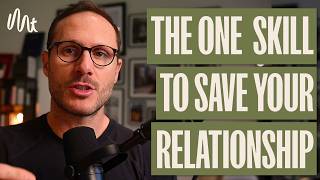
YouTube talk (Man Talk Show) by Connor Beaton presenting one core relationship skill—leading through conflict—to improve intimacy and relational longevity. The speaker defines conflict as an opportunity for deeper connection, identifies personal ‘conflict kryptonite’, and gives five practical steps (identify triggers, take ownership, reframe conflict as connection, set conflict agreements, and regulate via breathing).
Foreign.
Team, welcome back to the Man Talk Show. Connor Beaton here with a little bit of a cold. So hopefully you don't mind that you can bear through the congestion. But today we're going to be talking about the one relationship skill that could save your relationship, that could save your marriage, or at the very least, dramatically improve it. And that skill is the skill of leading through conflict. Now, we all kind of know that, and if you've been in a relationship, you especially know this. Everybody kind of knows that conflict is either going to make or break a relationship, right? How a couple navigates through disconnection, arguments, disagreements, disagreeing on, you know, how you should spend money or when you have kids or what house you should move in, all of those things are little, small conflicts, or they can be massive, big conflicts. Depending on where each person in the couple stands and how the individuals in the relationship navigate through that conflict will determine the quality of their connection, their intimacy, their communication, and usually the longevity of the quality of that relationship. So conflict, as I'm defining it here, and I'm gonna give you some very tactical steps of how you can better lead through conflict in your relationship. Because one of the things that I've found is that men that are in happy, healthy relationships, that they're enjoying, that they're fulfilled by, they know how to lead through the conflict. Now, obviously, you have to have a willing partner. Obviously you have to have somebody that is, you know, open to some of the things that we'll be talking about and, you know, not actively trying to destroy the relationship, although I think that's usually few and far between. But the men that I've met that are that love their relationships, that love their partner, that really get the most out of the relationship, they know how to lead through the challenging times and not over contribute to them. So here I'm defining conflict as something trying to be resolved in order for deeper intimacy and connection to take place. Right? Conflict is just something trying to be resolved in order for deeper intimacy and understanding to take place. Oh, conflict, it's not a bad thing. It's not a terrible thing that you need to avoid. However, for a lot of people, they have not been taught, right? So you may have never been taught how to go through conflict in a relationship. Maybe you grew up in a family system where conflict was violent or it was loud or it was avoided at all costs. And you actually never even saw your parents have any type of a disagreement because everything was hidden from you. So there's many sort of, we could call them dysfunctional we could call them maladaptive. We could call them less than optimal ways that we have seen conflict take place in our lives. And many people that are out there just do not know how to actually traverse conflict when it happens in the relationship. So here are five things that you can do immediately to improve how you lead you and your partner and the relationship through conflict. At the very least, how you lead yourself through conflict in a relationship. Number one, address your conflict kryptonite. Address your conflict kryptonite. What does that mean? It means that every single man, like Superman, has a kryptonite in his relationship that causes him to break down when conflict happens. That might mean that you are prone to reactivity. You get stuck as soon as the conversations enter into, you know, money conversations and you shut down. You're a stonewaller and you just cannot have any type of heated conversation. Or if the conversation, you know, gets anywhere near a certain topic, you start to stonewall and shut down. Maybe you become immediately defensive, you know, maybe you become the person that is passive aggressive towards your partner, but you have some type of shadow oriented communication style that emerges when you are uncomfortable in conflict. Maybe because you feel embarrassed or you feel ashamed, but you have some kryptonite and you likely know what it is because it's likely shown up in most of your relationships or it shows up all the time in your relationship and your partner calls it on you all the time, right? She might say things like, you shut down constantly or you stonewall me or you keep me out, or you never want to talk about money, or you never want to talk about health, or, you know, you get so reactive so quickly, I don't even feel like we can have a conversation. So you need to address your conflict kryptonite. This is the thing that breaks down your leadership immediately when conflict happens. And you cannot lead through conflict if you are the one sabotaging your own leadership as soon as it happens. Now, that might mean that you need to get uncomfortable and, you know, lean into some conversational topics, things that feel foreign, right? Maybe talking about sex feels uncomfortable for you. Maybe talking about money feels uncomfortable for you. And foreign. Maybe just the way that your, your partner gets big or they get a little bit louder, they get a little bit more heated, that might cause you to shut down. So that might be your kryptonite. Maybe a certain way that your partner speaks to you is your kryptonite and causes you to get really defensive and critical of them. So identify your conflict kryptonite as clearly as you can. Right. So my conflict kryptonite is when my partner is loud or when my partner is assertive with me, it causes me to be defensive. So my defensiveness is my kryptonite. And make it about you and not about them. It's not like when you do this thing. It's my kryptonite. And so you need to stop doing that. No, this is about ownership. So that brings me to number two. Number and step number two is ownership over blame. Ownership over blame. Finger pointing is easy, and most people do it. And it's why most people's conflict doesn't resolve, because they are sitting there pointing fingers at one another, telling the other person what they need to do differently or change or how, you know, they don't understand or whatever it is. And you can continue to play the victim by saying I. But Connor, I always take ownership, but she doesn't. I hear this. Guys say this all the time. Oh, I take ownership all the time, but she doesn't. Great. Maybe outside of conflict, try being direct about what you think she needs to take ownership for. Again, ideally outside of conflict, but focus primarily on what you can take ownership for. Remember, in psychology, in therapy, in spiritual realms, trying to control things that are outside of your control, AKA trying to control other people's behavior, how they are acting, how they are responding, how they are feeling is a recipe for suffering because you have no control over them. So we take ownership over ourselves. I get reactive when you do this. I feel ashamed when you say that. I become shut down when this happens, right when. When the conflict starts to escalate. I remember when my wife and I first started dating, sort of after the honeymoon phase, and we started talking about, like, the real stuff in our relationship. And she'd get a little passionate and heated about things. I would immediately feel myself start to, like, escalate in energy, in heat, in intensity, in assertiveness. And one day she was like, you seem like you're getting a little worked up. Are you all right? And I was like, I really am getting worked up. So take ownership over your part and start to let go of the blame. Number three, stop seeing conflict as a path to disconnection and a path to breakdown and start seeing it as a path to deeper connection. What happens for a lot of guys that I've noticed in working with so many couples and men over the years is that for a lot of men, conflict becomes this. This sign that's like, oh, the relationship's not working. Oh, maybe she's not the Right person. Because in our minds we want things to be peaceful and easy and we don't want any type of conflict. So you have to really decide what conflict in a relationship means to you. If it is always the thing that is, that is the sign, the signal of breakdown that you need to get out of there. It is likely a you thing and not a relationship thing. It is likely because you grew up in an environment where conflict was hostile, it wasn't safe, it wasn't productive, it didn't lead to anything. So that leads to my next point, which is have what I call conflict agreements in your relationship. Conflict agreements. If you've been with your partner for long enough, you should absolutely have the rules of engagement or the agreements for how both of you are wanting to go through conflict. These are the ways in which you and your partner are ideally in an ideal world, not that that's going to go that way every single time, but that you and your partner are ideally going to go through conflict, right? So that you're going to listen, you are not going to call each other names and that you have certain non negotiables that are an immediate cause for a pause. Right? So for example, what I've given to couples is if conflict enters into any type of name calling, that's an immediate call for a pause. Immediate because one of you has lost the thread in being able to be grounded, being able to assess the situation, being able to hear the other person. So have some non negotiables of like, hey, if these things happen, if I start to get passive aggressive or if I start to stonewall, that is an immediate cause for a pause. And maybe the behavior needs to be labeled. So you and your partner need to determine and how you are going to not enforce the rules, but how you are going to honor the agreements. You need to have agreements within your relationship, just like you would have agreements once you got married about how money is being split and you have agreements about how you're going to raise your kids and how you have agreements about where you're going to live and you know whether or not your relationship is open or closed. Those are all agreements and all of those agreements are generally talked about. So we should have conversations about how you want to move through conflict with your partner. The last piece is breathe ground and assess the situation. For a lot of men, they struggle to lead through conflict because their nervous system becomes hijacked, they become activated, they get anxious, they get afraid, they get embarrassed or frustrated, or they don't feel like they're Being listened to or whatever it is, and their nervous system starts to get, you know, more heated, more activated. You move more into a sympathetic stressed out state. And before you know it, you're all in your head, you can't think straight, you're disconnected from your breath and your body. And you are either on checking out mode or attack mode. And neither one of those is a good place to navigate and traverse conflict. So as soon as conflict starts to happen in your relationship, the main thing that you should do is literally, as it's happening, take a breath and you tell yourself that I had to practice that over and over and over again. Take a breath.
And out. And you're just breathing while you're listening to your partner, or you're breathing while you're communicating with them. But you are taking some part of your consciousness and your awareness off of the conflict, off of the intensity, off of the I need to be right, I gotta prove my point, I gotta make sure she knows she's wrong. You are taking some of your awareness and your consciousness off of the ego's drive and desire to reinforce itself and prove its point and be right and all those other things and back onto the simple breath. And what you will probably notice is that your breath has become, become quite quick, quite tense. There's probably a lot of heat in your body and you have been disconnected from your nervous system. So return back to the breath, deepen the inhale, extend the exhale, deepen the inhale, extend the exhale. And you might even want to practice doing that just in regular conversation with your partner so that you have a baseline, right? You can be having dinner and you're just deepening your inhale, extending the exhale, deepen the inhale, extending the exhale. And you're having a conversation with them. And then when conflict starts to happen, same thing. Deepen the inhale, extend the exhale. And as you do that again, you're pulling some of your awareness back onto your body, your physical sense of safety, and you are returning to, am I regulated or not? Am I hijacked? Am I like losing connection to how I'm feeling because I'm just so caught up in this conflict? Or, or do I have some understanding of where I'm at returning back to that space. Last but not least.
The one of the most important things that you can do. And I'm going to give you the question of all questions that I have found to be very, very helpful when it comes to conflict, specifically in resolving conflict. It's the question of what do you think I do not understand that you want me to understand? What do you think I don't get or understand that you've been trying to get me to understand? Both parties should be able to answer this question. Now, you might need to pose this question first, depending on the situation, and just say, because again, if you're leading through the conflict, then you are trying to resolve something that your partner is going through or you're trying to communicate something that you're going through. And so that can be very helpful. What do you think that I don't get that you've been trying to get me to understand and then your partner can communicate, oh, I've been trying to get you to understand that I feel like you're not prioritizing date night and that makes me feel like you don't care about me and you don't love me or whatever it is. I'm just making stuff up on the spot. That question can be incredibly helpful and it can be a question that you bring in as well. Hey, here's what I want you to get or understand about what I, what I'm going through or what I'm trying to communicate. Are you open to hearing that? So those types of questions can be incredibly helpful because sometimes your partner's not going to be in the space to hear that. So man it forward, share this, ideally with your partner, have a listen to it with them, ask them what really resonated with them, what they loved, what they would like to integrate, how they would respond if you were leading in this way. And. And until next week, Connor Beaton signing off.
More from Connor







How to Raise Strong, Unshakable Boys in Today's Culture, with Dr. Shefali Tsabary



