Men In Decline And The Rise Of Misandry
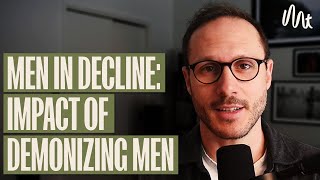
Connor Beaton argues that a decades-long cultural demonization of men — calling them the cause of many social problems and treating misandry as acceptable — is a major, under-recognized contributor to declining male participation in education, work, and relationships. He links this to other factors (easy access to pornography, anti-risk parenting, hostile campus climates), warns of consequences (male withdrawal, higher suicide rates), and urges a more positive vision of masculinity, practical role models, and encouraging risk-taking and real-life adventure.
Foreign.
In such decline. Why are so many young men checking out of work, More men living at home than ever before? You know, less young men are having sex than ever before, going to college. Like less young men are going to college than before. Why is this happening? I think there's many reasons. I've talked about a few of them before. But the one that I don't think has gotten enough attention is the decades long campaign of demonizing men and speaking to men and about men as the fundamental problem with every issue in existence. Basically, and I'm going to use a relationship analogy, okay? Imagine that you're dating somebody and that person starts to tell you that you are a problem, that you're causing them harm, that you're damaging them, that you're a problem in the relationship. That any type of dysfunction that happens is in the relationship is your fault. And then it gets worse, right? They start to say they don't need you, they don't want you. They actually would be better off without you. The world at large would be better off without you. That you're a piece of garbage, that you know that so many of the issues that they face in life are because of you. You would either move into a very defensive and attack oriented stance and position or you would just start to slink out of that relationship. Like you'd either hopefully you'd exit that relationship entirely, you'd be like, why the hell am I here? Or you would just, you would check out, right? You would literally just check out of that relationship and be like, why in the hell am I in this relationship with you? But we have made it commonplace. Culture, society has let it become commonplace to blanket statement, make blanket statements about men as being the fundamental systemic problem with society. I mean, imagine the lack of ingenuity and intellectual honesty that you'd have to deploy in order to just blame an entire sex for all of the problems and completely remove any type of personal responsibility for your part in the equation, right? Telling men that they're not needed, they're not wanted, that they're all grapists, that they're pieces of garbage, that, you know, they're all narcissists, that they're all, you know, violent, that they're all terrible, that the society would be better off without you. What we're experiencing now in this mass checkout within our society and this massive shift, I mean, I've been watching post election in America as this whole conversation around how men, you know, determined this election and how it was misogynistic and you know, all of this sort of intellectual rigmarole that has unfolded in so many political commentators and just individuals again, blaming men for what happened. And I think what you're seeing is the consequences of blaming men for absolutely everything, demonizing men for absolutely everything for decades. And when you do that, there will be consequences. Men will check out, men will start to go into decline as they have, they'll stop showing up into college spaces because I mean, let's face it, I probably wouldn't want to go to college if I was a 19 year old kid in today's world, especially if I was a 19 year old conservative kid, like I would not want to go to a college space, you know, and even if I was, and I mean I was very liberal as an early, I went, got a music degree, you know, know. But if, If I was 19 or 20 again and I was looking at going back to college or going to college, I mean, I'd have some real reservations about whether or not I was welcome on that college campus, whether I would be wanted in that space. And we as human beings are creatures of belonging and we don't generally want to go into spaces and places where we do not feel like we belong or that we have to fight for a sense of belonging to and you know, places like college campuses have always meant to be. They've always been a little bit more liberal leaning, but they've always meant to be a place for discourse of difference. And we've lost any type of capacity to disagree without being highly disagreeable. We've lost any capacity to disagree with somebody and say, you know what, I don't agree with what you're saying, but that doesn't mean that I'm, I'm going to try and annihilate you and, and deperson you online and get you completely cancelled. But this has been the modality that we've taken and so many men have been inundated with the conversation that you're the problem, you're contributing to the issue. Society would be better off without you or society would be better off if you just acted more like a woman, if you just showed up more like a woman, then, then you would be, you know, then you'd be accepted. And, and then men in relationships hear the same thing, right? I don't need you, I don't need you around, I'm better off without you. Or I'm, you know, whatever it is, I'm a strong, independent woman, I don't need you. And then that man ends up checking out of that relationship in Some capacity because relationships are reciprocal, right? Relationships are meant to be a reciprocal thing. But if you show up in a relationship with somebody and they're saying, I actually don't need you to contribute anything to me, then the question starts to manifest of, well then why am I in relationship with you? Because I thought we were contributing to one another for one another's betterment. So obviously there's many different reasons that we could give why men are struggling, right? The, I mean you give men access to porn, you give young horny men access to pornography, oftentimes way earlier than they can handle. I mean the fact that there's no age restrictions on pornography and any 12 year old boy can go online and watch and see more naked women than literally any man in the span of human history, pre Internet saw in his entire life is just insane. You know that that has a very damaging, detrimental effect to a young man's psyche, to a young boy's psyche, because it skews his sense of what should be accessible. And porn is low risk, right? Something like pornography is low risk. There's no real risk of rejection. But in the real world the stakes are very, very high. And so we've created conditions for young men where everything's kind of anti risk, right? We have helicopter parenting, we have anti risk, we've got very low risk sexual gratification acquisition. So you can just go online and watch a whole bunch of porn and get sexually gratified, but you don't actually have to work for it at all. Whereas in the real world you have to go and work, you have to go get rejected. There. There is a high level of risk to approaching a woman, talking to her and asking for her phone number. There's a very high risk that she's going to say no or I'm in a relationship or some form of rejection will happen. So when you couple telling men for a very long time, you're the fundamental problem with pretty much everything in existence right now and you're not needed and you couple that with giving them environments that are, that are not conducive for sharpening and helping to develop certain masculine qualities like being risk smart, being able to take risk, having the resiliency to take risk. The, those are generally speaking things that men thrive off of. You know, there's a, a period of time in a man's life where he will take a tremendous amount of risks and some of them are stupid. You know, I mean some of the risks that I took when I was a young man were absolutely, I mean Just dumb. They were just plain dumb. But those stupid risks that I took helped to inform and helped to rein in my risk taking ability or a skill. Right? Taking a risk is a skill set. And if you as a young man haven't had the opportunity to take real risks to develop that skill, then you're going to feel less capable within the world and within society. But the main piece here that I really want to drive home is we are creating a narrative where it's become socially acceptable to hate on men in a way that we would never allow with women. We would never, never, ever allow individuals on any side of the political spectrum to just point blank say women are the fundamental problem and, and to spew hatred around women. I mean, misandry has become so commonplace and so socially acceptable that I literally have young men reaching out to me, saying things like, I grew up in a household where my mom just hated men and she told me how bad men were and she told me how I, she hoped I never became like my father or any of the men that I was around. And so I never really had any kind of role model or idea of what type of man I should be because it just seemed like she just hated men all the time. And so this type of blatant misandry has become so commonplace that a lot of men don't even, it's not even that they don't even know how to become a good man. It's that they don't even want to take the risk to do that because it seems like there's no winning, there's no possibility that you could ever develop yourself into a man that society and culture is going to approve of. And that's problematic, right? That's problematic. I mean, on the one hand, with women, what we're saying right now is you, you do whatever it is that you want. We're sort of giving women a, again, this sort of like blank check of go be whoever and whatever you want. We're not going to put any labels on it. We're not going to define anything. If you never want to have kids and stay single and, and work a job for the rest of your life and have five cats like cool power to you. There's some hate around the, the quote unquote trad wife, right? If you want to be a traditional wife and stay at home and raise kids, there's, there seems to be some commentary around that. But for the most part it's like, ladies go off and do whatever you want. But for men there is this huge movement constantly telling men, you need to do this, you need to act like this. You can't do these things. You can't say that things. You know, this is misogynist. I mean, everything's misogynistic now to the point where if you're a man who cares about being in shape, you're a misogynist somehow because. Because you want to keep your body in shape. I mean, it's. It's gotten to the point where it's. It's so ridiculous that I think the average man looks out on social media and looks out on the content and the conversation around masculinity and just kind of throws his hands up and is like, I'll be back when y' all are done with this bullshit. Like, I'll check back into society when you start to, like, end this nonsense, because this is crazy. And so I think, to wrap this up, what I really want to drive home and is that we need a more positive vision for men and masculinity. You know, if you're somebody out there, if you're a man that's trying to work on himself, or if you're, you know, a single mom trying to raise a son, you need to have a positive vision for men and masculinity. And we need to eradicate this absolute bullshit, garbage notion that we can tell men that the world is better off without them. Men already kill themselves way more than women do. And they do that in part, if you look into the data in their research, which Richard Reeves has talked about a lot. They do that in part because they feel useless. Right. A man's ability to contribute to family, to friends, to society, to culture is incredibly important to him. And when we take that away and we say, you're not wanted, you're not needed, I'm going to reject the opportunities for you to develop the skills to contribute, to. To provide, to add value for your life and the people around you, then men will fundamentally suffer. And we see this happening, and so we need to create more positive visions, role models, opportunities for men to step into second. Guys, if you are out there watching this and you are somebody that is struggling personally, and you've got caught up in this rhetoric of men are all men bad, all men. The problem, you know, world would be better off without men, and you're not really too sure where to start. Start to pursue some type of adventure IRL in real life. Get off of the. The online forums, get off of the online conversations. Pursue adventure in real life. Like, go hike in the woods, go Camp, go touch grass, go sleep under the stars, Plan a solo trip somewhere that, you know, seems wild. Like, you know, motorcycle through Thailand, backpack through Italy. I don't know what it is for you, but go pursue some adventure in real life. Maybe that just means that you go to the local bar and you talk to a woman, you know, and like that's, that's the adventure that you pursue just to see what happens, just to see how it goes. Start to pursue some real adventure in your life so that you have some aliveness. I mean, I think I read through a lot of the comments of men that are struggling, whether they're young or they're old. And my gosh, does it sound bleak? You know, I think for a lot of the men that are out there, it just feels and sounds bleak. And how you combat when you feel bleak and hopeless in life is by saying yes to adventure. I mean, this is the whole point of most of what Homer wrote about in the Odyssey and the Iliad, right? It's like we have to say yes to adventure. Otherwise stagnation and mediocrity and a kind of bleak, mundane.
You know, cover just starts to come over our psyche and our hearts and our souls. So say yes to adventure. And then lastly, as I was talking about before, start to take risks. We need to encourage young men and men in general to take some risks, to start to fail and to start to develop the ability to know how to take risks, to get better at saying, yes, this is a smart risk that I can take. But if we don't allow them to fail and stumble and get things wrong, if you never allow yourself as a man to develop the skill of being able to have some discernment around what a good risk is and what a terrible, shitty risk is, you will suffer as a man. Because there is some type of correlation and maybe I should do another video on this. There's some type of correlation between you having a very deep level of self respect as a man and your ability and your competency in being able to take risks, because risks take you on a very specific adventure. So take some risks today, tomorrow, this week. Let that be your mission for a little while. And for the love of all that is holy, can we all stop feeding into this narrative that men are just point blank the problem to everything, that the world would be better off without men? The world would literally collapse in a matter of hours if men just disappeared. Everything would fall apart immediately because men are necessary and so are women. So anyway, leave your thoughts and comments below. I'd love to hear why you think men are in decline. I'd love to hear your take and your thoughts on this conversation, specifically about the demonization of men over the last few decades. And don't forget to man it forward. Don't forget to subscribe to the channel until next week. Connor Beaton signing off.
Sam.
More from Connor







How to Raise Strong, Unshakable Boys in Today's Culture, with Dr. Shefali Tsabary



