Navigating and Healing from Infidelity - Adam Nisenson
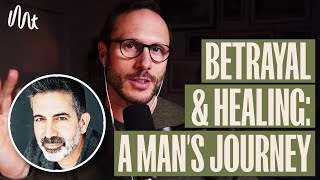
This content was created by Connor Beaton. This content was uploaded by Connor Beaton. This is a YouTube video titled "Navigating and Healing from Infidelity - Adam Nisenson" created on January 20, 2025. It features a conversation between Connor Beaton and Adam Nisenson discussing the topic of infidelity, particularly focusing on men's experiences and healing processes after being betrayed by a partner. They explore societal stigmas, personal responsibility, and therapeutic approaches to dealing with betrayal.
Chapters
I think at the end of the day, it's just a selfish act. That's it. It's just selfish. And you know, if you want to leave and leave, like, if you're not happy, tell your partner you're not happy. If there's work to be done, do it. Because once a cheater, always a cheater kind of thing. And the reason why there's some truth to that is because unless you do the work, you're going to end up picking the same partner. You're going to end up creating the same narratives and having the same results. Foreign.
Welcome to the Man Talk Show. How you doing today?
Pretty good. Good to be here. Thanks for having me.
Of course, of course. I mean, you. Why a book about a man's guide to partner betrayal? Why a book specifically for men who have experienced betrayal?
For the very reason is there isn't one really. There hasn't been one really till now.
You know, I'm a therapist and most of the resources out there always refer to the man as being the one that does the cheating. And I just, I felt like it was time. I have a lot of clients in my practice that have experienced infidelity in some shape or form. And then Also myself, over 13 years ago, my ex wife had a, had an affair. So it was just kind of time and it was also kind of time for me to, to face that shadow myself and to really dig into some of my own story and, and I realized I still had some healing to do. Yeah.
What do you, what do you think the, the stigmas are that men experience when they are the recipient of infidelity? When, when their partners cheated on them?
Yeah, I think, you know, most of the men I work with, it's shame based. It's. This can't happen to a man. A man has to be strong. You know, there's embarrassment. A lot of men I work with just, they want to pretend that it never happened. So they just kind of keep moving through life and all their responsibilities, being a husband, a father, their job, et cetera. And then of course, society tells men, right, we can't feel, we can't express feelings, we can't talk. It's not, it's not safe. We have to be stoic and strong. And I think it's a lot of that, that that happens for men.
Do you think that because I, I, you know, I always try and do my best to, to take in some of the social commentary around therapy, personal development, and kind of get a sense of the landscape of what is being Said. Now, I do think that what often happens in talking about infidelity specifically and betrayal within relationships, where it's for. We'll just talk about a heterosexual relationship where it's the woman who has been unfaithful or betrayed in some capacity. It is interesting to see the volume of content that is out there that inevitably, like either immediately or very soon thereafter, makes the man responsible for her betrayal. And, and so I do think that there's some of this is that I think, and I'm curious to get your take on why that is. Like, why is it that men seem to take a lot of the blame, even when it's the woman who has had the affair or betrayed him?
I mean, that's a whole separate podcast, right? I mean, there's.
You know, I, I have a funny. I have an answer, and I'll have an answer, but I'll just tell you a funny quick story is today, wife and I, we went to this hamburger place and I ordered mine as a lettuce wrap, and my wife got hers stacked with the bun and all this stuff. And when the waiter came, he naturally started putting the lettuce wrap in front of my wife.
And I think it's the same difference, right? I think that is how we are trained. That is how we are programmed. I think I see so much out there in the media. I see that toxic masculinity. I think even, I think even men are taught or told it's okay to cheat or it's okay to be that person or to have this huge sexual hunger. And I think that's the narrative that's just been ingrained, if you will, that maybe that collective unconscious. I think it's the story society tells us.
And like a lot of the stories society tells us, it's a big lie. It's just not true, you know, And I don't. Statistically, I think they say something like 30% of marriages, the, the man cheats on the woman, and they say about 18% for the other way around. However, it's underreported. I mean, I think it's. I think it's probably equal, you know, from some of the things I see and what I've seen clinically. I don't know if I answered your question, but now I'm hungry for a hamburger again.
I mean, a good hamburger will always do. I do, I do think that. I do think that it's. We as men often.
Whether it's social and cultural or whether it's sort of we're prone to that that there's a kind of inclination towards taking on personal responsibility. And, And I think. I think the other thing is that, you know, normally when you look at divorce rates, something like 72% of divorces are initiated by women. And so there's kind of this notion that, I mean, that's sort of dependent on state, but average 72%. And so there's this notion that the divorce is happening because there's something wrong that the man is doing and that the fault resides with him. And I think that same thing takes hold when an affair has happened and there's not an equal responsibility of like, well, probably both of you were contributing to this dysfunction in some capacity. And maybe one person has more ownership than the other. But. But I think that that's a very important piece, like when you're working with a couple around betrayal. And let's just talk about infidelity specifically.
How.
How important is it to ensure that both people see their part in the dance? How do you go about that? Where. Where should a couple who has experienced this infidelity begin?
Yeah, that's a great question.
The first thing I want to kind of back up because I think depending upon the situation, but most. It does take two to tango. I always feel like the betrayed has a part, however, really in betrayal work. It's. I don't always like to have the betrayed for their healing and their process to deal with that first because I think they're dealing with the shock and the ego injury and there's so much trauma happening. But I'll tell you, like, in my book, it's actually. I know it's chapter 14, because when I originally wrote my book, ironically, what you just brought up, I left that completely out. And, and, and two of my best friends questioned me on that and challenged me. And what I realized was, is I didn't want to look at that part myself. I didn't want to own that I had a part. And it's probably a bad metaphor, but one of the things I kind of realized and I think about, like through the affair that my ex wife had, it was kind of like I put the bullets on the table, but she picked them up, she put them in the gun, and she fired it. You know, And I think. I think for the betrayed, it's a chance to look at how was I playing small in the relationship? How was I not holding boundaries, asking, like, understanding and asking for my wants and needs and very possibly not being love avoidant. I feel like I was. I was really scared to ask for what I wanted in my first marriage and because of that it created an imbalance. Right. What I'm getting at is though, even with all of that, that never gives a person a reason and excuse for infidelity. It gives you a reason to ask your partner what's going on or ask for more help or to discover is this going to work or not. But it never gives permission. And I think that's the important part that, that I always try to make sure the people, the guys, the men I work with understand and know.
I can hear Internet chatter in my mind at most points.
Because I'm so used to, you know, I don't respond to most Internet comments, but I, I do really read through what people are saying and I think for better or for worse, there's a pretty big.
Perspective that women have a harder time taking accountability. And it's kind of an Internet meme. And I don't know if that's true or not across the board. I don't know if there's even relevance in getting into it. But I do think that.
I do think that sometimes for men there's this, there's this either knee jerk reaction for them to take full responsibility. Like I've seen guys who, their wife has cheated on them and two days after they're like, I've forgiven her, it's okay, we just need to move on. And it was my fault. And yeah. And it's kind of like, whoa, whoa, whoa. Like hold on, buddy.
Like I have that happen too.
Yeah.
So actually, yeah.
So tell me about the crisis that happens right after the infidelity. Like what does a couple go through? How can a man start to navigate that crisis that right after a betrayal has, whether it's lying, infidelity, some type of financial betrayal, there's always that crisis moment right after. How do we start to walk through that?
Yeah, great question. And also you just made me think. I just. Man. Connor, thanks for making me relive all my trauma here with. But I'll just. Interesting story. When my ex wife told me about her affair and I remember sitting at the table, I think one of the first things I said to her was like, I wonder what my part was. Like I instantly. And, and what you're getting at is what I see a lot of men do is we're by trait, we're fixers. I'm going to fix this. This isn't going to go any further. Right. And so I see a lot of that happening. As far as the patterns you're asking, like at the start of discovery of a betrayal. You know, it's. There's going to be a lot of trauma. There's going to be a lot of anger. There's going to be that shock that's going to be going through it. And when that happens, it's really, I want to say, almost impossible to really know or understand what you've just heard. And it's going to be really almost impossible for the two of you to. To fix anything. I think you have to sit in that shock. You have to sit in that wound. You know, I remember for me, and I always refer to myself as an example because I didn't have the resources that there's a little bit more now today, and I'm trying to create them myself for other men. But I was in a men's group, I don't know if you've ever heard of, the mankind project. And I was in that. And I had my men's group, my band of brothers, and. And what I found was being in a place where I can just share all my feelings and the anger and the sadness gave me the ability to process and to find that clarity to where then I could be in. You know, I could be grounded, and I can be in that way where I was able to start to look at what was going to have to happen next. And that's when you get to do the work. Right. The initial part, there's not much that can happen. I mean, there's. There's a lot of pain and a lot of confusion and. And that for men, the ego. The ego gets in the way most often. Not like the fixer or like you were saying, no, we're good. I forgive her. Right, Right. That's. I think that's a little bit of the ego playing in.
Do you. I mean, I think just to come back on. Just to come back on this part, to make it sort of clear how important to the repair process, if it is a man and a woman and she's had an affair, betrayed him, how important to the repair process is her taking accountability?
Well, if they're going to reconcile, it's vital. You know.
My ex didn't want to do that. I have a lot of clients that their partners are not open at looking at their part, you know, and that could come from their own shame or their own anger or whatever it might be. But what works best and what I always see that heals is when the man's doing their work with a therapist or a betrayal coach or someone like you, and the partner's doing the same thing. And you have to almost do the individual work first before you can come together and do the couples work. Because the couples works really to heal the relationship. You can't heal the relationship till you start to heal yourself. Do you start to understand the wounds and how we got here? So that would. That would be the pattern for me. That's where I see the most success.
I want to take, you know, I want to take a little bit of, like, a tactical approach to some of this stuff. So you fill in anywhere that, you know, doesn't necessarily need to be tactical. And I'll hold the tactical line because I think. Okay, I think that part of what happens that I see a lot of men go into is that crisis mode of give me the plan. Like, my life has been rocked, everything's obliterated. I don't know what to think now, and I don't know what ground to stand on. And so I'm going to approach this in our conversation. Just that you and the listener know from a place of trying to give a kind of. And I think your book really does that. Your book really is just like a tactical plan for men who have experienced some type of betrayal. So I'll just say that. I'll say that straight out, which I think is fantastic.
What are. What are some of the things that men do in response to betrayal that potentially make things worse? Because I think that's, like. I want to give the. Like, don't do this. Like, let's move away from that and let's move towards this over here. So what are some of the things that we do in response to betrayal that make things worse?
Yeah, man, I wish I knew that question before so I can really think about it. But I have a couple off the top of my head, things that I've seen happen is. The first thing is it's not your job to punish your partner. Like, trust me, the betrayer. Even if they're going to do the work or not, there's a part they're beating themselves up already. So there's no need to punish them. There's no need for you to lash out. There's no need to. You know, I've had clients where they, like, cut their wives off, like, financially, and they try to regain control in their, you know, their, I guess, their masculinity, their bravado. So I would never do that. The other thing I've had a lot of people do is, well, they. They get even. So they get to go have an affair or have that one night Stand or whatever it is. And, and I can promise everyone out there, you getting even like that will never make this easier. And it doesn't make the playing field easier. It actually I would say it makes it worse and some, in some cases makes it more difficult to reconcile. And then you know, I see a lot of men spiral into like that competitiveness and that jealousy. So those would be off the top of my head. Those would be a couple of things I would say it's great don't do for sure.
I mean I think that what I would add in to that is what I was pointing to before is being so quick to forgive and sweep it under the rug. You know, like I do think that that is a response from some men who have shame or feel like they up in the past. I see that a lot with guys is like, well I had an affair before and she found out about it and so I'm just going to let this go and we're going to keep moving, you know, or.
Or I just like I don't feel like I should be able to, you know, should navigate this. I don't want people to know about it. So I think that sweeping under the rug is also one of those pieces.
But yeah, I would agree with you for sure because I have so many people it keeps coming back over. And that was my situation too. Like that pretending as if or, or here's what I think is even worse. As you start to do the work or maybe you go to three months or six months of couples and you're like we are getting along great. Well newsflash, six months doesn't fix this stuff. This, this, these issues took years and for some of us a lifetime. Right? We, we picked the perfect partner. We grew up maybe being love avoidant or having a lot of trauma. A lot of us grew up in homes where we didn't like healthy love or healthy relationships were never modeled. So it's not a band aid fix for sure. I mean this is surgery with years of rehab to get back up to speed for sure.
What would you say? Because I think for a lot of guys when they've experienced betrayal and especially infidelity, I think they, they often move towards trying to get intellectually why their wife or their girlfriend would do that. Like, like, like what are some of the common reasons? Because I think this is a big question. Like what are some of the common reasons that you've seen within your work that lead women to have an affair?
You know, interestingly it's, it's not much different than men.
It'S being bored, not feeling connected to their partner anymore. You know, I have some of the guys I work with, I would say that their wives are definitely like a love or a sex addict. You know, I think what's lost is a lot of times around infidelity, the baseline is the betrayer struggles with their own self worth, self esteem and self love. So they're looking externally for it, you know. And the other thing I see a lot is, you know, marriages get flat. That's just how it works. Right. And when you don't do the work, when you don't catch it, you don't do something to pull your partner back in and to help the relationship grow. I see that happen a lot. So, you know, kind of, I would say it's pretty close. The same, I think, for what I hear and see on both sides of the street, if you will, around that.
I want to get your thought on one thing because I've always been curious about this and I think it's not necessarily universal, but I'm curious to get your perspective on whether or not you see it as being a general statement. So years ago I spoke at a TEDx conference and the woman that spoke before me was a sex therapist and she talked about, she had this like one liner that really stuck with the crowd and stuck with me, which was that women cheat to leave and men cheat to stay. And the notion is that men are looking for something external that is going to allow them to stay in the relationship without having to eject. And women are sometimes looking for a reason to leave. And I, again, I don't know if that's, it's definitely not a universal, but I wonder how much of infidelity from a woman's side sometimes is. There's something missing. I don't, I don't want to do the deed of is saying I want to leave and then an opportunity arises and it's like, oh, this is a good reason for me to eject.
Yeah, I don't know, but that's a great saying.
Yeah, it's catchy. It's got a good ring to it.
Yeah, totally. And I, you know, I, I think at the end of the day, I mean, this isn't going to answer your question, but it's, it's just a selfish act. That's it. It's just selfish. And you know, if you want to leave, fucking leave. Like right, like if you're not happy, tell your partner you're not happy. If there's work to be done, do It. Because the other thing I've seen in my practice is it's, you know, you've probably heard the saying, and I hate to say it, but I'm going to say it. It's kind of like once a cheater, always a cheater kind of thing. And the reason why there's some truth to that is because unless you do the work, you're going to end up picking the same partner. You're going to end up creating the same narratives and having the same.
I mean, look, you know that, right? You did your work, right? Like, you looked at your shadow. You woke up one day and were like, I couldn't do that. You can't. I think everyone, hopefully, I think everyone gets to a point in their life where they get tired and they're like, there has to be something else. There has to be another way.
Yeah.
Yeah.
Correct. Yeah. And I think. I mean, I think part of that is like the once a cheater, always a cheater. I mean, I really struggled with that. You know, I bought into it for a period of time in my life and was just kind of like, well, I guess this is just the way that I am.
Yeah. Just is.
And I even. I think I wrote about it in my book where I said something along the lines of, like, I question whether or not monogamy was for me, like, if I wasn't actually built for monogamy. Yeah, but that's a whole other thing. I mean, that's attachment, blah, blah, blah. We're not going down that rabbit hole.
What.
What can a man do after he's found out about the betrayal? Like, what should. What do you recommend happens immediately? And. And then as time goes on, what are some of the things that he can do to reconcile internally with all the pain and the anger and the frustration and the, you know, the abundance of questions that comes up within him?
Another huge question.
I mean, the first thing is don't isolate. I mean, I think men by nature, when we go into shame or when our ego gets a good kick in the ass, I think instantly we. We hide and we go within. So the first thing I would say is don't do that. Like, if you have a trusted friend, if you have, like, I was lucky. I don't know if I would have survived without my men's group, to be honest. And I started looking for therapy and I started, you know, for me, and I would say start to look for resources. You know, part of what we were talking about, there's not many out there today.
But there's More and more that are happening. You know, I'm a great resource. You're a great resource. There's other people out there. There's some books and groups that are. That are happening.
So I would do that. I would not hide for sure.
The other thing, I think it's like, I think you still have to go within. And I think when you go within, it's like journaling and finding out, like, what does this mean for me? And who am I? And, you know, we have to often have parts of us have to die, you know, and that's. And the beauty in that is that we get to create something new. And so if you're willing to step into that shadow, there's a. There's a quote. I love the author's name. I think it's Ben Lowry. L O O R Y. And he says, once there was a man who was afraid of his shadow. Then he met it, and now he glows in the dark. And I love that. And I feel like that encompasses, like, my betrayal journey. And I think if you do the work, you have to go into the dark, and it has to be painful. And if you work through it and you keep going and going, you'll find that pin drop of light. And if you keep doing it, you'll find the other side, and the other side is blissful. It's beautiful. And you'll become a new man for sure.
Yeah. There's a kind of revealing process that happens in betrayal. You know, it's like a deconstruction.
Yeah, I mean, it's a deconstruction. And I think that brings me to. To my next question is, what starts to happen to a man's sense of self and identity and ego after he has been betrayed?
Yeah. I mean, this work, I find it's so beautiful when it comes to the ego work. I mean, the ego gets to die as we know it for most guys, you know, I know because I got to read your book, and I don't know how much you read of mine. One of the things I learned is, like, my ego dictated so much of how I thought I was supposed to be and how I wanted to be seen. And what I realized was that was a lot of work, and that was a lie. And actually, the truth is I just. I want to be seen as a loving, vulnerable. And the truth is I'm fragile. We all are. And actually, me being fragile makes me even more valuable and more beautiful and more amazing and more brave. And, you know, I think that ego injury and healing the ego and creating a new sense of who you are is, is what this works about.
What was the rest of the question you asked me about it? I got lost there.
Yeah. Like what happens to the, what happens to the sense of self? What happens to a man's identity? Because I think a lot of the time, you know, as you're talking about with, with your affair and as you write about in the book, it's like your sense of self got rocked, you know. And I think that's the case for many men. On the other side of it is like, who am I? Can I trust?
How. How much of.
How much? And this is sort of a, maybe a strange way to. To phrase it, but like how much of a man's childhood relationship will come up in a betrayal? Like how he interacted with his parents, how he saw that relationship form. Do you find that there's a connection between how he responds to a betrayal that's happened in his adult life and what, what he experienced growing up, what he witnessed?
Yeah, that's an interesting question. I, I have a lot of guys I work with, which is surprising. They're their dads. They learned later in life their dads were the betrayer, had affairs on their moms. A lot of the men I work with have grew up in like really unhealthy homes or like the dad was absent, but more absent in the way where, like, you know, in the, in the 60s and 70s it was, you know, the dad would get home by, you know, 7pm, right? He's reading the newspaper, mom makes dinner. He doesn't even maybe tuck the kids in to bed. Right. And so there's just there. A lot of the men that go through this journey, I notice, never really had what I would say a strong, masculine role model.
Or a healthy one at that matter. So I see a lot of that happening in this work. And then the man gets to who the betrayed man gets to start to decide who do I want to be and how do I want to show up in. Because they ended up kind of being their dad, being absent in the relationship. And you know, I did that. You know, I was, I would work, I'd go to a sporting event and go to a buddies and smoke a cigar and drink some whiskey. And you know, I thought I was the. And I wasn't, but I thought I was right. And so I think, I think that's part of the shift too, to the ego. It's like, that's not really fulfilling, you know.
Yeah, it does seem like there's a, like A. An invitation to a broader, deeper sense of who you are, if you're willing to follow the thread, you know, to ride the tide of the grief and the anger and the frustration. I know for me, having been on the other side, having been the person who was the betrayer, although I was. I did experience infidelity earlier on in life, and having been on the receiving end of it, which was brutal, you know, but that was. I mean, I shouldn't downplay. I was about to say, but that was young love, you know, as if that didn't. As if that didn't hurt as much, you know, like, when you're a teenager, just, like it feels like it's everything, you know? Um, but I do feel like your sense of self starts to shift and change.
Yeah. Yeah. I would say you. You learn, like, you learn that you don't have to hold that facade up. Um, you know, most. Most men, I feel like, do a really great job of putting up walls. Right. And navigating. Navigating inside those walls. I'll tell my clients, you know, the trick about walls is, right, they keep the other person out, but they keep you trapped within. Right. So. So the idea is there's actually strength, and your protection is actually in your vulnerability. And. And actually, I think leading with your heart is. Is so much better than leading in a space of being numb or. Or unconscious to what's going on around you.
What about jealousy? Because I think what ends up happening for a lot of men after an affair has happened especially is. And this is kind of everybody, right? It's like, I want to know all the details, or I don't want to know anything. And then there's kind of this emergent jealousy that can happen, and possessiveness can start to leak in. How do you. You know, what. What do you say to the men that whether they've been betrayed or not, that have just sort of rampant jealousy going on? Where does that stem from?
First thing I want to say is, you're going to think you want to know everything that your partner did, and I want you to trust me. You do not want to know. You do not need to know. I'll tell my clients often it's kind of like, okay, you had a chocolate bar, but you don't need to know if it had nuts in it or peppermint or anything else like that, because those details actually just make it worse. And those details will actually intensify that sense of jealousy and that competitiveness. And here's the thing I learned on my journey of Jealousy was. That energy was misplaced. It was lost. I was. This guy was getting free rent in my head and I wasn't doing the work on myself. And we do that a lot in so many different facets of our life where we'll project onto others, right. Or, you know, we. We compare ourselves, keeping up with the Joneses, if you will. And so, you know, the jealousy and the competitiveness, it doesn't help win the person back. It doesn't help you heal. It doesn't help you get clarity for proving that you're superior. Well, if you are superior, would. Would your partner of luck to begin with? I mean it. Instead, I say take that energy and look at what needs to change. Where do I need to grow? Where do I need to heal? Like be self competitive, I guess you could say.
Never ask. You don't want to know all the details, Connor. It doesn't make it easier or give you clarity.
So, yeah, okay, I'm going to play devil's advocate because I think. And not even, not even for me, because I. I don't. I actually don't fully know how I would respond in that situation, in this moment. I have to think about it. But I think I've heard a lot of men say, how can I make a proper decision to stay or leave without knowing what actually fully happened? And I think that's there's merit in that. And so I actually don't know what to say. And so I'm curious about your thoughts on that. I hear that like, well, if you know all of the details, which sometimes we can get into the minutiae and get lost in it, then, you know, maybe that takes over and can blindside the healing process. But like, where? How would you respond to a man who asked you that?
Yeah. So. All right, you sure you need to know some things? Like, yes, we were physically intimate. Yes, there was oral sex. Yes, I bought them, you know, a Rolex watch. Right. Like, certain things I think need to be disclosed, but we don't need to know necessarily. You know, you know, it was, you know, four straight days, you know, on the Cayman Islands, and it was this. And we did xy. Like, it's. It's the deep details that we don't need to know because that's where it really starts to mess with our mind and it really starts to mess with our anger. Right. Like, we know you cheated. I know you were physically intimate with this person, etc. I know you said you love them. Okay. Like, there's some detail. Do you know, you Understand what I'm saying? There's some details that we should know. It's just you don't want to go into the rabbit hole because you're already going there. And when you get more details, you go deeper into that rabbit hole.
You know, I think a big one for men is because we're so performance based and so performative sometimes. And so much of our relational sense of worth can be contingent. Depending on the man, right? Depending on the man in the situation. But for a lot of men, their relational worth can be contingent on.
Like I've heard a lot of men want to know, like, am I a better lover? Do I have a bigger dick? Was I able to last longer in bed? Like, like all that comes up. And so where, where the lines get drawn on that. How do you navigate that with a guy who's like, who feels like that is really vital information for him to know in order to move forward? How do you navigate that?
Yeah, you know, I, I'm smiling because I've had this stuff happen in the. Very recently and one of the guys, he, he act. One of my clients asked his wife some of those questions and she. No, you're. You always lie. You. Your. Your dick is much better. Da, da. And he doesn't believe her. Right. It's a tr. It's a. You put yourself in a double bind, right? You know, instead of worrying again, is that other guy better than me? Is his dick bigger than mine? Worry about how am I going to become a better man? How am I going to become for my side of the street, how am I going to become a better husband, a better partner? You know.
I hear that all the time.
Yeah, I mean it's the double, but it's the.
And it's an ego. It's back to your ego wound, man. Right. It's the same thing, you know?
Yeah. I mean, I think you're, you're bringing up a good point. Is like, even if she told you what you wanted to hear, would you believe it? And then if she doesn't tell you what you want to hear, like, is that the data that you're looking for to then cut things off?
Yeah, and I'll tell you, I have some, some of my clients have done that for the purpose of they want it to be her doing for them to really want to leave her.
Uh huh. Interesting.
No, this is your choice. And that's the other part I think is, is for everyone, men and women in these situations is you have the power to choose what's best for you. You actually know more than you know right here in your heart. It's when our head gets in the way. Right. And those filters and those stories in the society and you're telling your friends and your buddy. You know, I remember when I was going through it, so many of my buddies were like, leave that B word. Right. And you don't need. And she's right. And that's not what actually I needed and that's not what I want. They thought they were helping.
Right.
What I needed was just to be heard and I needed to cry and I needed to process and I needed to understand what this meant for my, my, My man journey, if you will. And. Yeah. And the answers. I had the answers and they weren't in my head. They were in my heart.
Yeah. Yeah. I think it's interesting because I do think that part of the conundrum of. For men who have been on the receiving end of infidelity is their, their sense of manhood and who they are as a man becomes almost like that's the thing that gets questioned front and center. I don't know if that's true for women as much. I think it may be sometimes, but it doesn't. I don't think it's as much like, I don't think that when a woman is cheated on that she's like, oh, my womanhood is at question. My sense of femininity has come into question and who I am as a woman has, you know, fundamentally been questioned. So it does seem to be a very interesting part of what men go through.
Yeah, yeah. To summarize what you're saying, it's. I, I see that the self worth and my masculinity for most of the guys I work with, it's, it's the one thing that cuts them off at the knees. You know, they're. And they're worried about how their friends and everyone else will see them. That's why this is kind of, this is kind of like a silent killer because men don't talk about it and they hold it in and then it comes out sideways and they become resentful or they do things that are out of their own character.
Do you think that that shame is one of the biggest, like, shame of having had the infidelity is like the biggest block for a lot of guys to just get into it?
Yeah, yeah, I think it's in. Yeah. And the shame leads to the embarrassment and it leads to the stereotypes. Right. Like, what, you weren't, you weren't man enough. Right. To take Care of your woman or, you know, I hear guys tell me that, like, you know, I should have known what she was doing and I should have controlled it more. And I was just like, man, I don't know if that would have worked either. Right.
That might actually be part of the problem. Let's talk about the control piece. Yeah, go.
Go on. Yeah, but that. Yeah, that shame and the societal stigmas of how men are supposed to be in relationships and that hierarchy is. That's not. That's none of that ever creates a healthy relationship. And you're certainly not going to keep your partner that way. Right. If anything, you'll push them further away.
What about the anger that comes up? Like, talk to me about the anger that can be drawn out after the betrayal and how a man can start to sort of traverse that and navigate through it. Because I think for a lot of guys, there's this very deep rage that starts to come up, whether it's at themselves or that woman, you know, their partner or the other guy. And it can be displaced sometimes. And so how do you start to work with that?
Yeah, anger is a good one. It's, you know, I'm going to stereotype men, and we do anger pretty well. Although I know some women that do anger pretty well, too. You know, here's the thing. Anger is just going to keep you numb. Anger is how we kind of protect our ego. Anger is how we don't face what's really happening. Anger is how.
Anger is really what, you know, I will tell people, like, anger is that layer that's right above sadness.
And when we let the anger go, when we let the resentment go, like, all those things just build those walls. We were talking about earlier, when you remove the anger, when you stop projecting, like, they did this to me or whoever the acting out partner is, when you can get to the sadness, when you get past the anger, the sadness is where the healing is in the darkness. It's. I'll tell people. I think. I think the bravest thing a man can ever do is cry.
Do you think that that's something that he needs to do with that person? With other men? Like, what does that process look like of getting to grief?
Yeah, I'm glad you said. I'm glad you just asked me that. Because one thing I want to say is, don't ignore your anger. Anger is a valid. It's an important part of your emotions. It's an important part of this journey.
One of my buddies from my Mankind project group, he still jokes to me. This is like, over 13 years ago that I still owe him a throw pillow because I destroyed that son of a bitch. Like, my anger. I did anger work, but I'll tell you, every time I did anger work and I was yelling into a pillow, ripping it up, punching. I love taking cheap plates from Target and writing my anger and throwing them against a brick wall. But here's the key, guys. When you release anger, there's an opening. There's a hole inside you. You've released this stuff. And so I want to challenge you to think about, like, what do I want to fill up with? Like, what do I want in that space instead? And so anger is a gateway, but it's a gateway to the healing. It's a gateway to the pain. It's. It's. Yeah.
And then what about the. The grief? Because I think for some men, there's a. I already feel like I'm in a weakened position because this person betrayed me. How do I bring the depth of my grief and my sadness about what has happened and the hurt that I'm experienced to this person that betrayed me? So where does that part fit in the process? I know that's sort of. I know every.
I just.
I want to make sure that I'm very clear. Everything that you and I are talking about is so couple and situation dependent.
Yeah.
Like, there's no real sort of, like, you know, 1, 2, 3, 4, 5, 6, 7, 8, 9, 10 process here. But I think that there's some general rules. And so how does that fit in?
I mean, rule number one would be your partner has to be safe to have this conversation with. And, you know, some of the people I work with, they're navigating, reconciling, and others, they're not. And if you're not going to reconcile and if your partner has no desire to. That's not going to be the person to do this work with. You're going to have to do it on your own. Right.
If you're reconciling and if your partner is in a place. I almost don't even think you should do that alone. I think you need someone to help you facilitate because anger can be a slippery slope. But I know when it's facilitated, it's beautiful. It gets ugly. And then I'm always amazed when I. When I do that kind of work, it's ugly. And I'm like, oh, my God, are we gonna. Is this gonna work? And then something happens. Right? Because it's like all of a sudden it's gone, and then there it Is there's the sadness or there's the want or need that I just want to be loved or held or I want to be seen or I want to be acknowledged. And when that happens, then you can receive also the betray look. The betrayer, they're going through a similar journey and they're looking at if they want to do the work and they're looking at themselves on why would I do this? And I always often will hear the betrayer say, that's not who I am, or I'm not that kind of person.
And you did it right. And what kind of person do you want to be? How do you want to show up?
So, yeah, I mean, I think part of what I had to reconcile with is I. I am that type of person. And, you know, it really was a hard thing to come to, to be like, no, I can be. I can be savage and slippery and not give a shit and be selfish, and I really can be all of those things. And so part of it is about not negating it. You know, I think part of. And we're not. We're not going to get into shadow work today, but I do think that part of that shadow work is to be willing to say, here are the more unsavory parts of my being, of my identity that I can take responsibility for and not pretend like they're not there.
It's not there. Yeah, yeah, I love that. I. Sometimes I'll do. We're going to get a quick tangent, but I'll do some, like, parts work with my clients and. And I'll work on them to love those ugly parts or to love their addictive parts, and they just, they struggle. Why should I love it? Well, because it needs to be loved. It needs to be seen. It needs to be accepted. It needs to know that, you know, it's part of you.
So, yeah, that's a good way of putting it. What's possible in the reconciliation process? So if a couple goes through this, and I think some of the research shows that a couple that has reconciled from infidelity as an example, actually has a better relationship than. They report that they had a better relationship than they did before they even knew about the affair. So what. Why is that? Like, why it seems strange?
You know, you're just making me think of this client. I have some crazy, really heavy, dark betrayal stuff. And they have this relationship now that I think neither one of them could believe they would ever have. And it's.
Yeah, I think there's beauty in the messiness, you know, I always like to use the metaphor. Like people always say, birth is so beautiful. If you've ever. You know, we were just talking about our. Your child. I have a son. Birth's kind of messy and ugly, and it's scary. Right. And I think through that, that metamorphosis, through when we get ugly, when we get raw, when we let our partners see the darkest sides, those parts of us that we have been hiding, repressing and denying.
All of a sudden, I think the playing field gets leveled then, because I want to know all of you. I want to know even the parts you don't like, and I want you to know those about me, too. And I don't. But when you do, then we all know what we're dealing with. And the other part is, I think when you're about to lose something and you realize the reasons why you're going to lose it, I think you're willing to, if you want it, if you really love that person and if you really love yourself, I think you're willing to do the work. And I think when we do the work, we change and we're different. And.
You know, I have some clients that will tell me, like, you know, like, they thought all the work was going to be about the betrayal or the infant, whatever it is, the infidelity, etc. And they end up saying, like, I learned more about me and loving myself than my partner. And I think when we love ourselves, I think, and our partner loves themselves, I think it creates this magical connection that you can't find anywhere else. And I see it, Connor, I see it a lot, man, where these relationships that reconcile and they do the work, like, they'll even tell me, like, they never imagine they can have a relationship like that.
So it's almost like, yeah, it's almost like transparency is a requirement for belonging. You know, like transparency, honesty, a willingness to bring forward the parts of yourself that you would normally hide. That. That's a requirement for the depth of intimacy that you're likely longing for. That wasn't there before the affair happened.
Yeah. You know, I also, you know, one of the things that's unique for me is I work with the betrayed and I work with the betrayer. I work on both sides. And one of the things I always hear from the betrayer is they spend so much time in secret, in shadow, not being their authentic self, you know, chasing one story after the next that they were never in the relationship. And now they're now, because they do this work and they don't have to be nervous anymore or worry if their lives are matching up. They surrender. Surrender is a great topic. We don't have time for that today.
But.
They'Re present. When you're present in your relationship, when you're authentic, when you're vulnerable.
It's the greatest thing. It's like, I never thought I would get married and find love again. And then I found all those things in my partner. And I've never felt more safe and happy and authentic. And that's the magic, I think, right there.
Well, I think a good last question for us to end off on just because we have to wrap up for today is you were talking about, is that person safe? When we were talking about, you know, the partner who has betrayed and whatever that betrayal is. How do we begin to determine, like, what are some of the signs that safety is there? Because I think that's a big one for guys of like, well, how do I know that this person isn't just going to hurt me again and betray me again? And so what, what can a man look for?
I mean.
If your partner's doing their work, right, if they are reading the right books, if they're going to therapy or a life coach, betrayal coach, I think you have to do that. There are a lot of groups out there for betrayers to join.
I think you have to ultimately eventually do couples. Some couples work and then it's being the vulnerability part, like I was talking about, talking about earlier. It's like, you know, you know when you're connected to your partner, you know, when, you know, when they're being honest, you know, and it's, it's part of, you know, is it daily check ins, Is it weekly check ins? How are you communicating? What is lovemaking like? You know, like the full spectrum of vulnerability. And I think that's how you know if your partner's safe. Now those are baby steps, right? You're beginning with they're doing their work and you're doing yours. But you could see it, you know, if, look, I knew my ex wasn't present even after the. I knew it, you know, you just know. And that's the other part is a lot of people I work with that have been betrayed. And I was in the same place. Like, I knew, but I didn't want to know. But after you've been betrayed, that shit will never fly again, right? So I think there's part of that too. It's what I was saying, trusting your heart too, is a big part of it.
Awesome. Adam. Well, I really appreciate you man. And I think it'd be great to have you back on the show to talk about a couple other topics at some point for the people that are out there and want to either check out the book or your work. Obviously, the book is a man's guide to partner betrayal. Where can people go and just follow along with your work and what you're doing?
Yeah. So actually just a couple months ago launched a new website, betrayalshrink.com pretty easy. So I have a lot of materials on. On there. I'll be. I have blogs. I have an assessment. If you've just been betrayed, you can do this assessment and see where you are, like, in this journey.
Yeah.
But, yeah, betrayalshrink.com is the best way to find me. Awesome.
We'll have the links for those in the show, notes for everybody that's out there. If you know somebody that could use this episode, man it forward. Man it forward. Share it with somebody that you know needs to hear it. And check out Adam's work. It's phenomenal. Until next week, Connor Beaton signing off. Take care.
More from Connor







How to Raise Strong, Unshakable Boys in Today's Culture, with Dr. Shefali Tsabary



