Protect Children's RACIAL INNOCENCE - Coleman Hughes
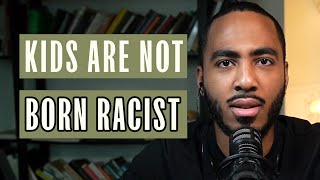
YouTube interview (Man Talk Show) featuring Coleman Hughes in conversation with Connor Beaton. Hughes discusses his personal defining moment (the death of his mother), his shift from music to philosophy, and lays out views on contemporary U.S. politics: rising polarization driven by social media, threats from AI/deepfakes, threats to free speech, and concerns about education—especially the influence of critical race theory. He advocates for 'colorblind' race-neutral principles and protecting children's racial innocence.
Chapters
I grew up in a very racially diverse environment. And as a half black, half Puerto Rican kid, I had black friends, white friends, Jewish friends, Hispanic friends, etc. I never thought of their race. And I think that racial innocence is important to protect because kids are not naturally racist until they get exposed to the toxic adult world of racism. I think it's very important to protect that racial innocence in the same way that we protect kids sexual innocence.
All right, Coleman, welcome to the Man Talk Show. How are you doing today?
Pretty good. Pretty good so far. How are you?
I'm good so far. So I could wreck your day, is what you're saying.
Yes, yes. My life is in your hands right now.
That's. That's right. That's right. The steering wheel, the driver's seat of the interviewer. Well, listen, man, it's a. It's an honor to have you on the show. I've checked out a bunch of your content over the last several months and really enjoyed listening to your interview style. I feel like I've learned a good amount of. Of, you know, how I like studying other interviewers because everybody has their own style. And something that I took for granted in the beginning of podcasting was I just sort of showed up and had a convo with people, and that seemed to work well.
And.
And it still works well a little bit, but I've definitely started to gain some insight into what other people are doing that makes them exceptional in their conversation. You have a very. You like Cool Hand Luke. That's the best way I could describe it on your show. You have this, like, very cool Hand Luke approach, and you're, like, very stoic and centered and grounded, and I feel like makes for a very fruitful conversation, especially around some topics that are very charged in our modern culture right now, in the modern conversation. So I just wanted to say thank you to the. To you for that.
Well, thank you for that compliment. I don't think I. Cool Hand Luke is that movie where the guy is working on a chain gang and then has this crazy experience. Right. Is that.
I don't even know the movie. I just know the reference that he's, like, super stoic. So I've actually. I've actually never seen the movie. Cool.
I think I. I could be thinking of a wrong movie, but he's. He's. At some point, he's working on a chain gang in prison, and then he just, you know, like, everything he does seems to just go right. And he's kind of a badass in that sense. But yeah. But he also quite stoic. Yeah. So I might have this stoicism without the everything going right automatically part, without the badassery.
Is that because I was kind of picturing like a Clint Eastwood style?
You know, I think there's even any scene in that movie where he just. He gets into some kind of impossible eating competition where he has to eat. I don't know what it is that they're eating. It's like hot dogs or. Oh, no, eggs. It was. It's eggs. And if he eats, like a hundred eggs, he gets some insane prize. And it starts out as a joke, but he actually does it well, if I may be thinking of a totally wrong movie here, but someone has to tell me what movie I'm thinking of.
We're going to have comments on the. On the YouTube.
Yeah. Screaming @ me for being an.
Idiot. Yeah, well. And people giving me a hard time for using a reference for a movie that I haven't.
Seen. Yeah, that.
Too. That's definitely. That's definitely coming. All right, well, I'm going to start with how I start every conversation, which is tell us a story about a defining moment in your life that made you who you are.
Today. Okay. So I think if I were to choose one moment that made me who I am today or that influenced me deeply, it would be probably the death of my mother. When I was 18.
It was. I was maybe five or six months into my.
First year at the Juilliard Jazz School as a trombone major and set on becoming a musician, which had been my passion throughout high school. My mom had cancer and eventually passed away. And it had a huge impact on me.
Because I really just. I couldn't understand how someone.
How someone can sort of do everything right in life and still.
Suffer for years and then die at the height of their.
Suffering.
Right. It's like when someone is a chain smoker. As sad as them dying from lung cancer, is it. It wouldn't. It wouldn't upset my worldview. It wouldn't, you know, the lesson there would just be, well, shit, I'm not gonna start smoking. I never want to. I never want that to happen to me. So I'm not gonna smoke. Right. The lesson might be that simple. But when someone is, you know, a health nut like my mom was, and does everything right and nevertheless just suffers and dies at, you know, in her mid-50s.
It had a massive impact on me because, you know, I began to think, well, what the hell is the point of all of this if you can just do everything right.
And then Diet in the way that she did. And it sent me into.
A series, a kind of radical doubt about my own life path and what I wanted to do in life and who I wanted to be and what the point of it all is. So I ended up dropping out of school and just reading lots of philosophy.
And by the time I was ready to go back to school, I figured.
The only thing I could really do was to major in philosophy or religion, because those are the only two majors where you're allowed to ask the kinds of questions that I was now interested in.
So I ended up pivoting in a major way. And that pivot has had a large impact on the trajectory of my career. And that's when I ended up going to Columbia, majoring in philosophy. And. Well, I'll stop the story there. But that. That moment had a big.
Impact. Would you say. Would you. Is it fair to say that that moment made you question where you derive meaning from in life and sort of a pursuit of meaning, or how, say that the death of your mother altered your trajectory? Because there's the outward alteration of moving away from dropping out of jazz school and pursuing a different career. But was that a part of it, or is there something else underlying that.
Transition? Yeah, it was definitely questions about meaning, but it was also.
I think, to some degree, lots of people are living for their parents.
And.
Or at the very least, what their parents expect of them.
Is.
A big fixture in their mind for decades. And for me, my mom was really the one whose expectations of me mattered the most. She was the one who I really wanted to please.
And suddenly she was just gone. Right. So suddenly I had to confront younger than I think most people.
The.
The gap between what living for her meant and what living for me meant. And. And I think that was also. That. That was also an interesting part of it for me. It's like how much. How. How many of your decisions are done for your parents? Well, one way to find out is for your. Your parent to die, and then you. To just no longer. You know, the part of you that wanted to please her essentially dies because she's not around to be pleased or. Or upset. Right. And then suddenly you confront.
What. What you would want to do if you were really just living for you and the way you want to live. And so that was a big part of it.
Too. You know, it's interesting because. Do you know who Richard Reeves is? I think you've had him on your.
Show. Yeah, I actually know him personally.
Yeah. Yeah. So I had him on my show. Recently and.
This, this question of defining moment has brought up. He shared a story of losing his sister and his sister passing away. In it being this sort of monumental alteration in his life really made him question things. And it's fascinating how, how much more recently people have been answering this question with a death of a loved one. I interviewed a former male porn star yesterday and his, his response is almost similar to yours is that the death of his mother sent him on a very different trajectory. And it's interesting how death can.
Be this constant in our lives that brings us together and sort of creates this human questioning of why am I here and what should I do? And you know, the expectations that I had of myself are previously no longer there. And I shared with him that my, my mom is actually going through that right now. So she's got stage four cancer and she's.
Terminal. Sorry about.
That. Yeah, I appreciate that. And so, you know, I think it's, it's been bringing up a lot of those questions of like what conversations do I want to have and what time do I want to spend with her and how does that look? We look, we live very far apart and so I don't want to spend too much time here. It's mostly just an observation because it, I had this other gentleman on my show, Stephen Jenkinson, who talked about how we live in a very death phobic culture and that our culture has sort of like removed and, and separated death from our everyday lives. I'm curious just to sort of maybe pause there for a second before we move into politics and all the other stuff that we're going to talk about. Do you agree with that sentiment that, that we've sort of extracted death out of the cultural conversation. It doesn't really have a place. And then all of a sudden when it shows up, it's quite jarring for.
Us. Yeah, I think we have, I think.
At least two other trends could be seen as causing that. One is the general secularization of our society. Right. If you're, if you're Jewish, you have the tradition of sitting Shiva. And you know, there may be analogous traditions in other religions where you just, you basically have a cultural script of how to confront death in a way that isn't avoiding it.
Secular people, we don't have necessarily that cultural script. I mean, we have funerals, but that's not quite the same thing. And then secondly, I think we no longer live in three generation households or communities which used to be much more common to have the grandparents living with the parents living with the grandkids, and that's still extremely common in places like Japan, and I think. I think maybe more common in a place like Israel, too, but in America, it's. It's just receded. So part of our being farther from death is a consequence of our being farther from old.
Age. Yeah. And it seems like part of our culture is just like this atomization that seems to be happening where we're getting further away from friends, from family, from elders, from. I mean, just others in general. You know, I think in. In the way where we're not in proximity with people in the same way that. Not even necessarily that we, quote, unquote, used to be, but I think we're not necessarily in proximity in the way that we almost need to be. You know, I think from a psychological standpoint, there's a good amount of research to back that. You know, the quality of your relationships is arguably one of the most important elements of our lives as human beings, and those seem to be disintegrating quite rapidly. So we'll. We'll probably touch on this as we go through this conversation. I wanted to have you on the show for a number of reasons. I've never really talked about politics on my show. I'm a Canadian, and so my. You know.
My. You guys don't have. You don't have politics up.
There. We don't have any politics. It's actually, you know, it's. It's just basically, you know, the Royal Mounted Police and maple syrup and, you know, and hockey sticks. Right. It's like, that's how we. It's how we deal with things. We just. Helmets and gloves.
But I wanted to enter in because I've noticed that a lot of the men that interact with me online, that come out to our live weekends, that join our membership, that read my book, that interact with our company.
They'Re asking more and more about politics because it's really affecting and impacting their lives, maybe more so than ever. And maybe that's just a perception or maybe it's true, But I wanted to enter into this conversation because even now, as becoming a father recently, I found myself thinking about this quite a bit more than I had before. You know, politics was sort of something that was on the back burner and I would pay attention to, but it really didn't. You know, it wasn't something that I necessarily gave a shit about, just to be candid. It just wasn't something that I necessarily cared about.
But having been in the States for the last five years, it's almost Impossible to not get dragged into it. You guys are like, it's like going to like a WWE match where you can, you can enter into the, into the ring, you know, it's pretty wild. But I've thought about the future and things with my son and the world that he's going to grow up in, and I find myself getting more and more curious about this. So I really want to come at this conversation as the novice and the student that I am. I really don't know a ton about. I mean, I know some about American politics and just politics in general, but. So let's just start broad and then maybe we can narrow down. When you look at the political landscape that's happening right now in America, how do you describe what's happening in a sort of clear and succinct way for the average person to understand? How would you describe.
That? Well, I think if you're entering the American political landscape now, one of the most important things to understand is what has changed in the past, say, 20 years. One of the most important trends of the past 20 years in American politics is increasing polarization. And this has many causes. Basically, you know, essentially what this means is just that the right has gone more to the right and the left has gone more to the left. And even more important than that is the fact that people on the right hate people on the left more and people on the left hate people on the right more. And this is measurably true. There's a lot of research to back this up at this point, and I think that's one of the most important facts to understand as a driver of the culture wars and as a. As a difference between America and many other places in the world, and as a different difference between America today and America. Even when I was a kid and I'm not that old, so.
There are many forces behind this. One was 24 hour cable news.
You know, in the 90s when that first began to be a thing, you saw polarized news and you saw the necessity of having news stories 24 hours a day instead of once on the 6 o' clock news.
And the even bigger driver of polarization has been the Internet and social media combined with smartphones.
So basically, if you roll the clock back to 2003, the way people got their news was they would read the newspaper every day, maybe they'd watch the six o' clock news, they chat with some friends. It was pretty normal for a Republican to be married to a Democrat. If you went to dinner with a couple that was in that situation, you would not ask them, oh, my God, how do you do it? Right? It would strike you as pretty normal if you went out on a first date with someone in 2003. It would not be crazy if they had different politics than you. It would not strike you as a problem. Right? So.
How is the world different? Starting in, say, like, 2013, now everyone has an iPhone in their pocket. Every citizen in the country has become a de facto journalist in the sense that if someone. If something goes crazy on my street corner, normally you, Connor, would never hear about it, right? But now I have an iPhone, I'm going to film it, and it's going to get 3 million views on Facebook and be algorithmically boosted into your mind. And the things that get boosted are the things that are most likely to provoke or anger or elicit strong agreement from you. So basically, there's way more content. Everyone is a journalist instead of only a few thousand people being. Being journalists. And.
Every piece of content can get to you instantly with no fact checking, with no barriers to entry into your mind, basically. And it's algorithmically boosted. And so everyone ends up getting the worst version of what they hate.
And this has caused a massive polarization on both sides. Both sides. This has caused a situation where now.
You. If you're single and dating, I don't think I. I'm sure every. Everyone will know this. You're gonna swipe on all these profiles that say, you know, if your politics is this way, then fuck off, essentially. And if you live in New York, that's going to be one way. If you live in Kansas, that's going to be. That's going to be another way. But the trend is the same on both sides, and it's. And you meet a couple with different politics, and it's like, wow, how do you guys do it? That's the question now. So that's how we've gotten.
Here. It also seems like the center. Maybe this is just a external perspective, but it also seems like the center is being.
Torn apart. You know, that, like, to be centrist, to be moderate, is like, somehow you're the enemy of both sides now. Like I. And maybe that's just a perspective, but I've always tried to take. I mean, I studied Daoism and Buddhism, and there's a concept called the middle way, and it stands for many things. But I've always liked this notion of trying to walk a middle way, you know, of understanding both sides of the equation and holding.
Holding as much as I can towards a center line. Without getting caught in the rhetoric and the polarization that, you know, is spewed out in the, in the news and et cetera. And what has been fascinating is that it to, to walk in the center in today's political landscape is almost like illicit hate and damage from, from both sides. Would you say that that's true? What do you think is contributing to that? And then I have some follow ups about.
This. A lot of people hate moderates because they feel that you're not taking a side. And in some way, some people feel like not taking a side is waffling and is worse than.
Taking the wrong side. So, I mean, and I can even empathize with that. I understand, like, there are certain times when you're in some kind of dispute in a group and you'd almost prefer someone to strongly disagree with you than to sort of waffle and like, not know what they think and not be able to place them. And I think that that's how some people feel about moderates.
I very much disagree. I think to be a moderate is just to say my political philosophy and instincts do not align well enough with the left or the right. It doesn't mean I'm in the middle on every issue. Right. Ideally, it means I'm looking at every issue on its own merits and deciding who is right. Right. Like, my views on one topic might be very classically left wing and my views on another topic might be very classically right wing. Right. Because I'm actually looking at each issue on its own merits.
And I'm not looking from the perspective of having a team in the fight. If you're a Democrat or a Republican, and there's lots of research on this as well, you can show Democrats a policy and say, do you support this policy? Obama implemented it. And they'll pretty much all say yes. And then you show another group of Democrats the same policy. Do you support it? Trump implemented it. They'll all say, I hate the policy. Right. And the same is true of Republicans. The problem with partisanship is you don't even know that it's happening. But you are thinking with your party first, not with your brain. And so I think the advantage of being a political independent and a moderate is that I approach each issue based on my principles and trying to get to the facts, trying to apply my principles to the facts of the issue. Not. And I'm unafraid to join one or the other team on a particular.
Issue. Yeah, I, I really appreciate that definition because I think, you know, I've, I've thought about if I could vote in, in the states, which I, you know, I think that I would feel like I didn't have a political party. I think I'd feel politically homeless because a lot of the stuff that's happening within the Democratic Party and a lot of stuff that's happening within the conservative party, the Republican Party just doesn't. I mean, it's just, it feels a bit insane, you know, what's going on. And I think a lot of the people that I've spoken to over the years kind of feel. Not everyone, but a lot of people feel like they're in the same boat. It's like I got to go with the lesser of the two evils. You know.
Let'S come back to this polarization conversation because I think this is a very important one. Do you have any kind of hope or pathway for the depolarization of.
America?
I mean, I would love to. I would love to say that I do, but the truth is I do. I don't really know how we depolarize.
The.
Incentives driving polarization are pretty strong and they seem like they're going to remain strong in the near term. So all I can say is there are organizations trying to fight this trend, make people more aware of it. Braver Angels run by my friend John Wood. And so really.
It'S about, you know, one by one, people committing.
To.
To try to see how partisanship or political tribalism might be affecting you and to try to, you know, if this is something you agree is toxic, to try to correct for it. One way of doing that, and I'll give a plug to a product that I really love and that I plug without getting paid to do is called Ground News, which is a website and an app that just collects all the news stories of the day on one topic and ranks them by their right wing or left wing bias.
And it just takes this from other bias aggregators. And it also presents stories that it calls the blind spot feature stories that the left is not paying attention to and stories that the right is not paying attention to. And it can also score your news diet, right? So like, you may think you're getting a really balanced take on the news and then you may realize, oh my God, you know, my news diet has like a 30% left wing bias or 30% right wing bias, etc. So that can be a really useful check on what information you're.
Consuming. Do you think that social media companies should have some restriction or regulation around.
Or at least some legislation around producing content or how content is distributed that's political in nature to, to market, to check it. Like, I think we're going to get into maybe sensor censoring and freedom of speech. Because one of the things that's different about Canada is there's no, there's no freedom of speech law. Like, it's not, that's not in effect, right? You don't have to have freedom of speech. You don't have to, like, there's no public gathering. And so they've started to pass laws in Canada. They're a little interesting in terms of.
Infringing on your capacity to gather. They're trying to pass legislation that is going to allow the government to essentially.
Help curate certain content on social media platforms like Netflix. So Netflix will have to have like 15 Canadian Canadian content or Canadian produced content. But then you know, who's, who's saying, who's producing that content? So where do you feel like the role of the government versus big tech intersects and how should we maybe as a country, as individuals or a community, try and not alter, but influence the, the amount of power that either government or big tech companies have? I know it's a very broad and large question, but we'll, we'll probably dig down into.
It. Yeah, it is a, it's, it's a broad question. I'm not sure that I have all the answers here, but I, I.
I was, I've been upset at the role that the government has played in.
Encouraging social media companies like Twitter and Facebook to label certain things as misinformation.
And ban people.
For expressing views that later turn out to be not at all misinformation.
I mean, this, it's not censorship per se because there's no, as far as I know, I don't think Trump or Biden has really made explicit threats on big tech companies. You know, I'm going to destroy you unless you cancel this journalist's account. Right? Or at least I haven't seen that anywhere. But there have been meeting, you know, back channels and meetings between government or their, where Twitter is essentially asking the government like, who should I ban? Who should I down regulate? And you know, the White House team is giving them names like, you know, why is this guy still on Twitter, why is, etc. And many of those views that they're expressing, it's like either turn out to be correct or at the very least they're valid takes. Right? They're takes that should be allowed. So I've been quite upset by the role the government has played in policing Covid, quote, unquote, misinformation.
And so. But, you know, I don't know. I don't know that I can say the government should have no input whatsoever or that these companies should be totally unregulated. I wouldn't commit myself to that view either. It's a very tough question for which I don't really have the correct.
Answer. Yeah, it seems like. It seems like everybody's trying to.
Figure.
Out.
How to maintain a very high level of freedom of speech while still making sure that, you know certain things that are maybe outright or, or borderline false. Although as you're. As you're talking about, in many cases there was things that were getting shut down that, that, you know, came out to be true and factually accurate. So it is a bit of an interesting line. What I really wanted to get your take on, and maybe you don't know too much about this topic, but I'm assuming you've probably dug into it, which is how do you feel or think that AI is going to start to impact the political landscape? And are there certain things coming down the pipeline that people should be aware of or start to look out for in terms of AI's influence within how we talk about.
Politics?
So one thing is deep fakes. We've already seen deep fakes circulating, getting millions of views on TikTok. There'll be a deep fake of Elon Musk saying something crazy that would really shake up the world, and then it turns out to be a deep fake. And most of the deepfakes I've seen have still been recognizably fake to me, but they're getting better and better, and I think soon they're going to be so good that it's not. It's not going to be obvious that it's a deep fake. Arguably, we're already.
There. I was just seeing that. I was working out this morning and came across a buddy of mine sent me. They're using deep fakes for ads for certain products. Like. Like protein, you know, like whey.
Protein.
Yeah. And these guys had created a deep fake of Joe Rogan. And I don't know if it was Musk or somebody else that were basically endorsing this product. And it looked pretty damn good and it was circulating on TikTok. And apparently it, you know, made this company, like millions of dollars within a few days. And it's like, man, can you imagine if that was political in nature, you know, having a politician advocate for something? So, sorry, I just wanted to.
Throw that in No, I mean, it's, it's a problem because it's possible that a video like that can just circulate and cause an effect in the world before it's able to be debunked. What if there's like, I don't know, say this ethnic violence between Hindus and Muslims on the border of India and Pakistan and then there's a, a deep fake of Modi saying, you know, go get him and, and it happens before anyone knows that it's a deep fake. Right. It's like in situations where time is of the essence, these things could, could really matter. You know, Russia and Ukraine, deep fakes of Putin and Zelensky have already happened. And if they get better, it's going to be tough, but hopefully we will. I think a lot of people are now concerned about AI safety and a lot of people are working on it. So I expect it to be like any other technology in that it will present threats and we'll deal with them.
But it's definitely something to worry.
About. Yeah, I think the other one was disinformation, like the rate at which you can create disinformation campaigns using artificial intelligence. Because I've been going down that rabbit hole for a while now. And it's really interesting to see how quickly you can create not only entire campaigns but, but websites copy for the website. I mean, the AI can code the website and you can have things up really, really quickly to make things look legal and accurate when, you know, in fact they're, they're completely fabricated. What would you say? You know, because there's a lot to sort of be alarmed by or concerned about within the political landscape from somebody who has sat down with, you know, a ton of people over the years. What would you say you are maybe most concerned about when it comes to American democracy right now in.
2023? What am I most concerned about? Well, I'm most concerned about the consequences of polarization. I would say I won't, I won't rehearse what I said about that before. But.
Just the degree to which each side hates the other is dangerous and a dangerous trend to keep, to keep moving towards.
And then, I mean, I think what I worry about is I worry about.
Nuclear war. I worry about.
The, I worry about America.
Losing global dominance to China and the, the knock on effects of having China be the global superpower for the rest of the.
World. Can we just pause there? Can I tug on that thrill a little bit? Can you maybe say a little bit more of how you think that might unfold because I've heard a number of people address this in terms of, like, you know, the de. Dollarization of, you know, the American dollar as being the, the standard global currency, you know, unpegging the, the Chinese yuan from the American dollar. And there's a. There seems to be a lot of controversy around whether or not that would send the Chinese economy spiraling, you know, if the United States has done enough to sort of circumvent the, the, you know, the Chinese superpower from taking over. So what's the sort of pathway that you see as being possible for that happening? And maybe what do you think that we need to do in order to circumvent.
It? Well, that's a good question and in some way beyond my expertise, but I know that, you know, I think that the US should have the most powerful military in the world, not because we're angels, but because we are the, the best of all the.
The big powers, I would say.
And that's a relative term, right? Like, we've done horrible things, but from a human rights perspective, we are better than China and we're better than Russia right now. And so I think it in. So we should.
We should not be shy about having the strongest military in the world. We should continue to have that. We shouldn't let China usurp that.
And I don't think that we should.
Just retreat from the world. There's this isolationist tendency that used to be on the left and is now on the right.
Which basically says, you know, we shouldn't care about what's going on in the rest of the world. And.
You know, America first, essentially.
Like, pull out from NATO. Pull the oars.
In.
Right? Pull out from NATO and those types of.
Structures. Yes. And I think, you know, I think it's naive only because it simply creates a vacuum for other actors in the world to assume a bigger role. And.
So, again, I don't think America should be the global police that intervenes in every conflict.
And so that's gone too far in the other direction. But I think we have to. I think we should not be shy about wanting to stay a superpower. And it's not because we're better people than others in the rest of the world is that we have a better system. Right? We, where we've, we have a democracy.
Had democracy for, you know, 250 years, which means that. And we have a free. We have freedom of the press. And our system virtually guarantees that human rights abuses come to light, that the media reports things and, you know, the Citizens have some say in what goes on and that's just not true in Russia and China. And it means that it's more moral for us to.
To be the global superpower because we end up making decisions that are on net better.
So you know, I don't know what the exact path is to prevent this from happening, but it definitely is a worry of.
Mine. Yeah, I mean I think one of the things that does seem to be fascinating that is problematic within that polarization is this sort of separation between individualism, you know, this very sometimes extreme focus in on sovereignty and individualistic tendencies and rights and freedoms. And then on the other side, you know, that the community. Right. That the community should have say and sway over the individual right. That governments and systems should have the right. And that seems to be showing up like in our school systems as an example. Right. Where parents capacity or ability to say what they want their child to learn or not learn within an education system. There seems to be a good amount of warring, I guess we could say around that. What's your take on that sort of battle between the individualistic aspects of democracy and the communal aspects of democracy? Because it seems like for a long time that cohabitation has been incredibly important. So how would you form the problem or the sort of like adversary nature of what's happening between those two, those two.
Stances?
Yeah, well there's, yeah, there's a lot going on with parents versus schools at this time. And you know, I think the basic problem is this.
Teachers are something like 85% democrat like teachers as a profession. Now that's, that's interesting and kind of.
Shocking.
And predominantly women as.
Well. Yeah.
But what that means is, you know, parents almost by definition are roughly 50. 50. Right. That could be, could be off by something. But it's, you know, it's nowhere close to the political profile of teachers. And so basically you have a problem where they're just, there's just lots of school districts where the teachers want to teach things that are more left wing than the parents want their children to be taught all over the country. So this is a problem.
And you know, at its best it's a problem that should be solved by parents going to their local board meetings and local face to face conversation exchange and so forth and parents talking to teachers and reaching compromise solutions. And in theory that's the best way for it to work. Not some kind of like heavy handed anti CRT laws.
I think those, those things tend to overly broad laws that can end up banning a lot of good things. As well as banning bad ideas. I think those tend not to work very well. But ideally you want this to be solved at a local level and each place can reach an equilibrium that it's happy with. Right, Because America's a very diverse country culturally, politically, etc. Part of the problem with that is that we live in an age of cancel culture. And a lot of parents, they don't want to be. They don't want to go to their school meeting and talk about how.
You know, like, I have a friend who, who lives in Westchester and his like 8 or 9 year old son had a lesson on culture. The topic of the day was culture. And like, I kid you not, like 80% of the lesson was about different black African American hairstyles. I was like, okay, a page or two on that might have been warranted, but if we're talking about just like global cultural diversity, isn't it a bit weird for 80% of the lesson to be on one subculture of one country and specifically the hairstyles that we like? That seems like, excessive. And it seems like, it seems like that is someone that is trying to push a kind of political ideology essentially on the students, which is like centering blackness. Right. That's like a phrase that would be used at, you know, Columbia's Teachers College or a very hyper left wing, hyper woke space. How do you complain about that as a parent, especially as a white parent, do you go to your teacher's board and say, hey, I think there's too much, there's too much black stuff in the curriculum. Well, what if someone's filming you? What if that film ends up on Twitter and now you have thousands of people calling you a racist, and now your boss says, look, we just can't deal with this heat. I'm sorry, I'm gonna have to let you go. That type of stuff has happened in the past few years, and it doesn't have to happen that many times for it to create a chilling effect.
On speech. And.
So cancel culture and social media and smartphones have.
Interfered with what would be the best and natural process by which to resolve these kind of political disagreements at the local.
Level. Yeah, interesting. So what you're saying is, with the education system specifically, that one of the best routes is going to your local.
Your local governing body and education body and being able to have those conversations with people, but that is largely getting shut down. Is that.
Accurate? Yeah, that. Well, people are afraid to do it for reasons that are understandable and, and they wouldn't have been afraid in the year 2007, say, where would you.
Say that CRT fits into the equation? Because that seems to be a point of contention for a lot of parents.
It seems to be a point within the education system that has become very political.
Maybe just opening up dialogue to you to kind of get a sense of like, maybe not necessarily your stance on that, but how, how can we approach that.
Conversation? Well, yeah, I think critical race theory. It's so funny. I was reading a lot about critical race theory a few years ago and I was writing a book proposal at the time and I remember the publisher said, well, all this critical race theory stuff, I don't think anyone's going to be interested in it. And then cut to a few years later, it's all anyone can talk.
About. So they missed the.
Mark. Yeah, like I said, the problem is there are ideological teachers coming out of hyper left wing.
Colleges where they've been taught that whiteness is bad, whiteness is evil.
White supremacy, culture pervades society. All of the American, all of the typical American principles like freedom of speech, free markets, meritocracy.
Objectivity, these are all products of white supremacy. And when you go in to teach, you have to ditch all of them. There are people being taught this stuff. It's pretty fringe. A lot of your listeners may just like never have heard of it in their own lives.
But if you go to like Columbia's teachers, Columbia Teachers College, or really many teachers colleges, you're going to be taught this stuff. And this stuff comes straight out of critical race theory.
It's basically the thesis of critical race theory. And then certain teachers feel that they should inflect that into the way that they teach in the classroom. Now, are they teaching actual critical race theory tests? Are they texts? Are they whipping out Kimberly Crenshaw's, you know, academic papers from the 80s? No.
But that's, I think that's a, that's an unconvincing critique of that. There's a problem. There is a problem, which is that teachers are diluting that into digestible lessons for kids.
And.
What do you do about that as a parent? As a parent, I would not want my kid who is, you know, very likely going to be black or of color in some capacity. And I don't want them going to school and being made to think about their race and the race of their classmates at a young age. Because I grew up in a very racially diverse environment. And as a half black, half Puerto Rican kid, I had black friends, white friends, Jewish friends, Hispanic friends, etc. I never thought of their race.
And I think that racial innocence is important to protect because kids are not naturally racist until they get exposed to the toxic adult world of racism. I think it's very important to protect that racial innocence in the same way that we protect kids sexual innocence. And so there is a kind of teacher coming out of these.
Activist spaces that wants to inject the activism into the classroom. And so how do you fight that? Well, one way to fight that is to create laws saying you cannot teach kids anything that makes them feel guilty because of their race or so forth. Now it's like that's, that's very dangerous because.
You know, a lot of things might make a kid feel guilty because of their race. And I use this example because these laws have actually been passed.
And then you have teachers saying, okay, you're censoring my ideas. You're censoring, like how do I even teach history without possibly making anyone feel bad? Sometimes learning history makes you feel bad, right? And then it's, and then that's overly broad. So how do we, how do we address this problem without writing out, trying to write ideas out of the classroom? It's a difficult, almost impossible thing to do. So it's, it's a tough.
Question. Can we go down this pathway a little further? Because I think this is fascinating and it's interesting to get your take. I mean, I thought about like my son is.
One third Lebanese, you know, but he's got blonde hair, green eyes, you know, it doesn't, doesn't look like he's Lebanese at all.
And it's an interesting conundrum to think about, you know, him going into school and, and learning about dividing himself and then he's, you know, he's like 20, I mean not 20, but like a dozen other ethnicities. Right. And it is interesting to thinking about him going into school and sort of subdividing his identity based on his background in race and ethnicity. So you were sort of saying that there's a thesis around crt. What would you say that that thesis.
Is? The thesis of CRT is that all of the principles we think of as race neutral, like meritocracy, like markets, like freedom of speech, like the rule of law. These are not neutral, but they are actually white supremacy in disguise.
So there's no such thing as race neutrality. There's no such thing as a race neutral set of rules by which a society, our society can live by. So we must reject all of those things which appear to be race neutral. We must reject rule of law free speech, markets, etc. And essentially substitute. As black people, we must substitute, like our own set of particular unique values and.
Simply take. Take political power to the extent that we can.
That's the thesis of critical race theory in a.
Nutshell. Interesting.
Okay. Whereas. Whereas the thesis of the civil rights movement was more or less to affirm all of those principles. Yes, rule of law is good, yes. You know, free speech, yes. Democracy, etc. But black people have been excluded from them. So include us. Include us in the good, fundamentally good system of American democracy. That was the thesis of the civil rights movement. The thesis of crt, which came after that was actually, no. The civil rights movement's diagnosis was importantly wrong. This is. All those principles are actually bad. They're white supremacist principles by nature. So we need to dismantle them and substitute a kind of black version which will be based on different.
Principles. Can you steel man, the perspective? Because this is. We're just. We're just gonna play with this for a second and see what takes us. Can you steel man, the perspective that something like free speech or freedom of speech is inherently racist.
Or white.
Supremacist?
So if I were to argue that it's, you know, I would just point to the fact that racists today are protected by free speech laws, right? Like, if you want to be a Richard Spencer or.
You know, a David Duke and say what you want to say about black people and so forth, what's protecting your right to say those things is freedom of speech.
Otherwise we would be able. And, you know, I would say. What I would say if I was someone who agreed with this take, which I don't, is that speech hurts black people. It hurts people of color, and freedom of speech allows racists to continue hurting, harming people of color with their speech.
And that's what free speech is all about. That's what they.
Think. I was going to ask on an arbitrary scale, but how important would you say that freedom of speech and free speech actually is in.
America? I think it's the backbone of what makes America great. Look, the civil rights movement would not have happened in a country without free speech. Right. It's not an accident that America had a civil rights movement. What protected people like Martin Luther King, Bayard Rustin, a. Philip Randolph, and so forth is that our First Amendment says the government cannot imprison them for what they're saying. Right.
Absent that, you know, their message was very divisive at that time, and they had lots of enemies. Right. If it. If you lived in A country where you could just.
Imprison and exile inconvenient, inconvenient people.
Then it would just be like Tiananmen Square in China, right? Like the civil rights movement would have been Tiananmen's where and we'd never have heard about it.
Again. Or Russia would have been. James Baldwin would have been gone, would have been.
Done.
Ida B. Wells, the most important anti lynching activist in American history.
Her newspaper, she called the Memphis Free Speech. I don't think that that's an accident. I think it's because free speech was the only principle protecting someone like her to the extent that it did. And again, it has not operated perfectly. But can you imagine how much worse it would have been if we didn't have a free speech, a free speech principle for civil rights activists, for socialists and Communists in the 40s and 50s, for any dissidents of any kind, for Vietnam dissidents? I mean, in some way you simply have to ask the question, what would American history have looked like for minorities, for people of color, for women, etc. If we had no First Amendment? And the question just answers itself. So to ditch the principle now because some of those battles have been won is extraordinarily short sighted. We have no idea how things will evolve in the next 50 to 100 years. And to say, well, free speech has been good when it protected us and now that it's protecting alt right assholes, let's just get rid of it. That's exactly the wrong position because it fails to account for, just from a self interested point of view, it fails to account for how deeply things can change and always do.
Change. I mean, I'm loving talking to you, so this is great. I just had like 18 different questions sprout out as you were talking.
What would you say that the notion that freedom of speech is inherently racist or is sort of steeped in white supremacy, like what are the roots of that? Where does that come from? Are there certain people that have been espousing that idea and sort of pushing that and bringing that into fringe culture and the mainstream culture? Like what, what's that rooted.
In? So basically.
I think there's a, there's a term for this that I'm, that I'm now forgetting. But.
There are all. Free speech is always under attack. It's been under attack throughout all of American history. At any point in time you can find people say, saying actually we should shut, we should shut those voices down. And the people saying that are always the people who have cultural power. Right? The People who have cultural power in any given moment, they always want to silence their critics. It's like a human nature tendency in every society on Earth. The concept of letting other people speak and letting everyone have an opinion, that's pretty actually rare. More, more common is to say they're the enemy, we have more power, let's freaking kill them or throw them in prison.
So essentially, the people that have cultural power always want to get rid of free speech. McCarthyists essentially wanted to get rid of free speech because of the threat of communism.
You know, the slaveholders wanted to get rid of free speech for abolitionists like William Lloyd Garrison and Frederick Douglass, because, you know, they were threatened. Who has cultural power today in some way? You can always see who has cultural power by who is trying to get rid of free speech. Right? Because they are assuming getting rid of it will benefit them. They're assuming they won't be thrown in prison or canceled or have their lives destroyed. So the people calling to get rid of free speech are quite often, almost always the ones with the cultural power who would benefit from such a change. And in the year, you know, 2023, that happens to be because of recent changes in American history and culture that happens to predominantly be people with liberal views on issues like race and gender. Right?
Like, for example, to give one example, I may get the facts slightly wrong here, but Abigail Schreier, who wrote a book critical of trans activist ideology, her I think the marketing campaign on Amazon, it was suspended. Like her book was suspended for a little while. And I think it was. It may also have been taken off of the target website. Right. And it's not a bigotry screed by any. It's a journalistic account of how certain young teen girls are. Are.
Suffering from rapid onset gender dysphoria and quickly moving into medical transitions that they potentially later.
Regret. And it's like happening within groups, right? Like she specifically does research around how it's like happening in clusters, essentially.
If I'm not mistaken, which you would not expect if it was.
Which, which is. Which suggests a social contagion element. Anyway, that's her thesis. Agree with it or don't. That's her thesis. Generally you're allowed to write a book with a thesis about society and it doesn't get like taken off major booksellers, even if it's like crazy, right? There are thousands of crazy, horrible, vicious arguments in books. They never get taken down. On the other hand, if you were a pro, like a very left wing pro trans activist, you. There's no book you could write crazy enough to get it removed from the Target website at this moment, it just. It wouldn't happen. So what does that say about cultural power at this moment? I'm not talking about political power. I'm not talking about who has money or who is in the halls of Congress. Those are different questions, important questions, but different one. I'm talking about who has sort of power at a lot of elite American institutions, corporate institutions. Right now, that power skews a bit to the left. And so it's no accident that you see mostly people on the left.
Saying, attacking free.
Speech.
That's a very interesting way to put it. And I appreciate that because I think.
That pieces some things together for me that I've. That I've wondered about. It does seem like we've entered into this space where.
Advocacy has turned in, has been weaponized. You know, like, I made a post the other day talking about, I'm on this mission to be. I turned 40 in November, and so part of what I wanted to do was try and get into the best shape of my life by 40. And it just seemed like a good goal for me to set. And so I'd made a post about, you know, body image and how 40% of men struggle with body image and how that was something that, growing up, you know, at one point I was like, 245 pounds, and I didn't really like the way that I bought my body looked. I was a little overweight, et cetera. And I started to talk about how really getting into, you know, keeping care of my body and working out five, five, six times a week and eating healthy has been incredibly rewarding. And it's changed and altered the way that I view my body. And I was. I mean, maybe I shouldn't have been shocked, but I was a little surprised at how many people were messaging me being like, oh, this is, you know, toxic body positivity, and this is so unhealthy. And I mean, I. You know, all I was saying was I've enjoyed working out and eating.
Healthy. And was it. Was it mostly men or.
Women? It was mostly.
Women. And were they like, women in your audience or just like, Internet.
Strangers? A little bit of both, Yeah. A little bit of both, yeah. And what I. What I noticed is that it was like, a little bit of, like, tagging, like, anytime that I have a controversial post.
Like, about a year and a half, two years ago, I put a post up that's like, I said, you know, I'm not sorry for being a Man or something about something along those lines. Like. And that. I mean, that just garnered a tremendous amount of hate and ferocity, which was really interesting to see. But it does seem like we've entered into this space where people. And I'm not really too sure how to frame this, but I've had this. I've been trying to write about something that I've called the hierarchy of suffering. And the notion is that when we feel like we don't have power in our lives, what we. What we end up trying to do is leveraging our own suffering, our own victimhood, our own.
Misfortunes as a means of trying to regain power relationally and socially, whether that's within our intimate relationships with our partner. Because we. I mean, my wife is a marriage and family therapist and we work with couples all the time. And I see this happening where one person feels like they're at the whim of the other person and how they'll try and regain a sense of balance within the relationship, within the power structure of the relationship, is by using how bad they have things in order to try and regain a sense of quote, unquote, equality within the relationship. And it almost seems like systemically moving out into the structures of our society, that that's happening on a cultural level where. Where the sense of how bad I have it has become a tool to gain social acceptance or power.
Yeah. So what's. What's your thought on that? Like, what's the. What's the intersection between how do we help people who really have been victimized and maybe have not been supported by the systems, but at the same time not fall prey to.
Allowing certain behaviors of leveraging and sort of feigning being the victim to sort of take over. Like, what's your thought on.
That? I can't remember who is that wrote this book, but it was a great book a couple years ago which argued that in the same way.
Many places in the world have an honor culture, we are developing a victimhood culture, a culture where.
You have social clout in proportion to how much you've been victimized or really how much you can convince people you've been victimized.
And that comes from a noble urge to want to.
To want to recognize the ways in which people have suffered and the ways in which people have been unlucky and underprivileged and disadvantaged.
And then it's. It's taken to such an extreme where people feel that the only way that they can be cool, that they can have social status, is to show you how Hard. They have it right. I mean this was definitely.
To some extent the case at Columbia and Barnard. Columbia, I spent four years. They're basically the same social pool. When you're there, everyone hangs out with everyone. But it's like, yeah, like insofar as you can.
You can be convince people that you are like a downtrodden, you know, I'm a black trans, one armed female with, you know, etc, like oppression Olympics, you will actually get opportunities. Like, you will rise, people will know your name, you will, people will know who you are. And that's what we all want. We want recognition, we want social status in some way. I think, I think most people want that even more than they want money.
So what that creates is it now creates an incentive for everyone to play up the aspects of themselves that are disadvantaged. And that's why you get, I mean like we live in an era of fake hate crimes. People will perpetrate fake hate crimes on themselves because they know if they, if they succeed, then that's an instant path to status and.
Clout. Right. And it's not just Jussie Smollett, it's, you know, people. Jussie Smollett is at one end of the spectrum of being willing to like totally manufacture bullshit in order to gain social status and help his career and so forth. But there are people much, there are people on that spectrum, but just not all the way there. People that will just exaggerate things and leave out parts of their life story so as to come across more like a victim. And there's a whole book my friend Wilfred Riley wrote about hate crime hoaxes. I mean they happen a lot more often than you might think. And that's a direct consequence of this victimhood culture. There's nothing wrong with, like, if you've actually been victimized by something, you should make that known so that people in your life can help you. Absolutely. But the goal should be for that state of victimhood to be a temporary status. Right? A temporary bat. Signal to the world that I need help right now. And then when the help is achieved, you go back to pre victim status. The thing now is that people view victimhood as a permanent, desirable state of affairs. It should be temporary.
Ideally. Yeah, I agree. I mean, it's, it's interesting because a lot of this has always been a very fine line. Like a lot of the work that my organization does is with men who have, you know, they're going through a divorce, they've experienced sexual abuse as a child, they've experienced, experienced some type of Trauma, you know, lost a parent when they were six or whatever it might be and dealing with the repercussions of that, you know, and a lot of the times it's these men have been.
Working through that psychologically having an abusive stepfather or neglectful mother or whatever it is, they've been working through that, but have oftentimes not brought that to light in their life. You know, not many people have known about it, they haven't really dealt with it, etc. And.
What'S very interesting about what you're saying is that I think what you're saying is, is so important is that we do need to have a time and place in our life where we bring that forth and say, you know, maybe I need help dealing with this. But the inclination, the psychological inclination to then have that be a cornerstone of our identity, of our personality is very interesting because the ego would normally not necessarily latch onto it. I always approach things from a very psychological lens. The ego would not normally latch onto it unless there was a benefit to it. Right. So if we've been victimized in some way, our ego is going to want to maybe process that and understand how it might be disrupting our identity and our Persona for a period of time. That can be very beneficial for self understanding to then be able to move back into your relationships and your work environment and then come back, you know, and have a more cohesive sense of self and self structure. But the ego would normally not latch onto something catastrophic like that unless there was a benefit. And I think what's important about what you're saying is that we've entered into a cultural space where we do benefit from holding onto that as a cornerstone of our identity. And that can be detrimental for a number of reasons which we don't necessarily need to go into right now. But you've talked a little bit about, I watched a couple of your videos talking about.
Colorblindness or race blind and moving towards a race blind society. And I thought it was very interesting to hear you talk about that. So, and just, you know, beginning this conversation talking about racial innocence, which I couldn't help but feel a sense, almost like a sigh of relief in some way from, from hearing that. Which is, which is interesting. I mean, I grew up in northern Alberta in Canada and you know, there's a little bit of diversity.
So I think it was a very different experience than growing up in America for a number of reasons. But can you define for the listener what you mean by race blind or colorblind society? Because I've heard a lot of commentary about how being colorblind is akin to racist. Like it is blatant.
Racism. Yeah. So what I mean by colorblindness is I try to treat people without regard to race, both in my personal life and in my public policy, in the public policies that I want to see enacted. There is this idea that that's akin to racism, that either it's naive or it's we're not ready for it as a society or it's actually white supremacy in disguise.
But you know, my argument is in the same way that we aim for a peaceful society, right. We have, we all know what we want in terms of our attitude towards violence. Right. We want to have a more peaceful society. We'll never fully get there. Right. But we know what our North Star is and what. And when we're going closer and when we're going further.
Colorblindness should be that North Star with regard to race. Right. If we're getting more and more obsessed with our racial identities and seeing race more and more, that's getting further from the goal. And so that's one thing I would just say there. Secondly, there's this idea that colorblindness is inherently a conservative idea because conservatives happen to like it more than liberals right now, at least to some extent.
Really. Colorblindness comes from the anti slavery movement. The earliest mentions of colorblindness come from Wendell Phillips, who was advocating for a colorblind government in 1865, using that word specifically. And he was the president of the most important anti slavery organization in the country.
And it was a colorblind legal regime was the, is the goal of the original March on Washington movement run by A. Philip Randolph and by the NAACP throughout the 1960s. Right. A colorblind legal and political regime where with no policies that mention, even mention race. So it was, it's not, it does not come from conservatives or racists or reactionaries. It's basically that.
Liberals kind of abandoned the idea in the 70s. And I'm trying to revive it. I think that it's, it's the best policy and best principle by which to govern a multiracial society. I think it's the best way to lower the temperature of racial conflict in the long run. And, and that's why I, I want to rehabilitate the image of colorblindness for.
People. I mean, it's interesting because I remember being a kid and my parents, you know, really.
Advocating for me to be curious about other people's culture and hearing that notion of you know, not seeing race, not seeing ethnicity and, and getting curious about the differences of like, people's heritage. And I think that there's, there's certainly room for that. And I think that that's what brings us together in some fashion is like we need to be able to understand those differences. I also think about.
Again, I always approach things psychologically that when we create so much resistance towards something, we create more of the thing. So like when somebody is dealing with anxiety, for example, if I'm working with a client and he's got a tremendous amount of anxiety, the more that he's fixating on disliking that anxiety and seeing it as problematic and, and focusing on it, the more that it actually manifests and builds and breeds itself within his own psyche. And it seems to me that like, America keeps trying to use this same tactic, this sort of psychological tactic, like the war on drugs has unequivocally produced more drug problems. It's like it hasn't gotten better. Fentanyl deaths are not decreasing in America. And the war on drugs back in the 90s and 80s and 90s, you know, it didn't necessarily help. And so that approach of viewing something as hateful and despiseful and then trying to sort of like systematically root it out or cut it out from society almost seems to implement it more. You know, again, the last thing I'll say is I see this happening with like toxic masculinity. That term gets thrown around so much. And I've always.
Taken the approach of, you know, that that has probably done more harm than good. The amount of men that hear toxic masculinity and are like, well, maybe repulsed is too strong a reward, but almost close off to any kind of conversation about how maybe certain archetypes or tenants of masculinity might not be helping, but simply because they're being told you're toxic or being masculine is toxic, or being a man is toxic or whatever it is shuts down the conversation and seems to perpetrate or.
Actually create more of the thing that people are advocating against. Is that something that you see or agree with, like this sort of going to war on racism, maybe not necessarily creating more racism, but having an adverse effect on the.
Conversation? Yeah, definitely. I mean, I think in 2020 and 21 especially, and even before that, people really overdid race fixation. They, they overdid, you know, like the notion that you should approach me in a particular way because I happen to be black and you happen to be white. I don't Know if you read any of the best selling literature of the past, like four years or so. But if you read White Fragility.
Right. Like White Fragility, which was the best selling, I think the. Probably the single best selling race book of the past four years at least.
Like, she has a set of rules for how white people are supposed to talk to black people.
And.
Those set of rules are that you're not supposed to withdraw, you're not supposed to argue back, you're not supposed to remain silent. You're not supposed to.
Basically everything except vocally agreeing with me would be off limits because you happen to be white and I happen to be black. Now look, I think that's not really a great way to create a good connection of equals between people.
And.
And it also, just like it encourages you to approach me as a black guy instead of Coleman, which I don't think is good. I think that. And it encourages me to approach you as a white guy. Right. Instead of your unique individual flavor of human personality and.
Experience. Strange and.
Weirdness. Yeah. Which is where all the interesting stuff in life is, all the interesting friendships and relationships, they always begin with how you're unique, not with how you're an interchangeable stereotype of.
Your group, your category.
So.
I mean. Yeah, that's what I would say about that. I do. I think there's been a backlash to it, a justified backlash to it because it's not anti racist. It's. It's actually closer to racist than anti racist.
And and so I'm trying.
To. I'm trying to put forth like a kind of real anti racism, a real anti racism based on common humanity.
And the principles of the civil rights movement, essentially. So that's what I'm trying to do in my book to that effect will come out probably next.
February. Well, I think that's probably a good place to pause. And I look forward to reading your book. I look forward to having you back on the show, if you're up for it, to talk about it. Sure. And go deeper into that subject matter because I've really enjoyed our conversation today. And we'll have the links in the show notes to your work, your channel, your website. But for anybody that wants to go learn more about you and what you're doing and the conversations that you're having. Where. Where can they go? Where can they find.
You? You can listen to my podcast, Conversations with Coleman, wherever you listen to.
Podcasts. Wonderful. Well, Coleman, thank you so much for joining me. For everybody else that's out there listening to this. Make sure that you man it forward. Share this conversation with somebody that you know will enjoy it. And as always, until next week, this is Connor Beaton signing off.
More from Connor







How to Raise Strong, Unshakable Boys in Today's Culture, with Dr. Shefali Tsabary



