Quadruple Amputee DJ Reveals Secret To Success
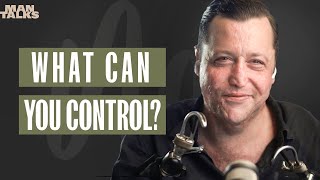
Tom Nash lost all four limbs to meningococcal at 19 and became DJ Hooky, running a Sydney club night for 13 years that led to festival and international gigs. He talks about reframing problems, antifragility, and managing expectations after trauma.
Questions this video answers
October 16, 2023.
19 (a week after his 19th birthday).
18 months (about one year spent in a rehabilitation hospital).
13 years (at one point the longest running weekly club night in Sydney).
DJ Hooky — Instagram: @DJHooky (spelled H O O K I E).
Chapters
I do believe that even if you experience a very little amount of adversity, that it's something that you can actually reverse engineer, because everybody, to some extent, experiences stress. Shifting your focus away from that which you can't control to what you can, I think, shifts the focus away from things that you need to accept and towards things that you can change. You know, disabled people were meant to be on inspirational Instagram posts or TV commercials or in the fucking parrot Paralympics. And you rarely ever hear of a quadruple amputee DJing in a nightclub on LSD.
All right, Mr. Tom Nash, how are you doing today?
I'm very well, thanks. Although I'm in Sydney right now and today was 34 degrees, so I'm quite jealous of where I presume you are, which is Scotland. Is that correct?
I was in Scotland. I actually just got back. I'm in. I'm in upstate New York, where I live.
Oh, okay. That still sounds like it'll be a bit cooler than what might be, I think, 90 in Fahrenheit. I'm not sure.
Yeah, yeah, yeah. I'm Canadian originally, and so the Celsius doesn't bother me at all. But for our American, you know, folks listening out there. Yeah, I think it was. It was like 9 degrees this morning when I woke up and packed my son. He wanted to go for a walk. And last year I bought him from North Face. I bought him this, like, full bear outfit for winter.
Does it look like a bear or is it just fluffy?
No, no, no, no. It looks like it makes him look like a little bear. Hold on, I'll. I'll pull up the photos so you can see. The listeners won't be able to see the epic amount of. Of cuteness, but Banis. Oh, yeah, Bear. Bear cuteness.
That's amazing.
So he's just in this, like, you know, warm onesie with, like, little bear ears on it. But, yeah, it was like 9 degrees, you know, maybe 8 degrees this morning, and we went for a nice little walk. But I just got back from Scotland. I did a solo trip hiking through the Isle of Skye, which is where my grandfather and his parents were from. So I kind of went back to the. To the roots. But it's a.
It's a east. Is it east? Scotland? West, Sorry, West. That's the west coast.
Sorry.
Yeah, yeah, west coast. Yeah. Opposite of Aberdeen, it would be. Right? Yeah, yeah, yeah.
It's a beautiful, beautiful country area. Yeah, it's a beautiful area, but I.
Like that weather way better because I'm. I'M the kind of person that really likes the cold, right? And I've just been in the United States for about six weeks where it was impossibly hot everywhere I went. And I was places like, you know, Austin, Texas, like off, it was like 150 degrees and, you know, New York and everything. And then so I missed the Australian winter. And then I come back over here and we don't have spring. That's it. You just ride into summer again. And I hate it.
I mean, it is uncomfortably hot. I was in Austin earlier this year and I think it was like 98 degrees or something like that. And I was like, oh, this is just brutal, you know, and it's humid. It's brutal. Yeah, yeah. I don't think you guys have as much.
You know what, I think it's interesting though because Austin seems somewhat prepared for it in a sense that, you know, it's kind of like Dubai. Everybody drives around in air conditioned cars. When you're in New York and it's 100 degrees and you have to walk two blocks, you know, for, to avoid getting a $75 Uber, it's a different calculation, right?
Very true, very true. And I find that in the, in the city, because I lived there for, you know, four or five years. I find that in Manhattan the buildings sort of like trap in the heat and. And so it's like this gross kind of muggy because you get all the people, you got all the like, you know, crap from the sewer coming up. It's really not a pleasant place. Like, I remember when I first started living there with my now wife, I was like, I don't get the appeal. Like, this isn't nice to me at all. It stinks like shit. It smells like piss. It's uncomfortably hot.
It's.
And there's just fucking people everywhere. Like, what's, tell me what the deal is here.
Well, I mean, I'm partial to people everywhere. There's this thing that I've been talking to people about recently is a realization that I had a self realization, which is that I can only live in places where I detest at least 20% of that place. Right. And the reason is, is complaining about trivial shit is so tied up with my identity that I, I wouldn't have anything to complain about if I lived somewhere that I loved every part of it.
I like that. I think, I think, I think we might be similar in that fashion, actually. I really, I really enjoy that. There's a certain quality. I remember I lived in Vancouver for 12 years and I love Vancouver. It might be like only a 10% thing, but I was one of those obnoxious people that was, you know, people would be complaining about the rain and I was like, eh, it's really not that bad. And I think that that's largely due to the fact that I grew up in Alberta where, you know, six months out of the year it's like minus 30, which is, you know, the other end of the spectrum. But anyway, I like that we managed to have a playful banter about the weather, which is, you know, normally. Normally.
It's very British of us actually, isn't it?
It's very British. But it's also like when I call my parents, right, they're like, oh, the weather here.
Do you know what? Actually, just to. Just to make one last note on that, I was thinking fairly recently that, you know, the British are often characterized as being obsessed with weather, but I actually think that that's a mischaracterization. And I think what it is is they're obsessed with measurement, right? Because when you talk to British people about how long it takes to get somewhere, right? Or, you know, how much time it takes or the distance or the weather, all they're doing is they're arguing about specificities within the scale of measurement of anything. Right? And it's my contention that that's what the British are obsessed with.
I appreciate that. My, my grandma was British and that was very much. Yeah, she, she and my grandfather would get into these like, epic battle royales about directions, you know, and he's exactly like, it's this far. She's like, no, no, the map says so.
Yeah, anyway, that's right. Yeah.
So, okay, well, let's. Let's do what we normally do and begin with you telling us a little story about a defining moment in your life that made you who you are today.
So I guess the most defining moment of my life would have to be the moment I relearned to walk a flight of stairs with prosthetic legs. So I contracted meningococcal over 20 years ago, and I lost both of my legs in both of my arms. And I spent 18 months in hospital. A year of that was spent in a rehabilitation hospital. And after learning how to walk again using prosthetic legs, I had to try to get up a curb, which is the precursor to be able to walk a flight of stairs. And I tried for weeks on end the way that you usually walk up stairs with no success.
At which point it dawned on me that, you know, those annoying people that Say if at first you don't succeed, try, try again, are basically full of shit. What you kind of need to do is, is work out a different way to solve the problem. And so I had identified that the reason I couldn't get up a step was because I didn't have ankle movement and therefore I needed to use a different joint to get up a stair. So I just turned my body sideways and I used my hip joint to leverage me up. Now, it's not that fantastic a story, but it was a poignant moment for me because it was the point at which I realized that I would have to do everything differently in my new life and that I would have to approach problems from a different angle all the time. And so I guess for me it was like a turning point and it became not just something or a lesson that I used in my physical life, but also, you know, vocationally or in, in for my mental health or anything like that, that I was going to have to do things differently. And that was a gift in a way because if I wasn't forced into that situation, I never would have had that realization.
And how old were you when you contracted the disease?
I was 19. It was actually a week after my 19th birthday.
Oh, Lordy. That's not, it's not exactly a party that you want.
And so, I mean, if it's gonna happen, you like, if you get to pick the age. I actually, I actually think the age was good because if I was a kid, if I was much younger, I probably wouldn't have known what it was like to be an able bodied person. If I was much older, I would have been far too set in my ways and it would have felt like more of a loss, I think. And so in many ways I think it was a good age. I'd recommend it to anyone.
It's like if you're looking for, if you're looking for a different route of development of your mind, of your mental health. Yeah, I highly recommend. Yeah, I highly, strongly recommend. Yeah, it's got some good reviews on Yelp. You know, one of the things I did a bunch of sort of research and went down the rabbit hole a little bit, kind of studying your story and learning about you and listening to some of your music, which we'll get to in a little bit. But one of the things that you talked about was, I found interesting was this notion that there, there's been real advantages that you've gained from going through this physical hardship. And that I think that kind of caught me off guard because I always, you know, I've been interviewing people for seven or eight years now, and I've talked to all kinds of folks, and I always try and put myself in other people's shoes. And sometimes that's very challenging because there's a. There's such a big gap of ex lived experience that is very hard. You know, I remember interviewing a cosmologist and he was talking about his life and he was talking about his vocation. I'm like, I have very little context for what the hell you're talking about, but this was one of those things where you said it, and I could somewhat contextualize it, but, you know, sort of had a hard time really grasping it. And so I'm wondering if you can maybe just speak to this, this notion of the advantages that you've gained from the physical hardship that you've had to endure.
Yeah, I, I would say that it's made me a better person because. For, for a multitude of different reasons. So I touched before on the idea of thinking laterally to solve problems. And that's something that I, as I said, have used in my life from that point onwards. But it's also made me a more patient person and I think I've gained a better perspective. I changed the trajectory of my life in terms of what I was studying and what I was doing, you know, because it, it's met with a sense of emergency, I guess, when you almost die. And I think I had a 2 to 10% chance of survival at that point. You know, the, the salience involved in not wasting your time becomes more apparent, I think, but also just being able to.
Be more pragmatic when approaching my life and approaching problems. So, I mean, one of the things that I, I went on to do, I mean, before I lost my arms, I was a guitarist. And so losing my arms was a lot more for me than just the, the lack of independence and the, the obvious hardship that one might go through losing upper limbs. But I was also losing a creative outlet and something that I just really love doing. And your life is just filled up with a lot of those different things. And that's what makes you happy. That's what makes you the person that you are. And so when you start cutting those away, figuratively and literally, it becomes a lot more challenging. But I actually was able to play the guitar again with my hooks. I developed a slide mechanism that would fit into my left hook and a pick mechanism that would fit into my right. And because I still had the music knowledge, it was just getting over the physicality, but the real innovation there had nothing to do with the engineering or technology behind me playing the guitar. Again, it was about asking the right question and reframing the problem, right? So the question wasn't, do I want to be Jimi Hendrix again? I don't think the question was ever that right. And so a lot of the problems that I had with learning how to play the guitar with hooks was around this physicality. And I would design these stupid systems that would, you know, allow me to press a string down on a fret in a particular formation, all this crap. And, you know, I realized that what I was really looking for, it was just some sort of contraption that would allow me to play basic notes, be able to write music, be able to perform music, play with my friends. So. And that was the question, right? So I wasn't solving the problem of becoming Jimi Hendrix. I was solving the problem of, you know, it being a community thing for me, being a creative outlet. And suddenly the solution became a lot simpler, and I was able to fix that problem. I. I had similar kinds of things where, like, I remember.
I remember as soon as I got out of hospital, I was back to smoking cigarettes because I was a smoker at the time, and I couldn't light my own cigarettes because I don't know if you've ever seen, like, Bic lighters. You know, they have this tiny little silver mechanism that you have to. It's quite intricate, actually, when you think about it. You have to depress it with your thumb and. And then, you know, rake your finger over as you press the gas thing down. Very difficult to do with hooks.
Until I, you know, realized one day, because I. I had different iterations, but I couldn't do that. So I had a candle that was lit, but then the candle would blow out, and then I was lighting my cigarette off. Off a toaster until that broke. I mean, you know, I was. I was 21. As you. But then I just. As you. Yeah, as you do. Uh, then one day I real. I was. I had this contraption where I.
Or.
Or this procedure, rather, which was extremely dangerous and kind of stupid. When my toaster broke that, I. I wrapped up an A4 sheet of paper and put it under the grill and then walked out into my backyard, lit the cigarette and then stomped it out on the floor. Um, and I was doing that for a day or two. And then I remember going out past. And I was like. Walked past the barbecue, and there are a bunch of barbecue matches, like really long barbecue matches. And I was like, of course, of course I can just do matches. So I sat there all day just working out how to strike a match. And, you know, I think what was happening there was like I was trying to solve a problem of using a lighter when the problem was, how do you set fire to something?
Right. And I think people have these challenges in their life all the time where because the path is so well trodden or because there's this sort of path dependence, or it's what other people do, or it's what they've been told to do. They're working towards a problem that becomes difficult to solve when really redefining the actual problem itself or the endpoint or the solution. And working backwards is an easier way to get to what they want.
Yeah, it's almost like a complete reorientation of yourself to the locality of the problem. When I've heard you talk. Because again, when I was sort of doing some research on you, I think the fascinating thing about listening to your story is you have had to look at problems in a very different way. And you've had to look at problems that I think many people haven't had to orient themselves to. But one of the things that I think really stood out to me was this notion of reorientation, of like, literally looking at things from a completely different vantage point. And.
It'S interesting because I remember one of the. One of the guys that I interviewed years ago, Bo Lotto, was a neuroscientist, cognitive neuroscientist, and he was talking about change and how one of the reasons why it's so hard for us to change is that our brain is literally wired as a pattern recognition machine and will constantly try and move us towards patterns that it recognizes. Even if those patterns are unwanted and harmful and shitty and are causing distress in our life, it'll move us towards those patterns simply because they're known. And he said one of the hardest things about change is that it's often an unknown pathway. And so it seems like your experience, your lived experience, was that this presented you with so many problems where you had to orient yourself in a different way to the problem. Is that accurate? Am I sort of getting that right?
I suspect. I mean, I'm not a neuroscience scientist, obviously, but I suspect that's. That's something that happened. I mean, I've read a little bit about. I'm not sure if you've heard about post traumatic growth.
Yep.
Which is sort of the inverse of post traumatic stress, I guess. Not exactly. But, you know, when people have gone through trauma that they end up feeling more positive afterwards. And I definitely think I experienced that. And then in terms of the rewiring thing, that could be symptomatic of that as well, or one could be symptomatic of the other. But I definitely think there is a. There is an instinctual rewiring. Because a lot of things that I was forced to learn, I use today. I mean, another example would be. I remember when I first started learning how to walk with prosthetics and the point at which I got to when I could walk a decent amount. We're talking like a couple of hundred meters or something. Endurance was the next goal. So it would be like walk from here down to the golf course near the hospital, right? And that's like a good 800 meters or something. Now, if I were to have looked at the end of that path, it would have done my head in. Right. But the interesting thing about walking with prosthetics is that you can't really look ahead too much anyway because you have to feel the ground with your eyes. You have to notice a difference in texture on the ground, something you might slip on or, you know, a raise in topography of some sort. So you always have to be looking pretty much directly in front of you. And the more I was just concerned with what was exactly in front of me and what wasn't too far away. What was too far away ended up taking care of itself. And I would get to the end of something like 800 meters without even thinking that I was close to finishing. And I kind of live my life like that now. I only ever plan anything very vaguely six months in advance. I hate knowing what's happening a year from now. I would. I would much rather sort of fly by the seat of my pants and be open to opportunity, because I think that's where the most salience in life lies, is the fact that a year from now, you don't know where you could be or what you might be doing. And I find that exciting.
What would you say? Because I think, you know, again, putting myself, knowing who I was at 19, into a position like that. I mean, I was a bit of a mess.
Which I think most 19 year olds are, if we're being honest. But I think I was a.
Of course, yeah, yeah.
I was a specific type of disaster.
I'd be suspicious of any 19 year old who isn't a mess.
That's right. That's right. It's like, what's going on? What are you hiding? You know, I think One of the things that stands out to me is it sounds like there's a certain quality of like, mental fortitude that I'm curious whether or not that existed within you previously or if that's something that was not necessarily birthed out of the experience, but. But maybe solidified in some ways. So, like, this mental strength.
Yeah. So can you just speak to that? Was that something that you grew up with, that you saw within your home environment as a kid, or is this something that was almost a byprod to the experience that you went through?
I've been asked this question before, and if I'm being completely honest, I. I don't know. It's hard to judge the opportunity cost of things that haven't happened. I. I don't think that I was a particularly robust person before going through what I did. It's interesting though, because, you know, one of the things that people say to me a lot is I never could have gone through what you did and come out the other end of it and nothing less as positive as you are. And the funny thing about that is that I probably would have thought the same before it happened to me. And all that really tells me is that we don't know what we're capable of until we're put in the position.
Yeah, I appreciate that. Would you say that. I think one of the videos that I watched you were talking about how you were telling a story about a woman buying you a coffee at a coffee shop because she had assumed that you, you were like a. A vet, you know, like a military vet. And I'm curious what that's what that's been like for you in terms of how people have treated you differently and how you've dealt with that. Because I think in, in some ways everybody has their own internal experience of like, oh, I feel like I get treated differently, whether it's from my family or whatever it is, but I think for you it's. It's probably.
Sorry, you're cutting out a bit of a.
Bit of a different experience. So can you just speak to that one? Either that one story or that experience.
So I rarely encounter negative experiences with people in the way that they treat me. You know, I don't experience any discrimination.
I sometimes experience positive discrimination.
People will give up their seats for me, but. But it's always usually people being very nice. And the only reason that I thought the. The mistaken identity one was interesting for me was.
You know, I didn't know what to say to her because I had to some somehow break down what she wanted out of the situation. And I think she just wanted to do some, something nice for somebody that was in my position.
And, and so it was a bit of a conundrum for me because I'm like, well, do I approach her and say, hey, I'm not, I wasn't actually in the military. I'm really sorry. Would that have mattered to her? Would it embarrass her to have assumed that of me? And then as all this stuff's going on in my head, I realized that I'm assuming things of her as well. So it was just this shamozzle. I, you know, I just left.
The, I think I, I, I waved to her and I said, thank you for your service, ma', am, which is the best that, that I could come up with. It was the only way that I could ameliorate that situation.
Yeah, fair enough. Fair enough. Well, I want to return to this, this notion of problem solving and how you have approached it over the years, because again, it seems like you have a life degree in problem solving. And after this, you know, having to sort of reorient in a lot of different ways, figuring out how to do sort of basic things over again. And one of the things that it seems like you have become proficient at and almost passionate about in some ways is looking at how to solve a problem. So if somebody's out there and they have an issue that they've been trying to deal with, you know, over and over and over again, it's this reoccurring problem that so many people have, and they've, they're looking at it in the same way. How would you describe your process of solving a problem? Or how would you describe how people can begin to orient themselves differently towards an issue?
So the first thing that I would do is reassess the actual problem itself and ask questions about, you know, how can the end result be different to what you're trying to do? Now, the lighter example is a, is a good one of that. Are you, are you trying to work out how to use a lighter, or are you trying to set fire to something? Right. The other thing to do is, is to identify false assumptions that a lot of people have made. So often when people are trying to solve problems, they're trying to solve problems that.
Haven'T been solved by others.
But they're using methods that everybody else does to solve them. And obviously that's not going to work. Otherwise somebody would have already done it. Right. An example of identifying false assumptions would be, so I started a club night with a friend of mine.
And the objective was to become DJs.
We weren't DJs, by the way. We didn't know how to DJ. We'd never DJ before, nothing like that. But.
We'D looked at the paths that it took to become a dj and they were, you know, buying equipment, rehearsing, you know, buying annoying clothes, becoming friends with promoters, making mixtapes, just no, no. So everybody does that, and it's highly competitive as a result, because everybody does the same thing.
And we thought that it's probably a false assumption that you need to do all of these things. And so our solution to that problem was just to start our own club night and to make ourselves the headline DJs. What we did with that is we actually shifted the focus away from us as DJs to us as personalities and runners of the club. So we were kind of the promoters, we were the advertisers, we were the faces of the club, we were the music curators, we were everything, right? And so when you came down to our club, you would expect a theme that had been devised by us. All of our doorstaff were friends of ours. Anyone that was DJing was part of our friends group. We would decide on the decorations, we would curate everything. And it was a kind of holistic approach to a club night, which nobody was really doing at the time. You had, you know, club promoters and they would hire DJs and, and you would have a booking agent and an entertainment manager. And all these people are disconnected in various different age groups and don't even talk to each other. It didn't make any sense. There was cohesion, right? So we just decided to completely frame it as. It's like you're going to a house party with a group of friends that you really like.
And we, we actually found, we identified another false assumption there, which was that crowds say that they want to go to clubs to see particular DJs because they're talented. What they really want is to be part of a community.
You know, and then there's other sundry things, like, you know, they want to drink and take drugs and hook up with people and whatever it is. And those are a constant in the world of variables, you know, but you identify some saliences in the difference between what people say, what they think and what they feel and then what they do, right? And so we had stumbled across that false assumption and we just put ourselves on it as the DJs. I mean, the great positive outcome of that is that starting a club night is A really good way to learn how to dj. I mean, the first time I ever did it was at the first party we ever threw. It was our launch party. We expected maybe 20 or 30 people to turn up. There are about 500. It was completely, it was teeming and I had to get up in front of all these people and play records. I didn't know what I was doing. I'd only just been told how to press play. And, you know, I realized as soon as I started DJing that they, they didn't give a if I couldn't DJ because I, I was looking like I was having fun. I was dancing with my friends, they like the music we're playing and you're thrown into the deep end with this kind of thing. And then eventually you become a good DJ by dint of that, because you're learning real world experience. You know how they always say, you know, experience is sometimes better than education because you get feedback.
Right.
And I don't mean like audio feedback, but I mean like feedback from crowds, which is you learn valuable lessons that you wouldn't learn practicing DJing in your living room.
Yeah, I love that. It's interesting as I hear you talk about this, because in some ways I took a, took a sort of similar path in the work that I do today. Like, I remember putting on this big event where I wanted to do more public speaking and I had put on some small events in Vancouver and we had a couple hundred people that came out to them on a monthly basis. And I didn't know really anything about putting on an event, but I wanted to do more public speaking. And so I decided I was going to put on this big event, hire Gary Vaynerchuk, bring him out to Vancouver, because he was just big on the scene at that time. Everybody loved him. I mean, he still is kind of very loved. And I was going to put on this event, host it and, and speak at it, you know, and sort of like be the person that went, went right before Gary Vee and that, that track, you know, and I had done some public speaking, so I wasn't like cold to the stage like you were. That's ballsy, man.
Take some hopes.
Yeah, but different, you know, like the distinction there would be that, you know, you actually had a plan and cared about what you were doing. We were just having fun, you know.
Sure, yeah. Because I was going to say, like, how did the, how did the DJ thing even come about, like that initial thing come about, like, did you just, did you like DJing? Did you want to do it? Did you want to put on parties? Like, was it a challenge for you? Like, what, where did, what was the, the origin of that?
The impetus was that for the months leading up to us starting our club night, I'd been doing some work experience for a different club in Kings Cross here in Sydney. And I seem to have a knack for running a night and the promotion of a night and the programming of bands and DJs. So I wasn't DJing, but I, I knew enough about music and about the scene to be able to curate a really good night.
And one of the things that I realized was how awful Most of the DJs were that would apply to play at the nightclub, and this is quite a, you know, well known Sydney nightclub. And I would get all of their mixtapes and I would listen to them and I would hear them live and I would be like, this is like, some of them had, you know, good mixing techniques or something like that. But the music selection was awful. And I just, I thought between my friend Chris and I, who had done a couple of DJ sets here and there, I thought between the two of us, and I said to him, I said, we can do much better than this. And it turned out I was right.
And what has that led to since? Like just, yeah, that's good.
What has that led to since, like, what's been one of the highlights of, of you getting to getting to DJ and getting to pursue this?
As I said, we got quite good quickly because we were thrown in the deep end. But.
You know, it was interesting for me because I think people really liked watching me DJ because I was DJing with hooks and there was a bit of a, you know, what would you call it, novelty element to that. And the thing that I always struggled with was when I actually did get better at DJing Technically, there was a kind of asymptotic appreciation curve that people had where it didn't really matter too much that I got better. They just liked seeing a guy with hooks dj. And that was kind of frustrating in a way. But, you know, within a very short period of time we had become popular enough to be asked to DJ at other clubs, which we thought was insane. You know, the only way we could get a gig before was to make our own club night. And now we were being asked by people to play other clubs. And I think after the first 18 months or two years running a club that we thought would go for a month or two.
We were asked to play the biggest music festival that comes to Australia. That tours around all the cities to host a stage at the Sydney event. And, you know, we'd. We'd been DJing for like two years, and we were already hosting a stage at this music festival to thousands of people, which is such a strange thing to be standing on a festival music stage. You know, just. And that's what I mean about. I like the trajectory of life to be able to take me wherever it takes me. Because if I had a plan and I was like, I'm going to get a job for McKinsey, and in five years, here's my plan, you know, I wouldn't be doing that, would I?
So that would have been a highlight for me. But we ended up playing all the biggest music festivals that came to Australia. We played internationally, we played Japan, Indonesia. We had a proper career out of it. The club night itself was something that was in a weekly capacity. It ran every Saturday night, and it was at one point the longest running weekly club night in Sydney. It went for 13 years.
That's wild, man. And. And just out of curiosity, the name DJ Hooky, did you. Was that somebody that, like, some. Did somebody recommend that to you or just like, you were just having fun with it? Like, where did that. Where did that come from?
Yeah, I think I used to introduce myself as Hooky to people before I DJed. Okay. Because I spent a lot of time in nightclubs around people on drugs, and it's. It's a lot easier for them to remember Hooky, particularly when it's attached to me, than it is Tom, which is, to be honest, like a fairly run of the mill, you know, name that 50% of the club has.
And so I just colloquially referred to myself as that. And then when we did our first party and it was decided that I was going to get up and do a set, I was like, well, what's your DJ name going to be? Well, it can't really be anything else, can it?
Right, right, right, right. Got it.
Okay.
I want to come back to this concept of antifragile, because I think in some ways, inadvertently we've been talking about this, the journey that you've gone on, having to reorient yourself to problems.
You know, obviously, I think this concept has become much more popular in the last few years. I think it's also much more needed within our modern culture and our society.
How would you define antifragile? How do you look at it? What do you see the. How do you see the importance of it? And then we'll kind of go down the Rabbit hole from there.
So I mean, obviously something, it was a phrase, a word coined by Nicholas Taleb in case some of the viewers weren't aware of it. But it is in essence the opposite to fragility. So it's something that benefits from stresses or disorders rather than is harmed by them. And it's not the same as resilience.
Resilient. Resilience is the middle ground. Right. So a wine glass is fragile for obvious reasons, a rock is resilient. But something like your muscular system is not really resilient because when you lift weights you get stronger. And that didn't have a word until Nassim Taleb came up with it, which is anti fragile. And I mean, he speaks about it with relation to ecologies and economics and systems. I think that there's a great place for it in our psychology as well. And so being able to use and exploit adversity for your own benefit. And there's several ways that you can reverse engineer this. I don't think it needs to be. I think I've become antifragile through having gone through a lot of adversity and being forced to deal with it. And we touched a bit before on Post Traumatic Growth, you need to be erudite. It can't just be simply experiencing adversity. You need to be able to learn from it and grow. And so it is a process that you have to go through and be cognizant of. But I do believe that even if you experience a very little amount of adversity, that it's something that, that you can actually reverse engineer. Because everybody to some extent experiences stress and, or stresses or disorder in their life. And you know, there are things in your life that you can control and there are things that you can't. Shifting your focus away from that which you can't control to what you can, I think shifts the focus away from things that you need to accept and towards things that you can change.
Yeah, it's interesting because I think when I look at the sort of social climate, especially in the west, it would seem that.
It would almost seem like there's a rise in emotional and psychological fragility. And then there's, because of that.
This sort of countermeasure of hardened resilience, which I don't think is often antifragile. You know, there's this sort of like reorienting towards, well, I'll be super resilient and super hard and like, nothing will break me. And you know, and it's, and it's it feels kind of like full of bravado and it doesn't feel quite like antifragile in the way that you're describing it. And so I'm hoping that you can sort of color a little bit of if there's people that are out there. I mean, obviously everybody that's probably listening to this is going through some type of adversity, whether it's their relationship or finances or, you know, just got fired or, you know, their kid's sick or whatever. What does it look like? What are the sort of steps that one can take to move towards antifragility when adversity comes knocking?
Yeah, well, it's interesting that you brought up those examples of the uber resilient, whatever you may call it. I think I kind of know what you're talking about and if I am on the right track, that seems largely performative. But I think that.
The way that I see it is a little bit more self reflective. And so I'd say that if I were to. To take someone through a process of trying to reverse engineer antifragility through adversity, you know, there are a few steps you can take. One is actually embracing pressures or negative vicissitudes and realizing that you've probably gone through them before. Right. Any problem that you seem to have on your doorstep right now is probably something that in one way, shape or form you've been faced with previously and that you've gotten through without any problems. There's a thing called impact bias, which I think we all suffer from, which is the tendency to, to expect negative events to affect us more and positive effects, positive events to affect us more in the positive. So, you know, an example would be if you win the lottery, you think you're going to be, you know, 100 out of 10 happy. And we know that that doesn't usually happen. And in the reverse, you think that breaking up with your partner is going to be the end of your life. And we know that it's never as bad as what we think it's going to be. And so embracing pressures and understanding that these things have happened before and that you will get over them is probably a first step. I think another way is a diversification and I mean this in a couple of different ways. So I always like to try and have a diverse skill set in really different things. So it could be music and it could be maths or something like that. This is just arbitrary examples, right? Let's say you're really good at spreadsheets, but you're Also good at video editing or something like that. The reason I think it's good to be good at two things, at least better than really great at one, is that you niche out more easily. So it's, let's say you're a great video editor, right? You're never going to be the best video editor in the world, but if you're a great video editor and you're also a great speaker like you are, right. Maybe there's something to be done with that. And that niche is something that's more difficult to find in a person, right? So it allows you to pivot in times of turbulence. It makes you niche out and be more valuable and that makes you more agile, I think, particularly in a work environment. I would also say that learning how to manage expectations is a really important skill to have.
When trying to grow from adversity. Because, I mean, we talked about impact bias. There's also a thing called the nocebo effect. I don't know if you've heard of that. The nocebo effect is like the inverse of the placebo effect.
So we know what the placebo effect. I'm sure everybody knows what the placebo effect is. The nocebo effect is, you know, when you expect negative things to happen, you actually act in a way that would ensure that those negative outcomes will come to light. And so an example of this might be, you know, you're up for a promotion at work, but you're so such in fervent belief that you're not going to get it, that you don't put in the effort required to actually get the promotion. And so managing expectations isn't just about, you know, not getting too excited about things to be great, but also not thinking that everything's going to be and therefore not putting in the effort as well. At the same time.
Adaptation is really good to get good at, I think. And it's, you know, something that you can use in work, something you can use in relationships and life.
You just talked about adaptation. I think what really struck me was like, ah, you were sort of like forced into extreme adaptation. And I'm curious if you think that there's merit in people putting themselves into positions where adaptation is a requirement no matter what. Whether they succeed, whether they fail is sort of irrelevant. But it's like forced adaptation that develops something within them. You know, like I think about, I've started to do kickboxing and Muay Thai and at first it was brutally cumbersome. You know, I did some boxing when I was young. I did some karate and. But doing Muay Thai and trying to figure that out was. Was hard. Like, it was rough and. And there was sort of this requirement of I was forcing my body to adapt to this new situation, this new type of movement. And there's. There's something that is in there. I don't really know exactly what it is, but it seems like forced adaptation is an important ingredient within being antifragile, and I would just love for you to speak to that.
Yeah, I definitely believe that it is. And if anything that you were saying about the. The rewiring of neural pathways has any weight to it, then I would double down on that and say that, you know, anything that you can put yourself through that would develop that skill and carve out a neural pathway of being able to adapt would be beneficial. The other thing that I find interesting about adaptation, one of the earliest experiences I had with it was when I got out of hospital and I was.
You know, had to live independently for the first time. They always send you this occupational therapist, and the occupational therapist is there to, you know, come and fit out your house with, you know, adaptive technologies that you might need as a person with a disability.
And my instinct at the beginning was to try to use as few of these as possible. And the reason was, you know, I remember the woman telling me once, she's like, oh, we can get you a kettle that you. You can use with the hooks. And I said, well, you know, I kind of want to be able to use any kettle, right? Because what happens if I go on holiday and I. I'm in an Airbnb and I need to make someone cup of tea? You know, one of those heathens that drinks tea. You know, what the is tea? Anyway.
You know, I. I need to be able to do these things everywhere, right? And because, you know, my. My skills are completely transferable, right? But I don't want my environment because my environment itself, you know, is something that will change. So I need to know my limitations and my skills so I can transfer them to different environments. And that's when I realized that, you know, that that part of adaptation about knowing your limitations and knowing your skills is kind of essential to being able to adapt in different environments, because, you know what you're capable of, and you can put yourself at a baseline level of saying, look, I know I can do up to a three. The idea is to adapt up to a seven. You know, my limitations are higher than that. Therefore, I can transfer that skill and adapt to a new environment. Yeah.
So interesting. Because I feel like there's. There's something so powerful in what you're talking about, in this notion of adaptation. Because even the example you gave of the kettle, it's like, yeah, that multiplied by 50 or 100, right? A hundred different examples of that, all of a sudden create a very fragile individual and how they relate to the environment. Because suddenly, like, you're saying if you can't use the kettle and then the stove and then, like, all of these different pieces, to then think about going on vacation all of a sudden can become an overwhelming endeavor. And I think that a lot of us do different versions of that, right? We have different iterations of that where we, you know, maybe it's a byproduct of a. Of an upbringing where adaptation, you know, you got too many participation trophies playing soccer, and we're just told, like, it's okay to. To suck, you know, to like, just be shit at playing soccer. Like, it's all right. Of being shit at math.
And then.
And all of a sudden, you don't feel very competent at much of anything because you've never been forced to adapt to the hardship of an environment or a situation or a conflict. And it seems like that. That forced adaptation, those moments where you're. You actually have to adapt, develop maybe competency or. What would you say that that develops when you're forced to adapt?
Well, I think it's just a skill, you know, It's a skill that it's like a skill of problem solving in the same way that it becomes a mindset of looking at things differently, so adapting to different environments. You don't ask the same questions anymore. You know, you start trying to find ways around things, and adaptation is pretty much like that. You know what I mean? Like, it's. A lot of it is problem solving.
It's interesting because I almost feel like there's a evolutionary thread in there, you know, like we've been forced. Like biology has been forced through many different iterations of adaptation to the environment. And that's how we've come to be in some ways, but that's probably it.
Yeah. I mean, you know, you. I think you're always surprised how quickly you adapt to news, environments and situations. You know, even when you, you know, it could be a new relationship, it could be a new area that you're living in, it could be a new job, and you have this guttural fear about the unknown, you know, as you're saying. And then once you get there, you're kind of like, oh, no, this is Fine. I'm totally comfortable with this now, you know, and that's part of embracing the challenge, which is that. That knowing that, you know, you've gone through change before and that you'll be okay and you just tackle it head on.
You. At one point, I heard you talk about how you sort of had a disdain or a loathing for the. Like, the support groups.
Yeah, I have a loathing and disdain for a lot of things. Actually. I started writing my next book because I just released a memoir a couple of weeks ago, and I've already started writing my next book, which is entitled 100 Things I Hate and why I Hate Them.
Well, I feel like. I was going to say, I feel like.
There'S probably a very interesting talk about this notion of forced adaptation and a very interesting book that could be written about forced adaptation, because I think that just from the outside, it seems like your life exemplifies that in some ways. And it. I think in many ways it's a missing component of, of maybe even our psychological culture that we actually, within our current society, I don't think that we thrust people enough into situations where they're actually forced to adapt. You know, I remember watching that's accurate. That show Survivor. Remember that show Survivor? It was garbage in many ways. I don't even know if it's still going. But there's a new version in the last several years called Alone, where they drop people off in northern Canada and they just have to survive. And it's like real, right? Like, they actually. They have to fish, they have to hunt.
They have to.
And you know, in five years, there'll.
Be one where they drop them in Toronto and do the same thing.
Yeah, or like Portland, you know, like, you just drop. Downtown San Francisco. Good fucking luck. But yeah, I mean, I think that there's. There's something within our culture and within us as individuals and even within relationships. I mean, my wife's a marriage and family therapist and we. We work with couples sometimes. And so I think I've seen this. This missing puzzle piece of forced adaptation where people resist adaptation. They resist having to actually adapt to the circumstances or the situation that they find themselves in. And that resistance of the ADAP adaptation weakens the. The internal mind or the system or the, you know, the body of the relationship or the culture and the society. And so I think you have something really powerful there. And so I appreciate you bringing that forward because it's.
That.
That feels very relevant for me.
I, I think I, I agree with everything you said. I also Think that people like Jonathan Hyten, Greg Lukianov might have something to say about the state of why we might be experiencing, you know, a lot of people feeling those pressures and not having answers to them. And I think that there's been a society constructed, you know, around producing that outcome which we now have. And so it's probably a good time for an antidote to that to be.
Released back to my. Where I was going initially.
Because I got sidetracked there. This sort of disdain for this. Support groups. No, no, you're good. You're good, man. I got just taken off track, easy.
Did you. What was the sort of mental recovery like? Because I think in some ways the, you know, the grief and the loss of what you went through, having to adapt, having to change so much. I mean, did you find therapy and psychological help after? Was that something that. That you found to be helpful? Like, how did you. How did you reorient in terms of cognitively? Because I would imagine that was jarring in some ways. Did you have external support?
So I often thought that, you know, the way that I dealt with things mentally was somewhat in line with the trajectory of how I felt physically. And so if I was in a lot of pain, I would feel quite down because not just the physical pain, but it compounds the extent to which you can actually move forward and get better and progress and become independent. And so that can become a negative spiral or a positive one, depending on which way your health is going that day. To some extent, you're not in control of that. I had a great network of family and friends supporting me.
And the more I've thought about it recently, you know, their role wasn't just to be supportive people and be around when I needed them, but they provided a sense of accountability. So I think it made it really difficult for me to let them down because they'd been so supportive of me. So it wasn't even what they might say or support that they may offer up visibly, but the fact that they were there from the beginning meant that I had a sense of accountability about moving myself forward, I think. And that's why, you know, having such a great network of family and friends is such a gift in that way. I know a lot of people don't have it, and those people are really up against it. There's a lot that I have to be fortunate that I have to be thankful for, I guess.
Would you say, dare I say that despite the.
The. The. The cynicism that you might carry about certain parts of life, that gratitude and thankfulness are actually very integral to.
To. To your life, to your. To your sense of mission.
I mean, I think. Look, I mean, generally speaking, I'm a very positive person. I just get really angry about dumb like 2 ply toilet paper or being put on hold for too long. You know, it's not. I never complain about not having legs. That would be ridiculous. Just get on with it.
So toilet paper that.
Just two ply. I mean, I. I've been in. In so many really nice hotels around the world, and the tissue box is two ply. What the fuck is going on with that?
Anyway, sorry. I get really heated about 2 ply.
Yeah, I mean, all of that appreciation stuff is in the background. I. I think, you know, I have a really different understanding of what I think luck to be now because I remember being in hospital and I remember meeting this guy who was a quadriplegic in the gym, and I'd sort of seen him around and. And I, you know, walked up to him one day and had a conversation with him, and he was telling me about how. How he became a quadriplegic and then started telling me about the incident. He was in a taxi and he had a car accident, but that he was so thankful that he had his family still, his wife and his kids, and they visited him every day. And he's talking about how lucky he was. And I remember it was the first time I thought, you know, it's interesting, a guy sitting there in a wheelchair, not being able to move anything but his head, talking about how lucky he is. And then I started thinking to myself, like, well, am I unlucky or am I lucky? You know, am I unlucky to have suffered from meningococcal, lost four limbs and 18 months in hospital and this horrible pain? Or am I lucky that it happened in Australia, where there's an amazing, you know, social health system that I would probably be dead living anywhere else. Am I lucky that I have friends and family around to support me? I mean, there's so many things on both side of that fence. And I guess the interesting part of it is, is you're neither and both right. And luck is very much, you know, in the eyes of whoever's making the decision. And so whether you regard yourself as lucky or unlucky is a choice that you can make. So if you choose to make yourself unlucky, you will be.
I feel like that is a good place for us to pause our conversation.
Yeah, you're getting sick of me now. No, I told you you would no.
No, no, I, I love that notion. I love that notion. I think it's actually quite a profound place. I think it might seem from the outside maybe to some people to be like, oh, yeah, of course, whether you think you are unlucky or whether you think you're lucky is a choice. But I do think that it's a.
I think it's one of those things in life that people take for granted, you know, the power of choice. Like, I've been working with this gentleman now. He's been doing Gestalt therapy and developmental psychology for 40 plus years and, you know, et cetera, et cetera. One of the things that has become just very clear to me is that so much human suffering revolves around the belief that we don't have a choice or the removal of choice from a part of our life. And I see it breaking down relationships, I see it hindering people from pursuing their goals, their dreams, whatever it is that they want. And, and if you can work with people to simply help them to reaffirm and reassert a choice in their life, it's one of the most powerful things you can do. And so I think what you just said is, is incredibly, incredibly important, even though it has to do with luck.
Yeah.
So, last question.
Well, it does, actually. Sorry, before you go on, it's not as much just about luck, is it is about choice. I think you nailed it on that first thing. And, you know, choice is such a, an interesting aspect to what we have control over because, you know, whatever you believe within that framework of what we can choose and what we can't, you know, often I see people, you know, switching between narrow and broad framing. You know what I mean? Or comparing themselves to others. Right. You know, someone will say, I don't know what I'm worried about. You know, you've lost four limbs. Useless thing to say, to be honest with you. Right. Because it's not, you know, whatever problem that you might have, you know, whether it be at work, maybe you're feeling unheard or underappreciated or something like that. And to say, well, you know, what am I worried about? Others have it worse off than me isn't non sequitur. Right. Because there will never be a number of starving children in Africa high enough to get you that respect at work. That's just not going to happen. Right. And so being able to oscillate between narrow and broad framing allows you to actually take care of your own problems. You know, don't use that choice to be able to Sweep your own problems under the couch and say that they're not worth anything, because that is a choice that you make. You can choose to defer to other people or you can choose to sort out your well said.
So the memoir, the. The book is Hook, Line and Sinner. Why? Hook, Line, Sinner?
I didn't come up with the title. My. My brother in law came up with the title. He knows that I like puns. And I had a bunch of different book titles that was that. They were all kind of rubbish. And we were just out to dinner with the family one night and he just turned to me and said, hook, Line, and sinner. And I'm like, you got it, man.
But look, I liked it because, like, obviously I like. I like double entendres. And.
You know, there's a sinner aspect to me, I guess. I mean, people have approached me and said, oh, it's because, yeah, you were in nightclubs and taking drugs and nefarious activities all the time, kind of. But it's more about the fact that I took a more unexpected trajectory. And I think sometimes in society that's viewed negatively or, or just not taken as seriously. Maybe not negatively, but, you know, disabled people were meant to be on inspirational Instagram posts or TV commercials or in the fucking Paralympics. And you rarely ever hear of a quadruple amputee DJing in a nightclub on LSD.
That's where we're going to end.
Well, this has been a wonderfully delightful conversation.
It's been great. Thank you so much for having me.
Yeah, I've really, really, really enjoyed your company and just getting to chat with you. And I feel like you're the type of guy that I would really just love to sit and shoot the shit with for a couple hours.
And so this is. Well, we can do that next time I'm in New York, for sure.
I would, I would love that. I would love that. And we'll have the links to your book, to your memoir, we'll have the links to your work, but anywhere that you'd like for people to go specifically to check you out?
Well, I mean, usually when I get asked this question, I just tell them to go to, you know, the bar that I'm usually found out in Sydney drinking a martini, but that might be difficult for people stateside, so they can just follow me on Instagram @DJ Hooky. And it's H, double O, K, I, E. Perfect.
All right, well, thanks to everybody for tuning in. Don't forget to man it forward. Share this conversation with somebody that you know will enjoy it. And as always, this is Connor Beaton signing off. We'll see you next week.
More from Connor







How to Raise Strong, Unshakable Boys in Today's Culture, with Dr. Shefali Tsabary



