Sex Therapist: 25% of Women Are Actually Sexual Pursuers In Relationship - Dr. Laurie Watson
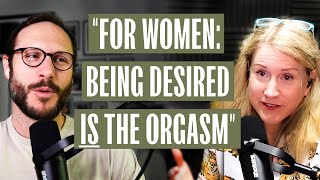
YouTube interview (Man Talk Show, May 20, 2024) with sex therapist Dr. Laurie (Lori) Watson discussing sexual dynamics in committed relationships. Key topics: the sexual attachment cycle (pursue–withdraw), how childhood attachment styles (secure, anxious, avoidant) shape adult sexual and emotional behavior, and gendered physiological differences in desire (citing Basson 2001 and Meredith Chivers). Practical therapeutic guidance includes using vulnerability, a reflect-validate-ask communication approach, role plays, and behavioral techniques to repair sexless relationships. The interview also highlights common myths from porn and cites specific statistics (e.g., 25% of her female clients are sexual pursuers; average penis length 5.1 in; ~15% of women orgasm from penetration alone). Guests/directives: Connor Beaton (host) and Dr. Laurie Watson (guest); resources: Foreplay Couples and Sex Therapy podcast and lauriewatsoncenter.org.
Questions this video answers
May 20, 2024
25% ("25% of the women I work with are really more of the sexual pursuers")
Basson (Rosemary Basson), 2001
5.1 inches (average, as quoted)
15% (quoted: "15% of women reach orgasm through penetration only")
Chapters
25% of the women I work with are really more of the sexual pursuers. Many times what I find out is that the woman actually has a more erotic self than her partner. And she's whispered it. She's tried to get through to him, what she needs, what she wants, what she fantasizes about. I had this one guy, and he was kind of a cowboy. He wanted sex more frequently, and she wanted sex once a month. And I basically persuaded her to have sex three times a week through the therapeutic work. But some of the things she wanted were more erotic, and they were really simple. Connor, he's like, you know what? I'd like him to wear his boots to bed. I'd like him to shave before we have sex. I would love candlelight. And he's like, all that nonsense. I mean, come on. We just need to do it. I can't be bothered with all that. She is expressing to you what she needs, what turns her on. And he could not be responsive. She wanted him to take dance lessons. Like, oh, that's ridiculous. I gotta say, though, the way man dances is often the way he moves in bed. So us as women, you know, we're watching that.
All right, Dr. Lori Watson, welcome to the Man Chalk Show. How you doing today?
Oh, great. Thank you for having me to the Man Talk Show.
Right, I know. Here we go. We're gonna. We're gonna talk about a whole bunch of stuff that's gonna be interesting actually, before we dive in. I should have asked you this before. Do you prefer Dr. Watson? Do you prefer Lori?
What should I. Oh, you can call me Lori.
Okay, okay. Because I've had people on the show that it's like, it's doctor, and I'm like, okay, I don't want to mess that up.
I make my staff call me doctor, but on podcast, Lori.
Yeah. And husband, once in a while, right?
It's like.
It's doctor.
And my husband, I tell him to call me doctor, too. Let's. Let's play doctor.
Yeah, there you go. There you go. So let's begin with the big question, which is what is the sexual attachment cycle?
Okay, so, you know, in committed relationship, there's actually two cycles. One of them is the emotional attachment cycle, and the other is the sexual attachment cycle. Because when we partner with somebody, it's body and soul. You know, we have a connection with them deeply in our hearts, and we have a connection with them deeply in our bodies. And the weird thing that gets twisted up for all of us, every single one of us, is that there's often a cycle that is one person who kind of wants more of something, and the other person weirdly seems to want less of it. It's not actually true because both people need connection in both cycles. But think about maybe traditionally heterosexual couple. The woman is like, hey, you know, I want to share feelings. I want to talk to you. I want you to spend more time with me. I need more support and help. And perhaps the guy early married is like, I got to build my financial kingdom. I got to get a secure. I got to work really hard. You know, these other. You know, I've done all that, right? I've. I've courted you, I've dated you, I've put in the time and. And now I want to focus outward into my purpose, you know, or maybe it's like, you know, I need more autonomy. I want a game. I want to, you know, my free time. I need. You know, I'm so stressed out. I need to, you know, take a little time to do that. So they seemingly don't respond as much. And that makes the first person a little more anxious. Maybe they grow critical and angry, which, of course, the other person says, ooh, this. This is not a good conversation. In order to manage it, they shut down. They. They pull away. Because their goal is really to keep things calm. They think, you know, if we could just be rational about this. Let's. Let's take a little time here, you know, maybe we'll come back to this conversation. And they pull back, which of course makes the first person more anxious. Same sort of thing happens sexually oftentimes, you know, the sexual pursuer, that's what we call this dynamic pursue, withdraw. The sexual pursuer, you know, feels love and connection in their body. That. That's their sweet spot. And so sexuality is like, they want that. They go for that. And the weird thing is, you know, it used to work, like, right when they were dating, but suddenly now their partner is not so interested in bed. And oftentimes in a partnership. This is a crisscross cycle. So one person is the pursuer in one area, and then the other one withdraws in that. In that area, maybe emotionally, but sexually, that person is a pursuer. And then they seem to be with a person who withdraws. And it's like, I don't. I don't get it. You know, like, when we were dating, you used to be all about sex. You used to do everything that was wild and crazy, and, like, suddenly you have no drive. You have nothing. You know, I don't get that? And so they become frustrated, angry, critical. The other person says, wow, you know, I can't make them happy no matter what I do. They feel like they're failing. They pull back further. It's like, you know, the first person is like, I. You know, if I don't ask, you know, four or five times a week, if I don't get up to bat four or five times a week, I'm never getting sex. And of course, that over asking, you know, results in the other person feeling drowned. Like, okay, I'm, you know, I'm somehow or another not. Not enough for you. I'll never be enough for you. I'm just not a sexual person. All this stuff goes on, and they pull back further. And both people are usually angry and frustrated and feeling like their needs are not being met and they're not appreciated for all the things they bring. But the emotional pursuer is saying, hey, look at. I'm bringing attention to the heart part of our relationship. So we are deep friends and connected. And the sexual person is saying, hey, I'm bringing attention to this part of our body that is so good when we have it, you know, like, we both feel great, we're more connected afterwards, oxytocin is released, we feel in love, and somehow or another, the other one doesn't get it. So that's the big knot, Connor, in relationship. And you and I just talked about this. Like, why do couples. Maybe. I think it's about 20% of couples are sexless by the time they hit two years. Well, this is why, because this cycle hits all of us. It's coming for us. If you are not in it yet, it's coming for you. And, you know, and it's a really difficult thing to resolve. Although I have tremendous hope about resolving it.
Yeah, it's interesting because as you were talking, I, you know, I've been running this show for almost eight years, and when a guest is, like, hitting on something that I know, I can. I can almost, like, feel the audience, like, nodding their head, like, oh, yeah, I've been there. Oh, yeah, that's happening in my relationship. Oh, yeah, that's so, you know, I think. I think you're touching on something that's super relevant in that push, pull dynamic, specifically within sex. Because, I mean, how many people, you know, I can't tell you how many people over the years have messaged and said, you know, I. I want sex more often than my partner. Is it a deal breaker? How do we engage more? Is it a problem? So can you Give a little bit of insight into.
Why or like the origins of where this push pull dynamic begins. Like, is it something that, that we experience in a parental relationship that then, you know, forms in our adult relationship? And um, let's just go with that first.
Okay. So we all come into romantic relationship. Coming from relationship, which is our family, kind of is like the blueprint of, of what we come to expect in relationship. And we come out of childhood with what is called an attachment style. So either we're securely attached, which means our parents, you know, loved us, we knew they loved us, they were affectionate with us appropriately. You know, there was a roof over our head, economic stability, and there was order. You know, we knew that if we did this we were going to get in trouble. And we knew that, you know, where the lines were. And so it was very, it made a lot of sense. And so if you come out of that with secure attachment, actually the odds go up that you're going to marry somebody with secure attachment. And secure attachment is like this incredible blessing. It gives you happier relationships. People who are securely attached are happier at work. They, they make more money. And Connor, if they get a disease, they feel less pain. It's amazing. And that's all research based, but most of us probably didn't quite have all of that. And so we come from one side or the other either of insecure attachment. And one side would be avoidantly attached. And maybe this is the person who.
Learned that help wasn't coming. And so if I'm going to make it, I have to be independent. And of course we socialize men to be independent. Right? That's, that's partly being male in our culture is you're socialized to not need anybody. It's macho not to be, to need anybody. But there's also something that comes from childhood that says, you know.
People are not terribly reliable. So I'm not going to count on that and I'm going to make it on my own. Anxiously attached is another side of the continuum. These people probably had intermittent help. The world was not so stable for them either.
But they are more looking to the partner to stabilize them. You know, they, they worked really hard as children to get their parents attention in some way. Like some help is better than no help. And so they're kind of like they're, they're the ones who are going to keep going and cry out and try to get attention. So avoidantly attached people don't really trust others. Anxiously attached people.
They don't trust others all that much. Either, but they think that they need them and so they keep going. So anxiously attached people often end up as pursuers in intimate relationship. Avoidantly attached people end up as.
Withdrawers in relationship. The crisscross place in sex. I mean, we know that men are funded by so much testosterone that they kind of have a second chance in life. Their, their body drives them to connect and that is a really good thing. And I, I don't think I would say that men get enough messages about what a great thing it is to be driven in the body toward connection. You know, there's a lot of, you're an animal, all you want is sex. All these bad things. And I gotta say, this is, this is a blessing, you know, to feel that desire inside your body and it helps drive the romantic relationship. So it's a great thing. They get that second chance there. And women probably don't get as much of a chance there. So it's a more fragile area. They don't have the body chemistry that funds desire like men do. And so they need a lot more emotionally in order to feel sexual. And that's all research based. Bassone, Rosemary Basson 2001 it's old research, but it's, it's, you know, some of the most important research that we have is women need connection. Oftentimes not all women and I am not one of those women actually. So I have a lot of help, you know, I have a lot of mercy for people who are congruent styles. You know, you're both a sexual pursuer and an emotion, emotional pursuer. So I get that it's not everybody, but most women, yeah, they get that. And you think about when they're dating.
Women, you know, they are very responsive sexually. Most of the time.
They self cue and so they tell themselves through fantasy like, wow, you know, tonight's the night, we're going on this hot date. This is really great. You know, they wake up, they shave their legs, they put on something sexy underneath their clothes that reminds them all day that sex is coming. They get their nails done at their lunch break, they set aside six hours for a date. Right. How many? You have children, so you probably go on 6 hour dates all the time, right? You know, they have unlimited, unlimited time. And you know, women's bodies need a lot of time to reach the same levels of arousal that men do. And they're also cued by the other. So their partner is often telling them, you look hot. There's a lot of compliments. And Meredith Chivers, she's a researcher A sex researcher. And she says being desired for the woman is the orgasm. I mean, it's so exciting to be desired. And not only that, but she has somebody initiating copious amounts of time with her planning. You know, it's like, you are so special. I want to, you know, set it, you know, can you go out with me on Friday night? You know, and then the date is planned and it makes her feel so special. And there's a lot of spontaneous offers of help and support. Like, you got a flat tire, baby, I'm going to be there. Like just, just hang on, just stay right there. I'm coming, I'm coming. You know, and this is spontaneous. So she gets self cued, she gets other cued. And these are the things that women often respond to sexually. Then, you know, once they're married, she's got a million things on her mind too. The self cueing often goes down. You know, there's not the sense of fant. About the coming moment. There's often right. The reduction of initiation from her partner for time with her. The offers of support go way down, you know, like, no, I don't really want to help. I got my own things I gotta do, you know, and the compliments, it's like, I did all that. I dated you, I complimented you. You should know I'm hot for you, you know, and, and so all of this self cueing and other queuing goes down and actually, you know, that impacts her desire. That goes down too. Whereas for men, they still have the same levels of hormones. And men are not just hormonally driven. I mean, they too, I think, want pleasure and intimacy with this one person. You know, that's how they get it though, in, in the bedroom.
Yeah, yeah, it's. I love what you just said that that quote of, for women, desire is the orgasm.
Being desired and being desired.
Being desired. Yeah. So, you know, I think that that is very relevant and helpful for men to keep them, for us to keep in mind. Because I do think that sometimes we can be very sort of pragmatic. It's like, okay, well we're married now. Or you know what we're like, we're dating. Like we're, we're in a relationship, you know, like the, like it's almost like the worst in one, you know, like I like, I got you, we're here, we're together. And, and that should be that. I think first I've noticed that in myself in the past for sure, where it's like, like what else do you want from Me, Like I committed to you? Yeah, you know, like I committed to you. So like, that's the ultimate signal that I, like, I could be right. It's like I could be with other women, like I've committed to you. And like, how is that not like the ultimate cue? And so I, I get, I get that. And it can, it can definitely cause, you know, cause some sort of like, laziness, I guess, like sexual laziness or like flirtation laziness where you just stop kind of doing some of those things.
I think that it's, it's also, I don't mean to dismantle this. I think it's a difference in terms of how they feel about it. It's like for them, commitment is a huge deal. It is the ultimate cue. Like you said, I, I have chosen you above all other women. You are mine, you know, I want you more than anything. So all of these, you know, little things feel, feel to them like niceties, you know, we, we are in a sexual relationship that's part of our contract. And it is, I fully agree with the fact that, you know, certainly in a marriage if you've committed to fidelity, you are in a sexual contract, you know, and it's, it's not fair to say, well, you know, I, I'm not going to be sexual with you, but I'm going to expect fidelity from you. That, that's a total not fair sort of thing that, that does happen. You know, it's like, well, I don't want you, but I, I don't want you to have anybody else. It's like, okay, well, you know, that nobody likes that, you know, and I, I think that's, that's totally wrong. But on the other hand, it's kind of like, I think men say, you know, I played the game, the dating game. I, you know, it's kind of like, I don't know, maybe in a work, in a corporate situation, you know, I brown nosed everybody. I was the go to guy. I, you know, you know, I paid my dues and now I want the responsibility and privileges that come with this position. And I think I can understand that mentality. It's like the privileges and responsibility that come with the position of commitment are, you know, I trust you, I expect your loyalty, you know, I expect you to care for me, to be, you know, my support, and I expect you to want to have sex with me. It's not just having sex with me. I don't think anybody wants a partner who will just have sex with them. What we really want in a partnership. And this, Connor, is what makes secure sexuality is a partner who wants to have sex with us. Now, for females, the want is not necessarily my body is pushing me. I feel horny, I feel desire. It's more like you are so important. This, this life together, this sexual, you know, experience with you is what drives me. I love how I feel. I love how you feel. I love how we feel together. That's often the driver, but it's. We really want somebody who has committed their body to us. Like I, when I got married, so I'm old and you know, I. I stayed up all night to watch Princess Diana get married. And Princess Diana committed to.
The Anglican vow was with my body. I. The worship. I mean, it's so powerful, right? It's like we're entering a commitment where we're going to give our body in worship to the other. How. How beautiful is that? And I made sure that those vows were in my wedding commitment as well, you know, But I think it's talking about that secure sexuality, you know, is really about.
The commitment and the promise onto an erotic life. It's not just, it's not just saying, I'll do it with you. It's like I'm committed to having an erotic life with you. That's really different. And I think that that makes the. The sexual pursuer feels safe, right? When I feel safe, I don't over ask. I don't feel this frantic demand in me. I don't get anxious. Like, it's like, you don't want to do it tonight? Totally get that baby. You know, I mean, secure sexuality is not perfect availability. I mean, we get sick, we get pregnant, we. We have all these life situations that happen where we have to be understanding that our partner may not be in the same place as us sexually, but if we know our partner is committed to an erotic life with us, we can be relaxed. Same sort of thing, right? Emotionally, you know, maybe our partner has a stressful position at work and they're going through a really tough season. Or maybe we have a child who has special needs. And you know what, we don't have as much time anymore right now to do that thing of debriefing at night because we're exhausted. But when we know our partner wants to be our best friend and is committed to us, we're relaxed. It's like, hey, we're in this together. We're under it together. Let's go. You know, so we solve these problems.
Of the frantic, pursue, withdraw cycle A when we reach security, there's that deep sense my partner wants to be with me sexually, my partner wants to be with me emotionally. And how do we do that? How do we solve that? That's the. That's the secret of the century.
So that is the secret of the century. I just want to, I wanted to say, add one thing and before I forget which is.
You know, I had a. Pretty. People that have read my book or tuned in my show for a while have probably heard at some point about my sort of promiscuous past.
And.
And I had a pretty interesting relationship with my own sex drive because it felt like this sort of wild, untamed part of me that was driving a lot of my life because it's where I got validation. It's where I got a sense of self worth for a long time. You know, it's like I didn't. I felt insecure about myself and where my life was going. But I was really good with women and I got a lot of attention from them, and that helped me feel better. And so my, My relationship to sex in a relationship was always a bit tumultuous until I realized and, you know, cleaned up the stuff that was happening outside of, you know, outside of relationships and started to realize that my desire in a relationship was a different form of expression of love for me as a man to my partner. And that was kind of. I know it might sound simple, but that for me was pretty eye opening. It's like, oh, this is an expression of love and connection. It's not just, I, I'm lusting for you, it's that I feel love for you, like you were saying in my body. And I want that connection with you to be ultimately as close as possible. And I think what happens for a lot of guys when they get in a relationship with somebody that they really love, that they really care about, is that all of a sudden that's there, you know, there's this really intense, deep craving for, I want to be as close to you as humanly possible. And what can happen is that that can get misconstrued as you just want sex all the time, or you have a higher sex drive than me, when what he's actually saying is, I want to be as close to you as possible. And this is a way or conduit or an avenue where I feel intensely close to you.
Exactly. And so, and often for. Often for men, it's not a way, it is the way that they feel so intensely close. And what you just described to me is a Secure sexual. A secure sexuality because it's both components. It's the intimacy of the sexual moment as well as pleasure. I think oftentimes earlier in life, you know, being promiscuous, kind of the driving motive is pleasure. You also talked about another motive. There's four motives. Approval. Like, right. One of the benefits of having sex is somebody thinks I'm hot, I can do that. And maybe there's a fourth motive which is kind of stress relief. Stress relief and status. You know, so it's kind of the way people get. They conquer, they, they win the chase. And so that makes them feel good. So you were operating in three different motives. Maybe pleasure, approval and kind of that stress relief, status motive. But then when you married or when you were committed to your partner, it was like the intimacy motive happened. And think about in dating, just since we're there for a minute. Many times in a hookup, you know.
Men, their body more likely is going to experience pleasure. They're going to reach orgasm. Women, without communicating their physical needs, you know what their body needs. They're only actually 10% likely to reach orgasm in a hookup. So they're not probably in it for the pleasure motive. They are often in it for the approval motive. You know, like, it's really great. This guy really likes me. He wants to have sex with me. This is. She's driving toward the intimate motive. So think about the disappointment of that. Like, you know, why does a hookup not work for women? Often is because her expectation, even if it's stated mutual consent. I, we're talking about consensual hookups, you know, and, but A, she probably doesn't reach orgasm most of the time, and B, she has this maybe more covert motive of intimacy. If I have sex with him, he likes me, he's going to call again and he's like, hey, I'm in it for pleasure. And, and you know, maybe to get the strokes of you thought I was hot enough to go to bed with me and you know, now this, I won the chase. And so all of those needs are met. Whereas for her, the COVID one about intimacy is not met. And probably pleasure, you know, she might have been aroused, but the odds of her reaching orgasm are pretty low. So, so that's why oftentimes men and women have different experiences and hookups. You know, for him, he, he gets something out of it and it drives him to do it again. And for her, she doesn't. I mean, some women are, you know, they are sexually forthright and they say, hey, you got to touch my clitoris for at least 20 minutes, buddy. You know, Go down and get busy, you know, and because women come with clitoral stimulation, right? Women need, without a vibrator, about 20 minutes of consistent consecutive clitoral stimulation. And I think men don't know that. They see porn, they see movies. You know, who teaches them that? You know, And. And even if they do know that, you know, they're in it for a hookup, their. Their body is driving them toward orgasm, and it's like, do I really have time to touch this woman for 20 minutes? Probably not, you know, so. So she's kind of disappointed sexually. And I think women. This is another thing is women have a cultural expectation that men know what to do sexually in bed. And I. I don't think men know what to do unless a woman tells him. And I think there are a lot of men that would be willing to do that, you know, if they even knew that, you know, because I think a lot of men think the vagina is really the place that women orgasm, right? That's what the movies. And that's what porn says. Amazing. Oh, and also porn says, just for the record, Connor, that the anus is now the new place for orgasms. You know, like, if only 15% of women reach orgasm through penetration. This is just my. My little soapbox, since I'm talking probably to a lot of men right now. 15% of women reach orgasm through penetration only. And that's the underside of the clitoris, right? That. That's where they're being connected with. And that pressure and that friction. Sometimes they reach orgasm that way. What are the odds that they reach orgasm one whole. Over.
You know, where. Where their nerve. Their nerve endings are not there. Right. The clitoris is analogous to the penis. All their nerve endings are in the clitoris and especially the tip of the clitoris. And so, you know, intercourse. She's not necessarily getting stimulated there. And with anal sex, porn shows. 50% of women. 50% of porn shows anal sex now, and it shows women having orgasms, which is the biggest lie ever. So just for the record. And. And I'm not against anal sex. One of my girlfriends is like, lori, make sure you tell them all about me, because I love anal sex. I'm like, I do, girl. I tell everybody about you.
Yeah, I mean, I think porn is a pretty poor teacher because it's entertainment. You know, I had actually had a former male porn star on, and I think I asked him. His name was Sterling Cooper. And I asked him the question if. And when you have a son, what will you teach him about porn? Like, what will you. What will you tell him? And this guy was in the porn industry for like a decade, and he said, I will tell him that porn is fake, that it's entertainment, and not to bother with it. I was like, that's great. You know, amazing. Thank you so much.
Yeah.
So, you know, there can be a time and place for it, but in terms of education, I think what's happening, unfortunately, is that a lot of young men get their sexual cues from pornography and then sort of expect. Because we as men are very visual, so then we expect a sexual interaction to look like what we saw in porn or that we have to perform like.
And their penis has to be as big as pornography. God. Do you know the average penis is only 5.1 inches?
Yeah.
Okay.
Yeah. Globally. Yeah. Yeah. It's.
It's.
It's not what. It's. You know, if. If you actually had the average guy in porn, it would look very, very different.
Right.
And so, yeah, I mean, it's a very interesting thing. I don't want to get too much.
We don't want to. We don't want to get off on porn, so to speak.
I mean, yeah, but I want to come back before I. Because I do want to talk about how sexless relationships are formed. Yeah. I just wanted to come back and close the loop on this push, pull dynamic that happens within sex.
So the key is, obviously we want to stop the power struggle, the push and the pull. So how do we do that? So the people who are pursuers, you know, they. They kind of have to take down the criticism and the anger, and they have to learn. They. They do have to learn to communicate their needs, but more directly. And with the. The big secret here, the secret sauce of solving, pursue, withdraw is vulnerability. I have to be able to say to my partner what you just said, which was, I thought, the. One of the most beautiful explanations of sex in a secure sex. You said, you know, I. I want. My heart. My. My heart feels so close to you. I want to be as close to you as I possibly can. And I feel it in my body. Yes. I want to have fun in bed. And this is the way I deeply feel connected to you. You just talked about it with vulnerability, Connor. And that's the message is I want to be as close to you as possible. My body is the way I feel. That. That's. That was beautiful. And I think emotionally, too, we need to say the same sort of thing. It's like, you Know, I. I long to. To know you, to hear your inner world, to hear what you think about. It doesn't even matter to me if it's. If you're stressed out, I. I'd listen to that. I just long to hear what's going through your head, and I long for you to want to know what's going through my head, you know, and I. I need some time for that. And, I mean, obviously, that's simple, and it's much more complicated in action because there's always a iteration of that, right? You know, there's some fight that we're dealing with, but talking to each other, softly talking to each other in a way that reveals the underbelly of what we feel is how we get through this. And, you know, I have a podcast, Foreplay Couples in Sex Therapy, and my partner, George Fowler, and I, we do a lot of role plays, so we, in many, many different situations, demonstrate how you talk about this, particularly sexually. How do you talk about what you need sexually in a way that gets through to your partner, that doesn't add to the. The pursuit, withdraw dynamic? And same thing emotionally. How do we talk about what we need in a way that actually pulls our partner toward us rather than pushing them away?
I think one of the things that I just want to touch on, that I think is important is I've been thinking about how to frame this. I'm not too sure if I really have it, so I might, like, excuse me if I fumble around on this. I think what's tricky is that sometimes that desire can be misconstrued as lust, right? Because if a man says, hey, this is an expression of love that I have for you, or this is just, like, this is where I feel closest to you. And his partner's like, well, yeah, but what you're saying is that you want to tie me up and spank me. Like, how is that, you know, like, how is that your expression of. So how do we bridge the gap between the action and the expression? Because I think that sometimes where couples get caught is I hear you saying that it's. It's an expression of closeness. But the act and the action that you want to go through maybe feels confronting for me. It maybe feels uncomfortable or makes me feel insecure or. Or like, I've never gone down that path, or I can't connect those two things. Like, how. How do you support couples in that? Because I've heard a lot of couples say, okay, I get. I get that this is about closeness and connection. I get that this Is about love.
It's also about pleasure and lust and excitement.
Right.
You know, the emotional connection is where we get the deep sense of I am home with you. The sexual connection is where we get excitement. Right. That's excitement on a Thursday night. You know, relationship without that excitement would be flat, insecure sex. The research actually shows that securely.
Sexually secure couples have the most experimentation, variety, safety. It's like they, they actually, once they are insecure relationships, sexually, they are more experimental. They do try things and I mean, I think, you know, they can be free. They know that their partner is not there just to use them. They know that their partner isn't going to leave them, you know, so this, this highway of safety opens up the possibility for more and deeper eroticisms, eroticism. Like they actually share their erotic mind with each other. That's secure sexuality. So people, when they hear this, like, oh, secure sex. That kind of sounds boring now. Secure sex is actually very hot. So I think some of it like you talked about. Yeah.
What would happen if they could talk about what it means to tie them up and spank them? There's something behind that, Connor, that it's not just an action. It's like, I feel like domination for me, let's just say, is like lights my body up. It makes me hot. It makes me feel so excited. You know, I'm. I'm being told all day long what to do. You know, somebody else is in control of me and me feeling like I am in control totally and that you submit to me. It's like there's something about that that is so sexually exciting. I mean, talking about that would be very vulnerable. And it's the vulnerability and sharing that that may get your partner to go, oh, I, I didn't really realize that that's what it was for you. I can do that. I mean, we don't want anybody to do anything that they don't want to do, you know, because that's coercive. Everybody needs to be able to say no to a particular act. But I think the odds go up that your partner is more willing when we talk from the inside about what it feels like to be vulnerable in this way. Like, not necessarily vulnerable as the submissive one, but even vulnerable as the dominating partner. Because sex is so exciting and so interesting with all kinds of themes. Right. There is domination and submission and themes of humiliation and themes that, I mean, there's all kinds of things that go into our erotic makeup that are exciting. But being able to talk about that with our partners, partner and share Kind of the erotic fire about that is extremely vulnerable. Hardly anybody has language for that. You know, they haven't even thought about it. It's just. I just want to do that because it's exciting. I don't even think about why. But in a secure relationship, we. We can explain to each other the fantasy and what's behind the fantasy and. And actually have an experience with a partner that is more varied and therefore more exciting.
Yeah, I really appreciate the way that you're framing it. And, you know, because it is like, sex is the place where, in our intimate relationships, where all the different parts of us sort of converge.
Exactly.
You know, like the fears, the insecurities, the wants, the desires and needs, like, the. All of it just, like, comes into that place. And. And, you know, I think, like, I. Without getting into the details, I remember having a conversation with my now wife where I was talking about something that I wanted to explore and do. And, you know, it was like, it was confronting for her, for sure. And I said, you know, I think she was asking, like, well, why do you want to do that? And I don't understand. I don't. I don't get it. And it was sort of like she was like, in her head, and I was like, well, this, for me, is an expression of who I am, and I want all of me to be in our relationship. This is actually a part of me that I want to bring into our dynamic that I want you to know. And for her, she was like, oh, well, that is very different. Like, that I can connect to, and that makes me feel safe. And she's like, okay, I definitely want that. And so it just shifted the conversation really quickly. When it wasn't about, you know, I want to use you, or you're an object for this, or, you know, because I think that our social narratives around women, around men, around a woman's sexuality, a man's sexuality, they all sort of penetrate into intimate relationships, right? Where it's like, well, men just want sex all the time, and they just want X, Y, and Z. They want to use women, and they did it at. And for a woman, there's a whole other bunch of narratives that show up. And I think that that can interfere in us actually having open sexual conversations and exploration. And yet, I think if people are entering into a committed relationship, this is just my perspective. But if people are entering into a committed relationship with the intention of this relationship as a vehicle for me to be really known at a deep level and fully expressed and fully myself and authentic, then one Sex is going to be part of that in a big way. And two, it's going to be freaking uncomfortable sometimes.
Right, Right.
You know?
Yeah. And I mean, I think that, first of all, your word penetrate was a really good sex word as you were describing that. I mean, I think there's also something insecure sex that we want to be used, and we want our partner to want us to use them. We want our partners sometimes to be lost in the experience in a way that they're not absolutely considerate every single moment. Like we. We want them to get lost in it. But I think the second half of that conversation, in knowing you, I'm sure you had this, is like, also your wife needs to say, what about this makes me feel uncomfortable? What am I afraid of? What does it feel like to fantasize about doing that? You know, so that two people are having the conversation? Because you may go, oh, I. You know, it might go the other way. Like, I never thought about how that would be for you, maybe because of your history, maybe because of things in you. And given that you've just told me that I. I can tamp down my desire for this because I know you in such a deep way that maybe that isn't. And, I mean, we've painted this just for the record, you know, as women being the resistant ones and men being the ones who want more. And. And I. I work with. 25% of the women I work with are really more of the sexual pursuers who actually do want more eroticism. And one of the things I come across is women who say, I never really want to have sex again. Right. Which sounds like a showstopper because we think about sex as in the body, you know, okay, you don't have any desire, you don't want any sex. That's the ball game. But actually, that's a very complicated thing to say, and it means something very complicated. And many times what I find out is that the woman actually has a more erotic self than her partner. And. And she's whispered it. She's tried to get through to him what she needs, what she wants, what she fantasizes about, you know, and he's kind of like, let's do it, baby. You know, I. I had this one guy.
And he was kind of a cowboy, I live in the south. And he wanted sex more frequently, and she wanted sex once a month. And I basically persuaded her to have sex three times a week, you know, through the. Through the therapeutic work. But some of the things she wanted were more erotic and they were really simple. Connor. It's like, you know what? I'd like him to wear his boots to bed. I'd like him to shave before we have sex. I would love candlelight. And he's like, all that nonsense. I mean, come on, we just need to do it, you know, light a candle, for heaven's sakes. That's ridiculous. Wear my boots. You know, and she wanted him to wear tight jeans. And it was like, I can't be bothered with all that. And I'm like, okay, you know, you can't entertain. What actually are her erotic turn ons. She is expressing to you what she needs, what turns her on. And he could not be responsive. So sometimes. And it was simple. And I'm. And I think one of the things was she wanted him to take dance lessons. And he's like, oh, that's ridiculous. I gotta say though, the way a man dances is often the way he moves in bed. So us as women, you know, we're watching that, you know, so if you're awkward, yeah, take some damn lessons, for God's sake.
But my wife, I have a story for you.
Tell me. But I mean, we have said it as if women are always the resistant ones, and it's not true. Women often have erotic fantasies and inside that maybe. And I think socially and culturally, you know, we also socialize women to be affiliative to, you know, to get along. And so they don't often represent themselves well sexually. They, you know, they, they downregulate that they don't even think about what they need because they're not there for that. They're there to please, not necessarily to get.
I think that oftentimes, I mean, I get messages from women all the time, you know, because my account is men. And it's like my husband or my boyfriend has a lower sex drive than me.
Right.
Can I do? And how I help them. And I want sex more often. So I mean it. It definitely is out there. And I think what, you know, part of that challenge in that dynamic is that usually the guy has a lot of shame around it because the narrative predominantly is that men have a higher sex drive or that men should have a higher sex drive. And so that creates one of the complications. The really quick story. I won't, I won't.
Tell us your story. Come on. That's what makes it fun.
But when my wife and I first started dating, we. I was living in Vancouver and she was living in Manhattan and I had flown out to see her and we had spent like a week together. And then I flew down to Miami for work. So I was putting on events in different cities all over New York, North America. And I got to Miami and she said, you know, she called me and she said, I want you to come back here. Because we had, you know, we had gone on basically like a week's worth of dates. We lived 3,000 miles apart. We were trying to. It was like, are we gonna do this? Like, this is, this is interesting. This is kind of wild. And so I said, okay. So I changed my flight, I flew back and you know, not knowing how it was gonna go, but I was like, I'll come back for another week and we'll see. We'll kind of see what happens. We'll go on some more days.
We're gonna stay in bed. So she planned that's what we're gonna do. That's what you were really planning, saying we're going to stay in bed for a while, right?
Yeah, we're going to stay in bed. And so she plans this date night with one of her best friends and her husband. And so we go out for dinner with them and then we go out for a drink. This is back. I was still drinking and so we went out for a drink at the speakeasy. And then they say, we're going to go to this place called Bob's. And I was like, well, Bob's, that sounds like a pub. You know, not a pub. We enter into this little tiny nightclub, like small nightclub at like 12:30, one o' clock in the morning. And it is absolutely freaking packed, wall to wall people. And it's just playing like old school grimy R B and everybody is just grinding on each other. And I was like, oh, I know exactly what you're doing. You want to see if I can hang and dance with you? I was like, I got you. And so, and so it's like this funny story now that she, that like she put, she put me to the test. Like, can he hang? Can he dance? You know, because that was a big piece. And so it was pretty funny because on the cab ride home that night it was like, you know, 2:30 in the morning and her best friend was like, I think you passed. And I was like, I knew it was a test.
Connor had moved.
It was a tough.
Conor had me.
I was like, is Connor going to stand over in the corner and not dance or is Connor going to engage and get something so awesome? No problems there, but okay, so let's shift gears a little bit into the. What creates a Sexless relationship. How does that even happen?
So, I mean, I think it's this dynamic. It's the power struggle between the pursue withdrawal cycle, oftentimes emotionally and sexually, you know, so it makes so much sense because this is ubiquitous in every relationship, you know, and. Right. The withdrawer gets a little hardened and stonewalls and shuts down. Maybe it's they're shutting down sexually or maybe it's, you know, emotionally they're shutting down. And you can see how tempting it would be in a crisscross system for both people to shut down. You're not going to have sex with me, you know, fuck you. I'm going to like, I'm not going to talk to you, you know, why would I? I've committed to you and you're not even, you know, going to be in bed with me. It's like, no. Or maybe it's like, you know, you're, you're not talking to me. I, I, I can't even fathom being sexual with you when you haven't talked to me all week, you know, and so that goes on and it starts out small and it gets deeper and deeper and deeper and more disconnected. And that disconnect feels like a place we can't come back from. So I mean, to me it makes so much sense because people are not trained, they don't talk about it. Maybe they, the only relationship they saw up close was potentially their parents, you know, and whether if their parents were successful in their own romantic relationship, probably the partner is secure and they're not going to get into this deep power struggle or they're going to have ways to get out of it. They're going to know how to repair. Because everybody has problems of disconnection. Every single one of us in relationship does. But the couples who are successful know how to repair and how to get out of it. We know how to, you know, come to our partner and talk about what we are feeling and to be curious what happened for you, you know, and we're not impatient and we don't say, well, that's the thing that you do to me, or, you know, that's what I'm feeling. It's like we list and we're careful and we validate. So I mean, I would say.
To resolve these things, there's, there's a quick little acronym and it's going to take a lot of reiterations if you're sexless to do this, but you got to reflect when your partner's talking about what they feel, regardless of how hard it is to hear. Like maybe they say, I, I don't want sex because I have so many things to do. Sex is the last thing on my mind. We have to reflect. We have to say, yeah, you know, I see you, you're busy. And so sex is just the last thing on your mind. We're literally saying back to them what they're saying. And you know, a lot of psychologists have taught us like, no, we want to synthesize what somebody's saying. I'm telling you, use their exact words and parrot it, nearly parrot it back.
You know, you have to have your heart in it because if you're just saying, yeah, yeah, you know, without any kind of heart, then the person doesn't care that you're listening. You know, and then we have to validate, you know, that makes sense. I, I know this new job has happened. I know that you're in grief because, you know, you don't live near your sister anymore. And you know, you've, you've been struggling making friends and you've tried so hard. We have to validate their experience. And then we. The E in rev, which the meat and potatoes is actually the R and the V, the reflection and the validation. The E is kind of like salt. We have to ask little tiny questions that evoke in our partner more information because we want to hear everything. So it's like, so, yeah, so like, you know, when I ask you on Thursday night, what happens for you? Open ended, tiny questions. Maybe a little bit further so that we can hear the whole story. And we may not like the whole story, Connor, we may not like it, but this is a conversation that has to happen over time. We have to have many of these little conversations and it turns out that when somebody has been listened to, that's not psychotic. When they've been listened to, they de escalate. Right? Some of the fight goes out of them. Somebody is caring about me. They want to hear my story. Okay. I don't feel as escalated and when I'm not as escalated, I can, it turns out, listen to you. I can reflect what you're saying. I can validate the reasons you feel this way. I can ask you tiny little open ended questions that draw your story out and if you do this over time enough and then you respond with vulnerability like, wow, you know, I just, I gotta say, you know, when, when you said that to me, what I told myself is, I'm not good enough for you. We don't say, what I told myself is you're selfish and Demanding, and I'm never gonna live up to it. We say, I feel on the inside I'm not good enough for you, or I worry deeply that, you know, if this keeps going, you're gonna leave me.
You know, be very tempting right then to go. And I am going to leave you if this keeps going the way it is.
So in sexlessness, I mean, it's. It's really a symptom of the disconnection in the couple. And, you know, I'm talking about a simple little communication technique, which of course, is important to have good technique in terms of repair and talking to each other. And the hardest part, though, Connor, is the vulnerability when somebody has hurt us to talk about our inner and underlying fears and anxieties. It's like, you know, I am afraid you're going to leave me, and I am afraid that I won't be enough for you sexually over time. This terrifies me. And, you know, if you're listening to that and the person has not been enough for you sexually, it's really hard. It's really hard to stand in their boots and to imagine that. But actually being able to affirm to the person, I. I get it. You know, I'm so critical. I'm always. I always bring to my anxiety. It makes so much sense that you're afraid I'll leave you, you know, and that would be really scary. And in that love, in that sort of situation of fear, very hard to open up erotically and sexually. You know, I really get that. And we're afraid that if we affirm and validate our partner's fears, that we're actually giving them permission to continue. But actually being seen deeply by our partner for the very thing we're afraid of opens up freedom. So it's counterintuitive. Like, why would I want to tell the person. I get why you're so angry, that deep underneath that is this utter frustration of not being able to tell me who you are, who you are on the most primitive, deepest level. This part that wants to share with me. And so I understand this. This rage that, you know, when I can't hear makes so much sense to me that you go there because underneath that, you're thinking, I may never be known. You know, even though I hate the rage, I hate the anger. Like, I'm not giving permission for that. I'm just trying to stand in your boots. I'm trying to understand you. I'm trying to know you, and I'm temporarily putting my needs and myself aside. This is a conversation it's not the last conversation we're going to have. I may have three conversations with you where I get you, where I try desperately to understand you. And then we, you know, eventually turn around and have three conversations where you desperately try to understand me. And that's healing. And that very frequently creates a new kind of relationship where sex is, again, possible.
I'm curious, I'm curious about what the major blocks are to this process of reconnection after sex has maybe dwindled. Because I would imagine that for couples, it, you know, if you haven't had sex, I mean, I don't really know what the. The definition of a sexless marriage or relationship has kind of been. There's many different ones, right. It's like sex less than ten times a year or sex less than three times a year.
Right.
And then you have, right, people that are like, there's no sex whatsoever. And so, you know, if you haven't been sexually connected with the person that you're with for six months or a year, I mean, that it could be maybe pretty awkward or a lot of pressure. So what are some of the. What are some of the pieces that people have to navigate entering back into sex after it's been a long time, it is awkward.
And I mean, the good news would be this couple has decided to re. Enter a sexual connection. I mean, so I would say a couple of things. I had a couple who had been sexless for 25 years and he, I mean, there were so many reasons, Connor, and most of them were actually misunderstandings. And he said to me, you know, she's not sexual. She never masturbates. She's never even thought about sex. Well, it turns out 25 years later, she's actually a fully developed erotic soul. You know, she does masturbate quite regularly. She also has erotic fantasies and she has very adult ideas about sexuality. But because they didn't talk about it because of early injuries, they didn't talk about it. So he didn't even know her sexually, you know, so starting to hear this was.
Was like brand new. And the way they re entered was with a hot and heavy, you know, sexual encounter. You know, they like went out, I think it was after therapy, they went out to dinner and they went to bed and had wild, crazy sex, you know, so wonderful. You know, sometimes it's like they're gun shy. You know, maybe what has happened is there's been some performance failure, you know, and I'm so anxious about, you know, the person, maybe the male had premature ejaculation Right. And he makes up in his head that, you know, she's disgusted with him. And so it's really fearful to come back into that moment and risk that again, you know, so a, maybe they get a little help from a sex therapist. That wouldn't hurt, you know, and they make an agreement. Let, you know, let's. Let's go slow. You know, I make you come, and then I'm gonna go for broke. And it turns out healing premature ejaculation is super simple. I mean, 95% of it responds to behavioral mod. And one of the ways that we heal it is go for broke. It's like, don't think about trying to prolong it, you know, just try to come as fast as you can. Which is paradoxical because if you're trying to come as fast as you can, when you're afraid about coming too fast, suddenly you have this permission and you don't come as fast, you know, So, I mean, it could be many different ways, but certainly being naked together again, taking a long bath, reintroducing your bodies together to touch and sensuality. The good thing about sex is it is rewarding. Our bodies like it. It feels good. So once we get the ball rolling again, it's very apt to stay rolling. You know, people go, well, if I have sex again one more time, I'm just going to be set up again for all that disappointment and despair. It's like, certainly the paradigm has to change. We have to enter it with vulnerability.
Because if you're entering it and you haven't had those deep conversations of expressing your longing and expressing those things. Things. Yeah, you know, if you're just saying, okay, we're doing it, you know, it's been six months, we're doing it, you know, the. The underlying paradigms of the reasons that it became sexless have not changed. So, yeah, that. That's probably a recipe for disaster because you do get set up, you do have great sex, and then you go through that whole longing phase again of, I don't know why it stopped and I don't know how to keep it going. But true sexless repair. You know, the good news is, is oftentimes people stay repaired.
Beauty. I feel like that's probably a good place for us to end with a little hope and a little optimism around sexless relationships. Where can people go to find out more about you and your work?
So, I mean, they can Google Lori Watson, sex therapists and find me a. I have a podcast, Foreplay Couples and Sex Therapy, that we're pretty big in the sexuality field. I think we're usually about number seven. So we're on wherever podcasts are found. You know, we do role plays. We talk about information. We, you know, we're all about sex and we talk about these dynamics quite a bit. Um, I do intensives. So with couples, if they have the means, they can fly into my home state. And, and I work with them like 12 to 16 hours. And that's lauriewakeningcenter.org so like. Org like orgasm.com yeah, we'll have the.
Links to all of that in the show notes. And for everybody that tuned in today, this is definitely one of those episodes to listen to with your person, with your partner, with the person that you enjoy life and sex with. So share this episode with them. Man it forward. This might be something that you want to tune into together or separately and then have a conversation about. But as always, thank you so much for tuning in. Until next week, this is Connor Beaton signing off.
More from Connor







How to Raise Strong, Unshakable Boys in Today's Culture, with Dr. Shefali Tsabary



