Should You Even Bother Having Kids?
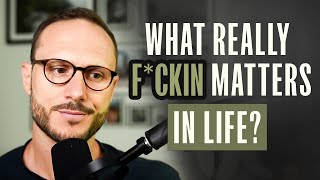
A personal, reflective talk by Connor Beaton arguing that fears about bringing children into a troubled world are often rooted in narrative and anxiety rather than decisive reasons. He offers reasons to have children — human ingenuity, potential for future solutions, personal maturation and selflessness, perspective on priorities, and small everyday moments of joy — and challenges doomsday-based excuses.
Chapters
Should you even bother having kids? Oddly enough, I get asked this question more than I expected. I have a lot of young men that follow me, but I also have a lot of men in their 30s and 40s that follow me that are asking me this question since I've become a dad, since I decided to have a child. And I get a lot of questions of, like, you know, why did you decide to do that? And what were you afraid of? And, you know, I think one of the interesting things that I keep hearing and that I've heard for the last number of years, that's the main obstacle for a lot of people, is this statement that a lot of people say they're so steeped in fear that it's pretty wild to me. And I. And I get it, because there's a time in my life where I question this as well. But I keep hearing the same thing from people. Why would I bring a child into this world? Why would I bring a child into this world? And there's a lot of other stuff. You know, kids are expensive. That's a big excuse that I hear. You know, it might infringe on my freedom, which, honestly, was one of the hardest things for me personally. And that might sound selfish, it might sound, you know, arrogant or egotistical or whatever it is, but it's just the truth. I was really afraid as a man because I value freedom, and I love having the freedom to be able to go do whatever I want, whenever I want, with whoever I want. I love that type of life. That's how I've built my life, you know, that's why I've built the business that I've built, so I can travel when I want. I can go hang out with who I want. I can go and have great experiences when I want. And I can construct my life and my lifestyle to cater to the type of days that I want to live in this lifetime. And so freedom was a big one. But I keep hearing this notion of, well, what kind of world would I be bringing this child into? And so before I even talk about, should you have a kid? And why, maybe it might be a good idea why, it's arguably one of the best things that I've ever done in my life. Surprisingly and shockingly, in a lot of ways, becoming a father.
Has been.
Surprisingly, one of the most incredible joys that I have found. I'm gonna talk about some of the reasons in a moment, but I wanna address this one notion because I was having a conversation with Esther Perel at a. At an event at a sort of, like, party that some of my friends were putting on. And Esther and I. If you don't know who she is, she has wrote a great book called Meeting in Captivity. She talks a lot about sex and intimacy with couples. She's probably, like, the foremost expert on sex and intimacy within North America. And she and I have hung out a number of times and we have these very interesting conversations whenever we. Whenever we get together. And it's in this conversation we were talking about this notion of, you know, what kind of world would you be bringing kids into? And I. To her credit, she had this very interesting take that really hit home with me. She said, when has it ever been the type of world that you would want to bring a child into?
And that kind of got me thinking, you know, because if you look at the span of human history, I think the challenge that happens with our current society is that we know what's happening in the world, right? In the last sort of 50 to 100 years, we've started to gain more insight into what's happening, right? You can open up a news app or Facebook or whatever social media platform you go on, and you can see what's happening in Russia and China and you can hear all these stories. You can see what's happening in Africa and what's happening in the UK. Whereas 200 years ago, you kind of just knew what was going on around you. You didn't have a clue that there was some massive plague sweeping through a different part of the world, killing hundreds of thousands or millions of people. You didn't know that there was some massive war going on where tens of thousands or hundreds of thousands of people were dying on some other continent, right? Unless you were in a very elite group of people who had some understanding of what was happening in the world, you just didn't know. And so the idea of, like, well, what kind of world would I be bringing people, you know, kids into was just based on your surrounding environment. And here's the kicker. Throughout human history, that has not been a good enough excuse. That has not been a reason to not have children, to not have a family, right? It has been arguably one of, you know, for any species to survive. Propagating your genetics is an incredibly important element, right? It's like some would probably argue that it's just sort of baked into your DNA to, at some level, have the desire to reproduce, because if that desire isn't baked into you genetically, then a species is going to just stop mating, stop reproducing, stop having kids. Altogether. And I think part of the damaging notion of this idea, and this is what Esther Perel and I were talking about, there's something very damaging and insidious into this notion of, well, what kind of world would I be bringing this child into? Yes, the world is hard. You know, I hear people talking about, well, you know, AI is going to destroy everything, or climate change is going to end the world in a decade. And there's all of this sort of dystopian doomsday feeder mongering beliefs and narratives that, that people have bought into so deeply that they would alter something that maybe would be life changing in the most incredible way, you know. So I hear a lot of people espousing this notion of like, well, what kind of world would I be moving my child into? It's like, well, how do you know that you wouldn't birth the child who does something about AI that helps to create the guardrails for AI or that helps to come up with some sort of clean energy that solves a lot of the climate challenges that we're facing. Like, how do you know that your kid and the child that you produce isn't the one of the special ones that's going to go out and create something that's innovative, that helps to right the ship? Like, this is the interesting thing about reproduction is that, you know, Einstein's parents didn't know that they were going to birth a child who was going to come up with, you know, this unified theory of space and time. Like, they just, they had no clue. You can't predict that. You don't know if you're going to birth Newton, you know, like the next Newton or then, you know, the next Nikolai Tesla. You don't know if you're going to birth the next, like Michelangelo. You have no idea. And so this notion of like, well, what if I, you know, I'm bringing my child into a world that's doomed? It's like, well, that's you. That's your narrative, that's your story and part of the human spirit. And I think this brings me into this notion of maybe why having children is important. Part of the human spirit is that we are always playing this game between the problems that we face as a species. And the question mark of do we have the ingenuity and the innovation to overcome those issues, to overcome those challenges? And that is, I think, part of what is at the very essence and the core of the human species and the human spirit is that there's something that is constantly within us that is trying to overcome the challenges that either life or this world or nature or biology or the issues that we have created ourselves as a species. That there is something within us that is driven, that finds meaning and finds purpose in contributing to the creation of the ingenuity and the innovation that helps to alleviate some of those problems, that helps to make other people's lives, other animals lives, other species lives just a little bit better. And for us to question that and say, you know, oh, the world is just so hard, I don't want to bring a child into that is for me a bit of a. It's a bit of a weak cop out that is so baked in fear. And look, if that's your choice, I still respect you, right? If that's your decision, I still respect you. But the world has always been hard. There have always been plagues, there have always been massive famines, there have always been massive wars. In fact, we happen to be living in an era where those things relatively to what we have experienced in the past don't exist. Right. The type of mass famine, mass war, mass poverty that has existed. I mean, just as an example, you know, a couple hundred years ago, the mortality rate for children was like almost 50%. You know, it's like something ridiculous, like 38 to 46% depending on where you were living in the world and depending on, you know, what was around. That's just like two to 400 years ago. That's insane. Whereas today it's improved exponentially. And so this idea that you're bringing your child into some broken dystopian world, I think personally says more about where that person is at and the narratives that they bought into than is an actual reason to not have children. I get it. The world is challenging. There's a lot of things that are unknown. We don't know how we're going to fix certain problems. I totally understand. I remember university. I ended up reading a book that changed my mind on a lot of this. And it was called the Ingenuity Gap. The Ingenuity Gap. I don't remember the author's name, but it was this very sort of harrowing and inspiring tale of humanity and how we as human beings are constantly kind of up against the ropes when it comes to life, when it comes to the challenges that we face individually, communally, culturally. And it walked me through this arc that we have faced in terms of every single problem that we've had to overcome as a human species. And the innovation, the ingenuity that was birthed by individuals and by communities and by tribes and. And. And cultures. And so for me, part of the reason why I wanted to have a kid was to embody that spirit. Because we can either look into the future and see something so bleak and grim that we allow it to collapse our human spirit. We allow ourselves to buy into this notion that where we're moving towards is inevitably pure destruction, right? That the whole world is going to end, that the whole human species is doomed, that everything is going to come to some sort of apocalyptic, you know, finality. And that's one way of living. But I think if we all bought into that, that would just be the end, right? I mean, that would just be sort of signing our own death warrants as a human species. And I think time and time again throughout human history, the stories that we read of individuals that have kind of gone against the grain, that have stared down the barrel of things that have been dystopian and things that have been challenging and to contribute to that, you know, to have children and say, look, the world is hard, the world is tough. It's not easy out there. There's a lot of problems. But. And part of our nature as human beings is to. Is to do something about that, is to contribute to the innovation and the ingenuity that might come up with some solution to those problems. They might come up to with some idea that can help and support and ease the suffering of others. Not so that we can live in some utopian paradise, but that we continue to embody this human spirit and this human essence. So that's one of the pieces. The next thing that I think is really important in terms of having kids is that I believe that there is a certain type of maturation and a certain type of selflessness that emerges when you become a parent. And I say this as somebody who's two and almost two and a half years into being a parent. I'm still a rookie, you know, I'm still. I'm still a novice by every means. I don't pretend to, you know, be a master at parenting, nor do I think I ever will, because I think that's a fallacy in itself. But what I can tell you unequivocally is that having my son has matured me in ways that I think would have been extremely challenging to experience had I not had a child. You know, maturation and maturity is something that comes with certain experiences. It comes with us putting ourselves into specific types of situations where we are selfless, where we are tending to others, where we are embodying What I was talking about before, right. Looking at some of the biggest problems and challenges that we face individually and communally and collectively as a human species and doing, trying to do something towards that, whether it's sacrifice based or creation based or whatever it might be. And so I do believe that becoming a parent, there's a specific kind of maturation that comes along with that. Now, I'm not saying that if you're not a parent, you'll never mature. I think that there's people out there that might say that, but I don't believe that. I think you can mature in a number of ways. You know, if you take care of an aging parent. As an example, that is a specific type of, of maturation. You know, there's nothing more humbling than being a child who has to change the diapers of their parents. Right. Or who has to help their, you know, elderly aging parents in and out of the bathtub and scrub them down and bathe them. You know, there's a specific type of maturation that comes along with that. And so can you get the type of maturation that you may get out of parenting? For sure. Do some people become parents and miss out on that maturation altogether? Abso freaking lutely. You've probably met a few in your lifetime. So I think that's another, another sort of reason why I think becoming a parent and having a child is important. And then there's a couple other reasons that I think are brief. Number one, not everybody gets to do it. You know, if you are a man, I think in America it's roughly like 75 to 80% of men will have children. And that's not accounting for the men who are raising other people's children that actually aren't theirs. We'll leave that one out of the equation. But you know, if a child is born, it's come from a biological woman. Just full story, you know, period, end of story. And so I think for a lot of men there's this reality that we live with that not all men are going to have children and not all men will even have the opportunity to have children. And certainly not, you know, no man has the option to have a child unless he's going to go out and adopt one, you know, if he can't have one with a partner and whatnot. And so I think that's a part of it. And I think lastly, it puts a lot into perspective. I think, I think having kids for a lot of people.
Puts into perspective what really effing matters in life. You know, what matters, because all of a sudden here you are tending to somebody who has zero capacity, you know, in the first few years to take care of themselves at all. You know, they are basically helpless little entities that require care a hundred percent of the time. And I think as a, as a parent, being in charge of that and then being around our children as they start to grow puts into perspective challenges, problems, how you want to spend your time, what really matters, what brings you joy. You know, I think. I think a lot of parents end up letting go of a lot of the petty garbage that they would normally hold on to if they're doing their own inner work work. You know, if you become. I think one of the interesting things is that when you become a parent, all of your childhood stuff will inevitably come up. You know, all of your ideas of, like, when I have a child, I'll raise them like this, and I'll never do that, and I'll never be like my mom or my dad or, you know, whatever that is. All of your childhood stuff comes forward. And so, you know, I'm not saying that you should have a child so that you can deal with your childhood stuff like that's, that's certainly not it. You need to do that on your own and not, you know, not burden your child with them being the reason, you know, that you get to work on your stuff. But it's going to happen and it's an opportunity for you to really get clear on what matters for you in your life. And I'll give you an example of this the other day. So out in our front yard, we have this. We have septic field in our house, right? We have. Well, we have a septic field. And I wanted, you know, I wanted the house to be sort of like as, quote unquote, off grid as humanly possible. And we're, you know, making some efforts to do that. But my son. On, on top of the septic field, we just planted these two big plots of wildflowers because I had this idea of like covering it, you know, with wildflowers. And I kind of thought that would be funny to have, you know, basically where all of our poop goes to have flowers growing out of the top of that. But anyway, on, on this, on the top of this field, there's all these rocks, right? These like sort of big and medium and small sized rocks. And my son has gotten into the habit. You know, I'll make coffee in the morning and we'll go outside and he's gotten into the habit. He Loves to go over to the field and try and pick up these medium and large sized rocks and then throw them over the side because it's elevated to this. It's, you know, sort of like 20 yards by 10 yards big. And he likes to just throw them over the side. And then there's like this, you know, sort of five to six foot drop down the side. You can walk down, but it's pretty damn steep. And in those moments, in these moments with my boy where he is just so present to picking up these rocks and like grunting, you know, it's like a very primal experience. He's like trying to pick up this rock that weighs like, you know, a quarter of the of his weight. He's like. And he's struggling and he's struggling and he's looking at me and he's like, you know, trying to get me to help him. And every once in a while he'll pick up a decent one, he'll toss it over the side. And just the pure joy that he gets out of that, just out of picking rocks up off the ground or digging them out and throwing them down the side of this little hill, he is in heaven. And what I've started to realize in these moments as I stand there in the morning drinking a coffee or at the end of the day after a long workday, is these moments require nothing else. These moments where I'm sitting with my son digging a rock out so he can throw it down a small hill, they require nothing else. There is nothing else that is needed besides my presence, besides my contribution to helping to dig out the rock, besides my witnessing of what he's doing. These moments require nothing. And I think that in itself is one of the most beautiful gifts that becoming a parent can offer, that all of us in our lives, all of us are trying to find what they call in Zen satori, these brief little moments of enlightenment where we find a kind of peace or serenity, a kind of not full enlightenment, but this, this bliss, you know, this. Okay, this peace in the moment. And every parent that I've ever talked to has had these moments where their kid does something or they're doing something arbitrary with their child, going for a walk or, you know, playing in the dirt or whatever it is. And it's just a perfect moment. And it doesn't need anything else. And it doesn't need to be captured for social media, and it doesn't need to be put online, and it doesn't need to be written about, and it doesn't need any of that, none of that nonsense is required. And in a life where we can be so busy and so taxed and so stressed and so overwhelmed and so in pursuit of meaning and purpose and function and joy and happiness and satiation of every single kind, I think that it's in parenting, if we are open to it and we're listening and we're looking, that we can find these absolutely perfect moments where nothing can be taken away from them and nothing is needed to be added. And they're just beautiful, they are awe inspiring and they are wonderful and they won't last forever. And it reminds you of, of the beauty of life, the finiteness of life, because you know that it's going to, you know, end within a matter of moments and maybe it'll come again, but it reminds you of that deep part of the human spirit that we are all so desperately looking to connect to. So I hope that you enjoyed my conversation today. I hope that when you hear people say I don't want to have kids because what kind of world would I be bringing them into, I hope that you push back a little bit or question or ask what they mean by that. I hope that you challenge that narrative within yourself. If that's something that you've experienced and even if it's not about having kids, even if it's about pursuing your goals or your dreams and you're like, well, why bother? Because the world's going to end because of climate or AI or whatever other sort of deep fear is living within your unconscious mind. I hope that you challenge that fear and you press forward anyways, because that is a huge part of what being and becoming a parent has taught me, this vital lifeline of the human spirit. So thank you so much for tuning in. Don't forget to man it forward and share this episode. And wherever you are watching, I'd love to hear your thoughts. Comment if you're watching on YouTube or DM me on Instagram. And until next week, this is Connor Beaton signing off.
More from Connor







How to Raise Strong, Unshakable Boys in Today's Culture, with Dr. Shefali Tsabary



