The Biggest Misunderstanding About What Women Are Attracted To
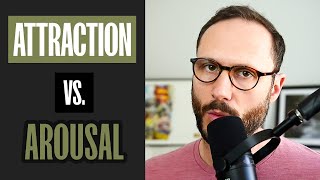
Connor Beaton (YouTube video/transcript) discusses polling data showing a discrepancy: more women report wanting sexually dominant men in the bedroom than men report wanting to be sexually dominant. He contrasts 'attraction' (relational criteria like status, kindness, safety) with 'arousal' (what sexually excites someone) and suggests cultural narratives have demonized male sexual desire, making men reluctant to express sexual dominance. He invites viewer discussion rather than prescribing solutions.
Chapters
What's going on, team? We're gonna have a short little episode here today, but we're only talking about the biggest misunderstanding about a woman's attraction. And I found this to be very interesting because it came out of. This whole conversation, came out of some research that I. I stumbled across. I was. I think I was listening to Lex Friedman podcast, and he was interviewing this woman named Ayala. I don't know if I'm saying that right. A E L L A. I think she was a former only. Only fan, star, an escort, et cetera, turned relationship data scientist. And so she uses her platform to sort of study relationships. And she had talked about this poll that I went and checked out, where she started to see that there was this big discrepancy between what men thought women wanted and what women actually wanted sexually within the bedroom. And so she put out a poll and said, you know, women, how many of you want a man to be sexually dominant in the bedroom? How many of you want a dominant man sexually? And the stats were quite high. And she also asked men, how sexually dominant do you want to be or think you should be in the bedroom? And that was quite a bit lower. And so she started to see this discrepancy emerging, that more women want a sexually dominant man than men want to be sexually dominant in the bedroom. Now, I thought that this was fascinating because I. I would not have guessed that if somebody had asked me that initially. And so I actually repeated the same poll, the same kind of survey, on my platform, on Instagram, if you're not following me, it's that man talks. But I repeated this poll and I said, men, how many of you want to be sexually dominant in the bedroom and to what degree? And so I said, you know, like, 0 to 3, 3 to 6, 6 to 8, 8 to 10. And then I asked women, how many of you want a man to be sexually dominant in the bedroom with the same scale? And what was fascinating to my surprise was that the data kind of matched up with what this woman, Ayella, had found, which is that more women wanted men to be sexually dominant in the bedroom than men wanted to be sexually dominant in the bedroom. And it got me to thinking, why is that? How has this come about.
You know, that less men want to be sexually dominant? So I followed up with the men, and I said, is it that you don't want to be sexually dominant, or is it that you think that you shouldn't be? Now, this is where it gets really interesting. A lot of the men responded by saying that their perspective of women's desires. And I asked them to DM me and, you know, message and whatnot. A lot of the men who responded said, I think most women don't want sexually dominant men. I don't think that women want a man to be that directional or sort of take charge in the bedroom. Right? So there's this growing stereotype that a man who wants to be. And I think this has sort of been in our culture for a number of years, that a man who wants to be sexually dominant is dangerous, that a man who wants to be sexually dominant is somehow toxic, and that a man who wants to be sexually dominant is actually not what women want, which is counter to a good amount of polling and data and evidence. I think I, you know, I think I had about 2,500 men and 2,500 women respond to the polling and the survey. And I think Ayala had, like, tens of thousands of people respond to the survey. So, of course, this is a smaller subset of data. And, you know, we can talk about the data itself and the efficacy of it, you know, based on the polling in the survey, et cetera, et cetera, et cetera, but the truth still stands that there's a bit of a discrepancy there. And so I think what has started to transpire is two things. Number one, I think that over the years, there's been this very negative connotation around our sexual desires as men. I think that for the most part, when you look out at the modern narrative, when you look at the mainstream narrative, and anytime that it talks about men and sex, it's generally not a good narrative. You know, it's not like, yeah, men's sexual appetites and. And energy is positive. It's great. It's like, no, you know, men are responsible for domest violence and all these things. And so what really gets highlighted is the dangers of male sexuality. And so I think that that's part one, is that, you know, the. The quote, unquote, dangers of male sexuality have become so prominent within the modern narrative that a lot of men are afraid to even go near any kind of sexual dominance. Right? Being able to express or explore what maybe is truly what they desire. Number two, I think is a discrepancy and a complete misunderstanding of what women want. And I think what I've noticed, guys get caught in, caught by, is that they go online and they maybe follow a female dating coach or they, you know, follow guys who are talking about relationship advice, et cetera, et cetera, et cetera. And they ask the question, what does a woman really want? And the more that you listen to. And I'll just speak from my personal experience, but the more that I listen to a woman describe what she wants, and I've spent a lot of time doing this. I've been on a ton of women's podcasts talking to them. What do you want? What do you desire? The more that you'll hear a woman talk about what she's attracted to, not what she's aroused by. And I think that this is the biggest discrepancy that when you listen to a woman describe what she actually wants, what she's attracted to, what she's attracted to relationally, she'll often talk about things that indicate a kind of physical or emotional safety, right? So she'll say. And maybe she'll talk about status, right? She'll say, I want a guy who's over 6ft tall, and I want a guy who's, you know, got a good job for himself, he's making so much money, he's emotionally intelligent, he cares about me, he's compassionate, et cetera. And so all of those things that she's saying are things that she's attracted to relationally, but not necessarily things that equal sexual arousal. And you hear this all the time with women who was like, oh, he was such a great guy, but I just wasn't attracted to him. What she's really saying is, he's a really great guy. I was attracted to him relationally, but I wasn't aroused by him. I wasn't turned on by him. You know, he sort of met the criteria of the checklist of what I wanted or what I thought I wanted. Right? He had a good job. He, you know, had a good family. He's very nice. He's very compassionate, very kind, but there was no element of spark. And so I wasn't aroused. So I think the biggest misunderstanding that a lot of men are operating on, that I would really encourage us to challenge, is this misunderstanding between what a woman is attracted to and what a. What a woman is aroused by. And I think if you're a young man out there or if you're an old man out there, it doesn't matter what your age is and you're single and dating or you're in a relationship, there's merit in being able to distinguish between what the woman that you're with or dating or et cetera, what she's attracted to and then what she's aroused by, because those two things are often very, very different. Right. And you can sort of see this again in female literature, Right. If you read Fifty Shades of Gray, if you read any sort of, like, sexy romance novel, if you look at a lot of the data and the research that's out there, what women are often aroused by and what they want sexually, it's not that it's counter to what they're attracted to and want in a relationship. It's simply that it's often the parts of men that we have in modern culture very much demonized and villainized in the last few decades. Right. And so again, in this data, what I really got from it, in this polling, in this survey that I found fascinating. And again, I'm not speaking about absolute, absolutely every single woman, I'm not talking about every single man. I'm talking about a kind of general population, is that there are more women who are wanting sexually dominant men. But I think that the number of men who are willing to be sexually dominant, who know how to be sexually dominant in a healthy way, maybe, I don't know if that's lessened. I don't know if, you know, more men are afraid of going down that path. I know for myself, I've talked to a lot of men who are like, you know, one wrong move and you get canceled or, you know, you say the one wrong thing or you don't, you know, something like, it's just, you're like kind of walking on eggshells. And so a lot of men are very, I don't want to say the word afraid, but they're very cautious of really getting into a relationship and expressing this part of themselves or exploring it with their partner. So I'd be curious to say hear your thoughts. I'm not going to give necessarily any. Here's what we should be doing about it or anything like that. I just want to hear what are your thoughts on this matter, on this discrepancy between attraction and arousal and the sort of volume of women that are out there that maybe want sexually dominant men and the decrease or the smaller population of men who are willing or wanting to be sexually dominant. So post in the comments below. If you're watching this on YouTube, man it forward. Share it with somebody that you know is going to enjoy the conversation, that's going to enjoy getting into the comments section and digging in on this one because the dating market is interesting right now and this conversation seems to be a hot topic. So I look forward to hearing your comments. And until next week, it's Connor Beaton signing off.
More from Connor







How to Raise Strong, Unshakable Boys in Today's Culture, with Dr. Shefali Tsabary



