"The Death Rate is 100%: what will you do with your life?" - David Kessler
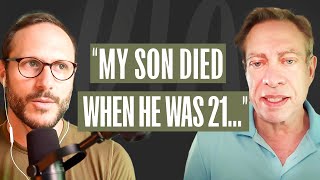
David Kessler, who lost his son at 21, explains how grief works and why men struggle to express it. He separates grieving a death from grieving an ending like divorce, walks through the stages of acceptance, and argues that meaning comes from community and being witnessed by others.
Questions this video answers
21
Seven years ago
grief.com
Paulette
"The death rate's 100%."
Chapters
One of the things is, I always say I'm not just a grief expert, you know, someone who studied this stuff academically. Besides my mother dying seven years ago, my younger son David died unexpectedly at 21. To really find some healing and grief and trauma, we need connections with other people. Men, not so good at that. When it's someone who's died, the work is to remember with more love than pain. The death rate's 100%. Like all of us are going to die someday and it could be today. I try to live my life in this world of death with the most joy and happiness possible. If this is my last day, if this is my last podcast, if death is going to happen at some point, let me go deeper with Connor. Let me make this count.
Foreign.
David, welcome to the man talk show. How are you doing today?
I'm really excited to be with you here today.
Likewise, likewise. I'm. I'm very grateful and honored to have you here. For those that are listening, I met, I met you at the, what's it called, the site Networker, earlier on this.
Year and it was therapist conference in dc.
Massive, massive therapist conference in dc and it was interesting timing because I think that it was about three or four, I guess it was maybe four weeks after my mom had passed. And you know, your work is all around grief and loss and how we sort of traverse that territory. And you had some very. Just being in your presence, I think was very helpful and hearing your story and sharing in that was very, very helpful. And then kind of diving down through your work and referring your work to my family and, you know, seeing how your work is supported, you know, supported everyone. And so I'm very excited to have this conversation. Let's start with, let's just start with the basics. Very broad. Do men and women grieve differently?
Yes.
I think that.
Women very much are comfortable with talking about their feelings. And I think when they get to intense feelings, they're much more used to discussing and trafficking in that world. I think for men, we are just not raised to deal with those intense feelings. And men, you know, many times we've had a history of pushing feelings down and that sort of works for the everyday, you know, day to day feelings. And then you get to the intense ones of grief and becomes kind of hard to hold them down.
Yeah, I find that, I find that the men we generally try and distract from the grief. You know, it's like you go through the hard breakup, you have, you know, somebody dump you or you're going through the Divorce process. And it's like, how are you doing? I'm fine. You know, I'm fine. Everything's okay. I'm dealing with it. It sucks. I'm figuring it out. It's this. Those sort of, like, platitudes. Do you have a. Do you have a sense of the toll that that takes? Like, what have you seen in terms of when. I mean, when anybody doesn't grieve? What's. What's the toll that that has on people?
Gosh. You know, I remember at a lecture, a man came up to me who was 80 years old, I think, and he said, you know, I'm finally feeling all this stuff. And he goes, every decision, every fear. I mean, I did everything from these fears and this grief and this unattended stuff in me. And he was like, I can't believe I'm just getting to it now. So there is this cost. It's really hard to see because, you know, we can become. We're pretty functional and, you know, but out of the blue, we can snap at people because we're not dealing with the anger, you know, and. And one of the things I always tell people is I hear, wait, is anger part of grief? And I'll go, absolutely. And I often think of, you know, anger as pain's bodyguard.
You know, that it's just another expression of pain. We just see that bodyguard first. And, you know, I really try and help teach people that when you see that anger, if you could make a translation of, you know, it looks like anger, it looks like rage, but it's really intense pain, then we can suddenly find compassion. I often think we have two Go to emotions when we're really under stress. Sadness and anger. Now, if someone walked in the room right now and gave me bad news, I'm the kind of person that gets angry about it. Someone else might sit down and cry. The problem is everyone gathers around the person who's sitting and crying to help them. Me, who's standing up angry. You know, people like, you need to go get yourself together, and then we'll talk to you. And it really is the same exact pain just getting expressed two different ways. So a lot of times, I think men don't get really the. The comfort and resources that we deserve.
All right, team. This episode is sponsored by Better Help Now. Obviously, you know that I am a huge advocate for therapy. There's definitely been moments in my life where my relationship has been in a rocky patch in the past where I needed some support, and I turned to really good therapists. There's been moments in my life where, personally, I've been dealing with some things that I haven't known how to deal with. And having somebody that knows the human psyche, that understands the human experience and can guide you can be incredibly helpful. I have found that some of the hardest moments of my life were the moments when I benefited the most from having a good therapist in my corner. So if you're looking for a little bit of support, whether it's your relationship, your relationships here, yourself, then try BetterHelp. You can go to betterhelp.com mantalks and get 10% off of your first month. Again, it's BetterHelp. H E-L-P.com forward/mantalks. Give it a try. I am sure that it will support you. Yeah, I like what you were saying. Anger is the bodyguard of pain. It's a very eloquent way of putting it. I remember reading there's a book by David White called Consolations, and he's got a. It's basically like him writing poetry about defining everyday words. It's one of the best books in, I think, in existence. It's really phenomenal. But one of his poems is about anger, and it. He talks about how anger is really paramount for protecting the things that we love, and that it's a deep form of care and compassion. I remember reading that the first time, and I was like, what?
Like, what are you saying?
But it really is one of those. One of those beautiful things. And I appreciate what you're saying because I think that oftentimes, especially within the therapeutic industry, we have a very feminine or feminized approach to how people should go through emotions. And I think oftentimes when a man's intensity shows up in the therapeutic space, especially if that intensity is through the channel of anger, it can really. I mean, I've seen it shut down therapists where therapists just don't even know how to react to it or deal with it. So I appreciate what you're saying. I want to talk about. Go ahead. Go ahead, please.
I was going to say.
It'S interesting, that idea of how that anger puts us off in. I have online grief groups, and sometimes I'll demonstrate releasing anger, and people will tell me how they're feeling unsafe, and I'll go, you know, we're on zoom. You know, I can't accidentally hit you with the pillow or anything. And people are just so activated by past models of unsafe anger. And I think we don't really know how to deal with it in A healthy way.
Yeah.
You know, how do we release it and let it out and share it? And for people to understand that is what the pain often looks like.
Yeah. It's also interesting because one of the things that I've seen within people who are grieving is I've worked with a number of people who have lost spouses, children, parents, et cetera. And one of the things that seems to happen sometimes is that when grief isn't processed, it can manifest in really intense anxiety. For, for some folks is that it's like when there's anxiety there, there's. Sometimes there's this grief underneath the surface that hasn't been registered. So can you maybe articulate, Because I've always been curious about that of like, why is it that the grief will manifest as anger? Why is it that the grief will manifest as an anxiety, like what's actually going on within the person?
Well, and I appreciate the examples that you used at the beginning because I always like to remind people when we hear grief, we think like someone died. And that's certainly one of the huge griefs. But as you mentioned, it can be a breakup, it can be a divorce, it can be a job loss. I always say grief is a change you didn't want. So when we talk about manifesting, oh my gosh, so many different ways, we become over controlling, we become hyper vigilant. You know, there's so much, you know, we talk about Paul Denniston's work, who does grief yoga, and he's, you know, work with Bessel Van der Kolk, study with Peter Levine and all those folks, and, you know, talks about how the issues get in our tissues, you know, that we hold grief in us. And you know, as that saying goes, you can't heal what you don't feel and we have to feel it. One of the things that's unique, I think, in our world.
Is we are one of the first generations that has the luxury of not fully feeling our feelings. We judge them, oh, I'm angry. I shouldn't be angry. Not good. We take an emotion, put it behind us, have felt, oh, I'm sad. But people have it worse. Throw the emotion half felt behind us and we have all these half felt emotions. And I think especially men just don't get taught how if you feel the feeling fully, you'll just go to the next feeling. You'll just keep moving to the next feeling. But we are so uncomfortable with it sometimes. And it is going to come out in these different ways where whether, like you mentioned, it's Anxiety or worried about the future or catastrophizing and all those things. I mean, I'm. I'm huge in that world. I always say I. I never have a headache. I only have a brain tumor. I mean, but, you know, I can make a joke about that, but it really comes from a place of grief and trauma and things not getting attended to.
I. It's interesting. Having done this work for so long with guys, I've. I've noticed that there's. There's like two core emotions that men, that we as men oftentimes, and whether that's because we're, you know, cultured not to, or we're sort of indoctrinated not to or whatever it is, we're trained not to. There's sort of two key emotions that we avoid and are the furthest away from. And one is grief. And the second one I found is shame. Like, shame is usually the emotion that a man's consciousness seems to be furthest away from. We. We really dislike it. But grief is. I mean, I've worked with guys who are about to retire or they're selling their company and they're avoiding exiting the thing that they know they need to exit because it's like, well, one, I don't know how that's going to be, and two, I don't know what I'm going to do with myself, AKA I'm going to have to grieve this, you know, this end of this chapter. And that can be incredibly hard. I want to talk about the tacticals in a moment of how to actually grieve, because I can hear my audience, you know, largely men, like, how do I grieve? What does that look like? But first, I would love a little bit about what got you into this work in the first place for those that might not be familiar with you.
Yeah. As you can imagine, no one's in the third grade or something going, I want to be a death and grief expert when I grow up. You know.
I had a mom who was in and out of the hospital when I was growing up, and I thought that was sort of the norm. And then when I was 13.
She went into the hospital and hours away in the big city. And.
By that time, I already had dealt with so much in my childhood. There had been my father, rage issues, addiction, my mother, bipolar. I was sexually abused. I mean, I was already full of trauma by the time I hit 13. And then she's hospitalized in this big hospital.
And in the hotel that we were across the street one day, Someone yells, fire. And we run out a huge fire on the 18th floor that we're watching. And the fire trucks pull up and shooting begins. Now, I have been at this hospital and this hotel unable to visit her because I'm supposed to be 14, and I was 13, and I'd been taught to lie about beer, but no one told me to lie to get in a hospital, so I couldn't see her. So here I was, bored day after day while she was in this hospital. So there's this shooting and a fire and fire trucks and police. I mean, look, I'm a bored preteen. I think I'm in an Arnold Schwarzenegger movie. I mean, I found it all really interesting until, you know, I saw police get shot and a hotel guests get shot. And the shooting went on for 13 hours. It was one of the first mass shootings in the US and from there, you know, they finally killed the sniper. It was a lesson in what not to do at a shooting. And then, you know, finally got back to the hospital, and my mother died a couple of days later. So in a span of a few days, I saw so much trauma around all of this. You know, people dying and. And, you know, I really came out of it. Sure. I was screwed up for life. I just thought damaged, broken. I could see relationships were going to be screwed up. And then I think it was community college. I hear about, you know, here's the two easy classes. Human sexuality. It's full. The other one's death and dying. And I was like, okay, yay. But I'm not going to admit that. And I went there, and I was shocked. There was a language to talk about this. And I learned about this woman, Elizabeth Kubler Ross, who did these stages. And little did I know I'd go on to write books with her. I still hear her voice going, the stages aren't linear. Stop that. Don't do that. But.
You know, I went on my own journey of healing and began to help other people along the way.
Do you want to just lay out the five stages for those who maybe just don't know, know them, and we can. We can enter into it a little bit?
Sure. And I always remind people these. This isn't the one model. There's no right way to do grief. There's denial, which is the I can't believe it. I can't believe they died. They're divorcing me. They're firing me. Anger, angry about it. Bargaining, which is the what ifs and if onlys, and depression, which is the sadness and acceptance. And, you know, Kubler Ross first wrote these about the stages of dying, and then her and I adapted her stages in our book for grief. And literally on page one, we say, there's no map. Don't make these. You know, I think the stages work so well for a lot of people that they enter grief and they just need some scaffolding. They just need to know there's some structure. But I always caution people, don't make them the be and end all.
You know, where do you feel like people get stuck? I know, and I know that each. Each area has its own place that. That people can get stuck in. But are there some commonalities in terms of where people really get stuck in terms of grief, or is it really situation and person dependent?
I think it's situational dependence, you know, but I think the two big places are. I think guilt lives in the bargaining. And I think we don't want to get to acceptance.
Why would you?
Well, what's the. What's the sort of psychological hurdle from getting to a place of acceptance?
I think we have a lot of stories in our mind that acceptance might mean, like, if we're talking about death, that the death was okay, or there's some disloyalty that we feel like if we accept it or we're just being disloyal.
I think there's a part of us that wants to.
Fight against it and not sort of accept it.
Yeah, it almost. I think for. Seems like sometimes it's like if I can, if I accept that that person is gone, that the relationship has ended, that it means something about the ending, you know, that it means, like.
I'm denying how good it was or I'm denying that I didn't want them to go or some. Some version of that, you know, what role really like, what role, when it comes to grieving, would you say acceptance plays? And when do we find our way there? Because I think for a lot of men, and I'll tell you why I'm asking this question, because it might seem vague and open. For a lot of men, acceptance seems to be a big challenge. You know, it's like, I do not like this, that this marriage is ending because I didn't ask for it. I do not like that this, you know, job is coming to a close. I hate that this is happening. And so acceptance seems to be this place where I see a lot of men get stuck. So that's why I'm asking this.
Yeah, I think there's a surrender there that we see as pretty negative.
You know, there is a. There's a mentality in us to sort of not surrender. And, you know, as you and I talked earlier, you know, I was there, too. One of the things is, I always say I'm not just a grief expert, you know, someone who studied this stuff academically. Besides My mother dying seven years ago, my younger son David died unexpectedly at 21. And I'll tell you, when I got to acceptance, there was no way. There was no way. I mean, I could accept everything, but not that. And part of the struggle for me was I didn't like it being the end.
Like, wait, that's it, he died. I'm going to accept it, and we're done, and we move on. Didn't feel right. So, you know, for me, I needed something after acceptance, and that's when I looked into meaning. And, you know, what comes after acceptance, and how do we deal with that reluctancy, just to stop there, because I do think it represents an end. And even Kubler Ross and I used to, you know, sort of talk to people about they had a finality in acceptance. They didn't want to get to acceptance because it meant the grief is final. And, you know, people ask me all the time, how long am I going to grieve? How long is my wife going to grieve? How long is my, you know, brother going to grieve? And I always say, well, how long is a person going to be dead? Because if they're going to be dead a long time, you're going to grieve a long time. Now, it doesn't mean we'll always grieve with pain. It doesn't mean we'll always grieve with pain. But I think, you know, it's really important whether we're struggling with acceptance or what it is to pay attention to those narratives, those stories in our mind, you know, whether it's like, oh, if I just accept this, I don't think I'm a really good parent. What kind of parent has a child die and just accepts it? You know, so that's why I personally needed meaning and went on to write about it. But also, you know, I think a story we have in breakups and divorce many times is, they're divorcing me. It's over, it's ending, There's a betrayal, whatever happens. And we have a story that not only is the relationship ending, but they were either the one or the only one who would love us. And I always remind people, you know, the person who leaves you isn't the one. The person who stays is ultimately the one for you. You know, And I think we have. When we go through a breakup or divorce, we have these two losses of the marriage ending or the relationship ending, and then our mind going, oh, and they were the one. Well, no one else for you. They were the one person who got you.
Yeah, the oneitis. Like that. That terminology. Right. The oneitis. It's interesting because as you're talking, this notion of surrendering feels very pertinent to men and grieving. And I'm reminded of a friend of mine who went through a divorce in the past and sort of a very masculine figure, very. I provide, I protect for my family. You know, there were kids involved. And I think one of the things that was incredibly challenging in that divorce process that he went through was that it really. It wasn't just the end of the marriage and the relationship, but I think it sort of put a crack into his own personal identity. And it's like, well, who am I if this didn't work, work, you know, I'm a failure that this is happening. And I think that that is something I. I see a lot of guys struggle with, and the surrendering into that is. It's hard, you know, it's like, really brutal, I think.
Well, I'll tell you, it's.
Identity is a really important piece in this. The identity in the marriage, in the work. I'll tell you something personal that's completely politically incorrect, but I always believe authenticity trumps political correctness.
You know, as a bereaved parent and having a father die, I mean, a father, mother, and a child dying, you would think that would be my only nightmare. I got to tell you.
Years ago, I was fired from a job. It screwed me up. That was my identity. And to this day, I have nightmares of that job loss. Now, logically, I would say to you.
The most brutal thing that's ever happened in my life was my son dying. And yet I still have nightmares about the job loss, for goodness sake, then. I mean, I've went on to become successful and do other things, but it just speaks to how it screws with us.
How it deeply affects our identity because we're raised and trained to be such doers.
You know, and when I can't do who am I?
It almost seems like the loss that causes the grief somehow cracks our personal perception of who we are. You know, it's like a threat to the Persona or the ego or the identity. And. And maybe. I don't know if this is correct or not. I'd love to hear your thoughts on this. Maybe part of the grieving process is reconciling with the part of us that is being threatened in the loss. Whether it's the ending of the marriage or the relationship or the loss of a parent or whatever. It's reconciling with what part of me is, is maybe dying alongside of that relationship or the ending of that job or the loss of that person. Is that, is that like, am I hitting something there? Does that feel.
Yeah, I think there's. I think there's always a reformulation sort of our identity. I do think that grief sort of cracks us open and we have to then decide if I'm not that, who am I and.
How do I embody what I am? And I think it's really hard for men to find their footing again in this.
Yeah, I agree. Can we back the train up a little bit? Because.
I think I remember having the conversation with you. We were walking from dinner back to the, the hotel where the conference was happening and I had, I was sharing with you about the loss of my mom and you shared with me about the loss of your son. And I was really, I was really struck by that. And it, it affected me for days afterwards because, you know, I have a three and a half year old son. And I was like, I cannot fathom what you must have gone through.
And I think there was a part of me that was like, man, how did you even, how did you even do that? You know, like I just. True. And then to talk about grief, you know, afterwards. And so I think I would, if you're open to it. Are you okay if I poke around a little bit and ask, like, how did you, how did you respond to that? And I don't know if, like, what details you're okay with sharing and not sharing, but like, how did you respond to the loss? Like, what happened? You know, what was your. How were you after it happened?
Well, as brutal as you might imagine it. It was that brutal, if not more.
Yeah.
And.
As a clinician, it's. As I entered that new realm, I did have this thought.
Oh my gosh, this pain is more intense than I ever imagined or could be. And I thought, is everything I've been saying, doing even going to be true, going to be helpful? Like, what's this new world I've entered? And I really, I mean, obviously I canceled everything and all that stuff and I was know. On tour and lecturing and all that and I stopped all that and I Only knew to do what I had told other people to do. And when I wondered what that was going to be like, the one thing that I realized, I would have liked to have written a letter to every parent I'd ever counseled and saying I had no idea how hard the pain was.
And then I had to go to a grief group. And I'm telling you, I used to tell people to go to grief groups, like, pick up some milk on the way home. I could not get myself to a grief group. It was so hard to do. And then I got to a grief group. I had taken my contacts out. I had my glasses on. I had a cap. I had to sit down in this group.
With a table five feet away from me with my books. And I couldn't be that guy. I had to be the father that had to bury a son. And.
You know, I. I think eventually.
I always talk about playing things forward, and I really thought, I live in this cute neighborhood, little houses. And I thought about how in 10 years, like, some teenagers could be going by and saying, hey, is that a haunted house? The one with all the cobwebs? And the other kid would go, no, it's a grief expert. And then his son died, and he never comes out anymore. I thought I could so be that guy. I mean, I so played that out as a reality. And as I kept excavating the pain and going through the pain, you know, I eventually realized we all come to a decision.
And it's a false decision, about are we going to live again?
Are we going to engage back in life? And I had to really think about who my son, David was and what he would want. And he loved my work. He wouldn't have wanted his death to construct my work. He would want to expand it. But, you know, even when I help people now and I talk to them in time about living again, they'll say, it's not possible.
Life again after this divorce, this breakup, this, you know, death of my spouse, whoever it is, is impossible. My parent. I'll say, can I.
You know, touch your wrist? And I'll touch their wrist, and I'll go, your heart's still beating. Go home tonight. Check your toenails. They're still growing. I know you have this illusion that we have a decision about whether we're going to live again, but we're actually living again. We're still living. The real decision is, do we participate in this life, or do we shut down and become the old man with the cobwebs? And, you know, I decided to live again and find meaning in his honor.
I think you're, you're bringing up something that's so valuable and I've heard so many men talk about, which is.
Some version or iteration of, I'm worried that if I go into this grief, I might not come out. I don't know if I'll be able to come out the other side of this. It feels like it's too much. It feels like it's too big. And so a lot of us, you know, try and jump on the grenade of grief, to use a very, you know, strange analogy. But we try and jump on it and cover it up and smother it and pretend like it's not there. And, you know, we pay the price with smoking too much weed or drinking too much or, you know, watching porn and all this stuff that we need to cope because I think, you know, when we're not allowing ourselves to move into the grief and excavate the pain, as you were talking about, there's something that we need to hold the lid down on, on the grief. And so what would you say to people that have that sentiment that maybe now or in the past, we're in that place where they were like, this just feels like it's too much. I don't know if I can actually enter into it and come out the other side.
Well, and I try to validate it is too much. You know, people say to me, like, oh gosh, grief, that's like touching a hot stove. I went, no, it's kind of like the hot stove falls on you. You know, it's, it's bigger than just touching the stove. But I do remind people, I say, you know, we come from a long line of dead people. Like every ancestor we had died, their loved ones died. There's something in us that knows how to do it, but we're not equipped often to deal with the pain. And so we do have to numb out and distract. And I, and I, you know, I try to, to help people understand that their protective mechanisms that, you know, the drinking, the poor and the pot, whatever it may be, are them trying to survive and very short term fix, you know, that like if they can understand that just helped them through the intensity. But let's not make that the way you're going to handle this or that will be your whole life.
I think what I'm gathering from you is that we, we do let ourselves go into it. There is a resiliency that can be birthed out of that. We don't have to know what the other side looks like. You know, I think that's the big fear for a lot of guys is I don't know who I'm going to be on the other side of letting myself move through this grief. And I think that that's right, you know, that like, you, you are changed by it. Like, would you. Would you say that grief is something that can. Has the capacity to reshape our identity, to reshape who we are in ways that we can't imagine?
Yeah. I'll tell you, one of the things you and I talked about before we went on was that I just finished this workbook, Finding meaning, the workbook for it. And I got to tell you, I spent a lot of time with the Hero's Journey.
About how.
We go through this journey into the dark night, and we do come out the other end changed. And, you know, I like to remind people, especially men, you know, I call like my online group, it's Tender Hearts. But the subtitle is, you know, a Community of Courageous Grievers. I say, you know.
It'S great to do the, you know, the cold water plunge and challenge yourself and all that, but I also remind people the dad dying is also a big challenge of life. You know, the sibling, the spouse, you know, those are huge challenges, and it's actually real courage to face them. And I think if we allow ourselves to know, we can walk through that. I mean, here's one of the challenges about it is.
As you know, everything is showing us to really find some healing and grief and trauma. We need connections with other people.
Men not so good at that, you know, not so good at that. And it's important. You know, when I work with the police department, I do what I call, you know, shoulder to shoulder counseling. We take a walk. It's a different kind of talking that I think men need. And, you know, we. We just need one safe person to talk to throughout that process, whatever that may be like. And it's amazing. There's something about grief that it just needs to get witnessed by another person.
Yeah, I. I agree wholeheartedly.
It's interesting because I think. I also think that there's many ways to. To work through it. I'd love to move into the tactical here in, in a second and kind of create two different scenarios because I've. I've noticed that, you know, men sometimes will walk through grief differently if it's the loss of somebody versus the end thing. And one of the things that I found is it's the tuning into the absence of the thing, you know, the ending of the job of, like, not going into that. That environment and the routine, not being able to connect with that person. I mean, I remember after my mom passed, the most challenging and brutal times were when I wanted to message her, you know, because we had gotten into this because she was. She struggled with addiction for a very long time. And when she was diagnosed with stage four cancer was when she got sober, you know, for the first time in her life. And it was a very. At first it was, you know, it was very rewarding, but it was very challenging at the same time because I felt like I had gotten my mom back after, you know, 20 years of her being immersed in her addiction. And we got into this routine where almost every day I was messaging her or talking to her, I'd send her photos of my son, kind of keep her updated. And I noticed that it really helped her spirits as she went through her chemo and her process and the absence of that contact and that connection was the really brutal part. At first, I found myself for weeks after she passed in the morning, like, taking a photo of my son and, you know, going to message her and send it to her. And I was like, oh, right, she's not there to receive this. And I remember actually sending it a couple times just out of routine, just out of habit of, like, I know you're not on the other side of this, but I want to go through the action anyways. And it was in those moments where a lot of the grief was just like, right there, very accessible. I remember some mornings just, you know, breaking down and my. My son's like, what is going on with dad? Like, it's 6:00' clock in the morning. I'm. I'm giving him a banana and some peanut butter and I'm crying in the kitchen, you know. But I think that there's many ways that we can find not only access to grief, but. But move through the grief. And so I'm going to give you two different scenarios. Let's start with the ending of something. The ending of a relationship, let's say. How would you counsel somebody in moving through the ending of a relationship or a marriage? What are some of the just sort of basic principles or steps that they can follow?
So I think they first have to allow it. They have to allow that sharp pain to hit them.
I think do our best to resist the fighting of the pain. And I think there is a sense of.
Recognizing there's a secondary pain, that many times we outsourced our Identity. Oh, who I am is her husband is. Whatever it is. And to realize.
I have my own story.
And right now, I'm in a sad part of my story, but my story doesn't end with her or him ending. My story continues. And to allow that process to happen and to just talk about it with someone and, you know, it's just. It's easier than ever. I mean, you know, I think there was a time when people would say to me, I got no one to talk to. And it was really hard. But I mean, now between grief groups and online support and therapists who are online and coaches, I mean, there are people out there. There is community to find, but it is hard, and we have to take that step. So I think there is this sense of feeling the pain and recreating our life. You know, I always say there's two things we have to do is grieve fully and live fully. In the beginning, you're going to be all about the pain, and then you got to begin to live your life again.
How does someone. And I know this might be a bit of a nebulous question, but how does someone begin to determine where they are in that spectrum of feeling the pain and then beginning to live again?
You know, I think that.
Early on, there's nothing but the pain. And a lot of times we say things like, I can't keep up with this or this, or I'm not going to go to my tennis club, or I'm not going to do this, and distraction's so important. I even say, you know, there's a healthy denial. We really heal by touching the pain and distracting. Touching the pain and distracting. So try to let life in as you can. You know, the more we shut down our life after a loss, the more isolated we become.
The harder it becomes to heal.
Yeah. Yeah. So. So shutting down and. And becoming stagnant, Closing off, maybe not the best strategy, which. Which is funny, because I think that's a natural tendency for men. Right? It's like. It's like, let me just pull the nets in, you know, sit on the couc, talk to anybody and drink it. You know, drink a 40 every day.
And, okay, do that for a week. You know, like, I mean, there's a lot of things, you know, I always say, you know, you. You know, there's always also a seat on the bitter bus. You know, there's plenty of things to do. You just don't want it to become your way of life.
Do you?
You know, when people come into this work, let's say they've gone through divorce or they're going through divorce. They're going through a really challenging process breakup. Is it, you know, is it beneficial for them to write? Is it beneficial for them to. To see a counselor? You know, obviously the, the grief groups, I think would be incredibly beneficial. But what, what are some of the tools or resources that you found can be very helpful for people to process? Because I think sometimes we, as men, we go to those tools and resources first before we go to the. The connection and the people.
Yeah, I, you know, listen, I don't think everyone in grief needs a therapist. I do think we need someone to share with. So maybe it's the friend, maybe it's, you know, the co worker, whoever it may be. Obviously, if someone's really challenged, you want to get some help, and that may be a therapist, but I don't want everyone to feel like, oh, you know, you need a therapist to get the. Through grief.
Is it different going through loss? So if somebody is out there, you know, that maybe has just lost somebody, should. Should they, or can they approach it differently from, you know, having the ending to a relationship versus having somebody pass away?
Yeah, it's a very different thing. You know, when. When it's someone who's died, the work is to remember with more love than pain.
When someone has.
Ended something with us, a relationship, the work becomes about finding ourselves again and finding our life again and rebuilding that identity we talked about.
Yeah, I think that's a very important distinction.
If there's folks that are out there listening to this who have lost somebody recently, where would you encourage them to begin? Where do they start? Because I think, you know, again, the reason why I'm asking this is that oftentimes we as men want tactical things. And so when these very nebulous things like grief come up, it's like, what are the, you know, we. We as men often want the. Like, what's the five things I should do? You know, I just lost this person in my life. Like, what should I start with?
Yeah, I mean, look, there's lots of resources out there. You know, I'm@grief.com. there's a lot of free videos, there's YouTube videos, there's things like that. I think, you know, when we talk about the doing, it's to show up for ourselves. We need to show up and let this be and not deny it. I think the biggest thing we cannot do, you know, there's nothing worse than denying reality. I'm fine. No, I'm actually not.
Have You. Are you familiar with Ernest Becker's work with the Denial of death? Have you. If you read the book before.
I haven't.
It's a really. It's a really interesting, really interesting book. But one of the. One of the sort of core pieces is the notion that people struggle with death anxiety and that there's this, you know, most human beings carry around this deep fear that is part of human psychology, that there's this anxiousness that is pervasive within everybody about a fear of death that most people are in denial of.
Do you.
Do you think that that denial of death sometimes shows up when we've lost somebody? That, like our own mortality is sort of in our face in a way that we can't avoid any longer?
I think it does crack us open, and it's so important to allow that to happen. And I'll tell you, we have fears around that. One of the things I'll always remember is before the pandemic, I was that 30 city, 3 country touring guy and would go to one hotel after another, and we'd have a meeting room of 2, 300 people that were there. And while I was in that room, the next room were the realtors. The next room were the nurses. Down the hall was the Rotary Club. And there'd be all these meetings going on in the hotel. After the end of the day, the cleaning staff would be coming through, and they would go, what were you teaching? And I go, why do you want to know? And they said, because your folks were laughing the most.
And I would go, grief. And they would go, what kind of grief? And I would go, the kind of grief you're thinking of. And they couldn't understand it. And here's what I think happens when you allow yourself to go there.
You have a deeper capacity for the pain, but you also have a huger bandwidth for the joy in life, too. I think people in that room probably cry a little harder, but they also laugh a little harder. And, you know, it's fascinating. One of the things is that I'm around death a lot.
See it, hear about it.
When I really sit with.
Oh, the death rate's 100%. Like, all of us are going to die someday. Hundred percent.
Wait a minute. So that means I'm going to die. You're going to die. Holy crap. And it could be today. Like, it could be today. I try to live my life in this world of death with the most joy and happiness possible. And for me, when I let that concept in about holy crap, death could happen. This could Be the day that makes. Wait a minute. This could be my last podcast. If I let that in, I either have to do two things. If I haven't been living my life currently, I gotta rush off and apologize to 30 people and tell them I love them for the first time. But if I've been current, I can go, well, wait a minute, if this is my last day, if this is my last podcast, if death is going to happen at some point, let me go deeper with Connor. Let me make this count. Let me really try to show up in a big way for this day and, you know, if I show up in a big way for this day and then hopefully don't die, I get another day to do this again. So I'm a big believer that, you know, fear doesn't stop death, fear stops life.
So I try really hard to allow that death fear in and go, okay, we're going to die, so what am I going to do in the meantime? Who am I going to be?
Yeah, I think that's. That's part of. I love what you said there. Fear doesn't stop death, fear stops life. And I think you just summed up part of Ernest Becker's sort of thesis is that the fear of death is what prevents us from really living and that we all carry it. And part of our work is to come into contact with that fear of our own mortality and to allow it to inform us in some way, in a meaningful way or a quote unquote healthy way or however we want to frame that. I found that after my mom passed once, the sort of initial, real deep pain and that part of the grief started to subside was this broader questioning of man. She passed at, you know, she was just about to turn 70. I'm 40, so if I passed at the same age, I'd only have 29 years left. And it really made me start to contextualize, like, what's not in alignment in my life, you know, what's incongruent, what am I living with that I, you know, that I'm saying yes to that. It's definitely a no, you know, And. And what do I want to achieve? What do I want to accomplish? What I want to see what I want? And so it really. I found that I was thrust into this. Into this position of.
Almost contemplating my own existence in a way that wasn't possible without that mortality sort of being very close to me, you know, being very close to my consciousness. And I found that to be incredibly. I mean, I wanted to say useful, but I Think it's beautiful in a way. Is that something, I mean, did you eventually get to that place after, after your son passed or is. Was it a very different process for you?
I'll tell you the thing, it really disrupted.
I think we all live in our assumptive world that, you know, when my younger son died, I had a.
89 year old aunt who was next. I had a 17 year old dog who was next. You know, I think we have this unconscious lineup of who's going to die. And for the most part it does work that way. The older you are, you know, that is the closer to death you are. But someone like my son comes along and tragedy comes along and disrupts that. And I think one of the things that made me really. And I'm constantly trying to take this in is.
I don't have any control. And the only thing I have control over is showing up with the people around me and to realize.
I don't have any control over who's next, what's going to happen. But I have a lot of control over how I show up and how much I get from this life and how much I give. So I really like put my control to work there.
Yeah, I think that's. It's interesting because grief and loss almost, it really humanizes and humbles us in a way. And it was interesting because I found that when I noticed that when we were having dinner and I started to share about my mom, which was still quite raw and emotional at the time, I found that you were, you were incredibly present. Like you were all like all of a sudden you're like, you were right there. And I find that that's the. And everybody was, you know, at the table. But I find that that's the experience that most of us have, is that grief can bring us into.
Into the present in a way that is sometimes hard to muster. You know, it's sometimes hard with all the distractions and all the bullshit and everything that's happening in the world and suddenly grief can cut through all of that bullshit in a like a sort of surgical way where it's like, no, this is what matters right here, right now, right in this moment. It's just this conversation and connection with all that said. Talk to me about the sixth stage of grief or the six sort of like pillar.
Because you've written a book called Finding Meaning, the six stage of Grief. And I'm hoping that you can just kind of unpack and give some light into what that is.
Yeah, you know, as I mentioned after my Son died, I was like, just can't stop at acceptance. I needed more. And I was always trying to figure out the meaning part. And, you know, when I would talk to people in grief about meaning, and I knew some of this before my son died, sometimes it didn't register. They would go, there's no meaning in a horrible death. And what I realized and eventually wrote about is.
The meaning. People would go, there's no meaning in a horrible death. There's no meaning in a divorce, a breakup. Of course not. There's no meaning there. Meaning is in us. It's what we do. Meaning is who I am, what I become, what I do after my son dies, after your mom dies, what do we do? Who are we? How are we changed by their life, by their death, all those things. Like you said, some of that might be the brevity of life, that we're like, holy crap, not here forever. Let me appreciate this more, or let me put in perspective what's big and what's small here.
Or maybe someone dies in a way they shouldn't, and we try to make the world better. It's a million ways to find meaning. But, you know, I also. We think of meaning. We think about the person who does the foundation or the 5k run. And I always say meanings in the little moments. Meanings in the little moments. You know, I get to come on here and talk about my son with you. You get to talk about your mom with me. Just little moments. What's your mom's name, by the way? Her first name?
Her name is Paulette.
Yeah. You know, look at Paulette. Can't fully die. We're here talking about her. She lives, you know, in this moment, in this conversation that's really meaningful to me. This becomes a meaningful moment. Someone might be listening that they hear something they need today that's really meaningful. So to think about that. And one of the things that was the downside of writing a book called Finding Meaning is people would go, oh, meaning, I'm not there yet. I'm in pain. And I'm like, the book will help you get through the pain. And I'm like, no, I'm not buying that book. So I wanted to find a way to really help people, as I said earlier, excavate the pain. And that's the workbook I just did. And I'm excited that it's coming out. And it really is as if we were sitting down.
Working with me, what would I have you do? What would we talk about? And, you know, I think for all the doers out there. It's going to be great because it's going to give so much structure to what to do with all these feelings and how to unpack them and get through them.
Yeah, I think it's very, very important how. And again, this might be a big question, but how does one start to find a sense of meaning on the other side of the loss, the ending that can sometimes feel insurmountable. And I know it's, you know, you got to come to it at the right time, but where are some of the clues that we can look for? Like what are some of the breadcrumbs that you can give people?
Yeah, if I can real quick, let me just read you a couple of guidelines here that I think will help to sort of solidify this. Here's seven things I wrote about meaning. That one, meaning is relative and personal. Two, meaning takes time. You may not find it for months or even years after loss. Three, meaning doesn't require understanding. It's not necessary to understand why someone died to find meaning. And four, even when you do find meaning, you're not going to feel it was worth the cost. You know, it's so meaningful to write a book and help people and include my son's life and death in it. I'd still rather have my son. And five, this is a big one for our modern society. Your loss is not a test, a lesson, something to handle, a gift or a blessing. Loss is what happens in life. Meaning is what you make happen after. And six, only you can find your meaning. And seven, meaningful connections will heal painful memories. You know, when I think about Paulette, I have to think there's a part of you that died with your mother and there's a part of your mother that lives on in you.
Your work is how do you nurture those parts of her that live on in you? How do you keep her alive? That's the meaning.
Yeah, I think that's, that's a great.
Framework for sure. I, I mean, I'll give an example of this because it's, I think you, you sparked it. Like, how do I.
Let her live on in me? I found myself. I, I built a above ground garden beds. I built like a raised garden bed. And my mom was a huge, huge gardener. Loved it was always outside, you know, all spring, summer, just always outside in the garden, in the backyard. Ever since I was a kid. And I have no interest in gardening. It's not something that, that is necessary for me. But I found myself, I was like, I'm going to build this garden bed and, you know, this raised garden bed, and my wife will, you know, plant some stuff in it. And it was interesting because as I, as I was building.
Was sort of like this weird, strange mission that I was on, you know, and I realized that it was almost like this tribute or memorial to my mom and this sort of carrying on of a part of her that.
That I really appreciated, you know, that that was just a huge part of who she was and what she did and, and how everybody knew her. And almost having like this tribute or this memorial on our land at our house that we could tend to. And so that just that sparked that, you know, finding that way to sort of let that. That live on. But, well, listen, we could talk about this topic forever. I have so many more questions to ask you about, specifically about death. But I feel like I'll leave that for a second conversation at some point in the future and we can go deep down that rabbit hole, which seems to come up a lot on the show. But for everybody that's out there listening, that wants to dive into your work, read your books, you know, get this workbook to, to work through their own grief. Where can they find you?
Yeah, if they go to grief.com that's the main site, grief.com I also have a site set up for the new book that will do a live companion class that they can find, find@griefbook.com so we'll have that available. And, you know, obviously my Instagram and Facebook and now even.
Tik Tok. So there you go. You know, lots of places to reach out and, and find, you know, wonderful.
We'll have, we'll have the links to all that in the show, notes for everybody that's out there and, and interested. And I definitely, really strongly recommend you go pick up a copy of one of David's books and definitely check out the workbook if you are like me and you want to do so. David, thank you so much for joining me today.
Thank you, Connor. Appreciate being with you.
Likewise. Likewise. And for everybody that's out there, this is certainly one of those episodes. Man it forward. Share this episode with somebody in your life that, you know, could really use this and could use the words and the work that were laid out here. Until next week, Connor Beaton signing off.
More from Connor







How to Raise Strong, Unshakable Boys in Today's Culture, with Dr. Shefali Tsabary



