The Epidemic Of Male Vacancy
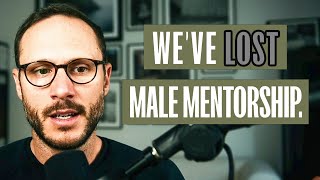
Connor Beaton’s YouTube talk "The Epidemic of Male Vacancy" argues that men are retreating from key social institutions—fatherhood, higher education, the workforce, relationships—and that this retreat is visible as shortages or ‘vacancies’ across family, education, employment, and male social networks. He frames the causes in three categories: social (changing cultural narratives about masculinity and masculine roles), structural (institutional incentives and environments in education, therapy, and work that do not attract or retain men), and relational (declining father presence, fewer male friendships and mentorships). He emphasizes this is a complex, multi-causal problem (not individual blame or solely women’s fault) and closes by urging conversation, more male-focused communities, and practical interventions to rebuild male relationships and competencies.
Chapters
All right, so today we're going to be talking about something that I have labeled the epidemic of male vacancy. The epidemic of male vacancy. And I haven't heard anybody talking about this, but I think there's people that have been talking about different parts of it over the last couple years. I'm going to try and consolidate it in. I'm going to be talking about why this is happening, what it looks like and some of the contributing factors, but also what we can start to do about it. Before I get into that, though, I would love to hear your thoughts. So as you listen to this, as you watch this, please share your thoughts. If you're watching me on YouTube, share your thoughts there. I love reading your comments. You guys have some really, really phenomenal insight into some of the things that are going on with men. And if you're listening to this, feel free to DM me on Instagram. It's just N talks. I'd love to hear your thoughts. And I read all of my DMs. So with all that said, what the hell is epidemic of male vacancy? You have probably heard stats like one in four children will grow up in a fatherless home. There's a vacancy of fatherlessness. You've probably heard stats like, in the next five years, for every one male graduate from universities and colleges in America, there will be two female graduates from university and colleges, meaning that men are getting graduating less. Men are actually enrolling less into colleges and universities than ever before. So there's a vacancy in continuing education. Then you look at stats around men in the workforce, and there's been some really great research that's come out on this that has shown that something like 7 million men in America that are eligible to work, that are of eligible working age between the ages of 24 and 55, are not working. And they're actually not searching or even looking for a job. And when you dig deeper, what you see is these men are, you know, spending thousands of hours on screens and shows, and they're on medications and, you know, government programs and et cetera. So there's a. There's a vacancy that's starting to show up in the workforce. Then you look at things like marriages and relationships. You see that less men are interested in marriage, less men are looking for a relationship. You have more men living at home than ever before. You actually have more men living at home between the ages of 18 and 30 than you have living with significant others. So there's a vacancy of men in so many different parts of life right from Higher education to fatherhood, to the institutions of marriages, to the workforce. You have men vacating a lot of these places. And I think that there's some very good reasons for why those things are happening. And so I wanted to break this down into a couple categories that we can talk about. And then, of course, I would love to hear your. Your thoughts on why you think these things are happening. But first, I just need to preface this. Number one, I want you to know that if you're a man and you're watching this, you're listening to this, and you're hearing me say these stats, I am in no way blaming you. I do not think that the whole blame game, finger pointing, this is your fault. Men need to pick themselves up by their bootstraps bullshit is helpful, right? Maybe in some ways. Individually, yes, of course. Getting your life together, getting yourself into better shape, you know, getting a good education, starting a business, these types of things, pursuing your interests, those things are, of course, meaningful. They're productive, they're important, and they are very beneficial for your life. So this isn't to say that you getting your shit together isn't meaningful or helpful individually as a quest, as something to do in your life, as a direction and aim. That can be incredibly purposeful. But when it comes to this conversation, I'm not putting blame on you as an individual, because I don't think that's helpful. And secondly, I'm also not, just so we're clear, going to point my finger at women, because I think a lot of the times in these conversations, what ends up happening is two things. Number one, men are told, pick yourself up by your bootstraps. What did you do to cause this? Right? This is all the patriarchy's fault. Or the conversation is, well, this is because of the rise of feminism, right? This is women's fault. Or, you know, the sexual revolution caused this. And while there are contributing factors from a lot of those things, oftentimes what happens in this conversation, that's complex. When we see men retreating from a lot of these spaces, a lot of these institutions, a lot of these social structures, people are looking for the, like, single reason or why it's happening, right? The smoking gun of what's causing this. And I don't think it's that simple. I think it's a little bit more complex than that. So let's dive in. I'm gonna. I've broken this down into three categories. Structural, social, and relational. And we're gonna start with the social things that have contributed to male vacancy from A lot of these areas of life, whether it's institutions, businesses, workforces, you know, relationships, marriages, et cetera. Let's start with social, because I think that is the one that normally gets the most attention in the media. So first and foremost, you know, we can look at the very real shifts that have come in the roles of men within our society since the sexual revolution, since feminism has come onto the scene. It's not to say that those things were necessarily bad. I'm not here to have a discourse or an argument or a debate about. About whether those things were good or bad. I'm gonna leave the morality of the sexual revolution and feminism to the side for the moment and just say what those things have done is unequivocally altered the role that men play within our social systems. And in some ways, they've been very good. In some ways, they've been harmful. But one of the things that's been a byproduct of that is that a lot of men socially have either felt or been told directly and indirectly, that they are not needed, that they are not wanted. And I don't know about you, but as a man, when I'm told that I'm not needed and that I'm not wanted, I exit, right? If I'm working for a company and I'm told that I'm not valued, I quit. I'm out of there, right? If I'm in a relationship and a woman says, I don't need you, I'm like, well, then why am I here? So for a lot of men, there's this linear connection. There's this very direct relationship that we have to the places that we inhabit that basically says, I feel a part of this. I know that I'm a part of this institution, relationship structure, et cetera, by what I can contribute to it, by my role in contribution to it. And so if you as a man. If we as men, are told individually or collectively that we're not wanted somewhere, that we don't belong, that we're not needed, then we're going to naturally step out of those systems, structures, relationships, et cetera, because part of our masculine core or masculine role for a lot of men is contribution. We like building, creating, directing, leading, et cetera. And if we're told that we're not needed or welcome in those environments, we will step out of them. So part of it is this social narrative that has become really prominent within our culture that is constantly telling young boys and young men that they are not needed, that they are not wanted. Then there's the social narratives of, you know, masculinity being toxic. If you want to behave like a man, that's bad. If you, you know, things associated with being a man or masculinity are bad or harmful. Right. I mean, this was the case with the American Psychology association saying that traditional masculinity is harmful. So I think for a lot of men over the past few decades, they've continued to hear these narratives that socially being a man, being male, being masculine, is inherently bad or wrong or harmful or toxic. And that's not always the case. It's not that everybody's saying that, but you can't deny that that narrative has been very socially pervasive. Next is from a social standpoint, I fundamentally believe that we are in one of the first times in human history where what it means to be a good man and what it means to be a masculine man has become more defined by the opposing sex and the opposing gender than it is by men. Right. And so we're in this time where women have more say and are defining more strongly, especially within social media and news and, you know, traditional media that is very largely being dictated, you know, what it means to be a good man, what it means to be masculine, what masculinity is. All of that is really being defined predominantly by women and by the feminine or female narrative. And largely what this does is it says in a very sort of simplified way, and I know that I'm simplified, simplifying and generalizing it, but what this narrative says is you as a man would be better if you just acted more like a woman, and you would have an easier, better life, and they would have an easier, better life if you just acted more like a woman. Now, the jury is still out on that, but the. The premise in. In sort of some is you should be more emotional. You should have more emotional intelligence, which isn't necessarily a bad thing. Right. You as a man, having emotional intelligence is great. There's nothing wrong with that. I would advocate for that every single day of the week. I do think that there is an immense amount of value in that. But socially telling men to be less masculine and that masculine qualities or traits are somehow bad. Right. It has become more socially acceptable. And I think I'll summarize it like this. It has become more socially acceptable for women to embody some of the traits that have always been associated with masculinity, assertiveness, directness, et cetera. Then it is for a man to embody it. Right. It's become much More socially acceptable and in fact, celebrated and cheered for women to embody these traits that have always been connected to masculinity, then it is socially acceptable for men to embody those same traits. So I think those are some of the social factors that. That are affecting men that are causing them to vacate. I think structurally, we'll move into the next category. Structurally, men aren't really being incentivized to move into some of these institutional frameworks, right? Like university. There's no real incentive to enter into higher education. You can look at some of the data and see that, you know, in a large way, people that graduate from college, from university, that get a bachelor's degree or master's degree, on average, they will. They are more likely to earn more money per year and over the course of a lifetime. But for a lot of men, and myself included, you know, you can be incredibly happy working in the trades, and you can make a good amount of money working in the trades. Not to mention that the structural institutions like universities and colleges have not become, and I don't know how else to say this, but they have not become places that most men want to spend their time. And they've become places where I think what I've heard a lot of you guys saying, whether you're tuning into my show or I'm meeting you on the street, a lot of you guys are saying, like, I don't really know if I want to go to university. I don't really know if I want to go to college because I feel like being a man and being masculine is somehow not wanted in those spaces. That being direct, being assertive, being honest and open, that those things aren't welcome. Speaking what's true for me, being honest and direct, that those things are going to get me canceled. And I feel like I'm going to have to go to university and not be myself. I'm going to have to trade my authenticity to go and get my university degree. So I think that in some ways, college campuses are shooting themselves in the foot, and institutions are shooting themselves in the foot from attracting more men and incentivizing more men from actually entering into those systems. And again, like I said, right now, in some of the colleges that you see around America, you have for every one male graduating, two women. And this produces a problem that I'll touch on in relationships. But this produces a problem in the sense that it reduces the perception of viable mates for women, right? Educated women want to date and marry and sleep with educated men. This has been proven. This has been studied. This has been researched. I think it's 78% or 80% of women that have bachelor's degrees or university degrees prefer strongly men who also have college education, and they would prefer to date men who have that college education over men who are, aren't. So if you have less men going to these university institutions, you are creating a surplus of men that women look at and will, will sort of disregard as a viable mate as somebody that they can date. So that's, that's a big part of the structural piece. I think when you look at things like the support networks for men or boys, those are largely being infringed on. They're collapsing. You know, you have Boy Scouts of America that are no longer only for Boy Scouts. And you know, whether or not you think that that's a good idea, that's a different conversation. But these institutions that have largely been for young boys to learn skills, to learn how to socialize with one another, to be, build male relationships, to learn from older men, those systems, those structural systems within our culture and our society are collapsing, and they're collapsing rapidly. So that's an example. Right. The other example is if you're a young man who goes through the system, the structure of education in our culture and society, the likelihood of you interacting with a male teacher is very, very slim. Right. It's like 2% of kindergarten teachers are men. Right. And then when you get into grade one to grade 12, you're likely to have a ton of female teachers. I think it's something like 75% of teachers in America are women. And so if you're a young boy, you're going to go into the structure or the institution of education, and you're largely going to be taught by women. And so you're not going to interact with men. And then, you know, if you go to college, same thing there, right? It's going to be an abundance of women. And then lastly is the support systems. When you look at the structure or the institutions of mental health, of therapy, of psychology, again, these places within our society where men are being encouraged to go constantly, right? Like, there's this huge push that says men need to go to therapy, men need to be more vulnerable, men need to open up. And yet when you really look at the institutions and the, the, yeah, the, the institutions of therapy and psychology, they are dominated by women, right? I mean, therapists, for example, is in the high 70 percentile of being women. And the framework that's often used is very feminine oriented, very female oriented. When you go into a lot of therapy, a lot of it, and rightfully so, in some ways, is around validating your experience, being able to understand what you're experiencing, being able to comfort you and console you. And all of that's beneficial. All of that is necessary if you're a human being. On the other side, though, what men are requiring a lot of the times is also the capacity to develop certain skills and certain competencies in their life that are going to allow them to be more successful. And that should be an active part of therapy. Right? If you go into therapy because your marriage or your relationship is struggling and your experience of the hardship that you're going through is empathized with and validated, that's helpful. But if you're not being taught how to communicate more effectively, how to set boundaries, how to say no, how to, you know, express what you want sexually, et cetera, then you're not actually developing the competency and the skill that's likely causing some of the problem and the challenge that's in your relationship. And so a lot of these different structures.
Are set up in a way that is not taking into consideration how men actually operate. And the last example that I'll give is the structure. I'm going to return to education. When it comes to young boys entering into the education system at a very young age, we know unequivocally that the majority of young boys develop differently and slower than young girls. So young boys, prefrontal cortex will actually develop slower. And you can read a bunch of this from a whole bunch of different researchers. My favorite is Richard Reeves. He talks about it in his book of Boys and Men. But a young boy's prefrontal cortex is going to develop slower than a young girl's. And what this means is that simple social skills, cognitive skills, language skills, mathematics, etcetera, are going to be delayed in young boys. And so they're going to enter into an education system that is, again, largely run by women, which isn't inherently a problem, Right. I'm not saying that that's a massive issue. It's just there's a vacancy of male role models. What's going to happen is they're going to enter into that structure and they're already going to be on the back foot. Right? And so. And there's no real altering the structure of that system to support those young boys lastly. And then we're going to get into what the heck do we do about all this? Lastly is relational, as I said, there's a vacancy of fathers In North America, right? One in four households will lack a father figure. One in four kids are going to grow up without a father, their biological father in the household. So that's an automatic vacancy. But when you drill down into some of the data of what a man's life is actually like, what you're going to find is that over the last three to four decades, there has been a significant decline in male relationships, in male friendships, right? So we are living in the era of the highest percentage of men between 18 and 30 living at home. We're living in the era where men, since we've been tracking this, have the lowest amount of male friendships in their life, the lowest amount of people, close friendships, to the point where 15% of men in the UK and I think in America as well, you can, you can fact check me on that one. 15% of men say that they don't have a best friend or a close friend at all. They can't even identify one. And we've gone from the 60s and 70s having five or six close male friends down to two or three. Our relationships are shrinking with other men in our lives. We don't have male mentorship in our education institutions. We don't have male mentorship in our therapeutic institutions. It's significantly lacking, right? If you are a black man, for example, who's wanting to find a black male therapist, good fucking luck. Like, you are really going to struggle to find somebody that you can go and work with now. There's a lot of other reasons why that is, but there's a vacancy, right? So there's a vacancy in all of these areas, systemically and then relationally and socially, where men are needing support, they're needing guidance, they're needing relationships, and people, just men aren't there to support them. Last thing is that there's a decline in male spaces in places where men would gather to have conversations, to talk about politics, to talk about their relationships, to talk about themselves and what's going on in life. There is a decline in that. Now, my caveat to this is that I think this is starting to change a little bit. I think that, you know, there's organizations like Mine and Everyman and the Good Man Project and the Mankind Project that are pushing forward and developing both virtual and in person meetups and groups for men to talk about things outside of religion and sports, but to actually talk about how do you as a man develop yourself into the type of man that you ultimately want to be? So the last thing is. The last thing I'll say is where do we go from here? What do we actually do? Because I know I just dumped a whole bunch of information on you, but I think that this is a very important topic, and I think that it's something that likely, if you've listened to this and you look, listen to my channel, it's probably something that you have felt and experienced. You probably grew up in a household where you watched your dad not have a lot of friends, where you grew up as somebody who felt a little isolated and disconnected from the other men in your life and maybe were more surrounded by women than you were men, and have found yourself in a place in life where you feel disconnected or you genuinely are disconnected from other male role models, other male females, friends, other male relationships. And because of that, there's a vacancy inside of many men in America, in North America and Western culture, of feeling some type of deep connection to their own sense of masculinity. Because here's the rub. Your masculinity isn't defined in a vacuum. Your masculinity is defined in a relationship. It's relationally defined. And oftentimes, which is why we have the saying, iron, sharpen iron. What that really is saying is that the other men around you are going to sharpen who you are as a man. Their masculinity is going to sharpen yours. And so when we strip ourselves, when we create these vacancies socially, structurally, and relationally within our culture, what we do is we actually remove the sort of grinding stone for our own masculinity. We remove the opportunities for us to learn from mentors. We remove the opportunity for us to sharpen our edge against other male friends and men in our lives, to challenge one another, to support one another. And we remove the chance for us as men to actually continue to uphold what it looks like to be a good, healthy, strong man and to be able to define and refine some of those things on our own as a collective, because you cannot do it alone. This lone wolf mentality, as we all know, does not work. So with all of that said, there's much more I could share. I will stop there and I would love to hear your comments. Please man it forward. If you found this conversation to be helpful. Share it with a buddy, get his thoughts, have a conversation with him, right? Man it forward, Share it with people in your life and see what they think, see what they agree with and disagree with. They don't have to agree with you with everything. But share your comments below. If you're watching this on YouTube and DM me to let me know your thoughts on Instagram. It's at Man Talks. Thank you so much for tuning in to the Man Talks show. See you next week.
More from Connor







How to Raise Strong, Unshakable Boys in Today's Culture, with Dr. Shefali Tsabary



