The KEY To Peak Performance
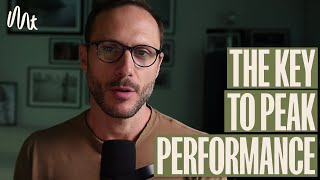
Connor Beaton argues that peak performance comes from emotional regulation under stress. When cortisol and adrenaline spike, they shut down your prefrontal cortex. He teaches breathwork, meditation, and tactical slowing: speak and walk at half pace, pause before big decisions, sleep on them.
Chapters
All right, team, welcome back to the Mantalk show. Connor Beaton here today we're going to be talking about the key to peak performance. So whether you're looking to perform in the boardroom or the bedroom or in conflict or in your artistry, whatever it is that you are looking to perform better in, I'm going to be talking about one of the main keys to peak performance. And I've had the honor and the pleasure of working with some really incredible men over the last decade. Men that are at the peak in entrepreneurship, guys that are pro athletes, men that run hedge funds and are real estate moguls, guys that are, you know, number one, best selling artists, musicians, you name it. And so I've really had a really interesting insight and glimpse into what peak performance can look like. And I've worked with every kind of man and you know, everything in, far in, in between, guys that, you know, work construction and, and everything. But there is something to what it takes to be a peak performer. And I think for every man there is a part of us that is intrinsically driven towards wanting to perform, wanting to achieve excellence, wanting to achieve a certain level of mastery. And I don't think that there's anything wrong with that. I think when you get obsessed with it or it becomes the thing that you start to, you know, beat the crap out of yourself with, then it can be problematic. But one of the main keys to peak performance is how you as a man deal with stress. And there's a certain process that you can deploy to actually produce better results. What happens when you get stressed? I think this is a very important part for us to start with. Your brain obviously floods with a whole bunch of stress chemicals and honestly, you just start to lose the ability to think straight. Think about any type of conflict that you've had with your significant other or past or present. And what you'll notice is guys usually say something like, I just lost it or I froze up or some version of that. Well, that's those stress chemicals moving through the brain, jacking up your nervous system, moving you into a sympathetic dominant state or a stress response state within your nervous system. And, and these stress chemicals like cortisol and adrenaline will flood your brain and activate the part of your brain that kind of takes the main part of your critical thinking and your deliberate thought more offline. So that's your prefrontal cortex. So you can think of it as like this inverse correlation where.
The more stress that you have, the more stress and duress that you're under, the more that you have these stress chemicals flowing through your body like cortisol and adrenaline. There's a tipping point where they can be productive for a period of time, but then they reach a tipping point where all of a sudden they are counterproductive. And what you'll find is that that's when your prefrontal cortex, your sort of decision making, your ability to critically think that all starts to diminish. At the very least, you'll lose a kind of potency in this. In these moments, you'll find that you're not as present, things are a little bit foggier, you don't feel very grounded. And what happens when you move into these stress states is a couple things. Your heart rate starts to elevate, your breath rate per minute starts to elevate, and your whole system starts to go into self preservation mode. A lot of people, you've probably heard talk about fight, flight or freeze. So what do men, or people in general, but this is channel for men. So what do men do in terms of peak performance, that separates them, that separates good from great from exceptional. And there's obviously some things that we could go into here about practice and there's some pieces that we could go into in terms of intentionality and, you know, continuing to go back to fundamentals and basics and drill those over and over and over and over and over again, regardless of what industry you're in. You know, whether you're the finance bro that's running a hedge fund, whether you're the real estate mogul, whether you're the, the, you know, the musician, whether you are the artist, like it doesn't really matter. You're the, you know, the, the linebacker or the quarterback or whatever it is, drilling those basics, getting certain things in place so that they move from being consciously competent at them to unconsciously competent. And then I think that there's not just unconsciously competent, but there's unconsciously masterful. And you've probably all heard of these four stages, right? That we move from being unconsciously incompetent, AKA we don't know that we suck, to being consciously competent incompetent, to knowing that we're not very good at it, to then consciously competent being like, yeah, I'm pretty good at this skill, to unconsciously competent, so we don't even have to think about it. And so a good example of this is when you started to drive, right? There was a period of time where you didn't know that you even sucked at driving because you never even thought about driving. And Then you, you started to drive and you realized that you weren't very good at it, and you started to get better and you realized that you were good at it, but you still had to kind of think about everything. And then you moved into this phase where you just get in the car, start up, and you drive and you don't even have to think about it at all. But then there's this extra stage which is unconscious mastery. And that unconscious mastery requires that we put in a whole bunch of legwork into certain skills and certain attributes and. And certain behaviors that allow us to unconsciously perform at an ex. At a very elite level. I'm going to talk about that in a separate video. But for today, what I really want to focus in on is something different. That aside, there is something that separates people who are good and great from those who are excellent and the people that are elite. And excellence in terms of performance, regardless of what it is, are the people who are able to regulate their nervous system under stress and duress. So it's not that they don't have fear, they don't get scared, or they don't have worry or anxiousness, or, you know, they don't get thrown off their game once in a while, but it is that they are able to.
At the times that matter most and the times where the most stress and duress seem to be forcing itself onto them, that they're able to still regulate and ground. So regulating your emotions leads to peak performance. That's number one. Regulating your emotions leads to peak performance. And this is where a lot of men go sideways, is that they try and have peak performance. You try and have peak performance in whatever area of your life it is that you are looking at, whether it's a sport, whether it's a hobby, whether it's within your career or your business. And what ends up happening is that you try and deal with the stress and the duress in those areas of your life by suppressing, by just stuffing down your emotions. But regulation, regulating your emotions is actually the pathway to peak performance. So allowing yourself to feel the anger and the frustration when it comes up without being overcome or overrun by it, or the anxiousness of the moment or the excitement of the moment without becoming overwhelmed by that emotion or becoming that emotion entirely. So being able to breathe and regulate your heart rate under sometimes extreme duress or stress, extreme states, Right. Imagine having to go into, you know, a client meeting where your whole business is sort of dependent on how this meeting goes, on how this presentation goes, being able to not Just stay calm, cool and collected. But being able to regulate your system so that your heart rate's not spiked, your breath rate is spiked, you're not pumping cortisol and adrenaline, you're not constantly self reflecting because this is one of those things that starts to happen is that as you move into a more stressed out state, your brain goes into a self ruminating process where suddenly the magnifying glass, which might normally be on the material that you're presenting, or that would sort of expand into a broader flow state, all of a sudden that turns back on you and it goes into this self critique. How am I doing? Did I say that right? How are they all doing? Are they enjoying this? Is this landing that is a sign that you've moved into this very stressed state and your body has shifted out of this regulated state. So. So being able to regulate your emotions under these extreme states is incredibly, incredibly important. And all of the men that I have ever worked with, whether they were peak athletes, whether they were at the top of their game, Fortune 500 CEOs and executives, whether they were hedge fund owners or whatever it is, doesn't really matter, artists, musicians, etc. They were able to to get on stage and perform. They were able to go into the boardroom and have the meeting. They were able to make the really high stakes decision from a grounded and emotionally regulated place. This is essential. And the reason why so many men, maybe some of you watching this, are struggling in your performance in some parts of your life, is because you are not emotionally regulated. And I'll give you one more example and cause this is about sex and this might land it for you. In order for you as a man to get an erection, you have to be in a more calm and grounded state. So the more stressed you are. In fact, you can think about performance anxiety as just sexual stress, right? Performance anxiety is just sexual stress. You are stressed, you're self referencing, you're, you know, in your head chronically thinking about how you're doing and how they're enjoying it and how you're performing. And what ends up happening is that all the adrenaline, all the cortisol starts to spike. Your heart rate spikes, your breath rate spikes and it pulls the blood from your extremities into your core because you're in fight, flight or freeze. And then what happens? You can't perform, right? You can't get it up, you can't maintain it, et cetera. So the more that we can emotionally regulate, the better you are going to be able to perform under Any circumstances. The second thing, and this is the beautiful part, which we don't talk about often enough, is that emotional regulation is something you can train. Emotional regulation is something you can train. So meditation, mindfulness, breath, work practices, all of these things can reshape your brain. And they are things that you can do on a daily basis. They increase the connectivity between your prefrontal cortex and the emotional centers of the brain. This is why for years, maybe not years, but for a long time, I did something called the fire meditation. So whenever I was in a kind of peak emotional stress state, you know, maybe I was stressed out or overwhelmed or I was just angry, I would force myself to go and sit and breathe and experience some level of meditation in that anger and let it naturally start to dissipate and come down. And over time, what I found was that my tolerance for any of that heat or that anger started to broaden. My ability to very quickly shift out of that state started to increase, and my ability to process that emotion started to increase as well, to the point where I had a little bit more dominion or, you know, I wanted to say control, but that's not necessarily it. It's more than the ability to shape and direct that emotion. It's not necessarily control. It's more like being able to direct the river where it's going to go, or the water where it's going to go. So you have to build the capacity to observe the emotion. And this is really, really key and crucial to training your emotional regulation. You have to develop the ability to observe the emotion without becoming or being consumed by it, by that emotion. And this will help to reduce your baseline level of stress hormones. And even. Even a modest daily practice, even a. Even a small daily practice can help and reshape how your brain responds under pressure. This is why people who, you know, have struggled with PTSD or trauma or those types of things. It can be so challenging for you to deal with stressful or challenging situations, confronting overwhelming situations, and to maintain an elite level of performance. Because as soon as those trigger points or stresses start to come in, your brain activates. You know, it gets sort of swarmed with these stress chemicals. The prefrontal cortex starts to, you know, dim doesn't shut down necessarily, but it starts to quiet and. And shut down a little bit and turn down, and all of a sudden you're in a very stressed state. So you have to start to train your emotional regulation. So how do you do that? You choose a daily practice. For me, I did meditation for quite a long time. And I did it every single day, and that definitely supported me. I've also done breath work and that has been my sort of go to method that I really love. Because certain types of breath work, like the WIM HOF method, or there's other forms like holotropic and whatnot, but I like the WIM HOF method. What they do is they stress out your system and then you move down into a more regulated space. And so you stress out your system, you move into a stress response and then you. What's called down regulate your system and you stress it out and you downregulate your system. And so you build up a tolerance for stress. But you also train your mind, you actually wire your brain and your nervous system to know that you can experience a hard time in your brain and your body and you know how to get out of it, you know how to shift down from it. So train your emotional regulation. The last piece on how to actually do this, and I have seen this time and time again with, with elite athletes and elite performers in almost every single space, is that they have the ability to slow things down. They have the ability to slow things down. It's almost as though they have some type of like temporal manipulation ability. And so you can, you can start to deliver when you can really slow things down. Speed is a very subjective experience. And generally speaking, what happens for most people when they are under duress and under stress or feel that they're under extreme pressure to perform, all of a sudden time starts to speed up. You know what happens for most people, and I'll try and explain this as simply as I can for you, is that when you are stressed, what happens internally is it feels like your temporal state starts to elevate. So it seems like thoughts are moving faster, breath is going faster, heart rate is going faster, the conversation's going faster. Your sense of time seems to be like, you know, some people might call it vibration. But your internal state is not only elevated, but it seems that everything is moving faster and faster and faster. So what really high performing people do is that they condition themselves through small methods, small repetitive, repeated methods over time and consistency to slow down their internal state, to slow down their subjective experience in the moment. And you know, this is one of those things where if things are moving too quickly, it can be fatal to good judgment. It can be fatal in terms of your sort of tempered response, especially in conflict. I mean, I can't tell you how many guys I talk to when they get into conflict. And it's like man, all of a sudden I felt like I was just spinning out of control and everything was happening so fast. And then she said something and I said something and then I blew up. And it's like, yeah, because you didn't bother to slow down. So we need to be able to do this slowing process to slow your response, to slow your thinking, to slow your breathing so that you can reduce cognitive overload. And this helps you to really keep your short term and working memory intact. Then this helps you to preserve a kind of flexible and creative thinking. This allows you to also hear a deeper kind of your. Your inner voice, right? So when things are moving very quickly inside of you, most often than not what you are hearing is the, the voice of fear, the voice of criticism, the voice of worry, the voice of, you know, anxiousness. What you're not hearing is a deeper, more anchored sense of your intuition, your gut, a deeper sense of knowing of what's right in order to kind of your. Your inner voice, right? So when things are moving very quickly inside of you, most often than not what you are hearing is the, the voice of fear, the voice of criticism, the voice of worry, the voice of, you know, anxiousness. What you're not hearing is a deeper, more anchored sense of your intuition, your gut, a deeper sense of knowing of what's right in order to access that quality of knowing. And some people call this a flow state, right? That what Sometimes people, whether you know, they're an athlete or they're an entrepreneur, they can get themselves into a flow state. And what they will almost always describe is that time begins to almost slow down and stretch out. And there's less self referencing. There's no ruminating thoughts, there's no invasive thinking. So you're not like, you know, surfing through the pipeline and thinking about the groceries that you need to buy later, right? Like that's not happening. You're not in the boardroom meeting, making the pitch of your life and, you know, thinking about whether you left the stove on at home. There's a deep level of presence and a deep level of groundedness and a deep connection to your inner knowing or your gut, however you want to frame that. So how do you slow things down? This can be as simple as taking a very deep breath before you respond to something. I've actually given men the assignment. If you feel like you resonate with what I'm talking about here and you have a very fast internal state, your inner voice is quite quick, then I've given a simple exercise to a lot of men, which is speak at half pace, you know, for a week or two, speak at half pace, walk at half pace, engage with people at 50% your norm. Breathe slower, take less breaths per minute. All of these things. What you're doing is you are conditioning your body and your brain to operate in a new way. And when you do that, you give yourself more space. So that's one thing you can do. You can also start to inject a pause before making a major decision, or, you know, having a sort of rule that you don't make any big decisions without sleeping on it. There's some good research around that. So slow is smooth and smooth is fast. And as Viktor Frankl said, there is a pause between stimulus and response, or between stimulus and response, there is a pause. And the more that you can execute that pause and you can condition yourself over and over and over and over and over again to have a pause in the way that you speak, in the way that you think, in the way that you breathe, in the way that you walk, to have a spaciousness to your experience, the more you are going to be able to access peak performance. It is almost counter to what most people think. But that pause and that slowing down allows us to access that not only unconscious competence that I was talking about before, but it allows you to access unconscious mastery. Because there's a certain level of knowing that comes along with unconscious mastery. And yes, it has to be backed up with a tremendous amount of practice and effort that has gone into the past. But these are the pieces that are necessary. So leave your thoughts below. I hope this has supported you. And if you take anything away from this video, it is slow down and start to pause. See you next time.
More from Connor




How to Raise Strong, Unshakable Boys in Today's Culture, with Dr. Shefali Tsabary





Anxious, needy, overthinking in love? That's a pattern, and it can change. Check the description 👇
