The Labors of Hercules: Ancient Lessons for Today’s Men
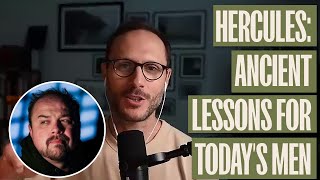
Conversation between Connor Beaton and Jameson (podcaster of Becoming the Main Character) using the Labors of Hercules as a lens for modern men’s struggles. Jameson retells key myth episodes (birth/Zeus & Hera, Choice at the Crossroads, the murder of Hercules' family under Hera’s curse, Oracle at Delphi, and multiple Labors including the Nemean Lion and Lernaean Hydra) and connects them to themes of atonement, responsibility, shame, resilience, confronting recurring patterns, and masculine–feminine dynamics. The speakers emphasize practical takeaways: pursue sustained corrective action rather than seeking a one-off feeling of redemption, rely on close bonds during crisis, and treat stories as simulations for ethical and psychological learning.
Chapters
All right, Jameson, welcome to the Man Talk Show. How you doing today, buddy?
I'm doing great. Thanks for having me. Connor.
Yeah, man. How do you. How do you describe your work to people? Because I love the fact that you're diving into these sort of ancient stories and then unpacking them, and it seems like they're kind of a mirror for people to look at themselves in their own life. But how do you describe your work to people?
So the simplest way is just to say, I just basically retell the greatest stories ever told with a focus on the choices that the characters make. Because I want us to be able to pay attention to how their choices impact the results that we see at the end of the book, whether it's their success or their demise. I also have found some of the value I didn't anticipate when I started was just the fact that I kind of am translating the story into a medium that is way more, you know, consumable in the 21st century. Most people don't want to read a 24 hour audiobook of Moby Dick and I give it to you in under two hours. And so. Or if it's bringing Shakespeare into plain English that you can understand. I just, I get really hyped about people getting in touch with stories that they felt were kind of out of touch or out of reach for whatever reason.
Yeah, that makes sense. I think it's interesting because these stories, like, I remember in my twenties reading through the Iliad and the Odyssey and Moby Dick, and, you know, just because of my degree, I ended up going into like, Shakespeare and reading different poetry and stuff like that. And. And I don't know if it's just the lens that I've always looked through, but it was, it was almost like anytime I was reading those stories, it was a process of self reflection, of trying to think about, well, how. What would I do in that situation and how would I show up and how do I make those decisions and what if that had happened to me? Or, you know, trying to conceptualize that character as a person that I knew in my life and then trying to look at, you know, like, why would somebody make that decision? And I've always been fascinated. I mean, obviously, based on the work that I do, I've always been fascinated about why people do the things they do, because I grew up in, in a family system with such paradox, you know, and juxtaposition of characters. Like there's two different family system and the characters were wildly different. And it was always like, why the Hell, did she do that? But she did that, or he did that, and he. Like, what is happening? And so that's. That's just always been a part of my frame of how I've read these stories. But I've realized over time that that's not always the case for a lot of people. So what I wanted to focus in on today was going maybe a little bit deeper into the stories of the stories, the Labors, the challenges and trials of Hercules.
Because he's kind of got the hallmarks of what I think a lot of modern men are dealing with. So maybe just set the stage for. Everybody kind of knows Hercules, strong guy, the lion head and lion mane and stuff like that. But set the stage of what are some of the important attributes of Hercules's life that modern men might need to know about that sometimes get missed within the story?
Yeah, honestly, I want to kind of start that by going all the way back to one of the other famous stories about Hercules called the Choice of Hercules. Or sometimes it's Hercules at the crossroads, when he is.
He's met at a crossroads by Arete, the goddess of virtue. And then I can't remember the Greek name for the goddess of vice. And they're both kind of tempting him down their path. And the goddess of vice is. Is basically saying, you'll never have to work, and life will just be amazing. It'll feel great, and I can promise you the cushiest existence ever, basically, and people will just love you. And Arete is just speaking straight and says, like, this path is not easy. I'm not promising anything other than, like, the rewards for your own labor. And that even though the other side is flashier, this is the path you have to take if you want to be accepted by the gods, essentially. And so he makes that choice at a young age. If we're thinking in terms of the Disney movie, I like to imagine that that crossroads scene happens right before he starts singing. I can go the distance, but.
At the. At the point of the. The story of the Labors of Hercules, he's. He's a grown man. He's got a wife and kids. He is basically in service of his cousin who is the king. And there's. There's kind of this subplot where he. Hercules was born because Zeus was trying to get him into this position as the king of. Oh, shoot, now I'm forgetting which kingdom. Mycenae, I think. But when Hera found out, she kind of pulled some fast ones to make sure Hercules didn't get the Kingship. And so Hercules ended up being a subject to his cousin, but he was just kind of doing his thing. He was out there fighting against enemies, trying to raise his three sons. And then. I don't know if you want me to dive into, like, what the inciting event is yet or just kind of leave it at that.
Not yet. Not yet. Leave him hanging out.
But, yeah, so he's a hero. Like, people adore him and he does incredible things, but, you know, being a hero is kind of like his job, and then he comes home to his family at this point in the story.
Yeah, I think. I think one of the. I want to go to his origin for a moment because that's. I always, you know, go there. One of the things. Well, first off, let me just touch on what you said about that, that choice point between Arete and the vice, because I think that that is so, so applicable for modern men. You know, and it's. Except today, it's like modernity, where you can go down the path of modernity, and it's all about flash and, you know, comfort and ease and, you know, like, how easy can your life be and how much money can you have and, you know, how many Rolexes and Bugattis do you have and all that kind of stuff? Or do you go down this path of responsibility? And I almost feel like the modern man has been disincentivized from choosing the. The latter, you know, from choosing arete. I think our culture and our society has shifted so greatly that men are not. I don't want to say the word rewarded, but men are not actually valued in large part for choosing that path of arete and because it is challenging and it is hard. And I'm curious about, you know, if you have anything that you want to weigh in on that, on that front before I kind of go into his. His early part, but it does seem like it's a big challenge that a lot of men face.
I definitely agree. I would almost describe it as. It feels like men are born in this day and age onto the path of the goddess of vice already. It's. You're not like, at the crossroads. It's like you're already on that path and you're looking across the way and are things like, hey, you should come over here. And you're just like, but I'm already here. Like this. This feels a lot easier. Like, this feels more natural because, yeah, we're very incentivized to chase clout. We're very incentivized to chase a Cushy life. Like that's what status is today. Whereas at different times in different societies, status was more about like what are the hard things you've been able to achieve with the, the gifts and skills that you have. And so yeah, I, I think we are kind of playing behind the eight ball in the 21st century.
Yeah. And I mean the vices that we have now, I mean you can watch porn in your pocket. You know, it's like this, this freaking device that we carry around in our pocket is basically just this access point to so many vices. You can buy weed from there, drugs, you know, you can watch porn, you can gamble on it. I mean you liter to vices 24,7 in your pocket, which is so. I love that frame because it's almost like you as a man or men in today's culture and society are having to make a conscious choice to actually get off that path that we've already been put on, you know, from, from the get go. So that's, that's a very interesting frame. I like that.
I. Oh, sorry. I was just going to say I talk about a lot on my show of the World is basically designed to turn you into an npc which for anyone, I feel like most of your listeners probably are familiar with the term, but just a non player character. It's someone who doesn't really have any motivation, no goals.
It's kind of pushing you in that direction so you have to actively fight against it.
Yeah, yeah, I see that all the time in a lot of people that I know who have. It's almost like there's this virtuous opt out of life. You know, it's like everything's so bad and so I'm just going to virtuously opt out of, you know, participating in the world in any way, shape or form, like any sort of like meaningful way. And that's a very interesting. And then that's like a badge of honor. But anyway, I, I want to get into the, the sort of beginning of Hercules because I think what's interesting about him is he sort of, I, I think he's the, the archetype of what a lot of young men face which is, you know, he's from a father who isn't really around and his mother, his mother is disliked because of his birth, his inception and his quote unquote stepmother. Right. Harrow is absolutely hates him and does not like him. And there's so many representations that I think we could extrapol that, that really go in not that you know, a lot of guys are growing up with a state mom that hates him, but just that there's sort of the, you know, the stepmother of culture and society that I think that a lot of men feel.
Doesn'T really respect them or like them or sort of out to get them and that type of stuff. So can you just go into, like, Hercules birth, You know how that sort of came about and then. And then we can sort of draw from there.
Yeah. So, I mean, my mind's just racing on how you set that up because I hadn't thought of that before, but it's very interesting. So I mentioned how Zeus. I mean, Zeus was like Odin or any of the kind of top king gods in mythology. He kind of did whatever he wanted, which included philandering quite a bit. Like, he just would hook up with anyone that he felt like hooking up with.
I think that the modern term is called fuckboy. He was a little bit of. A Little bit of a fuckboy.
Yeah. And so.
He has a relationship with this one particular woman, but the reason he does with her is because she is the granddaughter of Perseus. And there was a prophecy that the first great grandson of Perseus would become the king of Mycenae. Again, I'm pretty sure that was the kingdom, but it was kind of like the best kingdom to be the king of. And so he was incentivized. Like, I gotta try to. Try to get my son in here so I can rule the heavens and my son can rule Greece. Like, it's the perfect one, two punch. And so she becomes pregnant. Hera finds out. Hera is just fed up with having to deal with all this crap from Zeus. And she actually employs the assistance of the goddess of, like, childbearing to basically make Hercules's mom's labor take forever. And then she speeds up the labor of this cousin of his mom so that her son comes first. Which sets up what I described earlier of. Of him having to basically be a servant to his. To his cousin. But.
That was just the beginning of Hera just hating Hercules. And. And the cruel irony is that Hercules, which his Greek name is Heracles, means the Joy of Hera. Zeus named him that as like, this boneheaded attempt to pacify his wife. At least that's how I interpret it. But yeah, his name, the joy of Hera. And yet Hera is kind of his arch nemesis through most of his life. And his existence is basically just this living, breathing reminder that she has been cheated on. And. And it's like this display of how like how unimportant she is to Zeus in her mind.
Right. Yeah. And I think that's the interesting thing because it has some of the hallmarks of what a lot of kids in today's world will have grown up in. Right. It's like they don't live with their dad. They live with their mom and a stepdad.
Right.
Because Hercules. Hercules's mother ends up being with somebody that essentially raises him, if I'm not mistaken.
I can't remember which, unlike the movie, it is a king and a queen. It's not like humble farmers. So they are pretty important. But it's Thebes, not the big Mycenae kingdom that Zeus had hoped to have him be the king of.
Yeah, yeah. But I think it's interesting because it's one of those dynamics that I think a lot of young men grow up under, which is like, their father is removed. And in their mind, their father, like a lot of the men that I've worked with over the years, when there's a divorce and a separation and that boy lives with his mom, there's almost always this kind of idolization of the father that they can't be around, you know, and that they. That they don't have access to. And it's just very interesting to see how his story unfolds. So. So let's kind of go into the Labors and talk about some of those pieces. So maybe go to the choice point now.
And.
And we'll. We'll go from there.
Okay, so kind of continue on. I said he's. He's married to Megara. He's got three sons. Life's pretty good. He's out there. I compare him when I told this story, I compare him to General Patton because he feels most alive when he's at war. And so he's kind of finding ways to be involved in all sorts of military engagements. And he actually was out fighting against the Minion kingdom, which. It's not Minion like the little yellow guys. It's M I N I A N s. But he came home one night, you know, I don't know if they call it a furlough back then, but he basically came home from the battlefield temporarily to see his family, and he starts feeling dizzy. And then he sees these Minion soldiers attacking his home. And he goes into defense mode, and he kills all of these soldiers and thinks that they're under attack. And then he comes out of it and realizes that he actually had been under a spell and the people he'd killed were Actually, his own family. It is a tragic story. Like, the story of Hercules is so much sadder than. Than the happy Disney movie. But he comes out and he's beside himself, and he's just like, what? Like, he contemplates suicide. He is just thinking, what am I doing? Like, how could this have happened? And it turns out it was Hera who was so mad and so jealous of him that she put this curse on him so that he perceived his own family as these enemy soldiers. And so his father, stepfather, I guess, is trying to console him. Hercules just is like he wants to kind of punish himself. He feels like that's the only right thing to do is to. Whether it's taking his own life or anything that would cause him the most suffering possible, because he doesn't deserve anything better than that. And so. But he finally is convinced to go see the. The Oracle of Delphi, which is this priestess who works under the God Apollo to basically give prophecies and make predictions. And he goes to her asking for a path to forgiveness. Like, is there a way I can redeem myself? What. What can I do? I've committed such a horrible crime. And the. The sentencing, if you want to call that comes back that he has to go serve his cousin and perform 10 labors for him. And from the different sources that I read, it kind of feels like, you know, Hercules and the king, they get along fine, but it's not like they're really buddies because everyone knew that Hercules was supposed to be the king, but he didn't get the throne. And so, so he.
To the kingdom, and he reports to Eurystheus, his cousin. And.
Some. You know, the thing about Greek myths is we have so many different sources that either highlight certain things or not. And so for my narrative purposes, I'm like, pulling all my favorite bits. So my favorite interpretation says that Eurystheus was, like, in league with Hera at this point, and they were plotting together. How do we either kill Hercules or at least humiliate him beyond recovery through these Labors.
Yeah, it seems like. It seems like Eurysthes. I can't say his name. How do you say it?
Eurystheus. At least that's. I'm pretty sure that's it.
Euristheus.
And.
And it is. Mya, I think, is how you say you were right. But, yeah, it seems like he's almost got a grudge against him. And he's, you know, he's definitely trying to get him killed. But I think what's. I'm just Gonna put a pin in this one part. You know, obviously, in Greek mythology, one of the things that's interesting in a lot of these myths, the. The acts that happen are oftentimes so dramatic, right? He, like, you know, falls under this kind of spell and kills his entire family. That's not super relatable for the majority of people in today's world. But I do think that for a lot of men, there is this kind of inflection point in every man's life where he enacts a betrayal of people around him. You know, whether it's through an infidelity, a lie, a terrible decision acting a certain way in a relationship or a marriage. And that betrayal can send him on a. On a kind of journey or arc, much like Hercules endures, right, where there's a kind of salvational atonement. Note that that's embedded into it. And I. I point that out because I think that a lot of the men that come into. Into our ecosystem, into my work, they are oftentimes on the other side of that. You know, there's been some type of betrayal or hardship that they've endured that they're trying to reconcile with, whether it's, you know, they experienced some trauma in childhood or they've made some decisions in. In their life that are. That are not great, you know, that have had some. Some pain onto other people, or they're really struggling with something and stuck. And so it's interesting because I think that that inflection point in Hercules's journey and story is like this. This calling to a grander, broader version of himself in some ways, or a deepening into who he is, but also this. This like, incredible story of atonement.
So, okay.
Where do the journeys? Where. Where do the Labors begin? So he's sort of tasked with. He doesn't know. He does know, right? He does know that he has to perform 10 labors.
Well, yeah, he. So he's told 10 at the beginning, and we'll see what happens to that number. I just want to add one thing to what you said, because I definitely agree that feeling of having betrayed. I think another path that can lead anyone but men in particularly to a very similar kind of rock bottom is just kind of having a wake up moment where you realize that the culmination of all your choices has led you to a place that you would never have believed you would fall to. Because, yeah, I agree. When I did this episode, I was like, hopefully, none of you all are gonna kill your families. It's not that the act itself is relatable, but just the idea of you being at the lowest point of your entire life and knowing that it's your own fault that you're there. Yeah, that is relatable, and that is something that a lot of people feel.
Yeah. And sometimes the gods in these stories play like an archetypal role, you know, or a symbolic role, especially, like, I'm a huge proponent of Jung and Jungian psychology. And for him, when he looks at a lot of these myths and stories, the gods play these sort of archetypal roles of the psyche, you know, and so Hera being the sort of like, shadow of the feminine, the shadow of the anima in the psyche, that can scorn you, and that can, you know, push you into making decisions and choices and actions that you, you know, desperately regret afterwards, and you have to try and reconcile with. And I think that that is very applicable for a lot of men, as you're saying. So. Yeah, I appreciate that. So the laborers, where. Where should we begin?
I mean, we can start with the first one if we want. So the way I interpreted the. The different tellings were. Were basically Hera and Eurystheus just decide if we can just kill him on the first one. That would be best case scenario if we don't even have to deal with getting through all of these different Labors. And so they task him with killing the Nemean lion, which is this just monstrous beast that has been known to. Sorry, my headphones keep dripping out of my ears. This beast that had been killing locals and just no one could. Could find a way to kill it. There were rumors that, you know, all these kind of mythical properties to it, but no one had survived to really know. And so in my head, I envision Hercules just not even fighting it, because he's like, if I die, great, I deserve it. And if I win, then I'm closer to redemption. Right? And so he heads out and he goes to the. The lion's area and discovers that sure enough, it is impenetrable. No arrow, no sword, nothing can get through its hide. And so he basically has to choke it out. Eventually he fights with it, and, you know, it's got razor sharp claws, all these things, and he's just totally cut up. But at some point, the lion must have gone like, holy cow, this guy. Normally they're dead or they're running away at this point, but he's still here fighting. But yeah, so he ends up having to choke it out, essentially. And even then, because he was tasked to bring Back the hide. It wasn't just kill it. It's you got to bring its skin back to me. And so he's there. It's unconscious or dead, but either way, he can't figure out how to get the hide off, because even with the unconscious, he can't get his sword in anywhere until Athena kind of, like, pops in. And, you know, all of these gods that we think of in Greek mythology are technically, like, half siblings to Hercules because most of them are children of Zeus as well. And so Athena kind of pops in and just whispers like, hey, try using its own claw. And so he grabs its paw, and it's just like a scalpel. It cuts. Cuts right through. And so he's able to skin the lion. He wears the hide, including the head of the lion, over his own. And it's a funny story that when he returns to the kingdom, Eurystheus panics, thinking the lion has come, and he hides in a giant wine jar, which is kind of this repeating theme throughout the Labors that they use to make fun of Eurystheus that he's such a coward. He hides in this giant bronze jar, and you can even find in pottery and other art depictions of the laborers. You'll see, you know, there's one where he brings back a boar, and you'll see Hercules carrying the boar, and then it's Eurystheus peeking from this bronze jar. So they really kind of try to make this contrast between the brave Hercules and the cowardly Eurystheus. But. Yeah, and so he ends up bringing back the hide and just kind of saying, all right, what's next?
Yeah, I love the first challenge, because the first labor, because it really is a kind of confrontation with the invulnerable. You know, like, the lion is supposed to be this. This have impenetrable skin. Right. And be completely invulnerable. And then he has to overpower it with. With sort of, like, raw strength and power. And I think it's. So, again, I'm gonna. As you lay out the Labors, I think what I'm gonna do is try and weave it back into our experience as men. And I'd love to hear your take on all of it, but I think for every man, there's a moment where he sort of faces a challenge that feels. That feels impossible, you know, that feels impossible to sort of penetrate or pierce through or deal with, whether it's addiction or the loss of a relationship or. Or, you know, the grief that he's carrying or the shame that he's carrying. Or some type of external trial. Right. Financially. And I think sometimes we want to move to tools and tricks and these things that can sort of. That most of the time will pierce through these challenges. But there are moments in life where it sort of demands that you. That you fall back on a kind of, like, raw courage and presence.
That sort of calls you to wrestle with something directly that actually terrifies you and that has the capacity to incapacitate you. And I think that's in. In the sort of, like, hero's journey, that's the call to the underworld. That's the descent. Right. Is that you're. You're entering into the unknown. And the unknown is always much broader and much greater than you. And in. In alchemy, that's the nigredo. Right. Like, you're descending down into the nigredo. And so I think Hercules has gone through the descent in some ways, through losing his family, and he's having to. Now he's sort of like in the underworld in some, I think even goes into the underworld at one point.
Yeah.
But I love that because I love this beginning because it really sets the standard of. He is the symbol and the archetype of a man wrestling with his own strength and power. And what does it mean to be a man who has strength and power? And he's experienced both. Right. It's like it's gotten him accolades, but his strength and power has also decimated his family. And. And this is almost like a redemption labor. So any thoughts on. On that? I know I laid a little bit out there, but any thoughts on.
No, but I love this format. I love getting your take from. From the work you do on. On each of the laborers. I mean, I. To me, the. The Nemean lion, and I mean, almost any of the laborers, but specifically the Nemean Lion. It does speak to something that I see as a common theme, both in terms of the characters we consider very heroic as well as the things that's missing in a lot of people's lives these days is just this idea of it doesn't matter if the odds aren't good. What else are you gonna do? Like, what is the alternative? Just curl up and let life happen to you instead of giving it your best shot, at least. And that the ones we consider heroes. You know, I just covered Lord of the Rings on the show recently. It was the biggest undertaking I've ever done, and probably the thing I'm the most proud of ever having made. And the speech that Sam gives to Frodo as they're going into Mordor. It's a little different from the movie, but it's just as good. And he brings up this point of. I used to think that the characters in the books and the stories we loved, they wanted that life and that they were. They were adventurous by nature. But now I realize it's just the things that happen to normal people. But the reason that we know those stories is because they're the ones who didn't give up. And that there are plenty of other stories where they did give up and we don't talk about them. And so just that idea of, like, it doesn't matter if the odds are insurmountable, because what else do you. What other option do you have? Just to fade into obscurity, so you might as well try.
I love that. I love that. Okay. I have so many other things that I'd want to say on that, but I think for the effort of wanting to continue on and for the listeners experience. Let's talk about the Hydra, because I think the Hydra comes next, if I'm not mistaken.
Yeah. The Hydra of Lerna. I believe. I. I should pull up my notes so I can remember some of the details of these places. But the Hydra, you know, it's the same hydra you're thinking of. Technically. Most of the sources I read said it started with nine heads instead of three. But, yeah, the idea, you cut off a head, two more grow back. And, you know, Hercules, who actually very much favored a club instead of a sword. Most of the depictions, he just. He looks like he's carrying a big turkey drumstick around. And. But he. He's described as being able to use so much force that with a club with no sharp edge, he can still just tear a head off of the Hydra with the blunt force. But then two grow back, and he's trying to figure out what to do. There's like, this funny subplot where Hera. Hera pops in and out of some of these Labors, trying to foil him even more than just the labor itself. So there's a subplot where she sends in this giant crab to try to interfere. But as soon as the crab pinches him, the crab's just done for. And Hera's so sad that she actually turns it into the cancer constellation. I love, like, those origin stories. You were like, okay, so that's where we get that from, right? But it isn't until his nephew, who I can't remember. Iolaus, I think is his name. I can't Remember, his nephew has the idea of, like, what if we cauterize each neck when we tear it off? So Hercules blocks the head off, and then Iolus uses a torch to sear the flesh. And that does actually stop them from growing back. And so they get to work kind of dancing around as the Hydra is trying to. Trying to get at them. And they cut off all the heads and burn all of the open wounds until they get to this one last head that's immortal. So even when they cut it off, it's not dead, but they still cauterize its neck. And then they bury it under a giant rock so nothing can ever bring it back up. But when Hercules. What's interesting with this one is when Hercules gets back victorious, Theseus, or Eurystheus.
Finds this moment in his, like, despair of seeing his cousin succeed at these, like, impossible labors. He has this moment of like, aha, I gotcha. Where he says, oh, well, that one doesn't count. You can't use any help. Like, you weren't allowed to have someone help you achieve this, so you're gonna have to do another labor to make up for this one, because it didn't count.
Nothing. Nothing like completing a mission and then coming back and being like, that was. That wasn't good enough. Or like, you didn't fall, you didn't follow the rules, you know, according to plan.
I think this is probably one of the.
Most well known laborers. I think the lion and then the Hydra are very, very well known. And I'm glad that we're. We're getting into them and I think for men. You know, when I. When I read this one.
Because I was telling you beforehand, I like, you know, recently visited all of the entire Hercules stories and, you know, read through all of them, through some of Stephen Fry's work, because he's done a whole bunch of different, like, you know, writings on myth and sort of retelling the stories. And it's very interesting.
But one of the things that I find that stands out is just this sort of, like, chronic repetition of our cycles and our patterns, you know, and that there's these reoccurring destructive patterns, and it's. It feels like I've heard people. Did you ever play Whack a Mole as a kid? You'd, like, hit a mole at, like, that big game, and then, you know, two more would pop up. And I think for a lot of people, that's how it feels when they start down the path of therapeutic work or personal development work is that you start to address one issue, and it feels like you're just about to get it under control, and then it's almost like you have two more pop out, you know, And. And so it's this notion that we. We have these reoccurring destructive patterns, and those things don't go away unless we sort of deal with the root. Unless we sort of deal with. I mean, here he. He cauterized. You know, they cauterize the. The severed heads. And you're not necessarily doing that with, like, your childhood trauma, but it does speak to getting to the root of something in order to be able to sort of deal with the real challenge that is in front of you. And unless you do that, there's no amount of, you know, just, I'm going to cold turkey it and. And. And wish for the best. You really have to get down to the sort of, like, the root of the issues, whether it's your anger, your. Your porn, your, you know, your drinking, your procrastination. Oftentimes these things, they have a much deeper root, and we want to try and address these habits, usually in a very superficial way. And I think that that true change comes from us really dealing with the. The root of the root of the issue and stopping the bleeding from that place, I guess you could say. I'm curious if you want to add anything to that or where we should go next. I don't think that we need to go through the labors.
Yeah, I was going to say chronologically. I think I could probably summarize the next few pretty briefly, because they're not as the one thing I want to add because, yeah, I think that's a great takeaway of just the idea of we can't just. We can't fix our problems without solving the root problem. Right. But to me, I also really did hone in on that moment of. Of the dejection of Eurystheus, telling him, like, oh, that doesn't count. And how do you respond in that moment? Like, do you. Do you just say, oh, the rules are always changing, the goalposts always moving. This isn't fair. Like, I don't want to play this game? Or do you just kind of buckle down and say, I'm going to do this no matter what it takes, and if I have to learn these sneaky rules in order to do it, like, I'll do it. It doesn't matter. And. And to. You know, Hercules has this extra layer of just. He. He kind of feels like no matter what, he deserves it. Like, he still just Thinks he's the lowest piece of trash because he killed his family. And so to some extent, he's just like, fine, like I, you know, the more suffering, the better, I guess you could say. And so he just accepts it because finishing the mission matters more than if he feels it's a fair mission.
Interesting. I think that's a very. That's a very interesting lesson because I do think that. I mean, I think back to my own life when the decisions and choices and behaviors that I had deployed in my life completely cratered. Relationship, career, etc, and on the other side of that, trying to sort of get my life back together. It certainly took a while where I was facing trials and obstacles and challenges that.
The shame was still crippling, you know, and it was like, it's like, oh, I deserve this still. And so it's interesting to hear you say that because it's. It's like even in this point of the story or at this point of the story, Hercules hasn't. It's not like he's enacting resiliency. You know, he's. He's really just like, no, I deserve this form of punishment. And I think that's so. I think that's so applicable. You know, I. I see men all the time after maybe they, you know, implode a marriage or they make some bad decisions or whatever it is. There is a period of time where I think we go through digging ourself out of the hole in whatever way that looks like, not because we are resilient, but actually because there it is just like a. This. This is kind of what I deserve in a way. And so I have to face these labors, I have to face these challenges. I have to tell the truth or, you know, go to rehab or whatever it is, because that's what's necessary for me to endure or experience. And I don't know, there's. There's something in there that feels interesting because I think sometimes.
Therapy and personal development work can be sort of touted as this.
Like, rah, rah, you know, mentality that, like, you're always resilient through the entire process and you're always, you know, lots of courage and bravery. It's like, no, sometimes it's just you were a piece of shit and you think that this is what you have to do because you are acting like a piece of shit. You know, does that. Maybe that's too blunt, but.
Well, I mean, I agree with the sentiment of, like, who's to say how bad we should feel? You know, like, how often do we beat ourselves up more than we should? I do think any decent level of self awareness will involve some level of self chastisement as well. But, you know, we're our own harshest critics. And, and do we. Do we almost relish in. In seeking suffering because it makes us feel like we're redeeming ourselves in that way? I guess. But it's. It's a complicated question.
Yeah, well, maybe that's one above our pay grade. So let's, let's continue on. Where do we want to go next?
A handful of the next ones really fast, just so we kind of know the process, but there's not a ton that we need to talk about. So he's ordered to go. They're kind of like, okay, he's too good at killing these impossible to kill creatures. Let's try something different. They order him to go capture the Sirenian hind. Anyway, it's basically the goddess of the hunt, Artemis Pet. And it's supposed to be uncatchable. It's the fastest creature. And some versions say that he just ran it down for an entire year until it finally tired. Others say that he did land an arrow on one of its legs. And so Artemis shows up and is like, what are you doing, man? Like, what's. You're, like, taking my pet? And. And he promises, like, hey, I'm not going to hurt it. I just have to take it back to Eurystheus. And he's. He gets very clever because Eurystheus actually did want to kill the animal, but Hercules just kind of like, lets it go at the last second and it runs ways like, oh, oops. Like you weren't fast enough to capture it. Then he has to track down this. This big giant boar. It's kind of similar to the lion. It's been killing all these people around where it lives. And he gets a tip to chase it into the mountains where there's really deep snow, until it just gets stuck in the snow. And then he's able to chain it up and bring it back. And that's another one where the depictions of him bringing the boar back shows Iris in the bronze jar, like, peeking out at him. An interesting one is the stables. He has to clean these stables of these sacred cows. And I think it's odd. I hope Alex Petkiss doesn't see this. He'll criticize my Greek hard time. Yeah, I deserve it. I'm not that good at Greek. But this king has these stables of these sacred cattle that have not been cleaned in 30 years. And Hercules is tasked with cleaning him. And, you know, Hera and Eurystheus were hoping to totally humiliate him. Like, he's a demigod. He's this hero. And here he is, a stable boy, just, like, cleaning the stalls of these animals. And so Hercules tries to think of a way to make it a little more interesting. And he makes a deal with the king that if he's able to clean these stables in one day, he gets a tenth of the cattle as, like, payment. And he gets clever, and he actually creates these dams with these rivers that wash out the stables in a single day. But this is the second time where he goes back, and Eurisius is like, you can't take payment for these. Like, what are you doing? Like, that's another one that doesn't count. So all of a sudden, 10 Labors have turned to 12, and Hercules kind of decides, like, okay, I have to play these straight. Like, I cannot be trying to be clever. I cannot be trying to, like, get out of the exact instructions, because he has the power to just punish me if he wants to. So I have to give him no excuse to punish me.
And then the next couple also, I think we can kind of talk. He has to go kill these birds that have, like, metal beaks that are terrorizing everything, but they're in this swamp. And he can't. He can't really get line on them with his bow because they just hop from tree to tree. And then Athena pops in again and gives him this, like, rattle, basically, that sounds so horrible that the birds all scatter into the air, and he's able to kill the birds.
And then the next two, I think, are really interesting point because it's another. To me, it's another lesson of, you know, when you have a big goal mission in front of you, or it's going to take you a long time, you might hit a period of flow where things are going really well to the point where you almost kind of get careless. And that's where we get here. So the setup is that the seventh labor is he has to go capture the Cretan bull, which. There's a whole lot of history behind this bull in other stories in Greek mythology. But basically, he shows up to Crete, and the king Minos is basically, like, if you can capture it, it's yours. I'm not going to stop you. And I just. This is. And a lot of these are, like, personal interpretations, because in the actual sources, like the library of Apollodus, it's Sentences, right? And I'm trying to create this narrative, but it talks about how he brings the bull back. And Eurystheus is like, yeah, just let it go. And Hercules lets it go. And then it turns out it goes to, I think, marathon, but it goes to a different city and starts terrorizing people in that city. So I humorously interpreted that as both of them are just kind of going through the motions at this point. It's like, okay, fine, like, you got the labor done. Like, get that bull out of my side. I want to see it. And Hercules is like, okay, fine. And they don't notice that, like, they've let this terror loose that's like hurting a lot of people. And so it's kind of like he's in this groove and he's making progress, but he's getting careless because he's just, you know, it's like, I'm still in the middle of it. I'm not anywhere near finishing it. But then the next labor, something happens that kind of sobers him up. And so he's tasked with going to capture these flesh eating horses. If that's not a terrifying thought, that.
Sounds like a great, great horror movie, right?
So these horses, or mares specifically, had been trained by their owner, King Diomedes. Diomedes, to basically eat the flesh of his enemies or a servant who displeased him. Like, whoever he was, like, yeah, just feed them to the horses. And so he first goes and captures the horses by, like chasing them onto this kind of small peninsula. And then he digs a trench so they're now trapped on an island. And then he leaves a friend of his while he goes to deal with the king, who is like, not happy that he's taken his horses and is trying to. Trying to stop him. But when he comes back from dealing with the king, he finds that his friend has been eaten, like killed by the horses. And he kind of has this other falling out moment where he's just. Or crashing out moment where he's just like, another person has died because of me. Like, someone else I care about is dead because of me. And so that coming right off the back of the Cretan bowl where he's like, yeah, whatever. I just felt like this is really strong lesson of, you know, don't get careless enough when you're in the middle of it that you make a mistake that actually does give you even more regret while you're on the way to accomplishing what you're trying to accomplish.
Interesting. Interesting. Is there. I mean, that's such a valuable piece of insight, you know, because I do think this is right in the middle of the arc, right? It was.
Yeah. This is the seventh and eighth out of 12. So we're just barely.
Just on the other side. Yeah. Interesting. Yeah. I mean, it's such a valuable piece because I think for so many guys, there is that sort of, like, I've reached halfway. And especially when you're doing something that you're like, I'm not really invested or involved in this. Whatever. What's the big deal? It's also interesting because the bull is such a symbol of like.
Like male fertility, I guess, in a way you could say, just sort of, you know, this sort of like the divine bull rampaging uncontrollably. And it's sort of like that raw, primal male drive, you know, whether that's symbolic of. Of sexuality or ambition or dominance, that can really, like, be destructive without any type of discipline. And it's interesting to hear what you're saying, because it's almost like Hercules lack of discipline in that moment, you know, then just causes the bull to go off and. And sort of like, rampage everywhere again and cause more destruction, even after he's fulfilled the labor.
Yeah.
And so that. That part's really interesting. And I think with. I mean, with the mayors, it's just terrifying.
Yeah, it is a haunting visual.
It is a really. It's like.
I've been reading this fantasy series by Raymond E. Feist, and there's, like, 31 books in total, and I'm. I'm probably, like, 22, 23 books deep. So I'm like. I'm really invested now, but it's. It's getting into this place of sort of exploring.
Like, the chaos of evil. And there's a point in one of the books that I was just reading this morning, actually, where there's. There's this sort of, like, creature that has come from a different dimension, where that. That in that dimension, they're just inherently. It's like. It's like the antithesis of how we operate. They are just fundamentally built for chaos and cruelty and, you know, destruction. And that's just how this. The entire society is built and operated. And one of the characters says, you know, they're trying to figure what. What they're planning. And he sort of says, like, well, we're trying to think about this in a very logical, reasonable way, and we actually need to think about this as if we were completely insane. And I think that's such a. Interesting reminder because, you know, in this Hercules kind of comes across like a real tyrant, you know, like a real tyrant. And I think in our. I think in our modern age, it's hard to conceptualize people that are, like, truly inherently evil and, like, really do bad things.
And I think that's kind of been sterilized in our culture, you know, a little bit, where they're sort of like, yes, there's bad people, yes, there's evil people. But we. We almost sterilize it by just putting these, like, pathologies and labels over top of them. You know, it's like there are this ism or that ist or like, whatever it is, and it kind of creates this removal from, like, real inherent quality of chaos and evil that I think really does exist in the world and within a lot of people, you know, And I mean, Jung talked about having to face our own darkness and that, you know, But I. But I also think that there's this, like, having to sort of confront toxicity and. And tyranny in a way that I think is interesting. Within that. Within that, that specific Labor, I want to go. And I'm very curious about your thoughts on the next labor, the belt of. How do you say Hippolyta? Thank you. I was going to say Hippolyta. Like, I'm Latin. Hippolyta. Hippolyta. That is much better because I find this one very interesting. And it's like the dynamic between, like, the. The masculine and the feminine.
So, yeah, so he's tasked to go and steal, or, well, take the. The war belt of Hippolyta, who is the queen of the Amazons. And so, you know, if you've seen the Wonder Woman movie, like, the idea of these Amazon warriors is from Greek mythology. And Hippolyta was the queen. The queen. And this belt had been given to her by Ares, the God of war. So it's like a very precious item. And Hercules is kind of like, oh, my gosh, like, I gotta go to this. You know, they're on this island away from everybody else, and this is gonna be crazy. He takes all these men with him, expecting confrontation. And he gets there, and it turns out Hippolyta is a fan. She's just like, I love, like, the stories I've heard about you. Like, you're awesome and like, this is so cool and to have you here. And she ends up offering him the belt. She's just like, yeah, man, like, take it, like, if I can help you out. But the problem is Hera. This is another one where Hera got involved. She Came in disguise as an Amazon and started like, whispering in people's ears, like, I heard he's gonna kidnap the queen. And so she riles up all the other Amazons and this big battle breaks out between the men Hercules brought and the Amazons. And I mean, Hercules does come out victorious, but in the process, like, Hippolyta is killed in that battle when she was totally willing to just give him the belt because she wanted to support him, because she kind of identified with him, she saw herself in what he was trying to do. But because Hera intervened, the queen ends up dead and Hercules has to go home with less men than he came with.
Such a good arc of.
I mean, I think we're in a time right now where there's a huge gender war, like where men and women, men and women are really at odds in a way within, I think, modern culture that is very different than ever before. And I see it all the time online. Sometimes I get it online. You know, he like, comes at me. But I do think that there's, you know, there's a lot of animosity and tension between the masculine and the feminine, between men and women. And this is one of those interesting pieces where it's like, they were good. You know, Hercules and her were good. And there's just this sort of whispering and misinterpretation that happens from the outside and how, how he was going in from this place of like.
Conquest, domination, gotta fight, gotta, gotta go to war. And then it's, you know, there's. He's met with something completely opposite to what he expected. And don't they.
Not that they fall in love, but don't they have like a. Like a love affair? Like, don't they sleep together, if I'm not mistaken?
Or, you know, I did. I read several different versions. I didn't read all of them. So there may have been some, but I didn't read ones where that it went that far, but it's totally possible.
Okay, well, either way, it was a pretty good admiration.
Like they, yeah, they, they were like, they really liked each other in that regard. How.
What would you say to about, like, how this pertains to a modern man's relationship to women or the feminine, whether that's within himself or the world.
Well, what's, what's interesting to me about that when you kind of bring up like the gender war.
I think it's so interesting that Hippolyta and Hercules actually got along great. But it was when someone else who did have the hatred inside was Able to stir up the hatred in others. And. And so to me, it's. It's like, you know, dating is so interesting at this point in time because people are blaming each other for being the reason dating so hard. And. And, you know, I just. I had to kind of decide for myself that. That I'm only going to date people who don't see me as the enemy. Like, it doesn't. It's not worth it to me to try to prove that I'm reformed enough to someone who is assuming I'm kind of the antagonist in their life to begin with. And so. But yeah, just this idea of you may be able to find people like, I mean, if you're a man finding women, vice versa, whatever, the contrasting is that you get along with really well. But, you know, if they have a friend who's very toxic, or if you have a friend that's very toxic, like someone else can kind of spread that toxicity into what could be a healthy partnership, friendship, relationship, whatever.
So you just gotta be careful who you associate with.
As I tuned into your episode on this, there was a line that you sort of highlighted that was said to Hercules, I think, at the very beginning, right before the trials. I don't know who said it to him, but it's. But now it's time for you to be Hercules and bear the heavy burden of this disaster. Now it's time for you to be Hercules and bear the heavy burden of disaster. What does that mean to you?
So that line is from his stepfather, and it comes to us from. My favorite thing that I discovered making this episode was that one of the sources we have is a play by Seneca, the Stoic philosopher. I had read Seneca. Seneca was my first introduction into reading ancient philosophy. I read on the Shortness of Life, I think was the first thing I ever read. I had no idea he dabbled in fiction. And it's such a good play. I told everyone the episode, like, go listen to this or go read this play. Because to have a mind as sharp as Seneca, try to create characters that are feeling very deep emotions, it was just so powerful. But yeah, that line was my favorite for. From the entire play because it kind of felt, you know, it's. In this moment, the way I position it is that, you know, the family's dead at this point. Hercules is beside himself and his stepfather, who. I'm blanking on the name now. I'm so bad. Like, I dive into these stories, but as soon as I move on to the next story, I lose so many details from the one I just covered. But his stepfather, it feels kind of like he's almost begging him. Like, I need you to be Hercules right now. Because if you cannot be Hercules when it most matters, what hope does that give any of the rest of us? Like, this is the most important moment for you to be this superhuman demigod, because this is the moment that most people would just cave. And so if you cave now, what does that mean for the rest of us? It was such a powerful line to me, and I loved that scene between him and his stepfather so much.
What do you think it means to bear the burden of disaster?
I mean, in the context of this story? To me, it means.
Specifically going on when you think you can't. You know, it's easy to say, like, never give up, or, like, don't stop. But when you specifically hone in the moment where you just feel like, I cannot keep going. But to bear the burden of the disaster is saying, find a way. Like, I don't care. Find a way. You have to. Because everything else falls apart if you don't.
And I think that's another beautiful moment, the fact that Hercules needed that cheerleader. Right? It's the importance of having bonds in your life with other men or with your partner, whoever it may be. You could be the person that everyone looks up to as, like, the guy, but you still may have moments where you need someone to kind of have your back as well and like. Like he did in that moment.
Love that. Do you have any words for men that are in that place that seems like things are a disaster?
And it could be a story from a different character arc or a moment or, you know, whatever.
I mean, I'm drawn to actually pull from my own experience because I started this project a year, year and a half after I was coming out of what I perceive as my rock bottom, and I was in that phase. I kind of used the visual of a plane and nosedive. Like, you can stop plummeting, but there's this part at the bottom where you are grinding. There's so much force being exerted on you. You're working the hardest you've ever worked, but in terms of your elevation, like, it's almost no perceivable change because you're pulling out of the nosedive and then you start kind of climbing again. And so to me.
Reflecting back on where I was at my lowest point.
I don't know, the only advice I.
Can give is if you feel like you're in your worst moment, if you keep going, it's going to get better. Like, it's.
The best thing. The best thing that your current self, if you feel like you're in the worst position in your life, the greatest gift your future self can give your. Your current self can give your future self is to not quit. And your future self will thank you for that every single day.
Love that.
Love that.
What role do you think that. What role do you think atonement and responsibility sort of play in Hercules's arc?
Yeah, so, I mean, it kind of makes me want to just jump to the 12th labor if you want to go there. So there are a few more, but most of them are kind of, you know, they're Labors that were created to make sure there were enough. So the last labor, he, he's sent to actually go down to the Underworld and collect Cerberus, the three headed guard dog of Hades kingdom. And so he goes down and remember, Hades is his uncle. And so he talks to Hades and Hades basically is like, all right, I'll let you take him if you can subdue him without using any weapons. And so he's able to do it. What's crazy is when you read about Cerberus, you realize that the general depiction we get doesn't cover how hideous he was. He has the three heads. There are a lot of creatures that their tail is actually a snake, but Cerberus actually has a bunch of other snakes just coming out of his spine. And so, you know, imagine he's having to grapple again, he has no weapons, and there are all these snakes just like pelting him with bites. But he's able to bring up Cerberus.
And Eurysius kind of resigns into fees. Okay, great, fine, you're done. Like, get out of my sight.
But what was so interesting to me, as I thought about that.
Was the fact that there was no big celebration. There was no big, you know, it's not like the oracle showed up and said, you did it, Congratulations, you are now clean. In Apollodora specifically, it literally, like, it says, he brought Cerberus up, he was like, completed his labor, and then he sent Cerberus back to the Underworld. And the next sentence is like. And then Hercules went on to do like, xyz. And so the lack of ceremony got me thinking about this idea of.
How.
Dangerous it can be to be seeking redemption as a feeling, because there's no guarantee you're going to receive that feeling, you know, if you're part of. I talk a lot on my show about tribes and just how we're all working within a space system of different tribes. And so there could be authority figures in whatever tribe, you know, a priest, a boss, an HOA person in your neighborhood. There can be authority figures that can, like, grant you redemption of whatever sins you have against their tribe. But that isn't the same thing as internally feeling redeemed. Like, that's. It's not guaranteeing. It's the same thing.
And so this story, for the first time in my life, I just found myself thinking, like, why are we seeking redemption in that sense? You know, and redemption is such a common thing in stories. You know, the redemption arc is, like, one of the most common themes in stories. Right. But I just found myself thinking about there's no way you can guarantee that that feeling will come, and second, that it will last forever. Like, maybe you feel good for a year or two, and then you make another mistake, and you're like, oh, was I ever really redeemed in the first place? It's just. It's such a fickle thing that, like, it's not like you can possess it. Like, I have redemption. Like, look at this redemption. And so I think the.
The healthiest thing to do when we're trying to figure out, like, our mental positioning with this idea of, like, I need to atone for what I've done is kind of just accepting that, to some extent, those mistakes will always stay with you. Like, you'll never do something that you just completely forget about it, and it never haunts you again. But what you can do is create a stack of evidence of things that are, you know, good in contrast to the things that you. The mistakes you've made, and create so much evidence of that. That is who you really are, that when you think of the mistakes you made, you're like, oh, well, but look who I am. Like, that mistake doesn't define me.
And that instead of seeking redemption, we should just seek to continue moving forward, because that's the only guarantee we can actually get, is that if we keep moving forward, we'll have opportunities to make better choices and to achieve better things than our failures of the past.
Well said. Very well said. Okay, well, how. Maybe sort of like a final piece here. How do you. How do you try and look at these stories and these myths, and how can people start to look at them in a different way for their own sort of wisdom, understanding, like, maybe just give a little bit of insight into that and anything else that feels pertinent around Hercules if we want?
Yeah, Yeah. I mean, this is my mission, right? Is To. And you kind of touched on this towards the beginning of this conversation when you said how you. When you read a story or watch a movie, you're thinking about it in terms of if you were in their shoes. My argument is everyone does that, but most of it is at a subconscious level. But, like, think about the last time you watched a movie and you just kind of found yourself thinking, like, that was stupid. Like, that is you judging the choice because it's not the choice you would have made in that situation. So you are evaluating the characters based on what you believe should happen. But that is at such a subconscious level compared to going into a story and then analyzing it almost with, okay, so I noticed how, you know, he had this temperament, and that led to him making this choice, which ultimately kind of undercut him because it soured everyone on their relationship with him. There's. There's all sorts of different paths that. That we can see. You know, I just. On my show, I just released Jurassic park today. And it's such an incredible story of someone who thinks that just because they can, like, they're. They're, you know, they have the permission to do it. And. And I'll just say. All I'll say is John Hammond in the book is very different from John Hammond in the movie. It's a very different character. But I, you know, I've learned so much in my studies from Hamlet. I learned how being indecisive is actually kind of killing you in his case, literally. But to us, it's killing our future opportunities when we just don't make a choice.
There, there. You know, I could. I could just go on with listing all these different examples of what I've covered. But I just think it is such a wasted opportunity if we don't actually look at stories as these simulations of, you know, this is what happens when someone who's given an opportunity wastes it. Or this is what happens when someone takes this other person for granted and we see how, like, it comes back to bite them. Like, there's. There are ways for us to kind of be in this matrix of understanding the consequences of actions without having to live them ourselves so we can learn from them and become the best versions of ourselves. So the protagonists of our own life, if you put it that way, love that.
Love that. Well, I think that that is a probably a great place for us to pause, but also a very good reminder for a lot of people because these stories are very profound and sometimes hold truths that you can't just sort of, like, pack into a one sentence or a quote for, you know, Instagram or. Or X or whatever it is. So I. I do think that that's a good reminder. So for those wanting to learn more about you and becoming the main character, where can they find you?
Yeah, so. So the podcast at this point is the only real presence I have. You can find it becoming the main character on any platform. I am on Instagram and X as comingmain. I need to be more active on there and I am. Since I know a lot of your audience watches stuff on YouTube. I'm trying to get my episodes on YouTube. It's just a whole other editing process. So I've got my Lord of the Rings episodes up there, but I'm still figuring out how to get every release on YouTube. But yeah, you can find me there. Feel free to DM me if you have any questions or a story that you'd love to see me cover. But it's a good time. We have a lot of fun just discovering these stories and diving into all sorts of, like, fun facts and nuggets that give us a deeper understanding of the world that the story takes place in.
Love that. Love that. Well, thanks very much for your time, your wisdom, your work, and for everybody that's out there listening or watching, don't forget to man it forward. Share this episode with somebody that you know will enjoy it could use to hear it. And as always, until next week, Connor Beaton signing off.
More from Connor







How to Raise Strong, Unshakable Boys in Today's Culture, with Dr. Shefali Tsabary



