The Masculinity Of Aragorn - What Modern Men Have Forgotten
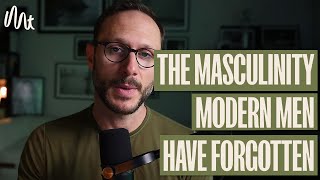
Connor Beaton’s YouTube talk reads Aragorn (Lord of the Rings) as an archetype of "virtuous" or "mature" masculinity. Using the line "The hands of the king are the hands of the healer," Beaton traces staged qualities — protector/warrior, humility in power, strength-with-purpose, brotherhood, magnanimity, and real humility — arguing Aragorn models a balanced ideal between toxic extremes and offering practical prompts for modern men to serve others.
Questions this video answers
87
Chapters
All right, team, welcome back to the Man Talk Show. Today we are going to be talking about virtuous masculinity or mature masculinity through the lens of Aragorn from Lord of the Rings. I've been wanting to make this video for a long time. I will probably be doing more like this. So if you enjoy it, make sure you subscribe, make sure you like the video, man it forward with somebody that might enjoy it as well, and share your thoughts and comments below. So let's begin. The hands of the king are the hands of the healer. The hands of the king are the hands of a healer, and so shall the rightful king be known. Now this one sentence is incredibly impactful. It might be everything that kind of sums up the true archetype of the king. And the king is the archetypal representation of the pinnacle of masculinity. It is the, the ascension of masculinity that one can aim for. And the archetype of the king is always, almost always misunderstood, misrepresented, hated, feared, disliked. But in mythology and in archetypal conversation, the king, the, the true king is the embodiment of that healer, is the embodiment of the bringer. Together, it's the embodiment of being able to bring order to the chaos. So this line sort of sums up why Eragon isn't just one of the greatest leaders in fiction. He's one of the greatest examples of masculinity that you will likely ever see, especially in the context of fiction. And sometimes in order to understand our own psychology, in order to understand what's happening culturally, we actually need to look to fiction or to myth to understand the larger and broader cultural conversation. Because right now, if you look out at the culture and society, you'll see that masculinity is pretty much on fire, you know, and not in a good way. The conversation is, is largely poison. Half of the voices out there are screaming for you to be hyper aggressive and get rich at all costs and, and you know, don't care about women in any way, shape or form. And the other half is pushing you to be more like a woman, to embody softness, to be completely non threatening and then to be weak as a man. Not that women are, but to, but are encouraging you as a man to be weak and to, if to do this is to almost be some type of superior, you know, superiorly male moral man, which is complete nonsense. But here's the truth. Both sides are wrong. Virtuous masculinity, mature masculinity, the masculinity of the true king lives somewhere in the middle. It is not weakness. It's not found in ego. It's not found in hyper aggression. It is found between the two worlds. The true king is the balancing on the sword's edge between the yin and the yang between the masculine and the feminine. And no one embodies this balance better than Aragon who is the son of Arathorn, the rightful king of Gondor. He is the model that we don't deserve but in many ways we really need right now. And if you have ever seen the movie you probably will have found yourself in some way, shape or form. Whether you liked the character of Aragorn or not silently admiring him and the journey that he went on cheering for him in some capacity experiencing a kind of reverence for him, right? Wanting him to make certain decisions being glad that he made other decisions. So let's start in the beginning with which is the protector king. So first and foremost in the beginning of the series Aragorn is the embodiment of the protector. And this is kind of like the warrior archetype. And that's really a part of the true essence of what a king is and what it means to really be a man regardless of what anyone tells you. Someone who cares for and defends the lives entrusted to him. Someone who cares for and defends the lives entrusted to him. It would have been so easy for Aragorn to seize power, to seize the throne. He's the heir, right? He's the last in the royal line. He could have walked into Minas Tirith and years before the war started. You know, the War of the Ring. And he could have said, this is mine. The throne is mine, by all means. He had claim to it, but he didn't. And instead of chasing power, instead of trying to grab power, he chased duty. He pursued responsibility. He spent decades off in the unknown. He spent decades in the wilds protecting the Shire, the North and even helping out everyone between the evil forests and between the Shire and the North. So he spent a tremendous amount of time in in the unknown, training himself to be a protector rejecting, almost rejecting power entirely. And when the Hobbits meet him, he doesn't just offer to guide them. He takes on their safety as his mission. He takes on their safety as his mission. And that commitment carries right through to the end to Helm's Deep, to Isengard, to the Pelennor Fields. So you can see here that part of the. We can call it ascension, we can call it transformation, progression into Mature masculinity into the healthy king, into virtuous masculinity, is by donning this protector status. The second phase of this is the humility of power, being humbled by power. So after winning the battle outside of Minas Tirith, Aragon could have paraded through the gates, right? He could have celebrated flying the banner of Elendil and claiming the throne on the spot. He could have again taken power. But instead, he says, I will not enter in nor make any claim. I will not enter in nor make any claim until it be seen when either we or Mordor shall prevail. So here again, he is humble enough to say, there's a larger mission than me simply claiming the throne. What good would that do if I just took power? He knows that the city's been without a king for generations. It's been vacant. He knows an early claim would likely cause unrest and division and politics and. And as we know, as we've probably, you've probably seen, politics don't really save lives. So he waits. He waits because a real man doesn't make it about himself. He shelves his ego, right? There's probably a part of him that says, you know, march in to the, to the castle and just take the throne and claim your pace place and hold the power. But instead, he lets that stand to the side for a moment. And the only reason he does enter is because Gandalf tells him he's needed in the Houses of Healing where Faramir, Eowyn and Mary are dying from the wounds no normal healer can touch. So again, here is a little piece of insight that the king goes where the people need him. The king goes where the people need him. The virtuous masculine goes where the people need need him. And here's the beauty of it. Aragon has been a warrior the entire story, right? He's been fighting. He's striker. That's how he starts off in the, in the, in the series. He starts off as Striker, who's deadly in combat. He's fearless on the battlefield. But now we see this other side to him, which is this healer, the Hand of the Healer. And this brings him into the. The third stage, which is strength with purpose. Yes, he has strength. Yes, he has even aggression when needed. Yes, he's a fighter, but his power will always be in the service of others.
In the original books, he's 87 during the war of the Rings, which is pretty wild. So in the context of the books, he's lived a very long life. So he's had decades of training and this is the nice thing about mythology, about fiction and story, they really over index on some of these important details. And when you look at the mythology of a virtuous man, of virtuous masculinity, of mature masculinity, there is something undeniable about the effect of time. There is something undeniable about, about maturation of a man really taking time. So he's had decades of training, swordsmanship, tracking, survival. You know, he could have been possibly, at least in the series, like one of the most dangerous men alive, but without purpose. That kind of power is just vanity. So he's not searching just for the power of wanting to be supremely capable at being dangerous. Right. This is where the edge.
Most of the sort of traditional masculinity conversations miss today. Your strength isn't for you. It's for the people you love. And that's what Aragorn really, really embodies. And it's something that a lot of the modern conversations of masculinity is entirely miss. Your strength as a man, your masculine strength, isn't for you. It is for the people who you love. Going to the gym, building your competencies, sharpening your mind. It's somewhat all worthless if it doesn't make you a better protector, if it doesn't make you a better friend, if it doesn't make you a better man to the people around you who you genuinely care about, care about. So this part of the development for Aragon is about starting to realize and understand and metabolize. My strength is for something broader. And he embodies that in his decisions. Then there is the brotherhood, the brotherhood and the bonds that he commits to. He understands something that a lot of us modern, modern men are really waking up to or striving for, which is brotherhood. He calls the writers of Rohan at the Black Gate. My brothers, he says, my brothers. Even though he's just met most of them, he doesn't really know any of them. Why does he do this? He does this because they have bled together, they have fought for a larger cause than themselves together, they faced death together. And this is why men throughout history have done the impossible on the battlefield. Not just for king and country or a sense of duty, but for the man standing next to him. That's why before the final battle against Mordor, Aragon doesn't just give some political speech. He reminds them, he says, a day may come when we forsake our friends and break all bonds. A day may come when we forsake all our friends and break our bonds. And he says, but that day is not today. The downfall of men doesn't come because the enemy is strong. Which, you know, in the Lord of the Rings, Sauron is arguably one of the most powerful beings that we see. I mean, he's psychological in nature, he's ephemeral, he's spiritual, he's physical. He is sort of this multi dimensional evil that is threatening all of the species. And when it comes to, when it comes to this embodiment of masculinity that Aragorn is standing for, he's reminding men not to forget why they fight or who they fight for. And one of the challenges that so many men in our modern culture have is they don't have either of those. Maybe you watching this don't feel like you have that. You don't feel like you have a why to any type of purpose or forward momentum or fight, and you don't have a who. You know, there's nobody next to you, no man, no woman, no child that you really feel called to protect and to preside over and to fight for.
So the next piece is really about this kind of magnet, magnanimity. And Aragon has a what philosophers call magnanimity. And this is the drive for greatness, but not for your own ego. And you can kind of see this in the arc of Aragon, where he's dry, he's almost pulled and called towards something. You know, you can see this call. He's being called and sort of step by step pulled into greatness over and over and over again. He's resisting and he's like, okay, life is telling me to go in this direction and I can feel this pull to greatness. I can feel this pull to being called into a greater and greater and greater and greater responsibility. But I'm going to resist it. I'm not trying to claim this. And when you look at, for example, to pull in something different that's not connected to Lord of the Rings, but is in a way. When you look at the Harvard Study of Adult Development, and this is the longest happiness study that's ever been done, it found that relationships, and not wealth and not fame are what really keep people happy. And that study largely involves men. And the happiness of you as a man at the end of your life is really going to be the quality of the relationships that you've had at 50. And so you as a man need to be able to really prioritize relationships, but you need to do so in a way that pulls you towards this greatness, pulls you towards something that is beyond and bigger than just your. Your ego. And Aragon really lived that truth. His greatness was never for himself. When you look at the entire trajectory of the story of the Lord of the Rings and Aragorn's journey, it's. He's not making those decisions for him. He's really asking himself, what is life asking of me? What are the people I love asking of me? What are the people I am supposed to protect asking of me? And this is a question that I really hope you start to ask yourself. What is life asking of me? What is it that the people I love are asking of me? What is it the people I am supposed to protect are asking of me? I try and ask myself this question all the time. What are the men that I am here to serve asking of me? What do they need of me? What does mine. What does. What is my wife asking of me? What of my children asking of me? To be a better father, husband, etc. So there's only a couple more stages and then I'm going to wrap it up. But the next one is real humility. So part of this virtuous masculinity is true humility. And humility is not a weakness. It is not self degradation. It's not tearing yourself down. It's knowing exactly who you are. It's knowing your strengths. It's knowing your flaws and focusing on the mission and not of the image of who you think you should be. And Eragon's biggest display of humility, arguably is marching on the Black Gate. Sauron thinks that this is arrogance, and it's not. It's strategy. Eragon's goal isn't to win the battle, which is almost insane. You know, he knows that that's impossible. He goes into that battle knowing there is absolutely no way to win. My goal is to distract Sauron just long enough to give Frodo a chance. That is my mission. I serve the broader, bigger mission. So he literally faces death for the slim hope of saving all others. That's not arrogance. That is courage. And it is full awareness of his limits. So he's humble in the moment to know that we are probably not going. We're not going to win this, right? It's not probably we are not going to win this, but we are going to give every ounce of our life force to try and serve this greater cause. And we are going to do that in a way that hopes gives, you know, Frodo the opportunity to throw the ring into modar. So the lesson, the lesson for today, the lesson for us as modern men, now more than ever, men are being told to arguably to choose between two toxic extremes. Aragorn sheds that false dichotomy. He rips apart that false choice and he says neither of those are the right path. He shows you that you can and must be both strong and gentle to be the warrior and the healer, to be ambitious and humble, to be dangerous and loving. And Tolkien, writing from the trenches of World War I, describes greatness as the following. He describes it as being an instrument, a great instrument in God's hands. A mover, a doer, even an ancient and even an achiever of great things, a beginner at the very least of large things. I love that notion. And that's Aragon. And that's the kind of man that the world is really starving for. Because in the end, greatness is not defined by your titles. It's not defined by your money. It's not defined by your status. And neither was Aragorn's. He had the title if he wanted it. He had the money if he wanted it. He had the kingdom if he wanted it. He had the status if he wanted it. He didn't pursue that. It's defined by your duty. It's defined by your responsibility, your loyalty and self sacrificial love. And we may never see the full ripple effect of our actions. You know, it's not till the very. There's a few moments throughout the series, through the books and through the movies, where Aragorn catches glimpse of the impact of his actions, but he's not in it for that. But if we aim to strive for some type of greatness that is about a greater call to life from life, from the people that we love and care about. When we deploy that with humility and a willingness to put other people first, we cannot fail. So we are made for each other. We are made for each other. We are built in connection. And part of the thing that Aragorn really embodies, that I think in today's world, in society, that we really need to remember, is that there's no war between him and any woman. You know, there's no blaming a woman for his life. There's no hating the feminine for his life. There's no hating his brothers for the life that he has. There is the pursuit of embodying something greater than himself and being of service to the things and the people that truly matter to him. And I hope, dear listener, dear viewer, that that is something that you can take away, that maybe you can start to look at that question of what is life asking for from me? What are the people that I love that I care about, that I want to serve, that I want to protect, that I want, that I want to help? What are they asking for from me? And then to set out on that task without the notion that you deserve a million dollars within the next year.
Without the notion that you are entitled to some title or some position or some accolade or some praise. If those things come, and they might, that's great. But it's not about that. It is about the being of service to the people that need you to be of service to them. And that is the virtuous masculine that is the embodiment of the healthy king. So man it forward. Share this episode with somebody that you know will enjoy it. Leave your thoughts and comments and questions below. And until next week, Connor Beaton signing off.
Sam.
More from Connor







How to Raise Strong, Unshakable Boys in Today's Culture, with Dr. Shefali Tsabary



